
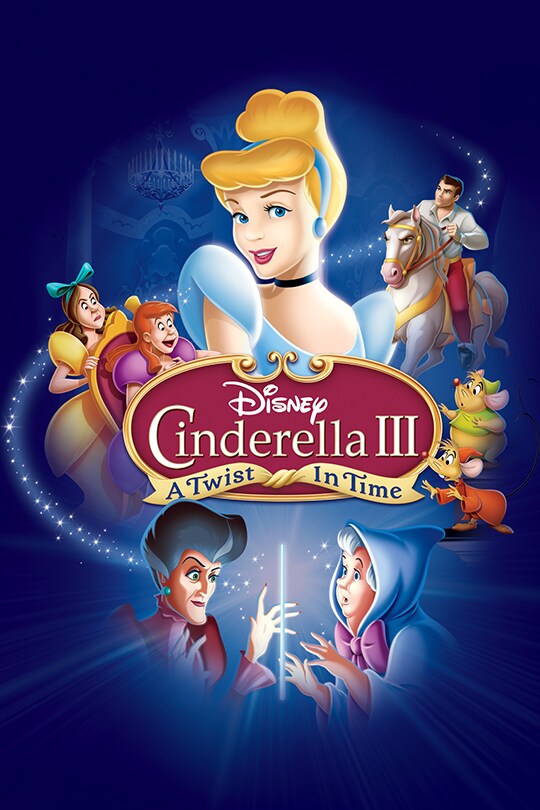
ICONIC BY MISTAKE · Full Movie Review · Cinderella III: A Twist in Time (2007)
Cinderella III: A Twist in Time Review: The Glass Slipper Is Evidence, Not Destiny
Lady Tremaine steals the wand, fixes the slipper test, edits the Prince’s memory, and accidentally forces this franchise to prove that love needs consent more than destiny needs a shoe.
The spoiler and context note
This review discusses the full altered timeline, the ending, songs, voice performances, production limits, family coercion, memory manipulation, and the relationship between the 1950 film and both animated sequels. A Twist in Time is funny, romantic, and far darker about control than its direct-to-DVD packaging suggests. The discussion follows that darkness without pretending the film resolves every consequence.
The sequel that looked at the glass slipper and asked for cross-examination
Cinderella III: A Twist in Time begins from a dangerous franchise question: if magic changed the evidence, would the Prince still choose Cinderella? The 1950 ending relies on a slipper proving identity after one extraordinary night. Lady Tremaine steals the Fairy Godmother’s wand, rewinds time, forces the slipper onto Anastasia, and enchants the Prince’s memory. Cinderella loses the object, the witness, the marriage, and the official story at once. Then she starts investigating.
That shift is why the movie has a reputation far better than most direct-to-video sequels from the same era. The premise does not merely repeat a villain. The premise attacks the machinery of the original happy ending and asks which parts survive without destiny behaving properly. Cinderella becomes active because recognition can no longer arrive through evidence already prepared for her. Love has to become a choice made again under hostile information.
Release receipt and the final wave of the sequel pipeline
Disney released A Twist in Time direct to DVD on February 6, 2007. D23 credits Frank Nissen as director and lists Jennifer Hale, Christopher Daniel Barnes, Tress MacNeille, Susanne Blakeslee, Russi Taylor, Rob Paulsen, Corey Burton, Andre Stojka, Holland Taylor, and Frank Welker among the voices. Disney Japan additionally credits producer Margot Pipkin, four screenplay writers, composer Joel McNeely, and editor Lisa Linder Silver.
The film arrived near the end of the long home-video sequel cycle documented across Disney’s catalog. Familiarity, lower production cost, and a ready family audience remained part of the business logic. The movie uses those conditions to take a genuine narrative swing. Continuity becomes material rather than handcuff. The original film supplies an iconic object and thin Prince. The sequel asks what happens when the object lies and the Prince finally needs a personality.
The anniversary frame treats happily ever after as an event people maintain
Cinderella and the Prince celebrate an anniversary with the mice and Fairy Godmother. The opening establishes that the marriage continued, friendship survived the move to the palace, and joy now has a calendar. Happily ever after is no longer the final image. Happily ever after requires remembering, gathering, and making another year visible.
Anastasia discovers the celebration from outside that circle. Her exclusion connects the emotional groundwork of Dreams Come True to the new plot even if exact chronology remains flexible. She watches proof that Cinderella’s life changed while her own household remains under Lady Tremaine. Envy brings her toward the wand, but envy is not the only force. She has already seen another possibility and still lacks the power to choose consistently. Magic arrives inside an unresolved family system.
The Fairy Godmother loses control of the tool she treats casually
Russi Taylor’s Fairy Godmother remains warm, comic, and generous. The wand functions as ordinary equipment in her hands, which makes the theft feel both shocking and avoidable. Anastasia grabs access to power she does not understand, and Lady Tremaine immediately understands that control matters more than wonder. The magical helper becomes a statue before wisdom can intervene.
The transformation exposes a franchise weakness. Magic has always been framed as benevolent because the right woman used magic for the right heroine. The wand itself has no ethic. Lady Tremaine can use the same tool to coerce bodies, memories, time, and legal identity. Access, not moral worth, decides what happens next. The Fairy Godmother supplied temporary opportunity in 1950. Her tool now supplies authoritarian revision.
Lady Tremaine does not want the past, she wants authorship
Rewinding the clock to the slipper fitting is not nostalgia. Lady Tremaine is not trying to relive a better day. She wants to become the person who decides what the day meant. The original ending defeated her because Cinderella possessed evidence she could not destroy. The wand lets her change the evidence, enchant the witness, and force the institution to accept her preferred daughter.
Susanne Blakeslee voices control with the same measured contempt that made ordinary household authority frightening. Magic expands reach without changing motive. Lady Tremaine still believes daughters are assets, marriage is acquisition, and reality should obey her evaluation of rank. The wand makes emotional abuse visible as political technology. She was always rewriting the household story. Now the clocks cooperate.
The slipper fitting becomes body horror in a G-rated register
Lady Tremaine uses magic to make the glass slipper fit Anastasia. The fairy-tale object once appeared to recognize the true woman naturally. The sequel reveals that fit can be manufactured when power controls the body. A foot becomes evidence because the story says the foot is evidence. Magic forces the body to match the institution’s test rather than changing the test.
The scene is comic and deeply uncomfortable. Anastasia receives the proof she was trained to chase, but the proof does not make her loved or ready. Lady Tremaine treats her daughter’s body as adjustable material for family advancement. The original slipper promised identity could survive sabotage. The altered slipper shows how easily identity can be falsified when the authority validating the object is compromised.
Cinderella arrives with the truth and no recognized evidence
Cinderella knows the slipper should fit, the Prince met her, and Lady Tremaine is lying. Everyone around her follows the object and procedure. Her testimony sounds like desperation because official proof points elsewhere. The situation turns a fairy tale into an epistemology problem without using the vocabulary. Who gets believed when material evidence has been engineered?
The heroine cannot rely on innocence to speak for itself. She has to observe inconsistencies, find the Prince, recruit the mice, follow the wand, and understand the mechanism of the lie. That labor changes her relationship to destiny. In 1950, the second slipper protects truth at the final moment. In 2007, truth requires investigation because the person controlling power has learned how to counterfeit the slipper.
Jennifer Hale gives Cinderella urgency without replacing kindness
Hale’s Cinderella moves quickly, argues, pursues, interrupts, and makes tactical decisions. The performance is firmer than the attic restraint of the original and more urgent than the palace reform of Dreams Come True. She has experienced life beyond captivity and knows exactly what has been stolen. Hope no longer means surviving until opportunity arrives. Hope means refusing a rewritten reality while evidence keeps failing.
The voice remains recognizably gentle around allies, including Jaq, Gus, and Anastasia. Action does not require a personality transplant. That continuity answers the passive-princess criticism better than a sword or sarcastic makeover could. Cinderella becomes an adventure lead using the same observation, collaboration, and emotional judgment she always possessed. Circumstance finally gives those traits a plot large enough for skeptical viewers to notice.
Jaq and Gus become witnesses in a case against magic
The mice remember the original timeline and understand that Lady Tremaine has altered the slipper. Their small size allows access to rooms, carriages, walls, and conversations beyond Cinderella’s reach. Once again, the franchise’s most important evidence moves through characters institutions barely recognize. The palace trusts a shoe. Cinderella trusts friends.
Rob Paulsen and Corey Burton give the pair urgency without losing comic rhythm. Jaq often translates the plan into action, while Gus supplies loyalty and physical persistence. Their role is more integrated than in many sequel plots. They do not decorate Cinderella’s bravery. They make bravery operational. Mutual aid remains the mechanism through which a woman denied formal power can investigate the people controlling formal power.
The Prince finally has to be more than a dance partner
Christopher Daniel Barnes receives the material the character lacked across earlier films. The Prince has humor, skepticism, frustration, physical initiative, affection for his father, and a stubborn sense that magical memory does not match emotional recognition. The famous line about meeting Anastasia during the dance becomes absurd because the body remembers a mismatch the spell cannot fully explain.
Giving him personality changes the romance retroactively. Cinderella did not simply meet a handsome title. She met a man capable of questioning an official story when feeling and evidence conflict. The sequel has to invent much of that capacity because 1950 barely supplied conversation. The invention works because the plot makes his judgment consequential. He can obey memory or investigate discomfort. Love becomes an act of discernment rather than a reward attached to a slipper.
The memory spell proves that facts and feelings can be separated
Lady Tremaine enchants the Prince so he remembers Anastasia as the woman from the ball. Memory supplies narrative facts: dance, connection, promise. His emotional response refuses to align cleanly with those facts. He treats the engagement as duty under the available story while repeatedly sensing that something is wrong. The split gives the romance a more interesting test than instant recognition.
The film does not argue that feelings are always superior to evidence. Lady Tremaine has corrupted both evidence and memory. Unease becomes the only unaltered signal he possesses. Trusting unease begins an investigation. The message would be dangerous if reduced to “ignore facts for true love.” The actual sequence concerns noticing when an imposed account cannot explain one’s own behavior and relationships.
Anastasia receives the dream and recognizes the cage
Tress MacNeille’s Anastasia is funny, anxious, selfish, frightened, hopeful, and increasingly aware that the forced marriage will not produce the affection she wanted. The slipper fits. The Prince agrees. The palace prepares. Every external marker says she won. Winning feels wrong because the man is enchanted and Lady Tremaine controls every step.
Dreams Come True established that ordinary reciprocal affection with the Baker could challenge maternal class ambition. A Twist in Time places Anastasia back inside the old audition with stakes raised to a crown. Her conflict is not deciding whether Cinderella deserves happiness in abstract terms. Her conflict is deciding whether she can refuse the exact prize her mother trained her to chase. Redemption becomes costly because refusal may destroy the family structure she still depends on.
Drizella remains the daughter the screenplay will not follow
Russi Taylor’s Drizella stays close to Lady Tremaine, participating in the scheme and reacting with comic enthusiasm or jealousy. Once again, Anastasia receives the path toward interiority while Drizella remains aligned with maternal control. The difference may be plausible. Siblings can respond differently to the same coercive environment. The film rarely asks why.
Drizella’s omission becomes sharper after Anastasia’s development. Does she believe the class project more deeply, fear the mother more intensely, resent her sister’s special role, or lack a relationship contradicting the household rules? The screenplay keeps her useful as continuity with the original cruelty. Character attention becomes destiny. Anastasia changes because scenes follow hesitation. Drizella looks static because hesitation, if present, never receives a close-up.
The King loves tradition until tradition threatens his son
Andre Stojka’s King brings warmth, impatience, and comic authority back to the palace. He accepts the slipper result and supports the engagement because royal procedure has produced an answer. As Anastasia’s incompatibility becomes visible, his concern grows less abstract. Tradition feels safe until his son’s future becomes the cost.
The King’s affection gives the Prince emotional context the original lacked. Father and son can disagree without Lady Tremaine’s coercive cruelty. Their relationship also demonstrates how benevolent monarchy remains vulnerable to manipulated evidence. One ruler’s kindness cannot protect a system when magic can counterfeit the test. The palace needs judgment distributed beyond a shoe and one enchanted witness. The film does not redesign governance, but the plot exposes fragility.
The Grand Duke becomes comic procedure under occupation
Rob Paulsen voices the Grand Duke, who remains responsible for implementing royal decisions while chaos grows around him. The character embodies procedure without Prudence’s personal investment in etiquette. Orders arrive, carriages move, engagements proceed, and bureaucracy gives Lady Tremaine’s lie practical force. Evil does not have to control every worker. Evil needs workers who treat the current document as enough.
The Duke is not a secret villain. His comedy comes from trying to make impossible circumstances fit ordinary protocol. That function makes the institutional critique clearer. Lady Tremaine cannot stage a royal marriage alone. Carriage drivers, guards, officials, tailors, clergy, and household staff must keep acting as though the slipper settled identity. Magic produces the lie. Administration turns the lie into a wedding.
Time travel is targeted revision rather than science fiction mechanics
The movie never builds a complicated rulebook about paradox, alternate universes, or temporal physics. Lady Tremaine rewinds to a useful moment, and the story proceeds through one altered timeline whose former participants retain uneven access to truth. The vagueness keeps attention on character rather than mechanics. Viewers understand the ethical problem before anyone asks what happens to causality.
That simplicity creates continuity questions the review can note without letting them swallow the movie. Cinderella and allies remember enough for the plot. The marriage anniversary disappears as lived reality while emotional bonds still leave traces. The Fairy Godmother becomes a statue outside ordinary correction. Time travel functions like gaslighting made cosmic: a powerful person rewrites the shared record and insists the target’s memory is the problem.
Gaslighting is not a metaphor the review should use lazily
Lady Tremaine deliberately alters external reality, manipulates memory, controls access to the wand, and tells Cinderella that her known life did not happen. Those actions fit the structure people mean when describing gaslighting: an abuser engineers doubt about perception to maintain control. The magical scale does not make the emotional pattern less recognizable.
The term should remain precise. Every disagreement, lie, or continuity error is not gaslighting. Here, Lady Tremaine possesses information, changes evidence, and weaponizes the changed evidence against a person whose account threatens her project. Cinderella’s refusal to doubt herself is heroic because almost everyone else has been given a coherent false world. The mice become crucial external witnesses preventing isolation from becoming total.
The second slipper no longer saves anybody
The 1950 twist works because Cinderella produces the matching slipper after Lady Tremaine trips the Duke’s servant and shatters the palace’s shoe. She preserved independent evidence beyond the villain’s reach. A Twist in Time knows viewers remember that triumph. Magic makes the safeguard irrelevant by changing fit and memory before Cinderella can deploy the familiar solution.
Removing the safety net forces the sequel to locate identity elsewhere. Cinderella is the woman who remembers the relationship, acts to protect others, recognizes manipulation, and keeps choosing truth when the official object rejects her. The slipper becomes ordinary glass with enormous institutional authority. That demotion is one of the franchise’s smartest moves. A symbol should support a person, not replace the person’s voice.
The palace guards turn romantic exclusion into physical force
Cinderella is not merely disbelieved. She is removed, confined, chased, and prevented from reaching the Prince. The altered story gives Lady Tremaine access to royal force through Anastasia’s engagement. A family abuser gains state power by manipulating marriage evidence. The scale of danger expands without changing the household logic underneath.
The guards perform orders rather than personal hatred. That distinction makes the threat more credible. Institutions harm through ordinary compliance long before every participant understands the lie. Cinderella’s navigation through palace spaces becomes an action sequence grounded in political exclusion. She knows the building as home in the erased timeline and is treated as an intruder in the rewritten timeline. Architecture remembers nothing for her.
Cinderella’s escape strategy is the agency receipts folder
She communicates with the mice, tracks Lady Tremaine, seeks the Prince directly, adapts when evidence fails, escapes confinement, and keeps returning to the central problem after each setback. None of those actions contradicts her kindness. They reveal kindness was never the absence of strategy. The original film showed planning within captivity. The sequel gives planning movement and public consequence.
Viewers who once called her passive often praise A Twist in Time as though a new heroine appeared. The better reading recognizes continuity. Cinderella always managed work, protected animals, assembled clothing, negotiated Tremaine’s traps, attended the ball, preserved the second slipper, and seized the final opening. The sequel changes genre enough to make the same intelligence impossible to ignore. Agency was not invented in 2007. Adventure framing finally put a spotlight on agency.
The wand makes every emotional threat literal
Lady Tremaine has always controlled access to food, clothing, movement, and social opportunity. The wand lets her control form, memory, time, and legal recognition. Magic does not create a different villain. Magic reveals the ambition hidden inside ordinary domestic authority. If she could make every person and object confirm her judgment, she would.
That continuity prevents the sequel from becoming random fantasy escalation. The wand is frightening because the character already knows how to use dependency. She does not waste power on spectacle for long. She targets the slipper, Prince, Fairy Godmother, Cinderella, and Anastasia at moments where identity and consent can be redirected. Magic becomes administrative abuse with sparkles.
The Prince’s body remembers choreography his mind cannot name
The enchanted Prince recalls Anastasia as his partner while physical interaction repeatedly exposes mismatch. Timing, balance, attention, and instinct do not align with the implanted story. The movie uses comedy around movement to show that memory alone cannot reproduce relationship. A dance contains two bodies responding, not a data point stored in one head.
The idea romanticizes bodily certainty and should not be stretched into proof that love always defeats manipulation. Within the fairy tale, the choreography gives him evidence capable of challenging the spell. He begins from discomfort, watches Anastasia, listens to contradiction, and eventually acts. The body opens the question. Judgment answers the question.
Cinderella and the Prince need a second first meeting
Because the original memory has been stolen, Cinderella cannot simply remind him with a phrase the spell will unlock. She has to become legible without demanding that he accept her account on faith. The imbalance hurts. She carries a marriage he cannot remember, while he experiences a stranger insisting on intimacy. The film lets that discomfort remain long enough to protect consent.
Their second connection grows through behavior under danger rather than one idealized dance. Cinderella takes risks to tell the truth. The Prince notices contradictions and resists control. Love becomes credible when neither person is reduced to a magical feeling. The sequel gives the couple more actual relationship than the original did, even though the relationship is being reconstructed after erasure.
Exile repeats the carriage as removal instead of rescue
Lady Tremaine arranges for Cinderella to be taken away from the kingdom, using a carriage to convert political exclusion into distance. The franchise’s most iconic vehicle once carried Cinderella toward possibility. The rewritten timeline turns transport into disappearance. Same fairy-tale object, opposite control.
Cinderella refuses to remain cargo. She evaluates the route, communicates with animal allies, and escapes the plan designed to move her beyond testimony. The sequence transforms the midnight flight. In 1950, she fled before magic expired. Here, she fights to return before a lie becomes marriage. Urgency belongs to intervention rather than concealment.
The pumpkin logic returns with sharper teeth
Transformation in the original produces a carriage from a pumpkin and turns animals into attendants. A Twist in Time revisits magical form as something morally unstable. Bodies and objects can be reassigned by the person holding the wand. The earlier enchantment served a willing Cinderella for a limited night. Lady Tremaine’s enchantments serve coercion and do not require consent.
The comparison complicates the Fairy Godmother without making her equivalent to Tremaine. Purpose, permission, duration, and consequence differ. The shared mechanism still matters. Magic changes beings into roles useful for a plan. The sequel finally asks what happens when the plan belongs to somebody who sees everyone as material.
Lucifer becomes a transformed enforcer
Lady Tremaine transforms Lucifer into a human coachman or guard-like figure to support Cinderella’s removal. The cat already embodied predation within the household. Human form scales the threat into institutional enforcement. Frank Welker’s animal performance and the exaggerated transformed behavior keep the character recognizable beneath the new body.
The transformation mirrors Jaq’s human wish in Dreams Come True with opposite consent and purpose. Jaq requested a body hoping to help. Lucifer receives a body as a weapon for somebody else’s control. Same magic, different agency. The comparison reinforces the franchise’s growing interest in who chooses transformation and whose goals the transformed body must serve.
The chase has more emotional logic than most sequel action
Action scenes can feel pasted onto princess sequels as proof that a heroine became modern. Cinderella’s chase grows directly from the story’s argument. She is being removed because her testimony threatens an engineered reality. Escape allows truth to return before ceremony finalizes the lie. Movement is evidence fighting a deadline.
The sequence also uses skills consistent with her history: quick observation, animal communication, trust in friends, physical courage, and improvisation under pressure. She does not become a trained warrior. She becomes the most determined person in the carriage because she understands what disappearance would cost. The action respects character instead of replacing character.
Jaq and Gus keep making impossible access practical
The mice move through locks, clothing, vehicles, and palace passages while larger characters remain constrained by guards and ceremony. Their scale is not a weakness to overcome. Their scale is the tactical advantage Lady Tremaine repeatedly underestimates. Dreams Come True already taught Jaq the danger of measuring usefulness through human size. A Twist in Time lets that lesson pay off.
Mutual aid becomes the franchise’s counter-magic. The wand can alter time and memory, but control remains vulnerable to people sharing information across spaces authority ignores. Cinderella’s individual resolve matters. The network makes resolve effective. That pattern connects the sequels more strongly than any exact calendar debate.
The Prince jumps from the window because somebody finally wrote him a joke
The Prince’s escape from confinement and dramatic jump became one of the sequel’s most beloved moments because the character suddenly possesses physical comedy, recklessness, and dry logic. Christopher Daniel Barnes delivers the exchange with a confidence that makes viewers wonder why the franchise kept him decorative for so long. The joke provides personality under pressure.
Humor also marks independence. He stops behaving like the enchanted role waiting at the altar and starts making decisions nobody authorized. Cinderella has been fighting a false story from outside. The Prince fights the same story from inside. Their parallel action turns romance into collaboration even before memory returns. Two people independently reject the arrangement forcing them together with the wrong partners.
The King receives a son rather than a symbol
The Prince’s defiance gives the King a relationship to respond to beyond succession. Their comic disagreement shows affection capable of surviving frustration. The King may value ceremony, but he also knows his son well enough to recognize behavior that does not fit. That recognition becomes another check against Lady Tremaine’s narrative.
Benevolent monarchy remains vulnerable because everything depends on whether the King listens. The plot does not create durable safeguards against enchanted evidence or coercive marriage. The emotional improvement is still significant. Father and son communicate as people rather than pieces required to complete a royal wedding. The Prince’s personality makes the King’s love more specific.
“I Still Believe” gives Cinderella hope after evidence collapses
The song belongs to a heroine whose dream was achieved and then erased from everyone else’s record. Belief no longer concerns whether a future may arrive. Belief concerns whether lived experience remains meaningful when authority insists the experience never happened. Jennifer Hale’s singing and the visual montage frame persistence as memory work.
The franchise risks repeating the message that belief alone solves material captivity. Cinderella’s belief immediately produces planning, movement, alliance, and risk. She does not sit beside the clock waiting for truth to correct itself. The song works because action grows around the feeling. Hope becomes fuel rather than substitute.
Joel McNeely scores a fairy tale as a caper
Disney Japan credits Joel McNeely for the music. The score has to bridge romance, magical menace, comedy, chase, palace ceremony, and emotional recovery. A Twist in Time feels more cinematic than many home-video sequels partly because music gives altered reality urgency and scale even when animation resources remain below theatrical features.
Themes support continuity while rhythmic action writing lets Cinderella occupy a new genre without sounding detached from the franchise. The score does not recreate 1950’s musical architecture. The score treats familiar motifs as evidence under pressure. Romance can return, but the path now includes pursuit, disguise, enchantment, and a wedding timed like a heist.
The false wedding is institutional violence dressed as celebration
The palace prepares flowers, clothing, music, clergy, guests, and public recognition for a marriage created through forced evidence and altered memory. Every beautiful element depends on consent the institution failed to verify. Ceremony makes the lie harder to interrupt because social momentum begins treating interruption as harm.
Cinderella has to become the disruptive woman at someone else’s wedding to restore the marriage already stolen from her. Anastasia has to become the bride who refuses the prize while everyone watches. Both women risk being blamed for ruining the event. The scene understands that ceremony can pressure people to continue after private truth has changed.
Anastasia at the altar finally sees what winning required
Anastasia stands beside a Prince who does not love her and knows the memory supporting the marriage was manufactured. Lady Tremaine expects obedience because every earlier family lesson defined this outcome as success. The crown is close enough to touch. The emotional cost is impossible to ignore.
Tress MacNeille lets fear and moral recognition coexist. Anastasia does not become fearless before refusing. She understands what her mother can do with the wand. She also understands that accepting the marriage would turn another person’s stolen life into her reward. Redemption becomes the willingness to lose the thing she was trained to call proof of worth.
“I want someone to love me for me” is the whole sequel cycle in one sentence
Anastasia’s refusal names the desire beneath both sequel stories. The Baker mattered because he liked her ordinary awkward self. The enchanted Prince offers title without recognition. Lady Tremaine calls the second option superior because class is the only love language she respects. Anastasia chooses reciprocity over acquisition.
The line can sound simple, but simplicity is earned through years of conditional approval. She has been taught that “for me” is not valuable enough. Beauty and marriage must elevate the family. Choosing authentic affection is therefore a rejection of maternal ideology, not merely a romantic preference. The moment completes the emotional argument Dreams Come True began.
Cinderella does not need Anastasia to become her best friend
Cinderella supports Anastasia’s refusal and recognizes the courage required. The movie moves toward warmth without insisting that one brave act erases prior cruelty. That restraint is imperfect because explicit apology remains thin. Still, the women can cooperate against Lady Tremaine without pretending the past never happened.
Survivor generosity remains a concern. Cinderella repeatedly becomes the emotional safety other characters need after participating in her abuse. The sequel partly protects her by keeping focus on the stolen marriage and shared enemy. She helps because Anastasia’s consent matters and because forced marriage is wrong, not because she owes reconciliation. The distinction keeps kindness connected to principle rather than endless availability.
Lady Tremaine hears her daughter’s consent as betrayal
The villain’s response confirms that Anastasia was never the beneficiary of the plan. She was the vehicle. Lady Tremaine does not celebrate a daughter finding royal happiness. She demands completion of a family acquisition. When Anastasia refuses, maternal control becomes openly punitive. The wand turns disappointment into physical threat.
That moment revises the original stepsister dynamic. Anastasia’s cruelty toward Cinderella came from a household where affection was conditional and hierarchy promised safety. Context does not erase responsibility. Context explains why choosing differently requires more than discovering she prefers a Baker. She must accept that maternal approval may never arrive and may become dangerous when challenged.
The magic escalation reveals what Lady Tremaine always believed
By the climax, Lady Tremaine uses transformation and force against anyone interfering with the wedding. Polite control has failed, so the coercion underneath becomes visible. She believed reality owed her a result and believed daughters existed to secure that result. Magic only removes the social restraints hiding the belief.
The villain remains frightening because the motive is domestic and recognizable. No kingdom-destroying prophecy is required. She wants status, vindication, and obedience from family members she treats as instruments. The wand gives household entitlement enough range to threaten a palace. The scale expands. The emotional logic never changes.
The Fairy Godmother returns after everyone else does the work
The petrified Fairy Godmother cannot rescue Cinderella during most of the crisis. Cinderella, the mice, Prince, King, and Anastasia have to identify the lie and choose against the altered world. Restoring the magical helper near the end confirms victory rather than producing victory. That arrangement strengthens every character.
The original film needed magic because Cinderella’s material access had been destroyed. A Twist in Time removes magic from the heroine’s side and discovers the agency already present. The Fairy Godmother still matters as friend, witness, and source of the wand. Her absence proves the franchise can honor magical help without claiming the heroine was helpless before help arrived.
The timeline restoration cannot erase what people chose inside the lie
Restoring reality repairs memory, marriage, and the Fairy Godmother, but Anastasia’s moral decision should remain meaningful beyond temporal cleanup. She confronted her mother and refused coerced love while the false world still promised reward. The choice reveals capacity no reset should delete.
Time-travel stories often use restoration to return characters to comfortable positions, risking the erasure of growth produced inside the alternate path. A Twist in Time preserves enough emotional residue for Anastasia’s development to matter. Exact mechanics stay fuzzy. The ethical record remains clearer: she chose consent when the crown depended on ignoring consent.
Jennifer Hale plays memory as something held in the body
Cinderella carries a marriage nobody else remembers, and Hale never turns that burden into one uninterrupted register of grief. Shock becomes urgency, urgency becomes strategy, and strategy keeps tenderness available around allies. The voice communicates that the erased life remains real to the person who lived the life. She does not need the palace to certify memory before acting on memory.
Hale also keeps the heroine from sounding anachronistically sarcastic. Determination arrives through clarity rather than a modern quip pasted onto a classic design. That choice preserves continuity with 1950 while letting the sequel move at adventure pace. Strength sounds like the same woman speaking before the household can lower her volume again.
Christopher Daniel Barnes finally gets a character instead of a title
Barnes gives the Prince curiosity, bafflement, dry humor, stubbornness, and a willingness to look ridiculous while escaping a false future. The performance turns generic charm into recognizable personality. He loves his father, respects royal responsibility, and still refuses a marriage that feels wrong after evidence begins to crack.
The romantic payoff works because he becomes capable of choosing rather than merely identifying. In 1950, the Grand Duke and slipper carry most of the search. In A Twist in Time, the Prince has to interpret his own unease and resist enchantment. Barnes makes that process funny enough for a family film and sincere enough for the restored relationship to feel earned.
Tress MacNeille protects Anastasia from a personality transplant
Anastasia remains selfish, awkward, easily influenced, and hungry for approval. MacNeille does not sand away the abrasive vocal traits once empathy enters. The performance lets hope sound embarrassing because Anastasia expects ridicule. Fear of Lady Tremaine stays audible beneath moments of defiance. Change becomes a struggle inside the recognizable person rather than replacement by a sweeter stepsister.
That continuity is crucial to redemption. Audiences do not forgive a new character who happens to share a name. Audiences watch the old behavior collide with new knowledge. MacNeille makes the collision legible in pauses, strained enthusiasm, and the moment Anastasia can no longer pretend the enchanted Prince’s attention feels like love.
Susanne Blakeslee makes magic sound like paperwork
Lady Tremaine does not squeal over the wand. Blakeslee gives magical domination the same clipped certainty used for household orders. The effect makes power feel chillingly practical. She identifies the useful moment, changes the slipper, alters memory, and moves toward marriage as though correcting an administrative mistake.
The performance refuses the idea that supernatural scale requires louder villainy. Tremaine remains dangerous because her emotional logic never changes. Cinderella and daughters exist inside a hierarchy she believes she is entitled to manage. The wand simply removes the limits other people once imposed on that management.
Russi Taylor carries Fairy Godmother and Drizella across opposite functions
Taylor voices the Fairy Godmother’s warmth and Drizella’s alignment with Lady Tremaine. One character grants possibility. The other helps police the family hierarchy. Having the same performer in both roles does not create a secret thematic claim, but the range supports a story obsessed with how tone changes the use of power.
The Fairy Godmother has less active time because petrification removes the easy solution. Drizella remains present around the scheme without receiving Anastasia’s moral turn. Taylor makes both immediately legible, proving again how much sequel continuity depends on voice actors whose work disappears behind familiar character designs.
Rob Paulsen turns small testimony into plot movement
Jaq must explain altered reality, coordinate with Gus, enter restricted spaces, and keep Cinderella connected to information. Paulsen’s energetic phrasing gives urgency without making every mouse line noise. The character understands that a detail other people dismiss may decide the whole case. He treats small observation as evidence worth risking safety to deliver.
Paulsen also voices the Grand Duke and Bishop, allowing one actor to occupy informal resistance and formal ceremony. Jaq helps expose the lie. Institutional voices proceed with the wedding. The vocal range supports both sides of the machinery without asking the audience to notice the shared performer.
Corey Burton makes Gus dependable instead of simple
Gus often receives physical comedy, food motivation, and affectionate reaction. Burton gives those traits stability useful during crisis. Gus follows Jaq into danger, carries tasks through, and never treats size as an excuse to withdraw. His confidence contrasts with Jaq’s body insecurity from Dreams Come True and confirms the lesson through action.
Dependability can look less dramatic than doubt, so reviews often skip Gus once plot details are listed. The franchise would collapse repeatedly without characters willing to perform unglamorous assistance. Gus is the friend who shows up, keeps moving, and does not need the palace to know his name before loyalty counts.
Andre Stojka gives the King a real father-son rhythm
The King’s bluster works because affection remains audible beneath command. Stojka lets royal frustration sound personal instead of purely ceremonial. The Prince can push back without the relationship becoming another Tremaine household. Their conflict creates humor and shows that authority may contain love without ceasing to be authority.
That contrast matters for Anastasia. The Prince can disagree with a parent and remain loved. She expects disagreement to trigger humiliation or punishment. The palace family is imperfect and flexible. The Tremaine family makes flexibility feel treasonous. Parallel family structures sharpen the stakes without a speech explaining them.
Frank Welker keeps Lucifer animal beneath the enchantment
Lucifer’s transformed role could become an unrelated henchman joke. Welker’s vocal behavior and the animation preserve appetite, aggression, and feline self-interest. The body changes, but the predator Cinderella and mice already know remains recognizable. That continuity turns transformation into another example of magic repurposing an existing trait.
Lucifer does not need a moral arc because his behavior belongs to animal comedy, while Lady Tremaine supplies ethical intention. The distinction keeps blame aligned. A cat chases mice. A woman transforms the cat and directs force toward kidnapping. Power belongs to the person choosing the use.
Frank Nissen directs one continuous escalation
Unlike the anthology structure of Dreams Come True, A Twist in Time can accumulate consequence. The stolen wand causes the rewritten slipper, enchanted Prince, altered engagement, Cinderella’s exclusion, exile, chase, false wedding, and final refusal. Each sequence tightens the same conflict rather than resetting the lesson. Momentum becomes the movie’s greatest formal advantage.
Nissen balances comedy with threat more effectively than the premise suggests. The Prince’s window jump, mouse action, and Lucifer transformation relieve tension without turning Lady Tremaine’s coercion into a joke. Emotional scenes remain brief, but the plot keeps returning to the same wound. Continuity gives depth through pressure even when individual conversations could last longer.
The screenplay turns an object lesson into a consent story
The slipper begins as the official proof around which the plot is organized. Once magic corrupts fit, the screenplay has to locate legitimacy in consent. Does the Prince want the marriage? Does Anastasia want a man who cannot see her? Does Cinderella accept an erased life because the kingdom believes the lie? Every important character must answer beyond the shoe.
That transition is the sequel’s central achievement. The original fairy-tale test is not mocked or discarded. The test is shown to be vulnerable when power controls conditions. Love survives through mutual choice, witnesses, memory, and action. The glass slipper remains iconic and loses jurisdiction.
Joel McNeely gives memory an adventurous pulse
McNeely’s music supports a film that moves between romantic recognition, magical threat, chase, comedy, and ceremony. Strings and orchestral color preserve fairy-tale atmosphere, while action rhythms give Cinderella momentum associated with investigation rather than waiting. The score helps the home-video production feel more unified and ambitious than many peers.
Music also carries emotional continuity when altered memory makes dialogue unreliable. Familiar warmth may surface before the Prince can explain attraction. Menace follows the wand because the audience understands control before characters see control. The score becomes another witness, though viewers should remember that cinematic music is designed to guide belief rather than provide neutral evidence.
“At the Ball” revisits romance through missing evidence
The film returns to the central dance as a memory under dispute. Song and visual recall cannot simply replay 1950 because the Prince’s mind has been altered. The scene asks what remained emotionally true after details were reassigned. Romance becomes an argument between implanted narrative and embodied response.
Musical callback works best when changing meaning. A melody repeated only for recognition becomes nostalgia bait. Here, the remembered ball is the crime scene. Who danced, who remembers, and who benefits from the revised answer? The sequel turns a franchise highlight into contested testimony without destroying the original beauty.
“More Than a Dream” is a better title for the relationship
The song argues that Cinderella’s life with the Prince was more than fantasy even when the shared record disappears. Critics often reduce the original romance to wish fulfillment, so the missing record carries real weight. A Twist in Time gives the couple behavior, humor, conflict, and separate acts of resistance, allowing relationship to exceed the image of one dance.
The song remains earnest in the direct-to-video musical tradition and may overwhelm viewers allergic to sincere franchise ballads. Earnestness serves the premise. Cinderella is defending lived reality against a person who literally rewrote reality. She needs language stronger than nostalgia. The marriage was not valuable because the dream came true. The dream was valuable because people continued choosing inside the life that followed.
The animation reaches higher than Dreams Come True
A Twist in Time generally offers stronger staging, more energetic movement, and more consistent emotional acting than the 2002 anthology. The improvement does not place the film beside the 1950 feature’s draftsmanship or atmosphere. The comparison that matters is whether the sequel’s visuals support action, coercion, and character choice with enough clarity to carry one continuous plot. They do.
Cinderella’s physical determination reads cleanly. Lady Tremaine’s stillness retains threat. Anastasia’s face carries conflict. The Prince’s comedy lands through pose and timing. Clock imagery and magical distortion give the premise visual identity. Limitations remain in background depth, model consistency, and the smoothness of some movement. The movie has an argument, and the animation usually knows where the argument sits in the frame.
Direct-to-DVD does not mean nobody cared
The release format reflects business strategy, budget, and market assumptions. None of those facts prove the artists approached the work without care. The sequel’s premise, voice performances, score, comic timing, and character development show deliberate choices. Some sequences solve familiar franchise problems with more imagination than several theatrical remakes later attempted.
Praise should not romanticize constrained production. Lower resources affect labor and finished craft. Criticism should describe what appears onscreen and avoid using “cheap” as a substitute for analysis. The visual limitation matters because threat loses texture in places. The creative success matters because character still survives the limitation.
Color makes altered reality feel colder without abandoning the franchise
Lavender night, deep burgundy, pale blue, and gold magic separate investigation from the warmer romance of restored memory. Lady Tremaine’s palette absorbs more of the palace as her control expands. Cinderella remains visually connected to blue while moving through shadows and mechanical spaces associated with clocks and evidence.
The review artwork follows those emotional cues without copying a frame or allowing film colors to dictate CVM Sekai’s page design. The site remains purple, lavender, white, and black. Artwork can dramatize stolen time inside the established editorial home. Consistent branding keeps one dark spell from turning the page into another disconnected theme experiment.
The clock is not only a deadline anymore
Midnight in 1950 limits borrowed access. The clock warns Cinderella that magic will expire and ordinary status will return. In A Twist in Time, Lady Tremaine controls time itself, making the clock evidence of stolen history rather than a neutral deadline. Temporal power belongs to the villain until characters restore choice.
That evolution deepens the franchise symbol. Cinderella once raced against time imposed by magic. Now she races against ceremony imposed through rewritten time. The difference moves her from temporary guest to person defending ownership of lived years. Midnight no longer asks whether the dress will last. Midnight asks who gets to say the marriage happened.
The wand is the most dangerous inheritance in the franchise
The Fairy Godmother’s wand can transform bodies, objects, memory, and time with minimal procedural protection. The tool depends entirely on character and custody. Once stolen, no institutional safeguard recognizes misuse. Magic behaves like concentrated authority without oversight. The franchise trusts benevolence until a villain performs a security audit.
That framing makes the wand more interesting than a generic spell device. Every enchantment raises consent questions. Who requested change? Who understands duration? Who can reverse the effect? Who controls the story after transformation? A guide on Cinderella magic should follow those questions across all four film branches rather than listing spells as cute lore.
Continuity bends because emotional continuity does the heavy lifting
The timing of anniversaries, the relationship between Cinderella II and III, and which Anastasia development happened first can inspire elaborate fan chronologies. The films were created to tell useful sequel stories, not to support a forensic calendar. Exact sequencing remains less secure than thematic progression.
Anastasia’s capacity for independent desire, Cinderella’s post-wedding agency, Jaq’s confidence in mouse-scale usefulness, and the palace relationships connect the sequels even when details wobble. Editorial coverage should note contradiction and resist treating contradiction as total failure. Franchise continuity often survives through character questions before dates line up.
Anastasia’s redemption belongs across two movies
Dreams Come True gives her reciprocal ordinary romance and the first public rejection of Lady Tremaine’s class rule. A Twist in Time gives her the crown her mother always wanted and asks whether she will refuse when the reward requires violating another person’s consent. The second test is harder because success looks exactly like the family dream.
Watching only the third film still provides a coherent arc. Watching both makes the refusal feel like development rather than surprise. The Baker taught Anastasia what being liked could feel like. The enchanted Prince teaches her what status without recognition feels like. Together, the experiences give her enough evidence to name the difference.
The Prince’s development belongs to the rewritten timeline
The original romance supplied an image and song more than a sustained relationship. The sequel cannot uncover a fully formed personality hidden in 1950 footage. The writers create personality under the pressure of altered memory. Humor, stubbornness, physical courage, and skepticism become the traits needed to escape the plot.
That invention is adaptation, not historical recovery of what Walt Disney secretly intended. The result remains valuable. Franchises can improve underwritten characters when new behavior respects the emotional premise and adds consequence. The Prince finally feels like somebody Cinderella could choose after the ball rather than a royal position attached to a chin.
The mice remain more reliable than royal procedure
Royal procedure trusts the slipper and enchanted Prince. The mice trust lived history, observed manipulation, and Cinderella’s account. Their evidence is socially weak and factually stronger. The plot repeatedly rewards attention from below. Small witnesses notice what official systems ignore because official systems are organized around recognizable status.
That theme connects the handmade dress, second slipper, storybook frame, and time-travel investigation. Cinderella’s truth survives through communities of care rather than authority designed to verify her. The mice are cute. The mice are also the franchise’s recurring counter-archive.
The Fairy Godmother’s mistake deserves a little accountability
Leaving the wand accessible near people harmed by the franchise’s original hierarchy creates the plot. The Fairy Godmother does not intend theft and suffers immediate petrification. The ending restores her warmth without much reflection on custody or boundaries. Magical elders receive forgiveness because benevolence defines their identity.
A lore guide can ask practical questions without ruining whimsy. Does the wand respond to anyone? Can spells be limited? Why can memory and time be changed so easily? Who repairs harm after misuse? The sequel reveals a power system larger than one kind woman’s intentions. Good intentions remain an insufficient security policy in fairy tales too.
The wedding clothing becomes a costume for a false self
Anastasia’s bridal presentation fulfills the visual fantasy Lady Tremaine demanded. Expensive fabric, palace preparation, and public attention make her look like the role. The body inside the dress knows the relationship is false. Costume supplies recognition and intensifies alienation at the same time.
Cinderella’s original gown opened access to a place where she could meet someone freely. Anastasia’s gown closes around a marriage engineered by her mother. Similar fairy-tale beauty carries opposite consent. Dress analysis becomes useful when viewers ask who chose the clothing, which event the clothing enables, and whether the wearer can leave.
The final choice makes the stepsister more than an obstacle
Anastasia stops the wedding, rejects Lady Tremaine’s plan, and protects the Prince’s right to choose even though the choice ends her royal future. The act does not erase cruelty toward Cinderella. The act proves she can value another person beyond competition. Redemption becomes a direction supported by cost.
The franchise once needed stepsisters to make Cinderella look graceful by contrast. A Twist in Time no longer needs Anastasia to remain ugly in spirit. Giving her moral agency does not steal attention from Cinderella. The development makes Cinderella’s own compassion less abstract because another woman actually uses the space compassion helped create.
Easter eggs begin with the object that no longer tells the truth
The slipper fitting, Grand Duke visit, hidden Cinderella, mouse intervention, shattered evidence, and royal search all recall the original climax. A Twist in Time rearranges those pieces so recognition fails. The callback is not decoration. The callback asks whether viewers trusted the object too much because the first story rewarded that trust.
A useful Easter-egg list follows altered function. The wand shifts from rescue tool to coercive instrument. The carriage shifts from access to exile. The wedding shifts from resolution to threat. The dance shifts from romantic proof to disputed memory. Recognition becomes analysis when a sequel changes what the familiar thing does.
The second slipper is absent because backup evidence cannot solve corrupted authority
The 1950 film gives Cinderella a second glass slipper after the first is broken, creating one of the studio’s cleanest reversal moments. Lady Tremaine can sabotage procedure and cannot erase the evidence Cinderella personally preserved. In A Twist in Time, magical alteration happens earlier and reaches the standard of fit itself.
That change is an escalation with thematic purpose. Having another shoe would not help if the palace believes another body and the Prince remembers another woman. The sequel removes material backup and forces testimony, relationship, and choice to carry truth. The original twist remains iconic. The sequel understands exactly why repeating the twist would be lazy.
The portrait of the marriage becomes a ghost of a life erased
Visual reminders of Cinderella’s royal future carry different weight after time rewinds. A portrait, room, dress, or familiar corridor may exist differently or not at all depending on the spell’s reach. The movie uses memory more than metaphysical detail, allowing viewers to feel loss before mapping every object.
The review artwork leans into that archival problem through loose pages, clockwork, and competing slippers. The image is original fan art rather than a film frame, and the composition treats Cinderella as investigator. She is not posing beside the symbol. She is examining the machinery that made the symbol lie.
The cat-and-mouse business keeps literal and political scales connected
Lucifer chasing mice remains franchise slapstick. Lady Tremaine using a transformed Lucifer to remove Cinderella connects household predation to political enforcement. The same cat who guarded stairs and breakfast now supports a rewritten royal marriage. Continuity becomes escalation through function.
Jaq and Gus respond with the same collective ingenuity used in the attic. Their methods remain small, physical, and exact. The wand changes time. A mouse opens the right lock. The contrast is satisfying because power is not measured only by spectacle. Knowing where to move can defeat somebody who believes scale guarantees control.
The Prince’s window joke became famous because competence can be funny
Fans often circulate the window exchange as proof that the Prince finally became interesting. The scene works because humor emerges from a practical decision inside urgency. He does not deliver a personality speech. He assesses the problem, chooses the direct route, and survives with enough dignity to keep moving.
That tiny sequence reveals how little characterization a franchise sometimes needs when writing becomes specific. One action can establish recklessness, confidence, wit, and refusal of confinement. The original film had room for a comparable beat and prioritized other characters. The sequel’s gain exposes the earlier absence.
The film improves romance by respecting disbelief
Cinderella knows the relationship. The Prince does not. The screenplay avoids framing his initial skepticism as betrayal because his memory and evidence have been altered. She is hurt and still understands that consent cannot be demanded through information available only to her. The restraint protects both characters.
When he chooses to investigate, the choice belongs to his experience rather than pressure to accept a soulmate claim. When they reunite, Cinderella receives recognition from a person who arrived through judgment. The romance becomes more mature because true love is allowed to include uncertainty, boundaries, and another decision after the first decision was stolen.
The film improves Cinderella by changing genre, not values
Adventure pacing reveals physical courage and strategic initiative without giving her a new cynical personality. She continues trusting friends, caring about Anastasia’s autonomy, and believing people can choose differently. Those values become tools rather than decorations. Kindness helps her interpret motives while resolve keeps kindness from becoming compliance.
The result should correct readings of the 1950 heroine rather than establish a hierarchy where sequel Cinderella is finally acceptable. Survival under captivity and investigation under magical conspiracy require different visible behaviors. Both versions act within available conditions. The franchise deepens when agency is understood through context instead of measured by chase-scene count.
The film improves Anastasia by letting her lose
Winning the slipper, Prince, palace, and mother’s approval would destroy the self she began discovering in Dreams Come True. Her moral victory requires losing the royal outcome. That reversal breaks the household equation between status and worth. Failure becomes freedom when the contest was designed by Lady Tremaine.
The Baker does not need to appear for the earlier lesson to matter. Anastasia has already experienced being liked without a title. The memory gives her a standard capable of exposing the enchanted marriage. Even if continuity is imperfect, emotional learning survives. She knows enough to refuse a crown that cannot see her.
The film leaves Drizella in the losing household
Anastasia’s escape creates a sibling shadow the ending barely addresses. Drizella remains with Lady Tremaine, still organized around ridicule and obedience. A celebratory restoration may leave her materially punished alongside the villain despite never controlling the wand. Her participation matters, and so does her dependence.
A future profile should avoid inventing innocence while asking what repair would require. Does she double down, grieve, envy, or question? Franchise storytelling often chooses one redeemed sibling and uses the other to preserve comic contrast. The pattern reveals how narrative attention distributes moral possibility.
The film does not abolish the fairy-tale test, and maybe the film should not
The slipper remains emotionally central even after fit is corrupted. Fans do not need the sequel to announce that the original ending was foolish. The original object carried clever narrative function, class access, and a backup-evidence twist. A Twist in Time adds vulnerability rather than contempt.
Stories can revise symbols by placing symbols under pressure. The slipper becomes less absolute and more interesting. Identity exists before fit, consent outranks procedure, and relationship requires more than recognition at the foot. The glass remains beautiful because beauty no longer has to carry the whole verdict.
The King and Prince relationship deserves its own profile receipts
The sequel supplies affection, exasperation, humor, and a conflict over royal marriage. The King values tradition and ultimately values his son’s judgment more. The Prince respects his father and refuses an imposed future. Their disagreement contrasts with Lady Tremaine’s punitive motherhood.
Neither relationship represents ordinary family life because monarchy changes stakes and power. The emotional difference remains useful. Love can survive a child’s independent choice when authority does not require obedience as proof of love. Anastasia sees that possibility inside the palace she was taught to conquer. The royal family becomes a counterexample to her own.
The direct-to-video sequel beats the expensive remake at one important thing
A Twist in Time lets Cinderella’s relationship face a conflict generated by consent, memory, evidence, and institutional pressure. The 2015 live-action film expands childhood, costume, politics, and visual spectacle while remaining closer to the familiar path. More money produces more texture, not automatically more curiosity about the ending.
The comparison does not require declaring one film superior in every category. The remake has performances and design worth deep analysis. The sequel demonstrates how franchise value can come from asking a dangerous story question rather than polishing known beats. A glass slipper used differently may reveal more than a glass slipper rendered with greater realism.
The sequel understands coercive control without clinical vocabulary
Lady Tremaine isolates information, changes evidence, controls movement, threatens daughters, manipulates the Prince, and uses public ceremony to force compliance. The film presents those behaviors through fairy-tale magic, allowing young viewers to recognize the wrongness before learning formal terms. Emotional clarity becomes educational without turning dialogue into a lesson plan.
The resolution remains optimistic. One refusal and restored timeline stop the immediate controller. Real coercive systems may persist through money, housing, law, family loyalty, and trauma after escape. The movie offers a readable pattern, not a complete recovery model. Editorial analysis should name both usefulness and limit.
The sequel understands evidence better than some mysteries
The plot identifies a claim, corrupted object, altered witness, excluded witness, motive, mechanism, and chain of enforcement. Cinderella and mice gather observations while the Prince notices inconsistency from inside the false account. The story is a fairy-tale investigation with evidence distributed across social positions.
Resolution still depends on magic and emotional truth, yet the path respects inference. Characters change belief because contradictions accumulate. The audience knows the answer early, so suspense comes from whether truth can become actionable before the wedding. That structure turns dramatic irony into momentum rather than waiting for a reveal everyone already understands.
The sequel understands that ceremony can become a trap
Weddings gather witnesses and create social pressure toward completion. Once guests arrive and vows approach, stopping the event looks disruptive even when proceeding would be the deeper harm. Lady Tremaine relies on momentum alongside magic. Every official preparing the ceremony increases the cost of refusal.
Anastasia’s interruption matters because she refuses before the institution can convert silence into consent. Cinderella’s arrival matters because external witness supports the refusal. The scene teaches a clean principle under elaborate fabric: celebration does not override the right to stop.
The animation scorecard
Character acting is strongest around Anastasia’s conflict, Lady Tremaine’s controlled menace, the Prince’s comedy, and Cinderella’s determination. Action staging remains readable. Magical effects provide energy. Backgrounds and movement do not reach the dimensional atmosphere of 1950, and some model shifts reveal production constraints.
Overall craft exceeds the low expectations attached to the format because direction, score, voice work, and one continuous plot reinforce each other. The movie looks like a home-video sequel and behaves like a feature with an argument. That distinction explains why viewers forgive visual limits more readily here than in sequels whose stories never justify continuation.
The character scorecard
Cinderella gains visible strategy without losing continuity. The Prince gains an actual personality. Anastasia gains the strongest moral arc. Lady Tremaine gains power proportionate to the control she always wanted. Jaq and Gus remain essential. The King gains relationship texture. Fairy Godmother becomes usefully unavailable. Lucifer escalates familiar threat.
Drizella remains underwritten, Prudence remains peripheral, and the palace workforce remains mostly machinery around the wedding. The ensemble is strong where the central consent story requires strength. The gaps reveal future profile work rather than reasons to dismiss the film. A hub should let readers follow each imbalance into another page.
The music scorecard
Joel McNeely’s score gives altered reality urgency, romantic memory weight, and action continuity. Songs including “I Still Believe” and “More Than a Dream” support the theme that lived relationship cannot be reduced to fantasy even when memory has been manipulated. Musical sincerity may feel unfashionable and fits the franchise.
The soundtrack does not replace the 1950 classics or need to. The original songs built an archetype. The sequel music interrogates the archetype after somebody steals the proof. Repetition becomes strongest when melody carries changed stakes rather than copying recognition.
The franchise scorecard
A Twist in Time earns existence by attacking the original ending’s mechanism and strengthening the people around the mechanism. The film connects to Dreams Come True through Anastasia’s independence and to 1950 through the slipper, mice, Tremaine control, and the second-chance structure. The premise is fan-fiction audacity executed with editorial intelligence.
Continuity mechanics remain loose, visual craft remains modest, and accountability between Cinderella and Anastasia remains incomplete. Those limits do not erase franchise value. The sequel gives later fans a language for explaining why Cinderella was never merely waiting and why true love should survive more than a shoe size.
The RaeRae verdict
This movie had no business being this clever. A direct-to-DVD sequel takes the most famous shoe in animation, lets a controlling mother rig the test, enchants the witness, steals the marriage, and forces everybody to prove that consent matters more than official fit. The Prince jumps out a window and develops a personality on the way down. Anastasia gets the crown and realizes the crown cannot love her. I have receipts and affection.
The animation is not theatrical magic, the time rules wobble, Drizella remains stranded, and the apology ledger stays open. I still prefer an ambitious sequel that makes the franchise argue with itself over a remake that spends a fortune making familiar fabric look heavier. A Twist in Time understands that the slipper was evidence, not destiny. Once evidence lies, people have to choose. That is the whole damn movie, and the movie lands.
Final receipt
Disney released Cinderella III: A Twist in Time on February 6, 2007. Frank Nissen directed. Jennifer Hale, Christopher Daniel Barnes, Tress MacNeille, Susanne Blakeslee, Russi Taylor, Rob Paulsen, Corey Burton, Andre Stojka, Holland Taylor, and Frank Welker voice the central ensemble. Joel McNeely composed the music credited by Disney Japan.
Lady Tremaine steals the Fairy Godmother’s wand, rewrites the slipper fitting, alters the Prince’s memory, and turns Anastasia into the official bride. Cinderella investigates with Jaq and Gus. The Prince resists the implanted story. Anastasia refuses a marriage without love. The restored ending matters because characters chose truth before magic repaired the world. Happily ever after survives cross-examination.
Who should watch this before dismissing the sequel era
Viewers who remember only weak home-video follow-ups should watch A Twist in Time as a case study in premise. The film does not rely on bigger mythology or another child of the hero. The film revisits one foundational object and asks what happens when the villain learns how the object works. That economy is strong franchise thinking.
People interested in Cinderella’s agency, Anastasia’s redemption, consent in fairy tales, memory manipulation, or underwritten princes will find more material than the packaging implies. Children receive a chase and magic. Adults receive a controlling parent engineering reality until her daughter refuses the reward. Both audiences can meet inside the same story without one being treated as the only legitimate viewer.
Who may still hate the movie
Viewers who need the 1950 visual standard, dislike direct-to-video vocal continuity, reject time-travel revisions, or prefer fairy tales to remain closed may find the sequel unnecessary. The character models and movement will not erase awareness of production format. The premise deliberately destabilizes an iconic ending some fans would rather leave untouched.
That response is fair when tied to specifics. “Sequel bad” is not analysis. Identify whether the problem is craft, continuity, tone, magic rules, song style, or the belief that Anastasia should remain a villain. Specific dislike contributes more to fandom than inherited embarrassment about watching a princess DVD made outside the theatrical canon.
What the film says about destiny
Destiny becomes unreliable once Lady Tremaine gains access to the symbols destiny used. The right shoe fits the wrong woman. The Prince remembers the wrong dance. The palace follows the wrong bride. If destiny depends on uncorrupted props, destiny was never enough protection.
The characters rebuild the ending through choices that magic cannot manufacture cleanly. Cinderella trusts memory and acts. The Prince trusts contradiction and investigates. Anastasia trusts the difference between status and love. Their decisions create a stronger claim than predestination. The sequel does not eliminate fairy-tale magic. The sequel makes magic answer to consent.
What the film says about mothers and inherited rules
Lady Tremaine treats daughters as extensions of family ambition. The Fairy Godmother treats Cinderella as a person whose wish deserves access. Neither maternal figure is a biological mother in the active story, and both shape possible futures through different uses of power. One controls outcomes. One offers tools, though her tool proves dangerously unsecured.
Anastasia’s climax depends on separating maternal approval from moral judgment. Cinderella’s strength depends partly on internalized care from relationships beyond Tremaine. Family influence remains powerful and not absolute. A daughter can learn the rule, perform the rule, benefit from the rule, and still refuse when the rule demands another person’s life.
What remains after the clocks return
The restored marriage does not make the attempted coercion meaningless. Cinderella has seen how quickly institutions can reject her testimony. The Prince has felt memory conflict with choice. Anastasia has refused the crown. The King has watched procedure fail. The Fairy Godmother has learned that a wand can become a weapon in another hand.
A richer epilogue would let those lessons change palace safeguards, family boundaries, and relationships. The film closes through celebration because fairy tales need release. The hub can continue the conversation through profiles, rants, and lore guides. Restoration returns time. Editorial follow-through asks what anybody does differently tomorrow.
Sources and credits
Release date, director, producer, writers, principal cast, and official synopsis are checked against the D23 Disney A to Z entry and the official Disney Movies page. The official Disney Japan release page supplies additional production, music, editing, and Japanese-release credits.
Keep exploring
Return to the Cinderella hub for the 1950 review, Dreams Come True, the 2015 live-action branch, character profiles, rants, and fairy-tale guides.