
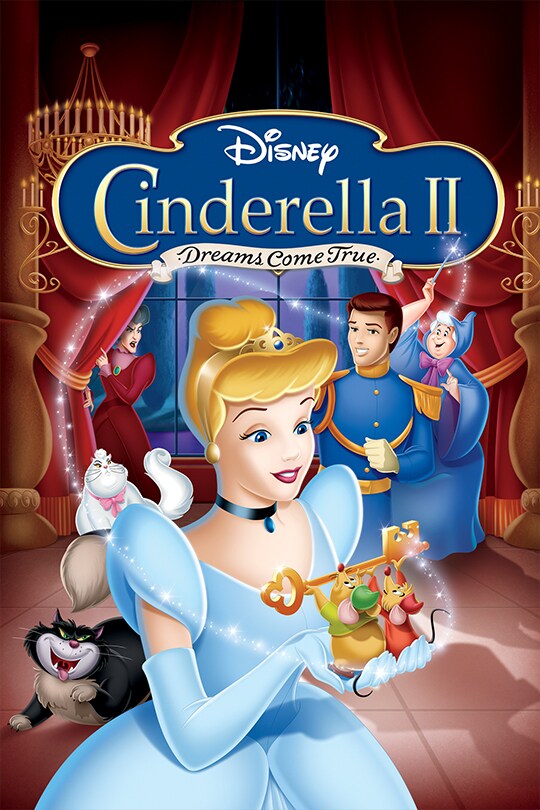
ICONIC BY MISTAKE · Full Movie Review · Cinderella II: Dreams Come True (2002)
Cinderella II: Dreams Come True Review: Happily Ever After Has Chores
The animation is flatter, the framing book announces every seam, and the best story ends in a bakery. The sequel still understands something important: a dream coming true does not tell anybody how to live on Tuesday morning.
The spoiler and context note
This review discusses all three anthology stories, the endings, character changes, music, production context, and connections to the 1950 film and Cinderella III. Cinderella II contains domestic control, class pressure, body insecurity, family coercion, and animal peril inside a G-rated fairy-tale sequel. The discussion treats those subjects seriously without pretending a direct-to-video children’s film supplied every answer.
The sequel nobody remembers until Anastasia walks into the bakery
Cinderella II: Dreams Come True has the reputation of a disposable direct-to-video sequel, which is understandable if the memory contains softer animation, pop songs, three episodes stitched together, and none of the visual authority of 1950. Then Anastasia meets the Baker, Cinderella breaks palace protocol, Jaq discovers that becoming human does not solve the problem he thought he had, and the movie starts arguing with the original franchise in surprisingly useful ways. The execution is uneven. The questions are better than the bargain-bin reputation suggests.
The anthology never becomes one grand dramatic arc. The connective book made by the mice is openly a device, and the segments feel like television stories because each resets emotional scale before the next lesson. That smallness can become a strength. Happily ever after is no longer one perfect image. Palace life has schedules, rules, class expectations, loneliness, body discomfort, family control, and people whose desires do not fit the role assigned to them. Cinderella II is less magical than Cinderella and more interested in Tuesday morning.
Release receipt and the home-video era
Disney released the film direct to video on February 26, 2002. D23 lists John Kafka as director and a 73-minute runtime. The official cast includes Jennifer Hale as Cinderella, Christopher Daniel Barnes as the Prince, Holland Taylor as Prudence, Rob Paulsen as Jaq and the Baker, Corey Burton as Gus, Tress MacNeille as Anastasia, Russi Taylor in several roles including the Fairy Godmother and Drizella, Susanne Blakeslee as Lady Tremaine, and Andre Stojka as the King. Those names matter because sequel voices are labor, not invisible approximations of a classic cast.
The home-video context shaped expectations. Disney’s sequel pipeline extended familiar properties through smaller budgets, new crews, marketable songs, and stories able to reach family shelves without a theatrical campaign. That business model produced plenty of weak continuations and some fascinating experiments. Dreams Come True sits in both categories. Movement and layouts often lack the first film’s refinement, yet the anthology can ask what a ninety-minute theatrical fairy tale had no reason to answer. Commercial extension accidentally creates room for domestic aftermath.
The mice make a book because memory needs editors
The framing story begins with Cinderella reading to the mice before palace duty pulls her away. Jaq, Gus, Mary, and the others decide to create a book of new stories for her. The Fairy Godmother helps turn memory into pages, which means the sequel announces adaptation inside the plot. Somebody chooses the events, pictures, order, and ending another person will receive. The mice are not neutral archivists. They love Cinderella, prefer stories where friendship matters, and understand palace life from floors, walls, kitchens, pockets, and hiding places adults overlook.
That frame also explains the episodic seams without making the seams disappear. A handmade book is warmer than a narrator pretending three unrelated plots naturally formed one movie. The device gives mutual aid a material shape. Cinderella once sewed clothing for the mice and protected them from Lucifer. Now they assemble testimony about her new life. The gift says that happily ever after deserves a record written by the friends who saw the labor behind the slipper. Frankly, those mice maintain a better archive than the palace.
Jennifer Hale inherits a voice built from survival
Jennifer Hale does not imitate Ilene Woods line by line. She preserves gentleness, musical warmth, and deliberate composure while giving the married Cinderella a slightly firmer social presence. That firmness is necessary because the new conflict is not escaping Lady Tremaine’s house. The conflict is resisting a palace that welcomes her title and immediately begins sanding down the personality attached to the title. Hale makes correction sound polite without making correction empty. Cinderella can smile, listen, and still decide that Prudence is wrong.
Voice continuity is emotional rather than forensic. The heroine remains recognizable because kindness still functions as chosen conduct, not a sign that authority has convinced her. The sequel adds a public role, and Hale lets the voice widen toward hosting, instruction, and advocacy. The performance does not possess the fragile hush of the attic scenes, because the character is no longer whispering inside captivity. She has room to speak. The best moments allow us to hear what survival sounds like after the door opens.
Aim to Please begins with another institution deciding her day
Cinderella and the Prince return from their honeymoon, and the King quickly leaves her responsible for an upcoming royal banquet while the men depart. The arrangement sounds like trust until Prudence appears with schedules, rules, posture, guest lists, table plans, and a model of royal behavior already complete without Cinderella’s judgment. She has escaped one household where another woman controlled food, labor, clothing, and movement. The palace receives her with affection and still assigns a woman to regulate food, labor, clothing, and movement under a prettier name.
The parallel should not be exaggerated into identical abuse. Prudence is not Lady Tremaine. Cinderella has status, allies, mobility, and a King who ultimately welcomes the changes. The emotional trigger remains sharp because control arrives through domestic expertise. The heroine recognizes another environment where pleasing authority may require disappearance. “Aim to Please” becomes interesting when etiquette is treated as a system rather than one fussy woman being difficult. Prudence enforces what the palace already calls proper.
Prudence is a functionary, not the whole machine
Holland Taylor gives Prudence clipped authority, exasperation, and the confidence of somebody whose rules survived long enough to feel like natural law. The character can become an easy villain because every creative choice receives correction. Yet Prudence did not invent monarchy, class hierarchy, ceremonial labor, or the expectation that a princess must perform flawless hospitality. She has built professional identity inside those demands. Cinderella threatens the identity by demonstrating that warmth may succeed where rigid procedure claimed necessity.
The story resolves conflict through a successful banquet, allowing Prudence to soften without losing employment or dignity. That is kinder than humiliating her for being old-fashioned. The resolution also avoids asking who trained her, who punished earlier deviation, or why the palace delegated adaptation labor entirely to women while the Prince and King traveled. A deeper sequel could have made Prudence an ally with institutional memory. This segment mostly needs her as the rulebook wearing spectacles.
The palace makeover is another version of the torn dress
In the original film, Cinderella and the mice make a dress from available materials, only for Anastasia and Drizella to destroy the work because Lady Tremaine identifies borrowed beads and sash. The first makeover belongs to labor and friendship before magic arrives. In the sequel, palace preparation reverses the problem. Cinderella already possesses expensive gowns, rooms, staff, and title, but accepted appearance requires obedience to an inherited script. Access has changed. The pressure to become legible to power remains.
Cinderella’s response is not rejecting beauty, ceremony, or responsibility. She rejects the claim that formality must eliminate comfort and personality. That distinction matters for the whole franchise. She does not gain agency by becoming anti-princess. She gains agency by deciding what kind of princess her experience makes possible. The segment treats personal style as governance in miniature. Table settings sound small until table settings decide who feels welcome and who understands that the palace was never designed with them in mind.
The commoners at dinner change the social argument
Cinderella expands the guest list beyond aristocratic expectations and designs a celebration where ordinary people can participate. The choice fits a woman who spent years laboring below stairs in her own home. She understands service work, hunger, exhaustion, and the violence of being present inside a household without belonging to the household’s definition of family. Palace hospitality becomes her first chance to revise class boundaries using power newly available to her.
The movie keeps the reform cheerful and temporary. Inviting commoners to one event does not redistribute wealth, alter monarchy, pay domestic workers, or create political representation. A children’s anthology does not need a constitutional revolution before dessert. The review still needs to separate symbolic welcome from structural change. Cinderella uses ceremonial authority compassionately because compassion is what the plot allows her to control. The scene reveals her politics and the limits of princess politics at the same time.
Food is the first place her own history should matter
Lady Tremaine’s house controlled breakfast, chores, and access to rest. Cinderella prepared meals for people who demeaned her while animal friends stole crumbs around Lucifer. Food in the 1950 film belongs to labor and hierarchy long before the royal banquet appears. Dreams Come True remembers that history indirectly when Cinderella rejects an uninviting formal menu and favors food people will enjoy. Taste becomes another form of listening.
The segment could have said more about kitchen workers performing the new plan. Palace warmth still depends on somebody chopping, stirring, carrying, cleaning, and absorbing last-minute changes. Cinderella’s past should make those workers visible to her. The movie focuses on the hostess, not the staff. That omission does not cancel her empathy, but the omission keeps reform centered on a benevolent princess rather than collective labor. An editorial review follows the meal all the way back to the hands preparing the meal.
The mice are collaborators, not cute approval stickers
Jaq, Gus, and the mouse community help Cinderella test ideas, move objects, solve practical problems, and maintain the informal world that palace etiquette considers noise. Their friendship links attic survival to royal adjustment. She does not abandon the companions who knew her before status changed. That continuity prevents the wedding from functioning as social amnesia. The mice carry habits of improvisation into spaces built for protocol.
The sequel sometimes uses them as reaction shots and slapstick because recognizable side characters help sell the package. Their deeper function remains mutual aid. They know how to make something useful from scraps, how to distribute tasks, and how to protect someone without waiting for permission. Those are political skills disguised as animal comedy. Cinderella’s banquet succeeds through the same cooperative logic that built the first dress. Magic may provide access, but community repeatedly performs the work.
The Prince disappears when the story gets practical
The Prince leaves on a trip with the King, removing romantic partnership from Cinderella’s first major palace responsibility. Plot convenience creates a revealing absence. The original film barely develops his interior life, and the sequel initially continues that thinness by letting marriage deliver status without showing how the couple negotiates work. Cinderella faces Prudence, staff expectations, and public scrutiny alone despite entering the institution through marriage.
The absence lets her solve the problem without a husband approving every step, which supports agency. The absence also allows the Prince to benefit from reform without participating in the conflict. A fuller account of happily ever after would show whether he notices how palace norms affect her, how he shares public obligations, and whether private affection survives disagreement. The anthology chooses independence for the heroine and leaves partnership underwritten. Both outcomes belong in the receipt.
The King is lovable because somebody else manages the consequences
Andre Stojka’s King remains enthusiastic, impulsive, and emotionally generous. He likes Cinderella and welcomes the successful celebration. The personality makes monarchy feel like a family with an eccentric father at the top. Yet his departure creates the entire test, and his approval ends the conflict because everyone around him depends on royal preference. The system is rigid until the sovereign enjoys the party.
That structure makes reform charming and fragile. Prudence changes because Cinderella proved another method could please the King, not because staff and guests possess a right to shape palace life. Benevolent authority remains authority. The film is not secretly writing a treatise on governance, but fairy tales teach political feeling through households and crowns. The King’s warmth protects the palace from the kind of scrutiny Lady Tremaine’s coldness invites. Loving him should not stop the review from following where power sits.
“Follow Your Heart” works better when the heart has receipts
The sequel’s repeated message about being true to yourself risks floating into generic encouragement. Cinderella’s choices give the slogan material weight. She is not selecting a favorite color in a consequence-free room. She is deciding whether royal acceptance requires reenacting the self-erasure she used to survive. Her heart contains experience with domestic control, hunger, friendship, sewing, grief, and the moment her handmade dress was destroyed. Authenticity is not an inspirational sticker. Authenticity is judgment formed through a life.
Pop-oriented songs make the home-video film feel separated from the orchestral identity of 1950. That aesthetic shift can sound dated and still serve the anthology’s intimacy. The music speaks from a smaller, more contemporary emotional register. Where the original builds fairy-tale permanence, the sequel often sounds like a personal affirmation montage. The difference suits stories about adjustment, though the soundtrack sometimes announces lessons the scenes had already communicated more gracefully.
A successful party is not the same as belonging
The banquet proves Cinderella’s instincts, wins the King, and relaxes Prudence. Success provides a clean anthology ending. Belonging would require the palace to value her judgment before evidence arrives and allow mistakes without treating mistakes as proof that her background disqualifies her. The segment gives her one perfect demonstration because princess narratives love competence that can silence doubt immediately.
Real institutional entry is messier. Newcomers learn hidden rules, choose which rules matter, fail publicly, depend on staff, and discover that inclusion may be conditional. Cinderella’s victory is satisfying because she refuses assimilation and produces joy. The review keeps a second question open: will the palace continue listening after novelty fades? Happily ever after becomes life when reform survives the next schedule, budget, conflict, and person who dislikes the guest list.
Animation quality changes the authority of the world
The sequel’s drawings and movement are serviceable, colorful, and often pleasant. They do not carry the weight, draftsmanship, lighting, or spatial coherence of the 1950 feature. Faces can feel flatter, expressions broader, and environments less inhabited. That difference affects more than prestige. Lady Tremaine’s first-film stillness felt dangerous because animators controlled every small shift. Prudence’s fussiness reads more like television comedy because the visual system encourages quicker signals.
Criticism should not use “cheap” as a complete sentence. Smaller production conditions involved artists solving different problems for a different market. The anthology needs character readability, recognizable designs, musical energy, and a pace suitable for three compact stories. Plenty of shots accomplish those goals. The loss arrives in atmosphere and psychological space. The palace looks like a setting for lessons instead of a structure capable of holding decades of rules. The content wants institutional critique while the visuals keep the institution light.
Cinderella as hostess turns care into public policy
Hosting is often dismissed as decorative feminine work, yet a host controls invitation, seating, food, timing, tone, and whose comfort counts. Cinderella uses that role to widen access and translate private empathy into a public event. The work is gendered and ceremonial, but the work is not politically empty. She changes how the palace meets people using the authority available to her.
The risk is making care another unpaid expectation attached to womanhood. Cinderella becomes responsible for humanizing the institution while men retain formal power and travel. Her kindness solves what hierarchy created. The franchise repeatedly calls that capacity virtue, and virtue can become a trap when everybody else treats emotional labor as inexhaustible. The segment praises her method without asking what support a compassionate princess receives when care becomes a permanent job.
The first story understands survival better than the marketing copy
Official copy emphasizes being true to yourself and making dreams come true. The segment contains a sharper continuity. Cinderella recognizes a familiar pattern in which rules arrive as help and gradually demand silence. She has more power now, so she tests the rule instead of merely surviving the rule. That is growth rooted in the original rather than a generic confidence lesson.
Her response also reframes kindness. She does not repay Prudence’s pressure with cruelty or public humiliation. She demonstrates another way, allows the success to speak, and leaves room for Prudence to join the celebration. Kindness here is not compliance. Kindness is the decision to reform without recreating the same domination from the opposite side. That is a more difficult strength than the passive-princess joke ever acknowledges.
The anthology scale lets ordinary stakes matter
No kingdom faces destruction. No villain steals the throne. No curse threatens death. The conflict concerns a banquet, a mouse’s body, and a stepsister’s date. Those stakes sound minor beside theatrical fairy tales and feel enormous to the people living them. Palace assimilation, body discomfort, and coercive family control belong to daily life, which is precisely why children may recognize the emotions before they possess the terminology.
The small scale becomes frustrating when resolution arrives too easily, but smallness is also the film’s thesis. A dream coming true does not erase awkward mornings, old fears, institutional rules, or the desire to be seen outside an assigned role. The sequel treats continuation as a collection of manageable crises rather than one final destiny. That choice makes the film uneven as cinema and useful as franchise psychology.
Where the opening segment leaves the franchise
“Aim to Please” gives Cinderella the most coherent post-wedding development in the anthology. She remains generous, observant, and collaborative while becoming more willing to challenge authority directly. The segment connects attic labor to palace hospitality without pretending status erased memory. Prudence receives enough humanity to adjust rather than disappear. The mice remain participants in change.
The story also exposes the ceiling of benevolent-princess politics. Cinderella can improve a banquet because the King approves the result. Workers, commoners, and palace women receive no independent authority. The Prince avoids the adjustment period. The ending feels good because one compassionate person makes power warmer. The deeper question concerns whether warmth changes power or merely makes power easier to love. Cinderella II is unexpectedly interesting whenever that question slips past the lesson.
The review has two more stories to survive
The first segment could support a modest sequel by itself because palace adjustment follows naturally from the wedding. Instead, the anthology turns toward Jaq’s wish to become human and Anastasia’s romance with the Baker. That pivot can feel like abandoning the strongest thread. The pivot also reveals the shared concern underneath all three stories: a role that once seemed like the answer becomes another enclosure.
Cinderella discovers that princess behavior can erase the woman. Jaq discovers that human size can erase the abilities and relationships that made him himself. Anastasia discovers that obedience to Lady Tremaine can erase the possibility of being loved as a person. The film says “be yourself” with pop-song simplicity, but the repeated structure gives the phrase more bite. Each character has to identify which authority taught them that another body, class, or personality would make them worthy.
Tall Tail begins with a body that no longer feels useful
Jaq has built identity around being small, quick, brave, and indispensable inside spaces humans barely notice. Palace life changes the scale of his contribution. Doors open without mouse-sized rescue, food is abundant, and Cinderella’s new staff can perform tasks once shared by the attic community. He interprets reduced urgency as reduced worth. The wish to become human begins from love and insecurity rather than vanity. He wants to help Cinderella in a form the palace will recognize.
That motive gives the segment more emotional weight than the transformation comedy initially promises. Jaq is not chasing status for abstract pleasure. He fears that friendship was tied to usefulness and that a princess may eventually outgrow a mouse. The fear makes sense after social mobility changes their environment overnight. Cinderella has not rejected him, but institutions can create distance without anybody consciously choosing distance. The palace is built at human scale, and scale starts speaking before she does.
The Fairy Godmother answers the request instead of the wound
Jaq asks to become human, and the Fairy Godmother grants the surface wish. Magical helpers in this franchise respond to clearly stated desire while rarely interrogating the conditions producing desire. Cinderella needed access to the ball, so magic supplied a carriage and dress. Jaq believes a human body would make him valuable, so magic supplies a human body. The transformation proves what a wish cannot diagnose.
A longer story might let the Fairy Godmother ask why he thinks Cinderella no longer needs him. The anthology uses experience as the teacher. Jaq receives height, hands, clothing, and the ability to enter rooms openly. He loses speed, familiar coordination, easy communication with the mice, and the identity through which courage previously made sense. Magic does not punish him for wanting more. Magic makes the hidden cost visible enough for him to choose with better information.
Sir Hugh is a name trying to hold a stranger together
Human Jaq receives the identity Sir Hugh, a title grand enough to cover how unprepared he feels. The joke works because status arrives without the social memory, bodily confidence, or practical knowledge expected from status. He can look like a courtly man and still respond with mouse habits. Clothing and name provide legibility, not belonging. The palace reads the surface before his body can perform the surface convincingly.
Rob Paulsen voices both Jaq and Sir Hugh, keeping vocal continuity across the transformed body. The familiar energy inside an unfamiliar silhouette prevents the story from treating humanity as a complete replacement person. Jaq remains present, anxious, eager, and loyal. Performance holds identity while animation explores mismatch. The body changes overnight. Habit, fear, affection, and self-understanding require another pace.
Human size creates access and new helplessness
A larger body lets Jaq reach objects, speak to humans, and move through spaces where mice must hide. The same body makes ordinary movement awkward. Furniture, clothing, crowds, and expectations require coordination he never learned. The segment resists a simple hierarchy where human automatically means powerful. Power depends on skill, context, and whether a body knows how to inhabit the environment built around that body.
The lesson can sound conservative if reduced to “stay what you were born.” The more useful reading concerns self-rejection. Jaq asks for transformation because he assumes value depends on fitting palace norms. Experience reveals that his existing abilities remain valuable and that Cinderella’s affection never required species assimilation. The story becomes less about accepting limits and more about refusing an institution’s scale as the only measure of contribution.
Pom-Pom turns palace luxury into predation
Pom-Pom is the palace cat, groomed and pampered, with none of Lucifer’s association with Lady Tremaine’s house. The new setting receives a new predator. That continuity matters because social ascent never eliminates danger for everyone who follows Cinderella. The mice enter a richer home and remain prey. Upholstery changes. Teeth do not.
Pom-Pom’s design and behavior make threat comic, but the chase also destabilizes Jaq’s human fantasy. A human body cannot navigate the crisis with the reflexes he trusts. The transformed mouse has entered the dominant scale and lost the community language needed for immediate coordination. Palace privilege looks less useful when a friend is under a paw. His wish promised protection through size. The scene reveals protection through knowledge and collective action.
Lucifer and Pom-Pom become a labor negotiation in disguise
The mice later attempt to redirect feline attention by encouraging romance between Lucifer and Pom-Pom. The plan is silly, transactional, and understandable. If the cats are busy with each other, the mice may experience a safer workplace. Animal courtship becomes hazard management. The segment uses comedy to admit that Cinderella’s happy ending did not solve the predator problem following her friends across households.
Lucifer remains a familiar threat tied to old abuse, while Pom-Pom represents danger produced by the new institution. Pairing them suggests continuity between mansion and palace beneath their different aesthetics. The mice are still required to innovate around creatures stronger than they are. Cinderella can change banquet rules. She cannot abolish cat nature through kindness. Small characters continue doing survival planning outside the royal narrative.
Jaq mistakes visibility for intimacy
As a mouse, Jaq can be overlooked publicly and known deeply by Cinderella. As a human, he can be acknowledged by the palace and feels increasingly estranged from himself. The segment separates visibility from intimacy. Being readable to an institution does not guarantee that friends understand the new performance, and being socially invisible does not erase the relationships formed through shared danger and care.
That distinction reaches beyond the body-change gag. People entering elite spaces often adapt speech, clothing, posture, and ambition because recognition appears to require translation. Jaq discovers that translation may swallow the very experience giving him confidence. Cinderella’s continued affection offers an alternative: belonging through history rather than conformity. The palace may never understand why one mouse matters. She does.
Cinderella notices the person beneath the failed performance
Cinderella does not value Sir Hugh because a human man can perform larger tasks. She responds to Jaq’s fear, courage, and loyalty across both forms. Her recognition completes the emotional lesson the magic could not provide. He wanted evidence that friendship survived change. The evidence was available before the wish, but insecurity made the evidence difficult to receive.
The segment avoids mocking him for wanting transformation. Embarrassment and chaos expose mismatch, yet the ending returns him to mouse form as relief rather than punishment. His body is not restored because smallness is inherently virtuous. His body is restored because he has stopped using palace scale to judge his worth. Cinderella’s gratitude names contribution without requiring a permanent makeover.
Body acceptance needs more care than a reversible spell
A magical body swap can explore dysphoria, disability, class performance, species identity, or simple insecurity without mapping cleanly onto any real experience. The reversibility keeps the story safe. Jaq can test humanity and return once the lesson arrives. Real people may not have a Fairy Godmother, a single preferred form, or a tidy distinction between authentic body and mistaken wish.
The segment works best when kept close to its own evidence. Jaq believes another form would make him more useful to a friend. He discovers that value depends on particular skills and relationships rather than resemblance to dominant bodies. The lesson supports self-acceptance without becoming a universal command against transition or transformation. Editorial care means resisting a broad metaphor the movie did not earn.
Tall Tail gives the mice their own post-wedding crisis
The original film uses the mice as Cinderella’s mutual-aid community and the practical engine behind her handmade dress. Dreams Come True lets one of them experience the social change marriage produced. Jaq’s anxiety proves that rescue alters networks. When a person leaves an abusive household, friends who survived beside that person may celebrate and still fear being left behind. Palace abundance can make earlier skills look unnecessary even when the relationship remains.
That subject could sustain more than one compact story. How do all the mice adapt? Do they have safe quarters, food access, roles, or freedom from cats? Does Cinderella deliberately include them in her new life, or do they remain hidden because royal legitimacy cannot absorb talking mice? The anthology touches the question through Jaq and returns to comedy. The question lingers because happily ever after has logistics.
An Uncommon Romance is the movie people are actually defending
The final segment follows Anastasia Tremaine, and the anthology suddenly finds emotional stakes the earlier stories approached more gently. Anastasia meets a Baker whose warmth is directed toward her without family rank, beauty competition, or Lady Tremaine’s approval. Their attraction is awkward, reciprocal, and rooted in ordinary pleasure. He likes her laugh. She likes his attention and the work he does. The simplicity becomes radical inside a household that taught daughters to treat marriage as status warfare.
Fans remember this story because Anastasia receives what the 1950 film withheld: a life beyond cruelty as comic function. The sequel does not excuse the dress tearing, mockery, exploitation, or participation in Cinderella’s abuse. The sequel asks whether a daughter raised by Lady Tremaine can recognize another model of love when somebody offers one. Redemption begins through choice, not amnesia.
The Baker has no title and therefore no value to Lady Tremaine
Rob Paulsen’s Baker is kind, physically ordinary, enthusiastic, and socially unsuitable according to Lady Tremaine’s project. His work produces bread rather than aristocratic access. Anastasia’s happiness around him threatens the entire family economy because desire stops serving upward mobility. Lady Tremaine cannot control a daughter who values affection more than status.
The character remains thin compared with Anastasia because the segment uses him as proof of another possibility. We learn generosity, skill, humor, and willingness to see her differently. A fuller romance would give him family, ambition, frustration, and a reaction to the Tremaine history. Within limited runtime, the Baker’s ordinary decency matters because nobody has to perform perfection before receiving kindness. He sees a woman the household trained as a competitor and responds to the person beneath the performance.
Anastasia has been trained to audition for survival
Lady Tremaine raises Anastasia and Drizella to understand marriage as acquisition. Beauty, manners, music, clothing, and proximity to power become tools in a competition where maternal approval remains conditional. Their cruelty toward Cinderella is real and also learned inside a household rewarding domination. Anastasia carries insecurity openly because she repeatedly fails the standards her mother enforces while being told another marriage attempt may finally prove worth.
The Baker’s affection short-circuits that system. He does not ask her to defeat Cinderella, imitate aristocratic femininity, or bring a title home. Being liked without winning feels unfamiliar enough to produce fear. Her redemption starts when she risks wanting something Lady Tremaine considers beneath the family. Desire becomes disobedience. That is a more specific and believable change than suddenly announcing she has become nice.
Cinderella helps the woman who helped destroy her dress
Cinderella recognizes Anastasia’s feelings and assists the romance. The choice fits her compassion and creates discomfort the movie handles lightly. Anastasia participated in years of mockery, labor exploitation, and the destruction of a handmade dress. Helping her does not erase the harm. Cinderella is not required to become the personal rehabilitation program for someone who abused her.
The segment treats generosity as evidence that Cinderella remains herself after gaining power. That reading is emotionally consistent and ethically risky. Survivors are often praised most when they offer care to people who hurt them. A deeper version would let Anastasia name specific harm, apologize without demanding closeness, and accept whatever boundary Cinderella chose. The sequel moves toward reconciliation through action before accountability receives language.
The makeover repeats a franchise habit and changes the target
Cinderella and the mice help Anastasia prepare for her meeting with the Baker. Clothing and grooming create confidence, but the story’s better moments emphasize that he already liked her before transformation. The makeover exposes how deeply she believes desirability must be manufactured. Cinderella offers support without turning the new look into a requirement for love.
Still, the franchise returns to dresses whenever women need access to a new emotional possibility. Fabric becomes a visual shorthand for agency, hope, and social legibility. The original handmade dress represented labor and friendship. The ball gown represented magical access. Anastasia’s presentation represents permission to imagine herself outside maternal contempt. The review follows who makes each dress, who destroys each dress, and which gaze the dress is expected to satisfy.
Lady Tremaine hears happiness as rebellion
Susanne Blakeslee continues Lady Tremaine with controlled contempt rather than theatrical shouting. She recognizes the Baker as a threat because he gives Anastasia a source of value outside maternal approval. The objection arrives through class language, presentation, and the claim that the relationship is improper. Control works best when preference can be disguised as standards.
The mother’s reaction confirms that Anastasia’s earlier cruelty did not grow from simple confidence. Lady Tremaine maintains hierarchy by keeping both daughters anxious and dependent. Drizella often aligns with the mother because alignment offers temporary safety. Anastasia steps outside the structure because affection makes the cost of obedience newly visible. One date cannot undo childhood conditioning, but choosing the Baker is the first choice the household cannot reinterpret as another audition.
The market confrontation is the real glass-slipper moment
Anastasia must decide whether to obey Lady Tremaine or stand beside the Baker publicly. No magical shoe proves identity. No prince chooses her after one dance. The evidence is her willingness to claim an ordinary relationship under maternal pressure. She becomes recognizable to herself through refusal. The segment lands because the choice belongs to her.
Cinderella’s support helps create safety, but Anastasia performs the decisive act. She tells her mother what she wants and accepts that wanting may cost approval. The moment rewrites the franchise’s romantic test. Fit no longer means matching an object associated with ideal beauty and royal selection. Fit means experiencing reciprocal affection without becoming the person coercive family rules demand. The Baker is not a prize. The relationship is a place where she can stop auditioning.
Drizella stays behind and the omission hurts
Drizella remains aligned with Lady Tremaine while Anastasia moves toward another life. The split is emotionally plausible because siblings survive controlling families differently and change at different times. The film has limited room, so Drizella becomes part of the pressure Anastasia leaves. That choice repeats the hierarchy the sequel is trying to challenge. One stepsister receives interiority and the other remains comic cruelty.
A brief look at Drizella’s reaction could have complicated the scene. Does she envy freedom, fear punishment, believe the class rules, or feel abandoned by the sister who shared every failed audition? Later fandom often asks why only Anastasia receives redemption. The answer begins with screenwriting attention. People look capable of change when stories follow them past the behavior that first defined them.
Anastasia does not become beautiful because a man approves
The segment flirts with that dangerous reading because the Baker’s gaze changes how the audience is invited to see her. The stronger interpretation rests on behavior. She becomes more sympathetic as vulnerability, humor, fear, and resistance enter the frame. Physical design remains recognizable. What changes is access to interior life.
Romance acts as a catalyst, not a verdict on her worth. The Baker notices traits the household mocked or ignored, and his attention gives Anastasia evidence against Lady Tremaine’s worldview. The next ethical step would be learning to value herself even if the relationship failed. The short ending does not travel that far. Cinderella III will continue her struggle between maternal control and independent judgment, making this segment more than an isolated redemption coupon.
The final story gives kindness a boundary-shaped future
Cinderella helps Anastasia without handing Lady Tremaine control over the outcome. She supports the relationship, rejects class contempt, and models the possibility that family connection does not require obedience to abuse. The segment would be stronger with explicit accountability, but the behavior already changes the direction of the franchise. A former victim uses new safety to open a door without reopening the old cage.
Kindness remains meaningful because Cinderella chooses where kindness goes. She does not restore Lady Tremaine’s authority, force the Baker to forgive anything, or demand that Anastasia return to the palace as a reward. She supports a small ordinary love. That scale mirrors the anthology’s best instinct. After the carriage, castle, and crown, a bakery can hold the dream somebody actually chose.
The three stories share a stronger spine than the frame admits
The anthology labels the lesson as being true to yourself, a phrase broad enough to fit almost any children’s story. The actual spine is more specific. Cinderella, Jaq, and Anastasia each enter an institution that measures worth through conformity. Cinderella faces palace etiquette. Jaq faces human scale. Anastasia faces Lady Tremaine’s class and beauty project. Each character initially assumes acceptance requires changing the self. Each resolution depends on testing that assumption through relationship.
The pattern gives the film coherence the storybook frame cannot create alone. None of the characters rejects all change. Cinderella learns public responsibility, Jaq learns what another body reveals, and Anastasia learns how to speak against her mother. Authenticity is not staying frozen. Authenticity is choosing change from experience and desire rather than coercion. That is a useful sequel argument because the wedding already changed everybody’s circumstances.
The title promises dreams and the stories deliver negotiation
“Dreams Come True” sounds like franchise reassurance. The stories are mostly about what happens after a desired future arrives and proves incomplete. Cinderella gets the palace and discovers rules. Jaq gets a human body and discovers mismatch. Anastasia gets romantic attention and discovers that love requires disobedience. The dream does not fail. The dream becomes specific enough to argue with.
That movement is healthier than treating satisfaction as proof that a wish was pure. Fairy tales often end when access arrives because continuation introduces labor. This sequel lives in the labor, even when the episodes resolve too neatly. Desire opens a door. Identity, institution, and relationship decide whether a person can live beyond the door. The title remains sugary. The structure keeps adding salt.
Michael Tavera’s score lives beside inherited musical DNA
Official Disney Japan credits Michael Tavera for music. The sequel carries recognizable Cinderella motifs while leaning toward early-2000s pop affirmation. The combination signals continuity and market era at once. Orchestral echoes tell viewers the castle remains the same. Pop songs tell viewers the emotional language now belongs to home video and contemporary children rather than a 1950 theatrical fairy tale.
The score works best when supporting small discovery rather than trying to reproduce the original’s iconic permanence. Jaq’s transformation needs comic momentum. Anastasia’s romance needs warmth without royal grandeur. Cinderella’s banquet needs energy associated with reorganizing a room, not destiny descending from the stars. Musical scale follows anthology scale. The weaker songs repeat the lesson after scenes already made the point, creating polish where silence might have left a more human bruise.
The pop songs date the movie and preserve the era
Dated is not the same as worthless. The bright vocal production, direct lyrics, and motivational choruses locate Dreams Come True inside a specific period of Disney home entertainment. Contemporary packaging helped sell classic characters to children whose media shelves contained sequels, television animation, music videos, and interactive DVD extras. The soundtrack belongs to that ecosystem.
A rewatch can cringe at lyrical simplicity and still hear historical texture. Studios imagined young audiences through particular tempos, vocal styles, and declarations about self-belief. Those choices reveal how Cinderella changed from postwar feature heroine to cross-generational princess brand. The music is evidence of corporate repositioning as much as emotional support. Nostalgia may attach to the sequel precisely because the songs sound like the room where somebody first watched the disc.
Brooke Allison and the DVD music-video logic
The original DVD promotion highlighted a Brooke Allison music video tied to the film’s central song. That bonus feature reflects an era when animated home releases routinely extended into pop performance, games, storybooks, and computer activities. The movie was not sold as one sealed film. The disc was an entertainment package designed to keep a child inside the property after the credits.
That packaging matters to criticism because repeated slogans can shape memory as strongly as scenes. A music video extracts the lesson, supplies a contemporary performer, and makes the franchise portable beyond narrative context. The mice’s literal storybook and the DVD’s digital activities serve related commercial goals through different textures. One feels handmade inside fiction. The other turns handmade feeling into a menu option.
John Kafka directs for clarity across three tonal worlds
D23 credits John Kafka as director. The task requires maintaining recognizable characters while shifting from palace social comedy, to body-transformation chase, to intimate stepsister romance. The transitions are blunt because the frame resets tone, yet each segment possesses readable priorities. Prudence scenes favor timing and reaction. Jaq scenes favor movement and scale. Anastasia scenes slow enough for embarrassment and defiance to register.
Direction cannot conjure theatrical resources from a home-video production, and comparison with 1950 will always expose reduced visual ambition. The fairer question concerns whether shots tell the intended story. Most do. The problem is not confusion. The problem is limited atmosphere and emotional duration. Scenes reach the lesson before contradiction has time to become dangerous. Clarity serves the audience and keeps the film from becoming unforgettable.
The screenplay likes repair more than consequence
Every segment moves toward social harmony. Prudence accepts the new banquet. Jaq returns to mouse form and feels valued. Anastasia chooses the Baker with Cinderella’s help. Nobody remains trapped in humiliation after the lesson arrives. That generosity fits a family anthology and the Cinderella brand’s investment in hope.
Repair becomes thin when consequence has barely been named. Palace class structures remain. Jaq’s fear of abandonment receives reassurance without a larger conversation about the mouse community. Anastasia’s past cruelty receives kindness without direct apology. The screenplay believes changed behavior can begin before perfect language, which is true. The screenplay also uses changed behavior to avoid language that might make reconciliation harder. Hope stays clean because accountability remains mostly offscreen.
Lady Tremaine barely needs magic to control a room
The third segment reminds viewers that Lady Tremaine’s central weapon has always been emotional structure. She knows which daughter fears disapproval, which social standard creates shame, and how to make personal desire sound like family disgrace. No wand is required. Cinderella III will give her a wand and externalize the control, but Dreams Come True shows the ordinary machinery first.
Susanne Blakeslee preserves the low, measured pressure associated with the character. Volume would make rebellion easier by naming abuse openly. Calm contempt invites targets to police themselves. Anastasia’s defiance becomes meaningful because she must interrupt a voice she has internalized, not merely win an argument in the market. The Baker offers affection, but the real opponent is the maternal standard continuing inside her after Lady Tremaine speaks.
Russi Taylor keeps half the supporting world connected
Official credits list Russi Taylor across Drizella, the Fairy Godmother, and several additional roles. That range is part of the home-video film’s craft economy and vocal texture. Drizella needs sharp comic alignment with her mother. The Fairy Godmother needs warmth and magical ease. Smaller characters need quick legibility. One performer supplies distinct functions without asking viewers to notice the labor.
Taylor also voices Minnie Mouse elsewhere in Disney history, but the relevant receipt here is the precision of ensemble work. Supporting animation depends on performers making minor characters readable within seconds. A deep review credits that work instead of listing only the heroine and villain. The franchise world feels populated because voices create social differences even when designs and scripts have limited time.
Tress MacNeille gives Anastasia the room to become awkwardly human
Tress MacNeille has to preserve Anastasia’s abrasive familiarity while opening fear, hope, embarrassment, and resistance underneath. If the performance becomes too gentle immediately, redemption feels like replacement. If cruelty remains the only register, the Baker’s affection becomes impossible to understand. MacNeille lets the voice catch between performance and sincerity.
The awkward laugh matters because Lady Tremaine’s household taught Anastasia to hear awkwardness as failure. The Baker hears pleasure. The audience begins hearing vulnerability. Vocal interpretation changes the social meaning of the same sound before the character completely changes behavior. That is a smarter redemption tool than a makeover alone. We learn to listen differently as Anastasia learns that somebody else already does.
Rob Paulsen connects the mouse and the Baker through generosity
Rob Paulsen voices Jaq and the Baker, two characters separated by species, class, and story. Both roles carry quick warmth and an eagerness to help. Jaq’s speech is energetic and compressed by urgency. The Baker’s speech is open, ordinary, and free from court calculation. The shared performer does not turn them into mirrors, but the casting creates a subtle vocal continuity around kindness outside prestige.
Paulsen’s human Jaq, Sir Hugh, adds another layer by placing the mouse’s rhythms inside a body expected to sound courtly. That performance helps the transformation remain comic and emotionally recognizable. One actor effectively handles small hero, awkward transformed man, and working-class romantic interest. The credit deserves more than a cast list because range supports the anthology’s thematic connection.
Corey Burton gives Gus stability inside every change
Gus remains comfortable with food, friendship, and practical action. Corey Burton’s performance grounds the mouse ensemble while Jaq spirals into questions about usefulness. Gus does not need to articulate a philosophy. His continued presence demonstrates that social change does not automatically require self-reinvention. He remains a mouse, remains valued, and keeps participating.
The contrast could have become a deeper conversation between friends. Does Gus understand Jaq’s fear, or does security make the fear look silly? The segment mostly uses him as support and comic reaction. Burton still gives the role warmth capable of holding the group together. Ensemble stability matters because transformation stories need somebody who remembers the protagonist before the wish and welcomes the protagonist after return.
Christopher Daniel Barnes still has almost nothing to play
Christopher Daniel Barnes voices the Prince, a character whose name remains Prince Charming more reliably than his interior life develops. The sequel gives him recognizable affection and sends him away during Cinderella’s palace conflict. Marriage exists as a happy condition rather than a relationship negotiated through scenes. Barnes can provide warmth, but the script offers little friction, humor, or private difference.
The absence becomes more noticeable because Cinderella grows. She has opinions about hospitality, class, and institutional performance. A partner should have reactions to those opinions beyond general support. Cinderella III will give the Prince more to do by disrupting memory and forcing him to choose against magical evidence. Dreams Come True uses him as continuity insurance. The heroine is married. The marriage is not yet written.
Holland Taylor makes procedure sound like personal identity
Prudence believes rules because rules organize her competence. Holland Taylor gives correction the confidence of professional expertise rather than random fussiness. That choice lets the character retain dignity when Cinderella’s approach succeeds. She is wrong about hospitality, not incapable of work. The distinction prevents one older woman from becoming another disposable obstacle to a younger woman’s authenticity.
The film still places women against each other while men leave. Prudence and Cinderella debate how a princess should host inside a monarchy neither controls. The King can validate the winner later. Taylor’s performance hints at a woman who survived by mastering expectations, making Cinderella’s improvisation feel threatening for reasons the script does not explore. A profile eventually needs to follow that hint further than the review can.
The King turns approval into a happy ending button
Andre Stojka’s King enjoys the new banquet and resolves the palace conflict through pleasure. The character is lovable because emotion arrives openly. He wants his son married, likes celebration, and responds to Cinderella without Lady Tremaine’s calculated contempt. That warmth makes authority feel familial.
Authority remains concentrated. Prudence’s standards can change after one royal reaction because standards served the King all along. Commoners receive access through Cinderella’s grace, not political right. The movie is not required to abolish monarchy, but the review is allowed to notice how benevolence substitutes for structure. Fairy-tale kings often make hierarchy emotionally acceptable by being funny fathers. This King performs that function beautifully.
Color carries continuity when draftsmanship cannot
The sequel leans on blue, cream, gold, pink, and familiar costume signals to keep franchise recognition immediate. Cinderella’s palette announces identity even when facial construction varies. Lady Tremaine’s darker tones preserve control. The mice retain strong color coding so fast ensemble action remains readable. Color becomes the cheapest and most reliable continuity system.
CVM Sekai should not copy those colors into the page theme. Artwork can contain blue dresses, bakery warmth, or palace gold while the site remains lavender, purple, white, and black. A franchise image illustrates content. The image does not get to redesign the editorial home. That rule protects consistency across dark anime, bright Disney films, and every mood between them.
The direct-to-video stigma hides the women-centered material
Home-video sequels are often dismissed as corporate leftovers, and corporate extension is undeniably part of their reason for existing. Dreams Come True also spends most of its runtime on women navigating institutions, care work, body expectation, maternal control, and ordinary romance. Those subjects were less likely to anchor a theatrical adventure designed around danger and spectacle.
The film does not handle those ideas with adult complexity. The film makes those ideas visible to children through small stakes and clear lessons. Dismissing the entire project as cheap can repeat the cultural habit of treating domestic, relational, and feminized conflict as narratively minor. Criticism should name limited craft and commercial motive without assuming only epic production deserves analysis.
The book frame quietly makes Cinderella the audience
The mice are creating stories for Cinderella, which changes how moral explanation functions. These are not only lessons delivered to children watching at home. These are memories and interpretations offered back to the woman at the center of their community. The gift says her adjustment mattered enough to record. Jaq’s insecurity mattered enough to confess. Anastasia’s change mattered enough to include.
Cinderella becomes reader, subject, and participant across different pages. That position is more active than a franchise scrapbook collecting familiar faces. She can receive a version of happily ever after assembled from witnesses below palace eye level. The frame remains contrived, yet the emotional premise is tender. Friends preserve the days that official royal history would never consider important.
Continuity is emotional before continuity is chronological
Fans debate how Cinderella II and Cinderella III fit because the later film rewrites time, revisits the anniversary, and develops Anastasia through another path. Exact sequencing becomes less useful than following emotional continuity. Dreams Come True establishes Anastasia’s capacity to reject Lady Tremaine and Cinderella’s willingness to help. A Twist in Time intensifies the same conflict through magic and royal marriage.
The anthology also assumes the animal friendships, Fairy Godmother access, and palace marriage continue directly from 1950. Minor details may bend because different productions prioritize the story in front of them. Franchise analysis should identify contradictions without pretending chronology is the only measure of continuity. Character themes often survive where calendars wobble. The hub can present each branch clearly and let readers compare the versions.
Easter eggs should be receipts, not random object counting
A useful Easter-egg section follows meaningful callbacks: the storybook frame recalls fairy-tale narration, mouse sewing and collaboration echo the handmade dress, Lucifer carries household danger into the palace orbit, the Fairy Godmother repeats magic as temporary access, and Anastasia’s makeover reverses the visual logic once used to distinguish heroine from stepsisters. These details connect theme as well as recognition.
Counting every pumpkin, shoe, portrait, or melody can become trivia without analysis. The question is what memory the callback activates and whether the sequel changes the memory. A glass-slipper reference may reinforce royal selection. A mouse with needle and paper may restore labor. An Anastasia design echo may show how audience empathy changes when framing provides interior life. The receipt matters more than the hunt.
The source trail is smaller and still necessary
Official Disney Movies supplies the basic synopsis and cast grouping. D23 provides release date, director, runtime, segment descriptions, and detailed voice credits. Disney’s archived home-entertainment page records original marketing language and DVD bonus features. Disney Japan adds director, producer, screenplay, music, editing, and Japanese release information. Those sources document what the company released and how the company described the product.
Corporate sources cannot provide an independent verdict on quality, labor politics, gender, class, or cultural meaning. They can establish credits and marketing claims. The review supplies interpretation while labeling inference. Production intention helps explain choices. Outcome belongs to the finished work and the audiences living with the work. Source discipline prevents editorial confidence from turning into invented trivia.
What children may understand before adults name the pattern
A child may not use terms like institutional assimilation, conditional approval, coercive family control, or social legibility. The child may understand that Prudence keeps correcting everything, Jaq feels left behind, and Anastasia becomes scared when happiness makes her mother angry. Clear emotional cause is one of the anthology’s strengths. The lesson language can be blunt because the underlying discomfort is recognizable.
Adult viewers bring vocabulary and history that widen the scenes. Naming the pattern should not flatten the child-level feeling into diagnosis. Prudence is more than a system, Jaq is more than a metaphor, and Lady Tremaine’s family is more than a case study. The characters work because behavior remains specific enough to feel personal before analysis makes relationships visible.
What the movie believes about change
Change begins when a person experiences a relationship contradicting the rule governing self-worth. Cinderella sees guests respond to warmth rather than etiquette. Jaq sees that friends value the mouse rather than the scale. Anastasia sees that the Baker likes her without status performance. Evidence enters through care. The person then acts differently.
That model is hopeful and incomplete. Some systems punish evidence, some people remain dependent on harmful authority, and some relationships cannot provide enough safety for rebellion. Dreams Come True works within an optimistic franchise where one supportive witness can unlock choice. The review appreciates the hope while refusing to turn hope into a universal instruction that people trapped in coercion simply need courage.
What the movie believes about kindness
Kindness is not passive agreement in any of the strongest scenes. Cinderella changes the banquet, reassures Jaq without rewarding self-erasure, and helps Anastasia resist class contempt. The behavior includes judgment and action. She understands feelings without accepting every rule surrounding those feelings.
The franchise still places an exhausting amount of care labor on her. Cinderella becomes the person who makes palace hierarchy humane, heals a friend’s insecurity, and supports a former abuser’s awakening. Nobody asks whether she wants one quiet week after the honeymoon. Kindness becomes admirable and economically convenient for every institution around her. A full reading praises the choice and tracks who benefits from assuming the choice will always be available.
The sequel improves the passive-princess argument by refusing the argument
Cinderella does not deliver a speech proving she has agency. She makes plans, changes invitations, coordinates friends, recognizes insecurity, and supports resistance. Action arrives through hosting and relationship rather than swordplay. Viewers who define agency only through physical combat may still miss the work. The anthology does not care enough to persuade them.
That confidence is refreshing. The heroine’s strength remains connected to observation, endurance, collaboration, and the ability to create safety without reproducing domination. Those traits were present in 1950. Dreams Come True makes them easier to see because the camera follows what she does after rescue. The sequel does not reinvent her as modern. The sequel gives existing judgment a larger room.
The weakest story depends on what the viewer needs
“Tall Tail” has the broadest comedy and the most familiar lesson. A viewer uninterested in transformation mechanics may find Jaq’s story disposable. “Aim to Please” offers the strongest Cinderella continuity. “An Uncommon Romance” offers the strongest emotional surprise. Ranking them is easy and not entirely useful.
The three stories balance different parts of the franchise. Cinderella needs post-wedding agency. The mice need consequences from social change. Anastasia needs interior life. Remove Jaq and the anthology becomes less connected to the mutual-aid community of 1950. Remove Cinderella’s banquet and the title heroine becomes supporting cast in her own sequel. Remove Anastasia and nobody remembers the movie with affection twenty years later.
The film needed more silence after Anastasia chose
The market scene resolves quickly into approval and celebration. A few seconds of silence could have allowed the cost of defying Lady Tremaine to register. Anastasia has spent a lifetime chasing maternal acceptance. One public choice does not make losing that approval emotionally simple. The Baker’s hand and Cinderella’s support help, but grief can accompany freedom.
The anthology format treats the choice as a completed lesson because another return to the storybook waits. That pacing preserves brightness and limits depth. Cinderella III will revisit the maternal hold through higher stakes. Dreams Come True deserves credit for opening the door. The review keeps attention on what remains in the doorway after the music decides the scene can end.
The film needed more partnership after Cinderella chose
The Prince returning to a successful banquet confirms pride without showing shared planning. A marriage sequel should be curious about how two people distribute public work and respond when one partner enters the other partner’s institution. Cinderella faces royal identity largely alone because solitude makes her agency cleaner.
Partnership need not mean rescue. The Prince could listen, admit which rules he never noticed, support reform when the King was less amused, or reveal his own discomfort with court expectation. Those scenes would deepen both characters. Their absence leaves romance preserved as an uncomplicated reward while every interesting conflict occurs between Cinderella and other women. The franchise protects the marriage by barely testing the marriage.
The film needed an apology after Cinderella helped
Anastasia’s changed choice is meaningful, but changed choice does not automatically repair harm toward Cinderella. The original dress destruction alone deserves language. Years of mockery and participation in forced labor deserve more. A specific apology would not require instant sisterhood or demand forgiveness. An apology would locate responsibility before kindness moves forward.
The sequel fears that accountability might darken the small romance. That fear underestimates children. Young viewers understand “I hurt you” and “you do not have to trust me yet.” Cinderella could accept the statement without pretending the past vanished. The missing scene becomes one of the ecosystem’s best rant and profile questions because redemption should become more human as specificity increases.
Where Cinderella III will pick up the dropped thread
A Twist in Time gives Lady Tremaine magical power, makes Anastasia the false slipper match, develops the Prince, and turns Cinderella into an active investigator fighting a rewritten reality. The later film is widely remembered as the stronger sequel because one continuous plot allows choices to accumulate. Dreams Come True supplies emotional groundwork even when chronology bends.
Anastasia already knows affection outside status. Cinderella has already practiced palace defiance. The mice already understand that changing form and evidence can alter access. The third film converts those concerns into adventure. Watching both sequels reveals a franchise experimenting with what happens after an iconic ending. One uses small stories. The other uses counterfactual crisis. The hub needs both reviews because comparison reveals development.
Where the 2015 remake will change the kindness problem
The live-action remake elevates “have courage and be kind” into explicit inheritance from Ella’s mother. That formulation makes kindness a conscious ethic and risks making endurance look sacred. Dreams Come True presents kindness through post-rescue behavior without a repeated maternal command. The contrast will matter when the 2015 review arrives.
Cinderella II suggests that kindness can revise institutions and support another woman’s disobedience. The remake asks kindness to survive prolonged abuse as proof of identity. Both approaches can inspire and burden. Franchise analysis becomes useful when slogans are compared with the work women actually perform under them. No one line should settle the argument across every adaptation.
Rating the animation without insulting the artists
The animation is inconsistent, visibly less ambitious than the 1950 feature, and generally sufficient for clear storytelling. Character models drift, movement can feel mechanical, backgrounds flatten, and emotional pauses rarely gain the visual specificity they need. Those are fair observations about the finished film.
Calling every frame lazy turns production conditions into a personal insult against artists whose names most reviews never bother to learn. Budget, schedule, pipeline, supervision, outsourcing, format, and market expectation shape what reaches the screen. Critique should identify the visible limitation and the consequence. The palace lacks atmosphere, so etiquette feels lighter. Anastasia’s expressions still carry vulnerability, so the final segment survives. Precision is more respectful than contempt.
Rating the story without pretending anthology is a flaw by definition
Anthology structure creates repetition and prevents one conflict from deepening across the runtime. The structure also lets the franchise examine three kinds of post-ending adjustment without forcing them into one villain plot. The question is whether each segment earns the time. “Aim to Please” and “An Uncommon Romance” do. “Tall Tail” earns enough through the mouse community and body-scale theme.
The framing pages remain transparent glue. Transparency may be preferable to a fake overarching crisis. The mice know they are assembling stories, and the audience knows the film is assembling episodes. Form and premise match. The weakness is cumulative emotional reset, not dishonesty. By the time Anastasia reaches the market, the movie finally discovers momentum the frame soon closes.
The scorecard
Story structure: uneven but thematically connected. Character development: valuable for Cinderella and Anastasia, modest for Jaq, still starving the Prince and Drizella. Animation: readable, colorful, and plainly below theatrical feature craft. Voice work: professional, specific, and responsible for more continuity than the visuals can always hold. Music: era-stamped, occasionally cloying, sometimes exactly the warmth a small story needs.
Franchise value: higher than the isolated movie rating. The sequel gives happily ever after logistics, allows Cinderella to govern through empathy, keeps the mice inside her social world, and opens Anastasia’s redemption path. Historical fairy-tale value: limited, because the film extends Disney continuity rather than returning to Perrault, Grimm, or global Cinderella traditions. Rewatch value rises when viewers stop expecting another midnight carriage.
The RaeRae verdict
Cinderella II is not secretly a lost masterpiece. The animation is flatter, the songs can sound like a DVD menu learned to sing, the framing book announces every seam, and the best emotional material ends before consequence can become complicated. I still refuse the lazy verdict that nothing here matters. The movie asks better post-wedding questions than several prettier remakes ask after spending much more money.
“Aim to Please” understands that escaping one controlling house does not make a woman immune to another institution’s rules. “Tall Tail” understands that social mobility can make old friends question their usefulness. “An Uncommon Romance” understands that a daughter raised to audition for status may need one ordinary relationship before she can hear her own desire. That is enough substance for a real review and enough mess for me to keep talking.
Final receipt
The film was released direct to video in 2002, runs roughly 73 minutes, was directed by John Kafka, and presents three connected stories through a book created by the mice. Jennifer Hale, Christopher Daniel Barnes, Holland Taylor, Tress MacNeille, Rob Paulsen, Corey Burton, Russi Taylor, Susanne Blakeslee, and Andre Stojka carry the returning and new characters. Michael Tavera provides the music credited by Disney Japan.
The lasting argument is simple enough for a child and complicated enough for the franchise: a dream does not tell a person how to live after arrival. Cinderella has to decide what kind of princess she will be. Jaq has to decide whether usefulness requires another body. Anastasia has to decide whether love matters more than the mother who taught her to chase rank. Happily ever after finally has chores, and the chores are where the people become visible.
Sources and credits
Release date, runtime, director, synopsis, and principal voice credits are checked against the D23 Disney A to Z entry and the official Disney Movies page. Original DVD marketing and bonus-feature language are preserved in the Disney home-entertainment archive. The official Disney Japan release page supplies additional direction, production, screenplay, music, editing, and Japanese-release credits.
Keep exploring
Return to the Cinderella hub for the 1950 review, both animated sequels, the 2015 live-action branch, character profiles, rants, and fairy-tale guides.