
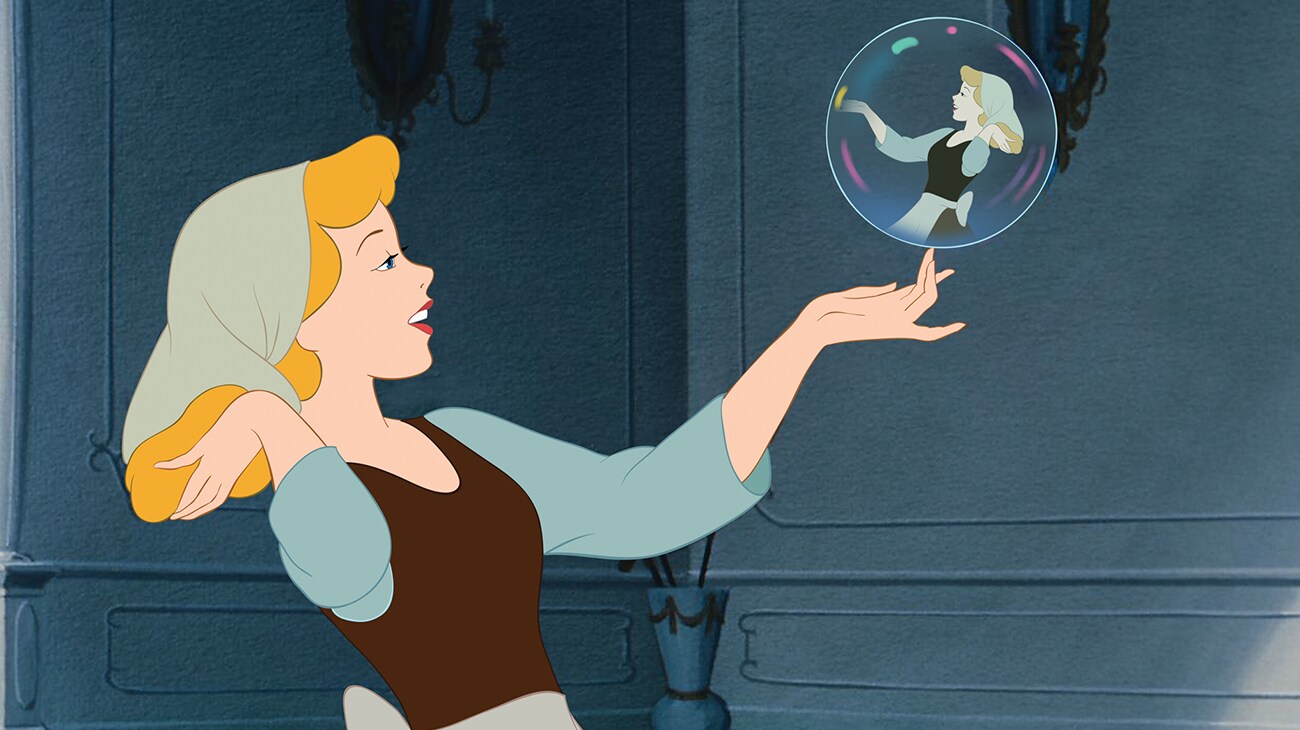
A Dream Is a Wish Your Heart Makes
Hope is not a rescue plan. It can keep a future alive long enough to recognize the door.
The song is not proof Cinderella waits for rescue
Cinderella sings about preserving desire before the invitation, ball, Fairy Godmother, or prince appears. Her dream has no guaranteed delivery system. The song describes an interior practice: keeping a private self alive inside conditions designed to consume every hour. Calling that passivity confuses lack of power with lack of thought.
Hope is doing survival work
Lady Tremaine controls housing, labor, schedule, clothing, and access to the outside world. Cinderella cannot end the arrangement through one confident speech. Hope keeps abuse from becoming the only imaginable future. It is not a legal strategy, but it protects the part of her capable of recognizing that life could be different. Survival tools should be judged within the conditions that make them necessary.
Ilene Woods sings intimacy instead of spectacle
The vocal feels close, controlled, and gently insistent. Cinderella is not performing for an audience that can reward her. She sings to animals and herself. That privacy matters because Lady Tremaine controls public behavior. Music creates a room the household cannot fully enter. The softness is not emptiness. It is emotion practiced without permission.
Dreaming happens beside unpaid and coerced labor
The film surrounds the song with waking, dressing, feeding animals, preparing fires, carrying trays, cleaning, and answering bells. Fantasy does not replace work. It moves through it. Cinderella’s labor is skilled and relentless, yet the household treats service as her natural condition rather than extracted value. The song protects imagination while her body remains on the clock.
The morning bells are instruments of control
Every call from upstairs reorganizes Cinderella’s time. She is expected to respond immediately because other people’s preferences have been declared emergencies. Abusive households often make domination look ordinary through schedules, errands, and impossible standards rather than constant visible violence. The song begins before those bells fully claim the day.
The bedroom is refuge and confinement
Cinderella wakes in a high room separated from the family’s comfortable spaces. Height gives privacy, sunlight, and animal companionship. It also marks exclusion. The same architecture can hold sanctuary and imprisonment. Her ability to create warmth does not make the arrangement benevolent. Beauty inside a bad condition should not be mistaken for consent to remain there.
The birds help with dressing because community already exists
Cinderella’s animal friends are not decorative witnesses waiting for romance to begin. They cooperate, remember routines, and respond to her care. Their help makes survival collective. She has built reciprocal relationships in a household structured around command. The prince is not the first person to see value in her.
Jaq and Gus turn tiny acts into resistance
The mice navigate traps, steal material, carry keys, and create possibilities beyond their physical power. Their scale mirrors Cinderella’s constrained position. They survive through cooperation and attention rather than authority. The movie’s comedy repeatedly locates agency among characters the house considers insignificant.
Lucifer enforces hierarchy because it benefits him
The cat does not create Lady Tremaine’s system, but he recognizes that cruelty receives protection. He targets smaller animals and expects Cinderella to absorb the consequences. Power reproduces itself through participants who enjoy local advantage. His behavior turns household structure into chase comedy without erasing the underlying pattern.
“No matter how your heart is grieving” names pain directly
The song does not claim Cinderella is secretly happy. It begins by acknowledging grief and then asks whether desire can survive it. That distinction separates hope from denial. She knows the present hurts. The dream matters because reality is unacceptable, not because she refuses to see reality.
A wish is not the same thing as a plan
The lyrics offer emotional endurance, while the plot later supplies an invitation, animal labor, magic, and a legal search. Multiple forces create change. Cinderella also insists on attending the ball under the announced rules, retrieves the key through allies, and produces the second slipper. The story contains wish, opportunity, action, and community. Reducing it to one makes the character flatter.
The film withholds the content of her dream
Cinderella does not name wealth, marriage, revenge, or a crown. The openness lets audiences project freedom, love, dignity, safety, or simple rest. That ambiguity is emotionally useful and politically convenient. A general wish avoids asking what material independence would require. The prince later becomes the plot’s answer even though the song asked a wider question.
Kindness is a value and a survival strategy
Cinderella cares for animals because she recognizes vulnerable life. She also depends on the network that care creates. Reciprocity does not make kindness transactional. It shows why solidarity matters when formal power is unavailable. The mice rescue her because relationship existed long before crisis.
The movie risks turning endurance into a moral requirement
Because Cinderella remains gentle under abuse and receives a happy ending, viewers may learn that goodness means absorbing harm without anger. That lesson becomes dangerous when applied to real people who need boundaries, escape, legal help, or rage. Her temperament is one response, not the price every victim must pay to deserve support.
Cinderella does express anger
She complains about the clock, recognizes unfairness, resists humiliation, and later collapses when the dress is destroyed. Her composure does not eliminate emotion. The film’s restrained performance requires attention. Anger may appear as sarcasm, refusal, exhaustion, or a boundary rather than shouting. Quiet characters still have interior conflict.
The dream belongs to someone whose inheritance was stolen
Cinderella is not naturally a servant entering aristocratic life through luck. Lady Tremaine has taken control of her family home and reduced its daughter to labor. The ball can represent access to a public world from which she has been deliberately excluded. Restoration and escape operate together, even if the monarchy makes that restoration fantastical.
The song was created during a studio survival moment
Cinderella’s success helped stabilize Walt Disney Productions after wartime financial pressure. A story about hope under constraint became part of the company’s own recovery narrative. Production context does not determine meaning, but it explains why transformation, faith, and restored possibility carried institutional weight. The film was dreaming about survival too.
Mary Blair’s visual influence keeps fantasy modern
Color, shape, and simplified design helped define the film’s atmosphere even when final animation moved toward a more naturalistic character style. The dream song benefits from a world soft enough to hold intimacy and precise enough to show labor. Art direction makes hope spatial rather than merely lyrical.
Live-action reference did not make the animation less authored
Animators used filmed performance as a guide, then selected, exaggerated, timed, and redesigned movement for drawn storytelling. Cinderella’s apparent naturalism is an artistic construction, not a traced absence of imagination. The performance emerges through collaboration among actor, animator, voice, layout, and music.
The song makes domestic space musically hers
Lady Tremaine owns the house in practice, but Cinderella’s voice fills rooms, stairs, windows, and morning air before commands begin. Sound creates temporary possession without a deed. The household can control her schedule more easily than it can prevent her from interpreting the space.
Dream language can be weaponized against people who need material help
Telling someone to keep believing can become an excuse not to change wages, housing, legal protection, or access to safety. The film’s song offers comfort from inside hardship. Institutions often repeat the comfort from outside hardship to avoid responsibility. Context decides whether encouragement supports survival or replaces action.
The Fairy Godmother arrives only after despair is allowed
Cinderella does not sing herself directly into magic. The dress destruction breaks the coping system, and she grieves openly before help appears. The sequence acknowledges that hope can fail under enough pressure. Needing help does not prove the earlier hope was fake. It proves no internal resource is infinite.
The prince does not hear the song
Cinderella’s interior life exists outside his knowledge. He falls for the person at the ball without understanding the labor, animals, grief, or private ritual that sustained her. Romance offers escape before it offers full recognition. A longer relationship would need to learn the woman beyond the evening.
The slipper becomes evidence because dreams need material proof
When Lady Tremaine destroys the official slipper, Cinderella produces its pair. The object confirms that the experience happened and that the household cannot fully control the record. This is not merely romance merchandise. It is a receipt. Her private memory enters public judgment through something the abuser failed to confiscate.
The song survives because it can be comfort and argument
Children hear reassurance. Adults may hear a person preserving selfhood through coercive labor. Critics hear the risk of teaching patience instead of change. All three readings can coexist because the scene is emotionally precise and politically incomplete. Durability comes from tension, not perfection.
Lady Tremaine understands that controlling time controls possibility
Cinderella receives so many tasks that attendance at the ball becomes technically permitted and practically impossible. The abuse hides behind a condition that sounds fair. Overwork can function as confinement without a locked door. If every minute belongs to somebody else, opportunity becomes unreachable even when nobody explicitly forbids it. The song’s private time is therefore a resource she protects before the household wakes.
The animals see Cinderella before society verifies her
Jaq, Gus, birds, and Bruno respond to daily conduct rather than title, dress, or royal recognition. Their loyalty is built from repeated care. This is why their assistance at the crisis feels earned instead of magically convenient. Community has already evaluated her character through ordinary life. The ball only makes that value visible to people who ignored domestic labor.
The word “heart” can conceal how carefully Cinderella observes
She is not guided by feeling alone. She reads Lady Tremaine’s wording, understands the invitation applies to every eligible maiden, notices the search procedure, and protects the second slipper. Her emotional endurance works beside practical intelligence. The film’s romantic vocabulary should not erase the evidence that Cinderella survives by paying attention.
The household depends on the labor it devalues
Breakfast, clothing, fires, rooms, animals, and schedules function because Cinderella works. Lady Tremaine calls her inferior while consuming the value she produces. This contradiction is central to many class systems. Necessary labor becomes socially invisible so the people benefiting from it can imagine dependence flows only downward. Cinderella’s absence would expose how much authority rests on somebody else’s hands.
The song protects desire from surveillance
Cinderella cannot safely tell Lady Tremaine everything she wants. Information would become another tool for ridicule, obstruction, or punishment. Singing privately allows desire to exist before it is strong enough to survive hostile interpretation. Privacy is not dishonesty when disclosure would hand an abuser the map to every vulnerable hope.
Morning turns repetition into evidence of endurance
The tasks are familiar enough that Cinderella moves through them with practiced rhythm. Repetition can look peaceful when animation smooths the motion. The same repetition proves how long the arrangement has continued. This is not one difficult day before a ball. It is a household system. Hope must survive accumulation, which makes the quiet song more demanding than a single burst of courage.
The king’s marriage decree creates opportunity through another person’s control
Cinderella reaches the ball because a monarch orders eligible women to attend while seeking a bride for his son. One hierarchy accidentally interrupts another. The decree is not liberation policy. It treats marriage as dynasty management and women as candidates for selection. Cinderella uses the opening anyway. Constrained people often move through imperfect opportunities because a perfect door never arrives.
The dream changes after Cinderella has evidence
Before the ball, hope remains unnamed. After meeting the prince and escaping the château for one night, possibility has texture, memory, and reciprocal feeling. The experience does not make freedom complete, but it changes what she knows is possible. Dreams can become plans when contact with another reality supplies information, allies, and material proof.
A happy ending does not retroactively make the abuse useful
Lady Tremaine’s cruelty does not build Cinderella’s character for a necessary destiny. Cinderella develops strength despite the harm, through her own values and relationships. The palace ending should not become an argument that suffering was secretly preparation. Survival can produce skills without turning the person who caused the suffering into an accidental teacher.
RaeRae’s final reaction
I am tired of people using this song to call Cinderella passive. She wakes up in a house where everybody owns her time, sings one soft song before the bells start screaming, feeds an underground mouse resistance, does the work, claims her invitation, survives a destroyed dress, and keeps a second slipper like she knew receipts matter. No, dreaming is not a housing plan. Hope will not file paperwork, redistribute inheritance, or remove Lady Tremaine from the deed. But people in controlled situations need an interior future before they can recognize an opening when it appears. The problem is not that Cinderella believes. The problem is when everybody outside the tower tells abused people to keep believing so nobody has to bring a key. Cinderella needed the dream, the mice, the magic, the invitation, and her own decision to walk through the door. She also needed the world to stop treating endurance as the rent she owed for basic dignity.