
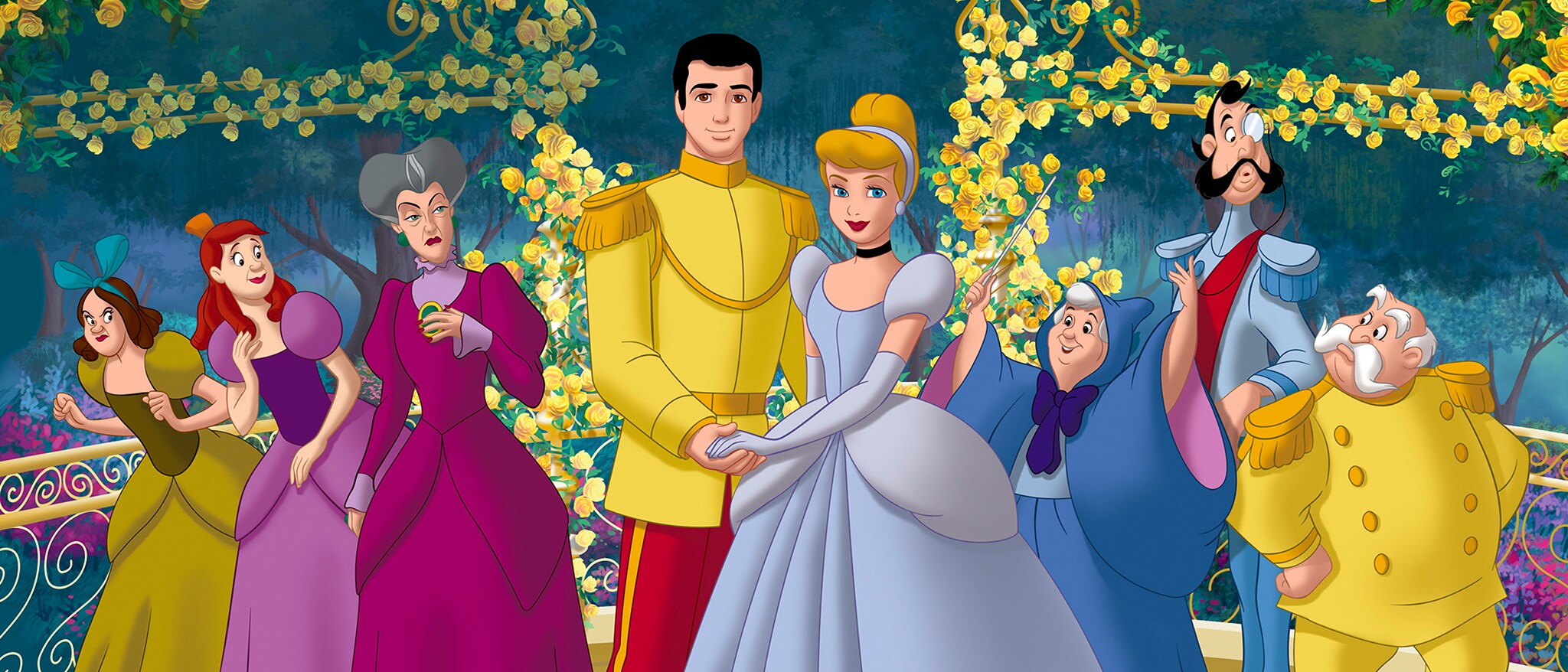
Anastasia Stops the Wedding
She got the crown and discovered winning was another form of control.
Anastasia receives the victory the original movie taught her to want
Lady Tremaine rewrites time so the slipper fits Anastasia and the prince’s memory attaches to her. The palace, wedding, and social triumph arrive without the relationship that was supposed to give them meaning. The sequel turns wish fulfillment into a trap. Anastasia obtains status and immediately discovers that being selected through coercion is not the same as being loved. Her discomfort creates the possibility of moral choice.
The wand makes family control materially visible
Lady Tremaine always manipulated language, schedules, access, and her daughters’ insecurity. Magic expands the same behavior rather than inventing a new personality. She can now rewrite memory, transform bodies, imprison rivals, and enforce the outcome she previously pursued through domestic hierarchy. Power reveals the scale of control already present in the family.
Anastasia is both beneficiary and victim
The altered timeline places her beside the prince, gives her approval, and promises royal status. It also removes the need for her consent because Lady Tremaine controls every step. Privilege does not prevent coercion inside the household. Anastasia benefits from Cinderella’s displacement while being used as an instrument in her mother’s ambition. Holding both truths prevents redemption from becoming innocence.
The prince’s enchanted affection is not love
His memories have been manipulated, so every tender response rests on stolen agency. Anastasia recognizes the emotional wrong even when the spell benefits her. The movie makes consent central without using adult terminology. A desired answer has no value when power removed the possibility of refusal. She wants to be chosen by someone capable of choosing.
Anastasia learns the difference between performance and connection
Lady Tremaine prepares her to occupy the role correctly: dress, ceremony, position, and public appearance. Anastasia can perform princess without feeling known. Her awkwardness is no longer only a joke. It becomes evidence that the approved role is another costume built around somebody else’s expectations. The sequel gives her the interior conflict Cinderella carried in the original.
Cinderella treats Anastasia as capable of a decision
She does not flatter her, erase the past, or assume cruelty is permanent. Cinderella appeals to what Anastasia knows about love and asks her to examine the situation. That approach offers accountability with agency. Anastasia must choose differently; Cinderella cannot redeem her on her behalf. Being addressed as morally capable becomes part of what allows change.
The baker matters because he sees Anastasia without status
Her earlier connection with the baker offers warmth unrelated to court beauty or family competition. He responds to her personality, and she experiences affection that is not manufactured by a wand. The relationship gives Anastasia evidence that love can feel different from winning. She does not need a prince to prove she deserves tenderness.
The wedding is the most public place to refuse
Anastasia could comply privately and regret it later. Stopping the ceremony exposes Lady Tremaine’s plan before the court and accepts immediate humiliation. Public wrongdoing requires public interruption when secrecy would preserve the false record. Her refusal restores the prince’s agency and risks every reward she was trained to pursue.
Saying no costs her the identity her mother built
Lady Tremaine defined worth through beauty, marriage, rank, and defeating Cinderella. Rejecting the wedding means rejecting the only success system Anastasia was taught. That loss is frightening even when the system was cruel. People do not leave controlling families by discovering one fact. They must build a self outside the family’s measurements. Her choice begins that work.
Drizella remains aligned with Lady Tremaine
The sisters no longer operate as an identical pair. Anastasia changes while Drizella continues pursuing power and approval. The split gives both women responsibility. A shared upbringing explains patterns without fixing every outcome. Redemption becomes a decision with contrast rather than a reward handed to all villains together.
The film refuses the idea that appearance determines moral value
The “ugly stepsister” label historically connected physical undesirability with bad character. Cinderella III complicates that tradition by giving Anastasia longing, shame, humor, error, and change. Her face does not transform into conventional beauty when she acts ethically. The moral movement occurs through judgment and relationship, not makeover.
Anastasia does not become graceful before she becomes worthy
She remains physically awkward and emotionally uncertain. The sequel stops treating polish as a prerequisite for interior life. That matters in a franchise where the ballroom makes elegance look like evidence of goodness. A person can make a brave decision while visibly nervous, clumsy, and unprepared.
Lady Tremaine responds to independence as betrayal
She does not interpret Anastasia’s refusal as growth. She treats it as disobedience and turns the wand against her own daughter. Control reveals itself when love disappears the moment a child exercises judgment. The magical punishment makes conditional maternal approval impossible to ignore.
The pumpkin transformation literalizes dehumanization
Lady Tremaine converts Anastasia into an object when the daughter stops functioning as an instrument. The gag carries a brutal family truth. Controlling parents may treat children as extensions of ambition rather than separate people. The spell removes the person because independence made her inconvenient. Anastasia’s earlier complicity does not make that treatment deserved.
Cinderella and Anastasia are no longer simple rivals
Their conflict was produced and rewarded by Lady Tremaine’s household. The sequel allows a moment of recognition across the hierarchy. Cinderella does not need to become Anastasia’s closest friend for solidarity to matter. They can oppose the same control while retaining different histories and responsibilities.
The prince receives more personality through resistance
He chases Cinderella, escapes confinement, questions evidence, and reacts to manipulation rather than remaining a silent reward. That expanded agency makes the coerced wedding more clearly wrong. He is a person whose memory and future were taken, not a crown waiting for the correct woman. The sequel improves romance by letting both partners act.
The king’s acceptance interrupts inherited beauty standards
He responds to Anastasia with more kindness than she expects and later supports her decision. His approval is imperfectly tied to palace authority, but it widens the social field around her. Anastasia begins to imagine belonging without defeating Cinderella. One respectful relationship can provide evidence against a lifetime of contempt, even when it cannot heal everything immediately.
The Fairy Godmother’s wand is technology without ethics
Magic amplifies whoever controls it. The object does not recognize rightful owners, consent, or justice. The sequel treats magical power as a system that needs moral judgment rather than an automatic force for good. Lady Tremaine’s competence makes the danger sharper because cruelty can be organized.
Time travel exposes how fragile the original happy ending was
One changed object and manipulated memory can undo the marriage because the first film depended on evidence, timing, and royal procedure. Cinderella and the prince must build recognition again under altered conditions. Love may be meaningful, but institutions still decide whether the couple can reach each other.
Anastasia’s refusal repairs one harm without erasing the original abuse
She helps stop the forced wedding and later pursues a different life. That does not undo her participation in Cinderella’s humiliation, labor exploitation, or dress destruction. Redemption should change future behavior and accept a truthful record. The sequel offers a beginning, not retroactive innocence.
Cinderella’s willingness to forgive remains her choice
Audiences should not universalize her response into a demand that harmed people welcome every changed abuser. Cinderella sees evidence and decides what relationship she can offer. Forgiveness without safety can become another obligation placed on victims. The story works because Lady Tremaine’s power is broken and Anastasia acts against it publicly.
The sequel understands that romance is recognition, not selection
The prince selecting a bride through a slipper was always vulnerable to manipulation. A Twist in Time tests whether connection survives corrupted evidence. Anastasia rejects being selected when the selection lacks recognition. Cinderella and the prince rebuild recognition even when the official record says they never met. The distinction gives the fairy tale more emotional intelligence than its reputation suggests.
Jennifer Hale gives Cinderella urgency without losing warmth
The performance allows Cinderella to argue, pursue, grieve, improvise, and confront power. Kindness remains a value rather than a limit on action. This expanded range answers critics who mistook the original character’s restraint for emptiness. The sequel lets gentleness and determination occupy the same voice.
Tress MacNeille lets Anastasia be funny and wounded
Her vocal performance retains the familiar comic abrasiveness while opening spaces of embarrassment, hope, and moral panic. The continuity makes growth believable because the character does not sound replaced by a newly polite version. Redemption happens through the same messy person learning another way to act.
The direct-to-video sequel takes a risk the prestige remake avoided
Cinderella III uses a wild premise to examine consent, memory, family control, and the stepsister’s interior life. It does not merely photograph the original more expensively. Lower-status franchise work can become more adventurous because it is not protecting a sacred remake brand. The result has rough edges and an actual point of view.
The ending lets Anastasia choose possibility without requiring royal reward
She does not keep the prince, and that loss becomes liberation rather than humiliation. Her future can include the baker, reconciliation, or a self not organized around marriage competition. The story removes the crown and leaves her personhood intact. That is the correction the “ugly stepsister” tradition needed.
The false memory harms the prince even when it makes him happy
The spell gives him affection without visible distress. That apparent happiness could be used to argue no harm occurred. Consent is not measured only by whether manipulation produces pleasant feelings. His relationship to his own past and future has been taken from him. Anastasia’s recognition of that harm is the moral center of her refusal.
Anastasia finally separates being wanted from being valued
Lady Tremaine taught her that securing male attention would confirm superiority over Cinderella. The spell supplies attention while removing the very judgment that could make it meaningful. Being wanted under enchantment treats her as the object filling a role, not a person known through encounter. She begins to value recognition more than victory.
The palace staff enforce the altered record because it appears official
Once the slipper fits and the prince confirms the memory, ceremony moves forward. Servants and officials have little reason to question evidence produced by magic they cannot see. Institutions can execute a false outcome efficiently when every document and authority agrees. Cinderella’s truth survives outside the official record and must fight for reentry.
Jaq and Gus remain archivists of the erased timeline
The mice remember enough to recognize that reality has been rewritten and help preserve evidence. Small witnesses become essential when power controls the public story. Their testimony is easy for authorities to dismiss because they cannot speak in the accepted forum. The franchise repeatedly entrusts truth to characters the hierarchy considers insignificant.
The prince’s recognition of Cinderella becomes an active achievement
He cannot rely on the original ball memory because magic redirected it. Through pursuit, conversation, and evidence, he begins to recognize the person again. The sequel upgrades destiny into renewed attention. Love is not merely a spell-resistant essence. It is a pattern strong enough to make the false record feel wrong. That gives him more agency than the first film allowed.
Lady Tremaine mistakes control for security
She believes a perfectly managed wedding will guarantee rank and remove uncertainty. Every independent person becomes a threat because any choice could disrupt the outcome. Control therefore expands until even her own daughter must be punished for hesitation. The plan fails because relationships cannot remain alive when every participant is reduced to a movable piece.
Anastasia’s change becomes credible through accumulated discomfort
The refusal does not appear from nowhere. She experiences the prince’s enchanted attention, palace kindness, Cinderella’s appeal, and the gap between ceremony and genuine connection. Each moment gives her another piece of evidence against Lady Tremaine’s definition of success. Moral change becomes observation followed by risk, not one sentimental switch.
The sequel allows a woman to reject the prince without being punished by the story
Anastasia walks away from royal marriage and gains a more honest future. The narrative does not frame refusal as proof she was foolish or ungrateful. This widens the fairy tale beyond competition for one man. A crown can be desirable, but it cannot be the only ending that makes a woman’s life count.
RaeRae’s final reaction
Cinderella III had no business going this hard. Anastasia gets the prince, the palace, the dress, the ceremony, and the official victory. Then she realizes every piece is empty because the man’s choice was stolen and her mother is still controlling the room. Stopping the wedding does not erase what she did to Cinderella. Good. Redemption is not a bleach cycle. It is the moment somebody finally refuses the system that rewarded their cruelty, even when refusal costs the prize they spent a lifetime chasing. Anastasia is still awkward, still messy, still responsible, and finally a person instead of a punchline. She does not become beautiful enough for love. She learns that love without consent is possession and decides she would rather lose the crown than complete Lady Tremaine’s script. That is a real fairy-tale choice I will defend forever.