
ICONIC BY MISTAKE · Full Movie Review · Cinderella (2015)
Cinderella (2015) Review: Kindness Still Needs Boundaries
The dress is stunning, the romance has a heartbeat, and Cate Blanchett walks into every room like the wallpaper owes her rent. Ella still deserved help before the ball.
The spoiler and context note
This review discusses the complete film, ending, domestic abuse, coercive control, parental death, class, body-image discourse, political marriage, visual effects, remake history, and differences from the 1950 animated film and older fairy tales. The analysis celebrates the production without treating beauty as an excuse to avoid the harder questions.
The verdict before the carriage arrives
Kenneth Branagh’s Cinderella is gorgeous, sincere, and far more interested in defending kindness than interrogating the household that weaponizes kindness against Ella. I like the movie. I also want to shake the movie by both shoulders whenever courage and kindness start functioning as a moral answer to unpaid labor, isolation, grief, and an adult woman taking ownership of a younger woman’s home. Beauty can hold an argument, but beauty cannot finish one by itself.
The remake works best when Ella and Kit meet as two grieving children who grew into adults while performing steadiness for everybody around them. Lily James and Richard Madden sell curiosity before status enters the room. Cate Blanchett gives Lady Tremaine enough wounded intelligence to expose the class panic beneath the cruelty. The movie becomes weaker whenever the script converts those conflicts into a tidy lesson about maintaining goodness under abuse without giving Ella a believable route toward safety.
What this review is actually reviewing
A live-action remake cannot be judged only by counting which animated beats survived. The useful questions concern why the film chose those beats, what new material changes their meaning, how live bodies alter the labor and violence, and whether production scale adds thought or merely texture. Cinderella recreates mice, slippers, pumpkin magic, midnight flight, and a blue dress. The additions include childhood, Ella’s parents, Kit’s political constraints, the dying King, a marriage scheme, and Lady Tremaine’s attempted bargain.
Those additions promise a story about inherited rules and the price of surviving them. Some promises are fulfilled through performance and visual design. Others vanish beneath the need to preserve a familiar fairy-tale finish. I am reviewing both the film Branagh made and the argument the film keeps approaching before turning toward another luminous corridor. The gap between those two things is where most of my affection and irritation live.
The opening gives Ella a life before suffering
The animated film begins with Cinderella already trapped. The remake gives young Ella parents, a prosperous country home, affectionate rituals, animals, gardens, and a mother whose presence shapes the central instruction. That choice matters because Ella’s later endurance no longer reads as an abstract princess trait. She remembers safety. Every room carries evidence that the house belonged to a family before Lady Tremaine turned memory into leverage.
Hayley Atwell brings warmth to a role designed to die early, and the screenplay lets the mother’s influence survive through language rather than a magical object. “Have courage and be kind” becomes blessing, coping mechanism, family commandment, and eventually a burden. Ella does not merely want happiness. She wants continuity with the person who taught her how to face loss. That emotional logic makes her choices understandable even when the movie refuses to test the slogan hard enough.
Courage and kindness are not the same instruction
Courage asks Ella to act despite fear. Kindness asks her to recognize another person’s humanity. The film repeatedly binds those virtues together as though one guarantees the other, but many of Ella’s hardest decisions require separating them. Remaining gentle toward frightened animals is kind. Returning to a hostile household because her father loved the property may be courageous, traumatized, impractical, or all three. Obeying Lady Tremaine is not automatically kind merely because open resistance might feel cruel.
The slogan becomes dangerous when an audience hears kindness as unlimited access. Abusers love a moral system where the harmed person proves goodness through continued service. Ella’s virtue should never depend on making breakfast for people who ridicule her, surrendering her room, or accepting the attic as though resentment would betray her mother. A stronger version would show kindness with boundaries. The movie hints at that distinction when Ella finally leaves, then hurries past the practical lesson.
The house is a character and a trap
Dante Ferretti’s production design gives the family estate warmth, clutter, botanical patterns, and lived history before the new marriage. After Lady Tremaine arrives, the same rooms become stages for display. Saturated gowns, polished surfaces, peacock colors, and carefully arranged dinners crowd the softer memory of Ella’s childhood. Nobody needs to announce that control has entered the house. Furniture, costume, posture, and noise make the takeover visible.
Ella stays partly because leaving feels like abandoning her parents a second time. The house contains love, yet ownership without power provides no safety. Lady Tremaine understands that contradiction and exploits every inch. She removes Ella from the rooms while benefiting from the property. The attic preserves childhood objects but also confines their owner above the family performance. Nostalgia becomes architecture. Ella is loyal to a home that can no longer protect her.
The father remarries and leaves the cost behind
Ben Chaplin plays Ella’s father as loving, distracted, and lonely. His grief explains the remarriage without excusing his failure to read the household. He brings Lady Tremaine and her daughters into Ella’s home, accepts escalating discomfort, then departs for business while Ella absorbs the domestic consequences. His affection is real. His protection is insufficient. Fairy tales often let dead parents remain morally perfect because death removes the need for accountability.
The request for a branch rather than a costly gift is emotionally elegant. Ella wants proof that her father remembered her during travel, not another display object. His death transforms that modest request into a relic, and the stepsisters’ later destruction of the branch becomes an attack on memory rather than property. Still, the film could admit that he created vulnerability before dying. Love does not erase a parent’s responsibility to notice who gains power after the wedding.
Lady Tremaine arrives already performing
Cate Blanchett enters through silhouette, fabric, cigarette smoke, controlled laughter, and a gaze that inventories the property before acknowledging the girl who lives there. Lady Tremaine is always staging herself for an audience. Even private cruelty has blocking. She sits while Ella stands, pauses before answering, and turns ordinary requests into tests of rank. The performance suggests a woman who learned that social survival depends on never being caught needing anything.
That interpretation gives the villain dimension without granting absolution. Lady Tremaine’s fear of economic precarity, aging, widowhood, and social irrelevance is historically legible. She chooses to solve those problems by consuming Ella’s labor and bargaining with the kingdom. Pain explains the precision of the weapon. Pain does not make the target responsible. Blanchett understands both halves, which is why the character remains fascinating after simpler elements of the screenplay fade.
The dinner where grief becomes competition
One of the sharpest scenes arrives when Ella speaks about her father and Lady Tremaine overhears the tenderness. The stepmother’s expression changes because affection is a resource she cannot command. Ella owns a version of the dead man that predates the marriage and cannot be edited through etiquette. Rather than share grief, Lady Tremaine treats memory as a competition she is losing. Cruelty follows the humiliation of feeling secondary.
The film briefly lets us see the widow beneath the costume, then shows what she does with that wound. She does not ask Ella for understanding. She imposes rank. This is the correct moral line. Humanizing a villain means revealing choices, not inventing an injury large enough to cancel them. Lady Tremaine repeatedly has opportunities to recognize shared loss. She selects domination because domination produces immediate evidence that somebody else has less power.
Anastasia and Drisella are noisy by design
Holliday Grainger and Sophie McShera play the stepsisters as a duet of entitlement, insecurity, appetite, and terrible musical confidence. Their comedy is broader than Blanchett’s menace, but their behavior reflects the same household economy. Attention is scarce. Marriage is strategy. Beauty is competition. Service appears natural because another woman performs the service outside the frame. They have been trained to occupy space without considering who maintains that space.
The film gives neither sister the later moral possibility that Cinderella III gives Anastasia. That limitation keeps them functional and thin. Their dresses and squabbles create visual energy, yet the remake had enough time to distinguish their loyalties, fears, or relationships with Ella. Cruelty shared by a chorus can feel safer than cruelty attached to individual choice. A franchise hub should leave room to compare these sisters with animated versions who develop in opposite directions.
The attic is not a whimsical bedroom
The attic contains beams, dust, keepsakes, animals, and enough golden light to tempt the camera into romanticizing displacement. Ella arranges a life there because adaptation is one of her strengths. A survivable room is still a room assigned through coercion. The beauty of her response should not soften the theft. She loses her bedroom so the stepsisters can avoid sharing, then converts exclusion into routine because no adult with authority will intervene.
Her animal friendships become emotionally necessary under those conditions. Talking to mice is not proof of childish innocence. The conversations externalize a person trying to preserve reciprocal care while human contact becomes transactional. The film wisely avoids making the mice fully verbal in the human world, but Ella’s attentiveness creates a private language. She notices hunger, fear, and personality because nobody downstairs notices hers.
Labor makes the nickname possible
“Cinderella” begins as a joke about ashes after Ella sleeps near the kitchen fire. The insult works because her labor has already become invisible. She cooks, carries trays, cleans rooms, tends animals, manages fires, and answers bells while the household treats each completed task as evidence that assigning another task is reasonable. The name converts exploitation into appearance. She is dirty because she works, then mocked for the marks left by work.
Live action makes physical labor harder to abstract than animation. Fabric drags. Pails carry weight. Stairs have distance. Even with montage and storybook lighting, Lily James’s body moves through a schedule. The film deserves credit for showing that rhythm, although Ella remains implausibly composed and visually pristine by modern prestige-drama standards. A deeper adaptation might let exhaustion alter judgment instead of treating grace under pressure as permanent styling.
Why Ella does not simply leave
The obvious audience question is also the question most likely to become victim-blaming. Ella has grief, attachment to the house, limited money, no visible social network, a dead father’s instruction, and a moral identity built around preserving home. Lady Tremaine escalates gradually after securing legal and domestic control. People rarely recognize the exact afternoon when an unpleasant arrangement becomes abuse. By the time the pattern is undeniable, isolation has already changed the available choices.
The movie supplies these emotional reasons but barely maps material ones. Where could Ella go? Who owns the estate? Does she have inheritance rights? Can household staff intervene? What happened to her father’s business income? Fairy-tale logic keeps law blurry because a solicitor could ruin the pumpkin. Editorial analysis should still notice that ambiguity. Her captivity becomes more believable when social and economic doors close, not merely when personal virtue keeps her inside.
The forest meeting changes the romance
Ella meets Kit before the ball while riding through the woods, distressed after household cruelty and alarmed by the royal hunt. Their first conversation begins with disagreement about the stag. She challenges the stranger’s assumption that hunting is harmless, and he listens. The exchange gives attraction an ethical texture. They do not fall in love because costumes identify compatible ranks. They recognize curiosity, humor, grief, and a willingness to revise behavior.
Calling himself an apprentice lets Kit experience attention without title. Calling herself Cinderella would expose humiliation, so Ella offers no full social identity either. Both arrive partially disguised before magic enters the story. The difference is power. Kit can reveal his status whenever he chooses and become safer. Ella’s hidden condition protects her from shame but leaves her economically vulnerable. Their chemistry is genuine, and the unequal exit routes remain important.
The stag receives the first royal mercy
Ella asks Kit to spare the stag because fear matters even when the frightened creature cannot explain itself. That plea establishes her kindness through action rather than slogan. Kit stops the hunt, demonstrating that listening can change policy at a small scale. The scene foreshadows what Ella may ask of a future king: see the vulnerable being in front of the institution and interrupt the machinery before custom finishes the harm.
The metaphor has limits. Ella is not an animal waiting for royal mercy, and romance should not reduce liberation to attracting a benevolent ruler. Still, the hunt reveals Kit’s capacity to disobey momentum. Horses, officers, and tradition move in one direction until one conversation turns him. Later political choices should build on that moment. The film offers the seed and spends more time on marriage logistics than on the kingdom such mercy might create.
Kit is grieving while learning to rule
Richard Madden’s Kit has a father who is dying and a court already treating marriage as state infrastructure. His charm comes from visible uncertainty rather than effortless princely perfection. He wants to honor the King, protect the kingdom, find Ella, and believe those desires can align. The conflict gives him more interior life than the animated Prince receives, even when the political writing remains broad.
Kit’s grief mirrors Ella’s without equating their resources. He can sit beside his father, argue with advisers, command searches, and eventually inherit authority. Ella loses parents and becomes a servant in her own home. Their bond rests on emotional recognition, but the plot cannot pretend recognition eliminates class. The romantic promise becomes meaningful only if Kit uses power differently after learning who she is. The movie gestures toward that future during the final procession.
The King is more than a wedding machine
Derek Jacobi gives the King impatience, affection, illness, and enough vulnerability to turn a familiar matchmaking plot into a father-son farewell. He initially treats Kit’s marriage as political necessity. Near death, he allows the son to choose love. The reversal matters because the King recognizes that dynastic caution cannot protect Kit from every loss. Control loosens when time becomes honest.
Their bedside scene provides one of the film’s strongest emotional exchanges. No magic interrupts death. No slogan erases regret. Kit receives permission too late to enjoy freedom with his father, which resembles Ella receiving a moral instruction before her mother disappears. Both children carry parental language into adulthood. The difference is that Kit inherits a kingdom along with grief while Ella inherits a house she cannot control.
The Grand Duke understands marriage as acquisition
Stellan Skarsgård’s Grand Duke sees marriage as a treaty with a face attached. He pushes the princess Chelina match because political alliances appear safer than Kit’s attachment to an unidentified local woman. The position is not irrational within monarchy. The moral failure comes from treating people as movable pieces and secrecy as governance. Once Lady Tremaine offers information, the Duke recognizes another transaction and participates.
His alliance with Tremaine expands the story beyond one cruel household. Domestic domination and political calculation speak the same language. Both ask what a young woman can secure for somebody else. Both hide information to preserve arrangements. Ella’s marriage eventually defeats their bargain, yet the system that made the bargain plausible remains. One happy ruler does not dissolve a court trained to convert women into alliances.
The ball invitation briefly opens the kingdom
Kit orders the ball opened to every maiden because he hopes the forest stranger will attend. Romance produces a democratic-looking gesture inside an undemocratic institution. The invitation allows women across rank to enter the palace, but only as potential brides under royal observation. Access expands for one evening without changing who chooses, who hosts, or what marriage means politically.
For Ella, the invitation is a possible reunion rather than a social-climbing scheme. She wants to see the apprentice, unaware that he controls the event. Lady Tremaine hears opportunity immediately. The sisters hear competition. The same paper enters each life with different stakes. Production spectacle later merges those motives into one ballroom, where costume makes class visible even as masks and music pretend everybody shares the floor.
The pink dress carries women’s labor
Ella does not ask magic to invent her first ball gown. She restores her mother’s dress while the mice help with details, preserving family memory through material work. The gown holds sewing, adaptation, hope, and the touch of a woman who cannot attend. When Lady Tremaine permits Ella to go only if chores are finished and suitable clothing appears, Ella answers both impossible conditions through skill and community.
The stepsisters tear the dress apart after recognizing items they discarded. Their outrage reveals the ownership logic of privilege: something remains theirs even after rejection, especially when another woman makes beauty from waste. The attack is not petty wardrobe drama. Three women destroy inherited memory on Ella’s body while a fourth woman supervises through silence. The scene makes later magic emotionally necessary because ordinary preparation has been violently denied.
Lady Tremaine does not need to touch the dress
Blanchett’s stillness during the destruction is more frightening than another shouted order. Lady Tremaine identifies the borrowed pieces, lets her daughters execute the attack, and preserves plausible distance. Control often works through permission rather than direct motion. She knows exactly what will happen when envy receives a target. Ella watches the adult who could stop the violence choose composure instead.
The sequence also complicates the movie’s kindness doctrine. Ella has served these women and tried to avoid retaliation. Her behavior did not teach them empathy. Unlimited kindness cannot reform people committed to hierarchy. The story eventually rewards Ella, but reward is not proof that the method protected her. Children deserve a version of the lesson that says kindness is a value, not a contract requiring access to your body, room, labor, or memories.
The garden collapse earns the Fairy Godmother
Ella runs outside after the dress attack and finally admits that the house has exceeded her endurance. Her despair is not failure. The breakdown is evidence that pain has been accumulating beneath composure. The beggar woman appears after Ella still offers kindness while shattered, which the film frames as a final moral test. I understand the fairy-tale mechanism and dislike how closely the mechanism resembles virtue surveillance.
A person in crisis should not need to pass a kindness exam before receiving help. Helena Bonham Carter’s transformation from beggar to Fairy Godmother makes generosity playful, but the setup implies magic was watching Ella suffer and waiting for proof. The 1950 film shares that problem. Live action intensifies the question because abuse looks less abstract. Why does supernatural power arrive for the party instead of during years of household captivity?
Helena Bonham Carter turns exposition into chaos
The Fairy Godmother scene changes the movie’s rhythm through comic experimentation. Pumpkins, lizards, geese, mice, footwear, and fabric become a series of magical prototypes rather than one polished spell. Bonham Carter plays power as delighted improvisation. The looseness keeps the sequence from becoming a luxury advertisement, even when every effect has clearly received luxury-film attention.
Her absent-mindedness raises useful questions the film never plans to answer. The wand can alter bodies, species, scale, clothing, transport, and perhaps memory. The midnight deadline exists because enchantment has rules, yet those rules arrive as instructions rather than ethics. Turning animals into human servants without consent is played for laughter. The lizard footmen look magnificent and terrified. A 101 guide can have fun with the transformation while still asking who volunteered.
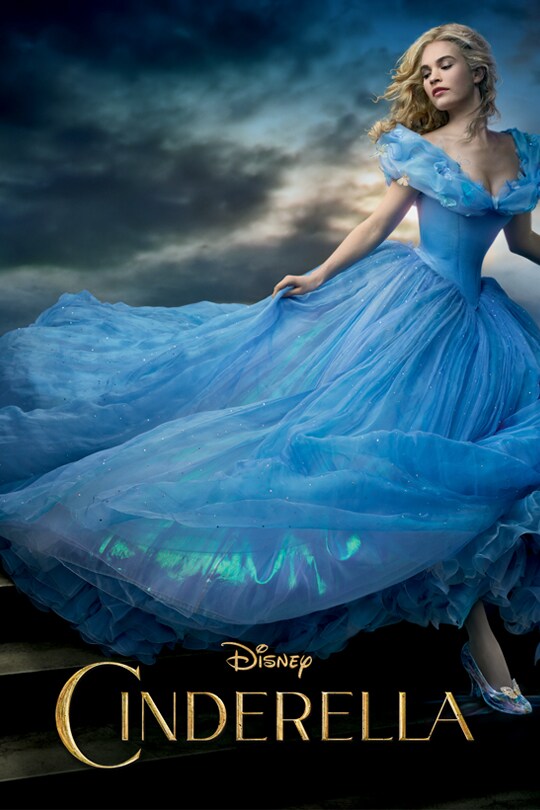
The blue dress is engineering and argument
Sandy Powell’s gown uses layers, movement, color shift, and scale to create an object that must survive running, dancing, stairs, and close observation. The skirt behaves like atmosphere around Lily James. Butterflies replace the animated film’s plain accents with a visible signature of transformation. Costume communicates that Ella has entered a heightened space without making her body look trapped inside armor.
The dress also became the dominant marketing image, which risks reducing the whole film to wearable spectacle. Ella’s courage, labor, grief, and moral choices are harder to merchandise than blue volume. The film knows clothing carries memory because the pink dress mattered before magic. The remake should therefore be judged by whether the blue gown extends character or buries character. Powell’s work extends her. The surrounding campaign often buried her anyway.
The waist conversation cannot be ignored
Audience discussion around the gown frequently centered on Lily James’s waist, corsetry, diet speculation, and whether the silhouette had been digitally altered. That discourse reveals how quickly craft praise becomes body surveillance when a woman wears an iconic dress. Costume construction can create proportion through skirt scale, bodice structure, camera angle, and fabric movement without making the performer’s body public property.
The film sells transformation through beauty, so body politics belong in the review. Ella is already beautiful before magic. The spell increases access and visibility rather than worth. Marketing that treats the waist as proof of fantasy weakens that idea. Young viewers should not leave believing kindness earns a smaller middle. The magic should reveal possibility in the room, not establish a measurement for deserving romance.
The glass slippers look impossible because they are
Swarovski crystal slippers function as visual icons, not wearable shoes for performance. The production used practical display pieces while Lily James danced in conventional footwear later replaced or concealed for the screen. That solution admits the object’s contradiction. Glass must appear delicate, rigid, reflective, and perfectly fitted while the heroine runs down stairs at midnight. Real ankles would file a grievance.
The slipper remains evidence linking Ella to the ball, but the remake makes the relationship stronger before the fitting. Kit searches for a person he already met twice, not an anonymous foot attached to a dance. The shoe confirms identity for the kingdom. The couple’s recognition does not depend entirely on size. That adjustment preserves the symbol while reducing the romantic absurdity, one of the remake’s smartest acts of fidelity.
The ballroom needs scale and intimacy at once
The ball sequence fills the palace with color, national delegations, musicians, polished floors, candlelight, military dress, and enough moving fabric to turn hierarchy into choreography. Haris Zambarloukos’s camera must establish royal spectacle while keeping Ella and Kit emotionally legible inside the crowd. Their dance succeeds because the room recedes when their attention locks, then returns as an audience watching the match become politically inconvenient.
Branagh understands theatrical entrances. Ella’s descent pauses the social machine without requiring every guest to become cruel or foolish. Wonder spreads through the room because the gown, posture, and timing create an event. Lady Tremaine recognizes danger before confirming identity. The Grand Duke sees policy disruption. Kit sees the person from the forest. One entrance produces four different stories, which is why the spectacle carries narrative weight instead of functioning as decoration.
The secret garden gives the couple room to speak
After the public dance, Kit leads Ella into a garden where spectacle loosens and conversation returns. The swing, hedges, statues, and moonlight build a romantic enclosure without erasing the fact that Ella still withholds her name and household situation. She can describe ideas more easily than circumstances. Shame has narrowed what feels safe to disclose, even with a man who listens.
Kit also avoids revealing how deliberately the ball was opened for her. Their relationship grows through partial truths rather than malicious deception. The scene works because both characters are trying to protect something tender before institutions claim the connection. The danger is that privacy becomes another luxury Kit can extend. Ella must leave when somebody else’s magic expires. He can remain in his own garden and order a national search.
The dance is a conversation with witnesses
Patrick Doyle’s waltz and Rob Ashford’s choreography let Ella and Kit test trust through movement. He gives space, she answers, and the skirt turns every change in direction into visible momentum. The dance is formal enough for court and personal enough to feel like discovery. Neither performer needs dialogue to sell the relief of finding the forest connection intact beneath palace clothing.
Everybody watching assigns meaning according to interest. The King sees his son alive with feeling. The Grand Duke sees a treaty collapsing. Lady Tremaine sees an unknown rival threatening her daughters’ future. The stepsisters see beauty as unfair distribution. Ella experiences one evening where attention is not tied to service. The same dance becomes romance, succession crisis, class breach, and family emergency.
Midnight is a labor deadline disguised as magic
The deadline produces urgency because the borrowed resources will disappear, not because Ella turns unworthy at twelve. That difference matters. Her body remains hers. The dress, carriage, servants, and horses revert. The flight exposes how much access depended on temporary infrastructure. Magic gets her through the door but cannot give her lasting transportation, identification, money, or protection.
Ella runs because revelation feels dangerous. Kit might accept her, but the court and household have already taught her that presentation controls treatment. The transformation’s end threatens public humiliation before romantic rejection. Her sprint down the stairs becomes a class panic wrapped in fairy dust. She is trying to preserve the one encounter unmarked by servitude, even as the slipper leaves evidence behind.
The carriage chase turns luxury back into animals
The escape sequence makes the magic visibly unstable. Wheels shrink, footmen revert, horses return to mice, and the grand vehicle collapses toward its original materials while guards close distance. Comedy and threat share the road. The lizard footmen’s transformations are funny until we remember they never requested employment. The goose’s confusion may be the most honest response to aristocratic logistics in the entire film.
Visual effects succeed because each reversal has weight and timing. The sequence does not merely dissolve objects in light. Bodies change scale while motion continues. The carriage must remain readable as carriage until survival no longer depends on appearance. Ella finally reaches darkness with one slipper, a ruined illusion, and the memory of being treated as an equal. That is more narratively useful than a perfect exit.
Lady Tremaine recognizes Ella through posture and memory
The stepmother does not need the missing slipper to identify the mystery woman. A familiar turn, voice, face, or manner has already unsettled her at the ball. Recognition threatens more than a marriage opportunity. Ella has entered the social world Lady Tremaine controls and received immediate admiration without the training, connections, or manipulation Tremaine believes survival requires.
Jealousy here is generational and structural. Lady Tremaine cannot tolerate proof that the girl she reduced to ashes can cross a room and command attention. Instead of reconsidering Ella’s value, she escalates confinement. The reaction exposes a villain who would rather destroy contradictory evidence than revise the hierarchy protecting her self-image.
The slipper becomes a state search warrant
Kit’s search carries romantic intention and royal force. Soldiers move through households testing women against an object. The sequence is cheerful because viewers know the desired outcome, but the mechanism remains strange. A kingdom mobilizes around a prince’s private memory while ordinary needs presumably wait. Fairy tales normalize concentrated power by aiming power at a beloved heroine.
The remake improves the search by giving Kit prior knowledge and by showing the Grand Duke’s interference. Still, the fitting reduces women to candidates measured by compatibility with an artifact. Ella’s voice ultimately breaks through that process. Her song identifies a person before the shoe confirms her. The order matters: she becomes audible, then visible, then politically undeniable.
The bargain between Lady Tremaine and the Grand Duke
Lady Tremaine discovers the remaining slipper and offers silence in exchange for advantageous marriages and authority. The demand reveals that her cruelty was never only personal dislike. Ella is leverage. The daughters are leverage. Marriage is leverage. The household has been operating as a small court where affection, labor, and access can be traded upward.
The Grand Duke accepts because the bargain protects his foreign alliance plan. Their conspiracy links domestic abuse to national policy without pretending the two characters share temperament. Tremaine wants security and elevation. The Duke wants political continuity. Ella’s imprisonment becomes the meeting point where private control serves public strategy. That is one of the remake’s most valuable additions.
Why the key scene belongs to the mice
Jaq and Gus cannot solve Ella’s life, but they can move through spaces denied to her. Their scale becomes tactical. The animals steal keys, evade Lucifer, and transform years of care into reciprocal action. Ella fed and protected vulnerable creatures without expecting a royal return. When the door locks, community answers in the only way available.
The film uses photoreal effects while preserving enough expression for the mice to remain characters rather than wildlife footage. Their work also prevents the romance from becoming pure rescue. Kit orders the search, yet Ella’s own relationships create the final opening. Liberation arrives through several forms of help: animal solidarity, Ella’s voice, the Captain’s willingness to hear, and Kit’s refusal to accept the Duke’s lie.
Singing from the tower is an act of evidence
Ella sings while confined because sound can cross the boundary her body cannot. The moment turns an old fairy-tale motif into testimony. She does not know whether the search party will hear. She chooses to make presence audible anyway. Courage finally becomes active resistance rather than graceful endurance.
The Captain pauses because he recognizes an anomaly instead of obeying departure. That small institutional choice matters. Systems often preserve abuse through people who ignore sounds that complicate orders. He listens, investigates, and forces the household story to confront another witness. The movie could do more with him, but this action earns his place in the ending.
Ella meets Kit without the dress
The fitting scene removes the blue gown, carriage, ballroom, and anonymous glamour. Ella walks toward Kit in a plain dress and asks whether he can accept her without title or dowry. The question is emotionally sincere and politically incomplete. She is not “nothing.” She has a name, history, labor, property claim, intelligence, and relationships. Abuse taught her to describe missing rank as missing worth.
Kit answers by presenting himself as an apprentice still learning his work. The symmetry is romantic, though his apprenticeship comes with a crown. What saves the scene is performance. Madden does not pretend equality already exists. James allows hope and fear to occupy the same breath. Recognition becomes a promise to meet beyond the costume, not proof that material difference vanished.
Lady Tremaine asks for forgiveness without repair
As Ella leaves, she turns and says she forgives her stepmother. The moment completes the film’s moral architecture and makes me argue with the screen. Forgiveness may free Ella from carrying Tremaine’s judgment. Forgiveness may honor her mother’s instruction. Forgiveness may also arrive before apology, restitution, safety planning, or any evidence of change.
The film treats the declaration as strength, and James plays the choice without submission. Still, audiences receive little help distinguishing private release from restored access. Ella does not invite Tremaine into the palace or excuse the behavior. That boundary should be explicit. Forgiveness is not reconciliation, and kindness does not require pretending the locked door was a misunderstanding.
Exile is a clean ending for a messy crime
Lady Tremaine, the stepsisters, and the Grand Duke leave the kingdom. The narration avoids legal detail, which preserves fairy-tale lightness and skips accountability. Tremaine committed confinement, extortion, conspiracy, theft, and long-term exploitation. The Duke obstructed a royal command. Exile removes threats but does not repair Ella’s home or address servants, property, inheritance, and public lies.
I do not need a courtroom sequel. I do want the ending to admit that changing status creates obligations. Ella becomes queen inside a system that nearly traded Kit into a strategic marriage and allowed a guardian to seize an heiress’s life. A procession cannot guarantee another girl will be heard. The hopeful promise rests on what Ella and Kit choose to reform after the carriage passes.
The final kingdom montage makes a political promise
The closing imagery presents Ella and Kit as beloved rulers whose marriage opens a kinder era. People gather across class, the palace becomes celebratory rather than coercive, and narration credits them with courage and kindness. The promise satisfies the genre. The film has earned belief in their intentions through the hunt, the open ball, the fitting, and their shared grief.
Intentions are not policy. Kind rulers still inherit unequal structures. The Grand Duke’s influence, marriage diplomacy, domestic labor, women’s property rights, and class access do not disappear because the royal couple smiles sincerely. A fandom site can enjoy the ending while asking what their values would require in budgets, laws, staffing, and succession. Fairy tales become more interesting when happily ever after has administrative work.
Lily James builds strength from attention
James does not play Ella as passive sweetness. Her performance is unusually attentive. She watches people before responding, notices animals, absorbs household temperature, and makes small choices about when to conceal pain. The stillness can be mistaken for lack of agency if viewers count only confrontation. Much of Ella’s survival depends on reading danger without surrendering the capacity for wonder.
The performance also carries the screenplay’s burden whenever kindness becomes too polished. James adds strain beneath composure, especially after her father’s death, during the dress attack, and before the fitting. Her smile is not one unbroken personality setting. The best moments show the work required to offer warmth after humiliation. That work deserves analysis rather than another paragraph calling her radiant.
Cate Blanchett refuses the flat wicked stepmother
Blanchett gives Lady Tremaine appetite, calculation, grief, class anxiety, theatrical cruelty, and a private awareness that the world punishes women who lose beauty, money, or male protection. Her costumes announce control before she speaks. Her pauses force other people to fill silence. Her laughter can invite a room or cut one person out of the room without changing volume.
None of that depth softens responsibility. The performance works because Blanchett never asks the audience to confuse injury with innocence. Tremaine knows what she is doing. She recognizes Ella’s humanity and exploits that knowledge. The villain’s tragedy is not that nobody understood her. The tragedy is that she understood dependence so well and reproduced the same terror for somebody with less power.
Richard Madden gives the Prince a job
Kit is allowed to think about ruling, argue with advisers, grieve his father, challenge a hunt, plan a ball, and investigate deception. The animated Prince barely receives a point of view. Madden’s version has duties that extend beyond finding a bride. His warmth works because responsibility is visible behind charm.
The political material remains introductory. Kit never faces a decision where mercy threatens the kingdom in a concrete way. The foreign alliance becomes a convenient bad option rather than a developed geopolitical issue. Even so, Madden creates a prince whose attraction to Ella follows values established before the gown. He likes how she sees a frightened animal and speaks despite his rank.
Patrick Doyle scores sincerity without apology
Doyle’s score supports romance, grief, magic, comedy, and royal scale without turning the remake into a jukebox of animated-film quotations. Themes swell because the movie believes emotional grandeur is useful. The approach fits Branagh, who stages fairy tale with Shakespearean confidence and little interest in ironic distance.
The closing performances of “A Dream Is a Wish Your Heart Makes” and “Bibbidi-Bobbidi-Boo” acknowledge musical inheritance after the narrative has mostly relied on orchestral identity. That restraint helps the remake stand beside 1950 rather than karaoke over the original. Familiar melody becomes a curtain call, not a substitute for dramatic construction.
Haris Zambarloukos photographs texture before spectacle
The cinematography distinguishes emotional spaces through light and movement. Ella’s childhood home begins in warm daylight with soft greens and wood tones. Tremaine’s influence introduces harder interiors, saturated fabric, smoke, mirrors, and controlled frames. The palace expands into reflective floors and candlelit depth. Magic brings cooler blues without abandoning the tactile surfaces that make transformation feel located in a physical world.
Zambarloukos and Branagh favor wide compositions when bodies interact with architecture, then move close enough for performance to interrupt ornament. That balance is necessary because the production can easily overwhelm a face. The strongest images use scale to explain power: Ella small in the attic, Tremaine positioned at the head of a room, Kit contained by court ceremony, and the blue gown taking up space that household abuse denied its wearer.
Dante Ferretti builds a world where rooms remember
Production design turns the farmhouse and palace into competing models of inheritance. The house carries family intimacy, commercial prosperity, and the slow damage of occupation. The palace carries public duty, administrative distance, and ceremony. Neither location is morally simple. Home becomes dangerous. Court contains both conspiracy and rescue. Ella and Kit must decide what to preserve from the spaces their parents leave them.
The sets reward repeat viewing through objects, wall treatments, staircases, gardens, and thresholds. Doors matter because access matters. Ella moves from central rooms to attic, from house to forest, from ballroom to road, then from locked room into public recognition. Her story is spatial before anyone mentions destiny. Every change in status appears first as permission to enter, remain, speak, or leave.
Sandy Powell dresses ideology
Costume does more than separate good taste from comic excess. Ella’s clothing begins with practical softness and inherited affection. The stepsisters wear aggressive pattern and shape because presentation is their assigned labor. Lady Tremaine uses architectural silhouettes, poisonous greens, black, and controlled glamour as armor. Kit’s uniform makes private feeling answerable to public role. The King’s clothing carries weakened authority without removing dignity.
Powell lets costumes argue across scenes. Ella’s torn pink dress contains maternal history, while the magical blue gown announces possibility unconnected to Tremaine’s permission. Lady Tremaine’s wardrobe becomes more magnificent as her moral position narrows. Surface beauty belongs to heroine and villain, refusing the lazy rule that goodness must look tasteful while wickedness looks ugly. Character emerges from how each person uses appearance.
The stepfamily wardrobe is comedy with a survival strategy underneath
Anastasia and Drisella wear clashing colors, broad shapes, excessive trim, and coordinated absurdity. The joke targets their taste, but their effort also reveals a household where daughters are displayed for marriage. Lady Tremaine treats them as projects whose visual impact may purchase security. Their vanity has been cultivated because attraction is the career path available to them.
The film could connect that pressure more clearly to their treatment of Ella. Competition among women benefits the system arranging them around one prince. Ella threatens the sisters because she appears to win without performing their exhausting strategy. Instead of recognizing a shared trap, they punish the woman with fewer protections. Costume makes the competition visible even when the screenplay stops short of naming the structure.
Visual effects should serve transformation, not replace feeling
The effects work succeeds when magic changes relationships among real textures: pumpkin against grass, crystal against skin, fabric moving through air, mice losing human scale, carriage wheels collapsing during motion. Transformation remains readable as an event happening to objects and bodies. The audience can track cause, consequence, and deadline rather than watching particles hide every decision.
Some animal work lands in the uncomfortable space between expressive character and photoreal simulation. Lucifer, the mice, lizards, goose, and stag must behave narratively while resembling creatures who occupy the photographed environment. The blend is strongest when behavior carries personality and weakest when the camera lingers on technical novelty. A fandom deep dive should credit the craft without pretending realism is automatically more truthful than drawn exaggeration.
The film remembers animation through movement
Live action does not abandon cartoon logic. The stepsisters move in comic rhythm. The Fairy Godmother tests transformations like an animator trying poses. The carriage sequence stretches scale and timing. Ella’s dress creates arcs around her body. Lucifer’s pursuit of the mice uses spatial gags inherited from the 1950 film. Animation survives as choreography and cause rather than surface.
That continuity supports the site’s decision to include CGI-heavy live-action branches inside the animation ecosystem. Digital bodies, transformed animals, impossible architecture, fabric enhancement, and magical environments perform narrative labor alongside photographed actors. Calling the film live action should not erase the animators whose work makes half the fairy tale visible.
The 1950 movie is a source, not a prison
The remake preserves the stepfamily, mice, pumpkin, Fairy Godmother, ball, slipper, midnight, and several visual cues, but the strongest changes answer limitations in the animated story. Ella and Kit meet before the ball. Both parents receive emotional presence. The Prince gains political and personal conflict. Lady Tremaine gains history. The conspiracy makes the final search an active contest rather than a sequence of comic fittings.
Fidelity becomes weaker when the film protects inherited moral simplicity. Ella’s labor remains underexamined. Forgiveness arrives without repair. Marriage resolves material insecurity. The kingdom celebrates benevolent monarchy. The remake expands psychology more readily than systems. That pattern defines much of Disney’s live-action strategy: deepen motivation, enlarge spectacle, preserve the ending, and avoid disturbing the commercial comfort attached to the original.
Perrault, glass, and the version Disney inherited
Charles Perrault’s 1697 tale supplies the fairy godmother, pumpkin coach, animal transformations, midnight condition, and glass slipper most audiences associate with Cinderella. Earlier and parallel variants across cultures feature persecuted heroines, lost footwear, supernatural assistance, family violence, and recognition through an object. No studio owns the basic architecture. Adaptations reveal priorities through what they select from that enormous family.
The 2015 film follows Disney’s Perrault-shaped inheritance rather than the Grimm version’s tree, birds, mutilated feet, and harsher punishment. Branagh’s world wants moral clarity without bodily horror. Lady Tremaine receives exile rather than dancing in iron shoes. The choice fits the intended audience and shifts consequence toward emotional release. A lore guide should map those lineages instead of calling one studio version the original fairy tale.
The glass slipper pun is probably not the whole story
A familiar claim says Perrault’s glass slipper resulted from confusing “vair,” fur, with “verre,” glass. Scholars have challenged the neat mistranslation story, and the glass object appears deliberately suited to literary spectacle. The material is impossible, visible, fragile, and uniquely verifiable. Fur would be wearable. Glass makes recognition magical and a little ridiculous.
The remake embraces impossibility by building display slippers that cannot function as normal dance shoes. That production reality mirrors the tale. The shoe works symbolically because nobody should be able to wear glass casually. Ella’s movement requires cinematic assistance, just as the transformation requires magic. The object is less interesting as fashion than as evidence nobody else can convincingly reproduce.
Class mobility remains romantic instead of collective
Ella moves from exploited heiress to queen through recognition and marriage. Her kindness toward servants and animals suggests she will rule with empathy, but individual ascent does not alter the ladder. The story offers relief through exceptional discovery: the right person sees the hidden woman and restores her status. Millions of workers cannot organize a policy around being found by a prince.
That limitation does not invalidate personal fantasy. Fairy tales often give emotional form to desires for safety, dignity, and escape when ordinary structures refuse them. Trouble begins when fantasy is presented as social instruction. Courage and kindness may sustain a person. Neither virtue guarantees wages, housing, inheritance enforcement, or rescue. The movie becomes richer when viewers hold comfort and material critique together.
Domestic abuse is softened by visual grace
The remake depicts isolation, degradation, excessive labor, property displacement, ridicule, destruction of belongings, confinement, and coercive control. Those behaviors form an abuse pattern even though the film avoids bruises and keeps many rooms beautiful. Lady Tremaine escalates after Ella loses protective relationships. The stepsisters normalize the treatment through jokes. Nobody in the household names the harm.
Ella’s composure makes the film accessible to families but risks suggesting that a good survivor remains gentle, articulate, attractive, and morally reassuring. Real responses include anger, numbness, confusion, bargaining, dissociation, and decisions that do not look graceful. Survival does not require performing princesshood. The story can celebrate Ella’s temperament without turning temperament into a test for deserving help.
Kindness needs a boundary chapter
The movie’s central instruction becomes valuable when Ella uses kindness freely: saving the stag, caring for animals, welcoming new family, listening to Kit, and recognizing the beggar woman. Kindness becomes dangerous when other people demand service and the narrative treats endurance as moral proof. A chosen gift is not the same as coerced labor. The behavior may look identical from across a room while power changes everything.
Parents using the film as a lesson should add the sentence the screenplay omits. You can be kind and still leave. You can forgive and still refuse contact. You can understand somebody’s pain and still hold them responsible. You can protect your own body, room, time, money, and memories without failing a moral test. Ella’s final departure supports those ideas even when the dialogue does not state them.
Race appears in the kingdom without changing the kingdom’s history
The court and public include actors of several racial backgrounds, presenting the fairy-tale kingdom as a deliberately inclusive imagined Europe. Nontraditional casting allows more viewers to inhabit fantasy without requiring a documentary explanation for every face. That choice is welcome. Representation inside the crowd, however, is not equivalent to giving characters narrative authority, interiority, or relationships.
The central family, romance, villain, King, Duke, and Fairy Godmother remain organized around prominent white stars. The diverse court mostly decorates a world whose politics stay undefined. This does not make inclusive casting false. The limitation shows how representation can expand visibility faster than story power. Future branches should ask who speaks, chooses, rules, works, and receives a name, not merely who appears behind the dance.
Princess Chelina is treated as policy before person
The foreign princess proposed as Kit’s bride appears elegant, observant, and largely silent within the central conflict. The court discusses her as alliance value. Kit resists the marriage because he loves Ella, not because Chelina deserves agency over the arrangement. Her perspective could expose that both royal children are being moved through the same diplomatic machine.
Leaving Chelina thin protects the romance from complication. A fuller film might let her reject the bargain, negotiate terms, or recognize Kit’s reluctance. Instead, she becomes the respectable wrong option, a role women of color and foreign women often receive in romantic narratives. Her treatment deserves more than a cast-list mention because absence can reveal the boundary of a film’s empathy.
The servants know more than the story lets them say
Household servants vanish or lose influence as Lady Tremaine consolidates control, and palace staff perform the machinery of court. The Captain receives enough personality to interrupt the false departure. Most other workers remain background competence. They dress, cook, clean, carry, announce, drive, guard, and maintain every room where noble characters discuss virtue.
A story centered on Ella’s coerced labor should notice labor everywhere. Who continued to work at the family estate? Were staff dismissed because finances changed, or because isolation served Tremaine? What do palace workers think of the open ball and national search? The film’s gorgeous surfaces depend on invisible hands inside the fiction and enormous crews outside the fiction. That parallel belongs in editorial coverage.
Disney’s remake machine found its glass slipper here
Cinderella arrived during Disney’s accelerating cycle of live-action revisions to animated properties. The film’s commercial success helped demonstrate that familiar titles could return through prestige casting, lavish craft, recognizable iconography, and modest narrative expansion. The strategy promised old emotion in a new material package. Later remakes would vary in how much they copied, revised, defended, or misunderstood their sources.
This movie remains one of the cycle’s more coherent examples because Branagh does not appear embarrassed by sincerity. The production does not chase cynical commentary or explain every magical rule through realism. The film believes a ballroom can matter. Weakness comes from ideological tidiness, not contempt for fairy tales. That distinction makes Cinderella useful when comparing remakes that spend more money and understand less.
Box office success became an argument for more remakes
The film opened strongly in March 2015 and earned substantial worldwide revenue, reinforcing corporate confidence in the live-action fairy-tale model. Financial success does not prove artistic value, but financial consequences shape what studios fund. Cinderella’s reception helped create conditions for additional remakes whose budgets, visual effects, casting debates, music strategies, and marketing would dominate family cinema conversations for years.
Fans can love this film and resent the industrial wave attached to its success. A good adaptation can become evidence for a repetitive business plan. The contradiction is not Ella’s fault, and criticism should avoid pretending one release single-handedly caused corporate behavior. Still, franchise history includes what executives learned from audiences. They learned that the blue dress, familiar title, and promise of respectful reinvention could sell globally.
The Frozen Fever pairing was strategic and strange
The theatrical release included the animated short Frozen Fever, connecting Cinderella’s launch to the enormous popularity of Frozen. The pairing gave families another reason to buy a ticket and placed a live-action remake beside contemporary animation. That exhibition context matters because audiences did not encounter Cinderella as an isolated heritage object. Disney packaged two generations of princess branding in one program.
The short may have shifted expectations before the feature began. Frozen arrives with rapid comedy, ensemble familiarity, songs, and modern sibling energy. Cinderella then slows into narration, grief, landscape, and storybook formality. The contrast can make Branagh’s sincerity feel calmer or older depending on the viewer. A hub that covers both franchises should link the event without collapsing their distinct themes.
Easter egg: the animated dress survives in the attic
The pink dress connects directly to the 1950 film through color, silhouette, and the idea that animal friends help complete Cinderella’s preparation. The remake changes the emotional source by identifying the gown as her mother’s. When the stepsisters tear the fabric, the scene destroys both animated recognition and family memory. The reference therefore performs more work than a background wink.
The blue transformation gown then creates a separate visual identity for the remake. Disney can sell both images without pretending one replaces the other. That approach represents the better kind of Easter egg: recognize the earlier film, alter context, and let the new scene carry its own consequence. Copying a prop is easy. Making the prop hurt differently requires adaptation.
Easter egg: Lucifer keeps the household hunt alive
Lucifer returns as the stepfamily cat, preserving his role as a predator whose daily chase mirrors the human hierarchy upstairs. The animal conflict is smaller and more comic than Ella’s danger, yet both systems depend on a powerful resident treating vulnerable residents as available targets. Jaq and Gus survive through attention, teamwork, and knowledge of spaces the cat cannot easily enter.
The remake reduces the extended cat-and-mouse plotting that structured much of the animated film. That choice gives human characters more time but weakens the mice as independent protagonists. Their key rescue restores some importance near the end. Fans comparing versions should track which adaptation treats animal community as comic decoration and which treats community as a second survival narrative.
Easter egg: names and altered spellings
The stepsisters remain Anastasia and Drisella, with the latter spelling differing from the animated Drizella. Prince Charming receives the personal name Kit, giving romantic dialogue something more intimate than a title. Ella’s nickname emerges from cinders and cruelty, while her birth name remains the identity Kit eventually seeks. Naming separates who a person is from what a household calls her.
The film repeatedly shows titles hiding people. Kit uses “apprentice.” Ella withholds status. The Grand Duke turns Chelina into an alliance. Lady Tremaine turns Ella into Cinderella as a labor category. The fitting restores public identity, but the deeper repair occurs when Ella states her name and stands without costume. Names are not trivia here. Names are control, concealment, and recognition.
Easter egg: the portrait and family memory
Portraiture throughout the house and palace records who belongs, who inherited authority, and whose image remains after death. Ella’s connection to her parents is preserved through objects and rooms. Kit confronts the approaching transformation of his father from living adviser into official memory. Lady Tremaine understands presentation well enough to know portraits can outlast affection.
The camera often frames characters near painted surfaces or mirrors, inviting comparison between performed identity and private emotion. A visual guide should catalog those placements because the remake communicates lineage through décor. The central conflict is not only who marries the prince. The conflict concerns who controls the story a household or kingdom tells about itself.
Easter egg: butterflies carry transformation across the gown
Butterflies appear as living decoration on the magical dress and reinforce metamorphosis without requiring dialogue. The motif risks becoming obvious, yet movement keeps the symbol integrated with costume. Ella does not emerge as a different species of person. Her social visibility changes while recognizable values and memories remain.
That continuity is essential to the fitting scene. The magical transformation is not a makeover correcting an inadequate woman. The spell temporarily translates her into a language the court notices. Butterflies belong on the gown because the evening changes her route, not her worth. Marketing sometimes forgets that difference when the dress receives more attention than the woman wearing the dress.
What the movie understands about grief
Ella and Kit recognize each other because both know how parental loss changes a room. Their grief is not identical, and neither uses pain to dominate the other. Lady Tremaine also grieves, then converts grief into hierarchy. The contrast creates the film’s most mature argument: suffering does not automatically produce goodness or cruelty. Choice still enters after injury.
The story allows grief to coexist with beauty without suggesting beauty cures loss. The ball gives Ella joy, not amnesia. Kit’s marriage does not return the King. Their final happiness includes inherited language and absent parents. That emotional continuity gives the fairy tale weight. Happily ever after begins after funerals, which means memory remains part of the household they build.
What the movie misunderstands about resilience
Resilience appears as Ella’s ability to remain generous, composed, hopeful, and aesthetically luminous through escalating abuse. That version is emotionally appealing and politically risky. A person who becomes angry, distrustful, messy, depressed, or unable to offer kindness has not failed survival. Resilience is adaptation under pressure, not a personality contest judged by outsiders.
The movie gives Ella a specific temperament and should be allowed to love that temperament. Problems arise when narration turns her response into universal instruction. Courage may look like endurance for one scene and departure in another. Kindness may look like feeding a mouse or refusing to let a cruel person use your labor again. The ending supports a broader definition than the slogan admits.
What children may hear and what adults should add
Children may hear that goodness matters when other people behave badly, that grief does not end imagination, and that social rank should not determine love. Those are worthy lessons. Children may also hear that enduring cruelty sweetly will eventually attract magical rescue. Adults should interrupt that implication before the credits make the message feel complete.
Say that Ella deserved help before the dress. Say that destroying belongings and locking doors are serious. Say that trusted adults should listen. Say that leaving can be courageous. Say that forgiveness belongs to the harmed person and does not reopen a relationship. The film becomes a useful conversation when viewers supply boundaries the fairy tale leaves outside the frame.
What adults may miss because the dress is beautiful
Adults can become so occupied with production craft, nostalgia, casting, and whether the remake was necessary that the domestic pattern disappears beneath the skirt. Ella’s home is taken room by room. Labor increases while social contact decreases. Her name is replaced. Her possessions are destroyed. The door is locked. Those actions form a recognizable escalation regardless of magical setting.
The beauty of the movie makes the pattern easier to watch and easier to minimize. That tension is worth holding. Art direction can attract attention long enough for a serious subject to reach a broad audience. Art direction can also turn suffering into tasteful atmosphere. The review should keep returning to the person inside the room, not only the wallpaper around her.
The animation and CGI scorecard
Transformation effects, animal characters, carriage reversals, palace extensions, and magical fabric generally support readable action. The strongest work preserves weight and interaction. The weaker moments announce digital polish more loudly than emotion, particularly when photoreal animals need expressive timing. Overall, the effects team builds a coherent fairy-tale environment rather than a collection of demonstrations.
The live-action label obscures how thoroughly digital artists construct the story’s creatures, scale changes, architecture, crowd enhancement, and impossible movement. This branch belongs in an animation library because animation is not confined to fully drawn films. The production depends on animation whenever photographed reality cannot carry narrative responsibility alone.
The performance scorecard
Lily James anchors the film through attentive restraint. Cate Blanchett dominates without flattening grief into excuse. Richard Madden gives Kit warmth and duty. Derek Jacobi turns a functional King into an emotional center. Helena Bonham Carter brings disruptive comic energy. Holliday Grainger and Sophie McShera coordinate broad cruelty while Stellan Skarsgård gives political calculation a patient face.
The ensemble is strongest when characters share silence, watch each other, or negotiate power beneath polite language. Dialogue sometimes reduces complexity to theme statements, and performance restores texture. The central casting is excellent. Supporting court and servant roles need more interior life. Princess Chelina particularly deserves more than being the dignified alliance Kit declines.
The craft scorecard
Costume and production design lead the film’s achievement, with cinematography, score, choreography, sets, hair, makeup, and effects reinforcing a unified storybook world. Branagh directs scale confidently and protects sincerity from embarrassment. The ball, forest meeting, dress destruction, magical transformation, midnight flight, and fitting each have distinct emotional and visual logic.
Craft occasionally makes harm too elegant and hierarchy too inviting. The camera loves the palace before the script earns confidence in monarchy. The attic catches beautiful light. Lady Tremaine’s cruelty arrives in museum-worthy clothing. Those choices are not failures by default. They create the productive discomfort of a film whose surfaces seduce while the story warns against judging value through surfaces.
The adaptation scorecard
The remake earns expansion through childhood, grief, the forest meeting, Kit’s political life, the King’s death, Lady Tremaine’s history, and the conspiracy around the slipper. Those additions strengthen romance and character motivation. The movie preserves magical pleasure without reproducing the animated film scene for scene.
The adaptation remains cautious around labor, law, class, property, forgiveness, and institutional reform. Psychology expands more than politics. Ella and Kit become fuller people inside a kingdom that remains decorative. As a remake, Cinderella is respectful, coherent, and emotionally persuasive. As a revision of the fairy tale’s power structure, the film stops after opening the door.
Who should watch the 2015 film
Viewers who want a sincere fairy tale, practical and digital craft working together, a romance built before the ball, and performances that treat familiar characters as emotionally present will find plenty to love. Costume fans can live inside the details. Young viewers receive accessible magic. Adults receive grief, class anxiety, coercive control, and enough unspoken tension to support a much longer conversation.
The film also works as an entry point for comparing Disney’s live-action remake cycle. Later productions often struggle between replication and reinvention. Cinderella demonstrates a middle path: preserve iconic images, add relational context, and commit to the chosen tone. The result is not radical, but the result knows what kind of movie entered the room.
Who may reject the film
Viewers exhausted by remake culture may see lavish repetition where fans see thoughtful expansion. People who need a stronger challenge to monarchy, class hierarchy, beauty standards, or the kindness doctrine may find the moral resolution frustrating. Fans deeply attached to the animated mice, songs, and comic structure may miss their prominence. Others may simply prefer the economy of seventy-four animated minutes.
Those objections deserve specificity rather than a verdict that live action is automatically inferior or mature. Name the change that weakens meaning. Name the image that replaces character. Name the political question the script introduces and abandons. Precise criticism respects both versions more than ranking media by realism or budget.
The RaeRae verdict
I believe Ella and Kit. That carries a lot of weight because this entire glass operation collapses if the couple feels like branding. Their forest conversation gives the dance a heartbeat. Their grief gives the kindness slogan something heavier than a mug quote. Cate Blanchett arrives dressed like every room owes her rent and makes one controlled inhale feel more dangerous than a dragon. I had a good time.
I also need this movie to stop asking an abused woman to turn moral perfection into protective equipment. The dress is stunning. The house is gorgeous. The slipper is evidence. None of those things explain why supernatural assistance waited until party night or why forgiveness gets a scene before repair. Cinderella is one of Disney’s better live-action remakes because the film loves fairy tales without smirking. The movie is also proof that sincerity still needs boundaries.
Final receipt
Cinderella opened in the United States on March 13, 2015. Kenneth Branagh directed from a screenplay by Chris Weitz. Lily James plays Ella, Richard Madden plays Kit, Cate Blanchett plays Lady Tremaine, Helena Bonham Carter plays the Fairy Godmother, Derek Jacobi plays the King, and Stellan Skarsgård plays the Grand Duke. Patrick Doyle composed the score, Sandy Powell designed costumes, Dante Ferretti led production design, and Haris Zambarloukos served as cinematographer.
The film expands Disney’s 1950 framework through Ella’s childhood, Kit’s royal education, a political marriage scheme, and a bargain between Lady Tremaine and the Grand Duke. The remake deepens grief and romance, delivers extraordinary visual craft, and protects magical sincerity. The central weakness remains the conversion of courage and kindness into an answer broad enough to cover abuse. Ella deserves the kingdom. Ella deserved help before the ball.
Sources and credits
Release date, runtime, director, principal cast, and official synopsis are checked against the D23 Disney A to Z entry. Production perspective is supported by the D23 interview with Kenneth Branagh, Lily James, and Richard Madden. Opening-weekend context comes from The Walt Disney Company’s March 2015 report.
Keep exploring
Return to the Cinderella hub for the 1950 classic, both animated sequels, character profiles, rants, fairy-tale history, and guides.