
Full Movie Review · Cinderella (1950) · Spoilers · The mice understood mutual aid before the palace understood her name
Cinderella (1950) Review: Kindness Was Resistance and the Other Slipper Was a Receipt
She worked, planned, asked, sewed, survived sabotage, accepted help, raced toward a door, and kept the evidence. Please retire the story that she only waited.
The answer before the recap
Cinderella is not a story about a woman who waits around for a rich man to notice her. Disney’s 1950 heroine works from before sunrise, manages a hostile household, builds a social world with animals, attempts to attend the ball under her own labor, survives deliberate humiliation, and uses the slipper as evidence when Lady Tremaine tries to erase her. The movie wraps coercive control in soft color, comic mice, elegant music, and one of animation’s most portable transformations. Sweetness makes the film approachable and sometimes hides how calculated the abuse becomes. My review begins there: the kindness is active resistance, the dream needs material help, and the prince arrives very late in a survival story already underway.
The popular complaint about Cinderella usually begins after the movie has already shown her doing the exact things critics claim she never does. She argues with the clock, negotiates with the mice, rescues Gus, carries breakfast, protects her private humor, asks to attend the ball, finds a dress, and tries to finish both paid-looking labor and personal work inside one impossible schedule. Lady Tremaine controls the house, money, transportation, permission, and public credibility. Calling the trapped person passive because she cannot overpower that system alone mistakes access for personality.
The slipper ending also deserves better than the phrase “a prince saved her.” The royal search creates an outside route, but Cinderella still has to recognize the song, survive confinement, call her animal community, reach the room, and produce the second slipper after Tremaine destroys the first. The Prince functions as an exit from the household. The heroine, mice, dog, Fairy Godmother, and Grand Duke each move a different part of the escape. Fairy tales simplify institutions, but the movie never reduces liberation to one handsome face riding in at the right moment.
The film Disney needed
Released in 1950, Cinderella arrived after wartime package features and a period of financial pressure for Walt Disney Productions. A successful full-length fairy tale offered the studio a path back toward sustained narrative features. The project therefore carried corporate survival alongside fairy-tale survival. Cinderella’s transformation became a studio transformation story, which later marketing loved because the metaphor practically dusted itself with glitter. Production context does not make every creative choice inevitable, but the stakes help explain the intense attention to clarity, music, comedy, and emotional payoff.
Disney had not released a single continuous animated feature since Bambi in 1942. The wartime and immediate postwar years brought package films assembled from shorter segments, government work, labor conflict, debt, and a studio infrastructure that still cost money whether one ambitious feature succeeded or failed. Cinderella therefore carried unusual pressure. The film needed songs that could live beyond the theater, characters that read immediately, comedy that traveled across age groups, and a transformation impressive enough to remind audiences why feature animation deserved a ticket.
That business history sharpens the movie’s obsession with making something usable from scraps. Mice turn discarded trim into a dress. A godmother turns kitchen-garden material and household animals into transportation. Artists turned live-action reference, storybook traditions, watercolor concepts, voice recordings, music, ink, paint, and photographed cels into a unified world. The studio later sold Cinderella as proof that wishing works. Production history offers a less comfortable answer: wishing survived because hundreds of workers made difficult choices under financial pressure, and audiences showed up.
Perrault under the castle
The animated feature draws primarily from Charles Perrault’s literary version, including the fairy godmother, pumpkin carriage, elegant transformation, midnight deadline, and glass slipper. The Brothers Grimm version contains harsher violence, assistance at the mother’s grave, and no fairy godmother in the familiar Disney sense. Global Cinderella-type stories long predate both European texts. Calling Cinderella one story hides a huge tale family. Disney selected the branch most compatible with courtly grace, transformation, and merciful closure.
Perrault published Histoires ou contes du temps passé in 1697, and his Cendrillon supplied several details now treated as the default: the fairy godmother, pumpkin coach, transformed attendants, midnight limit, and glass slippers. His heroine forgives her stepsisters and helps secure advantageous marriages for them. Disney keeps the gracious closure but spends much more time with animal companions, comic household warfare, and a stepmother whose quiet control dominates the film. The adaptation chose a courtly route, then built a domestic labor movie inside that route.
The Grimm tale Aschenputtel sends the heroine to her mother’s grave, where a tree and birds provide help. The stepsisters cut their feet to force the slipper to fit, and birds punish them at the wedding. Earlier and international variants include different supernatural helpers, family arrangements, disguises, shoes, tests, and marriage politics. China’s Ye Xian is often discussed because a lost golden shoe helps identify the heroine, though scholars rightly resist pretending every tale descends from one simple family tree. Disney did not invent Cinderella. Disney made one version culturally dominant enough to hide the relatives.
The opening book
An illuminated storybook introduces a prosperous childhood, loving father, bereavement, remarriage, and Lady Tremaine’s takeover after the father dies. The device compresses years of grief and economic dispossession into a ceremonial opening, allowing the film to begin after Cinderella’s status has already been rewritten. A book promises timelessness. The contents describe a very practical seizure of labor, housing, authority, and inheritance.
The opening narration grants Lady Tremaine respectable cover. She is introduced as a woman of good family with two daughters, and Cinderella’s father believes another mother will benefit his child. Once he dies, affection disappears and control over the estate shifts. The film avoids explaining inheritance law, guardianship, or where the household income goes. That omission lets the story move quickly, but adult viewers can still see the economic mechanism. Cinderella lives in her own family home while somebody else controls every resource inside the walls.
The storybook images also establish an emotional trick Disney uses throughout the feature. Ornamental pages, formal language, and pretty composition make terrible information feel safely historical. A child hears “untimely death” and “cold, cruel, and bitterly jealous” while looking at an illustrated family record. The distance keeps the opening from becoming unbearable. The same distance can blur the material violence, which is why the rest of the movie keeps returning to chores, stairs, damaged rooms, and worn clothing. The book closes. The labor starts.
The attic room
Cinderella sleeps in a tower room that looks picturesque until distance becomes the point. The household places her away from family space, near birds and mice, and close to the bells that control her schedule. The room is refuge and containment at once. She can maintain a private self there, but privacy is granted only after social expulsion. A beautiful attic can still be part of abuse. Production design makes the contradiction visible without announcing a diagnosis.
Cinderella’s room contains objects she has arranged for herself: a bed, mirror, washstand, sewing materials, and small signs of care. Nothing looks luxurious, but the room has order and softness absent from the stepsisters’ noisy entitlement. Birds enter freely. Mice use hidden doors. The tower becomes the one place where Lady Tremaine’s household cannot fully dictate the emotional temperature. Privacy matters because every room downstairs turns Cinderella into a servant before anybody treats her as a person.
The staircase between attic and household becomes a physical measurement of command. Each bell sends her down. Each forgotten item sends her back up. Breakfast requires repeated climbing while Lucifer turns the route into another trap. Later, Lady Tremaine locks the attic door and converts social isolation into literal imprisonment. Disney princess marketing loves the tower silhouette because towers look romantic. This tower is a workplace boundary, surveillance gap, refuge, and cage. The beauty of the architecture does not make the arrangement kind.
A Dream Is a Wish Your Heart Makes
Ilene Woods begins the day with a song about protecting desire during sleep and disappointment. The lyric has been mocked as passive optimism, usually by people ignoring what happens immediately afterward. She wakes, jokes with birds, washes, dresses, makes the bed, helps Jaq rescue Gus, and answers a command bell. The dream does not replace labor. The dream prevents labor from becoming the only identity she can imagine. Hope under coercive control is not laziness. Hope is unauthorized interior property.
Mack David, Al Hoffman, and Jerry Livingston wrote “A Dream Is a Wish Your Heart Makes,” giving Cinderella a philosophy simple enough for children and sturdy enough to survive years of parody. The key lyric does not promise that sleep automatically produces a carriage. The song protects the right to desire something while circumstances keep saying no. Ilene Woods sings with calm warmth, then moves directly into a morning routine full of jokes, dressing, washing, animal care, and orders. The editing refuses to let the wish replace the work.
That distinction matters most during the garden collapse. Cinderella repeats that she cannot believe anymore because belief has been carrying weight all day. She did the chores. She accepted the condition. Her community built the dress. The family destroyed the result anyway. The Fairy Godmother arrives after the optimism fails, which means the movie permits despair without punishing her for despair. Hope is neither a personality test nor proof of goodness. Hope is one survival tool, and survival sometimes needs another person to bring resources.
The bells and the schedule
Lady Tremaine controls Cinderella through bells, shouted lists, changing demands, and the certainty that every task may produce another task. The household does not merely need work. The household needs her constantly interruptible, available, and unable to complete anything for herself. Time becomes a tool of control long before midnight becomes a tool of magic.
The bell system gives Lady Tremaine reach without requiring her body in every room. A sound travels; Cinderella must respond. Commands pile up through breakfast preferences, baths, pressing, sewing, cleaning, and invented punishment after the teacup incident. Tremaine can later claim that Cinderella was free to attend the ball if she finished her work because the stepmother never acknowledges how the work was designed to consume every available hour. The schedule performs the exclusion while polite language denies the exclusion.
Midnight later creates the opposite kind of deadline. The Fairy Godmother tells Cinderella exactly what will happen and when. The limit is harsh, but the rule is clear, applies to the magic rather than her worth, and includes one named exception. Tremaine’s rules shift whenever Cinderella meets them. Fairy magic has terms; domestic coercion has traps. The film places both systems around clocks and bells, allowing sound to mark the difference between a boundary disclosed in advance and authority that keeps moving the finish line.
Jaq, Gus, and mutual aid
Cinderella knows the mice individually, provides food and clothing, warns them about Lucifer, and treats their lives as worth attention. Jaq organizes rescue, Gus brings appetite and vulnerability, and the mouse community later repays care through collective sewing labor. The animals are comic relief and a miniature social contract. Kindness creates infrastructure before magic arrives.
Jaq does not simply cheer for Cinderella. He gathers information, assigns work, organizes the mice, and takes physical risks. Gus begins as a frightened newcomer who cannot manage clothing or food without help, then becomes essential during the key rescue. Their friendship develops through shared labor rather than declarations about loyalty. Cinderella names Gus, dresses him, feeds him, and protects him from Lucifer. The later rescue feels earned because the film showed the daily maintenance behind that bond.
The dress sequence may be Disney’s clearest picture of mutual aid. Cinderella cannot split her body between the chore list and sewing room, so the mice and birds contribute skills, time, and scavenged material. Nobody waits for a savior. They identify the bottleneck and redistribute labor. The design remains imperfect, and the borrowed trim creates vulnerability, but community carries her farther than individual effort could. When critics demand that Cinderella escape entirely by herself, they accidentally repeat the household’s cruelest rule: help counts only when powerful people provide help.
Lucifer as household policy
Lucifer is Lady Tremaine’s cat, a pampered predator who turns food access into danger and receives protection from the person controlling the house. His name makes the joke obvious, but his real function is structural. The mice experience the same environment as Cinderella: survival depends on reading mood, avoiding surveillance, and finding resources inside somebody else’s rules. The cat is not the cause of the household. The cat is management with whiskers.
Lucifer receives food, comfort, protection, and the freedom to terrorize smaller creatures. Lady Tremaine knows his behavior and rewards the arrangement because the cat extends her control into spaces too small for human supervision. Cinderella repeatedly interrupts Lucifer without turning cruelty into her own entertainment. She saves the mice, scolds the cat, and even prevents Bruno from attacking him earlier in the story. Her restraint is a choice, not ignorance about the predator living downstairs.
The final chase changes the moral equation because Lucifer blocks the key needed to release a confined person. Jaq and Gus cannot negotiate with him. Bruno’s intervention becomes defense rather than retaliation, and the cat exits through the window in a burst of comic consequence. The movie does not kill Lucifer or turn the chase into righteous torture. Disney restores balance by removing his control over the route. “Management with whiskers” sounds funny because the cat behaves like a petty middle supervisor, but the joke rests on a recognizable workplace truth: protected bullies rarely need formal authority to enforce the boss’s wishes.
Breakfast as a battlefield
Cinderella carries trays upstairs while Lucifer traps Gus under a cup. The sequence crosscuts animal danger with the exact service routine that prevents her from intervening freely. When Lady Tremaine finds Gus beneath a teacup, she treats the incident as Cinderella’s failure and adds punishment through more chores. Abusive authority uses an accident as proof of character, then makes defense sound like insolence.
The breakfast scene makes service work visible through choreography. Cinderella balances several trays, remembers individual preferences, climbs separate staircases, and tries to prevent an animal emergency from entering the human routine. The stepsisters do not see the planning because competent labor often disappears into the finished cup. Gus under the teacup exposes that hidden system. One trapped mouse becomes a household scandal only because Lady Tremaine can turn surprise into evidence against the worker carrying everything.
Tremaine’s response follows a familiar abusive script. She rejects explanation, interprets the accident as deliberate insolence, and issues a punishment list long enough to erase Cinderella’s remaining time. The punishment includes ordinary chores, making the coercion harder to name. Floors do need cleaning. Clothes do need mending. The abuse lies in allocation, timing, volume, and intent. The film teaches that difference through sequence rather than a speech. Viewers watch a manageable morning become an impossible day because authority wants the personal plan to fail.
Lady Tremaine never needs to shout
Eleanor Audley voices Lady Tremaine with measured vowels, pauses, and the quiet pleasure of making a rule sound reasonable after designing the rule to fail. The stepmother studies Cinderella’s face before delivering punishment. She understands which hope to restrict and how to make cruelty look like household order. Volume is not the measure of danger. Control becomes colder when authority can remain calm because everybody else must absorb the panic.
Eleanor Audley understood that Lady Tremaine’s power comes from watching before speaking. She studies Cinderella’s reaction to the royal ball, the waltz, and the slipper search. Long pauses force the younger woman to reveal hope while Tremaine keeps her own intention hidden. Her voice sits low and controlled, with precise stress on apparently reasonable words. The performance never needs a cackle because Tremaine experiences cruelty as administration. She enjoys the result, but she prefers deniability.
The stepmother also knows when to outsource violence. She mentions the beads and sash, then lets Anastasia and Drizella rip the dress. She trips the footman rather than grabbing the slipper. She locks Cinderella upstairs before welcoming the Duke. Each move gives somebody else the visible action while Tremaine preserves the posture of a lady managing unfortunate events. That pattern makes her more frightening than a villain who announces every plan. The household has taught everyone to move in the direction of her desire before she states the whole command.
Anastasia and Drizella
The stepsisters are comic, vain, musically painful, competitive, and trained to treat Cinderella’s labor as natural. Rhoda Williams voices Drizella, while Lucille Bliss voices Anastasia. Their selfishness is real, but Lady Tremaine shapes the household economy rewarding entitlement and rivalry. Cinderella III later gives Anastasia more room to choose differently. The 1950 film uses caricature to protect the heroine’s grace. A franchise profile should follow what the caricature later reveals.
Anastasia and Drizella are broad comic creations, and the film uses their faces, voices, posture, and musical incompetence to contrast Cinderella’s conventional grace. That strategy can make ugliness seem moral and beauty seem virtuous, a habit Disney repeated often enough to deserve criticism. Their behavior, however, supplies the real indictment. They consume labor without gratitude, compete for maternal approval, treat the royal ball as entitlement, and attack a dress because another woman looks ready to leave the role assigned to her.
Later sequels complicate Anastasia by allowing embarrassment, affection, conflict with Tremaine, and a choice that costs her approval. That development does not exist fully in 1950, but the possibility is already visible in how both sisters perform for their mother. They sing, pose, complain, and fight inside an economy where marriage promises security and Tremaine controls access. Understanding the pressure does not excuse the assault. The pressure explains why cruelty becomes a family skill instead of one isolated bad decision.
Sing Sweet Nightingale
Drizella’s lesson becomes an auditory assault while Cinderella sings the same melody in layered harmony as she scrubs floors. The sequence contrasts paid cultivation with unrecognized skill. The person receiving lessons performs badly; the worker barred from formal attention creates beauty while laboring. Soap bubbles multiply her reflection, giving the household’s invisible singer an entire private chorus.
“Sing Sweet Nightingale” lets Ilene Woods layer her own voice into a small studio miracle. Cinderella’s melody becomes smooth and harmonically rich while Drizella’s lesson lurches upstairs under the supervision of a frustrated teacher. The scene does not argue that natural talent always defeats training. Cinderella receives no public stage, payment, or recognition for the better performance. Her skill remains private because class controls who gets heard as much as ability controls what a person can do.
Soap bubbles provide the visual freedom denied by the room. Reflections multiply Cinderella into a chorus, float around the frame, and briefly detach her voice from the floor she scrubs. Lucifer’s paw eventually breaks the reverie because household danger never stays out of the private space for long. The sequence is funny, beautiful, and bitter. A woman creates the film’s most technically playful vocal arrangement while doing unrecognized labor, and nobody upstairs realizes that the person carrying their laundry could sing circles around the lesson.
The royal command
The King demands grandchildren, loses patience with his unmarried son, and orders a ball for every eligible maiden. The Grand Duke must convert royal family anxiety into a public event, creating the opening Cinderella later tries to use. The decree is ridiculous comedy and a reminder that marriage politics operate on both sides of the palace gate.
The King’s demand for grandchildren turns royal succession into bedroom scheduling, and the Grand Duke absorbs every unreasonable detail. The comedy works because the King has emotional motives the audience understands, including loneliness and anxiety about the future, while using power in absurd ways. He constructs a ball to manufacture romance, demands that every eligible maiden attend, and expects one evening to solve a family problem. The palace has resources beyond imagination and still treats human attachment like a deadline.
The decree accidentally creates Cinderella’s legal-looking opening. Lady Tremaine cannot easily claim the invitation excludes her because the language covers every eligible young woman. Cinderella recognizes that fact immediately. The proclamation therefore matters as more than plot machinery. A public rule gives a person inside a private tyranny something to point toward, even when the guardian controls whether the right can be exercised. The household responds by turning neutral eligibility into impossible conditions. Access exists on paper. Transportation, clothing, time, and permission remain privately controlled.
The Prince is not actually called Prince Charming
The 1950 film identifies him simply as the Prince. Later culture supplies Prince Charming as though every fairy-tale royal shares one name tag. William Phipps provides the speaking voice, while Mike Douglas supplies the singing voice. Limited dialogue makes movement, attention, and romantic staging carry the character. The hub will keep the title accurate because fandom facts should not be inherited from collective nickname fog.
The Prince’s limited characterization is a genuine weakness if somebody approaches the movie primarily as romance. He dances, listens, follows Cinderella into the garden, reacts to her flight, and becomes attached enough to drive a kingdom-wide search, but the script gives him little history, humor, or independent conflict. The King and Duke receive more comic texture. Cinderella falls for an experience of gentleness and recognition; viewers receive only a sketch of the man providing that experience.
The split voice credit adds another layer. William Phipps handles the speaking lines, while Mike Douglas sings during “So This Is Love.” Hollywood animation often assembled a character from multiple performers, reference actors, animators, writers, and musicians. Calling him “Prince Charming” creates a false sense of specificity the film never supplies. The unnamed Prince functions almost like a role in Cinderella’s future rather than a deeply written partner. Sequels had room to develop palace life partly because the original leaves so much blank.
She asks to attend
Cinderella does not wait for invitation delivery to transform her. She reads the royal proclamation, confirms that every eligible maiden may attend, and directly asks Lady Tremaine for permission. The stepmother cannot openly refuse without exposing the rule as personal exclusion, so she offers conditional approval if chores are completed and a dress is found. The condition sounds fair because the sabotage remains hidden inside the schedule.
Cinderella’s request is careful because she knows the audience. She cites the proclamation, frames attendance as a right extended to the household’s eligible women, and keeps her tone respectful. Open anger would let Tremaine redefine the request as misconduct. The heroine instead makes the stepmother say yes under conditions, exposing that the barrier is not a formal royal rule. The scene shows social intelligence shaped by danger. She knows exactly how much truth can be spoken without losing the chance before the negotiation begins.
Tremaine’s answer demonstrates why “just stand up for yourself” is useless advice inside coercive control. The stepmother grants permission while assigning enough work to make attendance impossible, then lets the stepsisters add demands. Cinderella cannot prove sabotage because every task looks ordinary in isolation. Her decision to continue trying is neither naive nor submissive. She is testing the only opening available with the resources she has. When the mice later sew the dress, community expands those resources without pretending the underlying power arrangement became fair.
The mother’s dress
Cinderella chooses a dress that belonged to her mother, connecting the ball to memory, inheritance, and a self that existed before Lady Tremaine’s rule. The garment is old-fashioned and needs repair, but emotional value makes the dress more than fabric. Using her mother’s dress is an attempt to enter public life through family continuity rather than magical reinvention.
The dress links Cinderella to a mother the film barely describes. Choosing that garment turns preparation for the ball into an act of family memory. Lady Tremaine has taken authority over the house, but she cannot retroactively erase who owned the fabric or what the dress means. Cinderella’s first plan therefore does not depend on becoming somebody else. She intends to repair an inherited object and enter public space as the daughter of the family whose home she still maintains.
That meaning makes the later destruction much crueler than a makeover setback. The stepsisters tear into cloth connected to grief while attacking work performed by the mice and birds. Disney then replaces the pink dress with the famous silver gown, and merchandising encourages audiences to remember only the prettier transformation. The pink dress carries more biography. The ball gown provides access, but the handmade garment shows memory, taste, friendship, and effort. One image sells a princess. The other explains the person trying to reach the palace.
The Work Song
The mice recognize that Cinderella cannot complete chores and sew at the same time, so they organize materials, divide tasks, and transform complaint into labor. The number gives supporting characters a goal with practical stakes. Thread, beads, scissors, rhythm, and teamwork make hope material. The dress is not a fairy gift. The first dress is community labor built from a relationship she sustained long before needing help.
“The Work Song” gives the mice a problem-solving scene rather than a cute intermission. They observe the chore list, understand that time has become the true obstacle, and decide to take over sewing. The number moves through measurement, cutting, threading, carrying, and argument. Gus struggles with oversized tools. Jaq keeps the work coordinated. Birds contribute where flight helps. Every action translates affection into a practical response to a named constraint.
The sequence also respects skill. Cinderella had already selected the dress and imagined the repair. The animals do not invent her desire or declare that effort unnecessary. They extend her capacity. That distinction separates mutual aid from rescue fantasy. Good help does not erase what the person already knows or make the helper the new protagonist. The mice fill a labor gap created by Tremaine’s sabotage, and the resulting dress visibly contains many hands. The ball becomes possible because friendship behaves like infrastructure.
Borrowed beads and sash
Jaq and Gus retrieve discarded accessories from Anastasia and Drizella, understanding the objects as unused resources. The stepsisters later recognize the items and interpret reuse as theft, even though they had rejected them. Ownership becomes a weapon activated only when Cinderella benefits. Class entitlement often discovers sentimental attachment at the exact moment somebody else repurposes waste.
Anastasia discards the sash, and Drizella rejects the beads. Their lack of interest makes those objects available inside the mice’s understanding of the house. When Cinderella benefits, the sisters suddenly insist that ownership remains absolute. The scene catches a petty form of class power: waste can stay waste forever, but reuse by somebody lower in the hierarchy becomes theft. The material has no value until the wrong person looks beautiful wearing the material.
The mice do not understand the social danger attached to the trim. They understand fabric, color, and Cinderella’s need. That gap in knowledge matters because mutual aid can still carry risk when participants do not know every rule imposed by powerful people. Cinderella also does not recognize the source before descending. Tremaine does. Rather than address the issue calmly, she activates the sisters’ possessiveness and lets humiliation become public. A few discarded accessories give her the excuse needed to destroy an entire evening.
The dress reveal
Cinderella descends in the repaired pink dress believing she met the stated conditions. For a brief moment, Lady Tremaine cannot deny that the bargain was completed. The mice’s design is charming, slightly chaotic, and deeply moving because visible care surrounds her body. She reaches the foyer through labor and mutual aid, not supernatural rescue.
The descent in the pink dress is one of the film’s most emotionally generous moments because Cinderella believes the bargain has held. The stepsisters are ready to leave, the carriage is waiting, and Tremaine has almost succeeded through scheduling alone. Then Cinderella appears wearing proof that friends can defeat an impossible workload. Her happiness is not vanity. She has completed the stated condition and expects the household to honor its own rule.
The design tells the same story. The dress looks homemade beside the stepsisters’ elaborate gowns, but the fit, bows, beads, sash, and color create a coherent expression of care. Cinderella is not yet transformed into the palace’s visual language. She appears as herself, carrying her mother’s garment and her community’s work. The scene could have let that version attend the ball. Tremaine cannot allow the attempt because success would prove Cinderella remains eligible for a life outside service.
The destruction of the dress
Lady Tremaine directs attention toward the beads and sash without issuing an explicit order. Anastasia and Drizella tear the dress apart while Cinderella tries to protect the garment. The scene is frightening because the attack is social, intimate, and deniable. Tremaine watches the result she engineered and leaves on schedule. They do not merely destroy clothing. They destroy time, maternal memory, community labor, and evidence that Cinderella met the rule.
Lady Tremaine does not say “tear her dress.” She pauses, compliments the garment with poisonous calm, and asks whether the beads and sash look familiar. Anastasia and Drizella complete the violence while Tremaine maintains distance. Their hands pull at Cinderella from both sides. The attack is frightening because the target cannot defend the dress without risking escalation against three people who control her home. She covers herself and tries to hold the fabric while the others call their own aggression a response to theft.
The destruction erases several kinds of labor at once. Cinderella spent years caring for the animal community. The mice and birds spent the afternoon sewing. Her mother’s dress carried family memory. Cinderella completed every chore imposed that day. Tremaine turns all of that into rags in seconds, then leaves for the ball before the victim can gather words. The scene understands why sabotage hurts beyond the damaged object. Destruction says that effort, memory, and compliance will never be enough because the real rule is permanent exclusion.
The garden collapse
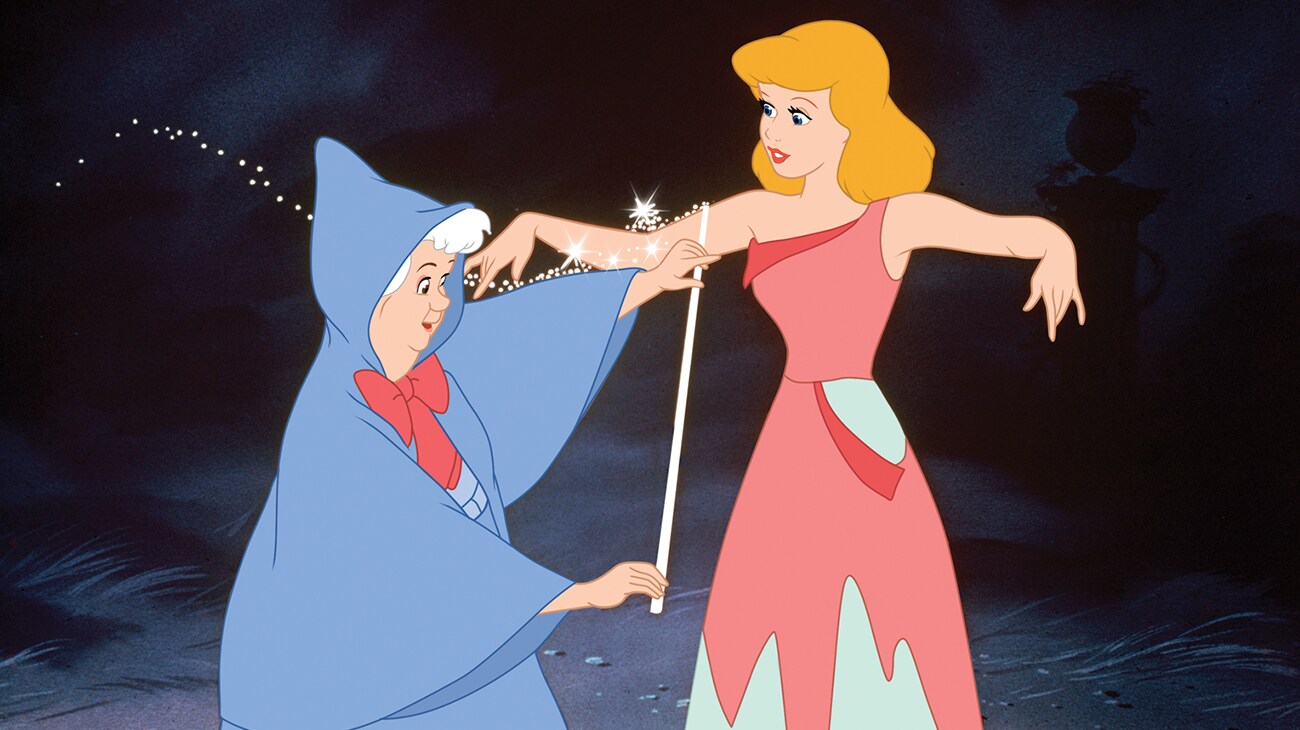
Cinderella runs into the garden and finally says she cannot believe anymore. The breakdown comes after action, effort, permission-seeking, task completion, and public humiliation. People who call her passive often cite the moment when exhaustion becomes visible, as though surviving abuse requires perfect motivational branding. Despair is not a moral failure. Despair is information about how thoroughly the household closed the available routes.
Cinderella’s crying in the garden is often edited out of the cultural summary, which prefers the instant magic arriving afterward. The breakdown deserves the pause. She has spent the film regulating emotion so other people cannot use frustration against her. The torn dress ends a day of work with proof that the bargain was fraudulent. When she says there is nothing left to believe in, the line names exhaustion rather than a permanent worldview.
The scene also refuses the demand that a “strong female character” remain composed through every injury. Strength measured only by visible defiance becomes another performance women must supply for an audience. Cinderella loses control for a few minutes, and nobody dies because she cries. Her community stays near. The Fairy Godmother responds with help, not a lecture about gratitude or resilience. The film lets grief register before changing the conditions. That small mercy remains one of the story’s most humane choices.
The Fairy Godmother arrives late
Verna Felton’s Fairy Godmother appears after human effort has been destroyed, not before. Her magic answers a collapse the heroine did not manufacture for attention. The godmother is warm, scattered, funny, and practical enough to inspect the available pumpkin, animals, and ruined clothing. Magic does not teach Cinderella worth. Magic supplies access after abuse blocks access.
The Fairy Godmother first appears almost as a memory trying to focus. Her warmth contrasts with Tremaine’s precision, and her absent-minded searching keeps magic from feeling like another intimidating authority. She asks what materials are available, notices the pumpkin, and builds the transformation from the immediate environment. The sequence treats intervention as improvisation. Help arrives powerful, but help still looks around before acting.
Her timing answers a moral question built into the plot. Why did magic wait until after the dress was destroyed? Fairy-tale logic rarely offers a satisfying administrative answer. Dramatically, the delay protects Cinderella’s agency and the importance of animal friendship. If the godmother arrived at breakfast, every human and communal effort would become decorative. By arriving after the ordinary routes have been sabotaged, she supplements action rather than replacing action. The magic opens a door that labor alone could not keep open.
Bibbidi-Bobbidi-Boo
The transformation sequence converts pumpkin, mice, horse, dog, and torn dress into carriage, team, coachman, footman, and ball gown through musical rhythm. Ward Kimball’s effects work and character animation make change feel tactile, comic, and escalating rather than a single flash. The song’s nonsense syllables are memorable because magic becomes play instead of doctrine.
Ward Kimball’s comic timing helps the transformation avoid becoming one smooth luxury advertisement. The pumpkin expands awkwardly. Mice become horses with traces of their former behavior. Major changes arrive through bursts, spins, and surprised reactions. The Fairy Godmother occasionally looks like she is remembering the plan one object late. Magic feels generous because the sequence allows delight, confusion, and personality inside the technical display.
“Bibbidi-Bobbidi-Boo” also solved a commercial problem beautifully. Nonsense syllables cross language barriers, invite children to participate, and attach sound to the film’s signature visual event. The song received an Academy Award nomination and outlived the exact scene through recordings, television, parks, and advertising. Cultural saturation can make the number feel inevitable. Nothing about a woman singing nonsense while turning a dog into a footman was inevitable. Artists made the escalation readable enough that a ridiculous premise became a shared memory.
The silver dress that memory turned blue
The ball gown is rendered in pale silver and cool white-blue tones, then merchandising and later imagery increasingly stabilize the dress as blue. Color memory follows branding as much as frame evidence. The blue princess identity becomes more portable than the film’s shifting moonlit fabric. A profile should distinguish screen design from merchandise shorthand without acting like color perception is a moral emergency.
The original gown shifts with lighting, painted cel color, and the cool atmosphere of the night. Pale silver, white, and blue all appear in the viewing experience. Later merchandise needed one instantly recognizable princess color, and blue won. Dolls, costumes, books, park appearances, logos, and redesigns reinforced that memory until arguments about the “real” color became a fandom ritual. The screen and brand history can both be true without treating perception as a courtroom emergency.
Color branding changes how later generations imagine the character before watching the film. Blue signals Cinderella as efficiently as a shell signals Ariel or yellow signals Belle. The simplification helps a huge franchise remain legible, but the simplification also erases the handmade pink dress and reduces a varied visual film to one product code. Rewatching the transformation in context restores movement, light, and surprise. The gown was never meant to sit under retail lighting as a flat swatch.
The midnight rule
The Fairy Godmother sets a clear deadline: magic ends at midnight, though the glass slippers will remain. The rule preserves urgency and prevents transformation from becoming a permanent class transfer granted by one elder. Cinderella receives one night of access, not liberation paperwork. The household will still exist when the carriage becomes a pumpkin.
The Fairy Godmother states the midnight condition before Cinderella leaves, and Cinderella accepts the risk. She does not fully manage the time because the ball offers her first sustained experience of freedom, attention, music, and rest in years. Losing track of the clock is understandable. The sequence does not frame her as irresponsible until the final chime forces action. Then she runs without trying to bargain for an exception.
Midnight also keeps the palace encounter from becoming permanent disguise. Cinderella cannot remain inside the identity created by clothes, carriage, and attendants. The magic must fall away, leaving a person whose worth cannot depend on presentation. The slipper survives as an exception, which turns the evening into evidence rather than a permanent costume. Fairy tales love arbitrary rules, but this rule gives the ending a useful argument: access may begin through spectacle, while recognition eventually has to find the person after the spectacle disappears.
The palace entrance
Cinderella arrives with no royal identity, family endorsement, or social network. Magic changes how gatekeepers read her before anybody asks who she is. The palace accepts fabric, carriage, and presentation as evidence of worth, proving class recognition can be staged through costume. The scene is romantic and a devastating little demonstration of how quickly manners follow appearance.
The palace staff responds to the carriage and gown before anyone knows Cinderella’s name, family, or place of origin. Doors open because appearance supplies a temporary social credential. The same woman who carries trays unnoticed at home becomes the center of royal attention after fabric, lighting, posture, and transportation align with elite expectations. Magic does not change her intelligence, voice, kindness, or face. Magic changes what gatekeepers believe those qualities are worth.
That class reading does not cancel the fantasy. The entrance is pleasurable precisely because Cinderella receives the welcome she was denied. Music slows, space expands, and commands fall away. The problem arrives when audiences treat the makeover as proof that hidden nobility needed the correct packaging. Cinderella deserved rest and public life in the pink dress, work clothes, or silver gown. The palace only recognizes one version. The movie invites the joy of access while accidentally revealing how shallow access can be.
The dance
So This Is Love carries Cinderella and the Prince out of the crowded ballroom into garden privacy. They connect without exchanging résumés, titles, or elaborate exposition. Live-action reference footage with Helene Stanley helped animators ground Cinderella’s movement, while the finished scene uses simplified elegance rather than rotoscoped stiffness. Romance functions as recognition after a day defined by command. He listens to her presence instead of issuing another task.
“So This Is Love” removes almost everyone else from the emotional frame. Cinderella and the Prince move from ballroom protocol into a quieter garden where the animation can focus on eye contact, hesitation, and synchronized movement. Helene Stanley’s live-action reference helped artists study weight, fabric, and timing, but the finished scene simplifies the motion into fairy-tale grace. Reference gave information. Animation chose which information mattered.
The romance works as an experience even though the Prince remains thinly written. Cinderella has spent the day hearing bells, insults, demands, and damaged singing. The Prince listens, follows her pace, and shares silence without requiring service. That contrast carries more emotional weight than their dialogue. Adult viewers may reasonably want conversation, compatibility, and knowledge beyond one dance. The movie offers recognition in compressed form. The scene succeeds as release, then asks the ending to make a marriage from material closer to a perfect first date.
She does not know he is the Prince
Cinderella’s behavior at the ball is not a campaign to marry wealth because she does not recognize her dance partner as the Prince. The misunderstanding matters. She responds to gentleness, attention, and the temporary freedom of being treated as welcome. The royal identity becomes relevant only when the kingdom turns one encounter into a search.
Cinderella never addresses her partner as royalty during the dance. She appears surprised when the clock interrupts and the Duke’s later search reveals the stakes. That ignorance protects the scene from the simplest gold-digger reading. She is responding to how a stranger treats her, not calculating proximity to the throne. The palace setting obviously signals wealth to the audience, but the film does not show her pursuing a title or asking what marriage could provide.
The Prince also does not recognize her as a servant because the class markers have been temporarily removed. Their mutual anonymity creates romance and conceals the structure surrounding them. He can be gentle without confronting what her ordinary life contains. She can be open without explaining Tremaine. The search afterward tries to bridge that gap with a shoe instead of conversation. Fairy-tale efficiency gets them to the wedding. Franchise storytelling inherits the harder task of showing whether affection survives knowledge.
The midnight flight
The clock interrupts before names or explanations settle. Cinderella runs, loses a slipper, and tries to escape without exposing the transformation. The sequence shifts elegance into speed, collapsing carriage, horses, footmen, and gown while guards pursue an unknown woman. The deadline protects the fairy secret and recreates the panic of a person racing back toward the cage before absence is discovered.
The clock does not merely end a dance. Chimes break the temporary identity before Cinderella can tell the Prince her name or hear his. Her route out becomes a reversal of the arrival: stairs, guards, carriage, road, forest, and collapsing magic. Each transformed object returns to an ordinary state while moving, so the escape contains comic panic and real exposure risk. The sequence reminds viewers how much infrastructure one elegant entrance required.
Cinderella apologizes to the animals after the collapse and remembers the evening with gratitude despite losing the apparent future. That response protects the experience from becoming worthless because the ending failed. She had one night outside the household, met someone kind, danced, and saw a larger world. The surviving slipper proves the event occurred, but her memory already carries value before the royal search begins. The film lets a temporary freedom matter, which is emotionally truer than pretending only permanent outcomes count.
The glass slipper remains
The slipper survives the reversal because the Fairy Godmother named an exception. That object becomes evidence connecting private experience to public search. Glass is impractical, beautiful, transparent, fragile-looking, and narratively exact. Folklore debates about glass versus fur have their own history, but Perrault’s familiar French text supports the glass reading. Evidence survives after presentation disappears, making the shoe more important than the dress.
The glass slipper became such a famous object that debates about material often overshadow narrative function. Some commentary links the French verre, glass, with vair, fur, suggesting mistranslation. Perrault’s published wording and the literary context support glass, and a transparent, impossible shoe fits his taste for refined wonder. Earlier tale variants use other identifying footwear. Disney keeps glass because animation can make light, fragility, and transformation visible in one object.
The shoe’s impracticality is the point. Nobody can easily duplicate, stretch, or disguise a transparent form made by magic. The slipper appears delicate yet survives stairs, roads, and the end of every other transformation. Tremaine shatters the Duke’s copy because physical evidence threatens her control over the story. Cinderella produces the mate because the Fairy Godmother’s exception placed proof in her possession. The ending does not ask the kingdom to trust a servant’s claim. The ending gives the servant an object authority cannot explain away.
The King and Grand Duke comedy
The King’s dream of grandchildren and the Grand Duke’s terrified obedience turn monarchy into domestic farce. Luis Van Rooten voices both men. The comedy gives the film another household ruled by unreasonable demand, though palace consequences remain slapstick rather than coercive confinement. Parallel authority structures make Cinderella and the Duke unlikely cousins in interrupted sleep.
Luis Van Rooten voices both the King and Grand Duke, creating two sides of palace authority through one performer. The King explodes, dreams, commands, and forgets practical limits. The Duke flatters, panics, calculates, and survives each command by trying to make the impossible happen. Their exchanges give adult viewers a workplace comedy nested inside the fairy tale. One man controls the institution; the other translates moods into policy.
The parallel with Cinderella’s household is funny until the power difference becomes clear. Both Cinderella and the Duke lose sleep because somebody above them wants a personal result immediately. The Duke, however, retains status, movement, and the ability to speak back within comic limits. Cinderella risks shelter and safety. The comparison shows how hierarchy can produce absurd labor at every level while consequences remain unequal. Palace comedy releases pressure without pretending royal demands are wise.
The search reaches the house
Lady Tremaine learns that Cinderella was the mysterious woman by watching her reaction to the waltz. Recognition comes from emotional evidence before the slipper arrives. She locks Cinderella in the attic, converting suspicion into physical confinement while presenting calm hospitality downstairs. The stepmother’s most dangerous act is not jealousy. The dangerous act is controlling whether evidence can reach a witness.
Lady Tremaine identifies Cinderella through the melody before the Duke arrives. Cinderella hears the song from the ball and drifts into memory, revealing an emotional connection that the stepmother reads immediately. Tremaine watches, follows her upstairs, and locks the door without confronting her. Recognition becomes dangerous because the person holding household authority now knows that Cinderella reached a space she was ordered to miss.
The lock is the clearest proof that this conflict was never about chores or proper behavior. Cinderella met every condition Tremaine pretended to value, attended without the family’s help, returned on time, and caused no scandal inside the house. Tremaine responds with confinement because the royal search could remove her source of labor and expose the household’s arrangement. She then greets the Duke with perfect manners. Public hospitality and private imprisonment occupy the same morning, which is exactly how respectable abuse protects itself.
The mice retrieve the key
Jaq and Gus carry the heavy key upstairs while Lucifer hunts them, turning years of mutual care into the mechanism of escape. The rescue is physically difficult, comic, suspenseful, and earned through the social world Cinderella built. No prince climbs the tower. Her community brings the key.
The key is larger than Jaq and Gus together, turning a simple rescue into an engineering problem. They drag the metal across the floor, push the key up stairs, improvise with the route, and keep moving while Lucifer stalks them. The scale reminds viewers that courage does not cancel physical limits. Small characters need cooperation, time, leverage, and luck. Their success feels suspenseful because the movie made the obstacle materially difficult.
Cinderella participates from behind the door by explaining what happened, calling to the mice, directing attention, and waiting near the lock. Her dependence on them does not erase agency any more than a person trapped in a room loses agency by needing somebody outside to bring a key. The rescue pays off dozens of earlier gestures: food shared, clothes made, names given, danger interrupted, and trust built. Community can reach places individual strength cannot. The film states that principle with two mice hauling hardware down a hallway.
Bruno finally intervenes
The mice summon Bruno, and the dog chases Lucifer from the window. Cinderella previously protected Lucifer from Bruno despite the cat’s cruelty. Her refusal to authorize revenge did not erase the animals’ ability to defend each other when stakes became confinement. Kindness is not the same as leaving every predator in charge forever.
Bruno spends much of the film dreaming about catching Lucifer, while Cinderella repeatedly asks the dog to control that impulse. She recognizes the cat’s cruelty and still refuses to let the household become an excuse for constant revenge. During the key rescue, the situation changes. Lucifer is no longer teasing mice over food. He is preventing them from releasing a woman who has been locked away from the royal search.
Jaq’s decision to summon Bruno acknowledges that de-escalation has limits when one party uses force to maintain confinement. The dog’s chase is staged as release and slapstick rather than execution. Lucifer falls from the tower and disappears from the immediate conflict, while the mice complete the task. Cinderella’s earlier compassion remains meaningful because defense arrives only when necessary. Kindness without boundaries would protect the predator’s access. Kindness with judgment protects the vulnerable community first.
Lady Tremaine breaks the slipper
When Cinderella reaches the fitting, Tremaine trips the footman and shatters the royal slipper. She destroys evidence while preserving plausible accident. The Grand Duke panics because royal authority has placed an impossible future on one fragile object. Tremaine nearly wins through sabotage and underestimation.
The Grand Duke believes the slipper is the kingdom’s only route to the mysterious woman, so the shattering feels catastrophic. Tremaine creates the accident with a cane placed exactly where the footman will fall. Her body barely moves. The broken glass spreads across the floor, and the Duke collapses into horror because one fragile object carried the King’s demand, the Prince’s desire, and his own professional survival.
Tremaine’s satisfied expression shows that she thinks evidence has been eliminated. She has controlled Cinderella’s time, clothing, movement, and testimony. Now she has destroyed the state’s identifying object in front of witnesses without appearing to touch the object. The maneuver is smart, which matters. Great villains should not succeed only because every other person becomes foolish. Tremaine studies systems and uses their narrow assumptions. Her mistake is assuming Cinderella returned from the ball with nothing of her own.
Cinderella has the other slipper
Cinderella produces the matching slipper from her pocket, revealing that she understood the importance of what survived. The moment gives her strategic agency. She does not merely place a foot into somebody else’s test; she introduces evidence Lady Tremaine could not control. The quiet line about the other slipper is one of the strongest mic drops in the Disney canon.
Cinderella’s line about the other slipper is quiet because she does not need volume once she holds the decisive fact. The camera and staging shift power immediately. Tremaine cannot rewrite the object, and the Duke no longer needs the broken shoe. Cinderella understands both the search and the value of what she carried home. Producing the slipper becomes her most direct public act against the stepmother’s version of reality.
The moment also changes the fitting ritual. Before the reveal, women across the kingdom submit their bodies to an object controlled by the palace. Cinderella introduces a second object under her own control. She does not merely prove that her foot matches. She proves knowledge of the night, possession of its surviving magic, and Tremaine’s inability to erase her. Fairy tales frequently use tokens to restore identity. This token works because the heroine has protected the receipt.
The wedding ending
The film moves quickly from proof to wedding, omitting courtship, legal disentanglement, property questions, trauma recovery, and what happens to the household. Fairy-tale closure values recognition and status reversal over administrative realism. The final carriage and bells deliver emotional release. The sequels exist because happily ever after creates an entire life the original ending does not explore.
The wedding arrives with the speed expected from a fairy tale and the gaps expected from a franchise starter. No scene shows the Prince learning about the attic, the labor system, or Tremaine’s conduct. No legal authority resolves Cinderella’s relationship to the estate. No courtship tests whether one dance can survive daily life. The emotional logic rests on release: the doors open, clothing becomes ceremonial, bells announce celebration rather than commands, and Cinderella leaves the household.
That compression is satisfying and incomplete. A survivor may feel joy after escape while still carrying habits formed under control. A palace can offer safety while imposing new rules. The Prince can be kind and remain nearly unknown. Cinderella II and Cinderella III exist because the original ending creates unanswered questions about adaptation to royal life, family power, memory, choice, and whether the stepsisters can change. “Happily ever after” closes the danger. The phrase does not describe every morning afterward.
Ilene Woods
Ilene Woods gives Cinderella a light, controlled speaking voice and a warm singing tone capable of layered harmony in Sing Sweet Nightingale. Her performance avoids self-pity without pretending the heroine never feels anger, exhaustion, or disbelief. The voice creates grace as discipline under pressure rather than natural princess polish.
Ilene Woods reportedly recorded demo material before Disney selected her as Cinderella, and the finished performance uses technical control without calling attention to technique. Her layered vocals in “Sing Sweet Nightingale” create a sound impossible for one person to perform live in the room, while “A Dream Is a Wish Your Heart Makes” stays intimate enough to feel like private thought. Speaking scenes carry humor, fatigue, caution, and flashes of irritation beneath the polished diction.
Woods never turns gentleness into emptiness. Cinderella laughs at the clock, scolds the birds, reacts sharply to Lucifer, questions Tremaine, and breaks down when the dress is destroyed. The performance keeps those changes within one person rather than switching between saint, victim, and princess modes. Later princess voices often inherit her bright placement and careful articulation. Her real achievement is emotional continuity. Grace sounds like something Cinderella maintains, not a magical substance installed at birth.
Eleanor Audley
Eleanor Audley builds Lady Tremaine from timing, restraint, and the suggestion that every polite sentence has already calculated the injury. Audley later voiced Maleficent, but Tremaine may be more frightening because no dragon is required. The performance understands domestic authority as theater performed for an audience with nowhere else to go.
Audley’s Lady Tremaine became a blueprint for villains who weaponize composure. She stretches a name, pauses before a punishment, and lets silence force the other person to guess how much danger has entered the room. Her consonants remain precise, and anger rarely disrupts the rhythm. That vocal discipline tells the audience that Tremaine is choosing every injury. She is not overwhelmed by emotion. She is arranging emotion in everybody else.
Comparisons with Maleficent show Audley’s range. Maleficent announces supernatural authority through ceremonial menace. Tremaine works inside domestic plausibility. A parent can explain chores, discipline, locked doors, and family preference in language outsiders may accept. Audley makes that normal-looking cover terrifying. The villain’s greatest weapon is not magic or physical strength. Her weapon is the social assumption that a respectable guardian must have a reasonable explanation.
Mary Blair and visual direction
Mary Blair’s concept work influenced the film’s color, shape language, romantic simplification, and storybook atmosphere, even as final animation moved toward the studio’s character style. Cool night blues, warm household browns, pink dress fabric, greenish menace, and luminous transformation create emotional geography. Design makes the story legible before dialogue and helps sweetness coexist with control.
Mary Blair’s concept art favored bold shapes, simplified architecture, expressive color, and compositions that could feel modern even inside a European storybook. The finished feature translated rather than copied her approach, combining atmospheric backgrounds with the studio’s established character animation. Her influence remains visible in the romantic night, transformation color, palace scale, and the way rooms organize emotional power. The movie often tells viewers where safety lives before a character speaks.
The household uses dark wood, green shadows, narrow routes, and vertical distance. The ball opens into blue space, reflective floors, garden depth, and movement without interruption. Warm animal scenes soften the attic. Pink makes the handmade dress emotionally vulnerable, while the transformed gown catches cool light. None of those choices require the audience to know a designer’s name. Good visual development becomes invisible grammar. Naming Blair and the other artists restores the labor behind an atmosphere people casually call “Disney magic.”
Character animation
Marc Davis and Eric Larson are closely associated with Cinderella’s animation, while other leading animators shaped Lady Tremaine, the stepsisters, animals, and comic palace material. Live-action reference offered movement information, but the finished performances depend on selection, exaggeration, timing, and drawn acting. Calling the film traced dismisses the judgment that turns reference into character.
Live-action reference was extensive because believable human acting posed a major production challenge. Helene Stanley performed movement for Cinderella, giving animators information about balance, fabric, gesture, and timing. The process did not turn the finished film into traced footage. Animators changed proportions, clarified silhouettes, controlled rhythm, simplified motion, and shaped expressions for a drawn face. Reference answered physical questions. Performance emerged from thousands of selective decisions.
Marc Davis and Eric Larson reportedly differed in emphasis, with Davis associated with elegance and Larson attentive to warmth and personality. Reducing Cinderella to one animator misses the collaborative pipeline, yet those differing priorities help explain why the character can appear idealized without becoming a moving doll. Other artists built Tremaine’s restraint, the stepsisters’ elastic comedy, Lucifer’s predation, and the palace farce. A feature succeeds when many hands produce one readable world without every hand disappearing from history.
Music and Oscar recognition
The score and songs include A Dream Is a Wish Your Heart Makes, The Work Song, Bibbidi-Bobbidi-Boo, So This Is Love, and Sing Sweet Nightingale. The film received Academy Award nominations including original song for Bibbidi-Bobbidi-Boo, scoring, and sound recording. Awards confirm industry recognition, while cultural longevity shows how deeply the songs entered Disney identity.
The soundtrack carries narrative jobs beyond ornament. “A Dream Is a Wish Your Heart Makes” protects inner life. “The Work Song” turns friendship into labor. “Oh, Sing Sweet Nightingale” contrasts access and talent. “Bibbidi-Bobbidi-Boo” makes transformation playful. “So This Is Love” slows the film into recognition. Repetition threads melodies through memory, allowing the later search scene to reveal Cinderella through her reaction to music before any slipper fitting begins.
The Academy nominated the film for scoring, sound recording, and original song for “Bibbidi-Bobbidi-Boo.” Awards do not settle quality, but the nominations show that contemporaries recognized the audio construction as central. The songs also created commercial life through recordings and radio, helping a financially pressured studio build revenue beyond admission. Disney later made music an industrial signature. Cinderella demonstrates why: a song can carry character, market the film, survive for decades, and still make somebody cry while folding laundry.
Domestic labor is the missing genre label
Cinderella spends more screen time managing work, food, clothing, animals, interruptions, and household authority than pursuing romance. Calling the film merely princess romance removes the genre operating under the ball: a domestic survival story with musical animal solidarity. The glass slipper sells posters. The chore list explains the character.
Domestic labor structures nearly every early sequence. Cinderella wakes, dresses, feeds animals, makes beds, serves breakfast, retrieves laundry, cleans floors, mends clothing, responds to bells, and tries to sew between interruptions. The movie understands that work is not one montage completed before the “real” story. Work determines where she can go, what she can wear, when she can rest, and whether a public invitation has meaning.
Calling Cinderella a romance first encourages audiences to measure the heroine by how aggressively she pursues a man. Calling the film domestic survival changes the questions. Who owns the house? Who controls the schedule? Whose talent is cultivated? Who gets uninterrupted time? Who can discard material and later punish reuse? The Prince matters because his world offers an exit. The mice matter because they understand the labor. Lady Tremaine matters because she keeps ordinary tasks arranged as a system of captivity.
Kindness is not obedience
She complains privately, recognizes unfairness, asks for access, attempts a plan, protects vulnerable animals, rebuilds a dress, grieves destruction, accepts help, runs toward opportunity, and preserves evidence. Kindness shapes how she uses power; obedience describes the conditions limiting open confrontation. A person can remain compassionate without consenting to abuse.
Kindness becomes controversial when critics assume anger is the only visible form of strength. Cinderella’s kindness includes judgment. She knows Lucifer is awful, the sisters are selfish, the chore list is unfair, and Tremaine has broken the bargain. She does not confuse cruelty with honesty. Protecting small animals, preserving humor, and refusing to become the household’s moral copy are active choices made under pressure.
The story can still be criticized for tying goodness to beauty, grace, and eventual royal recognition. Those conventions narrow the range of women allowed sympathy. The answer, however, is not to blame Cinderella for lacking a modern action-hero posture. Better criticism examines what the film rewards, what the culture markets, and why audiences treat softness as emptiness. A kind heroine may need more resources, sharper boundaries, and fuller anger. She does not need cruelty added as proof of personhood.
The rescue argument
Yes, marriage to the Prince removes Cinderella from the household. No, that fact does not mean she did nothing before rescue. Escape often requires outside resources because coercive systems deliberately control money, movement, time, witnesses, and legal authority. Demanding solo escape as the only valid agency turns structural captivity into an individual personality test.
Outside rescue is not an embarrassing loophole in a story about controlled resources. Tremaine controls the home, labor, schedule, clothing, carriage, social contact, and whether Cinderella reaches the Duke. Escaping such a system alone would require money, transportation, witnesses, legal standing, and somewhere safe to go. The film compresses those needs into magic, animal allies, a royal search, and marriage. The mechanism is fantastical. The need for outside resources is painfully ordinary.
Agency should describe choices within conditions, not demand that one person erase every condition through attitude. Cinderella chooses relationships, asks for access, works toward a plan, accepts help, attends the ball, leaves before exposure, calls for rescue, reaches the fitting, and protects evidence. Other people also act. That shared action makes the ending stronger. A story where nobody helps until the Prince appears would deserve the lazy rescue label. Cinderella spends most of its runtime building the network that opens the locked door.
What another watch changes
Watch the bells, doors, keys, trays, stairs, clocks, clothing, and food before watching the slipper. Objects map who controls time and access. Watch how Tremaine uses pauses, how Cinderella protects inner life through humor, and how mice convert care into practical rescue. The movie becomes less passive every time attention leaves the marketing summary and returns to behavior.
A rewatch focused on objects reveals how carefully the movie maps power. Bells summon labor. Trays carry invisible planning. Doors divide public manners from private control. Keys determine movement. Clothing marks inheritance, community work, class access, and sabotage. The clock places a disclosed limit on magic. The slipper preserves evidence. None of these objects has emotion or intention. People assign each object a function, and those functions show who controls the environment.
A performance-focused rewatch changes the villains and heroine too. Tremaine watches before acting. Cinderella uses humor most freely around animals. Anastasia and Drizella grow louder when competing for maternal approval. The Duke bends under royal pressure, then becomes unexpectedly firm when completing the search. Tiny pauses carry social information the plot summary cannot hold. The movie has survived because the surface is easy to follow and the acting rewards attention after the ending is already known.
Verdict
Cinderella is a beautifully controlled fairy tale about labor, coercive authority, mutual aid, temporary access, and the stubborn preservation of self. The quick wedding and court fantasy cannot answer every class or abuse question, and animal comedy sometimes softens the household’s danger. My verdict remains affectionate and firm: the movie is smarter than the princess blame built around the heroine, and Lady Tremaine is scarier than half the supernatural villains in the library.
Cinderella remains one of Disney’s most beautiful features and one of the company’s most misunderstood heroines. The film softens danger through mice, songs, and storybook design, sometimes asking elegance to cover gaps in class, inheritance, romance, and recovery. The Prince needs more personality. The wedding needs more life around the gesture. The beauty-coded morality deserves scrutiny. Those limits do not erase how accurately the household scenes understand coercion and labor.
My final receipt is the second slipper. Tremaine has controlled the schedule, destroyed the handmade dress, locked the door, and shattered the kingdom’s evidence. Cinderella reaches into her pocket and produces the fact that survived all four tactics. She did not win because sweetness magically purified cruel people. She won because care built a community, outside help changed access, and she kept something the controlling person did not know she had. That ending is sharper than the passive-princess joke, and honestly, the mice deserve union cards.
Sources and production receipts
Production and credit details can be checked through the Disney D23 film record, Academy Awards records for the 1951 ceremony, and Walt Disney Family Museum material on the studio’s postwar features and artists. Fairy-tale comparison should begin with Perrault, the Brothers Grimm, and folklore scholarship on the international Cinderella tale family rather than assuming one castle owns the story.
Keep exploring
Return to the Cinderella hub for every film branch, profile, rant, and fairy-tale guide.