
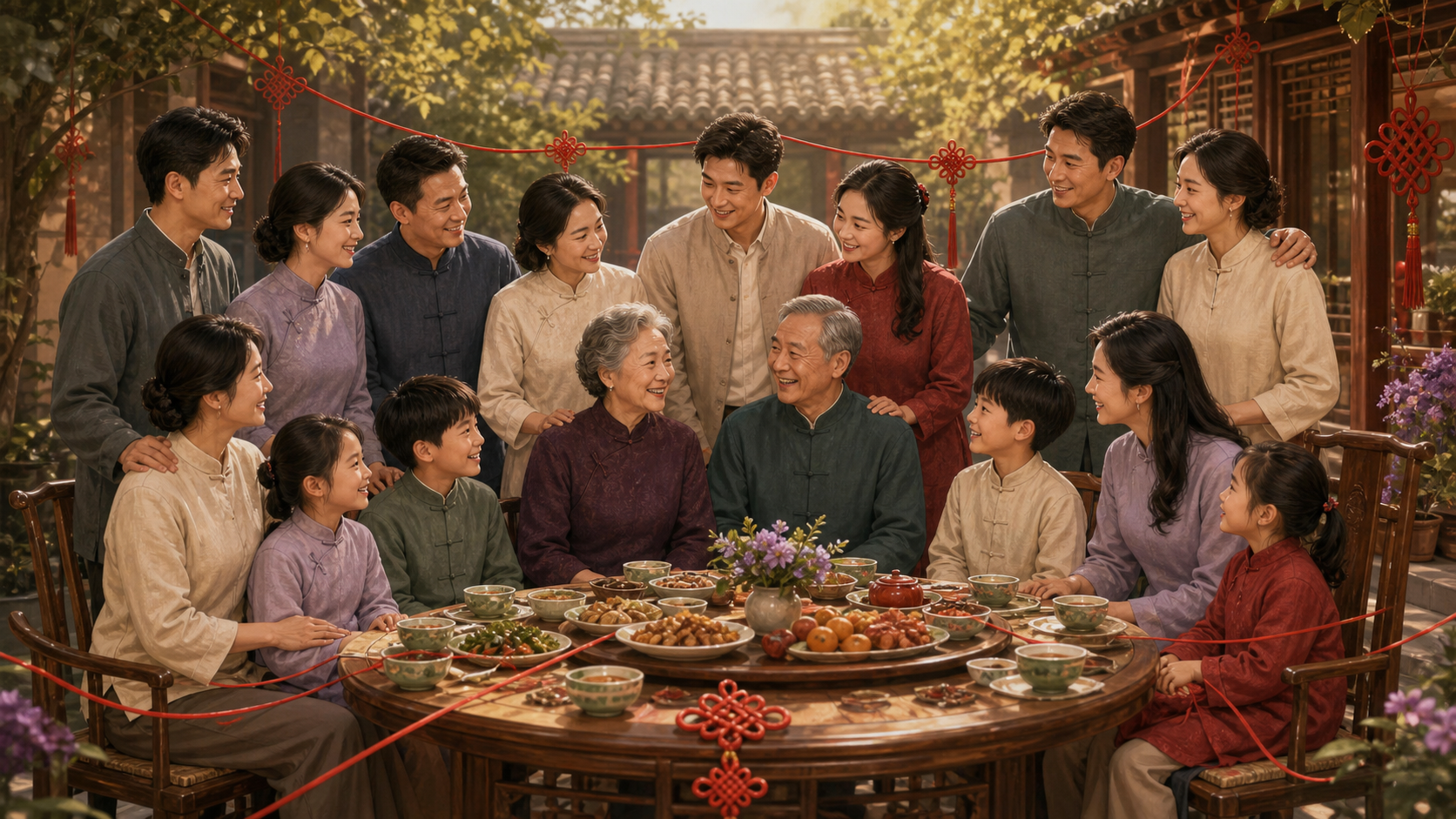
English gives us “uncle,” throws both sides of the family into one basket, and walks away. Mandarin Chinese wants the family map, the generation, the parental side, the relative age, and sometimes whether the person married into the relationship. Suddenly the family reunion needs air-traffic control.
Older brother and younger brother are different jobs
哥哥, gēge
Older brother. The term already tells you gender and relative age.
弟弟, dìdi
Younger brother. Same family category in English, different position in Chinese.
姐姐, jiějie
Older sister. In fiction, this can also become a respectful or affectionate social address.
妹妹, mèimei
Younger sister. Again, age is built into the word.
This is why a translation that replaces every kinship term with a personal name can flatten a scene. The original dialogue may be reminding us who owes deference, who is being affectionate, and who has decided to be disrespectful before the argument even starts.
Why “aunt” and “uncle” multiply
Chinese kin terms can distinguish the maternal side from the paternal side, older from younger, and blood relatives from relatives by marriage. A father’s older brother and younger brother do not automatically share one label. A mother’s brother occupies another branch. Their spouses can have their own terms too.
Regional language changes the exact vocabulary. Cantonese, Hokkien, Mandarin, and diaspora communities may not use identical terms. Modern families also simplify. So please do not grab one viral chart and use it as a weapon against somebody’s grandmother. The system is detailed, not mechanically universal.
Birth order can become the name you hear most
Inside families, numerals and seniority markers may attach to a kinship term. “Second elder sister” can be more useful than shouting three given names toward the kitchen. Traditional naming practices also used characters that indicated birth order or seniority.
That does not mean every modern Chinese person has a birth-order name. It means readers may encounter the practice in historical fiction, clan-centered stories, and family sagas. Context decides whether it is ordinary address, a formal lineage system, or an author using old patterns for flavor.
Generation names: the family tree hiding inside a given name
Some families assign a shared generation character to siblings and cousins of the same clan generation. The character may come from a sequence or generation poem. A reader who recognizes it can immediately see that two characters belong on the same horizontal line of the family tree, even if their fathers are different brothers.
The custom has never been identical across every region or family, and it is less common in some modern communities. Still, it explains why several cousins in a novel may share one character without the author running out of ideas.
What this changes when you read web novels
- Power: an elder-relative term can acknowledge hierarchy before anyone discusses rank.
- Closeness: switching from a title to a personal name can sound intimate, rude, or both.
- Clan structure: a shared generation character can reveal relationships before the narration explains them.
- Translation: “brother” may hide whether the original said older or younger.
- Comedy: one new marriage can create a vocabulary exam for everybody involved.
RaeRae reading rule
Do not memorize the whole kinship chart before chapter one. Follow the relationship from the viewpoint character outward. Learn only the branch the scene needs. If the family is enormous and evil, keep notes. You were going to need receipts anyway.
Receipts and further reading
- Irena Kałużyńska, “Traditional Chinese Generation Names”
- Ching-Chao Wu, “The Chinese Family: Organization, Names, and Kinship Terms”
- Columbia University Asia for Educators, Chinese naming examples
- Huang and Jia, Chinese kinship terms
Continue through Novel World 101 or compare the mythology and culture shelves in Behind the Worlds.