
The Turbulent Field Trip!!
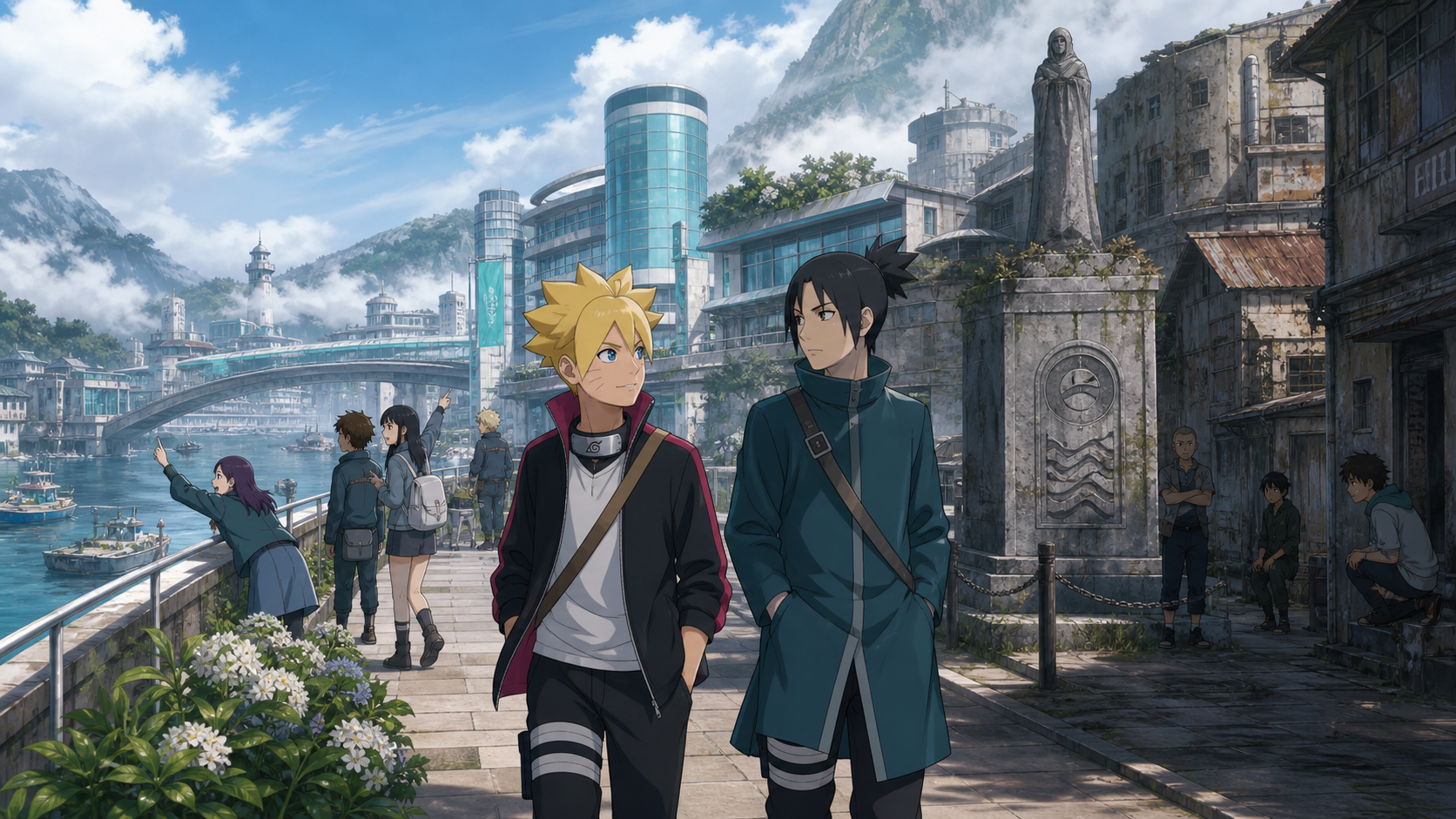
Boruto gets elected class leader while gagged, discovers a bright modern Kiri with Kagura, and nearly starts an international alley fight before Shizuma brings the old mist back.
Series: Boruto: Naruto Next Generations
Episode: 25 · The Turbulent Field Trip!!
Arc: School Trip Arc
Release: 2017-09-20
Previous: Episode 24 · Boruto and Sarada
Directory: All 293 Boruto episodes
Bottom line
Boruto Episode 25 begins the Hidden Mist field trip by hanging Boruto upside down, gagging him, and electing him class leader while he cannot object. Democracy is alive at the Academy, although democracy has apparently borrowed rope from Shino’s insect closet. Sarada nominates him, the class agrees, and Boruto enters his first international leadership role looking like somebody captured before the mission briefing.
The trip itself is exactly the kind of episode Boruto does well when the anime remembers that worldbuilding can be fun. The class rides a train, boards a ship, fights over parents, stays awake under the stars, and arrives expecting the gloomy Bloody Mist from old stories. Instead, Kirigakure looks more modern than Konoha. The harbor is busy. The streets are bright. Tourism is thriving. Chōchō and the girls immediately notice their handsome guide, Kagura, while Boruto notices that Kagura likes Kagemasa. Diplomatic friendship secured through a fictional ninja movie. Naruto can close the treaty files.
Iwabee refuses the brochure version because his family history makes the Bloody Mist personal. He wanders away, Boruto and Denki follow, and the class leader nearly creates an international incident after bumping into Hassaku. Shizuma interrupts, praises the Konoha children’s nerve, calls Boruto’s eyes interesting, and leaves them with a welcome to the Blood Mist Village as fog covers the street. Modern Kiri is real. So are the boys waiting for violence to make the old name valuable again.
The Land of Fire has opinions before the class packs
The episode opens with the daimyō speaking about the Land of Waves while Iruka and Anko watch the news. Naruto joins them at the Academy with a much more cheerful international announcement.
Konoha has reached an agreement with the Land of Water. The Academy can take its first field trip outside the Land of Fire. Peace has officially reached the school permission-slip stage.
Boruto interrupts diplomacy with bad Wind Release
Boruto attempts a prank and produces a poor Wind Release technique in the middle of the adults’ discussion. Naruto recognizes his son’s handiwork instantly, because nobody else would interrupt a diplomatic education meeting with amateur weather.
Father and son argue. The field trip announcement survives.
Shino announces the trip to a room full of possibilities
Shino tells the class they are going to the Land of Water. The students immediately begin imagining travel, food, sights, and everything except whatever worksheets Shino probably prepared.
For children born after the war, another hidden village can be a destination rather than an enemy position. That change deserves the excitement on their faces.
Boruto is elected while physically unable to campaign
Shino asks for a student leader. Sarada nominates Boruto while he hangs tied and gagged as punishment for the prank. Other classmates support the choice before Boruto can produce a recognizable word.
Sarada understands leadership as responsibility. She also understands comedy as timing.
Class leader is the funniest possible punishment
Boruto complains after being released, but the class has chosen him for a reason. He is reckless, loud, and frequently the first person to move when somebody needs help.
The same traits that create trouble also make everyone expect him to keep the group together. Leadership arrives before maturity because maturity rarely volunteers on schedule.
Iwabee remembers the name Bloody Mist
Iwabee warns the others that Kirigakure once forced Academy students into lethal graduation battles. The village’s history is not an adventure story to him.
Everyone else hears “field trip.” Iwabee hears “visit the place famous for children killing classmates.” His suspicion follows him onto the train.
Hinata packs for the child least likely to pack calmly
At home, Hinata helps Boruto prepare. The family scene is small and warm, giving the arc a proper departure before international mist, political resentment, and legendary swords enter the picture.
Boruto is excited enough to forget practical items. Hinata has raised him long enough to plan around enthusiasm.
The class leaves by train and ship
Shino and Anko escort the students out of Konoha, first by train and then across the water. The travel sequence makes the world feel connected in a way the original Naruto generation rarely experienced.
These children can watch countries change through a window instead of crossing borders on war assignments. That difference matters without needing a speech.
Boruto and Sarada bring their argument aboard
Boruto and Sarada bicker during the trip because no amount of ocean can stop their natural rhythm. The disagreement touches the strange way each child views the other’s father.
Sarada admires Naruto’s presence and public warmth. Boruto admires Sasuke’s mystique. Each sees the version of fatherhood missing from home and thinks the other got the better deal.
The parents look different from another child’s seat
Boruto lives close enough to Naruto to see every missed dinner and interrupted promise. Sarada sees the Hokage who greets people and holds the village together.
Sarada lives close enough to Sasuke’s absence to feel every empty chair. Boruto sees the legendary shinobi who moves through danger with impossible calm. Both perspectives are true and incomplete.
Iwabee refuses the vacation mood
While classmates enjoy the travel, Iwabee remains gloomy. Kiri’s old reputation has settled too deeply for a nice boat to change his expectations.
His mood irritates Boruto because Boruto wants the class leader experience to work. Iwabee does not owe the trip cheerful anticipation, but disappearing later will not help either.
Boruto asks Mitsuki about Wind Release at night
Under the night sky, Boruto talks with Mitsuki about Wind Release. The conversation is part training curiosity and part Boruto refusing to sleep when a new technique exists nearby.
Mitsuki remains the ideal late-night travel companion because nothing surprises him and bedtime appears optional.
Kirigakure rises out of the morning
The village comes into view after the overnight crossing. The class expects old stone, damp alleys, and ominous history.
The skyline answers with towers, waterfront development, bright streets, and a city that looks ready to sell them souvenirs before breakfast.
The modern Mist shocks everybody
Kirigakure appears even more urban than Konoha. The surprise works because Naruto’s older stories fixed the village inside Zabuza, hunter-nin, civil violence, and fog.
The new city has not deleted those events. The new city proves people kept living after them.
Kagura arrives as the least intimidating official guide
Kagura Karatachi welcomes the class. He is near their age, already serves as Chōjūrō’s aide, and speaks with the careful politeness of somebody determined to make the visit go well.
He does not resemble the brutal swordsman Iwabee expected. That contradiction begins working before Kagura shares any personal history.
The girls approve the guide immediately
Several girls notice Kagura’s looks before his credentials. International relations remain secure as long as Kiri keeps assigning attractive teenage aides to school groups.
Kagura handles the attention with the same gentle discomfort he brings to almost everything.
Boruto and Kagura bond over Kagemasa
Kagura greets Boruto as the Seventh Hokage’s son, which risks turning Boruto into a title again. Then they discover a shared interest in Kagemasa.
The conversation changes the relationship from official guide and famous visitor to two boys who like the same ridiculous hero. Fandom solves what protocol cannot.
The tour gives Boruto exactly what he wanted
Kagura leads the class through busy streets and modern attractions. Boruto is impressed, the class has fun, and the official field trip looks successful.
The city deserves that reaction. Kiri did change. Peace should produce places where children can wander, eat, shop, and annoy their classmates without becoming soldiers.
Iwabee sees a cover instead of a transformation
Iwabee refuses to accept the bright city at face value. To him, the prosperity looks like scenery hiding the Bloody Mist underneath.
His suspicion is understandable, but certainty becomes its own blindfold. A village can contain real reform and real resentment at the same time.
Iwabee walks away from the group
Rather than continue the argument inside the tour, Iwabee leaves. Sarada sends Boruto and Denki to bring him back because Boruto is technically the class leader and Denki is the person most likely to reach Iwabee without escalating him.
Sarada remains the actual operations department behind Boruto’s elected title.
Denki follows because he knows Iwabee’s weather
Denki understands the difference between Iwabee being annoyed and Iwabee being genuinely unsettled. Their friendship gives him access beneath the aggression.
Boruto brings authority, such as the class currently recognizes authority. Denki brings the reason Iwabee might listen.
An alley removes the tourist lighting
The boys move away from the open tour route and into a narrower part of Kiri. The change in space lets the city’s hostility step closer.
Modern towers remain nearby, but the conversation now belongs to residents who think peace made Kiri soft.
Boruto bumps into Hassaku
Boruto collides with Hassaku Onomichi, a large local boy already looking for a reason to dislike Konoha visitors. The bump could end with an apology.
Iwabee’s temper and Hassaku’s attitude make sure nobody wastes such a convenient opportunity for a fight.
Hassaku knows exactly who came from Konoha
Hassaku identifies them as Hidden Leaf students. The knowledge tells Iwabee that the encounter is not random. Somebody has been watching the class or spreading word about the visitors.
The field trip has an audience beyond tourism staff.
Iwabee supplies the match and Boruto lights the fuse
Iwabee confronts Hassaku aggressively, and Boruto joins when the exchange turns physical. Our elected class leader has reached his first international incident before lunch.
Boruto is defending a classmate, but the distinction will look thin on a diplomatic report titled “Hokage’s Son Fights Local Youth in Alley.”
Kagura is absent when the tour needs him most
The confrontation happens after the students leave the planned route. Kagura cannot guide a group that quietly splits itself.
That gap matters because Shizuma’s faction prefers isolated moments where outsiders and angry local boys can confirm each other’s worst expectations.
Shizuma enters like he owns the fog machine
Shizuma Hoshigaki interrupts the fight before Hassaku and Boruto can finish. He appears calm, charismatic, and much more dangerous than the boy throwing the first punch.
Hassaku obeys him. Iwabee immediately senses that the polite interruption carries a larger threat.
Shizuma likes Boruto’s eyes
Shizuma praises the Konoha students for standing up to Hassaku and tells Boruto he has interesting eyes. The compliment feels less like admiration and more like somebody inspecting a future weapon.
He knows Boruto’s father, understands the political value of Naruto’s son, and begins planning before Boruto understands he has been measured.
Welcome to the Blood Mist Village is a threat
Shizuma leaves them with a welcome to the Blood Mist Village. Thick fog spreads across the modern street as if the old name answered his invitation.
The line tells Boruto that Iwabee’s suspicion was not entirely misplaced. Some people want the Bloody Mist back badly enough to perform the return.
Making Boruto class leader turns popularity into responsibility
Boruto enjoys being the person who starts the plan, draws the crowd, and turns an ordinary afternoon into an event. Class leader sounds like a reward until every delay, argument, missing student, and diplomatic mistake becomes his problem. Sarada's nomination is funny because she understands the punishment hidden inside the title.
The role also reveals why classmates trust him despite the chaos. Boruto notices when somebody disappears from the group. He will enter an alley because Iwabee and Denki may need help. He can talk to strangers without freezing and recover after saying the wrong thing. Leadership does not arrive as polished authority. Leadership arrives as a social instinct that still needs judgment.
Sarada becomes the unofficial structure around his energy. She challenges his choices, watches the group, and understands the international stakes better than he does. Their argument on the ship is not proof they cannot cooperate. The argument is how they begin dividing the work. Boruto pulls people forward. Sarada keeps asking where forward leads.
Iwabee brings family history into a field trip designed around reconciliation
Iwabee cannot experience Kiri as a neutral tourist because the Bloody Mist connects to his family. Bright towers and friendly shops do not automatically answer stories about Yagura's rule, shinobi violence, and loss. His suspicion may sound rude beside the class excitement, but demanding instant comfort would be another form of disrespect.
The episode lets his distrust become both understandable and dangerous. Iwabee notices that a polished city can hide conflict. He also becomes so committed to finding the old village that Hassaku can provoke him into helping recreate the violent image. Memory protects people from propaganda only when memory remains open to current evidence.
Denki follows because he knows Iwabee's anger has weather patterns. He does not lecture him in front of the class or pretend the history means nothing. Denki stays close enough to interrupt isolation. Their friendship gives Iwabee room to question the tour without letting suspicion become the only voice around him.
Modern Kiri is not a cover story simply because reform remains unfinished
The city that shocks the students is real. Transportation, tourism, construction, public commerce, and open cooperation with another village show material change. Children from Konoha can walk through Kiri with an official guide because leaders deliberately built a different relationship between the villages.
Hassaku and Shizuma also reveal unfinished work. Some young people feel displaced by peace, romanticize the old swordsmen, and treat fear as a lost form of respect. Their presence does not prove reform failed. Their presence proves political and cultural change creates resistance, especially from people who imagine the former system would have made them important.
The episode avoids the childish choice between perfect transformation and total fraud. Kiri can be safer, brighter, and more open while still carrying violent networks, family grief, and young men who want the old hierarchy restored. Defending progress requires seeing both realities without letting either erase the other.
Kagura's ordinary kindness is part of the village's new identity
Kagura arrives without the theatrical menace Boruto expected from a Hidden Mist guide. He is polite, informed, slightly awkward, and capable of sharing fandom enthusiasm over Kagemasa. The connection gives Boruto an immediate person inside the larger idea of Kiri.
That ordinariness matters because Shizuma's politics depend on treating Kiri identity as inseparable from brutality. Kagura works beside Chōjūrō, welcomes foreign students, and guides them through a peaceful city. His daily conduct already contradicts the claim that only the Bloody Mist represents authentic strength.
Boruto bonding with him over a movie hero may look trivial beside the coming conflict. Shared fandom is exactly the kind of ordinary relationship the field trip was designed to create. Two children from villages with violent histories find common ground before either asks the other to account for national policy. Shizuma needs to turn that uncomplicated connection into a battlefield because friendship makes his categories unstable.
Hassaku studies the visitors before the first alley confrontation
Hassaku knows who came from Konoha and understands which insults will pull Iwabee forward. The encounter is not random street aggression. The local group has watched the tour, identified tensions, and chosen a narrow space where the bright public city cannot protect the visitors from intimidation.
Boruto reacts to the immediate threat while missing the larger surveillance. He believes the problem is one arrogant boy who needs correction. Hassaku wants exactly that interpretation because a street fight can be framed as proof that peaceful exchange is fake and Konoha visitors arrived looking for trouble.
Kagura's absence leaves the students without the guide who might recognize the group and political context. Boruto has the title of class leader but not the local knowledge required to read the trap. The mismatch turns a simple rescue impulse into an international vulnerability.
Shizuma performs the Bloody Mist because performance can recruit before policy exists
Shizuma enters through fog, language, and controlled menace. He wants Boruto to feel that the tourist city was temporary scenery and the true Kiri has finally stepped forward. The performance works because Boruto and Iwabee already know the Bloody Mist name. Shizuma needs only to occupy the silhouette.
His interest in Boruto's eyes treats the visitor as both opponent and audience. Defeating Naruto's son would give the local movement prestige. Recruiting or frightening the class leader would create a story larger than an alley dispute. Shizuma sees symbolic value before he sees a child.
The fog cannot erase the morning Boruto already experienced. Kagura's friendliness, the harbor, the shops, and the open tour remain evidence. Shizuma can create a frightening frame. He cannot make his frame the only Kiri without dismantling the relationships peace has made possible.
Hinata's packing scene keeps the international arc connected to family
Before the train and ship, Hinata prepares Boruto for travel because Boruto's excitement would otherwise pack three snacks, one game, and no practical clothing. The domestic scene grounds the field trip in the privileges peace created. Naruto's generation crossed borders for missions. Boruto crosses with classmates, permission slips, luggage, and a mother checking the details.
That contrast should not be used to belittle him. The ordinary trip is part of what the previous generation fought to make possible. Boruto's challenge is learning how quickly history can enter a peaceful itinerary and how much responsibility comes with representing Konoha abroad.
Boruto Episode 25 puts two Kirigakures in one frame
“The Turbulent Field Trip!!” does not reveal that modern Kiri is fake. The trains, towers, harbor, shops, tourists, and cooperation with Konoha are real. Kagura is real too: a kind, highly capable young aide working beside Chōjūrō. The village has changed because people built the change.
Shizuma and Hassaku are also real. They resent the version of Kiri where peace receives more respect than brutality. Iwabee arrives expecting the Bloody Mist and nearly helps them revive the image by fighting in an alley. Boruto, elected while gagged, tries to manage the collision with all the grace one should expect from Naruto’s son on day one.
The episode sells the school-trip fun before letting fog close around the street. That order matters. Kiri’s future is worth defending because the class already experienced the future: travel, friendship, fandom, bright public life, and children meeting across villages without weapons drawn. Shizuma’s entrance promises to test whether those ordinary pleasures can survive people who miss being feared.
Sources and lawful viewing
Official episode reference: Naruto Official episode guide
Licensed episode route: Crunchyroll licensed series page