
Proof
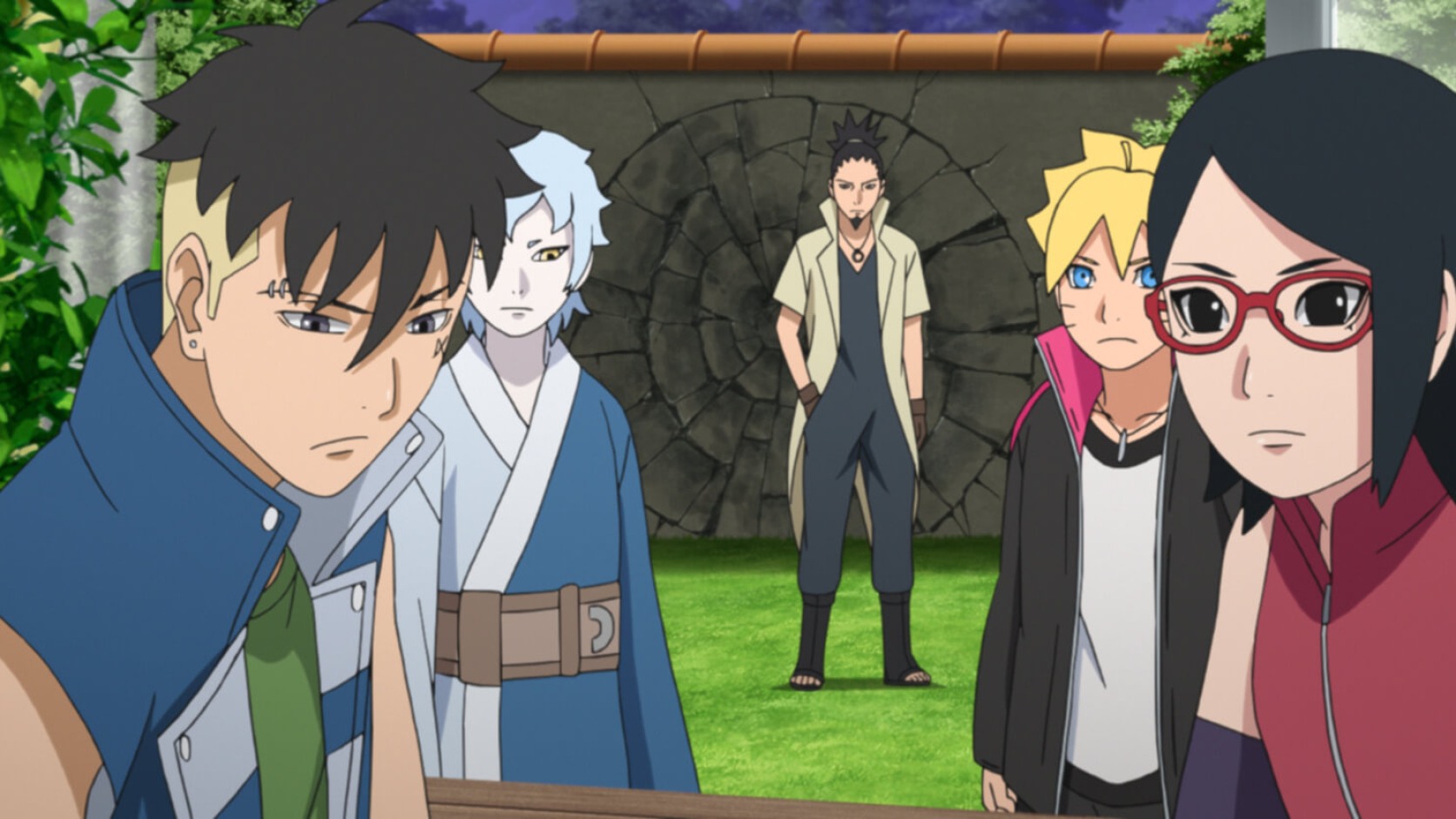
Naruto is missing, Kawaki is contained, and Konoha asks the child Kara imprisoned to prove himself before the village proves that its protection survives the Hokage’s absence.
Series: Boruto: Naruto Next Generations
Episode: 205 · Proof
Arc: Kawaki: Kara Clash
Release: June 27, 2021
Previous: Episode 204 · He's Bad News
Directory: All 293 Boruto episodes
Bottom line
Boruto Episode 205 asks Kawaki to prove himself at the exact moment trauma, grief, and institutional suspicion make coherent performance hardest. Naruto has vanished. Jigen used Kawaki’s body as the doorway. Shikamaru arrives, builds a barrier around the Uzumaki home, and treats containment as the safest response. His caution makes tactical sense, but safety for the village becomes confinement for the child Kara already imprisoned. Kawaki cannot offer innocence as a feeling. He must use the Kāma, coordinate with Boruto, and open a route toward Naruto. The episode’s title therefore cuts in two directions. Kawaki needs proof that Naruto can be recovered. Konoha demands proof that Kawaki deserves trust. Only one of those burdens should belong to him.
The title sounds neutral until power asks the question
“Proof” suggests evidence, fairness, and careful judgment. Evidence matters during a crisis. Jigen entered through Kawaki’s mark, Naruto disappeared, and nobody understands the full mechanism.
The problem begins when one traumatized child carries the entire burden of explanation. Institutions decide what counts as proof, how quickly proof must appear, and what punishment fills the gap before certainty arrives.
Naruto's absence reorganizes the room
The Uzumaki home still contains familiar walls and people, but Naruto’s disappearance changes every relationship. His authority protected Kawaki politically and emotionally. Without him, suspicion moves closer.
Safety built around one person becomes fragile when that person vanishes. Naruto’s care was real. Konoha still failed to turn his promise into shared policy strong enough to survive his absence.
Kawaki knows something terrible happened
The Kāma connection gives him bodily knowledge before the village has a report. He senses rupture without possessing a clean account of the battle.
Trauma makes uncertainty especially cruel. Kawaki knows Jigen’s capacity and may imagine every worst outcome at once. Demanding calm from him would confuse composure with credibility.
Shikamaru arrives as acting authority
Naruto is missing, so responsibility shifts. Shikamaru must protect the village, manage incomplete information, and make decisions before Sasuke can report.
His role deserves seriousness. A leader who ignores the possibility of infiltration would fail everyone. A leader who treats possibility as guilt can also fail the person most directly harmed.
The barrier is tactically understandable
Jigen entered through Kawaki. Nobody knows whether another portal can open or whether Kara can track the mark. Containment buys time and defines a perimeter.
The barrier is not automatically cruelty. Ethical judgment depends on duration, communication, necessity, and whether Kawaki retains voice. Emergency measures need limits precisely because fear makes expansion feel reasonable.
The barrier repeats the shape of captivity
Kawaki escaped a sealed environment where adults controlled movement in the name of a larger plan. Now Konoha closes another boundary around him.
Intent differs. Shikamaru wants to prevent harm, while Kara wanted to manufacture a vessel. The nervous system may still recognize walls before motives. Trauma-informed safety notices that resemblance instead of dismissing his reaction as ingratitude.
Containment can punish the person used as access
Jigen violated Kawaki’s body and turned the Kāma into a door. The village responds by restricting Kawaki because his body was violated.
That pattern appears whenever institutions transfer the cost of another person’s aggression onto the easiest body to control. Protecting others should not erase the injustice of that transfer.
Shikamaru distrusts a mechanism, then speaks to a person
The mark deserves suspicion. Kawaki deserves distinction from the mark. Crisis language can collapse those categories until a child becomes synonymous with a security threat.
Precise leadership says the access route is dangerous without calling the survivor dangerous by nature. Words influence how every guard, child, and neighbor interprets the containment.
Kawaki cannot provide a perfect timeline
He knows Jigen appeared, Naruto intervened, and the battle moved elsewhere. He does not know every technique, coordinate, or outcome.
Fragmented information is normal during crisis. A witness should not lose credibility because an abuser controlled the event and access to knowledge.
Boruto stands beside him
Boruto shares Kāma and has watched Kawaki struggle toward trust. His presence interrupts institutional isolation.
Peer loyalty matters because Boruto does not reduce Kawaki to a case file. He sees a person frightened for Naruto and understands that the mark can be both imposed danger and possible route.
Shared marks do not create identical experiences
Boruto and Kawaki can resonate through Kāma, but Boruto received his mark under different circumstances and grew up with secure attachment. Kawaki survived years of conditioning around his.
Solidarity becomes strongest when similarity opens understanding without erasing difference. Boruto can support Kawaki without claiming complete knowledge of his fear.
Sarada brings another kind of trust
Sarada knows Naruto as Hokage and personal inspiration. His disappearance frightens her, yet she listens to the possibility that Kawaki may help.
Her future leadership will depend on holding security and personhood together. Trust need not mean abandoning questions. Trust means refusing to decide guilt before evidence.
Mitsuki watches the system
Mitsuki has his own history as a created being whose purpose was assigned by adults. That background gives special weight to the scene even when he remains quiet.
He understands how a body can carry mechanisms and expectations the person did not choose. Observation can become solidarity when he helps keep the group focused on action rather than blame.
Team Seven changes the balance
Kawaki faces Shikamaru with peers beside him. The power difference remains enormous, but he is no longer one isolated child answering a state official.
Community does not erase institutional authority. Community makes misuse more visible and gives the targeted person witnesses who can remember what was said.
Shikamaru's fear deserves examination, not obedience
He has lost friends to attacks built on deception. Naruto’s disappearance threatens the village and someone Shikamaru loves. Suspicion comes from responsibility and grief.
Understanding his fear does not make every decision correct. Leaders need colleagues willing to challenge fear before fear hardens into policy.
Naruto trusted Kawaki with evidence
Naruto observed him, set boundaries, shared a home, defended him, and watched his choices change. That trust was not blind optimism.
Shikamaru does not inherit every private experience, but he should treat Naruto’s judgment as evidence rather than sentimental weakness. Institutional memory includes relational knowledge.
One advocate should never be the whole safety plan
Kawaki’s status changes dramatically because Naruto is unavailable. That fragility reveals a structural problem.
Rights should not depend on continued access to one powerful protector. Konoha needs procedures for children fleeing coercive organizations, including representation, review, and protection from retaliatory confinement.
The house becomes an interrogation room
Furniture, doors, and garden remain familiar, yet the barrier and official presence change the meaning of the space. Home no longer belongs fully to the family.
Conducting security questioning where the breach occurred may intensify fear. Familiarity cannot compensate for control entering the room.
Kawaki worries about Naruto before himself
He could focus on escaping suspicion. Instead, his urgency centers the man who protected him.
That concern offers evidence of relationship, but Kawaki should not need selflessness to earn humane treatment. Even a defensive or angry reaction would not prove complicity.
Survivor guilt waits beneath every answer
Jigen used Kawaki to reach Naruto. Kawaki may interpret causation as responsibility: without him, Naruto would be home.
The accurate sentence names Jigen’s agency. Jigen chose the intrusion and attack. Kawaki’s body was exploited. Repeating that distinction will matter long after rescue.
Proof should target the aggressor's system
Investigators need evidence about Kāma activation, spatial coordinates, Kara’s surveillance, and Jigen’s limitations. Those questions focus on the mechanism of harm.
Questions about whether Kawaki secretly wanted Naruto taken shift attention toward character judgment. Evidence gathering should reduce danger rather than satisfy suspicion.
The prosthetic arm becomes a signal
Naruto’s chakra-powered prosthetic links Kawaki to the missing Hokage. A change in that connection carries information about Naruto’s condition.
The arm is practical support, emotional bond, and diagnostic clue. Dependency creates vulnerability, but shared chakra also makes relationship physically legible.
Bodily evidence can overwhelm privacy
The village may need information from Kawaki’s mark and prosthetic to locate Naruto. Urgency does not erase the need to explain what is being examined and why.
Kara treated his body as public property for its project. Konoha must not repeat that logic while claiming rescue as justification.
Kawaki proposes using Kāma
The same mark that enabled Jigen’s breach may provide a path back. Kawaki turns imposed technology toward chosen rescue.
Reclaiming a tool does not redeem the violation that installed the tool. Agency appears when he decides how to use a capacity that once served only Kara.
Boruto's resonance makes cooperation possible
Their marks respond to one another, creating a route neither boy can open alone. Shared danger becomes shared action.
Cooperation should remain voluntary. The village cannot treat Boruto and Kawaki as paired equipment simply because their bodies interact.
Opening the portal is not proof of innocence
Kawaki’s success may persuade suspicious adults, but usefulness should not determine whether he deserves rights. A person can be unable to help and still be innocent of betrayal.
The rescue proves a mechanism and a choice. The choice reveals loyalty, yet humane treatment should have preceded performance.
Usefulness becomes a dangerous bargain
Kawaki may learn that Konoha accepts him when he provides access, intelligence, or power. Kara taught a harsher version of the same lesson.
Belonging must survive moments when he contributes nothing. Otherwise, the village offers conditional value instead of family.
Shikamaru needs verification without humiliation
Skepticism can coexist with respect. He can maintain the perimeter, document observations, seek independent confirmation, and explain thresholds for changing restrictions.
Humiliation adds no security. Clear process produces better cooperation because people understand how evidence will affect decisions.
The children are asked to solve an adult failure
Kara’s leaders created Kāma, attacked Naruto, and built the dimensional trap. Now four young people become the available rescue team.
Their courage deserves admiration alongside anger at the circumstances. Children should not need extraordinary competence to compensate for adult systems.
Agency and burden arrive together
Helping Naruto gives Kawaki meaningful choice. The mission also places enormous responsibility on someone already terrified.
Empowerment becomes exploitation when adults celebrate agency while withdrawing support. The team needs backup, information, and a plan for return.
The portal is a boundary negotiated by trust
Shikamaru must allow action from someone he does not fully trust. Kawaki must expose the mark to officials who have contained him.
Both sides accept risk, but the risks are not equal. Shikamaru risks a security failure. Kawaki risks recapture, bodily use, and confirmation that Konoha sees him only as danger.
Proof changes through action
The episode moves from verbal claims toward observable cooperation. Kawaki shares knowledge, responds to Boruto, and opens the way.
Action can clarify intent without revealing a pure inner self. People remain complicated. Ethical judgment should focus on present choices and evidence rather than demanding impossible certainty.
Trust is not the absence of safeguards
Boruto can trust Kawaki while acknowledging Kāma’s risk. Shikamaru can build safeguards without declaring Kawaki guilty.
Healthy systems separate care from naivety and caution from punishment. The episode’s tension grows because Konoha has not yet mastered that separation.
The barrier needs an exit condition
Emergency restrictions become dangerous when nobody defines when they end. “Until we feel safe” can stretch forever around a person already marked as suspicious.
Shikamaru should name the evidence required, the official responsible for review, and the rights that remain intact during containment. Procedure is a moral protection against fear’s appetite.
Kawaki deserves representation
A child facing security decisions should not argue alone against senior officials. Naruto served informally as advocate, but his disappearance exposes the need for someone else.
Representation helps translate questions, challenge assumptions, and ensure that urgency does not swallow rights. Boruto’s loyalty is valuable, yet another child cannot carry the legal burden.
Konoha's history should make suspicion more careful
The village has repeatedly feared children carrying dangerous powers, including Naruto himself. Adults once treated a child as the threat represented by what was sealed inside him.
Remembering that history should change present practice. Institutional learning requires more than celebrating Naruto after he succeeds.
The jinchuriki parallel has limits
Naruto and Kawaki both carried imposed power and community suspicion. Kawaki’s mark also functions as active access for an abuser, creating distinct security needs.
Parallel experience offers empathy without producing a copied solution. Konoha must respond to Kawaki’s actual circumstances rather than reenact Naruto’s story with improved intentions.
Rescue cannot erase the interrogation
If Team Seven recovers Naruto, relief may tempt everyone to forget how Kawaki was treated before the portal opened.
Good outcomes do not make process harmless. Repair requires acknowledging unnecessary suspicion, reviewing containment decisions, and changing future response.
Kawaki's choice carries real courage
Opening a route toward Jigen means moving closer to the person who abused him. He acts while fear remains active.
Courage is not proof that trauma has ended. Courage means choosing under conditions that make choice costly.
Boruto supports without speaking for him
The strongest solidarity leaves room for Kawaki to explain and decide. Boruto can challenge Shikamaru without replacing Kawaki’s voice.
Speaking beside someone differs from speaking over someone. Team Seven works best when support increases the targeted person’s ability to act.
Sarada's leadership begins with witness
Future authority develops through moments when official caution collides with individual rights. Sarada sees both the danger and the human cost of response.
Remembering this scene may matter more than winning an argument. Leaders need memory of how containment feels from inside the barrier.
Mitsuki understands chosen purpose
Mitsuki once centered his identity around another person and gradually developed a broader sense of self. Kawaki now chooses a purpose beyond Jigen’s design.
Chosen purpose remains healthy only when change stays possible. Helping Naruto should be one decision, not a new destiny imposed by gratitude.
The rescue team forms through relationship
Boruto, Sarada, Mitsuki, and Kawaki do not assemble because a command assigned ideal assets. Shared concern and trust bring them together.
Relationship improves coordination, but command still owes them preparation. Love cannot substitute for equipment, medical support, or extraction planning.
Amado and Jigen show another version of proof
Elsewhere, Kara measures bodies through data, compatibility, and performance. Jigen’s failing vessel becomes a technical problem, while Kawaki remains the desired solution. That system also asks for proof, but only proof of usefulness.
Konoha must not mirror Kara by using kinder language around the same measurement. Kawaki’s ability to open a portal can matter tactically without becoming the evidence that grants personhood. Rights exist before successful performance and remain after failure.
Scientific knowledge needs ethical custody
Understanding Kāma may require expertise Konoha does not yet possess. Information from Kara insiders could save Naruto and protect both boys. Expertise alone cannot establish trustworthiness.
Ethical custody means verifying claims, limiting access to bodies and records, and explaining uncertainty to the people carrying the marks. Scientific urgency can become coercion when experts decide that knowledge matters more than consent.
Crisis compresses choices without eliminating them
Naruto may be dying or trapped, so nobody has unlimited time. Urgency narrows the range of safe options and makes every delay costly.
Compressed choice still differs from no choice. Kawaki can receive the known risks, name objections, and decide how his mark participates. Even brief consent communicates that his body belongs to him, a truth Kara worked hard to destroy.
Repair should happen after the portal opens
Shikamaru and Kawaki do not need emotional resolution before the rescue begins. Immediate action can come first. That sequence should not erase the need for later conversation.
Repair would include Shikamaru explaining his decision, listening to the impact, acknowledging where language caused harm, and establishing a better protocol. Kawaki can accept, reject, or complicate that apology. Accountability offers no guaranteed emotional outcome.
Proof must flow in both directions
Konoha asks Kawaki to demonstrate loyalty and control. Kawaki also needs evidence that Konoha’s promises survive Naruto’s absence. The barrier gives him reason to doubt.
Institutions earn trust through transparent rules, consistent treatment, meaningful review, and repair after mistakes. A vulnerable person should not carry every test while authority remains unexamined.
What the episode gets right
“Proof” refuses to make institutional caution entirely foolish or entirely innocent. Shikamaru has legitimate reasons to fear the mark, and Kawaki has legitimate reasons to experience containment as betrayal.
The strongest writing lives inside that collision. Safety questions become more honest when viewers can see who pays for each precaution.
Where the episode needs care
Kawaki’s successful portal risks validating the idea that usefulness earns trust. The story must preserve his worth beyond rescue.
Shikamaru’s choices also need accountability after the emergency. Tactical necessity should not become a permanent exemption from reflection.
RaeRae verdict
Boruto Episode 205 earns four and a half bowls of ramen out of five. The episode understands that a barrier can protect a village and wound a child at the same time. Shikamaru’s suspicion feels credible because the threat is real. Kawaki’s anger and fear feel necessary because confinement repeats the shape of everything he escaped.
The proof that matters most is not that Kawaki can be useful. The proof lives in his choice to move toward danger for Naruto, surrounded by peers who refuse to leave him alone with the village’s suspicion.
Before the next episode
Episode 206, “The New Team Seven,” follows Boruto, Sarada, Mitsuki, and Kawaki through the portal to recover Naruto. Cooperation becomes more than an argument inside a barrier.
Watch whether the mission gives Kawaki genuine membership or simply borrows his access. A team should distribute risk, voice, and credit.
Sources and lawful viewing
The official Naruto site provides the Episode 205 synopsis and gallery. Crunchyroll carries “Proof” where regional availability permits. Release and streaming details can vary by country.
Official episode reference: Naruto Official episode guide
Licensed episode route: Crunchyroll licensed series page
After watching, ask which safety measures were necessary, which choices repeated Kara’s control, and what Konoha should change before the next frightened child needs protection without a Hokage standing in the room.