
The Power to See the Future
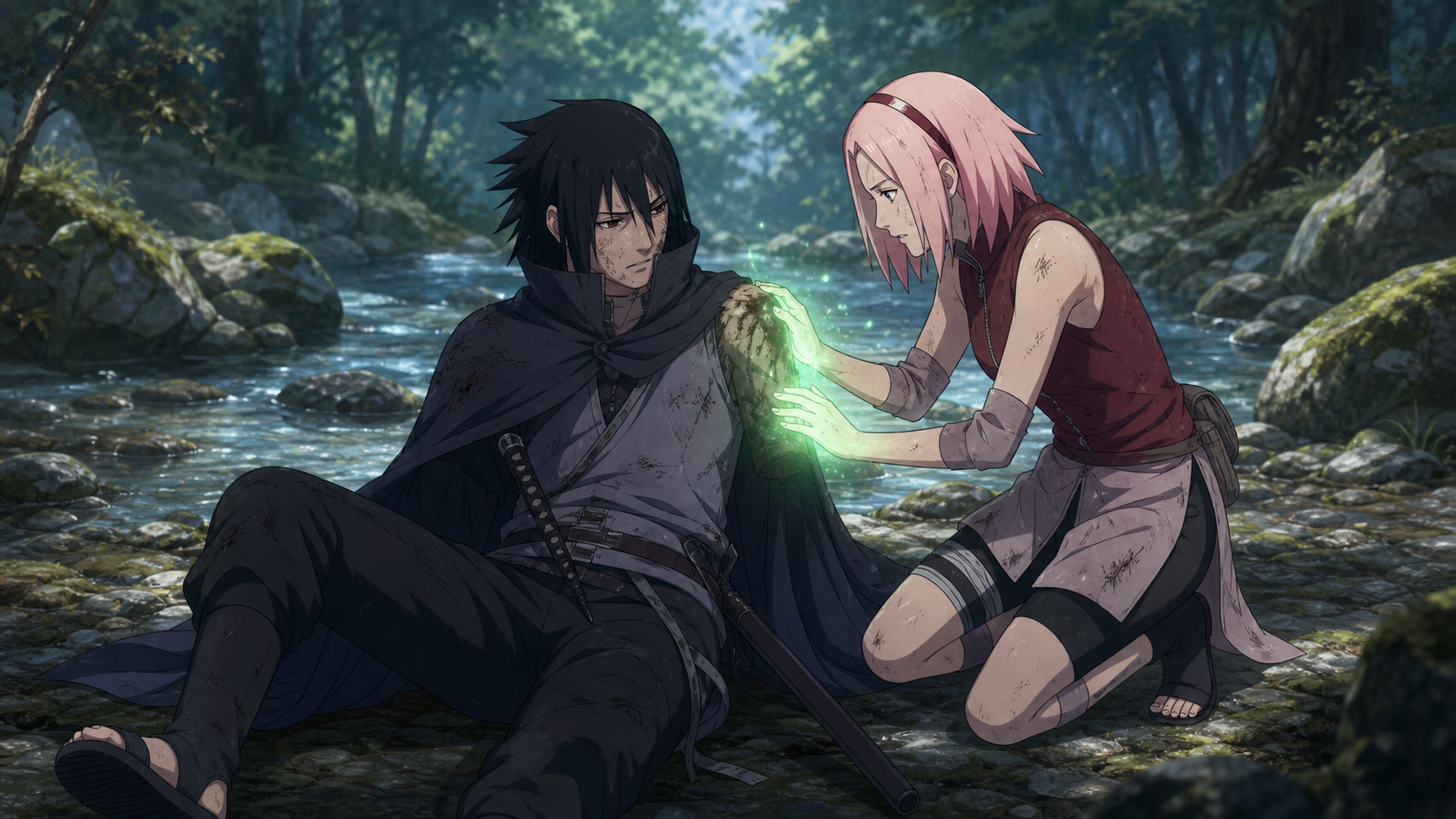
Urashiki dodges every attack until Boruto and Jiraiya notice that his body is living more time than everyone else, while Sakura unknowingly rescues adult Sasuke.
Series: Boruto: Naruto Next Generations
Episode: 134 · The Power to See the Future
Arc: Time Slip Arc
Release: 2019-12-01
Previous: Episode 133 · A Village Without Sasuke
Directory: All 293 Boruto episodes
Bottom line
Boruto Episode 134 turns Urashiki's boast about seeing the future into a problem that only careful observation can solve. Sasuke cannot overpower him. Jiraiya cannot surprise him. Naruto and Boruto cannot touch him. The winning clue comes from blood drying too quickly on Urashiki's clothes, which tells Boruto and Jiraiya that the enemy is not looking forward. He is repeatedly moving himself a few seconds backward and choosing a better response.
That distinction gives the episode its best idea. Future sight sounds absolute because every attack arrives after Urashiki already knows the answer. A short personal rewind has limits, physical costs, and a body that still experiences the repeated time. Jiraiya uses those limits against him by trapping everyone inside a toad's acidic stomach, where every rewind adds more exposure to poisonous vapor.
The episode also gives Sakura one of the strangest emotional encounters in the franchise. She finds the adult Sasuke she has not met yet, drags him to safety, and treats the man her teenage self is still trying to bring home. Sasuke wakes under the care of someone he hurt deeply and cannot explain that she eventually becomes his wife.
Urashiki makes every attack look foolish
Naruto and Boruto keep attacking while Urashiki slips around every strike. His movement looks less like superior speed and more like certainty. He knows where the blow will land, where the wire will tighten, and where a hidden attacker will emerge.
That certainty drains the fight of normal cause and effect. Training, teamwork, and surprise mean little when the enemy has already experienced the failed version of the moment. Urashiki's smugness grows because he can let everyone exhaust themselves while he selects the safest path.
The animation does not always sell the danger. Several dodges look casual when the scene needs sharp spatial logic. The underlying problem still works because the heroes cannot treat faster attacks as an answer to information control.
Sasuke spends his body to buy seconds
Sasuke orders Boruto to escape with Naruto. Jiraiya summons a toad and pulls both boys away while Sasuke grabs Urashiki and throws them from a cliff into the river.
The move is desperate because Sasuke has almost no chakra left. He cannot use his usual arsenal, so he turns his body into the obstacle. Adult Sasuke has spent years protecting Konoha from the shadows. In this moment he protects the child Naruto before that child can become Hokage.
The sacrifice also answers young Naruto's earlier story about refusing to abandon Sasuke. Naruto does not know the injured stranger is the friend he keeps chasing, but Sasuke is finally living the loyalty Naruto once gave him.
Boruto has to leave his teacher behind
Boruto fights the retreat because Sasuke is his teacher and the only other person from his time. Jiraiya restrains him and prioritizes Naruto, the target Urashiki came to harvest.
That decision feels cruel because Boruto has already watched Sasuke run low on chakra and absorb punishment. Going back without a plan would give Urashiki another hostage. Jiraiya refuses to let loyalty turn into a predictable suicide charge.
Boruto's panic still matters. Time travel has stripped away his normal support system. If Sasuke dies or disappears, Boruto loses his route home and the adult who understands the timeline risk. Protecting Naruto cannot erase that fear.
Sakura finds the man she is searching for
Sakura follows the river and finds Sasuke unconscious. She does not know his identity, but his face, clothing, sword, and connection to the damaged note make him impossible to ignore. She moves him away from the exposed bank and begins treatment.
The scene carries more weight than the episode says aloud. Teenage Sakura is living through younger Sasuke's desertion. She has promised herself that Team 7 can still recover him, but she has no evidence that hope will succeed.
Adult Sasuke is the evidence. He returned, survived the war, built a family with her, and accepted a lifelong role protecting the village. Sakura saves that future without knowing any part of the outcome.
Medical training becomes Sakura's own power
Sakura does not rescue Sasuke through romance or recognition. She uses medical skill, judgment, and physical labor. The choice matters because Part I often framed her through feelings for Sasuke before her training with Tsunade gave those feelings a disciplined outlet.
By this point, Sakura has begun becoming the medic and fighter who will stand beside Naruto and Sasuke rather than behind them. The adult Sasuke benefits from work the younger version never stayed to witness.
Her care also creates a quiet debt across time. Adult Sasuke cannot thank her honestly. Sakura cannot know why the stranger looks at her with such complicated restraint. The relationship exists on both sides of the scene, but only one person knows.
Jiraiya refuses to chase a mystery blindly
Naruto tends Jiraiya's wound while Boruto argues that they must find Sasuke. Jiraiya insists that Urashiki's technique has to be understood first. Another direct confrontation will repeat the same failure.
That pause is not cowardice. Jiraiya has been stabbed, Sasuke is missing, and Naruto remains exposed. A responsible commander studies the enemy before spending more people.
The episode remembers that Jiraiya is a spy and researcher. His greatest value does not come from the size of a Rasengan. He notices patterns, asks what a technique costs, and builds traps around the answer.
A stab wound gives Boruto the first clue
Boruto looks at Jiraiya's injury and realizes Urashiki's claim does not fully explain what happened. Seeing the future would let Urashiki avoid an attack, but physical details around repeated encounters suggest something else.
Boruto proposes testing a theory instead of delivering a complete answer. That choice fits the better version of his intelligence. He is quick, technically educated, and willing to use the next exchange as evidence.
Jiraiya supports the experiment because speculation needs a result. The two generations work well together here. Boruto spots the inconsistency. Jiraiya turns the clue into a controlled test.
Urashiki tries to make Sakura choose
Urashiki tracks Sasuke's trail and reaches the area where Sakura is hiding him. He cannot immediately locate them, so he offers to spare Sakura if she hands the injured stranger over.
The bargain reveals how little Urashiki understands human relationships. Sakura does not know Sasuke's name, but she knows he protected Naruto and arrived injured. She is not going to deliver a patient to the person hunting him.
Her refusal echoes Naruto's refusal to abandon younger Sasuke. Neither teenager has the full information adults would demand. Both decide that a person in danger is worth the risk.
Blood exposes the false future
Boruto manages to get blood on Urashiki during the next exchange. Jiraiya and Boruto notice that the blood on Urashiki dries faster than blood outside his personal experience of the moment.
Drying blood is wonderfully ordinary evidence for a time technique. No ancient scroll appears. No narrator explains the power. A physical process reveals that Urashiki has lived more seconds than everyone around him.
The clue also restores fairness to the fight. Urashiki's ability is extraordinary, but the world still leaves traces. Observation can reach where brute strength cannot.
Urashiki rewinds himself rather than the world
Jiraiya concludes that Urashiki returns his own experience a few seconds into the past. He can repeat the same interval, learn each attack, and select the version where he avoids the danger.
Everyone else experiences one clean timeline. Urashiki experiences several failed attempts before presenting the successful result. His confidence comes from editing out every mistake.
That mechanism explains why the blood dries faster on him. His body accumulates time even when the surrounding moment resets from his perspective. The ability protects him from immediate hits but cannot erase every physical cost.
Repetition becomes the weakness
Once Jiraiya understands the mechanism, the question changes. The team does not need to surprise Urashiki once. They need to make repeated success expensive.
Naruto and Boruto create shadow clones and force Urashiki to use the rewind again and again. Every avoided attack makes him relive the same hostile environment. His advantage becomes compulsory repetition.
This answer feels like Naruto at his best. Shadow clones do not merely add bodies. They overload the enemy's decision-making and turn endurance into strategy. Boruto helps shape the pattern while young Naruto supplies the relentless volume.
Jiraiya turns a toad's stomach into a clock
Jiraiya traps the group inside a summoned toad's stomach. Acidic vapor fills the enclosed space. Urashiki can rewind a few seconds, but each personal rewind extends the amount of vapor his body inhales.
The trap attacks elapsed experience rather than location. Dodging a kunai cannot remove poison already entering the lungs. Repeating the moment makes the exposure worse.
Jiraiya wins the intellectual contest because he accepts the technique's premise and changes the battlefield. Urashiki can choose among short futures, but every choice remains inside the same stomach.
Urashiki's body keeps the receipts
Urashiki coughs blood after repeated rewinds. The body records the time his technique tries to hide. His power edits visible outcomes, not biology.
That consequence is the episode's strongest piece of ninja logic. Great abilities in Naruto usually become interesting when rules create counterplay. A technique without cost becomes spectacle. A technique with a measurable limit becomes a problem characters can solve.
Urashiki loses control because arrogance kept him rewinding after the environment had already become dangerous. He trusted the clean appearance of each reset more than the warning from his own body.
Naruto and Boruto finally use cooperation in battle
After Jiraiya releases the stomach trap, Boruto accelerates Naruto into position. Naruto lands a Rasengan while Urashiki is weakened by the vapor.
The attack pays off the chakra-synchronization training without pretending the boys have mastered a brand-new ultimate technique overnight. Their cooperation appears through timing, trust, and movement.
Boruto has spent the arc meeting the child behind the Hokage title. Naruto has spent the arc trusting a strange boy who knows too much. The successful attack turns that growing relationship into a combat result.
The episode still undersells Sasuke
Sasuke's exhaustion provides the plot with room for Jiraiya, Naruto, and Boruto to solve the problem. The repeated low-chakra explanation still feels stretched for a shinobi whose adult power operates at a near-mythic level.
Removing Sasuke from the main solution is not automatically wrong. Sakura's rescue has emotional value, and Jiraiya deserves the tactical victory. The problem comes from how often the arc reduces Sasuke without making the depletion feel consistent from scene to scene.
Fans notice because power is part of characterization. Sasuke does not need to dominate every fight, but his limitations should feel like consequences rather than a switch the script flips whenever younger characters need space.
Calling the ability future sight gives Urashiki psychological control
Opponents stop trusting their own decisions because every action appears anticipated. The label turns repeated failure into proof that resistance is impossible.
Boruto and Jiraiya break that control by examining physical evidence. Blood, wounds, timing, and repeated reactions contradict the story Urashiki tells about himself.
That method matters beyond one technique. An enemy’s explanation is part of the attack. Shinobi intelligence should verify claims through observation rather than organize the whole plan around the most frightening description available.
Urashiki loses part of his advantage the moment the heroes rename the mechanism accurately.
Sasuke buying seconds with his body deserves medical consequences
He is depleted, injured, displaced in time, and still places himself between Urashiki and the children. The action creates room for escape without solving the threat.
Repeatedly using his body as a barrier cannot remain a visual shorthand with no aftermath. Sakura finds him because collapse finally makes the cost visible.
Medical evaluation should include chakra exhaustion, blood loss, ocular strain, and whatever time-travel exposure Karasuki created. Rest is not cowardice when continued combat could turn temporary depletion into permanent damage.
Sasuke’s protection matters more when the story lets protection leave marks.
Boruto leaving Sasuke is a leadership choice nobody should ask a child to make alone
Staying risks losing Naruto and allowing Urashiki to recover. Leaving means abandoning an injured teacher without knowing whether help will arrive.
Sasuke gives the instruction, which shifts responsibility toward the adult. Boruto still carries the emotional consequence.
A mission plan should establish thresholds before crisis: when to evacuate, who remains with an injured teammate, how to signal medical help, and what evidence confirms the person left behind can survive.
Boruto obeys because time has collapsed. Afterward, Sasuke needs to tell him plainly that the choice was not betrayal.
Sakura’s care is powerful because she does not need the mystery solved first
She recognizes injury, stabilizes the patient, and spends chakra on a man whose identity and presence make no sense.
Her medical action comes from training and ethics rather than romantic destiny. The scene gains emotional weight because viewers know the patient is Sasuke, while young Sakura acts without that certainty.
She deserves enough information to protect herself from danger. Sasuke also deserves confidentiality once stable. Care balances those needs by treating the body before demanding a complete story.
The future survives because Sakura already knows how to make usefulness her own.
Urashiki forcing Sakura into the scene weaponizes her compassion
He attacks or threatens in ways designed to make Boruto and the others divide attention. Sakura becomes leverage because everyone knows she will try to help an injured person.
That does not make compassion a weakness. The absence of a protection plan makes compassion exploitable.
Jiraiya and Boruto should create cover, assign evacuation, and keep Urashiki from controlling which person receives help first. Sakura should not be expected to stop caring so the fighters can maintain formation.
Strong teams build tactics around predictable goodness instead of punishing people for possessing goodness.
The time limit becomes useful only after the team measures the limit
Knowing Urashiki rewinds briefly is not enough. Jiraiya needs duration, trigger, recovery interval, and physical consequence.
The toad-stomach environment turns each repetition into data. Vapor exposure accumulates even when Urashiki rewinds his conscious position. His body becomes the record he cannot edit cleanly.
The plan works because observation changes battlefield design. They stop trying to surprise somebody who repeats short futures and create a condition where repetition itself produces damage.
That is the kind of tactical answer the arc needed earlier: specific, testable, and attached to a cost.
Naruto and Boruto’s cooperation succeeds without pretending their chakra is identical
The boys struggled because synchronization requires listening as much as output. Boruto’s frustration and Naruto’s insecurity disturbed timing.
The successful sequence uses movement, trust, and a defined opening. Boruto accelerates Naruto rather than trying to become a second Naruto.
Their difference remains useful. Boruto carries future training and precise direction. Naruto supplies the Rasengan and instinct developed through his own difficult learning.
Cooperation does not erase the age gap or family mystery. Cooperation gives both boys a task they can complete together now.
Sasuke’s inconsistent depletion weakens the rules around every other victory
The arc needs Jiraiya, Naruto, Boruto, and Sakura to matter, so Sasuke cannot solve each threat immediately. That narrative choice is sound.
The execution changes his capacity scene by scene without enough accounting. How much chakra did time travel consume? Which techniques remain available? What recovery does Sakura provide? Which injury blocks which action?
Clear limits would strengthen supporting characters because their contributions would answer defined needs rather than occupy space created by an invisible switch.
Power scaling becomes storytelling when consequences remain legible.
The temporary victory needs a second plan before relief arrives
Urashiki survives the Rasengan. Team members are injured, exhausted, and exposed. The enemy now knows they understand the rewind.
Jiraiya should assume the next form will change absorption, speed, or range. Civilians need evacuation. Sakura needs protection and medical supplies. Sasuke needs a recovery threshold before reentry.
The heroes have gained knowledge, not closure. Converting that knowledge into a new plan is the difference between learning the rule and surviving the opponent who knows the rule has been learned.
Sasuke owes Sakura protection from the consequences of helping him
Her treatment may expose her to Urashiki, timeline anomalies, or questions from Konoha officials who notice an unidentified adult patient. Accepting care creates responsibility for the patient too.
Sasuke should leave the medical space clean, recover foreign materials, avoid exposing her notes, and make sure no enemy can track her through the chakra she spent. If memory erasure becomes necessary later, the choice should be as narrow as possible.
He cannot repay care by making Sakura’s risk invisible. Even without revealing his identity, he can warn Jiraiya that the young medic needs protection and credit her contribution to the plan.
The future Sasuke knows exists partly because Sakura repeatedly chose to help people before knowing whether the help would be returned.
Final reaction
“The Power to See the Future” works because Boruto and Jiraiya refuse Urashiki's description of his own ability. The enemy says he sees the future. Blood says his body has experienced extra time. Once they trust the evidence, an impossible power becomes a short rewind with a measurable cost.
Jiraiya owns the tactical victory. He delays the rescue attempt, helps test Boruto's theory, identifies the time limit, and builds a battlefield where every rewind poisons Urashiki further. The plan feels like shinobi work rather than a contest of bigger explosions.
Sakura owns the emotional half. She finds adult Sasuke while searching for his younger self and heals the future she still believes might exist. Sasuke cannot tell her that her hope survives, which keeps the scene from becoming cheap reassurance.
The episode leaves Urashiki moving after the Rasengan, so the victory is temporary. That warning fits the lesson. Understanding an ability creates a chance, not a guarantee. Naruto, Boruto, Jiraiya, Sasuke, and Sakura have each contributed something different, and the final fight will demand all of those choices again.
Sources and lawful viewing
Official episode reference: Naruto Official episode guide
Licensed episode route: Crunchyroll licensed series page