
The Steam Ninja Scrolls: Mirai's King!
Mirai catches Ryūki with a fake memory, defeats his counterfeit resurrection, and discovers that Asuma’s answer has been living in her name.
Series: Boruto: Naruto Next Generations
Episode: 111 · The Steam Ninja Scrolls: Mirai's King!
Arc: Steam Ninja Scrolls
Release: 2019-06-16
Previous: Episode 110 · The Steam Ninja Scrolls: The Resurrection Hot Springs!
Directory: All 293 Boruto episodes
Bottom line
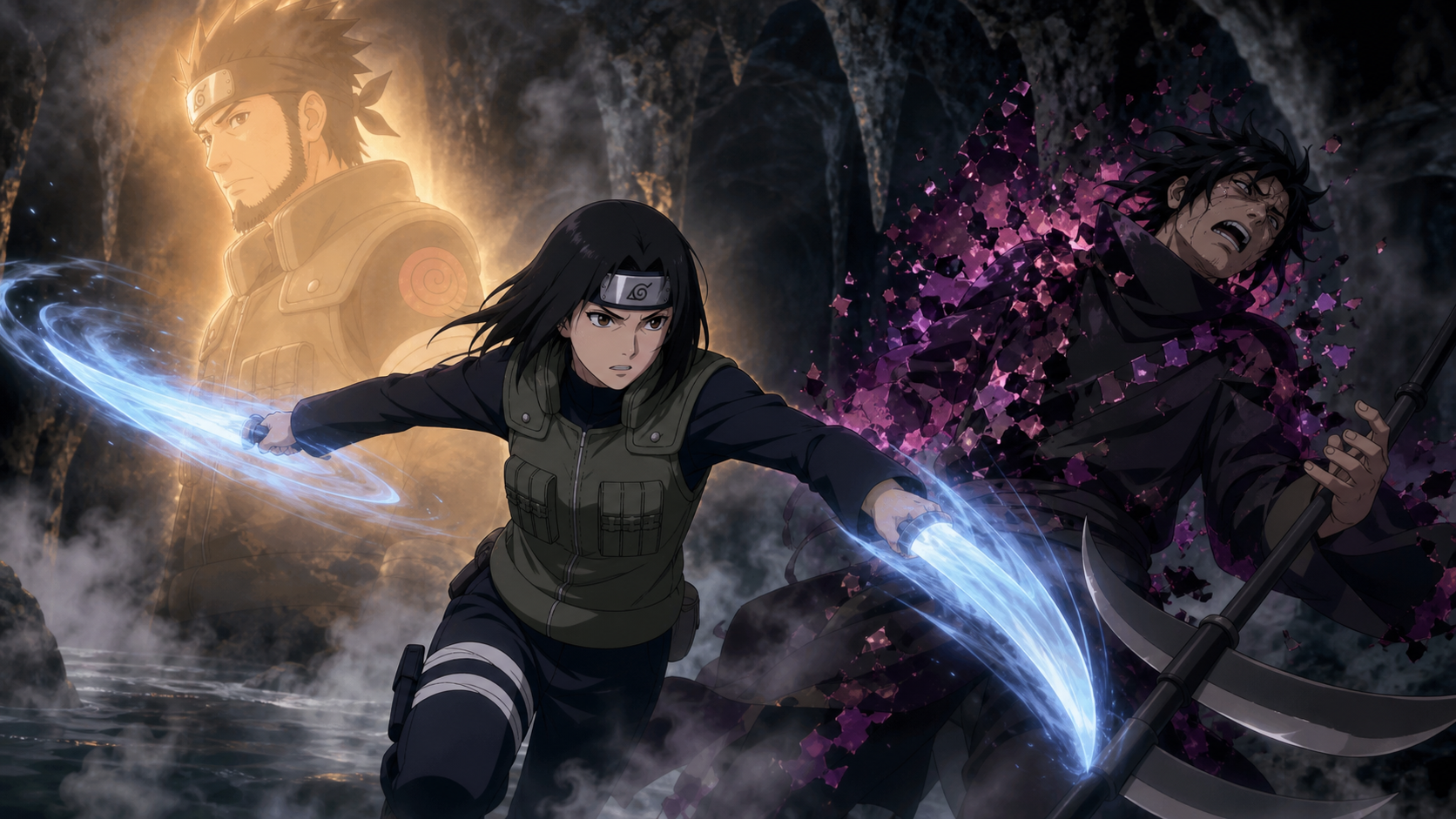
Boruto Episode 111 gives Mirai the meeting with Asuma she wanted, then makes her strong enough to reject the counterfeit. “The Steam Ninja Scrolls: Mirai's King!” closes the arc by revealing Ryūki as a Jashinist chasing Hidan's version of immortality through stolen blood and grieving women. He claims Asuma wants to see his daughter. Mirai tests the story with a fake shōgi player, catches Ryūki agreeing to a memory that never existed, and turns the ritual against him. She shocks the drugged women awake, replaces her blood with iron-rich spring water inside a layered genjutsu, and lets Ryūki believe his ceremony worked before breaking the illusion and dropping him with Asuma's chakra blades. Kakashi and Guy see Asuma in her, but Mirai wins through Kurenai's genjutsu, Asuma's wind style, and her own decision-making. Then the vacation comedy reveals itself as a real investigation into the missing women, with Kiba, Chōji, and Tenten gathering intelligence while Mirai protected the operation. Back in Konoha, Mirai finally tells Shikamaru that the king is the future generation. He points out that her name already means future. The answer was never hidden in a dead man's voice. Mirai had to become responsible for living people before the word could belong to her.
Mirai remembers exactly how Hidan killed Asuma
She read Shikamaru's mission report. Hidan used Asuma's blood to create a link, transferred wounds through his ritual, and made immortality look like divine favor.
Ryūki's ceremony does not arrive as abstract cult nonsense. The method reaches directly into the violence that took Mirai's father before she was born.
That connection turns the confrontation into more than revenge. Mirai has to stop another man from building power out of blood, grief, and the promise that death follows rules only he understands.
Ryūki asks the women whether they hear familiar voices
The ritual begins with suggestion. He tells the gathered women what kind of experience to expect, then asks whether the dead are calling.
Steam, exhaustion, mineral gases, group pressure, and weeks of anticipation do the rest. A woman desperate to hear one voice can shape any sound into the syllables she needs.
Ryūki does not resurrect anybody. He teaches grief how to hallucinate on command.
Mirai worries Asuma would not recognize her
Her fear is brutal because Asuma never saw the person she became. He knew Kurenai was pregnant. He did not know Mirai's face, voice, habits, or the way she carries his blades.
Mirai wants to ask him to teach her shōgi, but the smaller fear comes first: what if her father looks at her like a stranger?
Every adult around Mirai recognizes Asuma in her. She cannot know whether Asuma would recognize himself.
Ryūki claims he moves between the living and the dead
He presents himself as the bridge Mirai lacks. According to him, Asuma has already spoken about her and wants the meeting.
That claim is designed to make questions feel cruel. Doubting Ryūki now means doubting that Asuma wants his daughter.
Manipulation often hides a demand inside reassurance. Believe the leader, or accept the most painful interpretation of your loss.
Mirai invents a shōgi master and waits for the lie
She names a player Asuma supposedly admired and ties the fiction to the origin of her own name. Ryūki immediately confirms that Asuma told him the story.
No such player exists. Mirai gives him a fact that cannot be true and watches his need to sound omniscient defeat him.
The test is clean because Ryūki cannot blame misunderstanding. He claims personal access to Asuma, then manufactures agreement rather than admitting ignorance.
The fake memory saves Mirai from the fake reunion
Mirai wants the promise to be real. That desire makes her test more impressive, not less.
She creates a boundary her hope cannot rewrite. If Ryūki repeats the invented story, every other claim collapses with the lie.
People trapped by grief often need one verifiable point because emotion can negotiate with every vague warning. Mirai gives herself a fact solid enough to stand on.
Ryūki orders the women to drink
Once exposed, he moves from persuasion to control. The ritual water works with the cave's gases to keep the women passive and suggestible.
He needs their obedience more than belief. The spiritual language disappears as soon as Mirai threatens the system.
That transition reveals the entire operation. A promise that cannot survive one question was never built for healing.
Lightning Release wakes the room
Mirai sends a controlled shock through the women and breaks the chemical fog holding them. The technique is forceful without treating the victims as enemies.
She understands the difference between people participating under manipulation and the man directing the manipulation.
Rescue means restoring their ability to choose before demanding that they make the correct choice.
Ryūki wants Mirai's blood because lineage becomes theater
Asuma's daughter offers symbolic value to a Hidan admirer. Ryūki believes her blood can complete a ritual tied to the man Hidan killed.
He turns family history into a prop for his own importance. Mirai is not a person in his plan. She is proof that he has inherited Hidan's sacred violence.
The episode answers that obsession by letting Mirai define what inheritance actually looks like.
The blood Ryūki tastes is iron-rich water
Mirai uses the metallic spring water noticed during the previous night's journey. Inside her genjutsu, Ryūki believes he has cut her and consumed the blood needed for immortality.
That payoff rewards observation across episodes. The mineral taste was not decorative travel information. Mirai stored the clue and turned the environment into part of her counterattack.
Ryūki believes whatever supports his grand ritual, which makes him easier to deceive than the grieving women he exploited.
Mirai lets the illusion complete before breaking the frame
Ryūki sees his ceremony succeed. He believes Mirai's body is under his control and believes damage transfers through the ritual.
The victory swells until Mirai reveals that every stage happened inside genjutsu. His immortality lasted only as long as her decision to maintain the image.
That humiliation is precise. Ryūki built power by controlling what vulnerable people perceived. Mirai defeats him by controlling his perception and giving him the miracle he was greedy enough to accept without testing.
Kurenai's inheritance wins before Asuma's blades move
The arc repeatedly asks whether Mirai resembles her mother or father. Episode 111 refuses to choose.
Kurenai's genjutsu tradition creates the decisive opening. Asuma's chakra blades and wind nature finish the fight. Mirai combines both through a plan neither parent supplied.
Inheritance is not a personality quiz. She does not have to be one parent's echo at the expense of the other.
Ryūki cannot tell reality from illusion after the reveal
Once Mirai breaks the first genjutsu, he assumes every new sight might be another trick. The uncertainty ruins his confidence.
That consequence fits a man who taught mourners to distrust their own senses. He finally experiences a world where perception has no stable authority.
Mirai does not need another elaborate illusion. His panic does part of the work for her.
Asuma appears as memory, not resurrection
Kakashi and Guy watch Mirai strike and see Asuma's presence in her movement. The image is emotional recognition, not proof that Ryūki's spring worked.
That distinction protects the arc's argument. Mirai does not meet a summoned father. She carries lessons, techniques, relationships, and the future he died protecting.
The dead remain dead. Their influence does not.
Mirai defeats Ryūki as herself
Her final attack carries Asuma's blades, but the path to that strike belongs to Mirai: the false shōgi story, controlled Lightning Release, iron-water substitution, genjutsu layering, and timing.
Ryūki expected a grieving daughter he could use. He met a shinobi who understood grief well enough to protect the other women without surrendering her judgment.
The victory is not revenge pretending to be closure. Mirai stops an active threat and refuses to let Hidan's legacy claim another generation.
Tatsumi has to grieve without the promised apology
After the cultists are arrested, Mirai explains the deception. Tatsumi will not meet her mother in the spring.
That truth hurts more than a clean rescue ending can fix. The argument remains their final conversation, and no ritual can provide the forgiveness Tatsumi wanted.
Mirai offers a different future: keep the memories, carry the love that existed before the argument, and continue living without allowing one bad day to become the entire relationship.
Looking forward does not mean abandoning the dead
The girls talk about memories and the road ahead. Neither has to erase her parent to escape Ryūki's trap.
The cult demanded that grief remain desperate enough to obey. Healthy memory can hurt and still make room for new people, new baths, and new responsibilities.
Mirai and Tatsumi leave with no supernatural answer. They leave with each other and the knowledge that longing does not require surrender.
Kakashi and Guy were never clueless tourists
The trip turns out to be an investigation into the missing women. Kiba, Chōji, and Tenten gathered intelligence while appearing to enjoy vacation stops. Kakashi and Guy allowed Mirai to experience the assignment as an escort mission.
Their behavior across the arc changes under that reveal. The detours, cameos, and local conversations formed a network of surveillance rather than random fan service.
Kakashi trained Mirai by giving her enough truth to act responsibly without handing her the entire map.
Mirai's real mission was protection
She thought a bodyguard assignment was beneath the dramatic S-rank danger she imagined. The actual operation depended on keeping experienced investigators safe while they moved through the region.
Protection was not a cover for lesser work. Protection was the core condition that allowed everybody else to collect information.
Mirai also protected villagers, Tatsumi, the drugged women, and the future those women nearly lost inside Ryūki's ceremony.
The twenty-day misunderstanding becomes her report problem
Kakashi and Guy reveal details as the group returns because Mirai has to write the mission report. She finally understands why the trip lasted twenty days and why so many familiar faces appeared along the route.
The joke returns to where the arc began. Mirai packed for two days because she heard what she expected. Now she has twenty days of evidence to organize because she learned to observe beyond expectation.
Paperwork is the final boss nobody warned her about.
Boruto receives the wildest vacation summary possible
Mirai reaches Konoha and tells Boruto about the mission. His surprise works as a reminder that the arc existed slightly outside his usual orbit.
Boruto was not needed for Mirai's story. She carried the investigation, emotional question, and final fight without borrowing the protagonist's importance.
The franchise benefits whenever the world keeps moving beyond Boruto's immediate line of sight.
The king is the future generation
Mirai plays shōgi with Shikamaru and gives the answer Asuma once taught Team 10. The king represents the children and future people of the village.
The concept lands because Mirai has lived the answer across the arc. She protected civilians, listened to elders, helped Tatsumi, rescued missing women, and stopped a dead ideology from consuming living daughters.
The lesson would have sounded like a slogan in Episode 106. By Episode 111, the answer describes her work.
Her name was the clue sitting in plain sight
Shikamaru points out that Mirai means future. She has carried the answer every time somebody called her name.
The joke is affectionate and a little rude, which is exactly how Shikamaru should deliver Asuma's lesson. He does not turn the moment into a memorial speech.
Then he reminds Mirai that she lost the shōgi match. Emotional growth does not protect a beginner's king from the board.
Ryūki recruits through unresolved grief rather than supernatural proof
The women arrive wanting one more conversation with someone they lost. Ryūki does not need to prove resurrection before gaining cooperation. He needs to make hope feel scarce and obedience feel like the price of access.
His questions gather personal details that can be reflected back as revelation. Familiar voices, remembered phrases, and ritual atmosphere create emotional evidence before any verifiable contact occurs.
Tatsumi becomes vulnerable because grief includes guilt about words never spoken. Mirai becomes vulnerable because she knows Asuma mostly through other people's memories and fears he would not recognize the daughter who grew up without him.
The episode correctly frames that vulnerability as human rather than foolish. Predators choose grief because intelligent people still want the dead back.
The invented shōgi master is a clean test of the claim
Mirai gives Ryūki false personal information and waits to see whether the supposed spirit confirms the lie. The method separates emotional performance from independent knowledge.
The fake memory works because a genuine connection to Asuma should not reproduce a person who never existed. Ryūki's system reveals that the ritual feeds participants whatever details they supplied.
That test is stronger than arguing about belief. Mirai does not need to prove every spiritual claim impossible. She proves that this operator fabricates contact and uses the fabrication to control people.
Verification becomes self-defense. When a promise depends on secrecy, payment, blood, or obedience, one deliberately false detail can reveal whether the source knows anything beyond the recruit's story.
Mirai defeats the ritual with Kurenai's craft before using Asuma's blades
Ryūki wants Mirai's Sarutobi blood because lineage looks dramatic inside his Hidan imitation. Mirai answers first through genjutsu, the discipline most directly connected to Kurenai.
The iron-rich water, staged blood, and completed illusion let Ryūki believe the ritual succeeded until Mirai breaks the frame. She controls what he sees while he boasts about controlling the boundary between life and death.
Asuma's chakra blades matter when the fight becomes physical. The victory belongs to both family inheritances without reducing Mirai to a copy of either parent.
Her intelligence combines them. Kurenai's perceptual control creates the opening. Asuma's close-combat tools finish the threat. Mirai chooses the sequence.
Asuma's appearance works because the episode keeps him inside memory
Mirai sees and hears her father during the confrontation, but the story does not confirm Ryūki delivered a resurrected Asuma. The moment functions as memory, longing, and internal guidance.
That boundary protects the emotional truth. Mirai can feel connected to Asuma without validating the man exploiting bereaved women. Grief often carries vivid imagined conversations that matter even when nobody claims the dead physically returned.
Asuma's message about the king already lives inside the family and his students. Mirai reaches the answer through the values he left, not through a cult leader's ceremony.
The dead remain influential because relationships change the living. Influence does not make every voice in a dark room genuine.
Tatsumi deserves grief support after the deception collapses
Exposing Ryūki protects Tatsumi from further harm and also removes the reunion she hoped would repair unfinished guilt. Relief and renewed loss can arrive together.
Telling her to look forward should not mean rushing past grief or shaming the desire to apologize. Tatsumi needs safe witnesses, truthful information about what happened, and room to speak the words she never said without pretending the deceased must answer.
The village or inn community should also identify other victims. Ryūki built a system, not one private lie. People may have lost money, blood, memories, or trust.
Aftercare matters because cult manipulation can survive the leader's arrest through shame. Victims who fear ridicule may keep the damage secret and remain vulnerable to the next person selling certainty.
Kakashi and Guy's oversight is useful and still manipulative
The vacation framing allowed Mirai to travel with experienced shinobi while believing she handled an easy escort. Kakashi and Guy observed her judgment and remained close enough to intervene if the threat exceeded her capacity.
They also withheld the true protective purpose for most of the trip. Hidden evaluation can produce authentic decisions, but students deserve later disclosure about what adults knew, what risks were anticipated, and when intervention would have occurred.
Mirai's victory remains hers because Kakashi and Guy do not solve Ryūki's illusion, stage the counter, or wield her blades. Their backup reduces catastrophic risk without replacing her work.
Good supervision should become visible during debrief. Otherwise mentorship starts resembling another test where authority knows the rules and the student only learns that rules existed afterward.
The king answer connects grief to future responsibility
Asuma taught that the king was the next generation rather than the Hokage or any one leader. Mirai grows up as part of that generation and becomes a protector of children who will follow her.
The answer does not ask her to stop missing him. The answer gives grief a direction that does not depend on reenacting his death or chasing a false reunion.
Protection also includes Mirai herself. Children of fallen shinobi are not only symbols of the future adults died to preserve. They need care, truth, and permission to build lives beyond inherited sacrifice.
Her name, linked to the future, carries that hope. The symbolism works because Mirai earns the conclusion through judgment rather than receiving a slogan during a ceremony.
Mirai's report should name the misunderstanding and the successful judgment
Believing the trip was a twenty-day S-rank mission shaped her packing, vigilance, and expectations. Kakashi and Guy may find the misunderstanding funny. The command system should correct ambiguous instructions before the next assignment.
Her report should document Ryūki's recruitment method, the false resurrection test, blood collection, victims, genjutsu counter, arrest, and needed follow-up. The report should also record that she protected clients while adapting to a threat nobody described accurately at departure.
That evidence supports future promotion and training far better than a vague note saying the vacation went well.
Mirai proved field judgment. Konoha should preserve the proof instead of letting the episode remain a family anecdote Boruto hears secondhand.
Final reaction
“The Steam Ninja Scrolls: Mirai's King!” earns the arc's nostalgia because Mirai does more than imitate Asuma. She exposes Ryūki with a test built from her own skepticism, rescues the women with controlled Lightning Release, weaponizes a mineral clue, traps the villain in genjutsu inherited through Kurenai's line, and finishes with Asuma's blades.
Ryūki worships Hidan by copying the surface of his ritual. Mirai honors Asuma by understanding the responsibility underneath his choices. One man wants immortality as personal exemption from death. The other gave his life for the future. Their legacies meet through two inheritors, and Mirai's version wins because she protects people instead of using them.
Tatsumi never gets the apology scene she wanted. Mirai never gets a first conversation with Asuma. The episode refuses the cheap reunion and gives both girls something harder: permission to love the dead without handing the living future to a liar.
The king answer works because Mirai has already chosen the king repeatedly. She thought the trip was about proving she deserved Asuma's name. The mission shows that her name carries the assignment. Mirai is the future, and her work is protecting every future beyond herself.
Sources and lawful viewing
Official episode reference: Naruto Official episode guide
Licensed episode route: Crunchyroll licensed series page