
RaeRae Rants · Beauty and the Beast · Consent Is Not Set Dressing
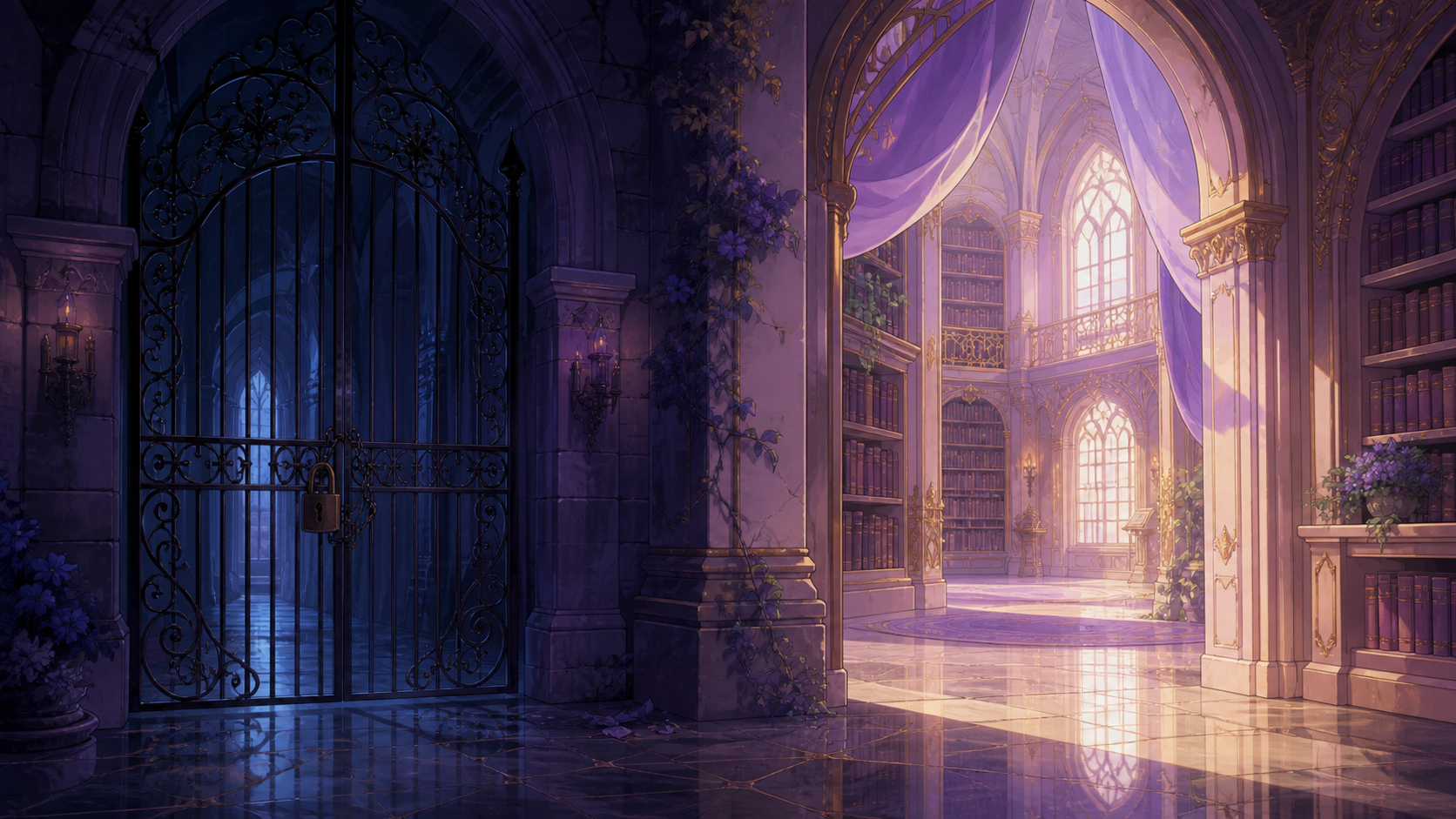
The Library Does Not Cancel the Cell
The Beast can change. Belle can love him. The beginning can still be captivity. I need us to hold all three thoughts at the same time.
Let me ruin the easy argument first
Beauty and the Beast is not difficult because nobody can tell right from wrong. It is difficult because the movie understands emotional change well enough to make people want to skip the moral accounting that change requires. The Beast begins by imprisoning Maurice, accepts Belle as an exchange, controls her movement, weaponizes food, and terrifies her after she enters the West Wing. Those are not metaphors. They are events the romance has to survive.
The Beast also learns restraint, releases Belle without guarantee, risks losing the cure, and stops trying to make affection happen on command. Those developments matter. If we flatten him into a permanent monster, we erase the work the story actually dramatizes. If we call the early behavior a misunderstanding because the ballroom is beautiful, we erase Belle. The interesting conversation begins after both truths remain visible.
A cell with good lighting is still a cell
The castle is gorgeous. It has enchanted servants, impossible architecture, a snow-covered garden, and the library every bookish child was trained to desire. Production design can make captivity feel like fantasy because beauty changes the emotional temperature of what we watch. It does not change the terms. Belle cannot freely leave at the beginning. Her father is released because she takes his place. The bargain is made under coercion.
This matters because audiences are often encouraged to compare material comfort with freedom as if one can compensate for the other. A private room is better than a dungeon. Warm food is better than hunger. A library is better than boredom. Every improvement is real, and none converts imprisonment into consent. Better treatment measures the Beast against his own earlier cruelty. It does not measure the situation against what Belle was entitled to have.
The exchange is not a romantic meet-cute
Belle offers herself because Maurice is sick, frightened, and likely to die in the cell. The Beast accepts because the exchange serves him. Whether he recognizes Belle as a possible solution to the curse at that exact moment varies by version, but he recognizes the power imbalance. One person controls the door. The other person is bargaining with a life she loves. That is not a free contract.
The scene is emotionally powerful because Belle acts with agency inside coercion. Agency does not mean unlimited choice. It means she makes a meaningful decision among the options available. She saves her father, claims the terms clearly, and refuses to collapse when the door closes. Praising her courage should not require pretending the cage disappeared because she entered it voluntarily.
No, this is not Stockholm syndrome shorthand
The internet reaches for Stockholm syndrome because it offers a quick label for attachment under captivity. The label is clinically contested, commonly misused, and too blunt for what the movie portrays. Belle does not bond with the Beast simply because he controls her. She resists him, rejects dinner, escapes, and changes her view only after observing behavior that contradicts the man who imprisoned her.
Avoiding the label does not make the power imbalance disappear. It makes the analysis more precise. Belle has constrained choices. The Beast controls space and resources. The servants have their own interest in keeping her close. Affection develops alongside changes in behavior, but the conditions remain compromised until he releases her. The story’s moral hinge is not that captivity produced love. It is that love becomes possible only when captivity ends.
The servants are not neutral matchmakers
Lumiere, Cogsworth, Mrs. Potts, and the rest of the household are charming, frightened, and invested. Their bodies depend on the romance succeeding before the rose dies. Every warm interaction with Belle occurs inside that urgency. They can genuinely care about her and still need something from her. Those motives do not cancel each other. They make the hospitality complicated.
The servants often soften the Beast’s harm. They feed Belle, guide him toward apology, create moments of safety, and translate an unsafe ruler into a person she can understand. That help matters to Belle. It also makes them emotional subcontractors for a prince who should be repairing his own damage. The household’s kindness can reduce harm without making the institution innocent.
Dinner is where the mask slips
The Beast invites Belle to dinner as an order dressed in formal clothing. When she refuses, he threatens to withhold food. Hunger becomes punishment for failing to perform sociability on his schedule. The demand reveals how little he understands the difference between invitation and compliance. You cannot command someone to relax, enjoy your company, and become the answer to your curse.
Mrs. Potts and Lumiere disobey by feeding her. That choice is not a cute side adventure separated from the moral plot. It is the moral plot. Basic care should not depend on whether Belle manages the Beast’s feelings correctly. The servants know this before he does, and their refusal creates the first evidence that the castle contains relationships not wholly defined by his will.
The West Wing does not make her the problem
Belle enters a forbidden space after being told not to go there. People use that fact to divide blame evenly, as if curiosity and explosive intimidation carry the same moral weight. Belle violates a boundary. The Beast responds by destroying furniture, roaring inches from her, and making the environment physically unsafe. One action does not authorize the other.
The West Wing also contains information the household withholds while asking Belle to participate in its salvation. The rose determines everyone’s future. Secrecy protects the Beast’s vulnerability, but it also keeps Belle from understanding the pressure shaping every interaction around her. You cannot demand informed trust while concealing the central fact of the situation.
She leaves, and that matters
Belle does not remain because the castle is luxurious. She leaves after the West Wing confrontation, choosing a dangerous winter over continued exposure to the Beast’s rage. That decision interrupts the fantasy. Her body reads the environment as unsafe even when the production design remains beautiful. She would rather face wolves than keep negotiating the mood inside the castle.
The escape protects her characterization. Belle does not fall in love because resistance has been worn down. She acts on the evidence available, and at that moment the evidence says leave. Any later affection has to account for the fact that she already proved willing to abandon comfort when comfort required accepting terror.
Saving her does not buy her
The Beast saves Belle from the wolves and is injured. The act is brave, but it does not create a debt that entitles him to her return. Belle chooses to bring him back and tend the wound. That choice shows compassion, not contractual surrender. She can recognize that he protected her without pretending he did not cause the escape that placed them in danger.
Their argument while she treats him is important because the film lets both causal chains remain visible. He says she should not have run away. She says he should not have frightened her. The exchange is not perfect accountability, but it breaks the pattern in which his feelings determine the entire narrative. Belle names his behavior to his face and stays because she decides to help, not because the door is locked.
The snow sequence is not absolution
The feeding of birds, snowball fight, and growing ease show a relationship changing through repeated lower-stakes contact. These scenes matter because the Beast begins responding rather than demanding. He learns humor, observes Belle’s comfort, and allows himself to look foolish. She sees a capacity for gentleness that was absent from their first interactions.
Still, happiness after harm does not retroactively make the harm necessary. This is where romantic narratives often become slippery. Because the couple reaches tenderness, viewers are tempted to treat captivity as the route that brought them there. It was the obstacle they had to undo. The useful lesson is not that frightening a woman might reveal your softer side. It is that no softer side counts until your behavior changes enough for her to feel safe.
Yes, the library is a good gift
The library works because the Beast pays attention to Belle’s actual desire. He does not give her jewelry, demand gratitude, or choose something that advertises his own wealth without regard for her. He recognizes that books represent curiosity, escape, education, and the wider life the village denied her. The gift is emotionally intelligent in a way his earlier dinner command was not.
It is also still a room inside his castle. The gift demonstrates growth; it does not settle the question of freedom. A person can be moved by care received within an unequal situation while continuing to deserve the option to leave. The library becomes romantic because the Beast eventually opens the larger door too. Without release, it would remain an exquisite benefit controlled by the person holding the key.
The ballroom earns its beauty through restraint
The ballroom sequence is not powerful because dresses and chandeliers overwhelm the moral problem. It is powerful because the relationship has reached a quieter form. The Beast does not order Belle to dance. He asks. His size remains visible, but the movement becomes careful. Belle participates, guides, and watches him with curiosity rather than fear. The scene stages mutual attention instead of conquest.
Mrs. Potts sings from outside the couple, which gives the romance a witness rather than a sales pitch. Her lyrics describe change as tentative and surprising. The number does not claim that the beginning was secretly fine. It recognizes that something different has appeared. We can celebrate that appearance while remembering how much behavior had to change before the room could feel safe.
Release is the actual love scene
The most important romantic act is not the dance, the library, or the rescue from wolves. It is the Beast opening the possibility of departure when keeping Belle might preserve his only chance to become human. He sees Maurice in danger and chooses Belle’s need over his desired outcome. For the first time, her freedom is not treated as negotiable.
That choice does not guarantee she will return. The lack of guarantee is exactly why it matters. Consent requires the possibility of no. Love that survives only because one person controls the exit is possession. The Beast becomes capable of love when he accepts loss rather than converting Belle’s care into an obligation to stay.
Belle returns with new information
Belle leaves to save Maurice and later returns because the castle is under attack. Her return is not proof that the captivity was harmless. It is a decision made after release, after behavioral change, and under a new emergency. She now has information about the Beast, the servants, and Gaston that she did not possess when she first crossed the threshold.
Choice becomes meaningful because the direction can reverse. She leaves when Maurice needs her. She confronts the village. She returns when people she cares about are endangered. The story finally allows her movement to follow her judgment rather than the Beast’s command. That mobility is the condition the romance needed all along.
Gaston is not bad so the Beast can be automatically good
Gaston escalates from entitlement to coercion, institutional abuse, mob violence, and attempted murder. His behavior is worse by the end. That contrast does not erase the Beast’s earlier conduct. Stories sometimes place two men beside a woman and invite the audience to treat the less dangerous option as morally complete. Belle deserves a standard higher than not Gaston.
The more interesting contrast is how each man responds to refusal. Gaston treats no as an insult requiring escalation. The Beast begins similarly, then changes enough to release control. The difference is not species, appearance, or hidden goodness. It is whether a person can accept that another human being’s choice remains valid when it hurts.
The 2017 remake explains more and solves less
The live-action version adds backstory, clarifies the curse’s social reach, and tries to make Belle more visibly inventive. Explanation can reduce fairy-tale gaps, but it cannot solve the central power problem through detail. Knowing more about the prince’s childhood may create empathy. It does not make Belle responsible for healing damage she did not cause.
The remake is strongest when it reinforces release, accountability, and the household’s separate losses. It is weakest when elaboration feels like a legal defense brief for a romance audiences already know. Trauma can explain why someone built harmful patterns. The ethical question remains what they do after the harm is named and whether the person harmed is free to leave.
Why children understand more than adults think
Children do not need a sanitized reading in order to love the movie. Many understand immediately that the dungeon is wrong, the Beast’s temper is frightening, Belle should be fed, and opening the door matters. The film’s emotional clarity is one reason it lasts. It does not require viewers to approve of the beginning before accepting the ending.
Adults often create the confusion by insisting that a beloved romance must have been healthy at every stage. It was not. Growth has no meaning if there was nothing serious to change. Letting children name the danger does not destroy the fairy tale. It allows the transformation to carry moral weight instead of functioning as a makeover montage for behavior.
Enjoying the romance is not a confession
You can love the songs, the animation, the library reveal, the ballroom, the snow, the servants, and the final transformation without submitting a sworn statement that every relationship condition was acceptable. Art is not a loyalty test. Pleasure and criticism can occupy the same nervous system. In fact, the stories we love most often deserve the most precise language because they helped shape what romance looks like in our imaginations.
The goal is not to prosecute viewers for being moved. It is to stop using our feelings as evidence that Belle was never endangered. We are moved because the movie creates change, release, recognition, and return. Those elements become more powerful when we admit what they had to repair.
The lesson worth keeping
Beauty and the Beast does not need to teach that love fixes an abusive man if a good woman waits inside his house. A better lesson is already present. People can change, but change is demonstrated through conduct. Apology without altered behavior is atmosphere. Gifts without freedom are leverage. Gentleness that appears only when rewarded is performance. The door has to open.
Belle does not owe the Beast transformation. The servants cannot ethically assign her that task. His growth becomes real when it no longer depends on forcing her participation. That distinction lets the story retain hope without asking women to interpret danger as potential. Hope belongs to the person doing the work, not as a debt charged to the person who was harmed.
The library does not cancel the cell
The library is beautiful because Belle is seen. The cell is terrible because Belle is controlled. Both rooms belong to the same castle and the same relationship history. One does not delete the other. The story earns its ending by moving from control toward recognition, from command toward request, and finally from possession toward release.
So yes, I want the library. I want the dress, the score, the impossible ceiling, and the snowball fight. I also want the key in Belle’s hand. If the romance cannot survive that requirement, it was never romance. Beauty and the Beast survives because the door eventually opens, and because Belle gets to decide what she does after it does.
What an apology would actually require
The animated film communicates remorse mostly through changed behavior rather than a formal speech. That choice can be emotionally elegant, but it also lets audiences fill the silence with whatever accountability they prefer. A real apology would name the confinement, the threat of hunger, and the terror of the West Wing response without asking Belle to comfort him for feeling ashamed. It would recognize that intentions do not determine impact and that later kindness does not purchase retroactive consent.
More importantly, apology would grant Belle control over what repair looks like. She might want distance, information, freedom of movement, or no relationship at all. The person who caused harm cannot define forgiveness as the outcome that returns everything to his desired path. The Beast’s release comes closest to meaningful repair because it accepts a future in which Belle never comes back.
The curse creates pressure, not permission
The falling rose makes the household desperate. Bodies are becoming less human, time is disappearing, and nobody knows whether another opportunity will arrive. That pressure explains why servants begin matchmaking almost immediately. It does not give them permission to conceal information or make Belle responsible for a punishment she did not create. Urgency can reveal motive without converting manipulation into justice.
This distinction applies far beyond fairy tales. Institutions regularly describe deadlines, budgets, reputations, or collective consequences as reasons one person must surrender a boundary. The need may be real. The requested sacrifice can still be wrong. Belle’s freedom does not become less important because many sympathetic people benefit from restricting it.
The difference between redemption and reward
The Beast’s transformation visually links moral improvement with restored beauty, social power, and romantic acceptance. That structure risks making redemption look like a transaction: behave better, receive the woman, recover the body, reclaim the castle. Genuine change cannot depend on receiving those rewards. If Belle had stayed away, the decision to release her would still have been the right decision and the clearest evidence of growth.
Redemption belongs to conduct maintained without guarantee. Romance is a relationship Belle may choose after witnessing that conduct. Keeping those categories separate protects both characters. The Beast can become better without being owed Belle, and Belle can love the person he becomes without being responsible for manufacturing him. The ending works best when love recognizes change rather than serving as its payment.
A beautiful prison is still organized around permission
The library is one of the most emotionally effective gifts in the franchise because it recognizes Belle’s mind. It also arrives inside a castle she cannot freely leave. A gift can reveal that the Beast is learning to see her and still fail to repair the power structure surrounding them. The room changes the quality of captivity. It does not end captivity by itself.
That distinction matters because audiences are trained to treat attentive consumption as proof of safety. He noticed what she likes, so the danger must be over. Yet consent is not a reward unlocked by good taste. Belle needs the practical ability to disagree, move, refuse intimacy, and leave without punishment before romance can become a choice rather than an adaptation to confinement.
The bargain with Maurice is coercion wearing family devotion
Belle offers herself because her father is sick, frightened, and imprisoned. The Beast accepts immediately. Her sacrifice is brave, but bravery does not make the bargain fair. She is choosing between harms designed by the person receiving the benefit.
The film understands this emotionally whenever Belle grieves at the window or rejects the Beast’s commands. What it rarely names is that his loneliness does not create an entitlement to her presence. Pain can explain why somebody becomes controlling. It cannot convert another person into treatment.
The servants need the romance for their own survival
Lumiere, Cogsworth, Mrs. Potts, and the rest encourage Belle to see the Beast’s better qualities because the curse ties their bodies and futures to his emotional development. Their affection for him may be genuine. Their advice is still compromised by desperation.
This does not make the household sinister. It makes the situation more tragic. They perform hospitality while quietly needing a captive guest to fall in love on schedule. Belle is surrounded by warmth, music, and care, but almost nobody can tell her that leaving would be reasonable because her departure threatens all of them.
The snow rescue changes behavior, not the original terms
When the Beast saves Belle from wolves, he takes a real risk after she leaves. She returns to care for him, and their relationship begins changing through mutual action rather than command. This is the strongest foundation the romance receives because neither moment is purchased through a threat.
Still, one rescue cannot retroactively make the cell voluntary. The later tenderness matters precisely because it is different from the earlier power. A responsible reading should preserve both phases instead of using the second to deny the first.
My final receipt on the library
I love the library. Belle loves the library. That is why it remains such an effective distraction. The scene offers recognition so intimate that viewers want the larger danger to dissolve around it.
The romance becomes defensible only when the Beast releases Belle, accepts the possibility that she will never return, and values her father’s need above his own deadline. The library is a lovely gift. The open door is the actual proof of change.
Freedom has to survive a disappointing answer
The Beast’s decisive moral change is not learning Belle’s preferences. It is opening the door while knowing she may never come back. Until that moment, every improvement can still be interpreted as a strategy to win the love required by the curse. Releasing her removes the guaranteed reward. He finally acts for Belle’s good at direct cost to himself, the castle, and every servant depending on the deadline. That does not erase the imprisonment, but it creates the first condition under which her return can mean what the romance needs it to mean.
Belle’s return is also not a verdict that the earlier captivity was acceptable. She comes back because Gaston has organized violence and because the relationship changed after her departure became possible. Choice is meaningful when alternatives remain open. The story becomes more honest when viewers can say she loves him and he imprisoned her, rather than treating love as evidence that the cell was secretly necessary.
This distinction matters outside fairy tales because harmful relationships often contain real tenderness. A person can notice your mind, apologize, protect you, and still control your movement. The presence of good moments does not cancel the structure. Repair begins when power changes, safety stops depending on mood, and the person who was confined can leave without punishment. The library is romantic because Belle is seen. The open door is romantic because Belle is free.
Belle’s anger is part of the love story, not an obstacle to it
Belle does not humanize the Beast by becoming endlessly patient. She argues, refuses dinner, leaves after he frightens her, and names his behavior when the castle would prefer a smoother path toward the curse breaking. Her boundaries create the possibility of relationship because they require him to encounter another person rather than a solution to his deadline. The romance improves when he stops treating resistance as disobedience and begins understanding it as information. That is why the ballroom cannot stand alone as proof. Dancing is easy once the room is warm and everybody agrees. The harder scenes are the ones where Belle remains fully herself while the Beast receives an answer he dislikes. If his kindness depended on gratitude, attraction, or permanent residence, the cell would still be operating through nicer furniture. His growth becomes credible when her freedom no longer feels like an attack on him.
Belle’s final choice means more because the film eventually lets it remain hers. The library can stay gorgeous without carrying moral work it cannot do.
Keep going
Return to the Beauty and the Beast hub for full reviews, character profiles, rants, lore, and guides.