
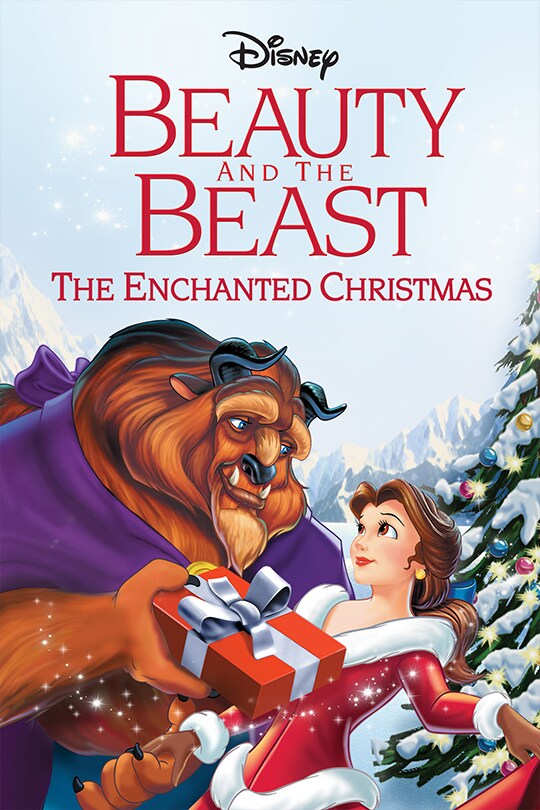
RaeRae Review · Beauty and the Beast · 1997
The Enchanted Christmas Review: Belle Tried to Give the Castle Hope and a Pipe Organ Declared War
This is not only a holiday side story. It is a fight over whether trauma gets to cancel joy, whether servants may want a future, and whether Belle is once again expected to rehabilitate a furious man while everybody else needs her to succeed.
Review receipt
Film: Beauty and the Beast: The Enchanted Christmas (1997). Director: Andy Knight. Music: Rachel Portman. Lyrics: Don Black. Principal voices: Paige O’Hara, Robby Benson, Jerry Orbach, David Ogden Stiers, Angela Lansbury, Bernadette Peters, Tim Curry, Paul Reubens, Kath Soucie, and Haley Joel Osment.
Disney’s own record identifies the film as an eighty-minute direct-to-video feature released November 11, 1997, and D23 records it as the first made-for-video movie produced by Walt Disney Animation Canada in Toronto and Vancouver. This spoiler-complete review treats that production history as part of the film, not trivia pasted beneath a plot summary.
Mrs. Potts tells a story because the household needs to remember its own survival
The film opens after the curse has ended. Human servants gather for Christmas while Belle and the prince briefly disagree about who made the holiday possible. Mrs. Potts responds by turning memory into a communal story. Her narration gives the sequel a witness, a reason for existing, and a built-in admission that the events were missing from the first film.
That frame is warmer than a simple flashback and more suspicious. Memory lets the movie insert an enormous crisis inside the original timeline without requiring the 1991 film to acknowledge it. Mrs. Potts becomes historian, but she is also protecting a celebration. The version she tells must convert terror, imprisonment, attempted murder, and a collapsing castle into a story the household can bear to repeat.
The midquel lives inside the most morally unstable part of the romance
This story occurs after the wolf rescue and before the ballroom, while Belle is still confined and the Beast has only begun learning restraint. That placement gives the film access to tension the happy ending cannot provide. It also means every warm holiday beat exists beside captivity. Belle may decorate, sing, plan, and hope, but she still cannot simply choose to go home.
A lesser sequel would behave as though the audience’s knowledge of the final romance erases the present danger. This film repeatedly reminds us that the Beast can rage, imprison Belle again, destroy what she builds, and believe a manipulator before he believes her. The ending is guaranteed by canon. The path remains ethically jagged.
Christmas is not neutral inside this castle
Belle treats Christmas as a language of hope, community, gifts, music, food, and chosen attention. The Beast associates the date with the night the enchantress cursed him. The same holiday therefore represents possibility to one person and humiliation to another. Their conflict is not really about decorations. It is about whether a traumatic anniversary owns every future version of the day.
The film is strongest when it refuses to solve that conflict by demanding cheerful compliance. Belle’s hope cannot simply overwrite his pain. His pain cannot justify controlling everybody else’s rituals. Healing requires a new experience that acknowledges the old wound without letting it govern the household forever.
Belle begins by making joy into work again
She surveys a castle full of exhausted people and decides a celebration might restore morale. That impulse is generous, practical, and painfully familiar. Belle sees emotional damage and immediately begins organizing labor around its repair. She plans, persuades, decorates, searches for a tree, and keeps belief alive while the Beast contributes resistance.
The franchise repeatedly turns Belle’s emotional intelligence into unpaid infrastructure. She is exceptional because she notices what a room needs, but everybody benefits from her ability to carry hope. The movie should make us admire her without accepting that one young woman is naturally responsible for making captivity festive.
The servants want Christmas because the curse has stolen ordinary time
Lumiere, Cogsworth, Mrs. Potts, Chip, and the rest do not merely want a party. Their transformed lives are measured by a dying rose and a prince’s emotional deadline. Seasonal ritual offers evidence that time can still contain more than punishment. Decorating the castle becomes a claim that they remain people capable of anticipation and memory.
This gives their enthusiasm more depth than comic bustle. The household needs Belle’s plan because the Beast has allowed his trauma to define communal life. A ruler’s private wound has become everybody’s calendar. Christmas is therefore a small labor rebellion disguised as garland.
Forte is what happens when usefulness becomes identity and identity becomes control
Before the curse, Forte was a court composer whose music pleased the prince during his isolation. As a pipe organ he becomes physically fused with the role that gave him status. He cannot imagine a self outside performance, and he cannot tolerate a future in which the prince no longer needs his despairing soundtrack.
His villainy is not simple hatred of Christmas. Forte needs the Beast unhappy because unhappiness secures his access, influence, and purpose. He has mistaken dependency for love. If the curse breaks, the prince gains a life and Forte fears becoming merely a musician rather than the architecture of another person’s mood.
Tim Curry makes manipulation sound like intimacy
Forte rarely needs to shout at first. He speaks as if he understands the Beast better than anyone else, validates resentment, and converts fear into advice. Tim Curry gives the organ theatrical force, but the dangerous quality is tenderness used as leverage. Forte tells the Beast what pain wants to hear.
This is coercive friendship in gothic form. Forte isolates his target, frames Belle as betrayal, and presents control as protection. He does not invent the Beast’s insecurity. He keeps feeding it because a healed person becomes harder to govern.
The Beast destroys Christmas because rage feels safer than grief
When the Beast discovers Belle’s plans, he responds as though celebration were an attack. Anger lets him avoid naming the anniversary, the shame of his original cruelty, and the terror that hope may fail. Destroying decorations produces immediate control over feelings he cannot regulate.
Trauma explains the trigger and does not excuse the harm. The film understands that distinction unevenly, but it places the consequence in front of us. Everybody else has to absorb the explosion, clean the damage, and decide whether his pain is allowed to cancel their own needs.
Belle refuses to treat his boundary as the final moral word
The Beast says there will be no Christmas. Belle recognizes the pain underneath the command and still proceeds. Her decision can look like boundary violation if reduced to personal preference. Inside a castle he rules through fear, however, the command governs servants whose lives are already subordinated to him. Belle is not insisting that he personally celebrate. She is resisting his authority to forbid everybody else.
That difference matters. Respecting trauma does not require reorganizing an entire community around avoidance forever. Belle’s plan creates room for the Beast to join without making his participation the price of everybody’s joy.
Angelique begins as caution because hope has punished her before
Angelique, once the castle decorator, understands both beauty and consequence. She has watched the Beast destroy attempts at celebration and knows the household will pay for another failure. Bernadette Peters gives her hesitation the weight of somebody who still wants wonder but has learned to distrust the cost.
Her movement toward Belle is not a conversion from cynicism to cheerfulness. It is a decision to risk making meaning again. The film gives a female servant an interior conflict connected to her craft, which expands the household beyond functions inherited from the first movie.
Fife is the assistant who confuses promised advancement with freedom
Fife helps Forte because the organ promises to give him a solo and elevate his place in the orchestra. The piccolo’s small body becomes part of the joke and part of the grievance. He wants recognition, and Forte turns that desire into complicity.
The arrangement mirrors abusive hierarchies everywhere. A powerful figure offers proximity instead of security, keeps the reward just ahead, and makes the subordinate perform increasingly harmful tasks. Fife is responsible for his choices, but the film understands why a neglected worker might believe the person exploiting him is the only person who sees him.
The search for a tree turns hope into physical risk
Belle leaves the castle grounds with Chip and Axe to find a tree worthy of the celebration. The sequence gives her active adventure rather than keeping her inside emotional negotiation. Ice, water, distance, and Forte’s sabotage make the holiday object something earned through danger.
The tree also carries a contradiction. Belle seeks a symbol of communal life by moving beyond the space where she is confined. The Beast interprets the absence as escape because Forte weaponizes his deepest fear. Once again, her independent movement becomes evidence in a man’s argument about whether she can be trusted.
Forte understands that misinformation works best when it confirms fear
He tells the Beast that Belle has abandoned him. The lie succeeds because it fits the Beast’s belief that nobody could stay voluntarily. Manipulation does not need to create a new worldview when it can activate an existing one at the correct moment.
This is one of the film’s sharpest psychological observations. The Beast does not investigate. He turns insecurity into certainty and certainty into punishment. Forte provides the story, but the Beast chooses rage because rage protects him from the possibility that he misunderstood.
Belle is imprisoned a second time and the film cannot call it a setback only
The Beast locks Belle in the dungeon after believing she fled. This is not merely a romantic misunderstanding. It is a restoration of the original power relationship after the film has spent time showing their growing trust. He responds to feared abandonment by taking away freedom.
The scene makes the eventual 1991 release more necessary, but it also deepens what Belle must forgive. A holiday movie cannot soften the act with snow or songs. The Beast has learned enough to know her as a person and still reaches for incarceration when emotionally threatened.
The handmade gift succeeds because it proves attention rather than expense
Belle creates a book for the Beast that gathers stories and meaning around the season. The present matters because it was designed for his wound rather than for a generic celebration. She has listened even while refusing to let his pain rule everyone.
The Beast discovers the gift after punishing her, which forces him to compare her actual care with the betrayal Forte described. Objects in this franchise often carry class wealth. A handmade book becomes more powerful than the castle because it contains interpretation, time, and evidence that Belle saw him clearly.
As Long As There Is Christmas treats hope as survival rather than prediction
The central song does not promise that circumstances will become easy. It builds hope through shared ritual, memory, and the choice to act as if a future remains possible. Rachel Portman and Don Black give the film a musical thesis distinct from the 1991 score while still serving character and plot.
Hope here is not optimism with better lighting. The household is cursed, Belle is confined, and the Beast may never change in time. Christmas becomes a practice that keeps despair from becoming the only honest response.
Stories gives Belle and the Beast a language they nearly share
Belle offers narrative as a way to travel, interpret pain, and imagine other lives. The Beast’s connection to books helps the film build continuity with the intellectual bond later expanded by adaptations. Their potential intimacy grows through meaning rather than physical attraction.
The song also reveals Belle’s preferred method of care. She does not deny suffering. She creates a frame large enough for suffering to exist beside possibility. That skill is beautiful and dangerous when everyone begins relying on her to narrate them into better behavior.
Forte tries to destroy the castle because losing control feels like annihilation
Once persuasion fails, Forte turns the castle’s structure into a weapon. His body is architecture, so violence becomes grand, mechanical, and suicidal. If the prince will not remain emotionally dependent, Forte would rather destroy the world that no longer centers him.
This is the endpoint of possessive usefulness. Forte says he needs the curse, but what he needs is hierarchy frozen at the moment of his greatest influence. Change threatens him more than death because change might reveal that being needed was never the same as being loved.
The Beast defeats Forte by rejecting the voice that made despair feel loyal
The climax requires physical action, but its real decision is psychological. The Beast must recognize that Forte’s apparent understanding has always served control. Rejecting him means accepting uncertainty, Belle’s autonomy, and a future that cannot guarantee constant validation.
The organ’s fall is spectacular because the film externalizes an abusive attachment as collapsing architecture. The castle survives when its ruler stops treating the person who confirms his worst instincts as his most faithful friend.
The film gives Christmas credit for work Belle actually performed
The ending calls the result Christmas magic, but Belle planned the celebration, persuaded the household, sought the tree, made the gift, survived sabotage, and maintained hope after renewed imprisonment. Ritual supported her. It did not replace her labor.
Holiday storytelling often turns women’s preparation into atmosphere. Meals appear, rooms glow, gifts carry meaning, and emotional conflicts soften as though the season completed the work. This film makes Belle’s labor visible enough that the audience should refuse to let magic take the receipt.
The restored household laughs because memory has become survivable
Back in the frame story, the prince admits Belle made the Christmas possible and the servants enjoy their human celebration. The past is not erased. It has been reorganized into a story where the household can identify courage, manipulation, failure, and change without remaining trapped inside the fear.
Mrs. Potts has performed another kind of service, but this one carries authorship. She decides what the community remembers. Her story preserves Belle’s contribution and quietly makes the prince listen to an account in which he was not the hero of every scene.
The Canadian studio branch belongs in the franchise history
D23 identifies the film as the first made-for-video production from Walt Disney Animation Canada, with work in Toronto and Vancouver. That fact matters because direct-to-video sequels are often discussed as if they appeared automatically from a corporate shelf. Artists, performers, technicians, and production systems built this expansion under a different industrial structure from the 1991 feature.
The uneven animation should be analyzed without treating reduced theatrical resources as reduced human effort. Movement, staging, color, effects, and character consistency reveal both constraint and ambition. The movie’s existence marks Disney’s growing strategy of extending theatrical stories into home-video ecosystems.
Direct-to-video does not mean outside the text
The film was designed for the home market, not a theatrical release, and its continuity has the awkward shape of a midquel built after a complete classic. That industrial position does not make its ideas irrelevant. Forte, Angelique, Fife, the Christmas trauma, and the second imprisonment change what viewers may perceive when returning to the original timeline.
Canon is less important than consequence. If the franchise sells this story as part of the household’s memory, criticism may ask what it adds, contradicts, or exposes. A cheaper distribution path does not grant immunity from the moral and emotional logic of the property it extends.
The continuity problem is also the movie’s reason to exist
Nobody mentions Forte, Christmas, or Belle’s second imprisonment in the 1991 film. The romance appears to move from wolf rescue toward growing companionship without this enormous interruption. The sequel cannot solve that mismatch because it depends on occupying an unrecorded space.
Instead of pretending the seam is invisible, the frame story turns the contradiction into oral history. Mrs. Potts tells us there were experiences the original film did not show. That answer is imperfect and strangely honest. Franchises are always built from later voices insisting there was more happening between the scenes we remember.
Foundation verdict
The Enchanted Christmas is messier, darker, and more psychologically useful than its holiday packaging suggests. Forte embodies dependency weaponized as devotion. The Beast converts trauma into household law. Belle makes hope through labor while remaining a captive. The servants risk celebration because ordinary time has become resistance.
The movie also asks Belle to absorb another imprisonment and continue guiding the man who caused it. Its continuity strains, some comic rhythms flatten danger, and the holiday conclusion moves faster than the harm deserves. Foundation verdict: an unexpectedly sharp story about trauma, coercive friendship, and communal hope hiding inside a direct-to-video Christmas sequel.
The opening party quietly confirms that the servants kept their relationships
Human Lumiere, Cogsworth, Mrs. Potts, Chip, Angelique, and the rest gather with the familiarity of people who survived a shared catastrophe. The celebration is not only royal hospitality. It is a reunion of workers whose bodies, privacy, families, and ordinary routines were suspended by somebody else’s moral test.
The scene moves quickly because the movie wants warmth, but the warmth contains history. Every person in the room remembers being an object. Christmas after restoration becomes evidence that they can choose decoration, food, music, and companionship instead of performing those functions because their transformed anatomy required it.
Belle and the prince disagree over credit because happy endings still need correction
The prince casually credits himself with making the previous Christmas successful. Belle objects, and Mrs. Potts intervenes with the story. The joke is small and revealing. Even after transformation, the former Beast can center himself inside communal labor unless somebody preserves the record.
Belle does not need a monument, but authorship matters. She created the plan, held the group together, survived punishment, and gave him the gift that interrupted Forte’s lie. The frame allows the household to correct royal memory without turning the celebration into an argument.
A flashback inside a fairy tale creates a second level of unreliability
The 1991 film already presents the curse through narrated stained glass. The Christmas sequel adds Mrs. Potts narrating an event hidden inside that story. We are not watching neutral history. We are watching a survivor organize memory for a room that includes the people who caused, endured, and repaired the crisis.
This does not mean the events are false. It means tone is purposeful. Comic timing may soften danger, songs may organize chaos, and the ending may compress accountability because the teller wants the community to celebrate. The frame makes emotional truth more important than forensic completeness.
The castle looks larger because fear has more rooms now
The sequel explores spaces the theatrical film did not need, including Forte’s chamber, service corridors, decoration storage, and areas damaged during the climax. Expansion makes the castle feel like a functioning institution rather than a romantic set of iconic rooms.
It also gives isolation geography. Forte occupies a shadowed chamber from which he can influence the Beast without joining communal life. Belle and the servants move through spaces of labor. The Beast controls doors and destinations. Architecture keeps translating hierarchy into movement.
Red and green enter a palette already organized around captivity
Christmas color arrives in a castle dominated by winter blues, stone grays, gold interiors, and the Beast’s dark silhouette. Garlands and candles do more than announce season. They mark spaces the household has temporarily reclaimed from despair.
When the Beast destroys decorations, the violence reads as an attack on color itself. Visual warmth is fragile because it has been produced by people with little authority. The eventual celebration works by letting those colors survive long enough to become communal rather than decorative.
The animation has to preserve familiar acting on a different budget
Paige O’Hara and Robby Benson return with vocal continuity, but the Canadian production must rebuild movement, facial expression, effects, and staging for a direct-to-video pipeline. Familiar designs create a cruel comparison because viewers remember theatrical animation at its most polished.
The fair critique is not to pretend every drawing is equal. It is to ask whether acting remains readable, whether staging carries the emotional beat, and where limited resources change rhythm. Belle’s conviction and the Beast’s volatility survive because voice, pose, timing, and composition cooperate even when motion is less fluid.
The film lets Belle be wrong about timing without making hope foolish
Belle believes a celebration will help before she understands why the date hurts the Beast. Her first approach risks treating cheer as a universal medicine. Learning the anniversary changes her understanding but not her belief that the household deserves a future.
This is a more useful conflict than optimism versus cynicism. Belle adjusts the meaning of the holiday instead of abandoning it. Hope becomes responsive rather than stubborn. The Beast is invited to build a new association, not ordered to forget the old one.
The Beast’s anniversary reaction begins with shame, not only sadness
Christmas marks the night he rejected the disguised enchantress and exposed his cruelty. Remembering the date means remembering that the curse originated in a choice he made. Grief and humiliation become entangled. He cannot mourn what happened without confronting what he did.
Rage offers a shortcut. If Christmas itself is the enemy, he does not have to distinguish unjust collateral punishment from deserved accountability. Banning the holiday lets him treat memory as something inflicted upon him rather than a record of harm he initiated.
The enchantress remains absent while everybody lives inside her sentence
The sequel deepens the curse’s consequences without giving its architect another appearance. Children remain objects, workers remain tools, the rose keeps dying, and a traumatic anniversary governs the prince. The enchantress’s moral lesson continues operating through bodies she is not present to witness.
That absence matters because fairy-tale justice often looks clean only while the judge leaves immediately. The household must improvise care inside a punishment designed around one man. Belle becomes the person addressing consequences the enchantress created and abandoned.
Forte turns art into an argument against change
Music should open feeling, but Forte uses it to stabilize despair. His compositions soothe the Beast only by keeping him inside an identity built from loneliness. Art becomes dangerous when the artist needs the audience wounded in order to remain essential.
The film is not anti-music. Its own songs repeatedly create solidarity. It contrasts music that accompanies another person’s agency with music that colonizes emotion. Forte does not want to express the Beast’s pain and let it move. He wants to score the pain forever.
An organ is the perfect body for a villain obsessed with scale
Forte is enormous, immobile, architectural, and capable of filling the castle with sound. His transformed body grants influence while denying freedom of movement. That combination helps explain his attachment to the curse. He has lost humanity and gained the ability to dominate atmosphere.
A pipe organ can make one performer sound like a building. Forte’s visual and sonic design externalize narcissism without reducing him to vanity. He wants every room to carry his emotional instruction. Other characters may move, but he decides what the castle feels like.
Forte’s immobility creates grievance without granting innocence
Unlike Lumiere or Cogsworth, Forte cannot travel through the castle easily. The curse has fused him to place. That suffering is real, and the prospect of restoration should seem desirable. His rejection of freedom reveals how power can make confinement preferable when confinement preserves status.
He would rather remain a dominant object than become an ordinary human artist. The choice complicates the curse’s assumed hierarchy. Human form is not automatically the greatest reward when institutional influence has become a substitute for identity.
Fife performs surveillance because ambition has nowhere honest to go
Fife moves through spaces Forte cannot reach, carries information, interrupts plans, and helps manufacture the appearance of betrayal. He is the mobile extension of the organ’s control. His promised solo turns workplace recognition into payment for espionage.
The piccolo’s arc asks what responsibility looks like under manipulation. He is not powerless, and his eventual break with Forte matters because complicity produced real danger. Redemption begins when he stops accepting future recognition as an excuse for present harm.
Angelique understands decoration as memory work
As the former castle decorator, Angelique does not simply know how to make rooms pretty. She knows which objects, colors, and arrangements carry ritual meaning. Her transformed body as a tree ornament makes that expertise literal and reduces an artist to decoration at the same time.
Supporting Belle lets Angelique reclaim authorship over beauty. She helps decide what the castle will remember when it looks at itself. Decoration becomes a public record that says fear did not own every room.
A Cut Above the Rest gives middle management its own crisis song
Lumiere and Cogsworth compete over methods, status, and who contributes more before recognizing that cooperation is necessary. The number is comic, but it preserves their distinct relationships to labor. Lumiere improvises through charm. Cogsworth seeks safety through procedure.
Both men are managing a celebration the ruler prohibited. Their argument happens inside risk. Cooperation is not a generic teamwork lesson. It is what workers do when authority is unstable and the project still has to be completed.
Cogsworth’s caution is often treated as cowardice because somebody has to count consequences
He knows the Beast may punish the household and repeatedly tries to contain plans that could trigger rage. Comedy exaggerates his anxiety, but the anxiety is grounded in experience. He has survived by predicting authority.
Belle’s courage expands what becomes possible, while Cogsworth’s fear records the price of failure. The film needs both perspectives. Hope without risk assessment becomes carelessness, and risk assessment without hope becomes permanent submission.
Lumiere can romanticize rebellion because charm protects him differently
Lumiere embraces Belle’s plan with theatrical enthusiasm. His confidence energizes the household and sometimes lets him skip the question of who will absorb consequences. Charisma makes danger feel like adventure.
The film loves his momentum, and viewers should too, but leadership requires more than making resistance entertaining. Angelique, Cogsworth, and the less powerful servants show what Lumiere’s optimism costs if the Beast responds violently.
Chip experiences Christmas as a child living under an adult deadline
Chip wants excitement, a tree, and participation. He also lives in a body created by punishment for a decision he did not make. The film allows childhood curiosity to coexist with stakes he cannot fully manage.
His presence keeps exposing the curse’s injustice. Adults may frame the rose as a lesson about love. For Chip, it is a countdown controlling whether he will ever grow up in his own body. Christmas matters because children measure life through recurring celebrations, and the curse threatens recurrence itself.
Mrs. Potts supports hope while performing emotional triage
She encourages Belle, protects Chip, interprets the Beast, steadies the servants, and later narrates the whole crisis. Angela Lansbury’s vocal warmth can make this labor appear effortless. It is not effortless. Mrs. Potts is constantly managing fear without authority to remove its source.
The franchise often treats maternal competence as renewable magic. This sequel gives us more evidence of how much the household rests on her. Her calm is a survival skill, not proof that conditions are safe.
The Beast’s apology is behavioral before it is eloquent
Discovering Belle’s gift interrupts his certainty. He releases her, restores the celebration, and begins acting against Forte’s influence. The repair is incomplete, but it occurs through changed decisions rather than a speech demanding immediate forgiveness.
That pattern matches the strongest moral logic of the 1991 film. The Beast becomes trustworthy when he relinquishes control. Feeling sorry matters because it changes what he does with doors, commands, and the freedom of other people.
Belle’s forgiveness remains more generous than the screenplay earns
She continues believing in him after a renewed imprisonment that followed earlier progress. The story uses her capacity for hope as proof of love, but it gives limited space to anger, fear, or a decision to withdraw. Holiday pacing accelerates emotional repair.
Viewers can accept the franchise outcome while still naming the imbalance. The Beast receives multiple chances to fail violently. Belle receives the responsibility of interpreting each failure as part of growth. Her compassion is a character strength and a resource the story spends aggressively.
The present is a book because Belle refuses to abandon her own language
She does not become the kind of person who solves conflict through spectacle, wealth, or submission. She makes a book, the same medium that helped her imagine life beyond the village. The gift invites the Beast into her way of seeing.
This is intimacy without self-erasure. Belle adapts the content to his pain but keeps the form connected to her identity. Healthy care should not require her to stop being the reader, maker, and interpreter who entered the castle.
Christmas Eve becomes a deadline competing with the rose
The original story already has a fatal countdown. The holiday adds another temporal structure, one based on recurrence rather than finality. The rose says time is running out once. Christmas says time can return and carry new meaning.
This contrast explains why Forte fears the celebration. Recurring ritual undermines despair’s claim to permanence. If the household can make one new Christmas, it can imagine another year. The curse no longer defines the only clock.
The tree functions as proof that the outside world still exists
Bringing an evergreen into the castle imports seasonal life from beyond its walls. Belle’s journey for the tree physically connects captivity to a landscape that continues growing. The symbol is obvious and effective because the household has been isolated from ordinary social time.
Forte’s sabotage targets more than decoration. Destroying the expedition would confirm that attempts to reach beyond the castle produce disaster. The tree’s survival therefore resists both winter and isolation.
Forte’s lie works because the Beast still treats Belle’s freedom as abandonment
If Belle has a genuine right to leave, her absence cannot automatically be betrayal. The Beast’s reaction reveals that he still understands her presence as reassurance he is owed. Forte exploits a possessive assumption already living inside the romance.
The later release in the 1991 film becomes the decisive correction. Love requires the Beast to survive Belle’s freedom without converting it into punishment. This sequel demonstrates exactly why that act of release cannot be treated as a sentimental gesture only.
The dungeon repeat makes architectural memory impossible to ignore
Belle returns to the cell after enough intimacy has developed for the confinement to feel newly personal. The first imprisonment might be explained as the act of a stranger consumed by rage. The second happens after he knows her courage, care, and boundaries.
That makes the betrayal worse and the moral stakes clearer. Progress is not a straight line, but relapse involving another person’s liberty is not merely private struggle. The film needs us to see that healing language cannot protect someone from accountability for repeated harm.
Forte stages a false choice between grief and connection
He implies that accepting Belle’s hope means betraying the pain that defined the Beast’s life. This is a common manipulation: if suffering becomes identity, recovery can feel like disloyalty to the self who survived it.
Belle offers a different model. A new Christmas does not declare the curse harmless. It refuses to grant the worst night permanent ownership of the date. Memory and joy can occupy the same calendar without one invalidating the other.
The climax makes the castle itself reject emotional stagnation
Walls crack, machinery tears loose, and Forte’s music becomes destructive force. The building that hid the prince from the world can no longer contain the system built around his despair. Physical collapse dramatizes an attachment structure reaching its limit.
When Forte falls, the castle survives damaged but available for rebuilding. That image fits the film’s therapy language better than a clean magical cure would. Ending manipulation does not restore every wall immediately. It makes repair possible.
Fife’s confession matters because truth arrives from inside the abusive system
He knows Forte’s plan and eventually provides information necessary to stop it. His turn does not erase participation, but it breaks the villain’s control over the narrative. The subordinate who carried lies becomes the person who exposes them.
Redemption here requires risk. Fife abandons the promised solo and accepts that recognition obtained through another person’s captivity was never advancement. He chooses a smaller honest self over a grand future designed by Forte.
The film’s new songs cannot borrow Howard Ashman’s authority
Rachel Portman and Don Black enter a franchise whose original songs are structurally and emotionally inseparable from Howard Ashman and Alan Menken. Imitation would invite failure. The sequel instead builds a gentler holiday vocabulary around hope, stories, teamwork, and Forte’s theatrical menace.
The music is less iconic and still deserves analysis on function. Songs organize belief, expose manipulation, and let secondary characters articulate conflict. Their value lies in what this film needs, not whether they can recreate the cultural event of 1991.
Tim Curry’s Don’t Fall in Love is the villain thesis disguised as protection
Forte frames love as danger because love might change the Beast’s dependence. His warning sounds protective while serving his own survival. The song converts jealousy into counsel and makes emotional isolation feel prudent.
A manipulator rarely announces that another person’s healing threatens his influence. He describes connection as foolish, unsafe, or disloyal. Forte’s performance is entertaining because the audience can hear the self-interest the Beast cannot yet recognize.
As Long As There Is Christmas belongs to the servants as much as Belle
Belle may lead the hope, but the number expands across a community whose members choose participation. The collective voice prevents the message from becoming one heroine manufacturing cheer for passive recipients.
Their singing is a vote about the castle’s future. They cannot remove the curse, but they can decide whether the waiting period contains ritual, beauty, and solidarity. Hope becomes democratic before the castle itself ever is.
The sequel knows merchandising logic and occasionally transcends it
A Christmas extension of a beloved film creates obvious opportunities for home-video sales, seasonal rewatching, songs, ornaments, and familiar characters in holiday imagery. The project is inseparable from franchise economics.
Commercial origin does not determine artistic emptiness. Artists can use an assignment to ask real questions. Forte’s dependency, the Beast’s anniversary trauma, Angelique’s fear, and Belle’s labor exceed the minimum needed to put familiar faces beside a tree.
Holiday comfort and gothic danger keep fighting for the same movie
Warm songs, comic servants, snow, gifts, and decorations promise a cozy seasonal experience. A giant organ manipulates a traumatized ruler, attempts murder, causes renewed imprisonment, and nearly demolishes the castle. The tonal collision is sometimes clumsy and often the reason the film remains interesting.
Christmas stories frequently hide fear under comfort because the holiday intensifies whatever a family or community has avoided. This sequel literalizes that dynamic. The decorations do not eliminate the gothic castle. They illuminate what has been living in its darkest room.
The movie’s deepest question is who benefits when a person never heals
Forte benefits materially and emotionally from the Beast’s despair. The household does not. Belle does not. Even the Beast does not, though pain has become familiar enough to resemble safety. The villain is therefore not grief itself but an invested system that keeps grief useful.
That question travels beyond the fairy tale. Families, institutions, industries, and individuals can build identities around another person remaining wounded. Recovery threatens roles and revenue. Forte is frightening because his love language is maintenance of the injury that gives him purpose.
The film inherits a romance and chooses to reopen its worst wound
A sequel placed after transformation could invent a new external problem and protect the completed love story. This midquel does the opposite. It returns to captivity, rage, distrust, and the fragile period when Belle has every reason to leave. That decision gives the story dramatic energy and increases the ethical debt the ending must pay.
The Beast does not merely misunderstand a party. He again uses confinement when he fears abandonment. The movie therefore makes the later ballroom and release carry more rehabilitation than the 1991 film originally asked of them. Franchise expansion is not neutral. New events alter the weight of old ones even when the final frames remain unchanged.
Belle’s courage should not be confused with infinite emotional capacity
She continues organizing hope after resistance, sabotage, danger, and punishment. The narrative treats that endurance as proof of character, and Paige O’Hara gives Belle warmth without making her passive. Still, courage is not evidence that no harm accumulates. A person can survive repeated mistreatment and remain changed by it.
The film offers little private space where Belle can admit exhaustion or reconsider what she owes the castle. Everybody needs her belief, including the future prince. That dependency can make her strength look less like agency and more like a resource the franchise assumes will never run out.
Paige O’Hara protects Belle from becoming a holiday mascot
The performance keeps curiosity, irritation, tenderness, command, and fear in the same voice. Belle does not sound cheerfully unaware of danger. Her optimism carries decision. When she sings about stories or Christmas, O’Hara makes the ideas sound connected to the character’s established hunger for a larger life.
That continuity matters because seasonal sequels can flatten a heroine into generic warmth. Belle remains the person who refuses Gaston, challenges the Beast, reads beyond her village, and names injustice. Christmas becomes something she chooses to build, not a personality replacement.
Robby Benson lets the Beast sound younger when fear takes over
The Beast’s deepest reactions often collapse authority into panic. Benson can move from low command to wounded uncertainty in a line, revealing the frightened person underneath the intimidating body. Forte exploits exactly that regression.
The performance does not excuse renewed violence. It makes the mechanism legible. The Beast reaches for control when he feels emotionally small. Growth requires learning that another person’s freedom cannot be sacrificed to stabilize his fear.
Angela Lansbury gives the frame story moral authority without making it law
Mrs. Potts speaks from lived experience, affection, and service. Lansbury’s voice makes the household history feel held rather than prosecuted. She can correct the prince while preserving celebration because her authority comes from memory and care rather than title.
Yet the storyteller is not neutral. Mrs. Potts has reasons to emphasize hope, minimize rupture, and end with community restored. Reading the film closely means honoring her testimony while noticing how survivors sometimes shape a terrible event into a usable family story.
Bernadette Peters gives Angelique the sound of disappointed artistry
Angelique knows what beauty can do and what happens when the person with power despises it. Peters lets reluctance carry old enthusiasm rather than simple fear. The decorator has not stopped loving her craft. She has stopped trusting the conditions under which she is asked to practice it.
Her decision to help Belle becomes a return to authorship. She is not just convinced that Christmas is nice. She chooses to make beauty in a place where beauty has been punished, which is a more adult and politically interesting form of hope.
Paul Reubens makes Fife needy enough to be funny and dangerous
Fife’s desire for a solo is comic because the promised reward seems small beside the scale of Forte’s plan. Reubens gives that desire enough emotional truth to explain why the piccolo keeps returning. Recognition can become enormous when a worker has been taught that visibility is scarce.
The humor should not erase the sabotage. Fife helps isolate Belle and mislead the Beast. His turn matters only if the harm remains real. The performance makes him redeemable by showing insecurity, not innocent by making him amusing.
The Beast’s gift scene reverses the power of interpretation
Forte has interpreted Belle’s absence as betrayal. The handmade book provides material evidence of another meaning. The Beast must decide whether to trust the person who confirms his fear or the person whose labor demonstrates care.
This is why the gift is dramatically stronger than a spoken reassurance. It exists before the accusation and was created without knowledge that it would become evidence. Belle’s attention contradicts Forte’s story because it was not performed for the trial.
Hope is not the same thing as reconciliation
Belle and the servants maintain hope that life can contain joy. Reconciliation with the Beast requires something additional: recognition of harm, changed conduct, freedom, and time. The movie sometimes compresses these processes because holiday structure wants reunion before the final song.
Keeping the distinction clear protects the film’s best idea. Hope belongs to the household whether the Beast improves or not. Reconciliation is not something Belle owes because she stayed hopeful. It is a relationship outcome he must help make safe.
The servants celebrate under a ruler who has not surrendered power
Their Christmas project is risky because the Beast can end it by command. He controls rooms, movement, punishment, and the emotional weather of the castle. The servants’ affection for him coexists with dependence.
This is why their cheer cannot be read as proof that the household is healthy. People create joy under bad authority all the time. Their celebration demonstrates resilience more reliably than it demonstrates benevolent rule.
The castle’s class structure survives every musical number
Lumiere coordinates service, Cogsworth manages procedure, Mrs. Potts provides care, Angelique decorates, and the other objects perform the work of celebration. Belle joins labor while the Beast evaluates whether it may exist. The holiday does not suspend hierarchy.
The film makes service colorful and communal, which can hide the fact that one person’s mood governs everybody’s conditions. Christmas is successful because workers organize around power, not because power becomes equal.
Forte is a court artist who became part of the court’s machinery
Before transformation he served the prince through music. The curse makes that relationship physical by turning him into an installed instrument. He is both performer and property, powerful enough to dominate sound and fixed enough to remain dependent on the castle.
His response is to identify with authority rather than fellow servants. Forte seeks safety by making himself indispensable to the ruler’s damage. The character becomes a dark study of how proximity to power can separate a worker from collective survival.
Angelique and Forte represent opposite responses to being reduced to art objects
Both characters have creative identities transformed into household objects associated with their craft. Angelique initially fears creation but eventually uses it to build community. Forte uses art to preserve control and isolation.
The contrast is richer than good decoration versus evil music. Each asks whether artistic worth depends on serving authority. Angelique risks making something the Beast may reject. Forte arranges the Beast’s emotions so rejection never threatens his position.
The film understands that a traumatic anniversary can become territorial
The Beast treats Christmas as belonging to the night of the curse. Belle treats it as a recurring tradition available for new meaning. Their conflict asks who owns a date after harm attaches to it.
The answer cannot be that the traumatized person must celebrate. It also cannot be that everyone nearby must abandon the day forever. Shared life requires boundaries that allow grief without making grief sovereign over other people’s time.
Belle’s plan creates exposure as well as comfort
Decorations, songs, and gifts bring the forbidden date into view. That exposure can support healing only if the Beast retains the ability to step away and lacks the ability to destroy other people’s participation. The castle has the opposite power arrangement.
The film reaches for an emotionally true intervention inside an unsafe system. Belle’s instincts are compassionate, but the story depends on her guessing correctly about what the Beast can tolerate. If she guessed wrong, the household would pay.
Forte’s manipulation resembles a closed information loop
He controls what the Beast hears, supplies interpretation, discourages connection, and uses Fife to gather selective evidence. Every new event is processed through the conclusion that Belle is dangerous. Contradictory information becomes further proof of betrayal.
Breaking the loop requires an object Forte did not anticipate, Fife’s defection, and the Beast’s willingness to question the voice he trusted. Isolation makes manipulation efficient because no competing account feels emotionally familiar.
The book is an archive against manipulated memory
Belle gathers stories about Christmas into a physical object that the Beast can return to. Forte’s influence depends on immediate mood and repeated suggestion. The book slows interpretation down.
Archives matter in this franchise because memory is unstable. Stained glass, Mrs. Potts’s narration, portraits, mirrors, songs, and books all decide what survives. Belle’s gift offers a record created through care rather than punishment or propaganda.
The collapsing organ refuses the quiet human future
Forte’s fantasy of importance requires scale. A restored human composer would have to share rooms, accept criticism, collaborate, and live without controlling the building. Destruction lets him remain enormous to the end.
His fall is therefore tragic in a narrow sense. He cannot imagine dignity without domination. The curse gave him a monstrous solution to insecurity, and he chooses that solution even when offered the possibility of becoming human again.
Fife’s promised solo is never really about music
A solo represents recognition, hierarchy, and escape from being treated as an accessory. Forte understands the desire and keeps it conditional. Fife must betray more people to prove he deserves the future reward.
This is how exploitative mentorship maintains loyalty. The student is told greatness is close, then made responsible for preserving the mentor’s power. Fife becomes free when he accepts that recognition granted by coercion would keep him dependent.
The film gives the Beast another rescue and Belle another lesson in waiting
He eventually recognizes the truth, acts against Forte, and restores the celebration. The plot permits him to become active at the climax after Belle and the servants have carried most of the emotional and logistical work.
That distribution is common in redemption stories. Others endure the harmful person’s process, then his final correct decision receives heroic framing. The Beast deserves credit for choosing differently. The film should not lose the receipt for who kept hope alive while he decided.
Christmas does not cure the Beast; practice begins to change him
The holiday offers symbols and opportunities. It does not magically remove anger, possessiveness, or fear. Change occurs through encountering Belle’s care, recognizing Forte’s manipulation, releasing Belle, and allowing a communal ritual he once banned.
This prevents the story from collapsing into seasonal sentiment. Christmas matters because people use it to practice generosity and shared memory. Without those actions, the date is only the anniversary the Beast feared.
The sequel complicates the later ballroom without ruining it
Knowing the Beast imprisoned Belle again can make the ballroom feel like a faster reconciliation than the original film intended. It can also make his eventual gentleness and release read as evidence of harder-won change.
The effect depends on whether a viewer accepts the midquel as emotionally binding. Either way, the new story reveals how fragile franchise continuity becomes when later writers insert major harm inside a completed arc.
Direct-to-video storytelling expands characters theatrical economy left behind
Angelique, Forte, and Fife exist because a longer franchise needs new relationships and spaces. The servants receive songs, arguments, fears, and responsibilities beyond supporting the central romance.
Expansion can feel like narrative clutter, but it can also redistribute attention. The castle becomes a workplace and community with internal politics. The theatrical film implied those lives. The sequel lets some of them speak.
The movie is visually strongest when light becomes communal
Candles, garlands, snow reflection, and the tree create pools of warmth rather than one overwhelming spectacle. The images work when they show many characters contributing to a shared atmosphere.
That visual strategy matches the moral argument. No single decoration saves the castle. Repeated small acts make despair less total. Beauty becomes accumulation of labor rather than a magical reward dropped from above.
Its weakest comedy arrives when danger needs emotional consequence
The film sometimes moves from rage or sabotage into broad object humor before the impact can settle. That rhythm serves a family holiday market and can make Belle’s imprisonment or the household’s fear feel temporary.
Comedy is not the problem. Lumiere, Cogsworth, and Fife can reveal character through humor. The problem appears when laughter performs avoidance for the screenplay, letting the story skip accountability it has already made necessary.
The best Easter eggs connect function instead of merely repeating shapes
Familiar rooms, gestures, objects, melodies, and character dynamics reward viewers who know the 1991 film. The most useful references explain how a later scene became possible: Belle’s use of stories, the servants’ teamwork, the Beast’s fear of abandonment, and the castle’s hidden spaces.
A copied pose says remember this. A functional echo says understand this differently. The sequel earns its place when recognition produces analysis rather than applause.
The holiday frame lets Disney sell nostalgia while the story argues with nostalgia
The product promises reunion with beloved characters in a comforting season. Inside that promise, the plot returns to the ugliest period of the romance and invents a villain who needs the past preserved exactly as it was.
Forte is, in one sense, the dark version of franchise nostalgia. He prefers a familiar cursed arrangement because change would reduce his importance. The film sells return while warning that return without growth becomes captivity.
Belle’s final victory is getting the household a future tense
The celebration matters less as one perfect Christmas than as proof another year can contain choices. The servants can imagine restoration, and the Beast can imagine an anniversary not defined solely by shame.
A future tense is politically important inside the curse. Forte rules through permanence. Belle counters by acting as though conditions can change, then making enough evidence for others to participate in that belief.
The story remains uncomfortable because Belle’s freedom is still postponed
Even after the celebration, she remains in the castle until the events of the original film lead to her release. The holiday improves relationship and morale without resolving the foundational coercion.
That limitation keeps the ending from becoming complete repair. Hope can exist inside captivity, but a beautiful Christmas does not make captivity consensual. The later opening of the door remains the moral act the franchise cannot replace with affection.
The Beast mistakes emotional honesty for a loss of authority
Admitting why Christmas hurts would require him to tell Belle that the date remembers his own cruelty, the enchantress’s punishment, and the household’s suffering. Instead, he issues a prohibition. Command lets him communicate distress without exposing shame. Everyone knows what he wants and nobody is allowed to know why.
The movie shows why authoritarian behavior can feel protective to the person using it. A rule simplifies an emotion that would otherwise demand vulnerability. The cost is transferred outward. Servants lose ritual, Belle loses information, and the castle learns to treat silence as safety.
Belle answers secrecy by building a public ritual
Her celebration creates visible, shared meaning where the Beast has imposed private avoidance. A tree cannot whisper. Songs move through rooms. Decorations announce that the household has made a collective decision about what the day can contain.
Public ritual can pressure a traumatized person, and the film never completely resolves that risk. It can also protect people whose needs disappear under one powerful individual’s secrecy. Belle makes the conflict discussable because the castle can no longer pretend the ban is emotionally neutral.
The servants are governing around the Beast
They organize tasks, manage risk, share information, and continue household life despite an unstable ruler. The comedy resembles a workplace completing necessary operations while leadership creates obstruction. Belle supplies purpose, but the servants supply institutional memory.
Calling this disobedience accepts the Beast’s claim that every activity requires his emotional permission. Reading it as informal governance reveals a community preventing one person’s pain from destroying all social life.
Seasonal repetition is an argument against fatalism
A curse countdown moves toward one irreversible ending. Christmas returns. Even a terrible Christmas belongs to a series of past and possible future observances. The recurring holiday provides a time structure capable of competing with the final petal.
Forte needs fatalism because a permanent cursed present makes his position permanent. Belle’s celebration introduces recurrence, and recurrence creates imagination. If another Christmas can be different, perhaps the Beast, the household, and the curse can also change.
The songs divide characters by what they believe music should do
Belle and the household use song to coordinate work, share stories, and sustain hope. Forte uses music to direct the Beast’s interpretation and keep listeners emotionally dependent. Both understand that music changes a room before an argument finishes.
The ethical difference is agency. Communal songs invite voices to join. Forte’s music overwhelms space and tells the Beast which feeling is true. One form creates participation. The other makes the composer indispensable by narrowing emotional possibility.
The organ’s destruction is the loss of an artist who refused relationship
Forte has talent, historical importance to the prince, and a legitimate terror of becoming irrelevant. The film could have given him restoration if he released control. He chooses domination until the building can no longer hold him.
That choice keeps the climax from becoming a simple defeat of ugliness. Forte is destroyed by the version of artistry he protected: enormous, solitary, fused to power, and incapable of listening. His tragedy is that collaboration would have required becoming smaller without becoming worthless.
Angelique offers the artistic future Forte rejects
She creates with others, accepts uncertainty, and lets decoration serve a community rather than secure exclusive access to the prince. Her craft remains visible without controlling every feeling in the castle.
The contrast suggests that artistic identity survives change through relationship. Angelique risks being one contributor among many. Forte would rather be the entire score. Only one of them can imagine human life after the curse.
Belle’s book and Mrs. Potts’s story preserve the receipts
Belle makes a book that changes how the Beast understands the present. Mrs. Potts later tells a story that changes how the restored household understands the past. Both women use narrative to interrupt a self-serving version of events.
Forte says Belle abandoned the Beast. The prince jokes that he made Christmas possible. A handmade archive and an oral history correct those claims. The film quietly argues that care includes keeping an accurate record.
The prince’s opening joke lands differently after the full story
At first, his claim to holiday credit sounds like ordinary romantic teasing. After watching Belle do the planning, endure the danger, create the gift, and survive his renewed punishment, the joke exposes how easily male redemption becomes the headline while women’s labor becomes atmosphere.
Mrs. Potts does not humiliate him. She supplies the missing record in front of the community. The correction is gentle because the relationship is now safe enough for truth to be shared without another door locking.
Forgiveness has class privileges inside the castle
The Beast is wealthy, powerful, traumatized, and central to everybody’s survival. His failures receive context, songs, patience, and repeated chances. A servant who endangered the household would not control the conditions of his own rehabilitation.
Belle’s forgiveness therefore operates inside class as well as romance. The prince’s interiority is treated as a public concern because his feelings govern the castle. The film humanizes him effectively while reminding us that powerful people often receive more room to become human.
Production conditions belong in the critique of uneven animation
Walt Disney Animation Canada extended one of the studio’s most celebrated theatrical films into a home-video market with different schedules, resources, and commercial expectations. The result carries comparison in every familiar face and room.
Criticism should name inconsistent drawing and compressed movement without pretending those qualities prove absence of craft. Voice acting, color, song staging, villain design, and key emotional poses keep the story legible even when fluidity cannot match the original feature.
The sequel makes the original release scene harder and better
After this story, the Beast’s eventual decision to let Belle leave is not his first attempt at improvement. It is the act that proves he has finally stopped responding to feared abandonment with confinement. The earlier relapse establishes the exact pattern he must break.
That does not excuse the relapse. It gives later freedom greater moral specificity. He loves Belle when her movement no longer belongs to him, even if losing her may seal the curse. The Christmas story makes that lesson painfully overdue.
Easter eggs should be verified before they become mythology
Familiar visual echoes invite claims about hidden references, but resemblance alone is not production evidence. A silhouette, ornament, musical phrase, or background figure may be intentional, inherited from model sheets, or simply part of the franchise’s design language.
The useful approach separates confirmed production facts from interpretive observation. Disney and D23 verify release, cast, songs, studio branch, and format. Visual analysis can explain a resemblance without inventing an artist’s intention. Fandom becomes richer when wonder does not require false certainty.
Survival rituals deserve seriousness
Decorating, cooking, singing, giving, and gathering may look small beside a curse and a collapsing castle. For the servants, these practices are how personhood survives transformation. They choose meaning while their bodies have been turned into labor tools.
Calling the celebration sentimental misses its resistance. Forte controls despair at architectural scale. The household answers with repeated acts of care. The smallness is the point. Human life is often rebuilt through practices too ordinary for villains to respect.
Belle does not save the Beast by loving him harder
She offers hope, information, care, and a model of another future. None of those actions can make his decision for him. He must question Forte, release Belle, tolerate a new meaning for Christmas, and act against the structure preserving his despair.
This distinction prevents the story from becoming advice that a patient woman can cure an abusive man. Belle creates opportunities and refuses fatalism. The Beast remains responsible for whether he uses those opportunities to become safer.
What remains after the Christmas lights come down
The household has proof that the Beast can reconsider, that Forte’s influence can be broken, and that communal joy can survive prohibition. Belle has also learned that progress can reverse violently. Neither truth should cancel the other.
The film ends with celebration because genre requires it. A serious reading carries both receipts forward. Hope has more evidence than it did before, and Belle still deserves the freedom the original film has not yet given her.
The earned final verdict
Beauty and the Beast: The Enchanted Christmas is an industrial sequel, a seasonal product, a continuity headache, and a surprisingly serious argument about who profits when wounded people never heal. Tim Curry’s Forte turns emotional dependency into gothic architecture. Paige O’Hara keeps Belle intelligent and determined. Robby Benson exposes the fear inside authority. Bernadette Peters and Paul Reubens give the enlarged household its own artistic and labor conflicts.
The film asks too much forgiveness from Belle, moves too quickly past renewed imprisonment, and sometimes uses holiday comfort to avoid consequences. Yet its central ideas endure: trauma may explain a ban without justifying communal control, hope is labor rather than decoration, art can liberate or manipulate, and another person’s recovery threatens anyone whose importance depends on the wound staying open. Final verdict: uneven animation, complicated ethics, excellent villainy, and far more psychological bite than the holly on the cover admits.