

Frozen Character Profile · Queen · Sister · Professional Door-Knocker
Anna
Attachment, anger, leadership, grief, romance, and the woman who kept choosing connection after connection repeatedly hurt.
Profile
| Full name | Anna of Arendelle |
|---|---|
| Titles | Princess of Arendelle and later Queen of Arendelle |
| Family | Elsa, Queen Iduna, King Agnarr, and the royal line of King Runeard |
| Primary performer | Kristen Bell |
| Younger voices | Livvy Stubenrauch, Katie Lopez, and Agatha Lee Monn |
| Partner | Kristoff |
| First appearance | Frozen (2013) |
| Current role | Queen of Arendelle |
Bottom line first
Anna is not the ordinary sister standing beside the magical one. She is the family member who grew up without the explanation everybody else used to justify her isolation. Her optimism, speed, romantic impulsiveness, anger, persistence, and eventual leadership all grow from that missing information.
The cheerful surface can hide how much labor Anna performs. She approaches, asks, negotiates, rescues, remembers, and keeps the household emotionally connected. The films become strongest when that work costs her something and when Elsa must meet her halfway instead of receiving endless pursuit as proof of love.
Early childhood with Elsa
Anna and Elsa begin as playmates who share a secret world inside the palace. Anna trusts Elsa’s magic because snow, skating, and Olaf belong to their private language. The accident removes Anna’s memory of magic but leaves emotional memory behind. She knows something disappeared even when she cannot name the cause.
Grand Pabbie changes her memories to protect her, while the adults close the gates and separate the sisters. Anna experiences policy without context. Every unanswered knock teaches her that closeness can vanish without warning and that asking harder may be the only available response.
The closed-gate years
Anna grows with few peers, limited public contact, dead parents, and a sister who cannot explain the distance. “Do You Want to Build a Snowman?” tracks play becoming negotiation, then frustration, then grief. The song shows an attachment pattern forming across years rather than one lonely afternoon.
Her social hunger is not a joke attached to a princess plot. Anna has little practice testing trust gradually. She treats an open gate as a life event because the household denied normal contact. The coronation gives her people, possibility, and an answer-shaped stranger on the same day.
Coronation day
Anna’s excitement carries physical awkwardness, overtalking, fantasy, and genuine relief. Kristen Bell lets thought and speech arrive almost together. The performance makes Anna funny without treating deprivation as stupidity.
The conflict with Elsa begins after Anna announces her engagement. Elsa correctly sees danger and incorrectly uses royal authority instead of explanation. Anna responds to another unexplained refusal by demanding the door stay open. Their argument exposes years of injury in front of the court.
Hans and immediate recognition
Hans mirrors Anna’s loneliness, humor, pace, and desire to leave family roles behind. “Love Is an Open Door” works because the fantasy answers the exact wound. Anna does not only want romance. She wants somebody who responds on the first knock.
The engagement remains reckless. The film still understands why caution sounds like another locked gate when Anna has spent years receiving prohibition without reasons. Hans weaponizes recognition, proving that attention can imitate intimacy before trust has evidence.
The journey up the mountain
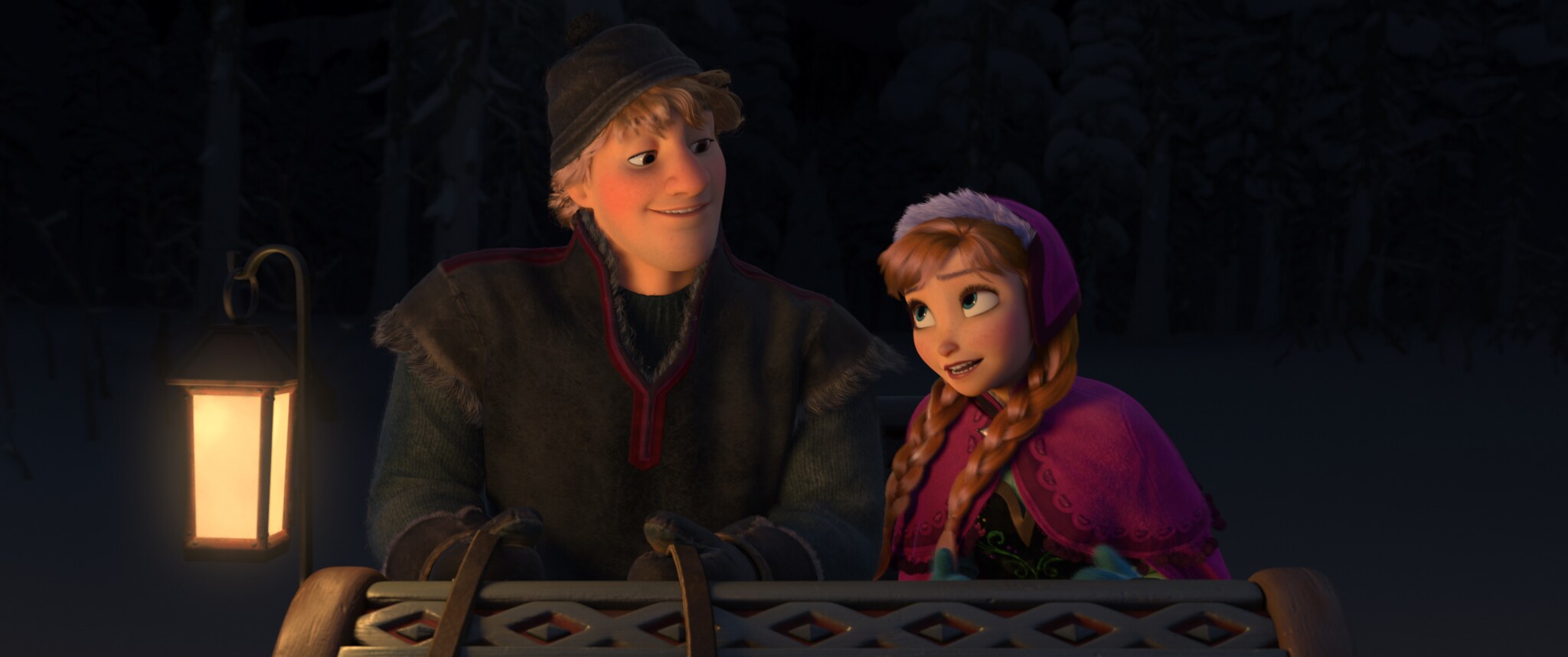
Anna leaves Hans responsible for Arendelle and pursues Elsa with confidence larger than her plan. She buys supplies, recruits Kristoff, survives wolves, meets Olaf, and keeps moving as the frozen heart begins long before she recognizes the injury.
The journey reveals competence through correction. Anna makes bad decisions, accepts help, argues, notices, and changes course. Her courage is not perfect judgment. Her courage is continued action after judgment fails.
Kristoff and love that develops through evidence
Kristoff begins as a transaction and becomes a partner through labor. He challenges her assumptions, protects her without claiming ownership, and takes her toward Hans when he believes that relationship will save her.
Anna learns his habits, work, bond with Sven, and awkward care. The contrast with Hans is not prince versus commoner. The contrast is instant mirroring versus observed behavior. Kristoff becomes trustworthy because the story gives Anna time to see what he does when no romantic reward is guaranteed.
The frozen heart
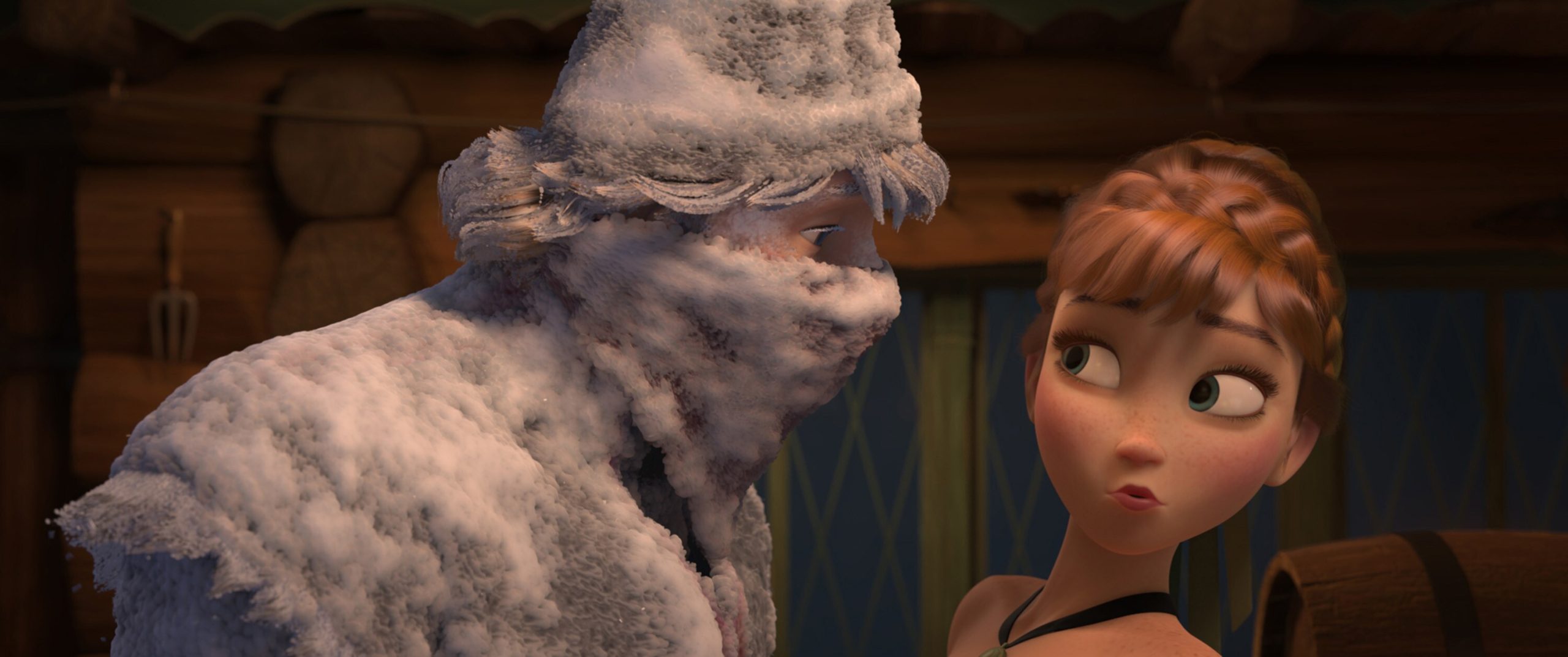
Elsa strikes Anna while panicking, and the injury moves through Anna’s body. White hair, cold skin, weakness, and failing time translate emotional damage into visible change. Anna still focuses on reaching the person she believes can help.
The trolls define an act of true love as the cure, and everybody assumes romance. Anna follows the available script because fairy tales trained the characters as thoroughly as the audience. Hans’s refusal turns the expected rescue into another abandonment.

The sacrifice
Anna sees Kristoff approaching and chooses Elsa instead. The decision abandons the rescue she has been told will save her. She protects her sister before knowing the act also protects herself.
The thaw makes sisterhood the completed act of love, but the scene carries more than a genre reversal. Anna stops chasing validation and acts from her own knowledge of who needs her. Elsa finally receives proof that closeness can survive danger.
After the gates open
Anna gains public life, a restored relationship with Elsa, and a developing partnership with Kristoff. The shorts show daily repair through birthdays, holidays, games, and household routine. Those scenes matter because one sacrifice cannot replace years of missed ordinary time.
Anna’s instinct remains pursuit. Elsa’s instinct remains private control. The household is healthier, not finished. Small disagreements reveal whether both sisters are learning new behavior.
Frozen Fever
Anna recognizes Elsa’s magical cold before Elsa admits weakness. She tries to redirect the perfect birthday plan toward rest, becoming caretaker during a celebration intended for her.
The short shows Anna accepting imperfection more easily than Elsa. Anna does not need reimbursement for every missed year. She needs her sister present, honest, and alive enough to share an ordinary bad day.
Olaf’s Frozen Adventure
Anna and Elsa believe isolation left them without a family tradition. Their search through old objects reveals that Anna’s drawings and Elsa’s preservation of them formed a ritual across the closed door.
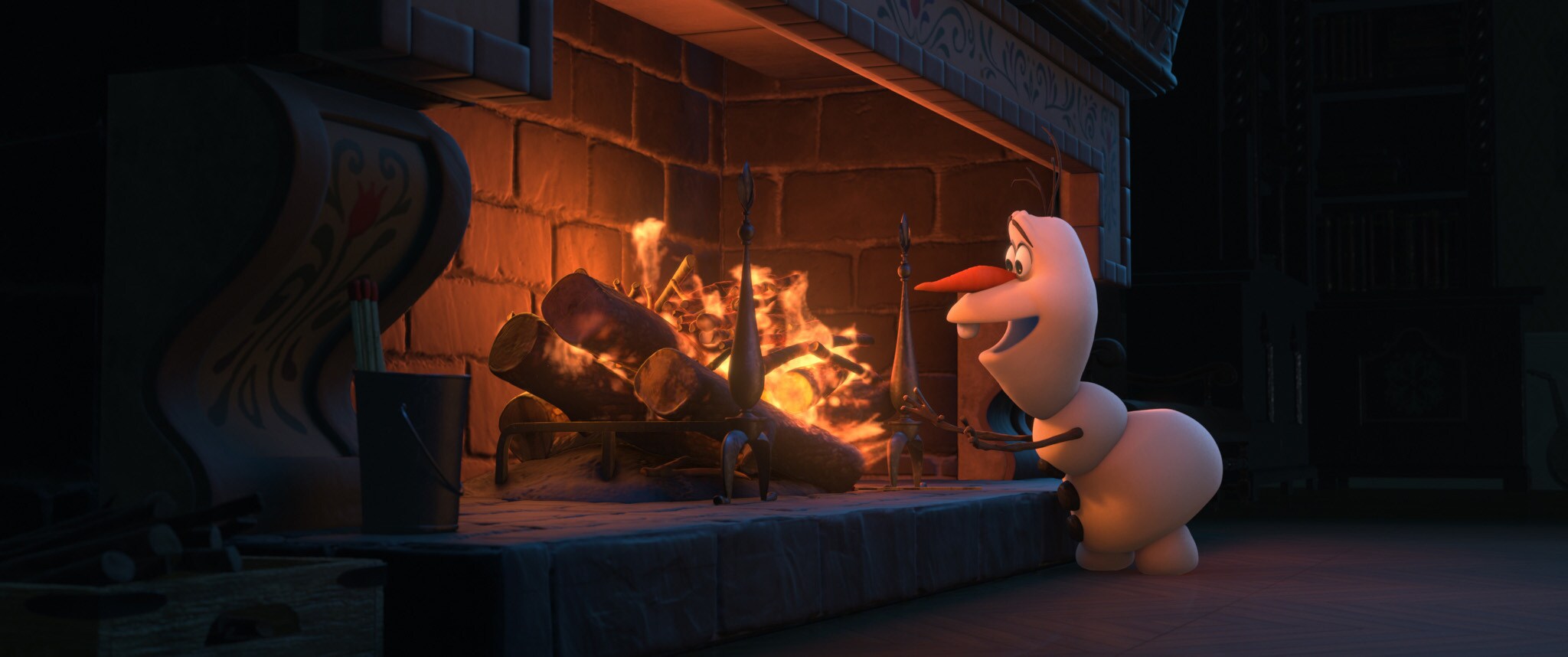
Anna’s relationship with Olaf gains historical weight. He is the snowman from childhood play and a person in the current household. Her later grief for him grows from both layers.
Some Things Never Change
The sequel opens with Anna clinging to stability because change previously arrived as disappearance, death, exposure, and magical disaster. The song’s promise comforts her while the story prepares to break every public role.
Her desire to keep the household together is loving and controlling in quieter ways. Anna monitors Elsa because secrecy has consequences. She also needs to learn that another person’s uncertainty cannot always be solved by staying close enough to prevent movement.
Protecting Elsa and repeating the chase
Anna follows Elsa into the forest, refuses separation, and treats every danger as proof she must remain physically present. Her fear is reasonable. Elsa has concealed the voice and has a history of leaving alone.
The pattern becomes a conflict because Anna’s protection can ignore Elsa’s autonomy while Elsa’s protection ignores Anna’s competence. Both sisters call control love. The sequel forces each to act without the other.
Olaf’s death and The Next Right Thing
Anna believes Elsa and Olaf are dead after Elsa’s magic disappears. The film removes optimism, romance, and immediate reassurance. “The Next Right Thing” reduces survival to one available action rather than presenting grief as a speech about strength.
Kristen Bell performs movement as labor. Anna does not feel ready to lead. She identifies the consequence of Runeard’s crime and continues while devastated. That sequence becomes the clearest evidence that leadership is behavior before title.
Destroying the dam
Anna learns Runeard built the dam to control the Northuldra and murdered their leader. She decides the structure must fall even if the released water destroys Arendelle.
The choice separates justice from image management. Anna acts as heir to the benefiting institution and accepts material cost before knowing Elsa can save the city. The political courage exceeds anything required by her coronation.
Queen Anna
Anna becomes queen after Elsa chooses the Enchanted Forest. Her social intelligence, persistence, ability to read people, and willingness to confront inherited wrongdoing support the role.
The film rushes the transition. Anna deserves a governing story that includes policy, rebuilding trust, resource decisions, and conflict with citizens who may not welcome the truth. A crown is not the conclusion of competence.
Relationship file: Elsa
Elsa remains Anna’s deepest relationship and most persistent source of fear. Anna loves her sister without pretending the secrecy and unilateral decisions are harmless.
Healthy sisterhood requires information, boundaries, anger, separate work, and return. Anna should not remain the emotional employee of a magical sibling. Elsa should not interpret every question as a demand to surrender autonomy.
Relationship file: Kristoff
Kristoff offers steadiness, practical skill, and respect for Anna’s decisions. The first film gives them a foundation. The sequel gives him repeated proposal failures that sometimes remove him from Anna’s actual crisis.
“Lost in the Woods” allows male uncertainty without punishing Anna for having another urgent responsibility. Their partnership works when Kristoff says, “My love is not fragile,” and means support rather than self-erasure.
Relationship file: Olaf and Sven
Olaf reflects childhood memory while developing independent personhood. Anna answers his questions, tolerates his monologues, depends on his warmth, and grieves him as family.
Sven communicates through behavior and Kristoff’s interpretation. Anna trusts his judgment and treats him as a participant rather than transport. The household would collapse faster without the reindeer’s practical attention.

Relationship file: Iduna and Agnarr
Anna remembers loving parents and experiences their deaths without learning the full history behind the gates. Later revelations about Iduna’s origin deepen family context while leaving Anna’s childhood questions partly unanswered.
The parents’ fear shaped both daughters differently. Anna can honor love without calling the policy harmless. The distinction matters whenever family stories confuse good intentions with good outcomes.
Relationship file: Hans
Hans exploits Anna’s need for immediate response and public belonging. His betrayal teaches discernment, but the lesson should not become shame for wanting connection.
The twist works thematically better than psychologically because early private moments conceal intention almost completely. Anna’s profile records both facts: he manipulated her, and the screenplay protected the surprise by withholding some character continuity.
Skills, limits, and leadership tools
Anna has no elemental magic. She rides, climbs, navigates danger, uses improvised weapons, recruits help, reads emotional shifts, and acts under pressure. Her body takes extraordinary punishment without becoming invulnerable.
Her strongest skill is relational persistence paired with growing discernment. Her weakness appears when urgency becomes certainty. Anna can commit before gathering enough information, then has to correct publicly and at cost.
Kristen Bell and the adult performance
Bell gives Anna speed without making every line identical. Breathless comedy can turn into anger, grief, negotiation, or stubborn focus. The voice often sounds directed toward somebody because Anna builds identity through relationship.
The performance changes most sharply in “The Next Right Thing.” Familiar bounce disappears. Phrases sound physically assembled. Bell makes leadership emerge from action taken before confidence returns.

Young voices and musical continuity
Livvy Stubenrauch voices young Anna, Katie Lopez supplies the young singing voice, and Agatha Lee Monn performs the teenage singing stage in the first film. Those credits preserve age across the opening chronology.
The younger performances establish curiosity, repetition, loneliness, and the gradual change in what knocking means. Adult Anna’s pace grows from that history rather than appearing as a generic comic trait.
Song file
“For the First Time in Forever” introduces desire and naïveté while the reprise turns sisterly hope into failed communication. “Love Is an Open Door” builds a fantasy from mirrored loneliness. “Do You Want to Build a Snowman?” carries the childhood wound.
“The Next Right Thing” becomes Anna’s defining solo because the song removes easy optimism. Her musical journey moves from wanting somebody to open a door toward choosing action when nobody is available to answer.
Design evolution
Anna’s clothing remains practical, layered, colorful, and tied to Arendelle’s Norwegian-inspired visual system. Travel costumes support movement while coronation clothing marks her new institutional role.
Design makes Anna look warmer and more socially available than Elsa without reducing her to sunshine. Damage, weather, hair change, and posture track physical and emotional cost across the films.
Culture, monarchy, and the practical sister
Anna inherits a fictional kingdom built from specific Norwegian visual sources and a history entangled with Sámi-inspired material through the Northuldra. Cultural reference should remain named instead of becoming generic fairytale texture.
Her queenship also raises class and governance questions. Anna’s warmth does not erase monarchy. Future stories need citizens, labor, law, and disagreement rather than treating personal goodness as a complete political system.

Reception and merchandising
Anna was sometimes overshadowed by Elsa’s ice dress and anthem even though the first film follows Anna’s journey. Merchandising can make the magical sister appear like the sole protagonist.
The imbalance repeats a familiar problem: visible power receives symbolic weight while relational labor becomes ordinary. Anna’s profile restores the work, mistakes, humor, grief, and political decision-making that hold the franchise together.
Criticism
Anna’s resilience can become an excuse for other characters to keep handing her consequences. The sequel risks making her the reliable sister who manages government while Elsa receives mythic freedom.
A stronger continuation gives Anna desire beyond keeping everyone safe. Leadership, romance, friendship, anger, curiosity, and rest should exist without every path beginning as another rescue mission.
Anger, boundaries, and the feeling she rarely gets to keep
Anna becomes angry throughout the franchise, but the story often converts anger into action before giving her time to examine the boundary underneath. She confronts Elsa at the coronation, challenges Kristoff, punches Hans, argues against being sent away, and destroys Runeard’s dam. Each moment contains judgment as well as impulse. The emotion is not a cheerful woman temporarily malfunctioning.
Her anger usually says that another person made a decision affecting her life without sufficient information or consent. Elsa closes doors and sends her away. Hans constructs false intimacy. Runeard’s secret leaves descendants and the Northuldra carrying consequences. Anna grows when she stops treating every refusal as abandonment and starts distinguishing a boundary from a deception. The franchise should let her keep that discernment without forcing immediate forgiveness.
Emotional labor inside the royal household
Anna notices who has withdrawn, who needs reassurance, and what ordinary activity might keep the household connected. Game night, holidays, conversation, physical affection, and shared plans do not maintain themselves. Her social energy becomes infrastructure after years when the palace had almost none.
That work can look effortless because Anna performs warmth with humor and speed. The cost appears when she monitors Elsa through every silence and treats vigilance as the price of preventing another disappearance. A healthy household cannot depend on one person detecting every unspoken crisis. Elsa, Kristoff, Olaf, and the people around Anna have to communicate before her fear turns care into permanent emergency duty.
Public leadership before the crown
Anna acts politically before becoming queen. She leaves Hans in charge during the winter crisis, negotiates help outside rank, returns with evidence about Elsa, challenges the plan to kill her sister, and later interprets Runeard’s history as a duty requiring material action. Some decisions are poor. The pattern shows a person learning authority through consequence.
Her greatest leadership strength is willingness to revise. Anna does not need to appear omniscient before moving. She makes a choice, receives new information, changes direction, and accepts embarrassment or danger. That flexibility differs from the royal habit of protecting certainty. Arendelle needs the capacity after generations of secrets presented as responsible governance.
The body file: stamina, injury, and physical comedy
Anna’s body carries the journey. She falls, climbs, rides, freezes, runs, swings, throws, sleeps badly, and keeps moving through weather she was not trained to treat as ordinary. Physical comedy never means physical consequence disappears. The frozen heart gradually changes hair, temperature, strength, balance, and time available.
Animation gives her a less controlled physical vocabulary than Elsa. Anna occupies furniture strangely, trips over presentation, leans into people, and lets reaction cross her face before etiquette can stop the evidence. The movement supports character. A woman raised in a formal palace never became fully polished because the palace also deprived her of the social world where polish would have been practiced.
Broadway, books, games, and alternate branches
The stage adaptation expands Anna’s musical and dramatic material, allowing live performers to adjust timing, vulnerability, and the balance between comedy and grief. Publishing, comics, games, and park stories fill domestic or adventurous spaces between films. Those branches can reveal useful possibilities without automatically becoming evidence for feature-film continuity.
A reference-grade profile labels the source before using the detail. Stage Anna is an adaptation. A licensed book may extend the world under separate continuity rules. A game turns choices into mechanics. Park Anna functions within a guest encounter. Comparing branches shows which traits remain essential: persistence, warmth, impulsiveness, loyalty, practical courage, and the refusal to let a closed door become the family’s permanent answer.
Adaptation history and the Gerda inheritance
Frozen developed from a long studio history of attempting Hans Christian Andersen’s The Snow Queen. Anna is not a direct copy of one literary figure, yet her journey carries clear Gerda-like functions: crossing danger, refusing to abandon a loved one, and using relationship rather than magical dominance to reach the frozen person at the center.
The adaptation changes romance, family, monarchy, and the source of the cold. Making the central relationship sisters gives Anna’s persistence a shared childhood rather than an idealized quest from outside. The profile should not call the film faithful or unrelated. Disney uses source motifs, rearranges roles, and builds a new argument about fear, memory, and family repair.
Reception, children, and the woman mistaken for the sidekick
Elsa became the merchandising phenomenon, while Anna often received the label of relatable or ordinary sister. That language can quietly demote the character whose decisions organize the first film. Anna leaves the palace, assembles the traveling group, reaches Elsa, survives betrayal, chooses the sacrifice, and creates the act that thaws the kingdom.
Children recognizing Anna’s messiness is valuable. The problem begins when relatability becomes smaller narrative importance. She carries humor, romance, physical action, grief, and political choice. The sequel makes the imbalance more visible by giving Elsa mythology while Anna receives responsibility. A serious character record refuses to treat invisible labor as evidence that less happened.
What a complete Anna arc still needs
Anna has moved from princess seeking immediate belonging to queen capable of acting through grief. The next stage should test life after emergency. Governing requires patience, delegation, budgets, law, diplomacy, public disagreement, and a relationship with citizens who may resent the cost of royal history. Love cannot solve every institutional conflict.
Her private life also needs room beyond monitoring Elsa and waiting for Kristoff’s proposal. Anna can want work, friendship, travel, children or no children, reform, leisure, and a household that does not depend on her constant brightness. The franchise built a woman who survives absence. The future should show what she chooses when survival stops being the only task on the calendar.
Humor, embarrassment, and why polish would ruin her
Anna’s comedy comes from commitment. She says the thought before checking the room, launches her body toward a plan, changes direction in public, and remains visibly embarrassed without pretending the mistake never happened. The humor keeps status from protecting her. A princess can still wake with impossible hair, talk to paintings, misread a stranger, and discover that confidence did not include a map.
Kristen Bell and the animators preserve dignity without removing awkwardness. Anna is allowed to be desirable, capable, funny, angry, and wrong in the same story. Polishing every reaction into royal composure would erase the character’s social history. She grew up with etiquette lessons and almost no ordinary practice. The gap between the two creates comedy while reminding the audience what the closed gates cost.
Frozen 3 and the future file
Disney schedules Frozen 3 for November 24, 2027. Announced production facts belong in the profile, while marketing hints remain separate from completed canon.
Anna’s future should test governance after Runeard’s truth, partnership across the forest boundary, and her life with Kristoff without reducing marriage to a closing reward. The queen needs conflicts that cannot be solved by knocking harder.
Fandom notes and reference floor
Anna fans often recognize the person whose cheerfulness hides abandonment, anger, and constant emotional work. The reading has evidence in her pursuit, rapid attachment, monitoring, grief, and willingness to act after hope collapses.
Major encyclopedic and specialist references provide the factual floor. This profile adds complete chronology, relationship mechanics, performance, culture, political consequence, criticism, and RaeRae interpretation so a reader receives more than a plot summary.
Sources
Primary sources include Disney’s official film and press records, D23 archives, Walt Disney Animation Studios production material, and Into the Unknown: Making Frozen II. Media attachments preserve source and rights details. Release dates, performer credits, runtimes, and announced future production are checked against those records before publication.
Interpretation is labeled as analysis. Verified credits, release facts, cultural consultation, visible scenes, fandom readings, and future-production reporting are not blended into one certainty.
Frozen coverage
Return to the Frozen hub for reviews, Reacts, rants, characters, lore, and viewing guides.