
Anime Combat Schools Are Failing Their Students
A school that can fund an arena, weapons, rankings, and live combat exams can fund a nurse, a counselor, a normal curriculum, and enough adults to stop sending children into war.
Bottom line first: a school that trains children for public danger owes those children a real education, real protection, and adults who accept responsibility when the system fails. Anime combat schools love calling danger an education. The students wear uniforms, attend homeroom, take written tests, and answer to teachers, so the whole operation gets treated like a school. Then the bells ring and a room full of minors gets sent to fight monsters, criminals, curses, enemy soldiers, or one another. When somebody gets hurt, the institution calls the damage training. When somebody breaks down, the institution calls the pain potential.
The Complaint Is Not That Teen Heroes Fight
Teen heroes fight because stories about growing up need pressure. A classroom alone cannot carry every fear about identity, friendship, failure, and adulthood. Combat turns those fears into movement. A student faces a rival and the rivalry becomes a question about envy. A student protects a teammate and the rescue becomes a question about loyalty. A student freezes during an exam and the hesitation becomes a question about self-worth. None of that bothers me. Anime has every right to make adolescence loud, magical, and dangerous.
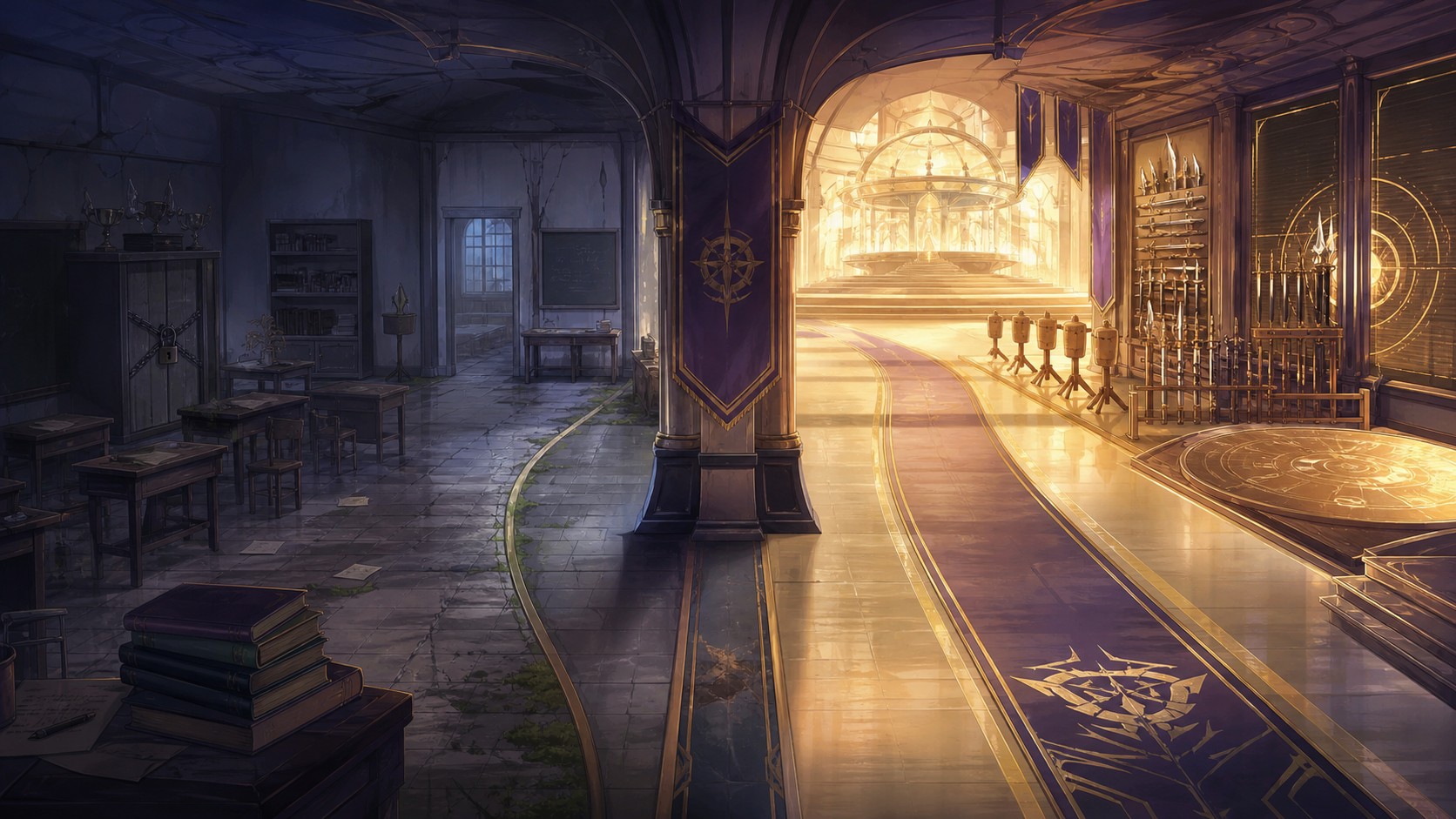
The problem begins when the story builds an institution around that danger and never asks the institution to behave like a school. Teachers praise sacrifice while ignoring exhaustion. Administrators rank children by destructive power. Parents disappear from decisions that could kill their kids. Medical care becomes a reset button between battles. Academic subjects exist as background furniture, even when graduates will need law, history, finance, diplomacy, logistics, ethics, and basic civic knowledge to handle the authority being handed to them.
That gap matters because the school label does moral work for the story. Viewers are invited to trust the adults because adults are called teachers. Training gets treated as legitimate because training happens on campus. Exams get treated as fair because everybody receives a number at the end. The language of education covers a labor system that often recruits children, sorts their bodies by usefulness, and places public safety on their shoulders before those students can legally control most parts of their own lives.
What the Trope Gets Right
Real schools do more than deliver facts. Strong schools give young people a place to test judgment, build relationships, recover from mistakes, and discover skills that families may not know how to teach. Anime combat schools understand the value of a shared training ground. Students from different clans, neighborhoods, classes, and personalities meet because the institution forces them into the same room. Rivalries become friendships. Isolated prodigies meet ordinary peers who will not worship them. Children carrying family expectations gain a second community.
The best versions also understand that ability needs practice under supervision. Power without practice can injure the user and everyone nearby. A responsible teacher can create controlled difficulty, explain technique, notice fear, and stop an exercise before pride turns into disaster. Team drills can expose selfish habits that private training would hide. Simulations can teach communication before a real emergency. Those are legitimate educational ideas. A safe version of combat training could resemble a demanding mix of athletics, emergency response, professional licensing, and public-service preparation.
Anime also understands why students chase these schools. Young people want proof that they matter. A uniform can promise belonging. A ranking can make an uncertain future look measurable. A famous academy can offer food, housing, mentors, status, and a path out of poverty. For students from damaged homes, the campus may be the first stable structure they have ever known. Stories gain emotional force when the academy feels like a doorway that nobody else bothered to open.
That promise is why institutional failure hurts. A school becomes responsible for the hopes used to recruit students. Once adults say, “Come here and we will help you become capable,” those adults owe more than combat drills. They owe safety rules, honest risk disclosures, qualified care, fair discipline, meaningful education, and a future that does not depend on a child remaining useful in battle.
My Hero Academia Builds a School Around an Emergency Workforce
U.A. High is exciting because the campus makes heroism feel teachable. Students learn rescue, combat, public presentation, teamwork, and professional conduct. Teachers have field experience. Specialized facilities allow practice beyond what an ordinary school could provide. The setting turns a superhero fantasy into a recognizable education system, which gives viewers clear milestones and lets classmates grow together instead of scattering into private apprenticeships.
U.A. also reveals the central problem with the trope. The students are training for a licensed profession, yet villains repeatedly invade their education. First-year students face threats that trained adults struggle to contain. Internships and work studies place minors near active crime. Public attention turns school competitions into scouting events where agencies evaluate children as future labor. The institution keeps operating because society needs the pipeline, even when the pipeline becomes a target.
A believable response would change more than campus security. Repeated attacks would trigger independent investigations, family meetings, trauma services, temporary limits on field deployment, and arguments about whether hero agencies are transferring public risk onto students. Rescue education would expand because most hero work should involve evacuation, first aid, crowd control, disaster planning, and de-escalation. Students who are brilliant at prevention would earn as much prestige as students who can punch through concrete.
Naruto Calls Child Soldier Preparation a Village Tradition
The ninja academy in Naruto teaches basic techniques, history, rules, and teamwork, but graduation feeds children directly into military service. New genin receive adult supervisors, which gives the system a layer of protection. Early missions are supposed to match a beginner’s skill. Team assignments can also prevent clan training from becoming the only route into public service. On paper, the village has created standards and oversight where private warrior families once controlled everything.
The Land of Waves mission exposes how thin those safeguards are. A client lies about the danger, the mission classification collapses, and children face killers far beyond their expected level. The team continues because returning home would leave vulnerable people unprotected and because pride, duty, and political need all push in the same direction. That choice makes a great story. The village learning almost nothing from the failure makes a terrible institution.
The Chunin Exams deepen the contradiction. Children compete for promotion in an event observed by military clients. The exam measures survival, intelligence, leadership, combat, and political usefulness, but the spectacle also turns young people into advertisements for village power. A student can be traumatized, cursed, nearly killed, or pushed by family abuse while officials keep the bracket moving. The system notices talent faster than distress because talent has strategic value.
Naruto gains meaning when characters challenge inherited cruelty, yet the academy rarely becomes the site of serious reform. A better postwar village would raise deployment ages, separate education from military ranking, give civilian students respected paths, create independent child advocates, and teach law and diplomacy alongside jutsu. The village claims that bonds make people stronger. A school built around that belief should protect those bonds before demanding that children bleed for them.
Jujutsu High Barely Pretends to Be a School
Jujutsu High has teachers, dorms, classes, uniforms, and school years, but the institution functions as a tiny labor pool for lethal curse work. The shortage of trained sorcerers explains why students receive missions. Curses do not wait for graduation, and experienced adults cannot cover every emergency. The setup gives the series a brutal realism: institutions under pressure often normalize unsafe assignments because the need never stops.
Scarcity explains the system without excusing the system. The adults know that students can die, disappear, or suffer permanent damage. Leadership still uses opaque orders, political punishment, and selective information. Young sorcerers learn technique through crisis because formal teaching capacity is weak. The school relies on exceptional mentors and personal loyalty instead of enforceable protections. When a good teacher is absent, students discover how little structure exists underneath the relationship.
A more believable system would treat every student mission like hazardous work. Missions would require verified threat levels, backup teams, extraction plans, communication checks, medical coverage, and automatic review after classification failures. Students would have the right to refuse assignments outside their certification without losing status. Adults who deliberately misclassify danger would face removal. The conservative leadership could still resist reform, but resistance would become visible policy conflict instead of background evil.
Soul Eater Makes Partnership the Curriculum
Death Weapon Meister Academy has one of the stronger educational ideas in the genre because its power system depends on partnership. Students cannot succeed through individual force alone. They must learn timing, trust, emotional alignment, and responsibility for another person’s body. A weapon is not equipment. A weapon is a student with agency. That premise makes communication part of combat competence rather than a soft lesson added after the fighting ends.
The academy still sends students into lethal situations while authority remains concentrated in a small, strange hierarchy. The world’s supernatural danger makes training necessary, but necessity again becomes a blanket excuse. Students face enemies and psychological threats that would overwhelm many adults. The institution offers community and instruction, yet mental strain often becomes a private problem that friendship must solve.
A better academy would build formal relationship support around the partnership system. Conflict mediation, consent rules, reassignment procedures, mental health care, and shared evaluation would matter as much as combat resonance. Students should not have to remain in a harmful partnership because their grades or social identities depend on the match. The series already knows that souls affect one another. The school should operate as though that truth creates duties, not only powers.
The Missing Curriculum Tells Us What Society Values
Combat academies often teach exactly what their societies reward. A village under constant threat teaches obedience and survival. A hero economy teaches branding and performance. A magical kingdom teaches lineage and sanctioned power. A curse system teaches secrecy and sacrifice. The missing subjects are not random gaps. Civics, labor rights, ethics, trauma literacy, disability access, and financial independence would give students language for questioning the adults who benefit from their service.
That omission mirrors real structures. Institutions can praise young people as the future while limiting their power in the present. Schools can celebrate resilience without removing the conditions that demand endless resilience. Employers can call dangerous work an opportunity. Governments can call emergency labor patriotism. Families can call obedience tradition. The label changes, but the bargain stays familiar: adults receive stability while children receive praise for carrying costs they did not create.
The International Labour Organization defines hazardous child labor as work likely to harm a child’s health, safety, or morals. Anime worlds are fictional, and supernatural crises can change what survival requires, but the comparison still clarifies the moral stakes. A society that sends minors into dangerous work should carry a heavy burden of proof. “They are gifted” is not proof. “Enemies are dangerous” is not proof. “The audience wants action” explains production, not justice inside the story.
Trauma Cannot Remain an Individual Character Arc
Anime schools usually treat trauma as fuel for personal growth. A student loses someone, trains harder, unlocks a technique, and returns stronger. That journey can feel honest when grief changes how the character moves through the world. Trouble arrives when recovery has no institutional dimension. The school that exposed the student to danger offers a hospital bed, a speech, and another assignment. Friends become unpaid counselors. Teachers improvise care based on affection instead of training.
The World Health Organization connects supportive school environments with better health and education outcomes. WHO guidance also treats schools as places where young people should gain knowledge, socioemotional skills, critical thinking, and access to health support. A combat academy would need more care, not less, because repeated exposure to violence raises the risk. Counselors should understand supernatural injury, survivor guilt, moral injury, family pressure, and the fear of losing a power-based identity.
Care should also change the plot. A student might be temporarily removed from combat without being shamed. A healer might challenge a coach who keeps clearing injured children. A counselor might recognize that anger comes from coercion rather than poor attitude. A family might learn that the prestigious academy hid the true risk. Those conflicts would not weaken the action. They would make every return to action carry informed choice instead of automatic obedience.
Rankings Turn Children Into Public Products
Rankings are useful storytelling tools because viewers understand them instantly. A number shows progress, creates rivalries, and sets goals. Schools also need assessments. Teachers must know who can perform a technique safely, who needs help, and who is ready for advanced responsibility. The problem is not measurement. The problem is collapsing a whole student into a public combat score.
Public rankings invite sponsors, clans, agencies, and families to treat children as investments. Students learn to hide pain because absence can cost status. Support roles seem inferior because visible destruction earns applause. Late bloomers get marked as failures before their development catches up. Disabled students face systems designed around a narrow body. Wealthy students can purchase training that improves the same score presented as natural merit.
A responsible assessment system would separate certification from spectacle. Results would be private, specific, and tied to demonstrated competencies. Combat power would be only one category beside rescue, judgment, teamwork, ethics, communication, and prevention. Students would receive multiple attempts and clear appeal procedures. Public exhibitions could celebrate learning without publishing a permanent ladder that follows teenagers into employment.
Teachers Need Duties Beyond Being Strong
Anime often hires the strongest available fighter and calls that person a teacher. Field experience matters. Students deserve instructors who understand the danger beyond textbooks. Strength can also make a classroom safer when supernatural accidents happen. A veteran may recognize subtle mistakes that an academic specialist would miss.
Being powerful does not automatically produce teaching skill. Educators need to plan lessons, explain concepts in different ways, notice exclusion, document injuries, manage conflict, and report abuse. They need boundaries. A charismatic mentor who gives brilliant advice to one favorite student may still neglect everyone else. A stern instructor who believes suffering builds character may recreate personal trauma as curriculum.
A believable academy would employ teams. Combat specialists would teach beside licensed educators, medical staff, counselors, legal advisers, and disability experts. Teachers would receive training in adolescent development and safeguarding. Independent staff would review dangerous exercises. Students would have a complaint process outside the chain of command. Heroic teachers could remain heroic, but heroism would stop serving as the only quality control system.
Parents and Communities Cannot Vanish at the Gate
Many stories remove parents because independence helps young protagonists drive the plot. Boarding schools solve travel problems and create constant proximity among the cast. Orphans and estranged families also fit worlds shaped by war. Those choices are valid. A large academy filled with minors still exists inside a community, even when individual families are absent.
Community oversight can create excellent conflict. Parents might demand safer exams while students accuse them of fear. Civilians might resent funding an elite campus that damages nearby neighborhoods. Graduates might expose hidden casualty rates. Local healers might complain that the school sends injured students without records. Officials might protect the academy because public safety depends on graduates. Such arguments turn the school into a living institution instead of a decorative castle.
Oversight also makes courage clearer. A student who chooses a dangerous mission after receiving honest information and a real alternative shows agency. A student who accepts because every adult has hidden the cost shows conditioning. Both can be dramatic, but the story should know the difference.
How the System Could Become Better Without Becoming Boring
Start by separating school from active duty. First-year students can train through simulations, supervised drills, controlled rescue exercises, and observation. Older students can enter limited field placements with certification, backup, pay, insurance, and the right to withdraw. Emergency exceptions should trigger public review. If a crisis forces minors into battle, the story should treat that moment as a system failure, not a normal Tuesday.
Build a real curriculum. Students need history that includes institutional wrongdoing, law that explains authority, ethics that covers civilian harm, and economics that shows who profits from their labor. Rescue training should include first aid, evacuation, disability access, shelters, communication, and disaster logistics. Media classes should teach consent and privacy rather than only branding. Basic life skills matter because graduates deserve identities beyond service.
Create multiple futures. Not every gifted child should become a fighter. Some students could research threats, design equipment, teach, heal, negotiate, investigate corruption, preserve records, or support communities. Leaving combat should not mean wasting talent. A school proves educational value when students can revise their goals without losing housing, status, friendships, or access to care.
Make consequences institutional. After a failed mission, change policy. After a biased exam, change assessment. After a teacher abuses authority, investigate the teacher. After a student dies, do more than plant a tree and deliver a speech. Publish findings, compensate families, protect whistleblowers, and show political resistance. Reform does not need to succeed quickly. Reform only needs to exist strongly enough that the world acknowledges preventable harm.
The Story Gets Stronger When Adults Cannot Hide Behind the Uniform
A functional school does not remove conflict. A functional school creates better conflict. Rules force villains to manipulate procedures. Oversight creates political fights. Safety plans fail in specific ways instead of disappearing whenever the plot needs danger. Teachers must choose between orders and duty. Students can argue about acceptable risk with real information. Families and civilians gain reasons to matter.
The combat-school trope becomes richer when education changes characters outside battle. A student might discover that policy can protect more people than one spectacular victory. A powerhouse might learn to teach without humiliation. A healer might demand authority equal to fighters. A former child soldier might redesign training so the next class does not repeat the same damage. These arcs connect power to responsibility instead of treating responsibility as a speech after power wins.
UNESCO describes quality learning as inclusive, equitable, supportive, and responsive to different learner needs. UNESCO also identifies normalized violence, insufficient support, and unequal resources as forms of institutional harm. Those standards belong in this conversation because anime schools borrow the trust associated with education. Once a story uses the school label, viewers can ask whether the institution actually helps students learn, live, and choose.
A School Responsible for Power Must Also Be Responsible for Childhood
The tunnel begins with a simple complaint: too many anime academies spend fortunes teaching children how to survive violence while refusing to teach the society how to stop consuming them. The institution calls danger inevitable, calls obedience maturity, and calls recovery proof that the system works. Every successful survivor becomes advertising for the same structure that injured them.
The vision is not a gentle campus where nothing happens. The vision is a demanding school worthy of the students who trust it. Training can remain difficult. Enemies can remain terrifying. Exams can remain competitive. The difference is that adults accept measurable duties, students retain meaningful choices, and failure produces reform instead of another inspirational poster.
The journey ends when the academy stops confusing usefulness with education. A graduate should leave with more than scars, techniques, and loyalty to an emblem. A graduate should understand the world, recognize coercion, protect other people without erasing personal needs, and possess enough options to say no. When a school cannot produce that freedom, the building may still have classrooms, uniforms, and bells. The system has trained a weapon and failed a child.
Receipts and Further Reading
- UNESCO: Quality Learning, on inclusive, equitable, supportive learning environments and the wider skills education should develop.
- UNESCO: Safe Learning Environments, on violence, institutional harm, and the effects of unsafe schools.
- World Health Organization: Guideline on School Health Services, on the relationship among education, supportive environments, health, and school services.
- World Health Organization: Mental Health of Adolescents, on protective school environments and the long-term cost of neglected mental health.
- International Labour Organization: What Is Child Labour?, including the definition of hazardous work likely to harm children’s health, safety, or morals.
- ILO Conventions on Child Labour, on minimum age, hazardous work, education, and child protection.
RaeRae’s Bottom Line
A combat academy does not earn trust by putting a crest over the door. Trust comes from protecting students when protection is inconvenient, educating them beyond the role society wants filled, and changing after preventable harm. Give the kids difficult lessons, dangerous enemies, messy choices, and glorious victories. Also give them adults who understand that surviving school should never be the final exam.