
ANIMATION 101 · ALADDIN LORE · THREE WISHES AND A WHOLE OWNERSHIP PROBLEM
Aladdin’s Three Wishes Explained: Genie’s Rules, Jafar’s Loophole, Consent, and the Price of Freedom
The lamp bans murder, forced love, and resurrection. It says much less about consent, coercion, political power, or owning the person expected to grant everything.
The three-wish rule sounds precise until somebody actually starts wishing
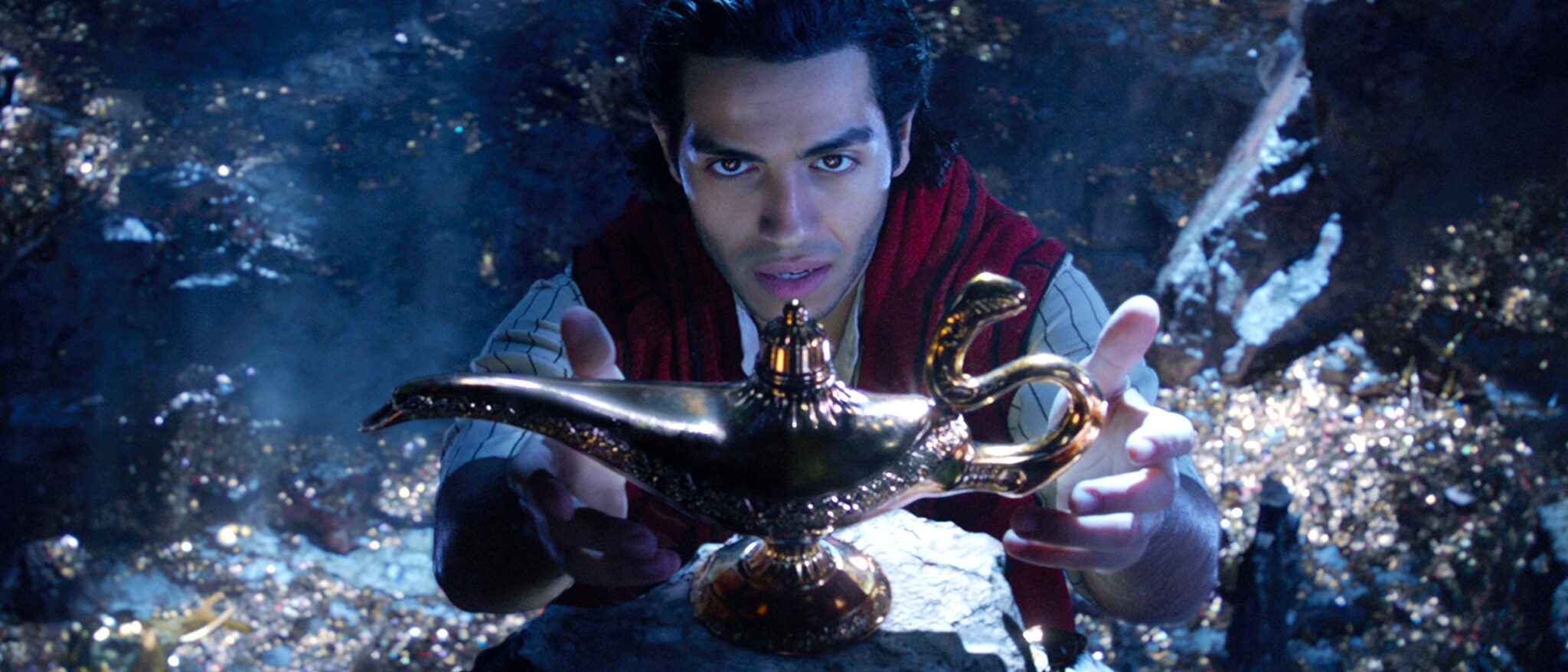
Genie tells Aladdin he gets three wishes. He also names three famous restrictions: he will not kill anyone, he will not make anyone fall in love, and he will not bring back the dead. Those rules give the magic a clean comic introduction. They do not explain the whole system. The film immediately begins negotiating what counts as a wish, who owns the lamp, how clearly a desire must be spoken, and whether Genie can act before the sentence is complete.
A magic system in a musical fairy tale does not need the precision of tax law. It does need enough consistency for choices to carry weight. Aladdin’s final promise to free Genie matters because the audience understands that freedom costs one of the limited wishes. Jafar’s escalation matters because each wish grants a larger title without repairing the insecurity driving him. The rules exist to expose character before they exist to settle fandom arithmetic.
That distinction does not excuse every contradiction. It tells us which contradictions deserve attention. When Genie saves Aladdin from drowning, the uncertainty about whether Aladdin wished becomes an ethical question about consent. When Jafar asks to become a genie, the wording becomes a trap because power and captivity arrive together. The best loopholes reveal the moral structure hiding beneath the spectacle.
Rule one: the lamp creates ownership before it creates wonder
Whoever possesses the lamp can command Genie, subject to the limits the story recognizes. That arrangement is slavery with comic staging. Genie performs enthusiasm because performance is part of his personality and survival. He can like Aladdin, enjoy making magic, and still be unfree. Friendship does not cancel the power imbalance while Aladdin holds the object that controls his life.
The movie knows this. Genie’s tiny living space appears after displays of cosmic power. The visual joke is also a prison diagram. He can reshape bodies, summon spectacle, and cross cultural references faster than anyone can process, yet he cannot decide where he goes. Enormous capacity and absent autonomy coexist. That contradiction makes his freedom emotionally larger than any palace transformation.
Aladdin becomes more sympathetic when he recognizes the promise, and less sympathetic when fear makes him postpone it. The betrayal is not abstract. He asks an enslaved friend to keep serving because the false identity seems impossible to maintain without magical labor. His panic is understandable. The choice remains wrong. A good redemption reading needs both statements.
Rule two: wishes need intent, but the film keeps the threshold flexible
Genie sometimes treats ordinary speech as if it might be a wish and sometimes waits for explicit phrasing. He shapes the conversation, offers examples, and interprets desire theatrically. That flexibility is partly comedy. It also means the person granting wishes has interpretive power. A wish is never only a sentence. It passes through Genie’s understanding of what the speaker wants and what the scene needs.
Aladdin tricks Genie into escaping the Cave of Wonders without formally wishing. The trick proves Genie can act outside a counted wish when pride, friendship, or a challenge moves him. It also establishes Aladdin’s cleverness before the film turns that cleverness toward deception. He understands that rules have edges and that personality can move the person enforcing them.
The drowning rescue makes the ambiguity painful. Aladdin is unconscious and cannot clearly consent. Genie interprets a head movement or creates permission because refusing would let him die. The wish counter drops. If the scene were only a technical puzzle, fans could argue forever about validity. As character writing, it shows Genie choosing Aladdin’s life and then hiding tenderness behind procedure.
Rule three: no killing does not mean no violence
Genie says he cannot kill. The franchise still contains transformations, imprisonment, environmental danger, coercion, and battles capable of causing death without a direct magical execution. Jafar can use power to place people in lethal circumstances. Genie can produce objects and conditions with unpredictable consequences. The stated ban is a moral line and a rating-friendly boundary, not a complete safety system.
The limitation also says something about the lamp’s creators, whoever they were. They restricted certain outcomes while preserving ownership of a sentient being. That is a very selective ethics policy. The magic refuses murder but permits servitude. It refuses forced love but permits bodily transformation. It refuses resurrection while leaving memory and grief to the humans who ask. The rulebook protects cosmic order more reliably than personal dignity.
Jafar’s violence exposes how weak a narrow prohibition can be. A ruler does not need to issue the words “kill them” to terrorize a city. He can seize institutions, remove choices, change bodies, confine opponents, and make resistance suicidal. Reading the no-killing rule as proof the magic is safe mistakes one forbidden act for an entire moral code.
Rule four: Genie cannot make somebody fall in love
The restriction protects inner consent more explicitly than almost any other rule. Genie can alter Aladdin’s appearance, wealth display, social access, and performance. He cannot manufacture Jasmine’s affection. The plot then asks whether Aladdin can use all those external changes to manipulate her into choosing an identity that does not exist. Magic cannot force love, but a magically supported lie can still pressure it.
Jasmine’s rejection of Prince Ali is therefore essential. She is not failing to appreciate a grand gesture. She recognizes another man arriving with a plan for her. The carpet ride becomes intimate when Aladdin listens and shares wonder, then becomes ethically unstable when he continues lying about who is beside her. Consent needs relevant information, not merely the absence of a spell.
The 2019 film gives Jasmine additional political goals, which makes the love rule broader. Genie cannot make her love Aladdin, and Aladdin cannot earn her by presenting the correct royal package. She is choosing a partner while trying to become a governing actor in a system that excludes her. Romance has to coexist with the future she wants for herself.
Rule five: the dead stay dead, but stories keep testing the border
Genie refuses resurrection and briefly demonstrates why with a comic image of an undead return. The joke protects the movie from opening a grief problem it cannot solve. If the lamp could restore every lost parent, Aladdin’s family history and Jasmine’s absent mother would demand immediate attention. A hard boundary keeps loss meaningful and prevents wishes from erasing every consequence.
Later franchise magic includes ghosts, undead villains, magical survival, transformations, and beings returning through mechanisms other than a standard wish. Those stories do not necessarily prove Genie lied. They show a fantasy world with more than one magical system. The lamp has limits even when the universe contains another door around the same wall.
Fans should label the mechanism before declaring a contradiction. A spirit appearing, a villain escaping magical confinement, and a dead human being restored to ordinary life are different events. The franchise can still become inconsistent, but precision prevents every supernatural return from being thrown into one bucket marked resurrection.
Can a wish create real royalty?
Aladdin wishes to become a prince, and Genie produces Prince Ali’s clothes, procession, servants, reputation, and apparent wealth. The film never settles whether a sovereign territory named Ababwa comes into existence, whether records are altered, or whether the magic creates only a convincing presentation. Jasmine and the Sultan are offered proof through spectacle rather than diplomacy.
The uncertainty serves the theme. Aladdin asks for a title because he believes access requires it. Genie gives him every visible marker and none of the inner security. The wish works well enough to enter the palace and badly enough to make the lie permanent unless he chooses honesty. If magic created a functioning country, the political consequences would overwhelm the romance. The movie keeps the answer soft because the emotional fraud matters more than the paperwork.
Jafar’s wish to become Sultan shows a darker version. Clothing and the throne change immediately, but legitimacy does not. He can command through force while everyone knows the transfer is fraudulent. A title granted by magic cannot create trust. The same lesson applies to Aladdin with gentler stakes: recognition obtained through display remains fragile when relationship depends on truth.
Jafar loses because he treats power as a ladder with no structure around it
Jafar asks to become Sultan, then the most powerful sorcerer, then an all-powerful genie. Every wish answers the insecurity revealed by the previous one. Political title is insufficient because people resist him. Sorcery is insufficient because Genie remains more powerful. Becoming a genie appears to end comparison until Aladdin reminds him that genies are bound.
The trap works because the final wish is fulfilled honestly. Jafar receives tremendous power and the conditions attached to it. Aladdin does not defeat him with a stronger attack. He lets Jafar’s definition of greatness expose itself. A person who sees every relationship as domination cannot imagine that limitless service might be another form of imprisonment.
Iago’s position beside him sharpens the point. Jafar demands loyalty while offering contempt. Genie serves Aladdin under compulsion and still develops mutual care. Neither arrangement is morally clean while the lamp remains in play, but the emotional difference explains why one servant eventually resists and the other friend is ultimately freed. Power over somebody cannot guarantee their allegiance.
Freedom is the wish that changes the person granting wishes
Aladdin’s final wish releases Genie rather than improving Aladdin’s own position. The choice repairs the promise he broke and rejects the idea that friendship can remain healthy while one person owns the other’s future. Genie’s bracelets fall away. The physical change is small compared with his earlier transformations because freedom is not another costume. It is control over what happens next.
The animated film lets Genie leave and later return by choice. Return of Jafar makes that return immediate enough to feel commercially convenient, but the distinction remains: he comes back because he wants to see his friends. He can travel again. His help is no longer owed by cosmic contract. That change should shape how every later story reads his magic.
The 2019 remake gives him a human life with Dalia and children. Some viewers find that future warmly specific. Others miss the animated ending’s open freedom, where Genie could remain a magical being without a master. Both versions understand that release must alter daily life. Freedom that leaves every obligation and dependency untouched would be a decorative ending.
The lamp’s missing history is a deliberate hole with ethical weight
The films do not explain who created the lamp, who bound Genie, how long he served, or how many masters came before Aladdin. Genie mentions ten thousand years, but the exact history remains comic scale rather than documented chronology. The absence keeps the story moving. It also leaves the system’s original violence conveniently faceless.
A future branch could explore that history, but explanation would need care. Turning enslavement into a clever accident or punishment risks shrinking what the original metaphor already communicates. Making one ancient villain responsible might provide a target while hiding the cultures and institutions that benefited afterward. The ethical question is larger than who forged the metal. It is why every finder accepts ownership as normal.
The Cave of Wonders protects the lamp through a worthiness test, yet worthy access does not equal worthy use. Aladdin can enter and still lie. Jafar can manipulate the test and still become master. Cosmic selection finds a diamond in the rough, while moral growth happens afterward through decisions the cave cannot make for him.
A practical rule sheet for watching the franchise
Count an explicit wish when Genie and the master recognize it as one. Treat ambiguous rescues as character decisions before treating them as arithmetic. Separate the lamp’s restrictions from every other magical system in Agrabah. Remember that titles and transformations can be materially real without producing legitimacy, consent, or trust. Most importantly, distinguish what Genie can do from what he is free to choose.
When a sequel bends a rule, ask what the bend accomplishes. Does it reveal loyalty, create a moral trap, or expand the world? Or does it merely solve a plot problem and hope nobody remembers? Flexible fairy-tale magic can remain coherent when its emotional consequences stay honest. It feels cheap when limitation returns only after the writers have taken every convenient exception.
The lamp is fascinating because it offers power in the grammar of a transaction and friendship in the middle of ownership. Every wish asks what Aladdin thinks he lacks. Every refusal asks what the universe considers too dangerous. The final freedom wish works because it stops asking magic to improve Aladdin and finally asks what Aladdin owes the person who made improvement possible.
Official sources and the route back
Disney’s official pages for Aladdin (1992) and Aladdin (2019) provide release details, credits, current character descriptions, and each film’s official framing. The analysis above separates what appears on screen from questions the franchise leaves open.
Return to the Aladdin hub for film reviews, character files, rants, production history, and the complete watch route.
Wish rules only matter when the person making them matters
The three headline restrictions are memorable, but the deeper rule is that Genie is not a neutral machine. He interprets language while living under compulsory service. Every loophole therefore contains a relationship. Aladdin can phrase a request cleverly, Jafar can weaponize precision, and Genie can perform enthusiasm, yet none of those facts erase who controls the lamp. A rules guide that ignores the enslaved person enforcing the rules turns coercion into trivia.
Aladdin’s uncounted Cave escape works because he provokes Genie’s pride instead of formally spending a wish. The scene is clever and ethically uncomfortable at once. Aladdin has just learned that performance can move the most powerful being in the room, and Genie learns that his new master will test the border between request and command. Their friendship grows later, but affection does not retroactively make the manipulation harmless. The loophole is character evidence.
Jafar exposes the difference between power and freedom. His wishes increase rank, magical capacity, and visible dominance while tightening his dependence on the system he wants to control. The final wish works as a trap because genie power carries genie confinement. Aladdin wins by understanding the structure, then proves his own growth by using the final promised wish to release Genie instead of securing royal status. The emotional rule survives every technical debate: freedom cannot be meaningful when another person remains the instrument.
How to use this receipt
Aladdin’s Three Wishes Explained: Genie’s Rules, Jafar’s Loophole, Consent, and the Price of Freedom should help a reader notice the difference between a recurring franchise claim and evidence that appears in one branch. The feature, sequels, television series, stage adaptation, and remake do not share every rule or priority. When this guide moves between them, it names the version instead of smoothing contradictions into a false universal. That small habit prevents a convenient scene from becoming proof of how the entire franchise supposedly works.
What the short answer leaves out
Aladdin’s Three Wishes Explained: Genie’s Rules, Jafar’s Loophole, Consent, and the Price of Freedom has a clean practical answer, but the clean answer should never erase the people, production choices, and cultural arguments underneath it. The final note keeps that tension visible. Readers can find the order, rule, or design reference quickly, then stay for the part that explains why the answer changed, who benefits from the accepted version, and which question the franchise still has not resolved.
The wish ledger scene by scene
A wish begins before the formal words because the power imbalance begins when somebody possesses the lamp. Genie can advise, joke, refuse certain outcomes, and exploit phrasing, yet he cannot simply leave. That condition changes every apparently friendly negotiation. Aladdin is often kind to Genie and still benefits from ownership. Jafar is openly abusive and uses the same system. The moral difference between the masters is real, but the structure remains coercive until the lamp no longer has a master.
The prohibition against making someone fall in love protects consent in theory while leaving room for enormous manipulation around the border. A master can request wealth, status, spectacle, access, or fear that changes the conditions under which another person chooses. Prince Ali demonstrates the gap. Genie does not manufacture Jasmine’s affection, but magic helps Aladdin construct a false identity and enter a restricted social space. The heart remains unenchanted while the information surrounding its choice is managed.
The rule against killing does not make wishes safe. Transformation, imprisonment, political takeover, forced movement, and the creation of dangerous power can destroy a life without directly causing death. Jafar’s wishes demonstrate that a narrow prohibition cannot substitute for an ethical system. Genie recognizes the horror, but bondage limits his ability to stop it. The rule protects the brand of magic more reliably than it protects the people living under the result.
Resurrection is introduced as impossible, then shaded with Genie’s warning that bringing someone back would not return them cleanly. That phrasing matters. The boundary is partly metaphysical and partly ethical: a body restored through compulsion may not contain the relationship the wisher wants. Later franchise magic should be compared carefully rather than used to declare the first explanation false. Different artifacts and continuities may operate under different costs.
Freedom is the only wish whose success must be measured after the magic. Genie loses the certainty of commands and gains the uncertainty of desire. Aladdin loses his most powerful guarantee and gains a relationship that no longer depends on possession. The scene completes both arcs because release changes what each person can ask of the other. Friendship becomes more honest only when Genie can leave it.