
Spill the Tea · BABYMONSTER · Ahyeon · wardrobe safety
Ahyeon Should Not Have to Choreograph Around Her Own Outfit
This was not a scandal because a woman wore a tube top. It became a story because a working performer repeatedly had to protect the costume while dancing—and the internet still found a way to put her body on trial instead of the adults who sent her onstage in it.
July 29, 2026
Outfit-safety criticism; no formal YG statement located
Performance footage + Korean entertainment reporting; motive claims remain unconfirmed
What happened
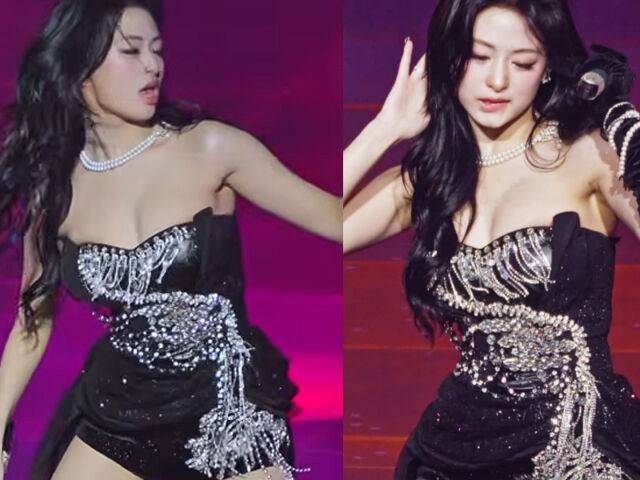
During the opening Seoul dates of BABYMONSTER’s 2026–27 춤 (CHOOM) world tour, footage circulated of Ahyeon performing in a strapless top that appeared to move while she danced. She adjusted it, used her hair and arm placement for coverage, and changed parts of her movement while continuing the stage. Korean entertainment reports published after the clips spread framed the argument around wardrobe stability and performer safety.
That is the confirmed center of the story. The footage exists. The outfit required attention during choreography. Coverage and fan discussion followed. What is not confirmed is who selected the piece, whether Ahyeon approved it at fitting, whether an alteration failed, or which staff member held final responsibility. Nobody outside the production team gets to turn a shaky top into an imaginary confession from the woman wearing it.
The timeline
- June 26–28, 2026: BABYMONSTER opened the CHOOM tour at Seoul’s Jamsil Indoor Stadium. Audience videos documented the stage and the wardrobe problem.
- Late June into July: clips and cropped images circulated through Korean and international social platforms. Discussion split between practical safety criticism and body commentary that had nothing useful to add.
- July 28–29: Korean entertainment outlets published reports focused on the tube top slipping and Ahyeon modifying her performance to avoid exposure.
- After the criticism: fans pointed to later outfit changes and argued that the styling had been adjusted. I have not found a formal YG notice explaining the fitting, assigning responsibility, or confirming why later clothing differed.
The actual problem is occupational, not moral
Stage clothing has a job. It has to support the concept, survive lighting, read from the back row, cooperate with microphones and body packs, and stay where it was fitted while a performer jumps, bends, turns and hits choreography. Pretty is part of the assignment. Functional is also part of the assignment.
If a dancer has to reserve one hand for damage control, the garment failed the performance test. That does not mean strapless clothes should be banned or that Ahyeon needed to dress more conservatively. It means the final version needed stronger internal structure, tape, grip, tailoring, a different closure, altered choreography, or another top. The solution belongs in production. It does not belong in comments telling a twenty-year-old woman she invited strangers to grade her chest.
What can be criticized
- The visible instability of the garment.
- The mismatch between the costume and high-impact choreography.
- The absence of a public explanation if fans want one.
- A production culture that may prioritize the shot before the person inside it.
What the receipts do not prove
- That Ahyeon had no input at any stage.
- That one named stylist acted maliciously.
- That the company deliberately planned a wardrobe malfunction.
- That her body, confidence, or clothing choices are public property.
The conversation immediately got gross
The first useful question was simple: why was a performer sent into demanding choreography wearing something she had to keep pulling into place? The internet answered with a second, uglier question: how quickly can we freeze-frame her body and pretend we are defending her?
Protection that republishes the most vulnerable angle is not protection. Neither is turning every outfit into a referendum on whether Ahyeon is “too sexy,” “asking for attention,” or being forced to look a certain way. Those arguments erase her agency and the production failure at the same time. They also create the exact image economy people claim to oppose: the most uncomfortable frame becomes the most shared one.
I do not need Ahyeon wrapped in a blanket. I need her costume to survive her job. She should be able to hit the choreography, throw her hair, breathe, and worry about the next count—not run a live engineering test on a tube top in front of thousands of phones.
This is bigger than one outfit
K-pop wardrobe complaints are usually treated as disposable fandom weather: too short, too repetitive, too revealing, too plain, too similar to another group. The safety version deserves a different category. A costume that restricts movement, exposes skin unexpectedly, catches on equipment, interferes with a microphone pack, or changes how an idol must perform is a workplace issue.
That is especially important in a group sold on live performance. BABYMONSTER’s identity depends on big vocals, aggressive choreography, visible confidence and the feeling that the members can handle the stage without the stage handling them. Clothing should sharpen that promise. It should not become the most suspenseful member of the formation.
What I want next
- Movement testing in the finished garment—not a fitting where everyone stands still and says it looks cute.
- Backup versions ready when tape, hooks or internal support fail rehearsal.
- Stylists, choreographers and artists in the same conversation before the stage, not after clips go viral.
- Fans who criticize the production without distributing invasive zooms as evidence.
This story does not need a villain with a name invented by social media. It needs a standard: if the performer cannot forget the costume is there, the costume is not finished.
Receipts
Reporting is linked for the documented wardrobe issue. Fan discussion is useful for showing the response, not for proving private production decisions.
Bottom line
Bottom line: Ahyeon Should Not Have to Choreograph Around Her Own Outfit matters because the confirmed facts change how fans understand the people, work, and company decisions involved. The headline is the door; the consequences are the room.
RaeRae take
I do not need a company statement to become a bedtime story before I can read it. I need the confirmed action, the people carrying the consequences, and enough room to say when the official wording is technically clear but emotionally evasive. Fandom deserves accuracy without being ordered to stop having feelings.
A body is not a scheduling inconvenience
If an outfit forces Ahyeon to edit movement around fabric, the styling has stopped serving performance and started borrowing safety from the performer. That distinction is where the Tea actually starts. The announcement supplies a date and a clean noun; fandom has to live with the verbs afterward. People update playlists, tickets, group maps, profile pages, expectations and sometimes the emotional meaning of years of older footage. None of that is irrational simply because a company can compress the event into three paragraphs and a heart emoji.
I am not interested in turning uncertainty into fake certainty. The responsible version keeps three columns open at once: what the official source confirmed, what reliable reporting added, and what fans are interpreting from the pattern. Those columns can speak to one another without becoming the same thing. “I think this means” is a perfectly respectable sentence. “This secretly proves” usually needs to sit down and drink water.
Care has to survive after the announcement
K-pop trains audiences to read movement as destiny. One ranking becomes a permanent status. One missed schedule becomes a breakup. One contract notice becomes moral proof about every person in the room. Careers do not behave that neatly. They are built from negotiations, bodies, money, timing, songs, visas, companies, families and private decisions the public may never receive. A useful editorial does not flatten that mess. It makes the boundary legible enough that readers can disagree without inventing evidence.
The industry also benefits when fans fight over personalities instead of examining structure. It is easier to argue that one idol was disloyal, lazy, greedy or ungrateful than to ask why schedules overlap, why promoters can fail late, why health requires public proof, or why a group identity is treated like company property. Personal blame is fast content. Structural attention is slower, less glamorous and much harder for a press release to redirect. That is exactly why it belongs here.
The fandom labor nobody invoices
Fans translate notices, compare dates across time zones, archive deleted posts, identify which account actually issued the statement, correct captions, explain lineup history to new listeners and stop rumors from outrunning the receipt. Then somebody dismisses all of that as “being too online.” Sometimes fandom absolutely needs to log off. Sometimes fans are doing the documentation that a global entertainment company should have provided in the first place. Both things can be true before lunch.
International fans carry an extra layer because information does not arrive evenly. Korean notices, Japanese schedules, local promoters, Weverse posts, regional ticketing pages and social clips can describe different pieces of the same event. The person who misses one platform can look uninformed when the actual problem is a communications maze. If a company wants global money, clear global information is not a luxury add-on. It is part of the product fans already paid to support.
What I am watching next
The next useful evidence will be boring in the best way: the next official schedule, the next credited release, the next complete lineup notice, the next promoter update, the next performance where the supposed new chapter has to function in public. I care more about that pattern than a dramatic anonymous post promising to explain everything. Careers reveal themselves through repeated choices. A single screenshot can start a question; it cannot carry the whole answer on its back.
I will update this file when the documented situation changes, not when a rumor account discovers a new font color. That means the page may remain emotionally unresolved for a while. Good. Real life is often unresolved, especially when contracts, health, representation, privacy and group identity overlap. The job is not to manufacture a perfect ending. The job is to keep the receipts straight while leaving the people involved enough humanity to have a life outside our preferred storyline.