
When I’m With You: LISA Entered Tyla’s Heatwave and Bose Brought Every Speaker It Owned
RaeRae’s verdict: LISA and Tyla made a heatwave video for a song that melts pride before the first chorus. Tyla brings the humid vocal glide, LISA finds a softer R&B pocket, and both women dance like the camera was lucky to be invited. The Bose products are less subtle than the desire. I noticed the speakers. I still replayed the hip sequence.
- Release File
- Sammy Soso Put the Correct Women in One Studio
- Lyrics and meaning: the song lets desire ruin everybody’s good advice
- Electric Piano and Empty Space Do the Heavy Work
- Tyla Arrives With Home-Field Advantage
- LISA Finds a Better Singing Voice When She Stops Pushing It
- The MV Makes Heat a Production Department
- Two Global Stars Actually Share the Frame
- The Choreography Understands Restraint
- The Bose Placement Is a Third Featured Artist
- Alter Ego Needed This Version of LISA
- What Worked
- What Needed a Cooler Sponsor
- RaeRae verdict
- Sources
Release File
- Lead artist: LISA
- Featured artist: Tyla
- Song: “When I’m With You”
- Album release: February 28, 2025 on LISA’s Alter Ego
- Music video and single release: May 16, 2025
- Writers: LISA, Tyla Seethal, Samuel Awuku, Richard Isong, Ariowa Irosogie, Imani Lewis, and Corey Marlon Lindsay-Keay
- Producers: Ari PenSmith, Mocha, Sammy Soso, Believve, and P2J
- Album version: 2:52
- Single/video version: 3:09
- MV director: Olivia De Camps
- Creative director: Emily Jang
Sammy Soso Put the Correct Women in One Studio
LISA met Tyla in a Los Angeles studio through producer and songwriter Sammy Soso, who had worked with both artists. The pairing makes musical sense before celebrity arithmetic enters the room.
Tyla’s global sound is built around South African pop, amapiano-informed rhythm, R&B restraint, and movement that sits inside the beat. LISA’s solo work often emphasizes rap attack, sharp choreography, and high-gloss pop switches. “When I’m With You” asks her to soften the edges without losing command.
The result sounds closer to Tyla’s natural climate, but LISA does not become a guest on her own record. She adapts.
Lyrics and meaning: the song lets desire ruin everybody’s good advice
The women have been warned to slow down, stay home, and leave this person alone. They know the advice. They ignore it with full documentation.
The chorus is about pride leaving the room and control becoming attractive. That is a dangerous idea if handled without agency. Here both singers state their choices directly. They are not confused victims of chemistry. They are adults selecting the bad decision.
The lyric gains tension from that contradiction. Friends say no. The body says tonight. Nobody claims this will end sensibly.
Electric Piano and Empty Space Do the Heavy Work
Ari PenSmith, Mocha, Sammy Soso, Believve, and P2J build the track from electric-piano color, soft low end, clipped percussion, and large pockets of air. The production refuses the giant BLACKPINK-style drop some listeners might expect around LISA.
That space changes how her voice reads. She cannot hide behind a brass hit or a shouted refrain. Her phrasing becomes the performance. Breath, timing, and the small crack between confidence and surrender matter.
The album version is only 2:52, but it feels less rushed than many short tracks because the rhythm is allowed to breathe. The video single extends the experience to 3:09. Those extra seconds are welcome.
Tyla Arrives With Home-Field Advantage
Tyla’s tone floats over minimal production without losing rhythmic precision. She can make a quiet line feel like choreography. Her South African pop work has trained listeners to watch the space around the beat, and this track lives there.
She brings ease rather than a feature-verse announcement. There is no siren telling the audience the guest has arrived. Her voice slides into the same atmosphere and changes its temperature.
That ease is why some listeners hear the track as a Tyla song featuring LISA. The criticism is fair. The production language belongs closer to Tyla’s established catalog. LISA’s success is that she meets her there without performing an imitation.
LISA Finds a Better Singing Voice When She Stops Pushing It
LISA’s lower, lighter delivery fits the electric piano. She sounds conversational, flirtatious, and less processed into a character slogan than on several Alter Ego tracks.
Her rap section restores some familiar authority, but it stays inside the groove. She boasts about screens, maps, and the effect both women have back to back. The verse acknowledges the collaboration as a star pairing without interrupting the song to read a résumé.
The best vocal moment is not a high note. It is the way she relaxes into repetition near the chorus and lets tone replace force.
The MV Makes Heat a Production Department
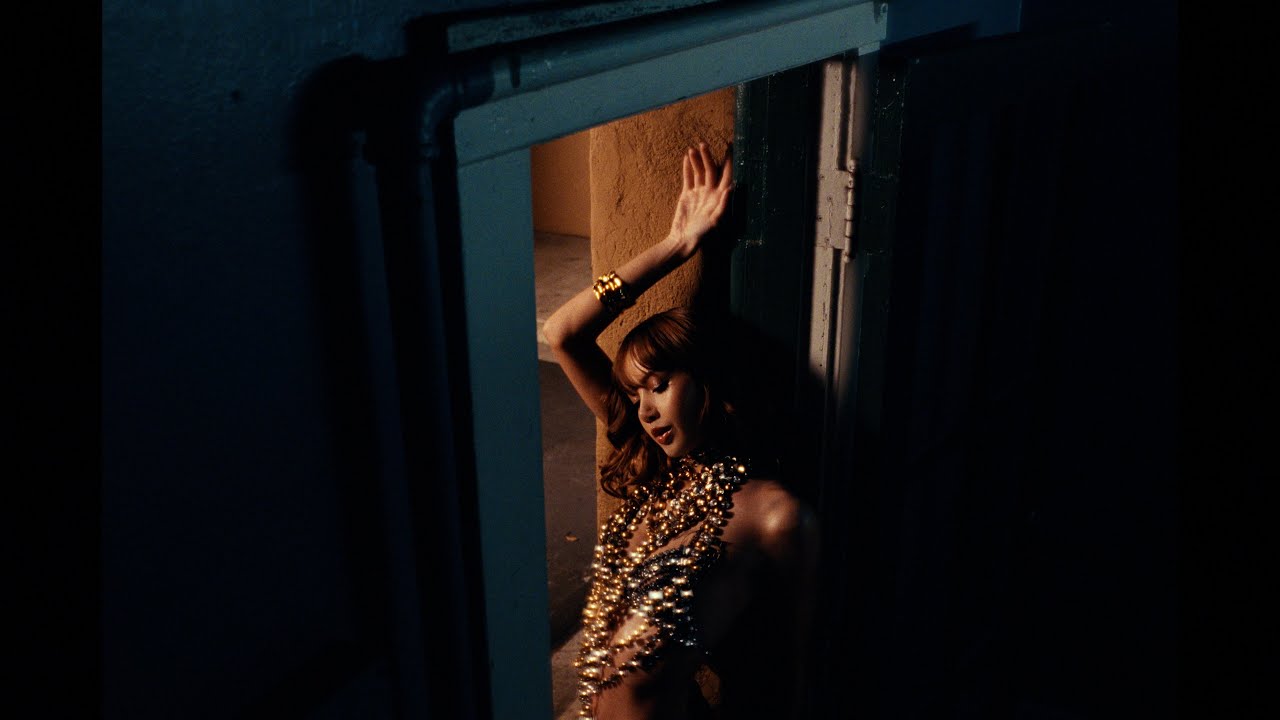
Olivia De Camps sets the video inside a sweltering summer world. Warm light, sweat, water, close skin, fans, speakers, and bodies moving through heavy air make temperature the only plot required.
Production designer Terry Watson builds spaces that feel tactile rather than digitally expensive. Surfaces look hot. The air appears thick. LISA and Tyla occupy the sets like two women who have decided the heat belongs to them.
The video does not invent a male love interest to explain the lyric. The camera treats their chemistry with each other, the dancers, and the rhythm as the visual event.
Two Global Stars Actually Share the Frame
International collaborations often look like separate calendar appointments edited into a duet. LISA and Tyla dance together, exchange focus, and allow one frame to hold both brands.
The contrast is useful. Tyla’s movement melts downward and rolls through the hips. LISA’s lines are quicker and more sharply placed. When they synchronize, neither woman erases her natural style.
The chemistry reads as mutual professional pleasure. They look aware that the other person can carry a close-up, which makes every shared shot feel competitive in the fun way.
The Choreography Understands Restraint
A weaker treatment would ask LISA to attack every count and Tyla to reproduce one viral move. This choreography uses walking patterns, hip control, torso rolls, grounded steps, and pauses where eye contact finishes the phrase.
The movement belongs to the song’s surrender theme. Control is visible precisely because the dancers know when to stop. A held shape becomes hotter than another eight counts of tricks.
LISA proves she can reduce power without reducing presence. Tyla proves her relaxed movement remains precise beside one of K-pop’s most watched dancers.
The Bose Placement Is a Third Featured Artist
Bose participated in the production, and its earbuds and speakers are built directly into the visual world. The products receive clear frames and repeated attention.
Brand funding can help an album track receive a full video months after release. That is the practical trade. Fans get LISA and Tyla together in a carefully produced clip. Bose gets a summer campaign with approximately no chance of being overlooked.
The placement is visible enough to break immersion, especially when the song is selling loss of control and the camera suddenly remembers its electronics invoice. The video recovers because the performers are stronger than the advertisement.
Alter Ego Needed This Version of LISA
LISA’s debut album moves among multiple named personas and genre experiments. That structure shows range but can also make the artist feel like the only person missing from her own costume closet.
“When I’m With You” works because the persona machinery becomes quiet. The song does not need a comic-book identity. LISA meets another artist, adjusts to a different rhythmic language, and reveals a softer mode of control.
Tyla is essential to that discovery. A good collaboration should change the lead artist’s behavior. This one does.
What Worked
- The minimal R&B production gives both voices space.
- Tyla brings natural rhythmic ease without turning the feature into a takeover announcement.
- LISA finds a relaxed singing pocket that suits her lower tone.
- The two stars dance together instead of mailing separate footage.
- The heatwave production gives a simple lyric a complete sensory world.
What Needed a Cooler Sponsor
The Bose placement repeatedly reminds the viewer that desire has a campaign budget. A few product shots would have paid the bill. The later reminders start charging interest.
The song also needs one section where LISA and Tyla trade lines directly. They share the frame better than they share the vocal arrangement. A call-and-response bridge could have turned chemistry into composition.
RaeRae verdict
“When I’m With You” places LISA inside Tyla’s humid R&B weather and lets her learn how good restraint can look. Tyla owns the glide. LISA owns the sharper turn. Olivia De Camps gives them heat, water, dancers, and enough speakers to furnish a small apartment.
The brand deal is loud. The chemistry is louder.
Sources
- Spotify official album version, release date, and runtime
- Spotify official May 16 single version and runtime
- Shazam official writing credits
- Little Black Book production-company and Bose integration file
- The Standard Thailand release report
Watch the exact official video
Release file
Released: May 16, 2025
Runtime: 03:11
Label / channel trail: LLOUD Official
Sound: RaeRae's verdict: LISA and Tyla made a heatwave video for a song that melts pride before the first chorus. Tyla brings the humid vocal glide, LISA finds a softer R&B pocket, and both women dance like the camera was lucky to be…
Sources:  Exact official playlist uploadDaily+20.9KTotal views35.9M.
Tyla is a collaborator, not a climate setting
The song works when Tyla’s amapiano-informed ease is treated as authorship rather than atmosphere imported to make LISA look globally fluent. Her timing changes how the groove breathes, while LISA answers with sharper visual attack and rhythmic definition. The contrast creates chemistry because neither woman is asked to impersonate the other’s movement language.
Heatwave visuals can only do so much labor
Sun, skin, water, and saturated color establish temperature immediately. They cannot replace escalation. The video is most interesting when blocking and gaze change the relationship between the performers; it is least interesting when another beautiful surface simply confirms that summer remains hot. A concept built on chemistry needs progression, not only climate.
Bose is visible enough to become a third performer
Product placement is part of modern pop financing, but the object becomes distracting when the edit asks viewers to admire it with the same seriousness as the artists. The speakers fit a song about bodily sound and shared space. Still, branding should support the world rather than interrupt it to collect attendance. LISA and Tyla generate more than enough electricity without a logo reaction shot.
The groove benefits from unequal attack
LISA often hits a phrase with clean edges; Tyla can make the same amount of time feel suspended. Putting those approaches beside each other keeps the collaboration from flattening into generic international-pop polish. The production leaves enough negative space for both methods, and the chorus becomes a meeting point rather than proof that one artist successfully absorbed the other.
One canonical upload protects collaboration credits
This React embeds LLOUD’s official video `wM–5vGraQQ` once. LISA is the lead artist and Tyla is the featured collaborator; Bose is a production partner, not a musical act, group, or taxonomy parent. Keeping that hierarchy explicit makes later discovery possible without creating a fake artist profile for a brand.
What changed every time I replayed it
First replay, the heatwave styling and Bose visibility fought for attention. Second replay, Tyla’s suspended timing made LISA’s sharper attack more legible. Third replay, their refusal to imitate each other became the collaboration’s strongest choice. By the fourth, the video worked whenever two movement languages shared the frame and weakened whenever branding tried to become the third star.
Bottom line:
“When I’m With You” works because LISA and Tyla keep distinct movement and vocal identities inside one spacious groove. The chemistry is real, the heat is convincing, and the only unnecessary guest is the product placement demanding its own close-up.
Follow the canonical relationships
LISA’s canonical artist and BLACKPINK member profile connects the song to Alter Ego, while the BLACKPINK group hub preserves her group chronology. Tyla remains credited as an independent collaborator rather than being folded into K-pop taxonomy.