
Killin’ It Girl: j-hope Left the Lyrics Thin and Put the Rest in His Body
RaeRae’s verdict: “Killin’ It Girl” is two minutes of j-hope choosing body control over lyrical depth. The beat is lean, his delivery slides between rap and pop without a seam showing, and the solo choreography video explains why the song exists. GloRilla improves the full version. The solo version improves the dance film. I wanted another verse from both of them.
- Release File
- The Beat Leaves Him Exposed
- The larger meaning: love at first sight gets a very short file
- GloRilla Gives the Main Version Friction
- The Solo Choreography Version Starts With Restraint
- The Dancers Are Partners, Not Furniture
- The Camera Knows When to Stop Moving
- The Main Video Is Heat, Travel, and Escape
- The Final Piece of a Three-Single Project
- What Worked
- What Needed Another Verse
- RaeRae verdict
- Sources
Release File
- Artist: j-hope of BTS
- Featured artist: GloRilla on the main version
- Song: “Killin’ It Girl”
- Released: June 13, 2025
- Versions: “Killin’ It Girl (feat. GloRilla)” and “Killin’ It Girl (Solo Version)”
- Writers: j-hope, GloRilla, Theron Thomas, Cirkut, Pdogg, Inverness, Jessica Agombar, and Blake Slatkin
- Producers: Cirkut, Blake Slatkin, and Inverness
- Main MV director: Cody Critcheloe
The Beat Leaves Him Exposed
Cirkut, Blake Slatkin, and Inverness build the track from dry drums, bass, clipped vocal pieces, and enough empty space to hear every change in j-hope’s delivery. BIGHIT calls it hip-hop with a minimalist arrangement. That is accurate. There is no instrumental curtain available when a syllable lands weakly.
j-hope handles the exposure through rhythm. He moves from a lower, conversational verse into a smoother pop hook without sounding like two singers were edited together. His voice bends around the beat, then snaps back onto it. The song is simple. The performance inside the simplicity is not.
The larger meaning: love at first sight gets a very short file
The lyric sees a confident woman, decides she is killing it, and stays there. j-hope admires her look, independence, and effect on him. BIGHIT describes the feeling as the rush of love at first sight. The line about her doing it “all without a man” is meant as praise, though the woman was already doing fine before a stranger began grading her independence.
This is lighter writing than j-hope’s strongest solo work. Jack in the Box dealt with ambition, fear, identity, and the cost of stepping outside the bright character people expected. “Killin’ It Girl” wants attraction, repetition, and enough open floor for choreography. A fun single is allowed. I still know he can write a more specific woman than “perfect and confident.”
GloRilla Gives the Main Version Friction
GloRilla’s Memphis rasp changes the air immediately. j-hope’s delivery is polished and flexible. Hers is rougher, heavier, and less interested in gliding. That contrast gives the collaboration a reason beyond two famous names sharing artwork.
Her verse also returns the gaze. She is not waiting quietly while somebody announces she is attractive. She brings her own confidence, sexual terms, and comic bluntness. The track becomes a conversation for a moment, then ends before the chemistry can develop.
The full version is the better recording because GloRilla interrupts j-hope’s smoothness. The solo version is the better base for an uninterrupted choreography film because his structure remains compact and the camera never has to pretend an absent feature is in the room.
The Solo Choreography Version Starts With Restraint
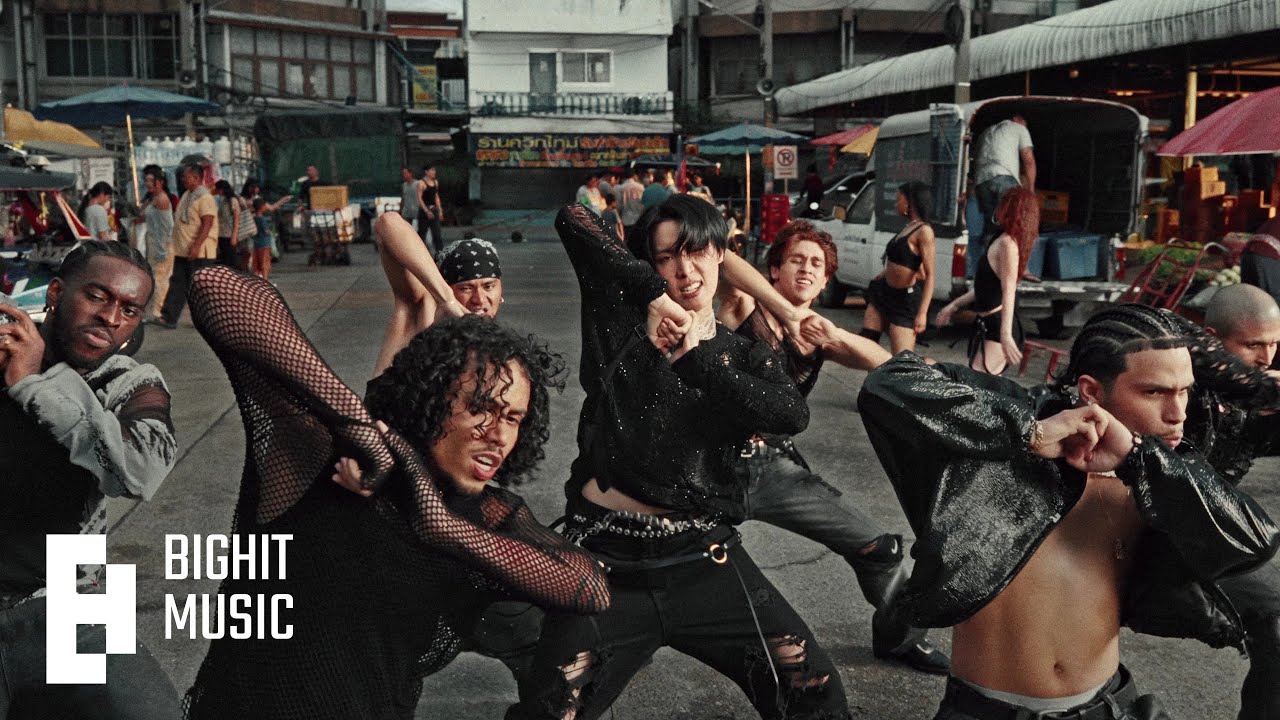
The solo video does not open with j-hope trying to break the floor. He walks, shifts weight, lets the shoulders answer the drums, and holds still long enough for the next movement to register. That restraint is the difference between dancing on every sound and understanding which sounds need a body.
His control remains clearest in transitions. A hand gesture travels into the chest, the torso changes direction, and the feet have already prepared the next angle before the viewer notices the reset. Nothing looks hurried even when the phrase is fast.
The Dancers Are Partners, Not Furniture
The ensemble closes around j-hope, opens a path, and changes the pressure of the frame. He does not need everybody frozen behind him to prove who the center is. He lets another dancer pull focus for a count because he knows exactly when the camera will return.
Partnered sections use contact and near-contact without becoming a catalog of sexy poses. The tension comes from timing, distance, and a delayed response. That matches the song better than literal acting about being stunned by a beautiful woman.
The choreography also understands his background. Before BTS, Jung Hoseok was known in Gwangju’s street-dance scene and trained in styles that made groove and isolation part of his base. The film does not turn that history into a museum exhibit. It shows up in how comfortably he can sit behind the beat.
The Camera Knows When to Stop Moving
The choreography version uses tracking shots and angle changes, but it holds enough full-body material to evaluate the dance. We see the feet. This should not be a revolutionary production choice. Apparently it still deserves applause.
Close-ups arrive for vocal details and expressions rather than replacing every difficult passage. j-hope has spent years understanding how to resize a movement for a stadium, television camera, vertical clip, or intimate room. The film gives him several frame sizes and trusts him to adjust.
The Main Video Is Heat, Travel, and Escape
Cody Critcheloe’s main video was filmed in Thailand and treats attraction like a humid chase. j-hope moves through streets, vehicles, interiors, and dance spaces while GloRilla enters with her own visual authority. The locations feel occupied rather than polished into a neutral luxury backdrop.
The video leans hard into j-hope as an adult solo performer. Skin, sweat, low light, and physical proximity replace the brighter styling attached to his name earlier in BTS’s career. It is not a personality transplant. His precise performance instincts remain the organizing force.
GloRilla’s section needed more shared space with him. Editing two strong performers into the same video is easier than building a scene where their energies meet. The track creates contrast between their voices, but the visual collaboration remains partly parallel.
The Final Piece of a Three-Single Project
“Killin’ It Girl” completed the 2025 solo-single run that began with “Sweet Dreams” featuring Miguel and continued with “MONA LISA.” j-hope described this release as the finale. The three singles moved through romantic territory with different collaborators, tempos, and performance priorities.
He premiered “Killin’ It Girl” during the Goyang finale of his Hope on the Stage world tour on release day. That timing explains the performance-first construction. This song was built to enter an existing concert set and produce a physical response quickly.
What Worked
- The minimalist beat leaves room for j-hope’s rhythmic control.
- GloRilla’s rasp gives the main version necessary friction.
- The solo video keeps the choreography intact.
- Partner and ensemble work create tension without burying the center.
- The song fits the live-performance finale of his 2025 single project.
What Needed Another Verse
At 2:18 for the solo version, the song feels like a complete performance clip and an incomplete romantic story. The hook repeats before the lyric has found a detail that belongs to this particular woman. j-hope has the writing skill to give attraction a setting, habit, joke, or conflict. None arrives.
GloRilla fixes some of that by giving the woman a voice, then the song lets her go almost immediately. A real exchange after her verse could have made the feature and the premise land harder.
RaeRae verdict
“Killin’ It Girl” is a better j-hope performance than a j-hope lyric. His groove, control, and camera judgment turn a thin love-at-first-sight hook into something worth watching repeatedly. GloRilla makes the full recording less polite. The solo film makes the choreography easier to read.
He killed the dance. The girl deserved one more descriptive sentence.
Sources
- BIGHIT MUSIC official solo choreography versionDaily+222.3KTotal views130.4M
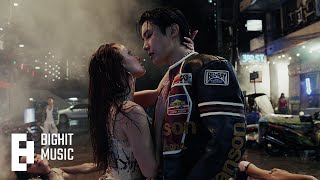 BIGHIT MUSIC official “Killin’ It Girl” music videoDaily+32.8KTotal views58.2M
- BIGHIT MUSIC official discography page
- BIGHIT MUSIC release notice on Weverse
- Apple Music official song and production credits
- Yonhap News release, artist comments, and tour-premiere report
Watch the exact official video
Release file
Released: June 15, 2025
Runtime: 02:39
Label / channel trail: HYBE LABELS
Sound: RaeRae's verdict: “Killin' It Girl” is two minutes of j-hope choosing body control over lyrical depth. The beat is lean, his delivery slides between rap and pop without a seam showing, and the solo choreography video explains why the song exists. GloRilla…
Sources: Exact official playlist uploadDaily+222.3KTotal views130.4M.
Release file
Released: June 15, 2025
Runtime: 02:39
Label / channel trail: HYBE LABELS
Sound: RaeRae's verdict: “Killin' It Girl” is two minutes of j-hope choosing body control over lyrical depth. The beat is lean, his delivery slides between rap and pop without a seam showing, and the solo choreography video explains why the song exists. GloRilla…
Sources: Exact official playlist uploadDaily+222.3KTotal views130.4M.
The lyric is intentionally light
“Killin’ It Girl” does not offer a dense narrative, and pretending otherwise would be fan-fiction disguised as close reading. The language supplies attraction, praise, and rhythmic cues. The missing complexity moves into the body. j-hope uses timing, groove, direction, and facial control to create the emotional variation the words leave open. The song is less a written argument than a score asking the performer to complete it.
Solo choreography changes accountability
Inside BTS, j-hope can redirect attention, support another member’s entrance, or strengthen a formation without remaining the visual subject. A solo performance removes that shelter. Every pause must hold, every transition must explain where the eye should travel, and every backup dancer relationship reflects his chosen center. The video demonstrates authorship not through domination but through how clearly the surrounding bodies understand his rhythm.
Groove matters more than maximal difficulty
Technical vocabulary can make dance criticism sound like an inventory of hard moves. j-hope’s strength is often subtler: weight lands inside the music, a shoulder arrives slightly behind the beat, and a held shape releases only after the viewer expects motion. Those choices create appetite. Choreography becomes flirtation because timing withholds completion, not because the camera collects isolated body parts and labels them charisma.
The alternate choreography upload stays distinct
The era includes another official performance route, but this React embeds only primary video `HK3LjI2InOg`. The alternate upload remains independently trackable because its framing may reveal footwork, formations, and transitions the main edit obscures. One exact video here keeps every claim about camera language attached to the object actually under review.
What changed every time I replayed it
First replay, the thin lyric felt like the limitation. Second replay, j-hope’s delayed weight shifts supplied the missing complexity. Third replay, backup-dancer spacing revealed how carefully he builds a solo center without isolating himself. By the fourth, the title sounded less like description and more like a count he kept completing with his body.
Bottom line:
“Killin’ It Girl” succeeds when it is understood as a performance record. The lyric leaves space, j-hope fills it with groove and controlled timing, and solo choreography turns his body into the layer of writing the song deliberately withholds.
Follow the canonical relationship
j-hope’s canonical BTS member and solo-artist profile preserves verified chronology, related releases, and participation boundaries.