
ARrC ARCHIVE · MAIN DANCER · LEAD VOCALIST
Rioto
Profile
| Stage name | Rioto |
|---|---|
| Nationality | Japanese |
| Group | ARrC |
| Debut | August 19, 2024 |
| Working roles | Main dancer and lead vocalist |
| Current status | Former ARrC member after the group’s June 2026 conclusion |
Official socials
The Japanese main dancer brought ballet and Chinese-dance control into a hip-hop group, then quietly reminded everyone that strong dancers can also sing.
Back to the ARrC group archive

Career profile
Before ARrC: ballet lines, Chinese dance and a move to Seoul
Rioto’s idol story began with a physical vocabulary that did not come from K-pop practice videos. He trained in ballet and Chinese dance, two forms that teach posture, extension, balance and the uncomfortable discipline of making difficult movement look inevitable. He also participated in the thirty-fifth Junon Superboy Contest in Japan before moving to South Korea in 2022.
That move matters. Kaneko Rioto left Tokyo as a teenager, entered a Korean training system and had to translate more than language. Classical control can look too careful inside hip-hop choreography if a dancer refuses to loosen it. Rioto learned how to keep the clean lines while adding weight, bounce and sharper attack.
Main dancer without becoming silent furniture
Rioto debuted with ARrC on August 19, 2024 as main dancer and lead vocalist. The second role is important. Idol formations have a long history of treating the strongest dancer as somebody who appears in the center for eight counts and then disappears vocally. ARrC gave Rioto a softer vocal color that could relieve the pressure of the rap-heavy frame.
His long lines made him easy to find, but height and flexibility are not choreography analysis. Watch a fixed camera and the useful details appear: how early he prepares a turn, how he finishes his hands, and how he adjusts classical extension so it does not float above the group’s groove. He was not trapped between dance languages. He was building a new one.
The ARrC music file
The vocal file deserved more room
Rioto’s lead-vocal position is easy to lose when profiles repeat “main dancer” first. His tone was lighter and gentler than the group’s rap line, useful in transitions and brighter melodic passages. The short catalog never gave him a full vocal showcase, so fans have to collect the evidence from smaller moments rather than one giant bridge designed to end the debate.
That incompleteness is part of the ARrC frustration. Four releases were enough to show that Rioto was not a decorative dancer. They were not enough to show the ceiling of the vocalist standing inside that dancer.
The disbandment stopped the translation mid-sentence
Mystic Story announced ARrC’s disbandment on June 23, 2026, before the group’s second anniversary. Rioto had moved countries, rebuilt his dance habits for idol performance and learned to work inside a multinational Korean-speaking team. The group ended just as those adjustments stopped looking like adjustments.
There is no clean lesson here. Training successfully does not guarantee time. Visible growth does not force a company to continue. The useful fan response is to keep Rioto attached to his own history so the next project is not treated as if a brand-new person appeared.
The panda side quests
- Games and movies: the standard indoor recovery file after choreography has tried to rearrange every joint.
- Exercise: unsurprising, but ballet stamina and idol stamina are different species and he trained both.
- Comfort food: kimchi fried rice, which suggests the Korean chapter reached the refrigerator as well as the stage.
- Music taste: Vaundy adds a Japanese singer-songwriter lane to the performance file.
- Sleep lore: he reportedly sleeps with his eyes open. Terrible for roommates, excellent for fandom mythology.
Fandom notes and things the fact box misses
- Name: Kaneko Rioto (金子凜音).
- Nationality: Japanese, born in Tokyo. The flag explains geography, not the work of moving at fourteen or fifteen.
- Dance base: ballet and Chinese dance before idol choreography.
- Vocal role: lead vocalist. Do not reduce him to a flexibility clip.
- Lineup history: member of both the original Ziwoo lineup and the later Andy lineup.
- Best evidence: fixed-camera stages, where editing cannot manufacture finished lines.
Official links and receipts
- Official ARrC video archive
- Mystic Story official ARrC conclusion notice
- Official ARrC video archive
- “awesome” RaeRae React
- Ziwoo/Andy lineup Tea file
YouTube tracking history
Rioto does not currently have a separately verified official solo-video catalog. ARrC releases remain attached to the ARrC group profile so group totals are not duplicated as individual activity.
Official video tracker
ARrC released two distinct official “awesome” uploads. The narrative MV and performance film keep separate exact IDs, React pages and local card images so the group archive stays searchable by version.
- “awesome” official MV React — exact video
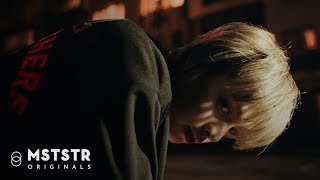 NtDzH9Imz-8Daily+91Total views5.8M, released July 16, 2025.
- “awesome” performance-video React — exact video f4LkYcibBI0Daily+9Total views402.6K, released July 17, 2025.
Sources
The final ARrC chapter
Rioto was part of ARrC’s final seven-member lineup with Hyunmin, Kien, Choi Han, Andy, Rioto, Doha and Jibeen. Mystic Story announced that the group’s activities officially concluded on June 22, 2026. The notice said the members would pursue separate paths; it did not publish the private contract details fans sometimes try to fill in themselves. This profile keeps the confirmed ending separate from speculation.
Rioto’s two “awesome” cards invite different audits: the MV sells the comic escape, while the performance version exposes extension, recovery, groove and vocal coordination in fixed framing.
Official “awesome” videos
awesome — Official Music VideoDaily+91Total views5.8M
awesome — Official Performance VideoDaily+9Total views402.6K
What Rioto added beyond the dance label
Calling Rioto the main dancer is accurate and still incomplete. Ballet and Chinese-dance training gave him extension, balance and careful finishing, but idol choreography required him to redistribute that control into weight and groove. The interesting part was not that he could point a foot. It was watching him decide when not to look classical—when to shorten a line, sit lower in the beat or let a movement hit instead of float.
His lead-vocal position prevented the familiar idol shortcut where a dancer becomes silent furniture between dance breaks. The softer vocal color widened ARrC’s texture and made the performance line feel connected to the song rather than pasted on top of it. In the final lineup, Rioto carried both jobs at once: visible physical precision and enough melodic presence to keep that precision from becoming his entire identity.
React image cards
Rioto’s profile keeps its individual portrait across hero and social metadata. The Reacts keep their official-video stills, preserving image uniqueness across member and review surfaces.
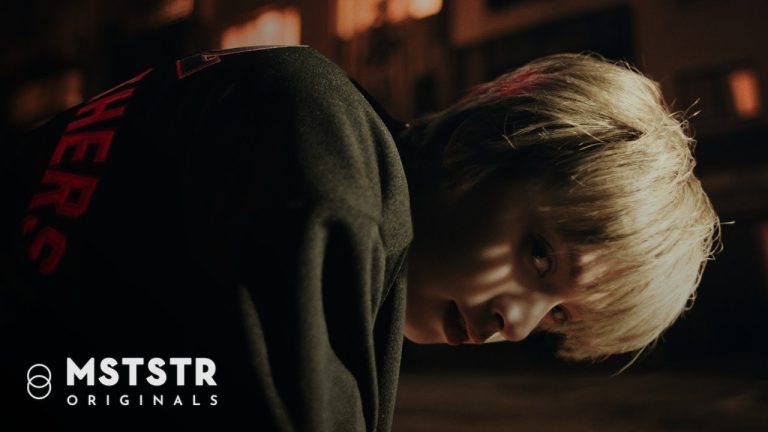
Rioto’s dance training is a starting point, not the verdict
Rioto’s ballet and Chinese-dance background gave him extension, balance and an instinct to finish lines. Idol choreography asked for a different relationship to weight. The challenge was not proving he could move beautifully; it was deciding when beauty needed a lower center, sharper stop or rougher groove.
That translation is visible when the choreography leans hip-hop. A classical line can float over the beat if the dancer protects it too carefully. Rioto’s stronger moments shorten or ground the shape so technique serves the track instead of asking the track to admire technique.
The most interesting growth therefore happens between releases. Watch how much preparation remains visible, whether the torso participates in the groove and how quickly he recovers from a long line into compact group movement. Difficulty is not the only metric. Adaptation is.
Lead vocalist prevents the dance-only box
Rioto also held a lead-vocal role, which matters because K-pop often turns strong dancers into silent furniture outside performance breaks. His softer melodic color widened ARrC’s texture and gave the physical line a musical identity inside the songs.
Singing while executing long, controlled movement creates a specific breath problem. The body wants expansion at the same moment the phrase may require a stable onset. A good arrangement and smart performer redistribute force before the line, letting the vocal enter without advertising the cost.
His profile should therefore track voice and movement together. A clean dance clip without live vocal context proves one skill; a stable phrase inside choreography proves coordination. Neither needs to be exaggerated into perfection to show that the dual role was real.
Japan, Korea and the multinational-room problem
Rioto trained and debuted in a group whose members carried Korean, Vietnamese, Japanese, Japanese-American and Brazilian-Korean histories. Nationality should not become personality shorthand. His Japanese background matters most where it created actual language, relocation or audience work.
Multinational promotion adds invisible rehearsal. Members translate instructions, jokes and fan communication while trying to preserve timing. A person can understand the task and still need another second to perform ease on camera. That labor belongs in the archive without being turned into permanent outsider branding.
The final lineup’s chemistry in “awesome” shows adaptation rather than instant magic. Rioto had to integrate Andy into already learned habits while the group rebuilt its public picture after Ziwoo’s departure. The performance version is useful because fixed framing makes those spacing decisions visible.
What the final notice means for Rioto
Mystic Story’s June 2026 notice names Rioto among the seven members whose group activity concluded. It does not announce a solo dance career, return to Japan or new agency. Those may become future chapters, but current profiles should not promote possibility into status.
The group ending also does not reduce his ARrC years to training footage for something more legitimate. ARrC was the official work: records, stages, choreography, fan communication and a catalog that remains available after the organization ended.
My bottom line: Rioto’s strongest story is translation—classical control into idol groove, dance position into vocal responsibility and Japanese trainee history into a multinational Korean group. The next verified performance should extend this same page, letting the archive show growth across structures instead of resetting him to rookie every time a logo changes.
How Rioto makes long lines useful
Extension matters only when the audience can read the musical reason for it. Rioto’s long lines can widen a phrase, delay its resolution or create contrast before the group snaps into a smaller shape. If the line continues after the beat has moved on, technique becomes clutter.
His best transitions show control over the exit. A leg or arm does not simply reach; it returns in time for the next shared count. That recovery is where ballet-derived precision becomes practical idol craft. The formation cannot wait for one beautiful shape to finish admiring itself.
Facial scale follows the same rule. A long movement may need a calmer face so the body remains legible, while a compact rap-adjacent section can support sharper expression. Performing every detail at maximum size would destroy contrast.
Lead vocal under physical pressure
Rioto’s vocal role should be evaluated across complete stages. Listen for whether the beginning of a phrase remains stable after travel, whether the final vowel loses support and whether he changes intensity when the choreography makes full projection unrealistic.
A softer color does not mean weak placement. In ARrC’s arrangements it can create depth beside brighter lead vocals and harder rap attacks. The producer chooses the layer; Rioto’s job is to make that layer audible without abandoning the movement picture.
Future material should test more of the instrument. A stripped cover, harmony-focused performance or slower song could reveal breath and phrasing that crowded group tracks leave partially hidden. Until such a credit exists, the profile describes the evidence available rather than inventing a secret main-vocal level.
Rioto inside both ARrC lineups
Rioto participates in the debut lineup with Ziwoo and the final lineup with Andy. That makes him part of the continuity through a change that affected the group’s vocal and social geometry. His individual position stayed, but the relationships around it did not.
Compare early and later fixed-camera footage for spacing rather than gossip. A dancer learns new partners through distance, peripheral timing and trust in where another body will land. Those adjustments are real even when the company’s edit prefers a simple ‘new era’ montage.
“awesome” belongs to Rioto’s final-lineup file. Both the narrative MV and performance upload should route through the group Reacts and this participation trail. Ziwoo should not inherit them, and Andy should not inherit the debut footage. Exact relationships keep the archive fair.
What comes after the June notice
Mystic Story ended ARrC group activity before the second anniversary and named Rioto among the seven members moving onto separate paths. The notice did not say that he stopped performing, signed elsewhere or returned permanently to Japan.
A verified dance upload, agency profile, credited stage or new debut will change the status when it appears. Fan sightings and motivational captions do not. This is especially important after disbandment, when ordinary life gets treated like a teaser because audiences hate an unfinished timeline.
My bottom line: Rioto’s page should make viewers notice choice—when he extends, when he grounds, when he blends vocally and when he changes scale for the group. Technique becomes identity through decisions, not through a list of childhood dance styles.
Exact-video tracker for ARrC participation
Rioto participates in both exact “awesome” uploads. A later dance credit, feature, solo release or redebut will be labeled by the role the official source actually gives him.
Rioto’s archive standard
Future updates should identify which tool Rioto uses and why: extension that widens a phrase, lower weight that finds the groove, vocal restraint that clarifies a harmony or a faster recovery that protects the formation. Calling him elegant forever would be a compliment-shaped cage.
A new project may emphasize dance, voice or neither. The page should follow the credit rather than forcing every opportunity to confirm an old position. Former main dancer is history; current artistic identity will be whatever verified work he chooses and receives next.
Rioto’s short ARrC file already proves adaptation under pressure. The unfinished question is range across a longer career. That question stays open without becoming a guarantee.
The same caution applies to visual clips after ARrC. Rioto appearing in a studio does not prove a company, choreography job or debut plan. A confirmed credit will be added when the source names the project and his role. Until then, the current record is already worth keeping: Japanese member, lead vocalist, main dancer, participant in both ARrC lineups and a performer who learned to make classical control bend toward idol rhythm without losing its finish.
A future chapter should be allowed to surprise that record; continuity means remembering the evidence, not forcing every new role to repeat it.
Every verified credit will extend the same timeline, with exact participation and local media rather than recycled assumptions or borrowed group totals.
That is enough to keep the record accurate without freezing the performer.
Future images and cards will follow the same rule: one local canonical asset per page, properly sourced, described and connected to the exact credit.
The archive stays ready for whatever verified direction follows next.
Exact evidence remains the rule.