
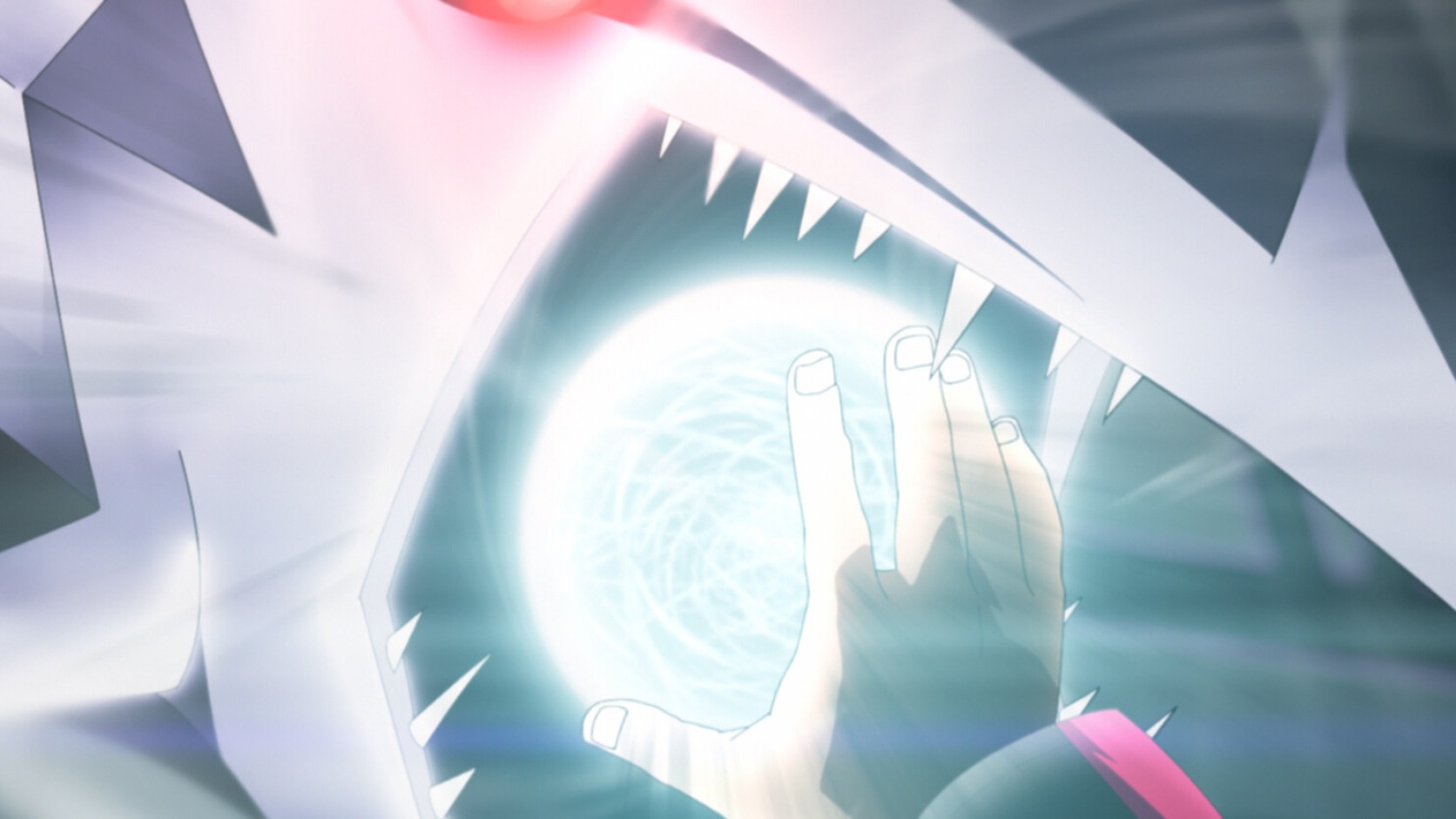
The Unleashed Villain
Araumi Funato’s return consumes human bodies while coordinated attacks fracture public systems; the Mist owes victims care and accountability larger than a revenge campaign.
Series: Boruto: Naruto Next Generations
Episode: 234 · The Unleashed Villain
Arc: Great Sea Battle of the Hidden Mist Village
Release: January 30, 2022
Previous: Episode 233 · The New Team 7 Jumps Into Action
Directory: All 293 Boruto episodes
Bottom line
Boruto Episode 234 turns the Shinonome ceremony attack into a coordinated prison break, island seizure, and public emergency. Araumi Funato escapes after draining water from guards' bodies, while Isari's forces exploit severed communications and confusion across the Land of Water. The episode wants viewers to feel the return of a feared pirate leader. I care first about the injured attendees, the dead, the guards trapped in water prisons, the residents on occupied islands, and every family waiting for verified information.
Kagura and Boruto respond bravely inside the prison. Sarada holds Team 7 together around an injured Katasuke. Chojuro faces a rapidly expanding crisis. None of that erases the institutional failures that let a known external threat, a high-value prisoner, a public infrastructure ceremony, and fragile communications collapse into one coordinated disaster.
The episode at a glance
- Series: Boruto: Naruto Next Generations
- Episode: 234
- Title: The Unleashed Villain
- Arc: Great Sea Battle of the Hidden Mist Village
- Original release: January 30, 2022
- RaeRae rating: Four bowls of ramen out of five
- Core question: Can the Mist stop Araumi without letting emergency power erase civilians, prisoners, and the truth?
The airship crash is a mass-casualty event
The ceremony attack injures many attendees and leaves people missing or dead. That scene cannot function only as the opening bell for a pirate arc. Emergency workers need triage zones, fire suppression, safe evacuation, patient tracking, and rapid transport.
Families need a reliable contact point instead of chasing rumors between hospitals and government offices. Officials should record who entered the venue, who boarded each aircraft, and where survivors were taken. Administrative accuracy becomes part of care when chaos separates people.
Sanzui cannot search the flames alone
Sanzui tries to enter the burning wreckage while looking for Awaji. Grief and panic make that urge understandable. An uncontrolled entry could add another casualty and force rescuers to divide attention.
Responders should assign a liaison who tells families what crews are doing, gathers useful identifying information, and remains present when answers are not yet available. Physically stopping someone from entering danger may be necessary. The person still deserves explanation and compassionate support, not restraint followed by silence.
Chojuro acts as a rescuer before a ruler
Chojuro helps extinguish the fire with Mist shinobi. Direct action can save lives when leadership capacity includes the needed skill. He still cannot become the entire response. A Mizukage must coordinate resources, delegate command, protect hospitals, and maintain information across multiple sites.
Heroic presence should support the emergency system rather than replace one. If every critical task depends on Chojuro personally arriving, the Land of Water has a resilience problem.
Katasuke needs medical care, not mission utility
Sarada tries to revive or stabilize Katasuke after the explosion. His scientific knowledge may be important to the Shinonome system, but treatment should follow clinical need rather than institutional value. He is a patient before he is an expert.
Team 7 needs to protect his airway, control immediate danger, summon medical personnel, and avoid moving him unnecessarily. Sarada should not carry medical responsibility beyond her training. A clear handoff to professionals matters.
Sarada's first command becomes triage
Her new team receives an escort and security assignment, then faces mass injury and a missing teammate. Command now means choosing priorities with incomplete information. Katasuke's condition, Boruto's location, public safety, and local authority all compete for attention.
Sarada needs a direct channel to Mist incident command and permission to request resources. Adults should not evaluate her as though perfect information existed. Later review must reconstruct what she knew at each decision point.
Boruto faces two emergencies
He wants to return to the ceremony after hearing about the explosion. Then attackers strike the prison. Leaving could abandon guards and expose high-risk prisoners. Staying separates him from his team and client.
Boruto should communicate before choosing where possible. The communications failure limits that option, which makes Kagura's local authority decisive. Helping defend the prison is reasonable because the threat is immediate and connected. The mission still needs a record of why he could not return.
Severed communication is an attack on coordination
Isari's forces cut lines to and inside the prison. That move isolates staff, delays reinforcements, blocks medical requests, and increases rumor. Communication infrastructure should have redundancy for a facility holding high-risk prisoners.
Backup radio, hardened lines, independent power, runners, visual signals, and scheduled check-ins can reduce total isolation. Security planning should assume attackers will target coordination before doors. A modern prison without reliable backup becomes a trap.
The prison should have noticed silence
External command needs an escalation rule when a high-security facility stops reporting. Officials should not wait for a distress message that attackers may have made impossible. Missed check-ins should trigger verification and a proportionate response.
Automatic escalation carries risks if false alarms are common. Regular testing, multiple confirmation routes, and documented maintenance make signals trustworthy. Silence during an active regional threat should never be treated as ordinary delay.
Kagura sends medical staff where people need them
Redirecting medical-nin toward the crash site reflects the immediate casualty burden. The prison still needs enough medical capacity for guards, inmates, and staff. Removing too much support creates vulnerability just as the facility enters crisis.
Mutual-aid planning should identify who covers each location when resources shift. Medical personnel need secure transport and communication. Nobody should be ordered into an unsecured scene without information about ongoing threats.
Prisoners feel the explosion too
Inmates become agitated after the blast and communication failure. They may not know whether family members are safe, whether the prison is under attack, or whether emergency systems work. Uncertainty can produce fear, conflict, or attempts to escape.
Staff should provide verified information as soon as possible, including what residents need to do for safety. Collective punishment, food restriction, or excessive force would deepen chaos. People in custody remain entitled to protection during a public emergency.
A lockdown needs exceptions
Chojuro orders a lockdown after unidentified bodies and coordinated violence are reported. Restricting movement may help contain attackers. A blanket lockdown can also trap injured people, separate families, and block evacuation.
Orders need defined zones, medical exceptions, review times, and accessible communication. Local officials should explain where residents may go and how essential services continue. Emergency authority must remain specific enough to challenge and end.
The Funato attack uses public systems against people
The clan strikes transport, communications, prison security, and island governance. That strategy aims beyond one prisoner. The attackers want to weaken the state's ability to coordinate while presenting themselves as an alternative power.
Officials need to protect water, energy, medical care, ports, and information without militarizing every civilian space. Continuity planning should keep communities alive even when formal command is disrupted.
Guards trapped in water prisons are victims
Kagura and Boruto find guards immobilized by a Water Prison Technique. Their rescue needs speed and medical follow-up. Near-drowning, oxygen loss, panic, aspiration, and injury can continue after release.
The guards also hold firsthand evidence about attacker numbers, techniques, route, clothing, and commands. Interviews should wait until stabilization. A frightened or injured witness should not be forced to perform perfect recall for impatient officials.
Kagura cuts them free because skill meets duty
His swordsmanship has a clear protective purpose. Kagura does not fight to prove personal redemption. He uses trained ability to free people under his care.
That distinction matters for his character. Leadership becomes credible through ordinary responsibility before spectacle. Kagura should still delegate medical checks and scene preservation after rescue. A warden cannot protect the facility by personally handling every task.
The prison break needed insider-level knowledge
Attackers locate Araumi, navigate the facility, disable guards, and exploit water systems quickly. Investigators should examine surveillance, staff access, construction plans, vendor records, recent visitors, and compromised credentials.
That review must avoid presuming every employee or inmate is a collaborator. Evidence should identify specific breaches. Broad suspicion can destroy trust and encourage witnesses to hide useful information.
Araumi's release is not liberation
The Funato may describe the operation as rescuing their leader from enemy custody. Araumi immediately uses horrifying violence against guards. A political narrative cannot turn their bodies into acceptable fuel.
Resistance to state policy does not grant permission to kill workers, prisoners, or civilians. Supporters who care about coastal grievances must confront that boundary. Leadership that consumes people while promising freedom reproduces domination.
Water becomes body horror
Araumi restores his strength by absorbing water from guards' bodies. The image is shocking because water is essential to life and central to the Land of Water's identity. His technique converts human bodies into a resource.
The episode should not rush past the victims once his power returns. Medical teams need to assess anyone who survives. Families deserve accurate notification. Investigators must record deaths and injuries without sensational images becoming public entertainment.
Power built on consumption tells the truth
Araumi's technique exposes a political logic. He grows stronger by taking what others need to live. That is not community liberation. That is extraction with a clan banner.
Leaders should be judged by how they distribute risk, listen to dissent, and protect ordinary people. A movement cannot claim moral authority while treating subordinates, captives, or civilians as expendable material.
Isari carries responsibility for the escape
Isari leads the operation that frees his father and returns him to the ships. Family loyalty does not erase accountability for the attack, deaths, and wider occupation. He makes strategic choices with public consequences.
Investigators should distinguish orders he gave, acts he performed, and conduct by others. Accurate charges matter. Turning Isari into a vague symbol of inherited evil would hide how organizations recruit, plan, and divide responsibility.
Family loyalty can become coercion
The Funato structure appears tied to clan identity and obedience. Members may experience refusal as betrayal of family, history, or homeland. That pressure can narrow perceived choices without removing agency.
Surrender and exit routes should allow lower-level participants to leave without automatically facing the same treatment as commanders. Protection for families and witnesses may reduce coercion. Accountability works better when the system recognizes different levels of power.
The captured islands contain civilians
Pirates seize multiple islands while attention focuses on the prison. Every island includes residents with different needs, politics, and levels of risk. Occupation threatens food, medicine, communication, transport, work, and family contact.
Chojuro needs verified maps of who controls what, which routes remain open, and where urgent care is needed. Military objectives should never erase civilian evacuation and humanitarian access. Islanders are not scenery between battle locations.
Dotou Island already has vulnerable infrastructure
Team 5 recently delivered automated mining puppets there. Gold, equipment, workers, and transport routes make the island strategically valuable. The mine can become a target for extraction, sabotage, or forced labor.
Denki, Iwabee, and Metal need clear instructions about civilian protection and whether to hold, evacuate, or withdraw. Three young shinobi should not become an island government because higher command lost contact.
Team Denki requires immediate contact
Kagura's proposed mission depends on joining Team 5. Command should first confirm their status, supplies, injuries, and local conditions. Assuming they remain safe because no report arrived repeats the communications mistake.
If direct contact fails, scouts or redundant channels should verify without exposing more people. Rescue planners need an honest boundary between known facts and hope.
Team Sarada cannot absorb an expanding war
Sarada's group began with escort duty. The situation now includes prison escape, mass casualties, island occupation, and a powerful clan leader. Mission scope has exceeded an ordinary youth assignment.
Chojuro may need every capable person, but urgency does not erase duty of care. Adult commanders, medical support, extraction plans, and clear objectives must accompany any continued deployment. A teenager's courage is not a logistics system.
Kagura proposes using former teammates
He asks Chojuro to allow his former teammates, currently held in custody, to join the operation. Their knowledge and abilities may be useful. Their participation also raises consent, coercion, legal authority, supervision, and promised benefits.
People in custody may feel unable to refuse. Officials should explain terms in writing, provide independent advice, and avoid threatening harsher treatment for nonparticipation. Emergency need cannot convert prisoners into disposable labor.
Rehabilitation cannot mean dangerous service
Offering meaningful responsibility can support rehabilitation. Sending former offenders into combat because their lives appear more expendable does the opposite. The mission needs safety standards equal to those for other participants.
Any sentence reduction, release condition, or compensation should be transparent and reviewable. Success should not guarantee instant absolution, while injury or failure should not erase earlier progress. People deserve futures beyond becoming useful weapons for the state.
Kagura's personal belief is not enough
He knows his former teammates and may trust their capacity for change. Personal judgment can inform the decision. Formal risk assessment, current conduct, victim concerns, and supervision still matter.
Kagura also carries emotional history that may create blind spots. Chojuro should not make him solely responsible for every outcome. A structured decision protects the public, the participants, and Kagura from impossible personal liability.
Chojuro needs an emergency council
The Mizukage faces simultaneous sites and incomplete reports. He should gather security, medical, infrastructure, legal, intelligence, and local representatives rather than rely only on combat leadership.
Decisions about island operations affect civilians, prisoners, workers, and neighboring communities. Broader expertise can identify consequences a military room may miss. Emergency speed and inclusive planning can coexist when roles are prepared in advance.
Retaliation would serve Araumi
Mass detention or punishment of Funato-associated communities could validate the clan's propaganda and generate more recruits. Officials need targeted evidence and protection for people threatened by both sides.
Anger after the crash and prison deaths is justified. State violence against uninvolved families would create new victims. Public statements should separate perpetrators from ethnicity, region, occupation, and kinship.
Public communication must beat rumor
Residents need clear information about affected areas, safe routes, missing-person reporting, medical access, and what officials know about the attackers. Authorities should state uncertainty rather than fill gaps with confidence.
Regular updates reduce panic and expose false claims. Independent journalists need safe access that does not compromise operations. Government credibility depends on correcting mistakes publicly when early information changes.
Bodies require respectful identification
Unidentified victims from the airship should be documented through trained forensic procedures. Officials need to avoid rushed visual identification when trauma makes mistakes likely. Personal effects, medical records, dental information, and family samples may assist.
Families deserve one consistent liaison and protection from exploitative images. The dead should never become anonymous numbers in a speech about national resolve.
Katasuke should not return to duty too soon
After stabilization, pressure may rise for him to explain the power system or support the response. A head injury, shock, burns, or other trauma can impair judgment. Medical clearance must come before technical urgency.
Colleagues should rely on documentation and distributed expertise. Critical infrastructure should never depend on one injured person being heroic from a hospital bed.
Sarada needs Boruto's status confirmed
She knows he went to the prison and communications have failed. Uncertainty can pull a captain into reckless search behavior. Command should provide verified updates as soon as possible and assign someone to track separated personnel.
Sarada must continue protecting the people in front of her. That responsibility does not make her uncaring. Adults should support the emotional weight of leading while a friend remains in danger.
Kawaki may interpret chaos through old survival rules
Explosions, injured adults, missing teammates, and unclear authority resemble conditions where he learned to act alone. Team 7 should expect control struggles or urgency without treating every reaction as defiance.
Sarada can give direct tasks, concrete timeframes, and honest information. Predictability may help him stay connected to the group. Later, Kawaki deserves a private debrief focused on support as well as conduct.
Mitsuki can help without carrying everyone
Mitsuki's calm observation may stabilize the team. Adults and teammates should not assume he can absorb every extra task because he rarely complains. He also faces danger and uncertainty.
Sarada should assign roles explicitly and check his condition. Reliable people need care before exhaustion becomes visible. Invisible labor still counts as labor.
Boruto and Kagura make a defensible choice
They stay to confront an immediate prison attack, rescue guards, and protect the facility. Returning to the ceremony would leave people in direct danger and allow the escape to proceed without resistance.
The decision should be documented as a change driven by conditions, not celebrated as instinct alone. Future training can use the case to teach competing duties, communication failure, and local command authority.
They still fail to stop Araumi
Bravery does not guarantee success. The Funato planned for the facility, cut communication, and used specialized water techniques. Boruto and Kagura face a coordinated force already inside the perimeter.
Review should identify choices and system gaps without dumping the entire failure onto them. Two young shinobi cannot replace layered prison security. Honest analysis distinguishes preventable error from overwhelming circumstances.
Failure should produce learning, not shame
Kagura may feel personally responsible because he serves as warden. Boruto may believe leaving Team 7 created the opening. Those feelings need careful debriefing before they become false conclusions.
Investigators should build a timeline of alarms, communications, staffing, attacker movement, and decisions. Responsibility belongs where control existed. Shame blurs that map and makes future reporting less honest.
Prison staff need support after the attack
Surviving guards and medical workers may face injury, guilt, grief, and fear of blame. Immediate suspension of everyone could destroy evidence and morale. Safety concerns may require temporary reassignment without presuming guilt.
Confidential counseling, union or advocate access, medical care, and transparent interviews can support recovery. Staff families also need accurate information, especially when attackers remain active.
Prisoners need an accurate head count
Officials must confirm who remains, who escaped, who was injured, and who may have been moved during the attack. Records should be checked against physical identification, not assumed correct after system failure.
Families and legal representatives deserve timely notice. Labeling every missing inmate a willing escapee would be dangerous. Some may have been forced, injured, killed, or relocated by staff.
Water-system security needs review
The attackers manipulate water inside a Land of Water prison. Designers should have considered hostile use of plumbing, reservoirs, channels, and moisture. Emergency isolation valves and physical compartmentalization may reduce spread.
Security improvements must preserve drinking water, sanitation, fire response, and medical needs. A prison cannot solve weaponized water by dehydrating everyone in custody.
The occupied islands need humanitarian corridors
Residents may need medicine, food, evacuation, or family reunification before military control changes. Neutral or trusted local organizations should negotiate access where possible. Aid cannot become payment for political loyalty.
Both the government and Funato forces should be held accountable for blocking essential care. Documentation now will matter later when every side tries to control the story.
Environmental knowledge belongs in the response
The Funato operate through seas, islands, currents, and water techniques. Fishers, ferry crews, harbor workers, and island residents may know routes and conditions better than central command.
Officials should invite local knowledge without coercing civilians into combat intelligence roles. People need informed choice and protection from retaliation. Community expertise can save lives when respected ethically.
The episode gives Araumi terrifying presence
His return feels dangerous because the attack has scale, planning, and immediate human cost. The body-draining technique makes his power impossible to separate from exploitation. He does not merely command water. He consumes people.
That image works dramatically. The story must continue to remember the guards whose bodies establish his threat. Villain presence should never erase victim personhood.
The episode moves too quickly past casualties
The plot races from crash response to prison attack, escape, island occupation, and countermission. Momentum is strong, but the injured and dead risk becoming evidence of stakes rather than people with ongoing consequences.
Future episodes need medical recovery, family grief, public investigation, and political accountability. Action without aftermath turns harm into disposable scenery.
RaeRae verdict
Boruto Episode 234 earns four bowls of ramen out of five. The coordinated attack makes the Funato threat credible, Kagura and Boruto respond with purpose, and Sarada faces the kind of command pressure no promotion ceremony can simulate. Araumi's return is brutal because his strength literally comes from other bodies.
The Land of Water must answer more than a pirate fleet. Officials need casualty care, prison accountability, island protection, truthful communication, lawful treatment of captured people, and safeguards around using Kagura's former teammates. Winning a battle will not repair systems that failed across every site at once.
Before the next episode
Episode 235, “Infiltrating Dotou Island,” sends the expanded group toward Team Denki and civilians under occupation. Watch who controls the plan, whether former prisoners receive real choice, and how leaders balance secrecy with the safety of residents already trapped there.
Infiltration should gather information and protect people, not turn an occupied community into cover for reckless heroics.
Sources and lawful viewing
The official Naruto site provides the Episode 234 synopsis and gallery. Crunchyroll carries “The Unleashed Villain” where regional availability permits. Release and streaming details can vary by country.
Official episode reference: Naruto Official episode guide
Licensed episode route: Crunchyroll licensed series page
After watching, remember the guards Araumi drained and the families at the burning airship. A villain's entrance should never become louder than the people forced to pay for that entrance.