
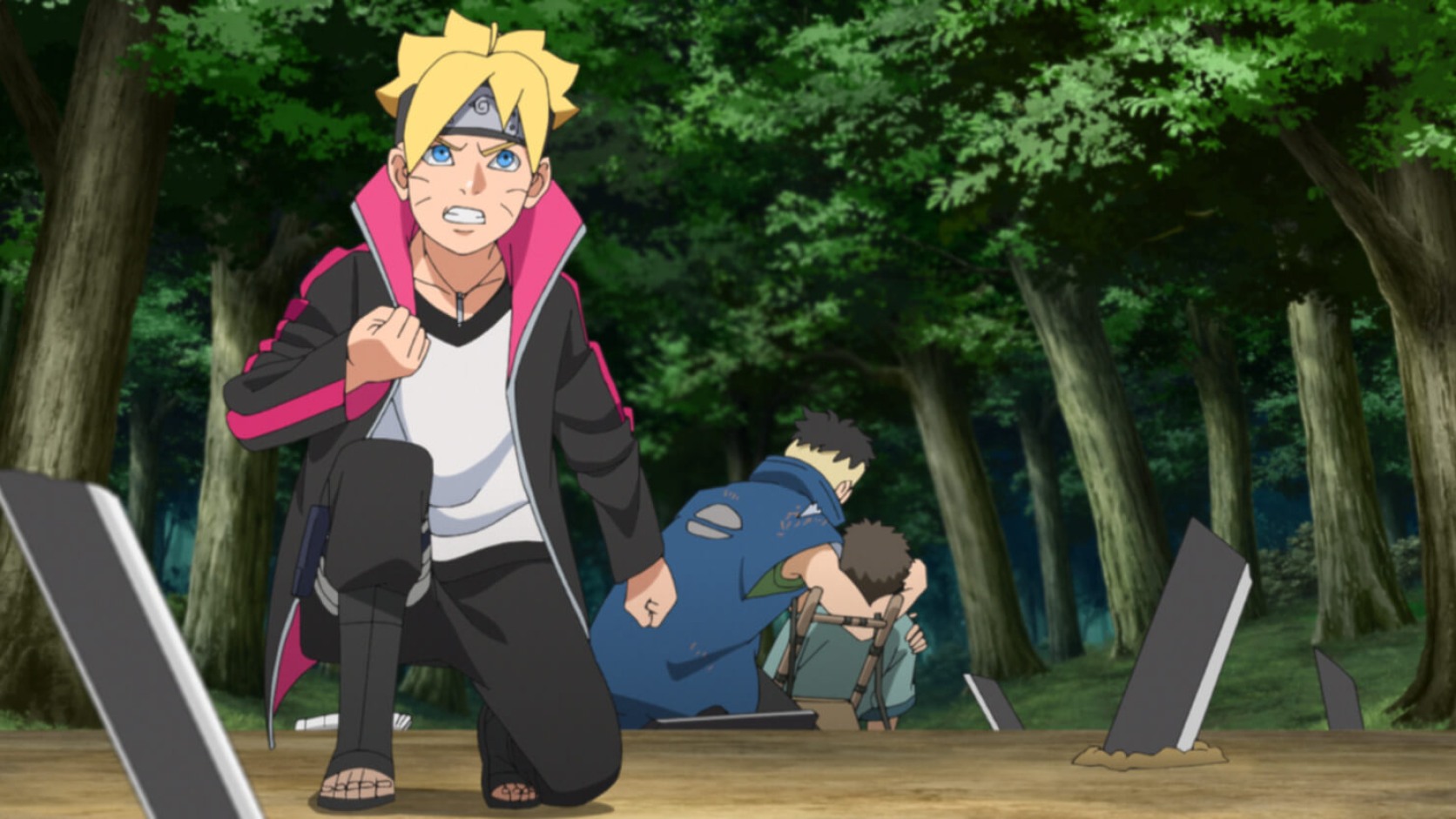
A Wish
Mozuku’s death cannot become beautiful tuition for Kawaki’s headband; Konoha owes his community medicine, accountability, safer missions, and a future without child couriers.
Series: Boruto: Naruto Next Generations
Episode: 230 · A Wish
Arc: Kawaki’s Shinobi Path
Release: December 26, 2021
Previous: Episode 229 · Breach of Orders
Directory: All 293 Boruto episodes
Bottom line
Boruto Episode 230 makes Kawaki face the cost of leaving Shikadai's retreat order to pursue the stolen medicine with Mozuku. He protects the mission's purpose and cannot guarantee the person survives. Mozuku's death is not a beautiful tuition payment for Kawaki's genin status. A child from the Land of Calm Seas should not have needed to die before powerful adults treated his community's need as urgent.
Kawaki grows because he recognizes Mozuku's wish as larger than individual glory, accepts help, and chooses connection after loss. Konoha still owes a hard review of intelligence, mission classification, medical supply, youth labor, and the decision to place one teenager's certification inside another child's emergency.
The episode at a glance
- Series: Boruto: Naruto Next Generations
- Episode: 230
- Title: A Wish
- Arc: Kawaki's Shinobi Path
- Original release: December 26, 2021
- RaeRae rating: Four bowls of ramen out of five
- Core question: Will Konoha honor Mozuku by changing the conditions that made his sacrifice necessary?
Mozuku is more than a lesson
The story positions his courage as a catalyst for Kawaki. That emotional function must not consume his personhood.
Mozuku has a home, relationships, fears, knowledge, and a future he wanted. His death harms a community beyond the shinobi observing him.
Editorial care means naming that loss before celebrating what somebody else learned.
The medicine carries a public promise
The stolen package represents survival for people in the Land of Calm Seas. Protecting the medicine matters because systems failed to make care reliably available.
One shipment cannot repair a supply chain. Konoha should support storage, distribution, future procurement, and protection shaped by local leadership.
Aid becomes ethical when the community is not left waiting for another child courier.
Shikadai's retreat order was defensible
Cho-Cho is injured, the enemy is stronger than expected, and the mission was misclassified. A captain should protect the team and return with accurate intelligence.
Retreat is not cowardice. Shikadai makes a decision from the facts available and the authority he carries.
Kawaki's disagreement does not make the original order foolish.
Kawaki sees the cost of turning back
Mozuku knows what failure means for his people. Kawaki responds to a human consequence missing from the formal briefing.
That information matters. The team should have had a process for reassessment and emergency escalation.
Kawaki's moral instinct is valuable, while leaving alone creates new risks the mission structure could have reduced.
A correct concern can produce a dangerous action
Kawaki is right that abandoning the package may cost lives. He is not automatically right to pursue without coordination.
Ethical review must hold both truths. Otherwise Konoha will either punish initiative or romanticize reckless isolation.
Growth means learning how to turn urgent concern into shared action faster.
Mozuku should not have been carrying the system
The responsibility placed on him exceeds what any child should bear. His bravery does not excuse the adults and institutions behind the situation.
When survival depends on one young courier, public infrastructure has already failed.
Konoha should ask who benefits from scarcity, why supply routes remain vulnerable, and what support local residents requested.
Sacrifice is not policy
Stories often use a young person's death to prove sincerity. Communities cannot build safety around exceptional self-sacrifice.
Honoring Mozuku requires fewer conditions where another child must choose between personal survival and medicine for everyone else.
Memorial language without material change would turn grief into ceremony.
Kawaki cannot be expected to process alone
He witnesses death after a life already shaped by violence. Immediate stoicism should not be treated as resilience.
Konoha owes trauma-informed medical care, confidential counseling, rest, and follow-up across time.
Support should not depend on Kawaki asking in the language adults find comfortable.
Genin status must not reward exposure to trauma
If Kawaki qualifies because he survived this mission, the village risks linking belonging to pain. Certification should reflect demonstrated competencies across evidence.
Mozuku's death cannot become the final exam fee. Kawaki should not feel that receiving a headband means accepting the loss as worthwhile.
Promotion and grief need separate conversations.
The breach still needs review
Saving the medicine or confronting the enemy does not erase the communication failure. Officials should reconstruct the decision without humiliation.
Kawaki needs to hear how leaving affected Shikadai, Cho-Cho, backup planning, and Mozuku's risk.
He also deserves recognition for identifying a consequence the original order did not address.
Shikadai should not be blamed for Mozuku's death
Captains often carry impossible guilt after a teammate or client dies. Shikadai may wonder whether a different order would have saved him.
The village must distinguish responsibility from omnipotence. He made a defensible choice under inadequate information.
Debriefing should identify systemic failures rather than allowing a teenager to become the container for every regret.
Cho-Cho's injury matters independently
Her pain cannot become background once the story follows Kawaki. She needs treatment, explanation, and space to process what happened.
Cho-Cho may feel guilt about being the reason for retreat or anger that Kawaki left. Both responses deserve care.
The team should not ask her to reassure everyone because she usually appears strong.
Boruto's arrival changes the power balance
Boruto brings support and emotional connection, but his presence should not erase Kawaki's agency or the consequences already unfolding.
Helping does not mean taking ownership of the mission. Boruto should listen to what Kawaki and Mozuku know.
Brotherhood becomes useful when backup expands choices rather than replacing the person being helped.
The enemy's strange jutsu required better intelligence
Unexpected capability confirms that the original mission rank was inadequate. Konoha needs to investigate how the threat escaped assessment.
Intelligence failure affects staffing, equipment, medical readiness, and evacuation planning.
Young shinobi deserve acknowledgment when institutional gaps increase danger.
The medicine needs continuity after combat
Recovery of the package is only one step. Officials must confirm integrity, safe storage, transport, and delivery.
Medical professionals should determine whether contamination or damage occurred. Shinobi should not make that judgment alone.
Public health success belongs to the people who can actually use the medicine safely.
Mozuku's community needs truthful notice
Family and local leaders deserve timely, accurate information about his death without graphic details becoming spectacle.
Konoha should provide a named contact, return personal belongings respectfully, and answer questions about the mission.
Transparency must protect privacy while acknowledging institutional responsibility.
Compensation cannot replace accountability
Material support for Mozuku's family and community is necessary. Money does not resolve why a child carried the risk.
Konoha should fund care without requiring silence or gratitude.
An independent review would make compensation part of repair rather than payment for disappearance.
Kawaki needs permission to grieve imperfectly
He may become angry, withdrawn, restless, or intensely focused on finishing the mission. None of those reactions provide a complete diagnosis.
Adults should offer choices: conversation, quiet presence, practical activity, medical care, and time.
Grief does not need to look gentle before support becomes deserved.
A wish is not an assignment
Mozuku's hope for his people may become deeply important to Kawaki. He still has the right to decide how much responsibility to carry afterward.
Adults should not turn the final words of a dying child into permanent command.
Honoring a wish can include supporting systems rather than reenacting sacrifice.
Naruto must separate recognition from rescue fantasy
Naruto may see Kawaki's choices as proof that he has found a shinobi heart. That language can feel affirming and can simplify the loss.
The Hokage should evaluate conduct through transparent criteria and acknowledge the village's failures.
The guardian should reassure Kawaki that belonging never depended on producing a heroic tragedy.
The headband should not close the case
Certification may mark progress, but the mission requires continuing review. Medical follow-up, grief support, policy changes, and community aid remain open work.
A ceremony can celebrate Kawaki without declaring him healed.
The village proves seriousness through what happens after applause.
Kawaki needs supervised early missions
Genin status expands access and responsibility. His first assignments should include stable mentorship, clear communication goals, and predictable backup.
Supervision should support rather than surveil every movement as evidence of threat.
Trust can increase as repeated conduct provides evidence.
Team assignment should consider fit
Kawaki needs teammates who communicate directly, maintain boundaries, and receive adult support. Selection should not rely only on who can tolerate him.
He should also have input. Forced closeness can reproduce control.
A compatible team offers structure without requiring instant friendship.
Failure should remain possible after promotion
Kawaki will make mistakes as a genin. The village needs proportionate correction and repair procedures.
If every error threatens removal or family belonging, fear will encourage concealment.
Safe accountability makes honest reporting more likely.
Mozuku's death should change mission classification
Future escorts involving contested medicine or unstable regions need stronger intelligence, adult leadership, and medical planning.
Records should preserve the causal chain without reducing the report to enemy action.
Institutional memory is one concrete form of respect.
What the episode gets right
Episode 230 refuses a painless conclusion. Kawaki's moral concern matters, and the cost of acting outside coordination remains visible.
Mozuku's wish connects the mission to a community rather than a simple package.
Grief support should begin before the report
The team may be required to provide statements while memories remain fresh. Officials should not treat speed as more important than immediate stabilization.
Medical staff can assess shock, provide water and quiet, and explain what the debrief will ask. Young witnesses deserve an advocate during formal questioning.
Accurate evidence and humane care support each other when the process is designed well.
Debriefs should avoid forced repetition
Recounting a death again and again can deepen distress. Konoha should coordinate investigators so each child is not asked to narrate the same moment for multiple departments.
Recorded statements need consent, secure storage, and limits on access. Follow-up questions should have a clear purpose.
Efficiency here is not bureaucratic convenience. Efficiency reduces harm.
Mozuku's name should remain attached to the policy
Institutional reports often convert a person into an incident number. Konoha should preserve his name and the purpose he served without exposing private family details.
Recommendations can state clearly that a young courier died while moving essential medicine under an under-classified escort.
Specific memory makes quiet procedural forgetting harder.
The Land of Calm Seas should lead the response
Konoha may have more military resources, but local residents understand their needs, politics, and risks. Aid should follow consultation rather than arrive as a heroic takeover.
Community leaders, health workers, families, and marginalized residents need seats in planning.
Respect means supporting capacity without claiming ownership of recovery.
Medicine access should not depend on loyalty
Konoha must not condition assistance on political alignment, intelligence sharing, or public gratitude. Healthcare should reach people according to need.
If officials use scarcity to gain influence, Mozuku's wish becomes another instrument of power.
Transparent agreements and independent monitoring can reduce that risk.
Kawaki may carry survivor guilt
He might ask why his modified body endured while Mozuku died. That question can turn survival into accusation.
Adults should state repeatedly that survival is not theft. Kawaki did not create the system, the enemy, or the impossible burden placed on Mozuku.
Responsibility for specific choices can be reviewed without making him responsible for being alive.
Boruto needs support as a witness
Boruto arrives in time to enter the violence and witness the consequences. His attention may focus entirely on Kawaki.
He also deserves medical review, debriefing, and private space. Supporting a grieving brother does not remove his own response.
The family should avoid assigning him permanent emotional supervision because the boys are close.
Shikadai may question every order afterward
A defensible retreat followed by tragedy can damage a young captain's trust in his own judgment. He may overcorrect by taking greater risk on future missions.
Mentors should reconstruct the evidence available at each point and distinguish hindsight from foreseeable harm.
Confidence returns through accurate review, not empty reassurance.
Cho-Cho may feel left behind
Injury removes her from later decisions while the mission continues. She may interpret that absence as failure or believe the outcome would change if she had remained.
Medical necessity is not abandonment. The team should include her in the debrief without asking her to defend needing care.
Her experience before injury remains operational evidence.
The attacker should not become a monster category
The enemy commits serious harm and remains a person subject to accountability. Understanding motive, command structure, and material conditions can prevent future violence.
That inquiry does not excuse the attack. A label such as evil may satisfy anger while hiding the network behind the individual.
Justice should protect the community and produce useful truth.
Evidence must survive the battle
Weapons, medicine packaging, communication records, and the attack site may reveal how the mission was compromised. Shinobi need training in basic evidence preservation.
Immediate rescue always takes priority over perfect collection. After safety, documentation should begin before the scene changes.
Reliable evidence protects future accountability from rumor.
The package is not the whole mission
Recovering medicine while losing Mozuku cannot be described as uncomplicated success. Losing the package while saving him would not be uncomplicated failure.
Mission reports need multiple outcome categories: client safety, public benefit, team safety, intelligence, and property.
A single pass or fail label cannot tell the truth.
Promotion criteria should remain independent
Kawaki's genin assessment should use evidence established before the emotional conclusion. Officials must avoid promoting him from sympathy or withholding status as punishment for grief-related behavior.
The breach, cooperation, protection, communication, and response to correction should each be documented.
Fairness becomes more important when everybody wants the loss to mean something.
A headband should come with explanation
If Kawaki qualifies, evaluators should tell him why using specific examples. He needs to understand which competencies were demonstrated and which require continued work.
Vague praise would leave him guessing whether the title came from Mozuku's death.
Clear reasoning separates recognition from emotional compensation.
The village should offer a memorial choice
Kawaki may want to attend, contribute privately, or avoid a public ceremony. None of those choices determines how much he cared.
Mozuku's family and community should decide the memorial form. Konoha visitors must not center their own grief.
Participation should never become another test of acceptable emotion.
Personal belongings require respect
Mozuku's belongings should be inventoried, protected, and returned through a compassionate process. Items connected to the mission are not souvenirs.
If evidence must be retained, family representatives deserve an explanation and timeline.
Small administrative acts communicate whether institutions recognize a whole person after death.
Long-term aid needs public accounting
Konoha should report what support was promised, delivered, and maintained. Transparency can protect the Land of Calm Seas from a burst of sympathy followed by neglect.
Local partners should define useful measures such as medicine availability, travel safety, and reduced reliance on child couriers.
Accountability gives Mozuku's wish a material future.
Kawaki needs ordinary days after tragedy
Not every recovery moment should become therapy or training. Meals, chores, quiet walks, and low-stakes time with family can restore predictability.
Adults should not watch every mood for evidence that he is healing correctly.
Ordinary life is part of care because trauma once made ordinary safety impossible.
The Uzumaki home must remain unconditional
Whether Kawaki accepts the headband, refuses another mission, becomes angry, or withdraws, his place at home should not change.
Naruto can establish boundaries around safety while repeating that family is not payment for service.
The promise becomes credible through consistency after difficult behavior.
Mozuku's wish should not silence his anger
People facing injustice may hope for community survival and feel furious about the conditions threatening them. Memorial narratives often preserve hope while removing anger.
Konoha should not turn Mozuku into a perfectly grateful symbol. His full humanity includes fear, frustration, and demands adults may find uncomfortable.
Listening to that anger could guide better policy.
Future teams need scenario training
Escort preparation should include changed mission rank, injured teammates, stolen medical supplies, client disagreement, communication failure, and retreat decisions.
Simulation cannot reproduce grief, but careful practice can make procedures available under stress.
Training should reward reporting and adaptation rather than only successful combat.
Kawaki's path stays his after Mozuku
The loss will shape him, but his future should not become a monument he must carry forever. He can honor Mozuku and still change careers, rest, make mistakes, and want things unrelated to this mission.
Survivors deserve lives larger than the worst day they witnessed.
Konoha should help him remember without turning memory into compulsory identity.
The adults need to say what failed
Young people often fill silence with self-blame. Naruto and the mission office should explain which intelligence gaps, ranking decisions, supply failures, and backup limitations belonged to adults.
That statement does not remove Kawaki's responsibility for breaking formation or Shikadai's need to review command. Shared truth places every choice at the correct level.
Konoha should publish corrective steps with dates and responsible offices. Promises become credible when somebody can check whether the work happened.
A wish becomes real through maintenance
Delivering medicine once may produce a moving conclusion. Keeping shelves stocked, routes safe, records accurate, and local health workers supported is less cinematic and more important.
Mozuku's community needs dependable access rather than a story about one successful package. Maintenance honors him because maintenance reduces the chance that another family faces the same emergency.
Kawaki can participate if he chooses. The responsibility belongs to institutions with resources, not to a grieving teenager seeking a way to make the loss acceptable.
Where the episode needs care
The story risks using Mozuku's death as development and certification for somebody else. Konoha must honor him through structural action.
Kawaki's promotion should not imply that trauma produced the proof the village needed.
RaeRae verdict
Boruto Episode 230 earns four bowls of ramen out of five. Kawaki does not become worthy because Mozuku dies. He was already a person deserving safety, education, and belonging. The mission reveals courage, empathy, and dangerous isolation that Konoha still has to help him untangle.
Mozuku's wish matters because people in his homeland need medicine, not because suffering makes a more dramatic genin origin. The village should deliver the package, support the community, review the failed mission classification, and ensure no other child carries the whole system on his back.
Before the next episode
Episode 231, “The Rusty Sword,” shifts to Tsubaki and a case tied to samurai skill, memory, and the assumptions people make when a once-respected weapon no longer looks impressive.
Watch how Konoha treats tradition when performance changes and whether disability or decline becomes shame.
Sources and lawful viewing
The official Naruto site provides the Episode 230 synopsis and gallery. Crunchyroll carries “A Wish” where regional availability permits. Release and streaming details can vary by country.
Official episode reference: Naruto Official episode guide
Licensed episode route: Crunchyroll licensed series page
After watching, ask what changed for the Land of Calm Seas after Mozuku died. A wish honored only in Kawaki's heart is not enough.