
Regeneration
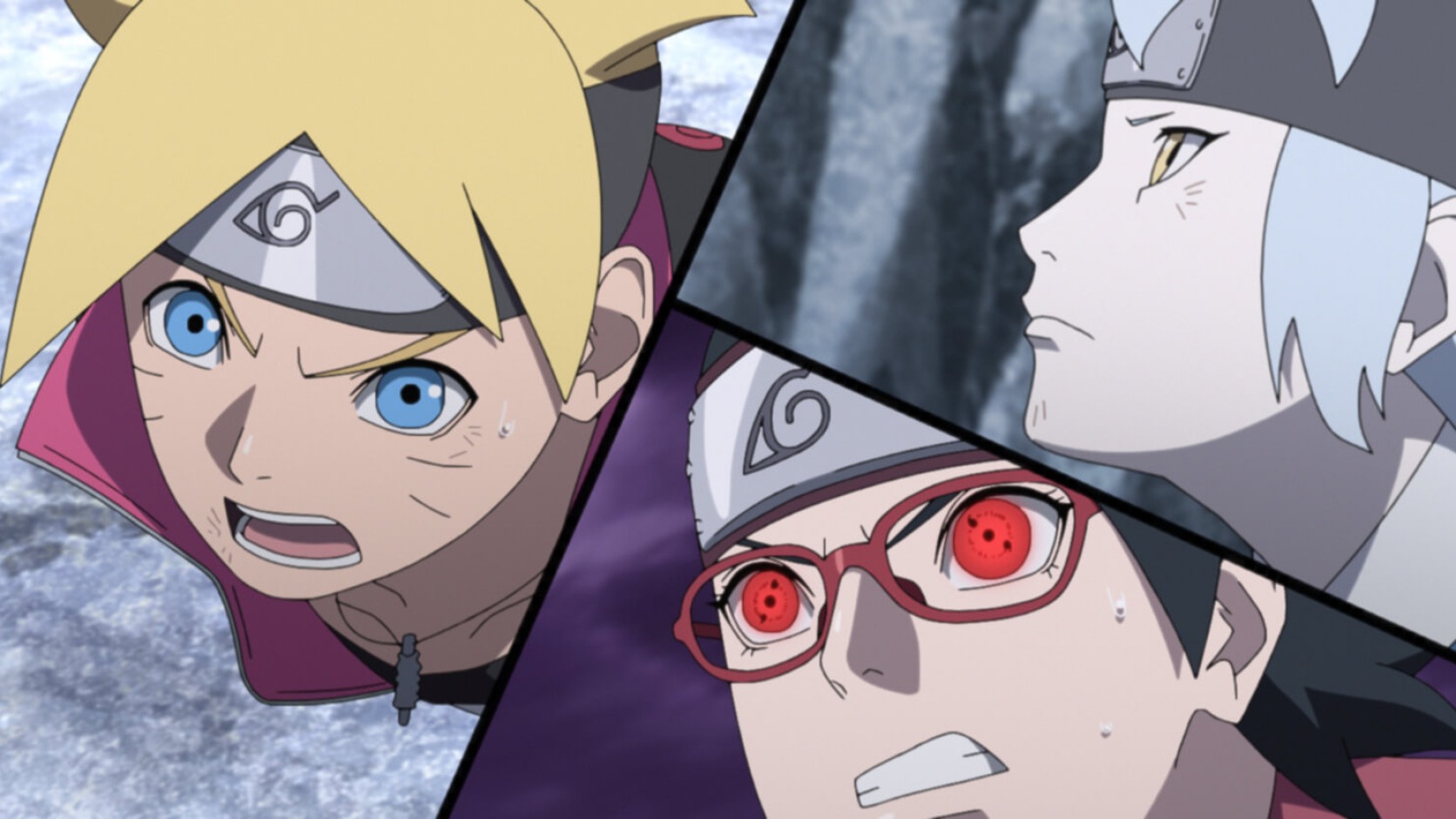
Team Seven defeats the mechanism behind Boro’s healing through shared intelligence, then watches another will use Boruto’s exhausted body to finish the fight.
Series: Boruto: Naruto Next Generations
Episode: 207 · Regeneration
Arc: Kawaki: Kara Clash
Release: July 11, 2021
Previous: Episode 206 · The New Team Seven
Directory: All 293 Boruto episodes
Bottom line
Boruto Episode 207 begins by asking how Team Seven can stop a body that repairs every successful attack, then ends by asking who owns Boruto’s body when Momoshiki wakes inside him. Sarada leads the investigation, Kawaki explains Boro’s scientific modifications, Mitsuki protects the team from the virus, and Boruto helps create openings. Their answer to regeneration is not a larger blast. They locate the core that coordinates Boro’s healing and trust Sarada to strike with Chidori. Boro’s body collapses into uncontrolled growth after the core breaks, and Momoshiki takes control of Boruto to finish him. One form of bodily domination defeats another. The victory rescues Naruto, but nobody should call the ending safe.
The title names more than Boro's ability
“Regeneration” first describes Boro rebuilding damaged flesh. The word also raises a larger question about recovery after harm. Bodies can close wounds while relationships, consent, and trust remain injured.
Boro treats repair as proof of invulnerability. Team Seven learns that restoration without regulation can become another form of collapse.
Successful attacks stop meaning success
The team lands blows that would end an ordinary fight. Boro rebuilds himself almost immediately.
Repeated effort without lasting effect can drain morale faster than a clean failure. Sarada must protect the team from confusing visible damage with progress.
Regeneration changes the objective
Defeating Boro cannot mean damaging more tissue than he can replace. The team needs the mechanism that makes replacement possible.
This shift rewards inquiry. A difficult opponent becomes solvable when the question changes from “How hard can we hit?” to “What allows him to recover?”
Kawaki recognizes Kara's design language
He understands that Boro’s body has been modified and that regeneration likely depends on scientific ninja technology. His knowledge directs attention toward structure rather than spectacle.
The information comes from proximity to abuse. The team uses his expertise without asking him to praise the system that taught him.
Lived knowledge does not make Kawaki responsible
Kawaki knows Kara because Kara controlled his life. That knowledge can help stop Boro, but nobody should treat him as accountable for every weapon the organization built.
Survivors are often asked to explain the systems that harmed them while outsiders remain free to be uninformed. Gratitude should accompany the request.
Sarada keeps command during uncertainty
The first plan did not solve the fight. Boro still heals, Naruto remains sealed, and the enemy can escalate.
Sarada does not abandon leadership because certainty disappeared. She collects reports, watches patterns, and narrows possibilities.
Her Sharingan serves analysis
The Sharingan can look spectacular, but Sarada uses vision as disciplined attention. She tracks Boro’s restoration and searches for movement hidden beneath the obvious wounds.
Seeing more creates responsibility to explain what she sees. Information becomes useful only after the team can act on the observation.
The core turns immortality into engineering
Boro’s recovery depends on a movable core that coordinates cellular regeneration. Apparent invulnerability rests on a component with location and limits.
The revelation does not make his body simple. The core moves, which means the team must predict rather than merely target.
Hidden dependencies govern powerful systems
Organizations and modified bodies often look self-sustaining from outside. A closer view reveals energy sources, decision centers, maintenance, and vulnerable links.
Sarada’s analysis matters because she refuses the performance of limitless power. Every system depends on something.
Boro moves the core to defeat observation
He knows the component is vulnerable and changes its position. Regeneration becomes an active defense rather than passive healing.
The moving target requires pattern recognition, timing, and trust in Sarada’s call. A team cannot solve the problem through individual attacks launched on instinct.
Sarada needs a precise opening
Chidori brings speed and penetration, but the technique commits her body to a line of attack. Missing could expose her to Boro at close range.
Leadership does not exempt her from risk. The ethical question is whether the risk serves a shared plan and whether teammates help create a route back.
Chidori carries family history without becoming a copy
Sasuke taught Sarada a technique bound to Uchiha perception and his own complicated past. She uses the inheritance while leading differently.
Legacy becomes meaningful when the next person can adapt a tool to present relationships rather than reenact the original owner’s identity.
The team makes her strike possible
Sarada’s Chidori becomes the decisive image, but Kawaki’s information, Mitsuki’s medical support, and Boruto’s pressure created the conditions.
Crediting the whole chain does not diminish her achievement. Shared work makes individual excellence legible.
Leadership can include taking the decisive risk
A captain should not claim every dangerous task. Sarada takes this one because her vision and technique match the target.
Role fit matters more than status. She does not attack to prove authority; she attacks because the plan requires her specific capacity.
Breaking the core also breaks control
Destroying the regulator prevents precise regeneration. Boro does not simply fall. His body expands and mutates beyond his command.
The transformation reveals that control, not healing alone, sustained his power. Repair without regulation becomes uncontrolled growth.
Regeneration is not the same as health
Boro can replace tissue rapidly while remaining ethically, biologically, and psychologically dangerous. A body’s ability to close wounds does not establish wellbeing.
Health includes regulation, autonomy, integration, and a future beyond endless response to damage.
Kara optimized function instead of personhood
Boro’s modifications prioritize combat survival. The design has little interest in what happens when the control mechanism fails.
Kara treats bodies as platforms for objectives. The person living inside becomes secondary to performance.
Boro's collapse exposes disposable engineering
An organization willing to rebuild bodies may appear invested in its members. The grotesque failure suggests another truth: Kara values useful function and accepts catastrophic breakdown.
Maintenance is not care when the system would discard the person after usefulness ends.
The team loses control of the battle again
Destroying the core solves one problem and creates another. Boro’s uncontrolled form threatens everyone through scale and force.
Good plans cannot predict every consequence. Responsible teams recognize the new situation quickly instead of defending the success of the previous step.
Sarada's victory remains real despite escalation
Boro’s mutation can make the core strike feel futile. The attack removed regeneration and exposed the body’s instability.
Progress does not always look like immediate safety. The next danger exists because the first defense is gone.
Exhaustion changes everyone's choices
The team has fought through a virus, repeated attacks, and uncertainty. Fatigue narrows attention and slows response.
Children should not need limitless endurance to earn praise. Their bodies deserve recovery even while the mission remains unfinished.
Boruto reaches a physical limit
His chakra drops as the fight continues. The depletion creates the condition Momoshiki uses.
Running out of power is not a moral failure. The danger lies in a mark that converts vulnerability into access for another will.
Momoshiki wakes inside Boruto
Control shifts without consent. Boruto’s face and body remain visible while another consciousness acts through them.
The scene should feel frightening even when the borrowed power defeats Boro. Effectiveness cannot make possession benign.
The rescue becomes a bodily autonomy crisis
Kawaki’s arc has centered Jigen attempting to overwrite his body. Boruto now reveals a parallel threat through Momoshiki.
Their experiences differ, but both boys carry succession systems designed to erase the current self for another being’s continuation.
Power arrives at the worst possible ethical price
Momoshiki has strength the exhausted team lacks. That power ends Boro’s rampage and protects everyone in the immediate moment.
The useful outcome can tempt observers to celebrate the transformation. A rescue achieved through involuntary control remains a warning.
Boruto is not secretly choosing this form
Nothing about Momoshiki’s intervention proves that Boruto wanted possession. The body’s action and the person’s consent separate.
Friends must remember that distinction when fear or gratitude shapes the aftermath.
Kawaki recognizes the threat differently now
He understands vessel logic from inside Kara’s system. Seeing Boruto controlled can confirm that their shared plan is more urgent than rivalry.
Recognition may also trigger fear. Solidarity does not guarantee comfort when another vessel becomes visibly dangerous.
Sarada faces a teammate who is no longer fully present
Captaincy becomes ethically harder when the powerful figure wearing Boruto’s face may not be Boruto. She must protect the team without treating his body as an enemy object.
Containment, communication, and rescue all need to remain possible at once.
Mitsuki sees his chosen sun altered
Mitsuki has oriented much of his identity around Boruto. Momoshiki’s emergence challenges the assumption that the familiar person always controls the familiar body.
His care must expand beyond devotion into discernment. Protecting Boruto may require opposing what Boruto’s body does under possession.
The finishing blow is not Boruto's achievement alone
Momoshiki uses Boruto’s body and available chakra to destroy Boro. Crediting Boruto without qualification erases the loss of control.
The team’s earlier work also made the finish possible by destroying regeneration. The final strike cannot swallow the chain.
Victory language needs precision
Boro is defeated. Naruto can be recovered. The team survives. Boruto’s Kāma threat becomes more immediate.
All four statements can be true. Calling the mission simply victorious would hide the new emergency inside the celebration.
Naruto remains sealed during the transformation
The man who protected Kawaki and understands possession through Kurama cannot intervene while Boruto loses control.
His absence increases the children’s burden. Rescue will restore an adult who may help interpret what happened without reducing Boruto to a threat.
Kurama and Momoshiki are not equivalent
Kurama was imprisoned inside Naruto and gradually developed a consensual partnership. Momoshiki marked Boruto as a route for resurrection.
Both involve another being within a body, but origin, intention, and direction of control differ. The franchise should not use Naruto’s eventual bond to romanticize Boruto’s erasure risk.
A forced origin does not dictate every future
Naruto and Kurama proved that relationships can change, but change required mutual recognition and freedom rather than surrender to possession.
Boruto’s future remains unwritten. Hope must protect his continuing self, not demand optimism about the force threatening replacement.
Scientific and spiritual systems converge
Boro’s regeneration uses technology. Kāma carries biological data and Otsutsuki succession. The story refuses a clean border between machine, body, and spirit.
Ethics must travel across those categories. Consent remains relevant whether control arrives through a laboratory, seal, algorithm, or god.
Sarada's leadership survives another person's spectacle
Momoshiki’s display could overshadow every decision that came before. The episode’s actual solution to Boro’s invulnerability belonged to Sarada and the team.
Remembering command, analysis, and Chidori protects the story from crediting only the largest power.
Mitsuki's support survives the highlight reel
Without antibodies, paralysis would have ended the mission before the core was found. Medical work remains structurally decisive.
Support roles deserve narration after the crisis, not only private gratitude.
Kawaki's disclosure survives suspicion
Konoha recently contained him as a possible threat. His knowledge now guides the rescue.
The lesson should not be that usefulness proves innocence. The lesson is that suspicion nearly excluded a person whose perspective belonged in the room from the beginning.
Boruto's vulnerability survives his power
Possessed Boruto looks overwhelming, which can make fear replace concern. Power and vulnerability coexist.
Someone can endanger others while also experiencing violation. Safety planning must hold both truths.
The team will need an honest debrief
They need to document Boro’s virus, regeneration core, body failure, and Momoshiki’s emergence. They also need room to describe fear, pain, and uncertainty.
A tactical report without emotional truth would preserve data while abandoning the children who produced the data.
Boruto needs medical assessment without becoming a specimen
Momoshiki’s control demands urgent study. Researchers may want every scan, sample, and observation.
Urgency cannot make Boruto public property. Explain procedures, limit access, seek assent and consent, and include advocates who prioritize his future.
Kawaki needs assessment without comparison
Their Kāma marks share mechanisms, but the boys may progress differently. Treating one as the baseline for the other could create false certainty.
Each child needs individualized care and the right to receive information about findings.
Team Seven needs a possession protocol
Future missions cannot assume Boruto will always remain in control after chakra depletion. A plan should identify warning signs, safe restraint, communication, extraction, and medical response.
The protocol should be developed with Boruto rather than imposed in secret. Participation gives him agency against the mark.
The plan must protect teammates too
Boruto’s rights do not require Sarada, Mitsuki, or Kawaki to accept unlimited danger. Their safety matters.
Consent-based planning can include distance, barriers, signals, and conditions for ending a mission without treating Boruto as disposable.
Regeneration asks what should continue
Boro wants function to continue regardless of bodily cost. Momoshiki wants himself to continue through Boruto. Team Seven wants Naruto and one another to continue as people.
The moral difference lies in whose future receives consent.
The moving core rewards patience under pressure
Every second beside sealed Naruto encourages immediate attack, yet the core cannot be struck until Sarada confirms location. Waiting becomes active work rather than hesitation. She watches regeneration repeat, compares movement, and chooses the moment when evidence supports commitment.
Patience often looks less heroic than impact. Here, patience prevents Chidori from becoming a desperate guess and protects the teammates relying on her decision.
Sarada carries the consequence of being wrong
The plan places her close to Boro and makes her call visible to everyone. A failed read could injure her, expose the team, and leave Naruto sealed. Leadership means carrying consequence without pretending certainty.
Her teammates reduce that burden by creating space and trusting the plan. Shared responsibility does not erase the captain’s decision, but shared preparation keeps responsibility from becoming isolation.
Boro's body reveals the danger of optimization
Kara optimized his flesh for repeated combat without building a humane failure state. When regulation disappears, growth continues without coordination. The body performs its function past the point of survival.
Optimization becomes dangerous when designers measure only output. Safety requires asking what happens during malfunction, who can stop the process, and whether the person inside retains control.
Momoshiki treats depletion as permission
Boruto’s exhaustion creates an opening, not consent. Momoshiki uses vulnerability as access and acts as though available capacity grants authority.
That logic mirrors every controlling system in the arc. Jigen sees Kawaki’s compatibility as ownership. Boro sees need as recruitment opportunity. Momoshiki sees chakra loss as a doorway. None of those conditions create permission.
Friends may feel gratitude and fear together
Momoshiki ends the immediate threat, so relief is natural. The same intervention proves Boruto can disappear behind another will, so fear is equally rational.
The team does not need to choose one emotion to make the other respectable. Mixed reactions can support a more honest plan than either celebration or rejection alone.
Boruto should hear the full account
When he returns to awareness, others may protect him by withholding frightening details. Silence would leave him unprepared for a threat happening through his own body.
He deserves a careful, factual explanation: what changed, what Momoshiki said or did, how long control lasted, and what conditions preceded the episode. Information belongs to the person most affected.
Memory gaps require witness without ownership
Boruto may depend on teammates to reconstruct the event. Their accounts become essential evidence, but no witness gets to define his identity through the possessed behavior.
They can describe actions precisely while repeating that Momoshiki controlled the body. Witness should return knowledge to Boruto rather than seize authority over his story.
Celebration needs boundaries
The team has every reason to celebrate survival, Sarada’s strike, Mitsuki’s antidote, Kawaki’s guidance, and Naruto’s recovery. Celebration can coexist with the recognition that Boruto experienced a serious breach.
No one should make him perform gratitude for power that used him. A victory gathering becomes safer when joy leaves room for fear, fatigue, and refusal.
The adults should also celebrate Sarada, Mitsuki, and Kawaki by name. Specific credit resists the habit of letting the final spectacular figure absorb everyone else’s labor. Boruto deserves care rather than praise for actions he did not choose, and the teammates who remained present deserve recognition for the choices they made deliberately.
What the episode gets right
“Regeneration” makes intelligence, leadership, and medicine necessary before unleashing frightening power. Sarada’s analysis gives the battle structure, and her Chidori earns the decisive opening.
The ending refuses uncomplicated triumph. Boro falls, but Boruto’s body reveals another prison under construction.
Where the episode needs care
Momoshiki’s visual dominance risks turning possession into a fan-favorite upgrade. Later storytelling must preserve Boruto’s loss of control as a violation, not only a source of exciting power.
Sarada, Mitsuki, and Kawaki also deserve credit after the spectacle. The team defeated regeneration before Momoshiki delivered force.
RaeRae verdict
Boruto Episode 207 earns five bowls of ramen out of five. Sarada seeing the moving core, trusting her training, and driving Chidori through Boro’s defense is the episode’s earned victory. Momoshiki’s arrival is the bill waiting underneath.
I love the fight because every teammate matters. I fear the ending because effectiveness makes possession easy to cheer. Boruto’s body saves the team while Boruto disappears from the driver’s seat. That is not a clean power-up. That is the next emergency.
Before the next episode
Episode 208, “The Manifestation of Momoshiki,” deals with what the team witnessed and brings Naruto home. The rescue succeeds, but Boruto cannot explain actions taken through his body.
Watch how adults discuss the transformation, whether anyone centers Boruto’s consent, and how Kawaki responds to another vessel losing control.
Sources and lawful viewing
The official Naruto site provides the Episode 207 synopsis and gallery. Crunchyroll carries “Regeneration” where regional availability permits. Release and streaming details can vary by country.
Official episode reference: Naruto Official episode guide
Licensed episode route: Crunchyroll licensed series page
After watching, separate the battle into contributions. Who diagnosed, who informed, who led, who opened space, who struck the core, and who controlled Boruto’s body at the end? The answers make the victory more truthful and the danger harder to romanticize.