
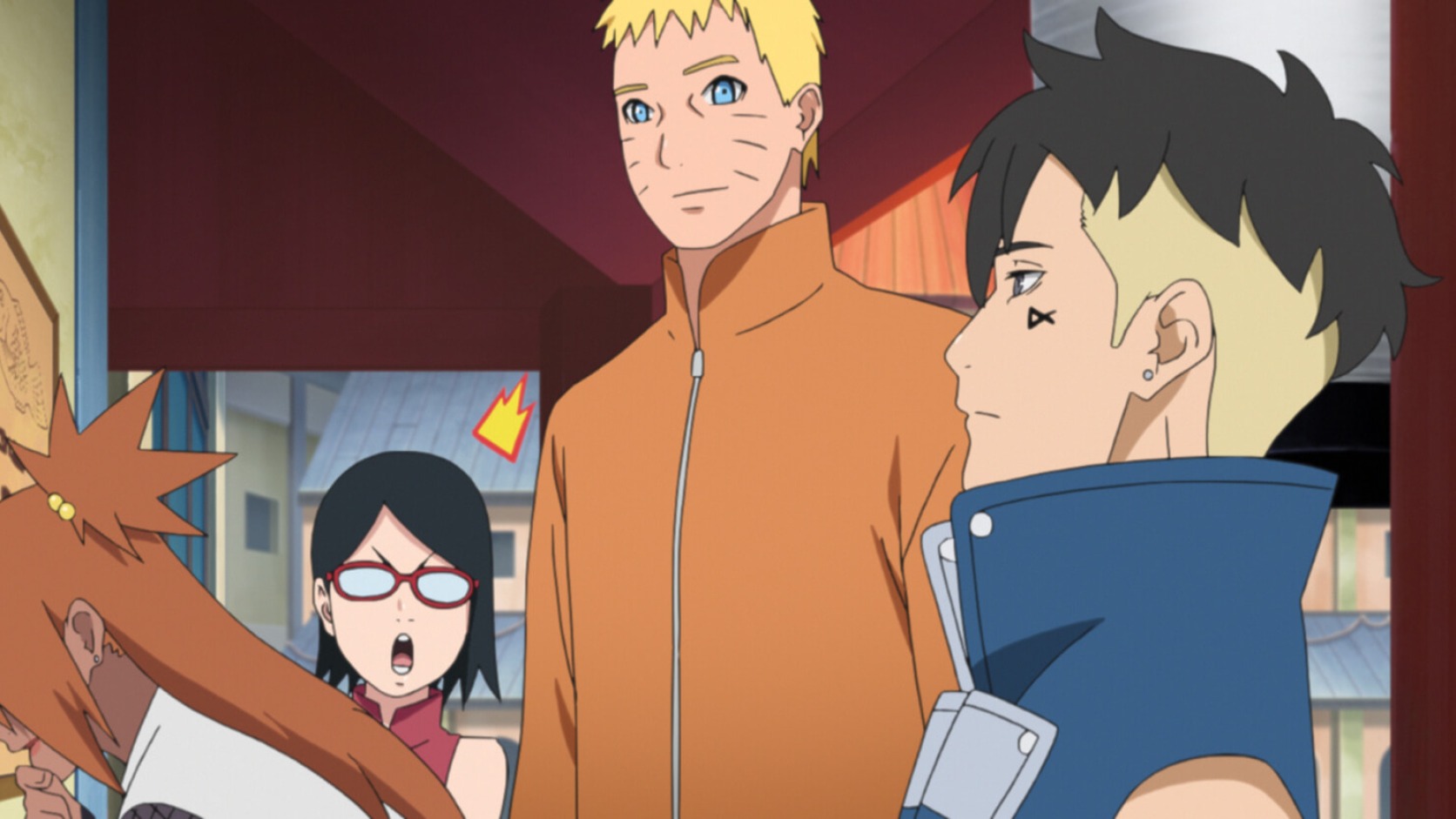
A Vase
Kawaki tries to replace what he broke, but Boruto’s glue teaches the harder truth: accountability must honor the love and labor held inside the original.
Series: Boruto: Naruto Next Generations
Episode: 195 · A Vase
Arc: Vessel
Release: April 18, 2021
Previous: Episode 194 · The Uzumaki Household
Directory: All 293 Boruto episodes
Bottom line
Boruto Episode 195 understands that replacing a broken object cannot replace the care held inside that object. Kawaki wants a clean transaction: buy Himawari another vase, settle the debt, and stop carrying proof that his anger damaged something precious. Boruto refuses that shortcut because his sister made the original with her own hands. Their disagreement is not really about ceramics. One boy believes accountability means paying for damage, while the other believes accountability means recognizing whose labor and love were hurt. Naruto quietly guides Kawaki toward the harder answer. Repair asks for money, patience, humility, self-control, and the courage to remain present after shame arrives.
The title makes one object carry a household
“A Vase” sounds tiny beside Kāma, Kara, and the threat sealed inside Kawaki’s body. That modest title is exactly right. The Uzumaki family does not need another grand speech about trust. Everyone needs one damaged household object to become a practical test. Can Kawaki understand sentimental value? Can Boruto protect Himawari without turning anger into permanent exile? Can Naruto supervise without controlling every decision? The vase holds all three questions.
Himawari’s handmade gift represents time that cannot be purchased from a store. Uneven edges and childish decoration are part of the value, not defects a shinobi salary can correct. Kawaki has known adults who price children, vessels, food, and pain. Episode 195 asks him to learn that love creates another kind of worth.
Kawaki begins with a bargain
Kawaki offers Boruto cooperation around Kāma because both boys possess knowledge the other needs. His proposal makes sense, yet Boruto still sees the broken vase between them. A useful alliance does not cancel a personal injury. Boruto will not let an urgent mystery become a coupon for instant forgiveness.
That refusal may sound stubborn, but Boruto is defending the right to name harm even when the person responsible has suffered terribly. Kawaki deserves safety and compassion. Himawari still deserves respect. Holding both truths at once prevents trauma from becoming permission and prevents accountability from becoming cruelty.
Boruto is angry for his sister
Boruto’s anger carries sibling loyalty. Himawari made the vase for Hinata, and Kawaki shattered the gift during a frightening confrontation. Boruto does not measure the damage by the market price of clay. He remembers the person who shaped the gift and the mother who received the love behind that work.
His position also protects Himawari from the family’s understandable focus on Kawaki. A household can become so committed to helping a wounded newcomer that the quieter child’s loss disappears. Boruto refuses that disappearance. His delivery remains sharp, but the principle underneath deserves attention.
A new vase is the easiest answer
Kawaki wants to buy a replacement because purchase creates a visible finish line. Choose an object, hand over money, bring the object home, and mark the problem solved. Transactions feel safer than relationships because rules remain clear. Nobody has to guess whether an apology worked or whether affection survived.
Kara trained him to understand value through usefulness, cost, and ownership. A new vase follows that language. Handmade memory does not. Naruto does not mock the attempt because buying a replacement is still movement toward responsibility. He lets Kawaki begin with the answer Kawaki can imagine, then leaves room for a deeper answer to emerge.
Naruto turns supervision into accompaniment
Naruto must monitor Kawaki, but Episode 195 gives that duty a humane form. He goes into town beside him. The Hokage does not send an assistant, issue a shopping list, or convert the errand into an interrogation. Physical presence becomes guidance without a lecture hanging over every step.
That choice matters because Kawaki has rarely experienced authority as company. Powerful adults watched him to measure obedience or prevent escape. Naruto watches for public safety while also helping a child complete an awkward act of repair. The same pair of eyes can police or protect. Naruto keeps trying to make the difference legible.
The village is ordinary around him
Shops, food counters, pedestrians, flowers, and children make Konoha feel busy without centering Kawaki. People have errands unrelated to Kara. Their ordinary movement gives him a first look at community as something larger than guards, targets, and escape routes.
Public normalcy can also overload a nervous system trained for danger. Strangers approach from unpredictable angles. Voices overlap. Hands move quickly. A quiet street for Naruto may feel like a field full of untracked threats for Kawaki. Healing cannot depend on pretending those bodily calculations vanish because the scenery looks friendly.
Sarada joins without becoming a therapist
Sarada’s presence changes the social temperature. She knows Boruto, knows Naruto, and can speak to Kawaki without sharing the household argument. Her reactions give the outing another witness while refusing to turn a girl his age into a private counselor.
She can challenge rude behavior and still notice fear. Those two responses belong together. Young women in anime are too often assigned endless emotional translation for angry boys. Sarada does not owe Kawaki perfect patience. Her value comes from being a full participant whose judgment carries weight, not from absorbing every sharp edge quietly.
Kawaki snaps because closeness feels dangerous
Sarada’s questions and observations reach places Kawaki would rather guard. He responds with hostility because distance has kept him alive. A cutting answer can end a conversation before curiosity becomes access. The habit once protected him from adults who treated information as leverage.
That survival logic does not make the behavior harmless. Sarada deserves basic respect. Episode 195 works because the story lets viewers understand the defense without calling every consequence acceptable. Explanation should widen accountability, not erase accountability.
Naruto does not demand a grateful performance
Kawaki receives food, shelter, protection, and the Hokage’s time. None of those resources require cheerful compliance as payment. Naruto does not tell him to smile, praise Konoha, or prove that rescue worked. Gratitude cannot become rent charged to a child with nowhere safe to go.
This restraint distinguishes care from possession. Jigen provided necessities when those necessities served Kara’s investment. Naruto provides necessities because Kawaki is a child. The difference becomes real through repeated days where disagreement does not cancel dinner and suspicion does not cancel shelter.
Flowers expose the limit of substitution
The shopping trip circles flowers and containers, objects designed to hold beauty without becoming the beauty themselves. A vase can be replaced as a function. Himawari’s vase cannot be replaced as a relationship. The episode allows both meanings to sit beside each other.
That distinction applies beyond pottery. Another bed can offer sleep, but cannot restore every lost night. Another guardian can offer care, but cannot return childhood. Recovery builds something new while honoring what cannot be duplicated. Kawaki’s new purchase may carry sincere effort without becoming the original gift.
Money can prove effort without buying absolution
Kawaki’s willingness to spend money matters. He is not asking Naruto to cover the cost or expecting Himawari to forget. The purchase shows intent, planning, and sacrifice within the vocabulary currently available to him.
Still, money cannot command forgiveness. A harmed person never owes emotional closure because the responsible person paid for materials. Accountability offers repair without controlling the recipient’s response. Kawaki must learn that another person gets to decide what the gesture means.
The child’s collision changes the whole errand
A child bumps into Kawaki, and his body answers before reflection can arrive. The moment is frightening because the target is small, accidental, and completely outside Kara’s machinery. Public life contains harmless contact, but Kawaki’s nervous system reads sudden touch as attack.
Episode 195 refuses the comfortable fantasy that safety automatically makes a traumatized child feel safe. Threat conditioning travels with him into shops and streets. A gentle community still needs preparation, boundaries, and adults ready to interrupt danger without humiliating the survivor.
Reflex explains the movement
Kawaki’s defensive motion comes from years when hesitation meant pain. His body learned speed before consent, context, or proportionality could matter. Calling that response a reflex explains why conscious kindness did not stop the first movement.
Explanation cannot become a promise that nobody was endangered. The child’s fear is real. Sarada’s alarm is real. Naruto’s intervention is necessary. Trauma-aware care protects the traumatized person and everyone nearby. Any model that sacrifices one side has abandoned care for management.
Naruto interrupts without making a spectacle
Naruto places himself between Kawaki and harm with the speed of a shinobi and the composure of a parent. He stops the danger first. He does not shout a public diagnosis, threaten expulsion, or force Kawaki to disclose abuse in front of strangers.
That sequence is responsible: secure the child, lower the temperature, then address what happened. Public shame would add another threat signal and could make Kawaki more volatile. Silence would leave the child unprotected. Naruto finds a middle route grounded in immediate safety and private correction.
The frightened child matters too
Viewers may focus on Kawaki because the story follows his recovery, but the child under his raised arm must not become a prop. Fear belongs to that child without qualification. Accidental contact should never lead to the expectation of violence.
A healthy community does not ask vulnerable people to absorb harm for someone else’s rehabilitation. Adults must create conditions where Kawaki can practice regulation while children remain protected. Compassion grows stronger when every person’s safety counts.
Sarada sees the danger directly
Sarada’s shocked face records how quickly the outing changes. She has fought dangerous opponents, yet violence directed toward an ordinary child feels different. The scene gives her evidence that Kawaki’s aggression is not only attitude or bad manners.
Witnessing can deepen understanding without producing instant intimacy. Sarada may recognize the severity of his conditioning and remain cautious. Trust should grow from future behavior, not from one dramatic revelation demanding immediate closeness.
Kawaki has to live after the mistake
The hardest lesson arrives after Naruto stops him. Kawaki does not get sent away. He must keep walking through the same village with people who saw what almost happened. Remaining present can feel more painful than punishment because shame wants disappearance.
Repair requires surviving that urge. A person cannot make amends from a fantasy where the bad moment never occurred. Kawaki has to accept that Naruto saw, Sarada saw, and the child felt afraid, while also accepting that the day can continue.
Accountability needs a next action
Naruto’s guidance works because the episode gives Kawaki something concrete to do after failure. Continue the errand. Choose the vase. Return home. Listen to Boruto. Consider the damaged original. A next action prevents shame from becoming paralysis.
Consequences should connect to the harm whenever possible. Random suffering teaches fear, not responsibility. A repair task teaches attention: who was affected, what mattered, what can be restored, and which loss must simply be acknowledged.
Boruto rejects the replacement
When Kawaki presents the new vase, Boruto refuses to accept a store-bought object as a substitute for Himawari’s work. His response is blunt, but his reasoning names the heart of the episode. The original carried his sister’s time.
Kawaki initially hears rejection of his effort. Boruto is actually rejecting the claim that one object can overwrite another. The new vase can remain a gift or container. The broken vase still needs attention because sentimental value survives physical damage.
Glue becomes more important than pottery
Boruto offers glue, a small tool with no prestige. Glue does not hide every crack. Glue asks Kawaki to handle the pieces carefully, align edges, wait through drying, and accept that the finished object will show damage.
That offer is Boruto’s first meaningful bridge. He does not say everything is forgiven. He gives Kawaki a route toward work that matches the loss. Cooperation begins through a practical object before either boy can manage a soft conversation.
Repair preserves evidence
A repaired vase carries the history of breaking and the history of someone choosing not to discard the pieces. The cracks remain part of the household record. That outcome is more honest than replacing the object and pretending the frightening moment vanished.
Families often heal through visible repair. An apology does not rewind time. Changed behavior does not remove memory. What grows instead is evidence that harm can be named, responsibility can be practiced, and belonging can survive without denial.
Himawari owns the final meaning
The boys can argue, shop, glue, and apologize, but Himawari made the original vase. Her response should determine whether repair feels welcome. Neither Boruto’s protection nor Kawaki’s effort should speak over her.
Himawari’s kindness must not be treated as automatic absolution because she is gentle. Children who forgive easily still deserve room for sadness, hesitation, or conditions. Her emotional labor should never become the family’s shortcut around a difficult conversation.
Boruto’s glue is conditional trust
Offering glue means Boruto believes Kawaki may be capable of careful work. That belief remains narrower than friendship. Conditional trust can be healthy when behavior has not yet earned anything broader.
Stories often rush enemies into brotherhood after one sympathetic revelation. Episode 195 takes a better route. Boruto can acknowledge Kawaki’s attempt while staying angry. Kawaki can accept help without demanding affection. Their relationship grows through negotiated tasks.
Kawaki learns that care has texture
Kara made worth abstract and brutal: a vessel succeeds or fails, a body performs or gets punished. Himawari’s vase teaches another system where texture, effort, memory, and intention matter. Imperfection can increase value because human hands made the object for someone specific.
That lesson reaches Kawaki through materials rather than a speech. Clay pieces, glue, flowers, and a purchased replacement give him something to touch. Physical work can make relational ideas easier to understand when emotional language still feels unsafe.
Naruto lets the boys negotiate
Naruto could order Boruto to accept the new vase and thank Kawaki. Such an order would create surface peace while teaching both boys the wrong lesson. Boruto would learn that adult sympathy overrides Himawari’s loss. Kawaki would learn that authority can force forgiveness.
Instead Naruto gives their conflict room. Adult supervision remains nearby, but the children shape the next step. Agency turns glue into a genuine offer rather than assigned family therapy.
The episode protects slow forgiveness
Forgiveness here is not a switch. Boruto’s anger softens enough to offer a repair tool, not enough to erase every suspicion. Kawaki’s remorse becomes effort, not a perfect apology. Slow movement suits both boys.
Fandom sometimes treats unresolved tension as bad communication that one conversation should fix. Real relationships often need repeated evidence. Episode 195 respects repetition: shared meals, monitored outings, difficult errands, repairs, and future choices will carry more weight than one polished statement.
A vase can hold two gestures
The purchased vase and repaired vase do not need to compete. One records Kawaki’s first attempt to make amends using the language he knew. The other records his willingness to learn a more personal language after Boruto challenged him.
Growth does not require mocking the first effort. People often begin repair imperfectly. What matters is whether they listen when the harmed family explains why the first answer falls short.
The quiet scale strengthens the Vessel arc
The Vessel arc contains organizations, seals, scientific tools, surveillance, and enormous power. A shopping trip keeps the arc grounded in what all that machinery threatens: the chance to live an ordinary life among people who value one another beyond utility.
Kawaki’s future cannot be measured only by combat control. Can he enter a shop, tolerate a bump, apologize, choose a gift, and repair a fragile object? Those questions reveal whether freedom has reached daily life.
Public space requires support
Naruto accompanies Kawaki because a first outing carries risks. Continued support should include clear plans for crowded places, unexpected touch, exits, warning signs, and de-escalation. Trust does not mean removing every structure overnight.
Good support can expand freedom instead of shrinking freedom. Preparation gives Kawaki more chances to participate safely. The goal is not permanent escort. The goal is enough practice and regulation that ordinary movement becomes possible without danger.
Safety plans should never sound like punishment
A child who expects control may hear every rule as another cage. Naruto needs to explain why a boundary exists, who the boundary protects, and when adults will review the restriction. Predictability helps separate care from domination.
Kawaki also needs choices inside the plan. He can choose distance, signal overload, request a quieter route, or step away before fear becomes aggression. Agency and accountability can reinforce each other.
Sarada deserves a follow-up conversation
Sarada witnessed a frightening reflex and may have questions. Naruto should not reveal Kawaki’s private history without consent, but he can acknowledge what she saw, confirm that the risk is being addressed, and invite her boundaries.
Peers should not be left to guess whether adults noticed danger. Transparent safety language prevents secrecy from becoming another burden placed on children. Sarada can decide how close she wants to stand while trust develops.
Boruto deserves information without confidential details
Boruto lives with Kawaki and therefore needs practical information about warning signs, house rules, and who to call. He does not need every traumatic detail. Privacy and household safety can coexist.
Adults should avoid recruiting Boruto as a monitor. He is a child and brother, not security staff. Clear adult responsibility protects their relationship from becoming another surveillance assignment.
Himawari should not become proof of healing
Because Himawari is warm, characters may use her acceptance as evidence that Kawaki is now safe. That burden would be unfair. Her kindness is a relationship, not a certification.
Kawaki’s progress must rest on his behavior across time, adult assessment, and honest accountability. No young girl should have to stay close to demonstrate that a wounded boy deserves care.
The new household can survive imperfect days
Episode 194 showed conflict inside the Uzumaki home without expulsion. Episode 195 extends that lesson into public space. Kawaki nearly causes harm, yet Naruto neither ignores the danger nor abandons him.
This balance offers the clearest definition of secure belonging: mistakes have consequences, other people remain protected, and care does not disappear at the first failure. A child can be responsible for behavior without being reduced to the worst reflex his body learned.
Boruto and Kawaki speak different repair languages
Kawaki begins with replacement because cost and function feel measurable. Boruto answers with restoration because memory and labor feel sacred. Neither boy begins with a complete vocabulary.
Together they produce a better response. The purchased vase shows initiative. The glue shows attention to meaning. Their disagreement becomes collaboration when each boy contributes something the other lacked.
The episode refuses polished redemption
Kawaki does not finish the day transformed into an easy houseguest. He remains defensive, proud, frightened, and capable of dangerous reactions. The story also shows curiosity, effort, and the ability to accept correction.
That uneven portrait feels honest. Redemption built from flawless behavior would repeat Kara’s obsession with performance. Recovery built from repair allows failure to become information and effort to become evidence.
Small objects make strong fandom memories
Fans remember giant fights, but household objects often carry the emotional spine of Naruto stories: photographs, lunches, headbands, toys, memorials, letters, and shared meals. The vase belongs to that tradition.
A small object can hold more character truth than another explosion because everyone reveals a value through contact with the same thing. Himawari creates. Kawaki breaks and replaces. Boruto protects and offers glue. Naruto makes room for the process.
RaeRae’s verdict
“A Vase” earns its place in the Vessel arc by treating accountability as a relationship rather than a receipt. Kawaki’s shopping trip begins with the understandable fantasy that money can close a painful subject. Boruto makes him face the difference between function and meaning. Naruto protects a frightened child without publicly crushing the frightened child in his care. Sarada witnesses danger without being assigned the job of curing a boy she barely knows.
The glue is the episode’s best choice. Glue promises work, not perfection. Cracks remain visible. Hands must slow down. Pieces can return to use without pretending no break occurred. That model suits Kawaki, Boruto, and the Uzumaki household. Their future will not come from replacing every damaged thing with a clean copy. Their future depends on learning which pieces still belong together and doing the patient work required to hold them.
Sources and lawful viewing
Official episode reference: Naruto Official episode guide
Licensed episode route: Crunchyroll licensed series page
The official guide identifies Episode 195 as “A Vase” and summarizes Kawaki’s offer to work with Boruto on Kāma, Boruto’s continued anger over Himawari’s broken vase, and Kawaki’s trip into town with Naruto to seek a replacement. Crunchyroll provides the licensed episode route where available by region. Availability and language options can vary.