
STITCH! · SEASON 3 · EPISODE 1 · REACT
Stitch! Season 3 Episode 1: New Town, New Rules
Stitch nearly leaves because embarrassment feels like proof that a home can reject him
The episode record before the chaos starts
Production season: 3
Episode: 1 of 30
Japanese title: スティッチ、ニュータウンへ行く!
English card title: New Town, New Rules
Runtime: approximately 22 minutes
Japanese voices: Kōichi Yamadera as Stitch and Motoko Kumai as Yuna
Official record: Apple TV Japan or Disney+ Japan episode page
The episode begins with this problem: Yuna starts school in Okinawa New Town, Stitch causes a public mess while returning her forgotten item, and one bad day makes him consider leaving. That is enough plot to start the React, but a recap alone cannot explain what the episode asks us to accept. The receipt is who made the choice, who had useful information, and who was expected to absorb the consequences before the ending music arrived.
My first reaction
Stitch nearly leaves because embarrassment feels like proof that a home can reject him. That is the image and argument I kept after the episode stopped moving. The comedy works because the situation is recognizable, but recognition also makes the weak excuse easier to see.
I am not asking a children’s episode to become a hearing. I am asking the story to remember that feelings, bodies, homes, schools, and public trust do not reset simply because Stitch landed the final move.
The central problem is bigger than the alien ability
The real pattern here is that relocation turns ordinary mistakes into evidence that Stitch does not belong. The modified experiment creates urgency, yet the vulnerability existed before the power arrived. That is why defeating the visitor cannot complete the emotional story.
If the same social pressure, secrecy, or labor arrangement remains afterward, another episode can trigger the same harm without any alien help. The response has to repair the ordinary system as well as stop the spectacular threat.
Who had enough information to choose
Yuna and Stitch are both learning a place where nobody knows their history. Consent becomes unreliable when the person making a choice does not know the danger, the identity of the speaker, the effect of a device, or the cost being transferred to somebody else.
Jumba, Pleakley, and any adult with technical knowledge owe the group a clear explanation before the next plan begins. Children can participate in an emergency without becoming the default risk holders.
The body keeps a receipt
Transformation, mind control, enlargement, duplication, exhaustion, or forced performance may look reversible on screen. The person still experiences the loss of control. Recovery needs medical observation, privacy, and time to describe what happened without an audience demanding a lesson.
A restored appearance does not prove that fear, pain, memory, or embarrassment disappeared. The React keeps the body in the record after the animation returns everybody to model.
Stitch cannot be both the child and the emergency service
Stitch has unusual strength, but strength does not make him the automatic answer to every failure created by adults, institutions, or modified experiments. He needs information, a partner, an exit, and somebody responsible for recovery.
When the plan is simply “Stitch will fight,” the episode borrows his body instead of protecting a member of the family. Heroism should remain a choice, not the rent he pays for belonging.
Yuna deserves more than the emotional-support job
Yuna often reads Stitch correctly and can reach him when nobody else can. That bond is valuable. The story should not turn her into the only person responsible for regulating an alien body, repairing his reputation, or convincing him to survive.
She is a child with school, grief, family distance, friendships, and her own fear. Adults must share the work before praising her maturity.
Jumba owes the complete technical file
Every modified experiment is also a creator-responsibility problem. Jumba may not have performed the latest alteration, but he understands the original design language better than anybody nearby. Withholding a weakness until the climax turns expertise into suspense at everyone else’s expense.
He should maintain local records, containment guidance, medical cautions, and humane placement plans. Brilliant improvisation after disaster does not replace preparation.
Pleakley’s care labor belongs in the action record
Communication, transport, supervision, domestic recovery, and the panic nobody else has time to express often land with Pleakley. The joke may frame that work as fussing, but the household depends on it.
A proper debrief should credit care as operational labor. Pleakley also needs authority to stop an unsafe plan, not only responsibility for cleaning after it.
Hämsterviel and Delia keep exploiting predictable gaps
The villains succeed because they know which desire, insecurity, routine, or weak boundary the group will expose. Sending another experiment is only half the strategy. The other half is waiting for the household or school to repeat a familiar mistake.
A durable response studies the pattern. Who verifies invitations? Who tracks unfamiliar devices? Who notices when someone’s behavior changes? Who calls for help before a private argument becomes a city problem?
Public blame needs public correction
When a crowd, class, family, or audience sees the wrong person blamed, a quiet private apology is not enough. Reputation was damaged in the same space where the accusation spread. Correction has to reach that space too.
That does not require exposing private details. The responsible person can state what evidence was wrong, what has been repaired, and what procedure will change next time.
The emergency plan I wanted
an apology, a school safety boundary, and a plan for Stitch to help without entering classrooms uninvited. Those steps are less flashy than the final confrontation, but they protect more people and reduce the amount of courage the episode has to demand from one frightened character.
A plan also creates roles for people without Stitch’s strength. Warning, evacuation, translation, first aid, documentation, transport, and containment are all part of saving the day.
Repair is not the same as forgiveness
An apology should name the choice, the harm, and the person affected. “Everything worked out” is not an apology. Neither is a hug that arrives before the harmed person can finish speaking.
Forgiveness may come later or not at all. The immediate duty is repair: restore property, correct a lie, fund treatment, replace labor, respect a new boundary, and demonstrate different behavior under the next pressure.
The school and town need procedures
New Town contains teachers, families, businesses, public space, transport, and emergency services. Alien incidents cannot remain a private household hobby once other residents repeatedly face risk.
Procedures should protect Stitch from automatic suspicion while also protecting residents from real danger. Identity verification, evacuation routes, adult contacts, and accessible explanations would make the setting feel inhabited rather than disposable.
The experiment is a person before becoming a plot device
A modified experiment may cause harm and still require humane containment. Ability, programming, coercion, hunger, confusion, and deliberate choice have to be separated before punishment or placement is decided.
Jumba should identify whether the alteration can be reversed and whether the experiment can safely communicate preferences. A useful power does not justify exploitation after capture.
Japanese performance keeps changing the temperature
Kōichi Yamadera can move Stitch from boastful noise to fear through rhythm before the script states what changed. Motoko Kumai gives Yuna a directness that can sound like anger, protection, embarrassment, or exhausted love depending on the breath around a line.
This React follows the Japanese track. Another language performance may shape the scene differently, so the credit and interpretation should not be blended into one imaginary universal delivery.
The visual joke has an ethical point of view
Framing decides whether the audience watches with a frightened character or laughs from the safe side of the room. Reaction shots, music, repeated cuts, and the duration of an embarrassing transformation all guide that choice.
The episode is strongest when the visual joke reveals personality without asking the harmed person to disappear. Comedy can keep dignity and still be ridiculous.
Continuity cannot reset the emotional cost
Season three moves the household into New Town and accelerates the modified-experiment conflict. Earlier lessons should remain available. A boundary learned last week cannot vanish only because the new plot needs the same mistake.
Episodic rhythm allows recurrence, but recurrence should show pressure, relapse, quicker recognition, or better repair. Otherwise the characters become costumes rented by each script.
What the episode gets right
Stitch nearly leaves because embarrassment feels like proof that a home can reject him. The premise finds a real emotional nerve and gives the action a reason to matter beyond winning. The best moments let affection and irritation occupy the same relationship.
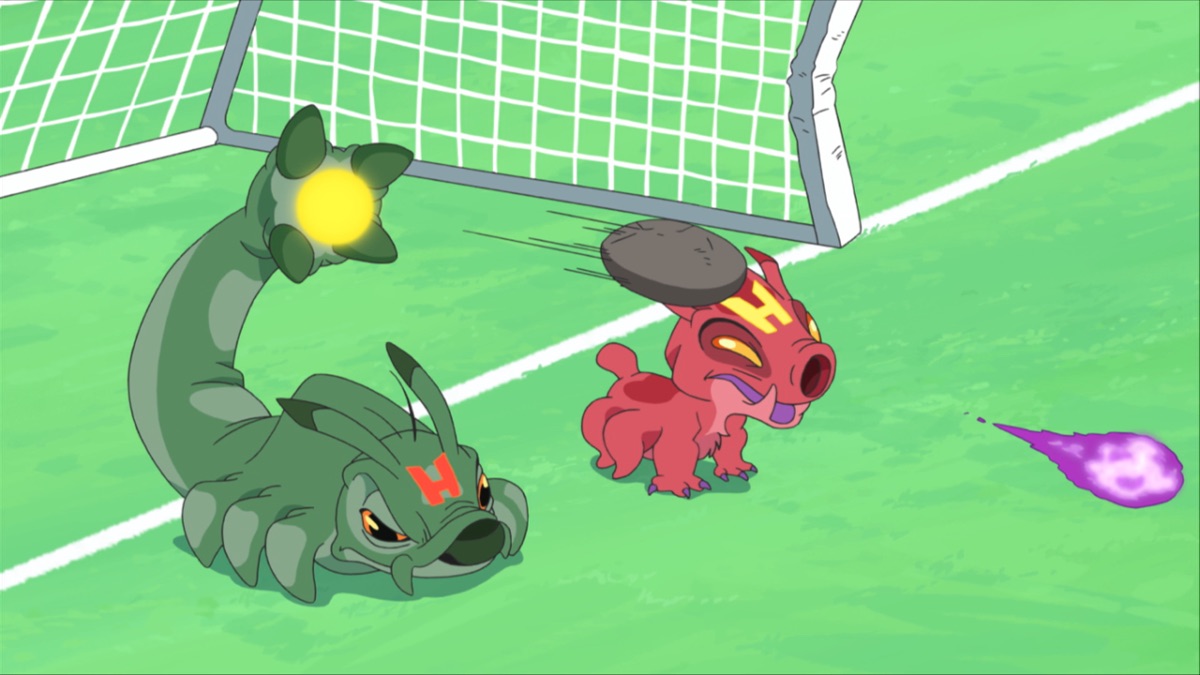
The official still also preserves that tension for the landing card. Featured image, hero, and directory image remain identical so the reader knows exactly which episode conversation is opening.
What I wanted pushed further
I wanted the episode to stay longer with the person who lost control, trust, privacy, or public standing. The rescue matters, but recovery is where the stated lesson becomes believable.
I also wanted the adults to accept a named task before the final scene. Family language sounds warmer when responsibility is visible.
The next episode should remember this
A future story should show at least one changed routine: a verified invitation, a quicker warning, a disclosed technical file, a respected refusal, or an adult stepping in before Yuna and Stitch carry the full danger.
That single continuity receipt would prove the episode changed the household rather than merely entertained it.
The aftermath needs its own scene
Once the threat is contained, the affected people need a room where nobody is cheering yet. They should be checked for injury, allowed to ask what happened, told which facts remain uncertain, and given a choice about who hears the details.
A debrief is also where the episode can separate responsibility from shame. Someone may have made a poor choice without causing the alien modification, while somebody else may have supplied the device, concealed the risk, or failed to intervene. Those are different receipts.
Adults cannot keep arriving after the lesson
The recurring pattern places children inside danger and lets adults provide a tool, explanation, or joke near the climax. That order has to change. Adults should notice the setup, verify the plan, and take the first share of risk before Yuna and Stitch improvise.
Obaa, Jumba, Pleakley, teachers, family members, and public responders have different knowledge. A working network would combine those strengths instead of waiting for one person to become the complete solution.
A repaired object is still part of the emotional story
When an episode breaks a gift, room, costume, school space, vehicle, or treasured possession, replacement should not be treated as background cleanup. Objects hold labor, memory, money, and trust. Their loss can hurt even when nobody is physically injured.
Repair begins by asking what the object meant and whether replacement is possible. If not, the person responsible can still fund restoration, provide labor, and stop minimizing the damage because a larger crisis happened later.
The fandom receipt is allowed to be complicated
I can enjoy Stitch being chaotic and still reject the idea that chaos excuses every adult around him. I can laugh at the transformation and still care about the person trapped inside it. Fandom is not loyalty to every script decision.
The useful reaction holds pleasure and criticism together. The episode does not become less fun because we noticed a missing apology, a weak safety plan, or a character whose choice disappeared under the joke. The conversation becomes worth returning to.
One more character beat I needed
Before the credits, I wanted a quiet exchange tied directly to Stitch nearly leaves because embarrassment feels like proof that a home can reject him. No crowd, no villain, no magical counter, and no speech written for everybody at once. Just the people affected deciding what the day changed between them.
That scene could be brief, but it should contain a specific promise or boundary. Specificity gives the next writer something to remember and gives the audience evidence that the relationship survived through work rather than automatic forgiveness.
The last practical question
Who checks tomorrow whether the repair actually held? A promise made during adrenaline needs follow-through after school, sleep, bills, and embarrassment return. Somebody should own that check instead of assuming the family feeling will perform maintenance by itself.
Follow-through is quiet, which is exactly why I want it. The next morning can prove more about trust than another explosion.
The receipt I am keeping
Stitch nearly leaves because embarrassment feels like proof that a home can reject him. I am keeping that receipt because the episode’s deepest argument lives there, not in the size of the final attack.
The second receipt is the repair the episode still owes: an apology, a school safety boundary, and a plan for Stitch to help without entering classrooms uninvited. If the franchise remembers both, the comedy gains weight without losing its mess.
Final verdict
“New Town, New Rules” works when the action exposes the ordinary pressure underneath the alien problem. The episode becomes shallow only when reversal is mistaken for recovery and affection is used to skip accountability.
My final call is to keep the humor, keep the Japanese performance, keep the ridiculous threat, and give the aftermath another minute. That minute is where family stops being a slogan and becomes work people choose together.
Keep watching
Previous episode · Next episode · Complete episode directory