
STITCH! · BROADCAST SEASON 2 · EPISODE 12 · REACT
Stitch! Season 2 Episode 12: Infiltrate Yuna’s Dream
Remmy did not hide Yuna’s mother behind the final level. He used the person she could not remember as the reason she might never want to leave.
The episode record before grief becomes a bonus stage
Episode: Broadcast Season 2, Episode 12
Japanese title: ユウナの夢に潜入せよ
English card title: Infiltrate Yuna’s Dream
Apple TV display number: Season 2, Episode 12
Production branch: Stitch! Itazura Alien no Daibōken
Japanese voices central here: Kōichi Yamadera as Stitch and Motoko Kumai as Yuna Kamihara
Where to watch: Apple TV Japan carries an official episode listing. Availability changes by region.
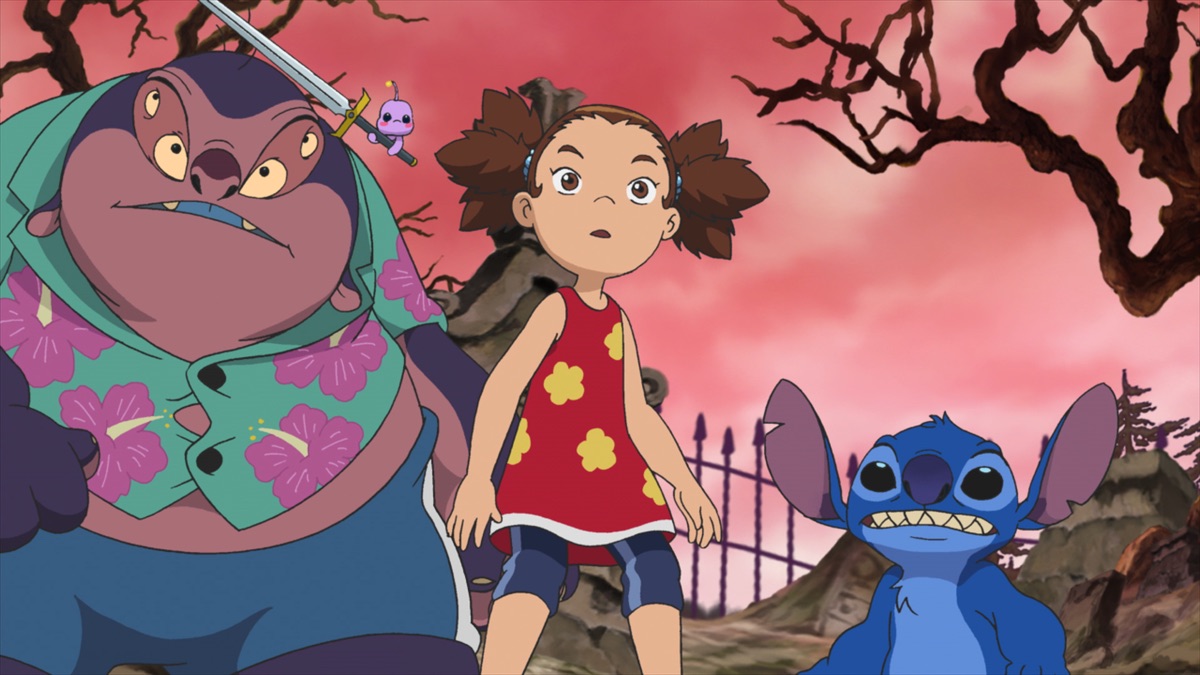
Yuna’s mother died when Yuna was an infant, leaving her without a conscious memory of her face. One night, Experiment 276, Remmy, enters Yuna through her ear and invades her dream. Remmy converts dreams into nightmares. Stitch, Jumba, and Pleakley enter after him and find a strange game world. Beyond its levels, the bonus stage offers the person Yuna most wants to meet.
My first reaction: a child’s grief is not unlockable content
The game structure gives the rescue clear stages, obstacles, and visual rules. The final reward turns Yuna’s mother into the most intimate bait possible. Remmy does not merely scare her. He finds the absence beneath her daily life and builds an encounter around it.
That makes the bonus stage emotionally dangerous even if the image feels comforting. Yuna cannot verify whether the figure reflects memory, imagination, Remmy’s manipulation, or information taken from somebody else. Longing makes the experience feel true before evidence can catch up.
A dream is private even when the sleeper cannot close the door
Yuna does not invite Remmy into her mind. She also cannot consent to Stitch, Jumba, and Pleakley entering while asleep. Rescue may require urgent access, but necessity does not convert every observation into shared property.
The team should enter only as far as needed, avoid exploring unrelated memories, and agree not to discuss private material afterward. Jumba needs to explain the intervention when Yuna wakes. She deserves to know who saw what and why.
Mental privacy matters because a person cannot curate a dream. Images may be contradictory, embarrassing, frightening, or meaningless. Witnesses should never treat them as confessions.
Remmy weaponizes association instead of inventing fear from nothing
Experiment 276 turns dreams into nightmares by using material already emotionally available. That ability makes him dangerous and reveals what Yuna carries without necessarily revealing objective truth. A nightmare can expose a concern. It cannot prove that concern describes reality.
The team must resist interpreting every symbol. A locked door may represent grief, a game mechanic, or whatever image the sleeping brain produced. Rescue requires attention to Yuna’s distress rather than amateur diagnosis inside her head.
Yuna cannot remember her mother, but absence still has a shape
Lack of visual memory does not mean lack of relationship. Yuna knows stories, photographs, other people’s reactions, and the daily consequences of growing up without her mother. She may imagine a face from those fragments. She may grieve somebody she cannot consciously recall.
Adults sometimes minimize infant loss because the child “was too young to remember.” The body and family system still changed. Every holiday, school event, illness, and question can make the absence newly specific.
Yuna deserves stories about her mother that do not demand a particular emotion. She can feel love, anger, curiosity, numbness, or all of them at different times.
The dream mother cannot be treated as a real reunion
The figure in the bonus stage may say exactly what Yuna needs to hear. That emotional accuracy does not establish identity. Remmy controls the environment and benefits from keeping Yuna engaged. A convincing simulation can still be manipulation.
Stitch should not rip Yuna away without acknowledging what the encounter means. He should also avoid confirming that the figure is truly her mother. The honest response is painful: “I know you want this to be her. I do not know what Remmy made.”
Protecting Yuna requires respect for longing and refusal to certify the unverifiable.
The game rewards persistence while quietly changing the goal
Stitch, Jumba, and Pleakley enter to remove Remmy. Levels encourage them to focus on progress, rules, and victory conditions. The bonus stage redirects attention toward Yuna’s desire. A game can make continued participation feel necessary even after the original rescue goal becomes obscured.
They need an exit criterion established before entry: stabilize Yuna, isolate Remmy, and leave. No optional exploration. No chasing a higher score. The mind is not a dungeon that owes completion.
Stitch’s love can become another intrusion
Stitch wants to save Yuna and may believe knowing every fear will help him protect her. That impulse can cross a boundary. Friends are not entitled to complete access simply because they would use the information kindly.
Afterward, he should let Yuna decide whether to discuss the mother figure. He can offer presence without questions. Silence chosen by Yuna differs from secrecy imposed by shame.
Trust grows when she learns that Stitch can know something vulnerable and wait for permission before touching it again.
Jumba created Remmy and owes more than technical rescue
Experiment 276 was designed to invade sleep and transform dreams into nightmares. Jumba understands the mechanism, or he should. He needs a countermeasure that minimizes further entry, monitors Yuna’s physical state, and prevents neurological harm.
He also owes Remmy a path beyond the original function. An experiment built to violate mental privacy cannot find belonging without training, consent rules, and a safe purpose. Jumba’s responsibility continues after the immediate removal.
Pleakley needs to keep the dream from becoming a story later
Pleakley talks when nervous and often turns unusual events into dramatic retellings. Here discretion is part of care. Yuna’s grief, dream images, and reactions should not become island gossip or a funny dinner anecdote.
He can document technical facts necessary for future safety without recording intimate content. Access to that record should remain limited. Protecting a child includes protecting the narrative she gets to tell about herself.
Obaa belongs in the conversation before and after the rescue
Obaa likely holds family stories, photographs, and knowledge about Yuna’s mother. She also understands island spirituality and may know how dreams are interpreted locally. Her absence from the entry team should not make her irrelevant to recovery.
After Yuna wakes, Obaa can answer factual questions and admit what she does not know. She should avoid replacing the dream encounter with a polished family myth. Yuna needs truth, including complicated truth, more than a perfect maternal image.
Waking Yuna safely matters more than beating every level
A prolonged nightmare can affect heart rate, breathing, stress, and sleep recovery. Jumba should monitor her body outside while the team operates inside. Somebody needs authority to terminate the attempt if physical risk increases.
The rescuers may feel close to the bonus stage and resist leaving. Medical safety outranks game completion. A partial rescue with a new plan is better than forcing Yuna through more distress because the team wants a cinematic finish.
Dream-entry technology needs rules before anybody uses it again
Jumba’s method for sending three people into Yuna’s dream creates its own power. The device can access a sleeping person, carry observers into private mental material, and possibly alter what happens there. Keeping it in an unlocked laboratory would invite another violation.
Future use needs informed consent when time allows, an emergency standard when it does not, a minimal-access rule, independent monitoring, automatic time limits, and deletion of unnecessary recordings. A rescuer should not be able to wander because curiosity feels useful. Every action needs a connection to the immediate safety goal.
Yuna should participate in deciding what happens to any data created during her rescue. If the device captured dream imagery, the default should be destruction unless she knowingly requests preservation. Technical possibility does not create an archive entitlement.
Grief support cannot recreate the bonus stage on purpose
After seeing how deeply Yuna wants contact, an adult may be tempted to use dream technology again under controlled conditions. That would turn mourning into an experience somebody else engineers. Even with consent, a simulated mother risks confusing wish fulfillment with memory and making ordinary grief harder to tolerate.
Support should begin outside the dream: stories, photographs, questions answered honestly, rituals Yuna chooses, and a trusted adult who can sit with feelings that do not resolve. Professional help may be appropriate if grief disrupts daily life, but the goal is not manufacturing closure.
Yuna does not need a perfect last conversation with a person she cannot remember. She needs permission to build a relationship with the available truth and to change that relationship as she grows.
The episode should not use grief as proof that Yuna is secretly broken
Missing her mother does not make Yuna’s courage fake or her daily joy incomplete. Grief can coexist with a functional, loving life. The nightmare identifies a tender place, not a hidden defect explaining everything she does.
Friends should not reinterpret every future mood through this episode. Yuna remains more than bereavement. Respect means remembering the information without reducing her to it.
Remmy needs accountability without being denied personhood
Remmy invades Yuna and uses grief as a trap. The harm is serious. Hämsterviel or original programming may shape the behavior, but Experiment 276 still needs containment, evaluation, and a plan that protects sleepers.
A safe role might involve consensual nightmare therapy only under qualified supervision, creative dream simulation with awake opt-in, or no activation until control is reliable. The ability does not create a right to access minds.
Family for Remmy must include boundaries strong enough that other family members can sleep.
Yuna needs a debrief that does not force a lesson
When she wakes, adults should orient her, explain Remmy’s role, confirm safety, and ask what she remembers. They should not immediately announce that the dream taught her to cherish family or let go. Meaning belongs to Yuna and may take time.
She may feel embarrassed that others saw the longing, relieved by the encounter, furious that it was false, or uncertain whether any part came from memory. All responses are valid. A debrief can hold uncertainty without resolving it for television.
Sleep itself may feel unsafe afterward
Yuna can understand that Remmy is gone and still fear closing her eyes. The invasion happened during a state where she could not defend herself or call for help. Obaa should expect disrupted sleep, repeated checking, nightmares, or a need for company without treating those responses as childish.
A recovery plan can include a secure room check, a way to call Obaa, calming routine, and honest reassurance about how Remmy is contained. Stitch may stay nearby if Yuna asks, but he should not monitor her secretly. Restoring safety requires giving control back, including control over who remains in the room.
The mother figure may still matter even if she was not real
A constructed encounter can produce genuine emotion. Yuna may keep a phrase, sensation, or image because it helps her articulate what she wants from maternal memory. Rejecting the figure as fake does not require dismissing the experience as meaningless.
The safe distinction separates emotional truth from historical fact. The dream can reveal longing. It cannot establish what Yuna’s mother looked like, thought, or would have said. Family stories and records remain the sources for those questions.
Memory deserves evidence outside the dream
After recovery, Yuna could ask Obaa and her father for photographs, recordings, letters, or stories from multiple people. Different accounts may conflict. That complexity gives her mother a human life beyond the perfect figure Remmy’s game offers.
Yuna should choose the pace. Researching a dead parent can comfort and overwhelm. Adults can make materials available without staging another emotional reveal.
What the episode gets right
“Infiltrate Yuna’s Dream” gives Remmy an ability tied directly to character rather than random visual chaos. The nightmare game works because Yuna’s deepest reward is not power or victory. It is contact with somebody absence made almost unimaginable.
Stitch’s rescue also tests whether protection can coexist with restraint. He enters the most private space available and must remember that reaching Yuna does not make everything inside his to understand.
What I wanted pushed further
I wanted explicit consent and privacy rules around dream entry. Urgency can justify access without erasing the obligation to disclose it later. Yuna deserves control over what the team remembers, records, and shares.
I also wanted the episode to distinguish the dream mother from verified memory. Comfort should not depend on pretending Remmy created a supernatural reunion. The uncertainty is sadder and more honest.
The receipt I am keeping
The receipt is the bonus stage offering Yuna the one person she cannot consciously remember. A game built by a nightmare experiment understands that longing can hold attention more effectively than fear. The most dangerous trap looks like relief.
Stitch’s receipt is the moment he must interrupt that relief. Love means rescuing Yuna without mocking what she wants, promising what he cannot verify, or claiming the private grief he saw while she slept.
Final verdict
“Infiltrate Yuna’s Dream” works when it treats the dream as a violation and the mother figure as emotionally real but historically uncertain. Yuna’s grief deserves tenderness, privacy, and evidence outside Remmy’s controlled game.
The rescue earns its ending if the team leaves with less information than it could have taken, tells Yuna exactly what happened, and lets her decide what the encounter means. A friend can enter a nightmare to bring somebody home. He still needs permission before turning on the lights in every room.
Keep watching
Return to Season 2 Episode 11 or open the complete Stitch! episode directory.