
STITCH! · PRODUCTION SEASON 2 · EPISODE 8 · REACT
Stitch! Season 2 Episode 8: A Little Lie That Grew Too Big
Yuna did not invent the bird story. She just watched everybody spend time, trust, and chaos making it true for her.
The episode record before silence becomes a whole rescue operation
Episode: Production Season 2, Episode 8
Japanese title: ふくらみ過ぎた小さなウソ
English card title: A Little Lie That Grew Too Big
Production branch: Stitch! Itazura Alien no Daibōken
Japanese voices central here: Kōichi Yamadera as Stitch and Motoko Kumai as Yuna Kamihara
Where to watch: Apple TV Japan and VideoMarket carry official Japanese episode listings. Availability changes by region.
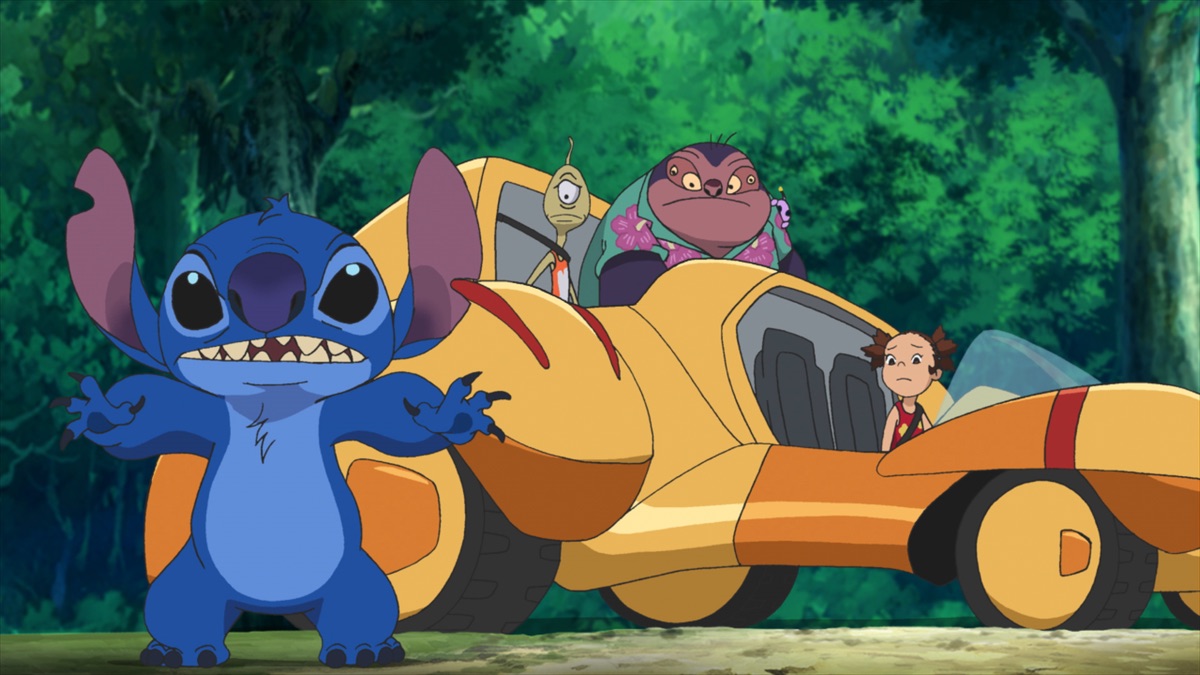
Yuna accidentally breaks a handmade strap Sae gave her. Afraid to admit it, she stays quiet while everyone concludes that a bird stole the gift. Stitch races across the island trying to capture the supposed thief, drawing residents into the search and making confession feel harder with every new effort. Hämsterviel hears about the strap and mistakes it for a key connected to the Chitama Stone, turning a broken keepsake into an alien attack.
My first reaction: Yuna did not tell one lie, but she kept accepting its benefits
The misunderstanding begins without Yuna inventing the bird story. That detail matters because silence can feel less dishonest than speaking false words. She knows the explanation is wrong, sees people act on it, and allows their effort to protect her from Sae’s disappointment. The moral weight grows through each opportunity to correct the record.
Fear explains the first pause. Shame explains the second. By the time Stitch launches a search, Yuna is no longer protecting only Sae’s feelings. She is protecting her image as a careful friend while everybody else pays for the story.
The handmade strap carries labor that cannot be replaced by price
Sae made the gift. Its value includes time, choice of materials, attention to Yuna’s taste, and the vulnerability of giving something imperfectly personal. Breaking it hurts because Yuna understands that care. The object is not sacred, but it represents a new friendship she does not want to damage.
That same meaning makes honesty more necessary. Sae deserves to know what happened to her work. She may be sad, angry, or completely understanding. Yuna cannot preserve the relationship by deciding which reaction Sae is allowed to have.
Repairing or remaking the strap can become part of restitution, but replacement does not erase the original. Yuna needs to acknowledge the labor and ask what Sae wants rather than secretly producing a substitute and hoping similarity prevents the conversation.
Accidents do not become betrayal until concealment recruits other people
Objects break. Friendship can survive an honest accident. The trust problem begins when Yuna lets Sae and the community operate on false information. Stitch believes a bird harmed his friend and acts accordingly. Islanders spend time searching. The animal becomes a target without evidence.
Each new participant raises the cost of confession, which is exactly why confession becomes more urgent. Waiting for a private moment after public action has begun means allowing preventable harm to continue. The least comfortable truth is still cheaper than the next stage of the lie.
The bird becomes a suspect because nobody checks the evidence
A bird can take shiny objects, so the explanation sounds plausible. Plausibility is not proof. Nobody confirms a sighting, identifies the species, checks where the strap broke, or examines fragments. Stitch moves directly from story to capture mission.
Blaming wildlife for missing property can lead to injury, nest disturbance, or frightened residents attacking the wrong animal. The bird does not understand the accusation and cannot defend itself. Humans and aliens owe it a higher evidence standard precisely because it has no voice in the conversation.
A calm search would begin at the last known location, inspect the broken pieces, and ask Yuna direct questions. The island chooses a dramatic chase because certainty feels better than ambiguity.
Stitch’s loyalty becomes dangerous when he skips verification
Stitch wants to recover Sae’s gift and protect Yuna from loss. That motive is loving. He treats the first explanation as a command and uses extraordinary strength across the island. Loyalty without questions turns him into an amplifier for somebody else’s fear.
He needs a pause routine: repeat what he knows, identify what he assumes, and ask who witnessed the event. Yuna may confess if he gives her a quiet opening before announcing a hunt. Even if she does not, verification limits harm.
The episode should not punish Stitch for caring. It should teach him that helping includes checking whether the requested rescue corresponds to reality.
Sae deserves more than protection from disappointment
Yuna imagines confession as something done to Sae. That framing treats her friend as emotionally fragile and removes her agency. Sae may value the truth more than the object. She may know how to repair it. She may need time before responding. All of those possibilities belong to her.
A genuine apology names the accident, the delay, and the consequences of silence. “I broke it, I was scared to tell you, and I let everyone blame a bird” is harder than “sorry about the strap.” The specificity shows Yuna understands which part damaged trust.
The island’s willingness to mobilize is beautiful and easy to exploit
Residents join the search because a child lost a meaningful gift. That community care deserves respect. It also demonstrates how quickly one unverified claim can redirect collective labor. Nobody wants to be the person who refuses help while a sentimental object is missing.
Healthy community response needs a coordinator who confirms facts, limits risk, and updates participants. Compassion does not require immediate belief in every detail. Questions can protect the person asking for help and everyone responding.
A rumor can grow without one person deliberately spreading it
Nobody needs to stand in the square and announce that the bird is guilty. One person guesses, another repeats the guess as context, and a third treats the repeated version as confirmed. Action supplies apparent credibility. Once Stitch begins searching, residents assume he knows something they do not.
Stopping that chain requires source language. “Yuna saw a bird take it” differs from “somebody thinks a bird may have taken it.” The first statement is false. The second preserves uncertainty. People coordinating a search should keep observations, guesses, and conclusions in separate columns.
Yuna occupies a special position because she knows the source is wrong. Even if she never started the rumor, she has information nobody else can provide. Remaining silent lets repetition manufacture confidence around an event she knows did not happen.
Hämsterviel mistakes social intensity for strategic importance
Hämsterviel hears about the strap and assumes it must unlock the Chitama Stone because the whole island appears invested. He reads attention as evidence of power. The mistake is absurd and perfectly logical within his worldview. People mobilize around objects because of affection, so he assumes the object has technical value.
His attack reveals information leakage. Public searches can advertise where residents are gathered, which objects matter, and what stories an enemy can manipulate. The solution is not secrecy around every loss. It is accurate communication that prevents rumor from becoming intelligence.
Yuna’s shame grows because other people keep doing kind things
Every searcher increases Yuna’s guilt. Kindness becomes pressure because she knows it rests on a false premise. She may fear that confession will make everyone’s effort meaningless and expose her as unworthy of care.
The effort is already spent. Continuing cannot recover it. Telling the truth allows people to stop, redirect toward the real danger, and decide how they feel with complete information. Confession does not waste prior kindness. It prevents kindness from being used further without consent.
Adults need to create a path for children to admit mistakes early
Children hide accidents when they expect humiliation, disproportionate punishment, or loss of relationship. Obaa and the school should make honesty safer without making it consequence-free. A predictable response helps: tell the truth, secure immediate safety, contact the affected person, and build a repair plan.
Yuna still owns her silence. Adults also shape whether confession feels survivable. If every broken object becomes a character verdict, children learn to protect themselves through concealment. Accountability works better when mistakes are specific and repair remains possible.
Confession should arrive before Yuna knows whether forgiveness is guaranteed
Waiting until Sae seems calm or the strap can be fixed turns honesty into another controlled outcome. Yuna needs to tell the truth without securing the response first. Sae’s uncertainty is part of what Yuna avoided, and accepting it is part of repair.
Courage here is quiet. There is no monster to strike and no score to raise. Yuna has to choose accuracy while knowing the truth may change how a friend sees her. The episode becomes emotionally credible when that risk remains real.
The strap should be repaired with Sae, not behind her back
A joint repair can turn the accident into shared knowledge. Sae can explain how she made the strap, Yuna can contribute labor, and both can decide whether visible mending becomes part of the object’s story. The goal is not returning it to an imaginary untouched state.
If the strap cannot be repaired, Sae decides what happens to the pieces. Yuna can offer materials or make something in return, but she should not replace handmade care with a purchase and call the relationship settled.
The bird needs repair too
If Stitch chases, corners, or captures a bird because of the false story, releasing it is the minimum. The team should check for injury, restore any disturbed nest, and prevent residents from repeating the accusation. An apology cannot be understood by the animal, but changed conduct still matters.
Yuna should name publicly that the bird did not steal anything. Private confession to Sae would leave the community holding the false belief. Repair must travel as far as the lie traveled.
Hämsterviel’s arrival changes the safety problem without erasing Yuna’s responsibility
Once an alien attack begins, immediate protection takes priority. Yuna may feel tempted to delay confession again because the situation has become too dangerous for personal truth. The correct information now helps the defense. Hämsterviel is targeting an object with no special power, and the heroes need to know that.
His decision to attack remains his own. Yuna did not cause villainy by breaking a gift. Her concealment supplied bad information that expanded the incident. Keeping those responsibilities separate prevents the story from blaming a child for an enemy’s deliberate violence.
Stitch deserves an apology for labor performed under false information
Stitch may forgive quickly because he loves Yuna. She should still acknowledge that he spent time, took risks, and frightened an animal while acting on a story she knew was wrong. His devotion does not make his effort free.
He also owes the bird and islanders repair for failing to verify. Both friends can be accountable without turning the incident into a contest over who made the bigger mistake.
Sae controls the pace of reconciliation
An apology creates the conditions for repair. It does not require Sae to forgive immediately, remake the strap, or reassure Yuna that the friendship is safe. She may need distance after learning how long the truth was withheld.
Yuna’s job is to tolerate that uncertainty without producing another story to manage Sae’s reaction. Trust returns through consistent honesty over time, not through one emotional scene that demands closure before the episode ends.
What the episode gets right
“A Little Lie That Grew Too Big” understands how silence accumulates responsibility. Yuna does not design an island-wide deception. She keeps choosing the temporary relief of not correcting it, while each kind response makes the next truth harder.
Hämsterviel’s misunderstanding extends the theme instead of interrupting it. He also builds action from assumptions, reads behavior as proof, and escalates without checking. The villain and hero mirror each other across very different stakes.
What I wanted pushed further
I wanted the bird’s welfare treated as part of the repair. False accusations against an animal can produce real harm even when the chase is funny. The public correction should be as visible as the public search.
I also wanted Sae’s reaction to remain hers. Let her be disappointed. Let her explain why handmade gifts matter. A friendship becomes stronger when it survives an honest uncomfortable response rather than skipping directly to reassurance.
The receipt I am keeping
The receipt is Yuna watching Stitch run past with complete faith in a story she never said aloud. Silence protected her image while loyalty performed the lie for her. Omission can carry the same weight as a spoken invention.
The second receipt is Hämsterviel attacking a meaningless strap because everyone’s behavior convinced him it mattered. Social energy can create apparent evidence. The only reliable interruption is somebody willing to say what actually happened before one more person acts.
Final verdict
“A Little Lie That Grew Too Big” earns its title through accumulation. A broken gift becomes a false suspect, a community search, an exhausted Stitch, and an alien attack because Yuna keeps waiting for honesty to become easier. It never does.
The ending works if confession travels publicly, Sae controls forgiveness, the bird receives protection, and Yuna helps repair the material and relational damage. Accidents are survivable. Trust depends on what happens in the minutes after them, especially when silence starts recruiting everybody else.
Keep watching
Return to Season 2 Episode 7 or open the complete Stitch! episode directory.