
STITCH! · PRODUCTION SEASON 2 · EPISODE 5 · REACT
Stitch! Season 2 Episode 5: Raise the Ghost Ship!!
Rock called it treasure. Stitch called it adventure. The ocean had been calling it sealed for two hundred years.
The episode record before salvage becomes grave robbery
Episode: Production Season 2, Episode 5
Japanese title: 幽霊船を引き上げろ!!
English card title: Raise the Ghost Ship!!
Production branch: Stitch! Itazura Alien no Daibōken
Japanese voices central here: Kōichi Yamadera as Stitch and Motoko Kumai as Yuna Kamihara
Where to watch: Apple TV Japan and VideoMarket carry official Japanese episode listings. Availability changes by region.
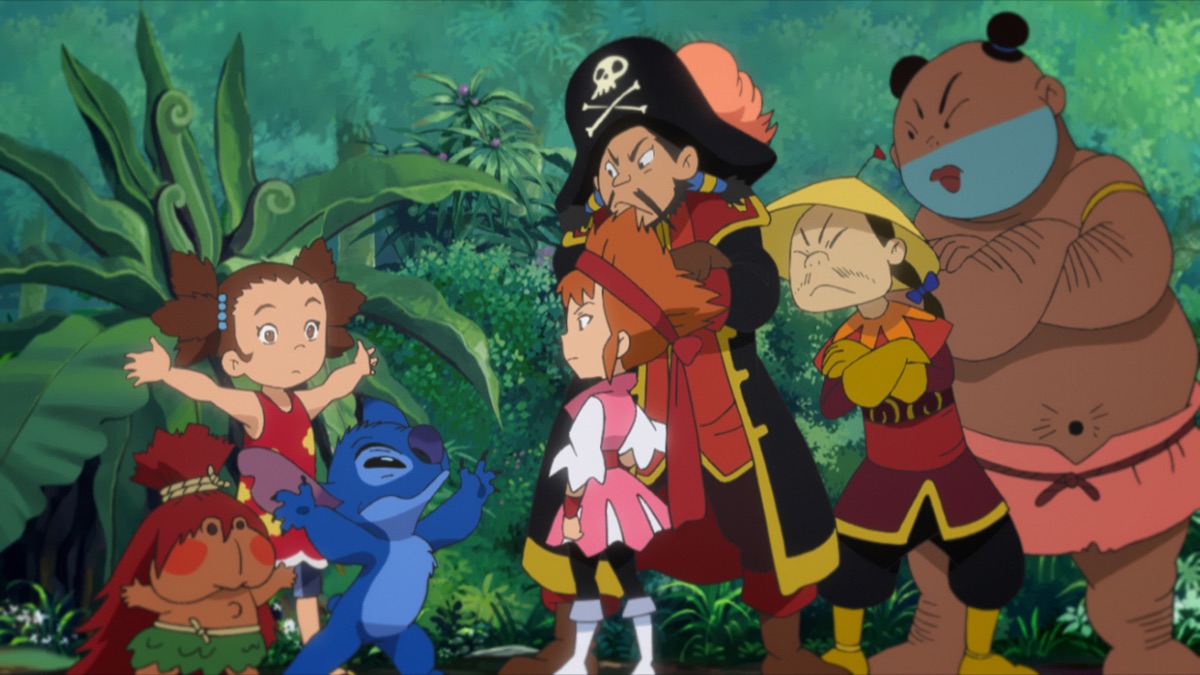
Rock and his pirate crew land on Izayoi Island seeking the Chitama Stone. They want its power to lift the legendary pirate Khan’s ship from deep underwater. Stitch becomes fascinated, puts on a diving suit, and raises the wreck before the pirates can control the operation. The recovery also releases Khan, an evil pirate sealed with the vessel for two hundred years.
My first reaction: everybody saw treasure and nobody saw a protected site
A ship resting underwater for two centuries is not a loose object waiting for the strongest person to collect it. It may be a grave, a historical site, an ecological habitat, evidence of old crimes, and part of the island’s cultural memory. Rock calls it opportunity. Stitch calls it adventure. Neither asks who has authority to disturb it.
The disaster does not begin when Khan wakes. It begins when curiosity and greed outrun consent. Raising the wreck changes the seabed and breaks whatever seal kept the pirate contained. The supernatural consequence is dramatic, but the ethical warning was already present before anybody touched the hull.
Rock’s crew arrives with a plan built entirely around taking
Rock wants the Chitama Stone because he believes island power should serve his expedition. He does not negotiate with the community, present evidence of ownership, or explain how the recovery will protect artifacts and human remains. He arrives as a pirate and behaves like one with a project proposal.
The crew’s legend of Khan gives them knowledge without granting authority. Knowing a wreck exists is not the same as owning it. Descendants, local elders, maritime agencies, historians, and the island community may hold competing claims. A responsible expedition begins by identifying those people instead of racing them to the seabed.
Rock also treats Stitch as free labor once the alien shows interest. Excitement can be manipulated. A childlike being with extraordinary strength still deserves a full explanation of the task, risks, beneficiaries, and consequences before becoming the crane.
The Chitama Stone is not public machinery for whoever arrives first
The stone is tied to Izayoi Island’s spiritual history and Stitch’s good-deed journey. Outsiders repeatedly see power and translate it into equipment. Rock wants a supernatural lifting system. That framing strips the object of community meaning and turns access into a technical question.
Obaa and other knowledge holders should decide whether the stone may be involved. Even if it can raise the ship safely, using sacred power for private salvage may violate the relationship the island maintains with it. Capability does not settle permission.
Stitch cannot grant access simply because the stone responds to him. Being part of a tradition does not make one person the owner of every community resource. His desire for adventure needs a boundary stronger than Rock’s flattery.
Stitch dives before anybody completes a risk assessment
The diving suit makes the recovery look controlled. Deep-water salvage involves pressure, entanglement, unstable structures, poor visibility, hazardous materials, and unpredictable weather. Stitch’s unusual body may reduce some risks. It does not make the environment harmless or the wreck stable.
A proper survey would map the vessel, assess the seal, document artifacts in place, and determine whether lifting is necessary. Many wrecks are preserved better underwater than after exposure to air. Raising the whole ship because it looks impressive is the most disruptive option available.
Yuna and the adults should stop Stitch long enough to explain that bravery cannot replace planning. His strength becomes dangerous when everybody assumes surviving the task means understanding it.
A sunken ship can become a living reef
Two centuries underwater allow coral, plants, fish, and microorganisms to build around a wreck. The structure may shelter breeding grounds and alter currents. Pulling it out can destroy habitat even if no supernatural pirate wakes up.
The episode can keep the ghost story while acknowledging the ordinary life attached to the hull. Jumba could scan for organisms. Local fishers could explain changes in the area. Recovery teams could relocate vulnerable life or choose partial documentation instead of removal.
Environmental harm often disappears in treasure stories because the sea is treated like an empty vault. It is an inhabited system. The wreck stopped belonging only to its former captain long ago.
Khan’s two-hundred-year seal was information, not decoration
Somebody sealed Khan with the ship. That fact should halt the recovery. A seal is evidence that earlier people identified a threat and chose containment. Rock’s legend apparently preserves the vessel’s fame while forgetting the reason nobody raised it.
Communities lose safety when they keep the glamorous half of history and discard the warning. Treasure, captain, and lost ship survive in the story. Victims, crimes, and containment procedures fade. Then a new generation mistakes prohibited access for an unsolved challenge.
Obaa’s oral knowledge could restore what the pirate version erased. Before breaking a seal, the island needs to know who placed it, what Khan did, and what conditions keep him contained. Stitch should not have to learn that after the chain begins pulling.
Khan waking does not retroactively make every pirate legend accurate
A supernatural captain emerges, confirming part of the story. That does not prove Rock owns the ship, that treasure belongs to the crew, or that every rumor about Khan is true. Historical evidence remains evidence, not a reward for the person whose gamble happened to uncover a ghost.
Khan deserves examination as a responsible actor rather than pure curse. If he harmed people and remains dangerous, containment may be necessary. If the seal distorted or punished him without process, the island needs a different response. “Evil pirate” communicates urgency but cannot replace investigation forever.
The dead and missing deserve more attention than the treasure
A wreck associated with a notorious pirate likely contains victims, crew, forced labor, stolen property, or people whose families never learned what happened. Raising it can expose remains and personal objects. Those materials require dignity, documentation, and descendant consultation.
Rock’s treasure focus repeats the original violence if valuable objects matter more than the people attached to them. The island should catalog names where possible, preserve evidence, and return stolen material to communities of origin. A gold chest does not become ownerless because the thief who carried it drowned.
Yuna needs to challenge Stitch without shaming curiosity
Stitch’s fascination makes sense. A legendary ship, diving gear, and a physical challenge align with everything that captures him. Yuna can recognize that excitement while stopping the action. Treating curiosity as stupidity would make him hide the next expedition.
The better conversation separates interest from entitlement. Stitch can explore through scans, supervised dives, historical research, and community-approved archaeology. He does not need to lift the entire site to prove he experienced it.
After Khan wakes, Stitch owes repair. He should help secure the ship, protect residents, and listen to experts rather than solving the problem through another impulsive display. Curiosity becomes mature when it accepts responsibility for what it disturbs.
The adults cannot blame Stitch for doing the labor they permitted
Rock manipulates him, but the island adults also fail to intervene before the recovery. Jumba understands technical risk. Obaa understands spiritual risk. Pleakley understands galactic law. If they watch Stitch suit up and treat it as another adventure, their silence contributes to the release.
Accountability should follow authority. Stitch made the physical choice. Rock designed the theft. Adults with knowledge failed to establish a boundary. Repair requires each person to name their part instead of making the strongest child carry the entire consequence.
Containment should protect the island without erasing history again
Once Khan returns, the heroes may want to sink the ship and recreate the old seal. That can stop immediate danger, but it also restores the silence that allowed the warning to disappear. The island needs a record accessible to future generations.
A safe archive can document the wreck, Khan’s actions, the seal, and the failed recovery. Marking the underwater site as protected would turn legend into guidance. Knowledge should survive even if the physical vessel must remain inaccessible.
If Khan can be contained without destroying him, the response should remain proportional to the threat. A ghost does not lose every right because the community failed to understand the seal before waking him.
Salvage law exists because possession is the easiest story and usually the wrong one
Rock behaves as though reaching the ship first makes the contents his. Real recovery questions are slower. The vessel may belong to a government, descendants, an insurer, a community whose property was stolen, or nobody under a simple modern category. Location, nationality, age, cargo history, and the circumstances of sinking all matter.
The Chitama Stone makes physical recovery unusually easy, which increases the need for governance. When technology removes cost, it can also remove the practical barrier that once protected vulnerable sites. The ability to lift a wreck in minutes does not eliminate conservation, documentation, or ownership review. It makes impulsive destruction more likely.
Pleakley could bring galactic law into the argument without flattening local authority. The island should not surrender decisions to an outside bureaucracy, and pirates should not exploit uncertainty as permission. A temporary protection order would keep the site stable while affected groups establish a process.
The spectacle of raising the ship hides the quiet work that keeps history intact
Television loves the chain tightening and the hull breaking the surface. Conservation begins after that image. Waterlogged wood can crack, warp, and collapse as it dries. Metal corrodes differently in air. Textiles and paper can disappear when removed without controlled treatment. Every second of careless exposure can destroy evidence that survived underwater for generations.
Jumba’s technology could stabilize the vessel, but he needs historians and conservators to decide what preservation means. Strength retrieves an object. Stewardship keeps its information alive. Stitch should learn that the less exciting work may be the part that actually respects the discovery.
Rock owes restitution, not another map toward the next treasure
Pirate stories often let the opportunist escape after helping defeat the larger monster. Rock’s crew initiated the operation for private gain. They should fund environmental assessment, artifact conservation, and damage repair. Any recovered property should enter a transparent process instead of their cargo hold.
Restitution also means sharing information. Maps, legends, and records the crew used belong in the investigation. Withholding them to preserve future profit would leave the island vulnerable to another attempt.
What the episode gets right
“Raise the Ghost Ship!!” understands that Stitch’s best quality and recurring danger come from the same place. He sees a task everyone calls impossible and wants to help. That energy can rescue people. It can also hand a pirate exactly the force needed to break a two-century safeguard.
The episode gives the action a consequence rooted in history rather than random monster arrival. Khan was already there. The island’s problem begins when present-day characters disturb something earlier generations contained. The ghost belongs to the choice, not merely to the genre.
What I wanted pushed further
I wanted Obaa’s knowledge before the dive. A sacred stone, a legendary wreck, and a supernatural seal sit directly inside her area of responsibility. Let her explain what the pirate story omitted and force Rock to face the island as a community rather than an obstacle.
I also wanted the wreck treated as an archaeological and ecological site. Even a brief survey would establish that raising it has consequences beyond Khan. Treasure adventures become richer when history contains people, habitats, and ownership disputes instead of decorative old wood.
The receipt I am keeping
The receipt is Stitch pulling a legendary ship upward while everybody celebrates the impossible feat. The image looks heroic until the seal breaks. Strength completed the wrong task perfectly.
That distinction should follow him. Helping is not whatever uses his power most dramatically. Good judgment includes asking who requested the labor, who benefits, what the environment loses, and why somebody wanted the object left alone for two hundred years.
Final verdict
“Raise the Ghost Ship!!” works as a warning about curiosity without stewardship. Rock wants treasure, Stitch wants adventure, and the island’s history becomes equipment for both desires. Khan’s return makes the warning supernatural, but the ethical failure is ordinary: nobody asked permission before disturbing a protected place.
The best ending would secure Khan, document the truth, restore the seabed, return stolen property, and make Rock pay for more than a comic defeat. The ship should leave a record behind. Otherwise, somebody will hear “legendary pirate treasure” in another two hundred years and forget the part where the ocean was keeping everyone safe.
Keep watching
Return to Season 2 Episode 4 or open the complete Stitch! episode directory.