
STITCH! · ORIGINAL SERIES · EPISODE 25 · REACT
Stitch! Episode 25: Stitch vs. Hämsterviel, Part Two
Hämsterviel reduced Stitch below usefulness. Yuna and the island rescued the person his power model could not see.
The episode record before the universe gets saved by everything the villain called weak
Episode: 25
Japanese title: 対決! スティッチ vs. ハムスターヴィール パート2
English card title: Stitch vs. Hämsterviel, Part Two
Original Japanese broadcast: March 25, 2009
Production branch: Stitch!, first Japanese television season
Japanese voices central here: Kōichi Yamadera as Stitch, Shōzō Iizuka as Jumba, and Kōji Ochiai as Hämsterviel
Where to watch: Apple TV identifies this episode as Season 1, Episode 25. Availability and packaging can differ by region.
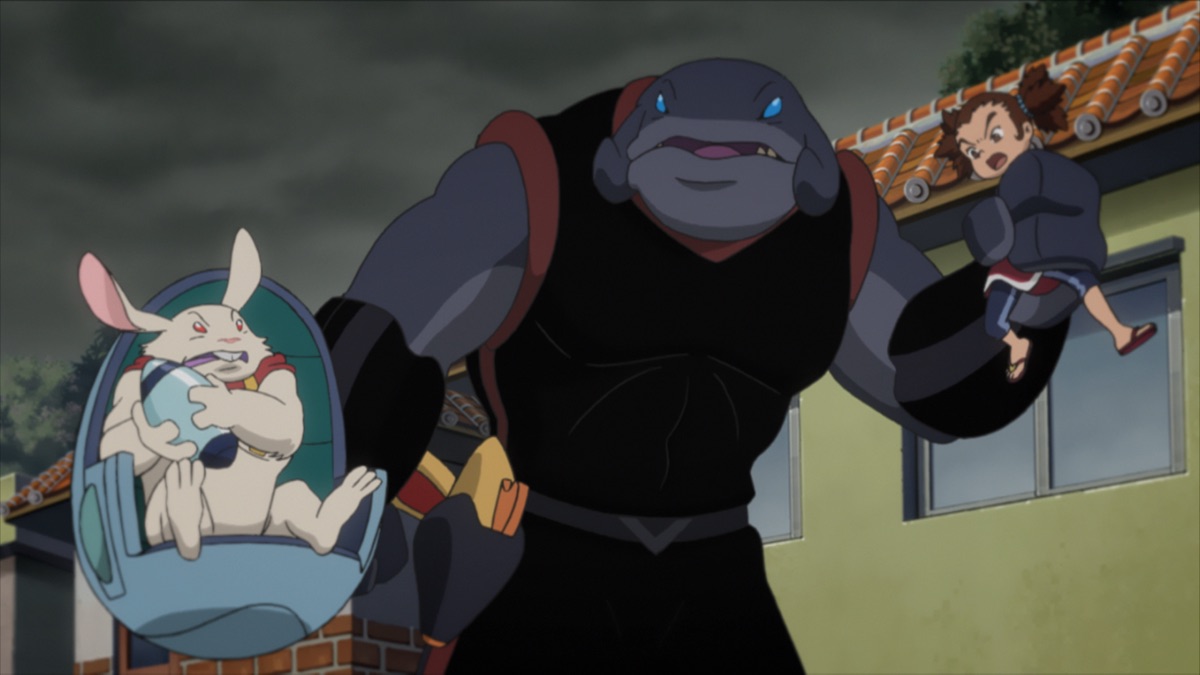
Hämsterviel has captured and reduced Stitch, contained him inside a football-shaped prison, manipulated Jumba, and drained the Chitama Stone toward universal power. Yuna must reach Stitch while Izayoi’s community operates without the abilities it normally depends upon. The second half turns rescue into resistance: free the captive, break Hämsterviel’s control, stop the extraction, and restore a living island before concentrated power becomes permanent rule.
My first reaction: Yuna has to save Stitch because the season was always about mutual rescue
Stitch usually possesses the spectacular body. He catches falling objects, breaks restraints, outruns threats, and places himself between Yuna and danger. Shrinking and containing him removes those advantages. Yuna cannot wait for his strength to return before acting. Her knowledge, relationships, nerve, and ability to coordinate people become the rescue technology.
That reversal does not make Stitch helpless as a character. It reveals that accepting rescue is part of belonging. He once survived through self-sufficiency and destruction. Now other people risk themselves because his life matters beyond utility. The prison diminishes his body, while the community’s response proves Hämsterviel cannot diminish his personhood.
The football-shaped container is humiliation disguised as containment
Hämsterviel does not simply restrain Stitch. He shrinks him and places him in an object with a ridiculous shape, turning danger into display. Humiliation supports domination by making the captive appear manageable, unserious, and available for handling. The villain can hold the prison, show it to others, and pretend the person inside has become property.
Yuna’s rescue should protect dignity as well as physical safety. Do not treat tiny Stitch as a toy, joke about his fear, or make him perform gratitude while still disoriented. Explain what happened, restore normal scale carefully, and let him participate in the next decision. Freedom means returning control over his body, not transferring the container to friendlier hands.
A powerless community still contains skills Hämsterviel never counted
The yōkai and experiments lose signature abilities when the stone is drained. Hämsterviel assumes that power loss produces irrelevance. He has organized the world around outputs, so a being without a spectacular function disappears from his calculations. That blind spot creates the resistance’s opening.
Kijimunaa knows routes. Yuna understands people. Obaa holds memory. Pleakley improvises. Angel can read Stitch’s emotional state even without relying on song. Sparky and Felix remain individuals with experience, bodies, and loyalty beyond their powers. The finale should let those ordinary capacities build the plan. Restoring power may finish the fight, but community begins winning before restoration.
Yuna’s leadership needs decisions, delegation, and consequences
Calling Yuna brave is insufficient. Leadership becomes visible through choices. Who approaches the prison? Who helps Jumba? Who protects residents from ongoing disasters? Which route avoids Hämsterviel’s attention? What happens if the stone cannot be restored immediately? She should distribute tasks according to knowledge rather than simply shout encouragement beside an action sequence.
Consequences make the choices meaningful. A route may close, an ally may need evacuation, or a rescue attempt may expose somebody else. Yuna can revise without treating adaptation as failure. Her strength is not perfect command. It is the ability to keep people connected to purpose when the original plan breaks.
Jumba needs rescue from control and a path into repair
Hämsterviel weaponized Jumba’s expertise against the island. Freeing him interrupts the extraction and returns crucial technical knowledge. The community must treat him as a violated person, not a convenient switch that becomes good again. He may be confused, injured, ashamed, or afraid of what his hands did while controlled.
Repair can begin once immediate safety returns. Jumba should explain the device, help restore the stone, and accept community oversight over any future access. Those acts do not confess voluntary guilt. They acknowledge that recovery uses the knowledge Hämsterviel exploited. Care and accountability can share the same room.
Stopping Hämsterviel is not the same as restoring Izayoi
The villain’s defeat ends active extraction. Energy does not necessarily return without damage. Homes have endured disasters, habitats have shifted, and beings who lost abilities may require time to recover. The stone itself may be altered. A satisfying ending must show restoration as work rather than a flash that erases every consequence.
Residents should inspect structures, care for injuries, reconnect displaced families, and monitor the island’s supernatural ecology. Jumba can support technical repair while local stewards decide what happens near the stone. Celebration belongs after that labor begins, not instead of it. Victory without repair would leave Hämsterviel’s costs hidden under music.
The Good Deed Counter has reached the end of its usefulness
Hämsterviel followed the counter to the Chitama Stone because the device made moral reward look extractable. Stitch has also spent a season reading goodness through points. The finale should retire or transform the mechanism. Keeping the same scoreboard after catastrophe would ignore the lesson written across the island.
Stitch no longer needs a display to prove that relationships changed him. He has friends willing to act when he cannot produce strength, and he has repeatedly chosen care when no number could capture the full consequence. If a wish remains available, refusing transactional power may become the clearest deed the counter never knew how to measure.
The wish should answer desire without rewarding domination
What Stitch wishes for matters because Hämsterviel’s plot assumes ultimate power is the obvious goal. Stitch may once have agreed. Experience should complicate that desire. Power did not create home. It could not force trust, repair absence, or guarantee that people stayed. The season’s relationships gave him what domination promised badly.
A mature wish might restore the island, return powers to their owners, free everyone under Hämsterviel’s control, or protect the stone from extraction. The choice should not make Stitch a benevolent ruler. Good intentions do not solve concentrated authority. The best use of ultimate power may be dispersing it back into the community and giving up control.
Hämsterviel’s defeat needs to dismantle the logic, not humiliate the body
Hämsterviel is physically small, and comedy often punishes him through size-based humiliation. The finale should target conduct instead. He coerced Jumba, captured Stitch, drained a sacred source, endangered residents, and attempted universal rule. Those actions justify containment, restitution, and loss of access to the systems he abused.
Mocking his stature would repeat the same equation of body and worth that the series challenges elsewhere. He is dangerous because of choices, planning, and disregard for other lives. Accountability becomes stronger when it names the actual harm. A tiny villain can face enormous consequences without the story suggesting smallness itself is shameful.
Gantu’s role should reflect the cost of serving somebody who treats everyone as equipment
Gantu often follows Hämsterviel through a mixture of employment, loyalty, frustration, and limited alternatives. The extraction plot reveals where that service leads. If Hämsterviel can control Jumba and containerize Stitch, Gantu should understand that usefulness offers no lasting protection. A subordinate remains safe only while producing the desired result.
Part Two can give Gantu a decision rather than using him as another obstacle. Does he maintain the prison, ignore an opening, or resist the plan once the island’s destruction exceeds the mission? A small act would not erase previous harm. It could establish that domination fractures when workers stop lending it hands.
Angel should participate in freeing Stitch without becoming romantic motivation
Angel’s relationship with Stitch gives her a personal stake. The previous episode also placed her body at the center of his rescue. Letting her act here creates reciprocity. She can contribute knowledge, infiltration, distraction, or emotional communication without serving only as proof that Stitch is loved.
Her choices should remain distinct from Yuna’s. Two people caring about Stitch do not need jealousy to organize them. Yuna may lead the operational rescue while Angel handles a risk suited to her experience. Collaboration allows both relationships to exist without turning a captive person into a prize between them.
The island itself should reject the fantasy of ownership
Hämsterviel wants to pull universal rule from a stone embedded in Izayoi’s living systems. The island’s instability demonstrates that the source cannot be separated cleanly from place. Restoration can make that relationship active. Weather, yōkai, landscape, and the stone may respond once extraction stops, not as weapons owned by Yuna but as parts of a system rebalancing.
That distinction prevents the heroes from becoming new owners. They protect the stone because they belong in relationship with the island, not because victory transfers title. Stewardship includes limits, shared authority, and acceptance that some power should remain unavailable to personal ambition.
The finale should remember residents without names
Central characters receive rescue scenes and dialogue. Ordinary residents experience the disasters too. Families sheltering, shopkeepers protecting neighbors, and children helping powerless yōkai make the victory communal. Their presence prevents the universe-saving plot from floating above the place supposedly at stake.
Afterward, those residents deserve information. What happened to the stone? Is another extraction possible? Who will monitor recovery? Heroes often keep dangerous knowledge within a small circle. Hämsterviel exploited secrecy and concentrated access. A safer future requires enough transparency for the community to participate in protection.
Part Two must pay off the season without pretending growth is finished
Stitch can reject the old wish logic, accept rescue, and choose community while remaining impulsive tomorrow. Yuna can lead the crisis and still struggle with her father’s absence. Jumba can repair the machine and retain complicated habits. A finale should demonstrate movement, not personality replacement.
That openness supports future seasons. The counter’s arc can close while relationships continue. New threats will test different weaknesses. The first season earns completion by proving that Stitch’s place on Izayoi no longer depends on a number, a power level, or perfect behavior. Belonging has become a practice the community chooses together.
What the episode gets right
Episode 25 turns captivity into a test of mutual dependence. Stitch cannot use the strength that made him famous, and the people around him must act under reduced power. Yuna becomes the rescue center. That reversal pays off a season where he repeatedly helped others and slowly became somebody others would organize themselves to save.
The showdown also gives the Chitama Stone plot a moral resolution. Hämsterviel’s concentrated power creates collapse. Collective action rebuilds the possibility of balance. The opposition is larger than hero versus villain. One model owns and extracts; the other protects relationships no single person can command.
What I wanted pushed further
I wanted a visible community decision about the stone after the battle. A guardian, council, shared protocol, or explicit restriction would show that everyone learned from the access failure. Returning the stone to its old condition without changing stewardship leaves the same vulnerability waiting for another villain.
I also wanted Stitch to speak clearly about the counter. Does he still want the original wish? Does he resent the device, thank it, or recognize that the counting distorted his choices? The season built so much around that number that emotional closure deserves more than the display reaching its target.
The receipt I am keeping
Hämsterviel wins the power contest and still misunderstands power. He can drain the stone, weaken supernatural beings, capture Stitch, and make himself the largest force in the room. He cannot make Yuna abandon him, stop powerless allies from coordinating, or convert coerced labor into loyalty. His model breaks at the point where people choose one another.
My receipt stays with tiny Stitch inside the container. The image looks like ultimate defeat because his body has been reduced below usefulness. The rescue answers that insult. Yuna reaches him because personhood never depended on scale, strength, or output. He mattered while unable to give anybody a single spectacular thing.
Final verdict
“Stitch vs. Hämsterviel, Part Two” completes the season when rescue becomes redistribution. Free Stitch, release Jumba, return power to the beings and place from which it was taken, and refuse to build a new ruler from the recovered energy. Yuna’s leadership proves that ordinary human agency belongs at the center of a cosmic crisis.
The victory earns me if Izayoi receives repair, the counter loses authority over goodness, and the stone returns to community stewardship. Hämsterviel wanted a universe that moved through one owner. The finale answers with a home sustained by many people, including the frightened, powerless, injured, and unnamed. That network is not a sentimental bonus. It is the power he could never extract.
Keep watching
Return to Episode 24, open the Stitch! anime hub, or continue to Episode 26: Piko’s Challenge when published.