
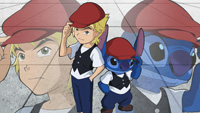
STITCH! · ORIGINAL SERIES · EPISODE 17 · REACT
Stitch! Episode 17: Stitch Makes His Idol Debut?!
Tetsuo hired a novelty villain. Stitch showed up as a scene partner, and suddenly the star could not share the frame.
The episode record before somebody mistakes top billing for ownership
Episode: 17
Japanese title: スティッチ、アイドルデビュー?!
English card title: Stitch Makes His Idol Debut?!
Original Japanese broadcast: January 28, 2009
Production branch: Stitch!, first Japanese television season
Japanese voices central here: Kōichi Yamadera as Stitch and Motoko Kumai as Yuna Kamihara
Where to watch: Check the official Disney+ catalog available in your country and verify the Japanese production title because its streaming order may differ.
A child actor named Tetsuo arrives on Izayoi for production of the television show Kid Cop. He recruits Stitch to play a villain, giving the experiment a chance to perform in front of cameras and a crowd. Stitch prepares seriously and begins attracting attention. Tetsuo responds with dirty tricks designed to keep Stitch from succeeding. The effort backfires when the audience recognizes the sabotage and boos the star who assumed their affection belonged to him by contract.
My first reaction: Tetsuo wanted a prop and accidentally hired a performer
Tetsuo’s original invitation carries an unspoken hierarchy. He is the trained child star. Stitch is the novelty villain whose strange body can make the hero look impressive. The arrangement works only while Stitch remains useful and controllable. Once the audience responds to Stitch as a personality, Tetsuo no longer sees a scene partner. He sees theft. That reaction exposes how little collaboration existed inside the offer from the beginning.
A generous performer understands that a scene becomes better when the other person brings something alive to it. Tetsuo has learned a harsher model. Attention is scarce, billing establishes value, and another person’s successful moment reduces his own. Stitch does not need to scheme against him. Being sincere, strange, and visibly excited is enough to become dangerous. The episode turns jealousy into sabotage because Tetsuo cannot imagine sharing a frame without losing the identity built around being its center.
Child stardom is labor wearing a cute costume
Tetsuo is still a child even when the production treats him like a brand. He arrives with a role, an audience expectation, professional habits, and fear about replacement. Somebody taught him to measure security through applause. Somebody benefits when he remains charming, available, and competitive. The episode can hold him accountable for cruelty while noticing the industry structure that made another childlike performer feel like an existential threat.
That context does not excuse the dirty tricks. It explains why the fear arrives so quickly. A child whose livelihood or family approval depends on popularity may experience a crowd turning toward Stitch as danger rather than ordinary enthusiasm. Adults on the set should recognize that pressure, establish boundaries, and protect both performers. Leaving Tetsuo to manage fame through instinct practically guarantees that insecurity will become aggression.
Stitch prepares because play matters to him
Stitch’s enthusiasm is easy to dismiss as another burst of chaotic curiosity. I read it as commitment. He receives a role and wants to do it well. Acting gives his destructive design a safe vocabulary. He can threaten, roar, chase, and perform danger while everybody understands the frame. The villain role turns traits once used to condemn him into part of a communal game. That is a meaningful opportunity for a character still learning how his body can belong.
Preparation also makes the sabotage hurt. Stitch is not wandering through the production and stealing focus by accident alone. He accepts the task, practices, and invests emotionally in the outcome. Tetsuo attacks that effort because it produces visible results. The conflict is no longer famous child versus amusing alien. It becomes one worker undermining another after inviting him onto the job.
The villain receives love because audiences are allowed to surprise the production
A television set tries to organize response. The hero receives the entrance, the best angle, and the story’s permission to win. Audiences still form attachments that nobody planned. They notice timing, vulnerability, chemistry, and the performer whose joy reaches beyond the script. Stitch can enter as a villain and leave as the person viewers remember. That does not mean the show failed. It means meaning remained alive after production decisions ended.
Tetsuo treats affection as something the script should distribute according to rank. When viewers resist that arrangement, he blames Stitch. The better question belongs to the performance and the environment. Why does Stitch feel fresh? Why does Tetsuo feel guarded? What pressure has made the star unable to enjoy the scene? Popularity cannot be commanded, but a healthy set can make room for what the audience discovers.
Sabotage is a confession about confidence
Tetsuo’s tricks announce that he does not trust his own work to survive beside Stitch. Every attempt to weaken the newcomer makes that insecurity more visible. If he believed the hero performance could stand, he would let the scene happen. Instead, he tries to control conditions so completely that success becomes meaningless. Winning after disabling a scene partner would prove only that the system protected him.
This is why the audience’s boos matter. They are responding to conduct, not choosing a new permanent idol through some objective measurement of talent. Tetsuo breaks the agreement between performer and viewer. The crowd entered the fiction willing to cheer a hero. Once they recognize that the actor is humiliating somebody outside the honest needs of the scene, the moral alignment reverses. Stitch’s villain costume cannot make him the villain when the star behaves cruelly in plain sight.
Yuna knows the difference between Stitch causing trouble and trouble finding Stitch
Yuna has enough experience with Stitch to recognize when his chaos is voluntary. That matters on a set where adults may assume the alien ruined the production because his reputation makes him the easiest explanation. She can look at his preparation, the sequence of failures, and Tetsuo’s behavior without automatically defending every action Stitch takes. Friendship becomes useful evidence rather than blind loyalty.
Her job is not to turn the conflict into a fan war. Tetsuo does not need Yuna leading a crowd against him. He needs the sabotage stopped, Stitch protected, and adults willing to address what happened. Yuna can insist on fairness while leaving room for a child actor to recover from a public mistake. Accountability should interrupt harm and create a path back. Humiliation alone teaches people to hide their methods better.
The adults on set are responsible for more than keeping the camera rolling
A professional production working with children and an inexperienced alien performer should have supervision, consent, rehearsal, and clear safety limits. If Tetsuo can repeatedly interfere without an adult noticing, the set has failed both children. The crew cannot celebrate Stitch as good footage while leaving him exposed to harm. Nor can they build Tetsuo into a star and act surprised when he believes the production will protect his status at any cost.
Adults often praise precocious professionalism because it makes their own work easier. The child arrives on time, hits a mark, repeats a line, and carries financial pressure with a smile. That competence can hide distress. Tetsuo’s jealousy should trigger intervention before the crowd becomes the first institution willing to tell him no. A responsible set would pause, investigate, repair the scene, and make the standards of collaboration explicit.
Fame turns affection into a scoreboard if nobody teaches another language
Tetsuo appears to understand applause numerically. More for Stitch means less for him. That framework makes every colleague a competitor and every shared success unstable. It also places his self-worth in the hands of a crowd whose attention will always move. A child cannot build emotional safety from ratings, cheers, or the promise that the next performance will restore whatever the last one took away.
He needs relationships where nobody requires him to be the star. He needs adults who care when the episode wraps, peers who can disagree without threatening his livelihood, and work that allows mistakes without turning them into identity. The story may only hint at that need, but it changes how I read his cruelty. He is responsible, and he is also showing us a child who has learned a brutal definition of relevance.
Stitch’s history makes the role more complicated than a cute casting gag
Stitch was created to perform destruction. Other people decided that purpose, judged him through it, and tried to contain him when he exceeded their control. A villain role could repeat that pattern if the production values him only as a dangerous-looking object. His joy changes the arrangement. He chooses to perform, practices the part, and uses the image of danger without surrendering his personhood to it.
Tetsuo’s sabotage threatens that agency. Once again, somebody wants Stitch powerful enough to serve a plan but small enough socially to remain manageable. The moment Stitch develops his own relationship with the audience, control becomes the priority. That echo gives the episode more emotional weight than a celebrity parody. Stitch is learning that acceptance can become conditional whenever another person benefits from defining his place.
The crowd’s boos deliver accountability, but they cannot finish the repair
Public rejection stops Tetsuo from controlling the narrative. He cannot sabotage Stitch and still assume the hero label will protect him. That consequence is satisfying because the audience sees through the performance. It also risks reducing the lesson to a popularity reversal. If Stitch becomes the new favorite and Tetsuo becomes disposable, the industry logic remains untouched. Only the winner changes.
Repair requires more than moving applause. Tetsuo should admit what he did, hear how it affected Stitch, and accept limits on future behavior. Stitch should decide whether he wants another scene with him. The crew should examine how the sabotage continued. The audience can signal that cruelty broke trust. The people involved must do the slower work of rebuilding it.
What the episode gets right
Episode 17 understands that jealousy becomes clearest through action. Tetsuo does not merely glare while Stitch succeeds. He interferes, making the ethical problem visible enough for a young audience to follow. Stitch’s preparation gives the conflict stakes, and the crowd’s response separates scripted heroism from real conduct. The person wearing the villain role behaves with more integrity than the star positioned as good.
The entertainment setting also fits the franchise. Stitch has always lived between spectacle and personhood. His body attracts attention before people understand him. A television production intensifies that condition, then asks whether attention can become recognition rather than exploitation. The episode finds comedy in the cameras while preserving the discomfort of somebody being invited because he looks useful.
What I wanted pushed further
I wanted more evidence of what Tetsuo’s professional life looks like away from the crowd. Who manages him? Who praises him only after a successful take? Who taught him that a guest performer becoming popular is an emergency? One quiet scene could turn a familiar jealous-star plot into a sharper criticism of the adults who package children as dependable entertainment products.
I also wanted Stitch to speak about the betrayal in his own terms. He may be angry about the tricks, embarrassed that preparation was mocked, or confused because Tetsuo issued the invitation. Letting him name the injury would keep the resolution from belonging entirely to the audience. The boos validate him, but his experience should remain central even if nobody in the crowd had noticed.
The receipt I am keeping
Tetsuo casts Stitch as a villain because he expects the role to reinforce his own hero status. Stitch arrives with too much personality for that arrangement. The audience responds, the star panics, and sabotage reveals who actually threatens the scene’s fairness. I love the reversal because it is earned through conduct rather than costume. The episode lets viewers revise their allegiance after receiving new evidence.
My receipt stays with Stitch’s preparation. He takes the opportunity seriously even though the production initially treats him as a novelty. That effort gives him authorship over the performance. He is not somebody’s strange prop. He is a scene partner whose choices reach the audience. Tetsuo’s failure begins when he refuses to recognize that person standing beside him.
Final verdict
“Stitch Makes His Idol Debut?!” is a fame story about ownership disguised as a television-set adventure. Tetsuo believes the role, billing, and audience belong to him. Stitch’s unexpected appeal exposes how fragile that certainty is. The dirty tricks are cruel, but they also function as a confession: the star does not believe his own work can share space with somebody new.
The episode lands when the boos reject behavior instead of appointing a replacement idol. Stitch deserves protection, credit, and the freedom to decide whether he performs again. Tetsuo deserves consequences and adults capable of helping him build a self beyond applause. A good scene has room for more than one person to be alive inside it. That shared energy is the work, even when it surprises everybody holding the script. Anybody who has to sabotage that life was never protecting the work.
Keep watching
Return to Episode 16, open the Stitch! anime hub, or continue to Episode 18: Stitch’s Singing Pride when published.