
STITCH! · ORIGINAL SERIES · EPISODE 4 · REACT
Stitch! Episode 4: The Paint Yōkai Muun
Yuna does not owe Stitch a smile, Muun does not owe the forest another painting, and a magical brush does not turn a bad assumption into truth.
The episode record before the drawings start moving
Episode: 4
Japanese title: ペイント妖怪むうん
English card title: The Paint Yōkai Muun
Original Japanese broadcast: October 22, 2008
Production branch: Stitch!, first Japanese television season
Japanese voices central here: Kōichi Yamadera as Stitch and Motoko Kumai as Yuna Kamihara
Where to watch: Check the official Disney+ catalog in your region and verify the Japanese production title because its streaming order may be repackaged.
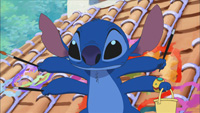
Piko draws an insulting portrait of Yuna during art class and other students laugh. Yuna stays angry after school while Stitch tries to make her smile. In the forest, the paint yōkai Muun has lost interest in creating art even though other yōkai anticipate his pictures. His magical brush, capable of turning drawings into reality, flies away while he carelessly swings it. After Stitch and Yuna argue, Stitch finds the brush on the beach. He begins drawing without knowing what the tool can do, and emotional repair becomes a physical mess.
My first reaction: Yuna is allowed to be mad
The episode starts with a social injury adults love minimizing. Piko draws Yuna in a way meant to provoke laughter, the class participates, and suddenly the harmed child is expected to recover on everybody else’s schedule. “It was a joke” does not remove the choice to turn somebody’s appearance into group entertainment. Yuna’s anger is not the disruption. The humiliation caused the disruption. Her refusal to smile on command is a boundary.
Stitch wants her happy because her mood affects him and because he cares. Both can be true. His attempts fail when he treats the visible expression as the entire problem. If he can force a laugh, perhaps the injury disappears. That is emotional management, not listening. Yuna needs recognition that Piko crossed a line. She may later want comfort, distraction, confrontation, or time. Stitch has to learn that friendship does not grant him control over which response comes first.
A portrait can be art and still be a weapon
Drawing is not automatically gentle because it uses paper instead of fists. A caricature can criticize power, reveal hypocrisy, or create affectionate exaggeration. It can also isolate a child, magnify an insecurity, and give a crowd a shared object for ridicule. Context decides what the image does. Piko’s intent, the classmates’ laughter, and Yuna’s reaction make the social function clear. The portrait is being used against her.
The episode creates a useful connection between representation and power before the magical brush appears. Images shape how a person is seen. Once a group accepts the insulting version, Yuna has to fight both the drawing and the social story built around it. Muun’s brush later makes pictures physically real, but Piko’s ordinary picture already produces real consequences. Magic increases the scale. It does not invent the harm.
Stitch tries jokes because jokes are the language he trusts
Stitch understands noise, physical comedy, faces, pranks, and sudden spectacle. When Yuna is upset, he reaches for the skills that normally change the atmosphere. That impulse contains affection. He notices her pain and wants to help. The problem is that he measures success by whether she performs happiness for him. Every failed attempt becomes frustrating because he thinks effort should purchase a smile.
Care requires curiosity before technique. What happened? What part hurt? Does Yuna want company? Does she want him to stop? Those questions are harder than a gag because the answers may leave Stitch unable to fix anything immediately. He has to sit beside an emotion that is not about him. For a character built to act, waiting can feel like failure. Episode 4 begins teaching that respectful presence is also action.
Muun is burned out, and everybody around him still wants output
The forest yōkai gather because Muun’s paintings have become an event. Their excitement sounds supportive until we notice he no longer wants to paint. Audience desire becomes pressure. A creator who once produced joy is expected to keep producing because other people built a ritual around the work. Muun’s boredom, exhaustion, or creative numbness receives less attention than the missing entertainment.
I wish the episode stayed with him longer because this is painfully current. Artists get told they are lucky to create, as if luck cancels fatigue. Fans ask for another drawing, chapter, album, episode, update, or commission without seeing the person behind the schedule. Muun swings the brush carelessly because the tool no longer feels like a gift. It feels like a demand he cannot escape.
A magical tool does not solve creative burnout
Muun owns a brush that can make art literally come alive, yet he is tired of using it. That detail destroys the fantasy that better technology automatically restores inspiration. Power can increase production while reducing the creator’s relationship to the work. If every drawing becomes an event with consequences, the pressure may become worse. The magical feature raises the cost of experimentation because a rough idea can walk out of the page.
The brush also exposes why tools need context. In Muun’s hands, it belongs to a practice, history, and understanding of its effects. In Stitch’s hands, it becomes immediate possibility without training. The object has no built-in ethics. It cannot ask whether a drawing should exist, whether the subject consents, or whether the creator understands what will happen. Capability arrives before judgment, which is usually where trouble starts.
The lost brush is not abandoned responsibility
Muun does not deliberately gift the brush to whoever finds it. It flies away while he is disengaged. Stitch discovers it and acts as if possession proves permission. That assumption is familiar across the franchise. Jumba creates beings, institutions seize them, strangers assign them uses, and objects move into new hands without anyone asking who has authority. The brush repeats the same ownership problem in miniature.
Finding a powerful tool creates a duty to pause. Who made it? Who lost it? What can it do? Who could be harmed? Stitch skips every question because drawing looks fun and he is emotionally activated after arguing with Yuna. The episode combines unprocessed feeling with unknown technology, then acts surprised when the combination becomes unstable. I am not surprised. I am collecting the receipt.
The fight between Yuna and Stitch matters more than the magical chaos
Their argument grows from failed care. Stitch wants credit for trying. Yuna wants him to understand that trying does not erase her right to remain angry. Each one feels rejected. He hears that his affection is unwanted. She hears that her feeling is inconvenient. Neither has enough language yet to separate the relationship from the moment. That is believable friendship writing.
A weaker episode would make Yuna apologize for being difficult and reward Stitch’s intention. Episode 4 allows the conflict to create distance. Stitch goes to the beach carrying frustration. The brush then gives that frustration a physical outlet. His drawings are not neutral doodles. They come from a person who wants control back after failing to control a friend’s mood. The magic externalizes the emotional mistake.
Making an image real does not make it true
The brush turns representation into matter, but a drawing still contains the artist’s assumptions. If Stitch draws a solution based on a misunderstanding, the result can be vivid, active, and completely wrong. This is one of the episode’s strongest ideas. Realistic output is not accurate understanding. Movement does not equal truth. A powerful image can reproduce an error with greater confidence.
That matters far beyond fantasy paint. Photographs can mislead through framing. Animation can turn stereotypes into lovable designs. Generated images can produce polished scenes from incomplete prompts. A technically impressive result may hide the absence of consent, context, or cultural knowledge. Muun’s brush makes the warning visible: the more powerful the tool, the more expensive an unexamined assumption becomes.
Piko’s role cannot vanish just because bigger trouble arrives
Once magical creatures or drawings cause chaos, the original classroom harm risks becoming a forgotten setup. Piko drew the portrait. Other children laughed. Yuna carried the humiliation home. Stitch’s mistakes may dominate the action, but they do not cancel the first injury. Resolution should return to the social source rather than asking spectacle to wash it away.
I want accountability scaled correctly. Piko does not need cosmic punishment. She needs to understand what she did, hear that Yuna was hurt, and stop using the group as a weapon. The classmates need to recognize participation. Yuna should not be required to accept an apology immediately or laugh at herself to prove resilience. Children deserve the same dignity adults demand when their public image is manipulated.
Muun and Yuna are both being asked to perform for an audience
The episode quietly pairs them. Yuna is expected to turn humiliation into a smile so the people around her can feel comfortable. Muun is expected to turn creative exhaustion into another painting so the yōkai can enjoy the event. Both face an audience that wants a particular output and treats refusal as a problem. Their emotions become obstacles to everybody else’s preferred experience.
That parallel gives the story more depth than a runaway-brush plot. Creative labor and emotional labor share a boundary: another person cannot demand the performance because it would make the room nicer. Yuna does not owe cheerfulness. Muun does not owe inspiration. Support begins by recognizing the refusal instead of designing a better method to extract the desired result.
The good deed counter should not reward cleanup without examining cause
If Stitch causes the magical emergency and then helps stop it, does the counter rise? This season must answer carefully. Repair matters. People should fix what they damage. But repair is an obligation, not automatically a bonus deed that lets someone profit from creating the crisis. Otherwise Stitch can game the system by causing recoverable harm and collecting credit for the rescue.
The moral growth is in recognizing his role without demanding praise. Return the brush. Help contain the drawings. Apologize to Yuna. Listen to Muun. Accept that the episode may end without the cheerful response he wanted at the beginning. If the counter records anything, it should be secondary. The relationships should determine whether repair has actually begun.
What Muun needs is permission to change his relationship with art
Recovering the brush does not solve his burnout. Handing it back and expecting tomorrow’s show repeats the problem. Muun may need rest, privacy, different subjects, a new medium, fewer spectators, or the freedom to stop. The episode treats the lost tool as the central emergency because its magic threatens everyone. His exhausted relationship with creation is the quieter emergency left behind.
I would love a later story where Muun paints something nobody sees, teaches somebody else, destroys a failed piece without guilt, or decides the forest gathering happens less often. Creative recovery cannot be measured only by restored output. Sometimes healing means making less. Sometimes it means making badly without consequence. Sometimes it means discovering that the audience survived disappointment.
The Japanese branch earns its setting when folklore shapes the moral problem
Episode 3 introduced Kijimunaa through home and unfair competition. Episode 4 introduces Muun through art, audience, and a magical object. These plots feel specific to the branch because local spirit language is doing narrative work. Stitch is not meeting a renamed experiment with a single destructive function. He is entering a world where nonhuman persons already have relationships, practices, and obligations independent of Jumba.
The responsibility remains. “Yōkai” cannot become a bucket for any cute supernatural character the writers invent. The show blends original creatures with references drawn from Japanese and Ryukyuan traditions. Viewers should know which is which. The fiction can expand its island mythology while staying honest that commercial invention and living folklore are not identical sources.
What the episode gets right
Episode 4 respects Yuna’s anger longer than I expected. It connects ridicule to representation, gives Stitch a caring motive that still produces controlling behavior, and makes magical art carry the assumptions of its user. Muun’s burnout adds a second emotional story about audiences wanting a performance from someone who has nothing left to give. Those threads belong together.
The episode also allows conflict inside the new friendship. Yuna and Stitch do not become healthy because the title song says they are partners. They misunderstand, irritate, and hurt each other. Repair will require more than defeating a creature. That friction makes their bond more believable and gives Yuna room to be a person rather than Stitch’s patient moral tutor.
What I still want from the resolution
I want Piko’s responsibility named. I want Muun’s right to rest protected. I want Stitch to apologize without explaining how hard he tried. I want Yuna to choose when she is ready to reconnect. I want the brush treated as somebody’s tool, not a neutral prize for the finder. A fast children’s episode cannot explore every layer, but those are the standards the setup creates.
Most of all, I want the story to reject forced happiness. Yuna smiling at the end may show comfort, but it should follow recognition rather than replace it. Feelings do not become valid only after they turn pleasant. Stitch’s next good deed may be learning to remain present when the person he loves is still mad at him.
Final verdict
“The Paint Yōkai Muun” looks like a magical-brush comedy and quietly becomes an episode about who controls an image, a mood, and an artist’s labor. Piko weaponizes a portrait. Stitch tries to manage Yuna’s response. Muun loses connection to the work everyone wants from him. The brush makes assumptions physical, but ordinary social pressure caused trouble before any drawing moved.
I like this episode because the mess comes from recognizable behavior. Nobody needs to be a grand villain. Ridicule, impatience, entitlement to creative output, and unexamined tools are enough. Yuna deserves her anger. Muun deserves rest. Stitch deserves the chance to learn that care is not a button that makes somebody smile. The counter can wait while he listens.
Keep watching
Return to Episode 3, open the Stitch! anime hub, or continue to Episode 5: The Mysterious Electric Alien when published.