
Memory, Sorrow, and Thorn · Canonical Character Profile
Hani
Hani is a young Rimmersman of Saegard, named among the dead after Bukken abandon their remembered pattern of hiding beneath the earth and attack armed soldiers on open ground. No duel survives. No last words. His name is one of the facts proving the North’s rules have changed.
At a Glance
A named young soldier inside the evidence that the Bukken have changed
- Name
- Hani
- People
- Rimmersman
- Home or unit association
- Saegard
- Role
- Young soldier
- Companions named in the same report
- Thrinin and Utë
- Enemy
- Bukken / Boghanik
- Historical significance
- Killed during an unprecedented open-ground attack on armed soldiers
- Status
- Dead
A Young Man of Saegard
The record gives Hani a community before it gives him a death
Hani is identified with Saegard and described as young.
The record does not clarify whether Saegard is his birthplace, home, garrison, household, or simply the place from which the named soldiers come.
It also does not give an exact age.
“Young” must govern future art without turning him into a child or inventing a precise number.
His Rimmersman identity places him within the northern people whose roads, keeps, kinship networks, and border defenses are already under pressure.
The profile does not assign him a clan, parents, siblings, partner, rank, veteran history, religion, or personal relationship with Isgrimnur.
Hani should not enter the directory only as “Bukken victim.” Saegard and youth are the two pieces of life the record preserves before the attack.
The Open-Ground Assault
Hani dies in the event witnesses use to explain that old danger has changed behavior
Hani, Thrinin, and Utë are named among the dead after a Bukken attack.
The assault occurs on open ground against soldiers.
That behavior is unprecedented within the memory being reported.
The record does not preserve Hani’s individual position, action, weapon, injuries, killer, final words, body recovery, or burial.
It does not say he fled, held ground, warned others, killed a Bukken, protected a companion, or died instantly.
Any such scene would be fanon.
The confirmed significance is collective and strategic. Armed men in the open—people who should not fit the creatures’ ordinary prey pattern—are attacked and killed.
Hani’s death therefore enters the council not merely as a casualty but as evidence that assumptions used to keep northern travelers safe no longer hold.
The page can honor him without assigning an unrecorded battlefield performance.
What Changed About the Bukken
The creatures leave the earth and choose targets they were known to avoid
Bukken are also called Boghanik in Qanuc speech, with “Bukken” glossed as diggers.
Qanuc memory knows them as creatures that prey on animals or solitary travelers.
They do not ordinarily attack armed groups.
Binabik also states that Bukken do not build fires and hate bright things.
Jarnauga’s warning later includes the fact that Bukken now leave the earth to attack soldiers.
Hani’s death belongs to that altered pattern.
The profile should not claim why the creatures changed before the evidence chain reaches its larger conclusion. The unnatural winter, Stormspike’s activity, Norn movement, and Ineluki’s return are connected through cumulative observation, not through a Bukken explaining its orders.
Nor does the event prove every Bukken everywhere now behaves identically.
It proves at least one unprecedented open-ground assault killed named soldiers from Saegard.
Wartime Testimony
Hani’s death reaches the narrative through report, not an omniscient battle scene
The Saegard deaths are transmitted evidence.
The ledger explicitly preserves the Saint Hoderund and Bukken reports as bounded wartime testimony rather than omniscient proof.
That means names and reported outcome are firm within the account while unobserved details remain unavailable.
Jarnauga builds a larger warning from multiple facts: summer displaced by Yuven-month winter, Hunën hunting in the Wealdhelm, Bukken leaving the earth, and Stormspike’s forges burning through the night.
He has personally seen the glow and heard the hammers at Stormspike. The Saegard attack belongs to the collected chain, but the profile should not imply Jarnauga personally witnesses Hani die unless the source says so.
Information quality matters because the council is trying to identify a threat larger than Elias alone.
Hani becomes part of the case through a named death, not through speculative choreography.
Three Names, Not One Anonymous Loss
Hani, Thrinin, and Utë remain individuals even when the report groups them
The same sentence names Hani, Thrinin, and Utë.
Shared event does not make them one composite soldier.
Each receives one canonical profile and one future canonical identity.
Their pages will necessarily share attack context because the surviving report groups them, but they cannot share faces, featured images, invented actions, or copied biographies.
The directory also should not display one scene image three times as though a group casualty card fulfills individual identity.
For Hani, the confirmed differentiators are name, youth, Rimmersman identity, Saegard association, and death in the assault.
For anything beyond that, the honest answer remains unknown.
A Death That Changes Strategy
The council hears more than grief: it hears that defensive knowledge has expired
If Bukken attack only animals and isolated travelers, armed groups can plan around the risk.
If they emerge onto open ground against soldiers, the map of safe movement changes.
Hani’s death therefore affects how Isgrimnur, Josua, Jarnauga, and the northern company understand roads, garrisons, and the approaching war.
The text does not assign Hani posthumous fame, a song, reward, memorial, or effect on a named relative.
His strategic importance comes from the event itself.
This is one of the trilogy’s recurring cruelties: ordinary people pay first for changes that leaders only later recognize as a pattern.
The profile can make that structural role visible without pretending Hani intended to become evidence.
Connections
The fellow dead, witnesses, analyst, and northern crisis around Hani
Thrinin
A fellow Rimmersman of Saegard named among the dead in the same assault.
Utë
Another Saegard soldier killed during the unprecedented Bukken attack.
The Bukken
The subterranean creatures whose changed behavior makes the deaths strategically alarming.
Jarnauga
Builds the wider northern warning from the Bukken assault and other observed changes.
Isgrimnur
The northern duke whose losses, roads, home, and political authority are under attack.
Saegard
The community or military place attached to Hani’s surviving identity.
Why Hani Matters
His name keeps a strategic data point attached to a human life
Hani matters because “the Bukken attacked soldiers” is useful intelligence but incomplete remembrance.
Naming him restores the human cost inside the pattern.
He is also evidence that the war’s supernatural escalation begins beyond the central heroes’ sight. The world changes first in remote attacks, missing garrisons, strange weather, altered creatures, and young people who do not return.
A shallow fandom entry would repeat “killed by Bukken” and stop. An irresponsible one would invent a heroic last stand.
The canonical profile organizes every true relationship around the death while making absence visible.
Hani was young. He belonged to Saegard. He was a Rimmersman soldier. He died alongside other named people in an assault that should not have happened under the old rules. That is sparse biography and significant history at the same time.
Character Image Continuity
A distinct young Rimmersman, not interchangeable casualty art
Visual state: approved editorial reconstruction. Hani now has one permanent living identity, and this profile is published.
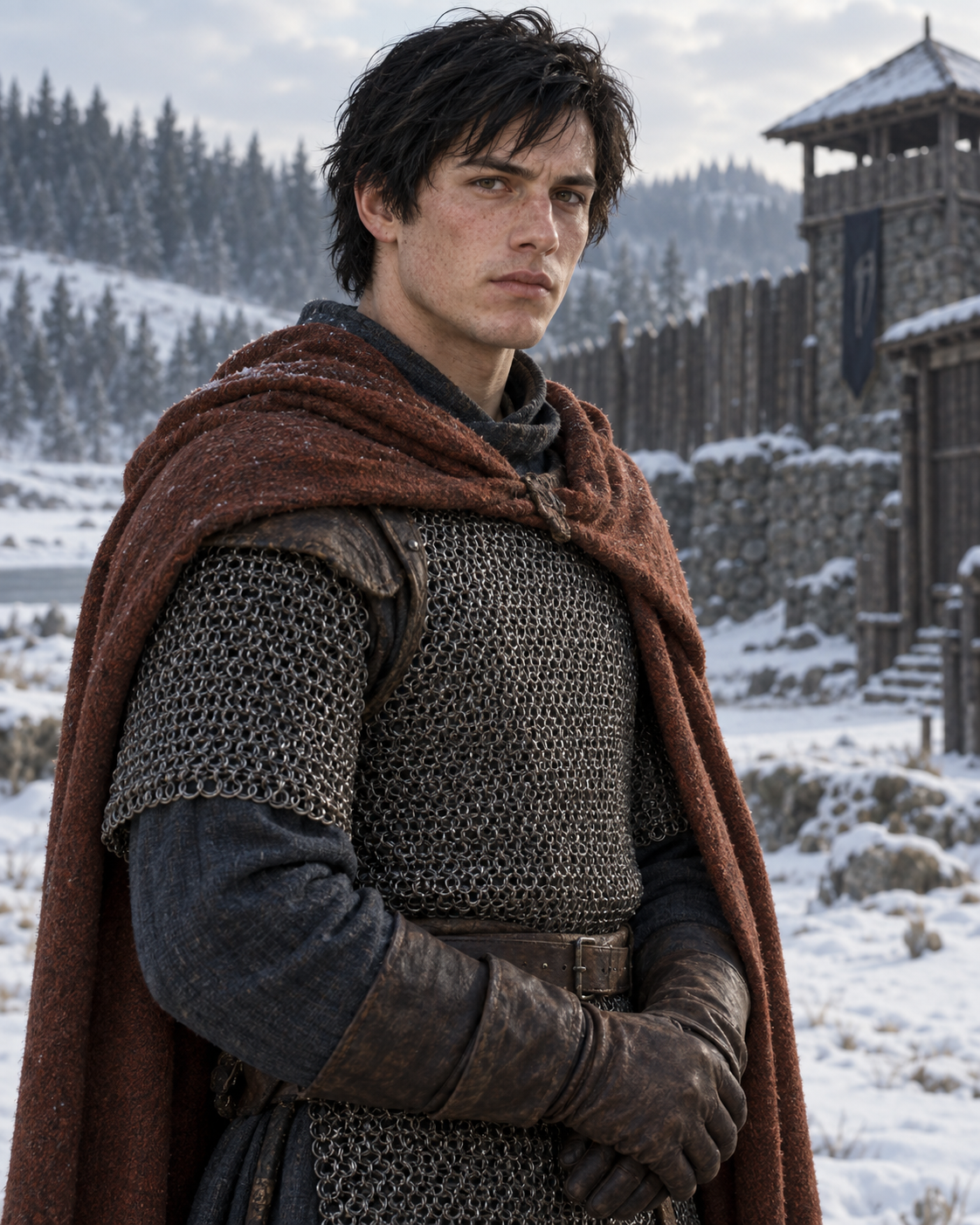
CVM depicts Hani as a striking young adult Rimmersman around twenty-one with a tall lean build, gray-green eyes, freckled cold-reddened skin, uneven ear-length near-black hair, and a clean-shaven face. His charcoal-blue wool, worn mail, rust-brown mantle, leather gloves, and snowy Saegard palisade are reconstruction rather than recovered physical canon.
Canon supplies no exact age, face, skin, hair, eyes, height, build, facial hair, clothing, armor, weapon, heraldry, injuries, or death pose. Preserve this exact face, age, body, coloring, hair, wardrobe, and quiet young seriousness across every later use.
Do not depict him as a child. Do not cover his identity with gore or make a Bukken wound the only recognizable feature.
Scene art may show the terror of open ground and the changed attack pattern, but it cannot assign Hani an unrecorded duel or last act.
The same canonical attachment powers featured image, hero, directory card, and social metadata. Bukken Story 101 and every casualty reference must preserve this identity without assigning Hani an unrecorded duel, wound, final act, body recovery, or burial.
On the Record
Book 1 wartime testimony with no invented battle
This is Hani’s one canonical, full-spoiler character profile. His confirmed evidence belongs to The Dragonbone Chair through the northern Bukken report.
The record identifies Hani as a young Rimmersman associated with Saegard and names him with Thrinin and Utë among the dead from an unprecedented open-ground Bukken assault on soldiers.
The report contributes to Jarnauga’s evidence that northern danger has changed: Bukken leave the earth and attack armed people outside their remembered prey pattern.
The record does not confirm Hani’s exact age, family, rank, appearance, equipment, individual actions, injuries, killer, final words, body recovery, burial, or relationship with the other named soldiers.
Status: dead; killed in the Bukken assault.
Visual state: approved editorial reconstruction. The portrait preserves Hani as a living young man at Saegard rather than converting his sole identity into casualty imagery. All physical features, clothing, mail, fortification detail, pose, weather, and light are CVM reconstruction. The same canonical attachment powers featured image, hero, directory card, and social metadata.