
EPISODE 11 · CHINESE TELEVISION BRANCH · NUO OPERA · RAE RAE REACTS
Stitch & Ai Episode 11: Nuo Opera
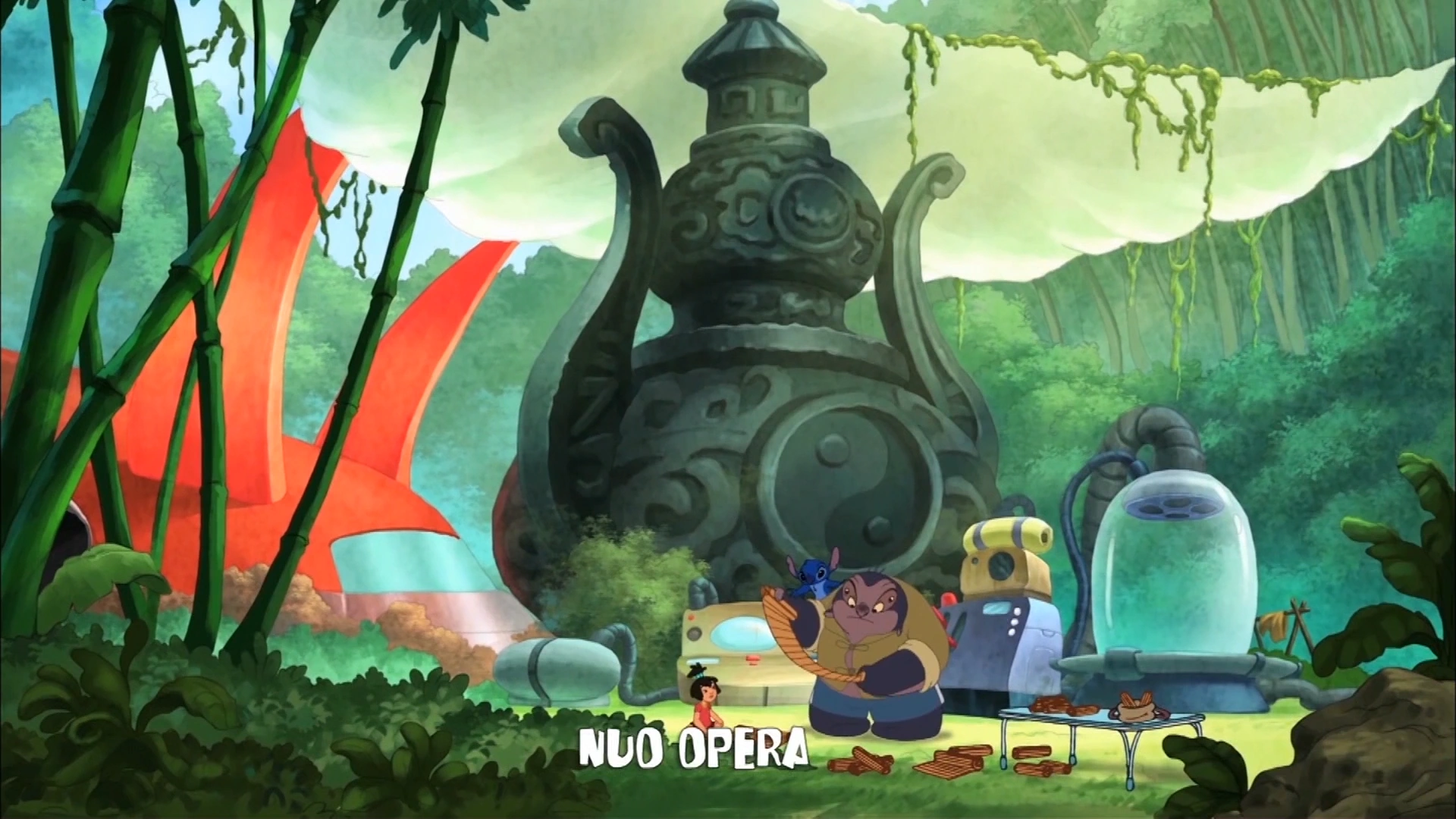
Stitch mass-produces Jumba’s myth-inspired creatures and wrecks a community performance. Helping the creatures save the opera matters, but one spectacular finale cannot erase sentient creation, damaged labor, or Jumba leaving the button available.
A Nuo opera is not generic “old Chinese theater”
“Nuo Opera” places a local performance at the center of the episode. Nuo traditions vary by region and community and can involve masks, ritual history, music, dance, narrative, religious practice, and local transmission. The show should identify what its fictional production borrows instead of presenting one event as the complete definition.
A CVM guide needs sources, regional specificity, and acknowledgment that living practitioners decide how the form is described. Stitch wearing a costume does not turn visual recognition into expertise.
The performance exists because people rehearsed before Stitch interfered
Jiejie, Dahu, residents, musicians, mask makers, costume workers, organizers, and performers have invested time long before the episode begins. Ruining the event damages more than a schedule. It disrupts labor, community expectations, and possibly ritual obligations.
Any repair must include the people whose work was affected. The family cannot replace their production with alien spectacle and call the result equivalent without consultation.
Stitch mass-produces creatures because Jumba left access open
Stitch behaves recklessly by using Jumba’s work to create many myth-inspired organisms. Jumba remains responsible for maintaining a laboratory where a childlike family member can activate sentient production. A button should never separate curiosity from multiple new lives.
Security needs authorization controls, physical safeguards, activity logs, emergency shutdown, and independent oversight. “Stitch should have known better” is true and insufficient.
Every new creature arrives with needs the plot did not budget
Mass production creates individuals who require names, communication, medical screening, food, housing, social support, environmental assessment, and legal identity. They are not duplicates in the sense that one care plan automatically fits all of them.
Jumba must document variation and stop assuming his intended design defines personality. The community should not inherit lifelong care because his laboratory lacked a lock.
Myth-inspired design does not make the creatures cultural property
The organisms may resemble figures connected to local stories or performance. That does not make them authentic embodiments that community members must accept. It also does not give Jumba ownership over the cultural source.
The creatures are people shaped through borrowing. They deserve autonomy, while the family owes transparency and respect to the traditions used in creating them.
The first response should be safety, not saving opening night
Unknown organisms moving through rehearsal spaces can injure performers, damage masks, contaminate food, frighten animals, or trigger crowd panic. Organizers should pause the event, evacuate restricted areas, account for children, and assess each creature before planning a new performance.
A deadline does not make placing untested beings onstage acceptable. Delaying the opera may be disappointing and still be the correct choice.
Stitch’s mistake is larger because he understands created personhood
He knows what it means to be designed for a purpose and handled like equipment. Creating other beings for amusement repeats the harm that shaped his own life. That history does not make him incapable of error. It makes the accountability more specific.
He needs to acknowledge the creatures directly, help secure care, and accept consequences beyond performing one helpful act.
Cobra Bubbles sees a security breach and reaches for capture
His response is to contact the Galactic Federation and prepare to apprehend Stitch. The scale of the incident justifies intervention. Stitch created dangerous disorder in a public cultural event. Yet capture should not be the automatic answer when supervision, laboratory design, and Jumba’s negligence contributed.
A fair assessment separates immediate containment from punishment and considers the least restrictive plan that protects everyone.
Calling off apprehension after a good deed risks spectacle-based justice
Cobra changes course when Stitch remedies the damage and helps the opera succeed. Repair should matter, but legal consequence cannot depend on whether an emergency ends with an emotionally satisfying show. People who perform redemption well receive mercy while quieter harm can remain invisible.
The decision needs documented factors: intent, risk, remorse, restitution, supervision failures, and a prevention plan. Applause is not due process.
The Federation should investigate Jumba too
Stitch activated the system, but Jumba built and stored it. His repeated sentient-creation incidents show a pattern. Apprehending Stitch while leaving the adult inventor free to continue would punish the easiest target.
Jumba needs restrictions, audit, required training, and independent control over high-risk equipment. Family affection does not exempt professional negligence.
The creatures helping the opera must choose participation
Their appearance may solve staging problems and create a spectacular performance. They should be asked individually, told what the event involves, and given the right to refuse or leave. Being inspired by myth does not obligate them to perform culture for humans.
Rehearsal, rest, safety, communication, and compensation apply even if their involvement lasts one evening.
Human performers should remain visible
If the creatures become the attraction, Jiejie, Dahu, and community performers risk disappearing behind novelty. The opera’s value comes through trained human practice, not biological realism. A living creature does not make a mask or movement obsolete.
The revised production should preserve original roles and use alien participants only where practitioners believe the collaboration supports the form.
Masks are not costumes anybody can grab during cleanup
Nuo masks may hold craft, ritual, character, lineage, and community meaning. Handling, wearing, storing, photographing, or repairing them can carry rules. Stitch and the creatures should receive guidance before interacting with them.
Damaged masks need assessment by qualified makers or caretakers. Jumba should never scan one into his production system without explicit permission.
Daiyu’s cleaning anxiety intersects with the wrong emergency
The episode includes concern about germs and excessive cleaning around the household. A mass appearance of unknown organisms creates legitimate biological questions while also exposing how fear can become indiscriminate. Spraying everything is not an infection-control strategy.
Jumba should provide specific information about transmission, allergens, waste, and contact precautions. Residents deserve evidence rather than ridicule or panic.
Some germs are necessary, and that fact does not cancel hygiene
Jiejie may point out that microbes can be beneficial. The useful lesson is balance: targeted cleaning, handwashing, food safety, ventilation, and medical guidance rather than trying to sterilize an inhabited world.
The family should avoid turning Daiyu’s concern into a joke if she is responding to real unknowns. Anxiety needs accurate information and boundaries, not shame.
The audience should be told the production changed
Spectators expecting a familiar event may encounter living creatures and altered staging. Organizers need to disclose significant changes, provide exit options, maintain safe distance, and prepare for sensory or mobility needs.
Secrecy about alien biology complicates the announcement, but deception cannot become the default. The Federation must help design truthful safety language.
Photography and recording require community control
Images of masks, ritual performance, children, creatures, and identifiable locations can circulate far beyond the event. Practitioners should decide what may be photographed. Creature location and identity may also require protection from collectors and military factions.
An official archive with consent and careful captions is better than uncontrolled viral footage that strips the performance of context.
Repair costs belong to the responsible parties
Costumes, masks, sets, instruments, venues, food, and rehearsal time may be damaged or lost. Jumba, the Federation, and the household need to fund restitution rather than relying on community generosity after Stitch saves the finale.
Stitch can contribute age-appropriate labor and apology, but he should not be assigned debt he can never repay as leverage over his freedom.
The creatures need placement after the curtain closes
A successful performance does not answer where dozens of new lives sleep, eat, learn, or receive care. Nobody should place them permanently at the theater because audiences enjoyed them. Their welfare continues on ordinary days.
Individual assessment may lead to different homes or habitats. Siblings and bonds should be protected without treating every copy as interchangeable.
The community should decide whether collaboration happens again
Organizers may invite the creatures back after the memorable performance. Practitioners, residents, and the creatures all need a voice. Commercial pressure, tourism, and Federation secrecy can distort that choice.
A future appearance should include contracts, compensation, safety standards, cultural consultation, and the option to return to an all-human production.
The alternate title “Creatures” removes the episode’s cultural center
The former American platform listed the episode as “Creatures,” a label that foregrounds alien novelty and drops the specific performance named by “Nuo Opera.” Viewers encountering the alternate title may expect a monster story rather than a conflict about a community production and the traditions it draws upon.
A directory should record both names while using “Nuo Opera” as the primary title in original order. Alternate distribution metadata belongs in notes, not in a replacement that makes the culture invisible.
Cultural consultation is still necessary after the show succeeds
Practitioners should review how masks, movements, stories, music, and creature designs were used during the improvised finale. If the collaboration distorted restricted, sacred, or locally specific material, applause does not erase the problem. Organizers may need to revise future recordings or public descriptions.
Jumba and the family should listen without demanding gratitude for saving the event. Repair includes accepting that some footage, objects, or staging choices should not be reused.
Credits and compensation must name the people behind the recovery
The final program should credit original makers, performers, musicians, emergency volunteers, creature caregivers, translators, and anyone who rebuilt staging under pressure. Stitch cannot become the sole hero in publicity while everybody else’s work disappears.
People who performed extra labor or lost paid work need compensation. The creatures also require an advocate who can negotiate resources without tying food and housing to publicity rights.
Mass-created beings require individual biological and identity records
Jumba should assign temporary medical identifiers without reducing anyone to a production number, screen for instability, and document differences in abilities, communication, age, health, and support needs. One batch label cannot safely guide treatment.
Genetic and behavioral records must remain confidential. The Federation should prevent collectors, military factions, or future producers from using the incident as a catalog of rentable mythical bodies.
Audience members may need support after an unknown-species incident
Children and adults who saw creatures appear, equipment fail, or authorities prepare to seize Stitch may experience fear, confusion, sleep trouble, or distrust of future events. Organizers should provide accurate follow-up information, medical contacts, counseling routes, and a way to report injury or property loss.
The community should not be pressured to describe the night as magical if it felt dangerous. Pride and distress can occupy the same memory.
Reconstruction records should preserve what changed
Makers need photographs, material lists, condition reports, repair dates, and notes identifying which masks, costumes, instruments, and set pieces survived the incident. New work should be credited as reconstruction rather than quietly presented as untouched heritage.
The improvised creature staging also belongs in a separate, clearly labeled permanent production record. Future performers deserve to know which choices came from local practice, which were emergency solutions, and which were invented by the episode’s alien crisis afterward.
Stitch needs consequences that teach without repeating captivity
He should lose unsupervised laboratory access, participate in welfare planning, apologize to makers and performers, help restore damaged materials, and complete training about consent and sentient creation. Those steps connect consequence to harm.
A cage would repeat trauma without teaching the needed skill. No consequence would tell him a spectacular rescue erases preventable damage.
What I would keep
I would keep Stitch’s impulsive mass production, the creatures spilling into the planned opera, Cobra Bubbles preparing Federation intervention, Stitch realizing the scale of the mistake, and the community finding a way to complete the performance with help.
I would also keep the uneasy redemption. The ending feels good while leaving enough questions for an editorial to refuse easy absolution.
What I would repair
I would identify the specific Nuo tradition represented, involve practitioners before rewriting the performance, secure Jumba’s laboratory, treat every creature as a person, investigate adult negligence, and base Cobra’s decision on a documented safety plan rather than the successful finale.
I would fund restitution, protect masks and recording rules, give creatures independent advocates, and show where they live after the event.
RaeRae’s verdict
“Nuo Opera” lets Stitch make the exact mistake he should understand better than anyone: creating lives because the button was there and expecting purpose to arrive afterward. He helps repair the performance, and that matters. It does not magically turn dozens of new beings into props or reimburse the people whose work he wrecked.
My verdict: keep the opera with the community, keep the creatures only if they choose the stage, put Jumba’s lab behind actual security, and give Stitch consequences that involve care instead of another cage. A standing ovation can end the night. It cannot close the case.
Where to watch
Stitch & Ai is not currently available through its former United States DisneyNOW route. That service previously listed this episode as “Creatures.” CVM Sekai records the episode under “Nuo Opera” in original Chinese broadcast order and will update legal availability when a complete licensed option appears.
Keep exploring
Return to the complete Stitch & Ai episode directory, return to the Stitch & Ai hub, or return to the full franchise hub.