
EPISODE 1 · CHINESE TELEVISION BRANCH · HELLO – GOODBYE · RAE RAE REACTS
Stitch & Ai Episode 1: Hello – Goodbye
Stitch escapes two alien armies, falls into Huangshan with damaged memories, and meets Ai Ling while adults are threatening to move her away from home. New friendship arrives inside two different kinds of forced displacement.
The opening refuses to give Stitch a quiet retirement
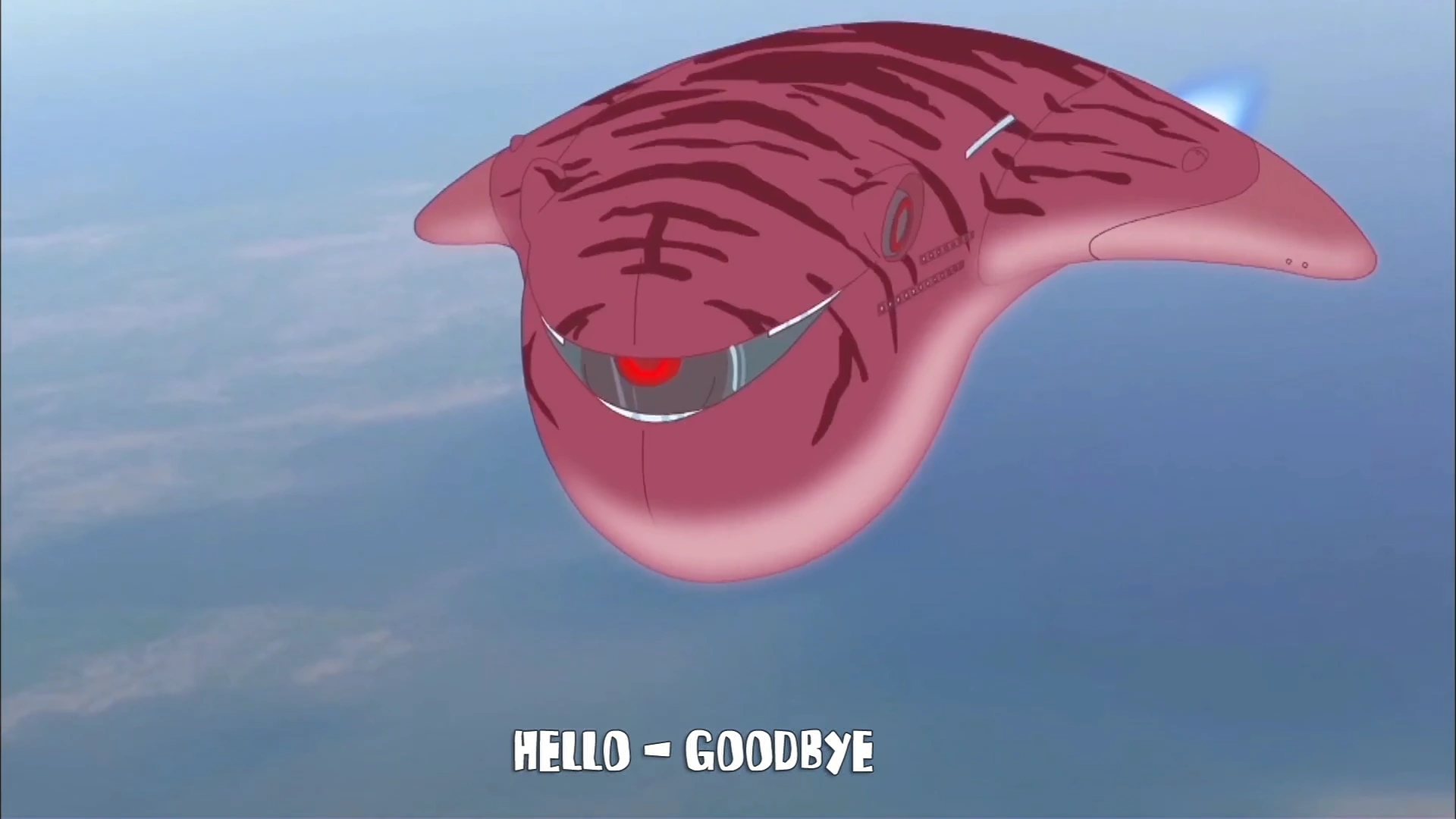
“Hello – Goodbye” begins with Stitch in captivity between the Jaboodies and the Woolagongs, two factions that look at Experiment 626 and see a military advantage. The franchise has always surrounded Stitch with people who want to define him by function. Jumba called him a destructive achievement, Gantu called him cargo, and Hämsterviel called him property. This branch changes the uniforms and keeps the same ugly assumption: a created life belongs to whoever can hold the cage.
That premise matters before Ai ever appears. Stitch is not leaving Hawaiʻi because he became bored with family. He is escaping another abduction. The episode uses action to relocate him, but the emotional fact underneath the chase is forced displacement. A new setting can be exciting while the route into it remains traumatic.
The Jaboodies and Woolagongs turn one person into a whole war plan
Both alien factions want Stitch because his strength, intelligence, durability, and adaptable body could change their conflict. Neither side asks what he wants. They speak about him as equipment whose allegiance can be engineered. Their argument is not really over Stitch as a person. It is over access to the violence they believe his body can produce.
This is the same logic that follows every powerful experiment in the franchise. A gift becomes a security problem, then somebody claims control is necessary for public safety. The episode is sharpest when it lets Stitch reject the premise entirely. He does not select the nicer captor. He escapes both.
Escape is victory, but re-entry takes something from him
Stitch reaches Earth through a dangerous atmospheric fall and lands in the Huangshan mountains. The series later connects his survival to special qi energy and uses that event to explain his memory loss. That is an enormous emotional cost hidden inside a fast transition. He survives the cage, loses orientation, and arrives unable to hold the people who once made Earth home clearly in his mind.
Amnesia gives the production room to build a new friendship without having Stitch spend every episode trying to return to Lilo. It also creates the branch’s first ethical problem. A character should not have to forget one family so the story can introduce another. The writing needs to treat missing memory as injury, not convenient permission to replace somebody.
Huangshan is a place before it becomes scenery
The yellow mountains, stone paths, clouds, pines, villages, and temples immediately distinguish this series from Kauaʻi. The episode wants the landscape to feel legendary, but Huangshan is not a fantasy backdrop invented for Stitch. It is a real region in Anhui with history, communities, tourism, religious sites, labor, and environmental pressure.
That means the show earns no automatic cultural depth merely by placing a shrine behind an alien. The setting deserves research, precise language, and attention to the people who live there. Beautiful mountains can welcome a franchise while still being flattened into decoration if the story only harvests recognizable symbols.
Ai Ling enters while adults are planning her life without her
Wang Ai Ling is introduced under pressure from Aunt Daiyu, who wants her moved away from the mountain home and into a city. The adult argument is framed around education and opportunity, but Ai experiences it as the threatened loss of her sister, community, routines, and the place that tells her who she is. Adults can have practical reasons and still cause harm when a child is treated as a package to relocate.
The episode wisely gives Ai a strong opinion instead of presenting her resistance as childish noise. She understands what she would lose. A fair decision would require information, preparation, repeated conversations, and meaningful participation from Ai and Jiejie. “This is better for you” cannot carry the whole burden of proof.
Ai and Stitch recognize the same threat from opposite directions
Stitch has been captured and transported because powerful beings decided his abilities belonged to them. Ai is being told that adults may remove her because they believe they know what future she should have. Their circumstances are different, but the emotional shape overlaps. Both are resisting a life chosen by somebody with more authority.
That recognition makes their bond faster without making it random. Ai does not need a complete alien biography to notice fear and defiance. Stitch does not need all his memories to understand that she is fighting to stay connected to home. They meet at the point where neither wants to be carried away again.
The first friendship beat is curiosity without a custody claim
Ai approaches Stitch as a strange living creature, not a weapon system. She is curious, bossy, generous, and immediately willing to bring him into her problem. The relationship begins with imperfect child logic, but it is already more humane than the factions chasing him because she expects him to have preferences.
The episode should still make room for caution. Stitch is injured, disoriented, and unable to communicate everything he remembers. Ai is a child alone with an unknown being. A safer version of the meeting would include Jiejie earlier, medical assessment for Stitch, and an adult plan that does not hand Ai responsibility for an interplanetary refugee.
The shrine in Stitch’s visions is a clue, not cultural proof
Stitch keeps seeing a shrine he cannot place, so Ai helps him search. The image gives their first adventure direction and ties the alien plot to the mountains. It also risks treating spiritual architecture as a magical navigation device whose meaning exists only when an outsider needs it.
The story needs to distinguish a real sacred site, a fictional ruin, and the vision produced by the series’ mythology. Ai should know local names and limits. Stitch can be drawn to a place without the narrative implying that every Chinese religious structure is interchangeable mystery wallpaper.
Ai’s local knowledge gives her real authority
She knows the paths, landmarks, people, and rhythms of the mountain community. Stitch carries physical power, but he cannot interpret the place alone. Ai becomes a guide because she belongs to the setting and pays attention, not because the script gives her a magical ethnic connection to everything around her.
That balance is worth protecting through the series. Local knowledge should remain practical and specific. Ai can misunderstand legends, argue with adults, learn new history, and change her mind. She becomes more credible when the show lets her know some things deeply without making her a spokesperson for all Chinese culture.
The wrong shrine is useful because searching should include error
Ai brings Stitch to a shrine that does not match the one in his visions. The failed match prevents her from becoming an instant answer machine and keeps the relationship collaborative. She offers what she knows, checks the result, and continues when it is wrong.
That process feels more honest than a mystical revelation. Research works through partial clues, mistaken assumptions, and correction. The episode could strengthen the moment by naming why Ai chose that site and what details make Stitch reject it. Specific evidence would turn a plot stop into character intelligence.
The chase arrives before either child has a safe adult plan
The Jaboodies and Woolagongs follow Stitch into the mountains, bringing a space war into paths used by residents and visitors. Ai is now exposed because she helped him. Stitch is exposed because nobody on Earth knows where he landed. The adults with the most information are absent while two children improvise under attack.
A responsible response would alert the Galactic Federation, establish evacuation routes, notify local authorities without causing a public hunt, and contact Jiejie. Secrecy may protect Stitch’s identity, but secrecy that leaves Ai missing during an armed chase protects the wrong thing.
Alien pursuit does not make the local population expendable
Action scenes often treat empty-looking landscapes as damage zones. Huangshan is visited, maintained, protected, and inhabited. A blast can harm hikers, workers, wildlife, water systems, historic structures, and people far outside the frame. The factions do not gain a private battlefield merely because the camera finds a dramatic cliff.
The franchise should keep an incident record and fund repairs. Stitch did not invite the invasion, and Ai should never be blamed for helping him. Responsibility belongs to the organizations that brought weapons into a civilian environment and the systems that failed to contain them.
Stitch’s body remembers survival even when his mind loses names
He evades attackers, reads danger, climbs, fights, and protects Ai with the instincts built across earlier stories. Memory loss does not erase learned responses or emotional patterns. His body reacts before he can explain why. That makes him capable and vulnerable at the same time.
The episode should resist using competence as evidence that he is fine. Trauma survivors can perform under pressure while remaining confused, frightened, or disconnected. Stitch needs rest and care after the escape even if he wins every physical encounter.
Ai does not replace Lilo by sharing a few personality traits
Ai is stubborn, inventive, attached to place, and willing to defend an alien everybody else misunderstands. Those echoes help the franchise establish a recognizable partnership. They do not make the girls interchangeable. Lilo’s family history, Hawaiian identity, grief, social isolation, photography, hula, and relationship with Nani built a specific person.
Ai has her own sister, aunt, school pressures, regional knowledge, friendships, and conflict over relocation. The branch succeeds when it develops those details instead of treating “energetic girl with Stitch” as a complete character design. Similar narrative roles can hold different lives.
The episode needs to name Lilo’s absence more honestly
Viewers who followed the Hawaiian branch know Stitch chose Lilo and promised family. Moving him without a clear conversation creates an emotional debt. Amnesia explains why he does not immediately return, but it does not explain what Lilo, Nani, Jumba, Pleakley, and the Federation believe happened to him.
A later story should show the search, the grief, and the eventual truth. Adult Lilo’s later appearance in the anime branch acknowledges the old bond, but this Chinese branch still needs its own continuity answer. New family should expand Stitch’s life rather than erase the people who already fought to keep him free.
“Hello” and “goodbye” happen at the same time
The title captures the structure cleanly. Stitch says hello to Ai, Huangshan, and a new branch of his life while the audience feels the goodbye to the Hawaiian center. Ai faces the possible goodbye to her mountain home while meeting the creature who may help her fight for it. Each introduction carries a threatened separation.
That tension gives the episode more weight than a standard pilot. The joy of the new partnership should feel real, and so should the discomfort. Loving Ai does not require pretending Lilo never mattered. Missing Hawaiʻi does not require rejecting a story rooted in China.
Jiejie should be treated as family, not an obstacle between adventures
Ai’s older sister lives close to the practical consequences of every decision. She has to manage Daiyu’s pressure, Ai’s safety, household needs, and the shock of a powerful alien entering their lives. If the series turns her into the person who merely says no while children escape, it will repeat the unfair treatment Nani received.
Jiejie deserves information, resources, and authority. The franchise loves children who see possibility before adults do, but adults are often handling rent, legal risk, food, school, and injury offscreen. Respecting that labor makes the family stronger rather than less fun.
Daiyu’s city argument cannot be dismissed as simple villain behavior
Access to education and stability can matter, especially if the mountain community offers limited services. Daiyu may believe relocation creates opportunity. The problem is the method: she treats her judgment as sufficient and Ai’s attachment as resistance to overcome. Good intentions do not remove the need for consent and careful planning.
The story should ask what support would allow Ai to remain, whether schooling can be improved locally, what Jiejie wants, and how often Ai could return if she moved. A real decision has more possibilities than exile or stagnation. Turning Daiyu into a cartoon snob would waste the conflict.
Qi cannot become a catch-all explanation for whatever the script needs
The series connects Stitch’s survival and memory loss to special qi energy. Qi has long histories in Chinese philosophy, medicine, martial arts, religion, and popular culture. Using the word as colorful magic without defining the show’s fictional rules risks flattening all of that into an exotic battery.
A guide should explain which ideas the production borrows, what it invents, and how translations change the language. The show can build fantasy from cultural concepts. It still owes viewers precision about where tradition stops and franchise mythology begins.
The English production history complicates the word “donghua”
“Stitch & Ai” is a Chinese-produced animated series, set in China and first broadcast there in Mandarin, but Disney developed it through an international production path and the episodes were produced in English before localization. Calling it donghua is useful for the branch directory, yet the label should not hide the cross-border labor behind it.
Credits, production companies, directors, writers, storyboard artists, animators, and voice performers need to be recorded by version. The site should never imply that one nationality explains the whole production. Animation ecosystems are often collaborative, commercial, and politically complicated.
The visual continuity looks familiar on purpose
Unlike the Japanese anime, this series stays close to the rounded proportions and movement language of the original American television branch. That choice makes Stitch immediately recognizable and helps the Huangshan setting feel like a new chapter rather than a total redesign.
Familiar style can also make the relocation feel deceptively simple. Matching linework does not solve continuity, cultural research, or character depth. The production has to do more than place the old model sheet in front of Chinese architecture.
The pilot earns the friendship before it earns the franchise answers
Ai helps Stitch search, Stitch protects Ai, and both resist forces trying to move them. That is enough to begin trust. It is not enough to explain the shrine visions, the competing aliens, the memory loss, the Federation’s absence, or the connection to Lilo. A pilot can leave questions open if the emotional contract is clear.
The contract here is simple: neither child will hand the other over to somebody claiming authority. That promise carries the episode. Later installments need to honor it by giving Ai agency, letting Stitch recover more than combat instinct, and making the adults answer for the danger surrounding them.
What I would keep
I would keep the simultaneous displacement story, the mountain search, Ai’s immediate refusal to treat Stitch as equipment, the wrong-shrine mistake, the two alien factions getting outplayed, and the title’s double meaning. The episode gives the new pair a reason to recognize one another beyond mascot chemistry.
I would also keep the discomfort around continuity. A branch should feel like a branch. The audience is allowed to wonder about Lilo while becoming interested in Ai. That unresolved ache is more honest than pretending the franchise restarted with no history.
What I would repair
I would slow the arrival enough to let Stitch’s abduction and memory loss register, bring Jiejie into the safety plan sooner, identify the shrine and local geography more precisely, and show consequences for the factions attacking a civilian landscape. Ai’s relocation conflict needs multiple adult perspectives without making her voice optional.
I would also include one unmistakable trace of Hawaiʻi that Stitch cannot explain: a song fragment, photograph, word, or reflex tied to Lilo. That would protect the original relationship while allowing the new one to grow. Memory loss should create mystery, not deletion.
RaeRae’s verdict
“Hello – Goodbye” works because Ai and Stitch meet while both are being told that somebody else owns the next chapter of their lives. They do not bond because the franchise needed a replacement girl. They bond because each recognizes the other’s refusal to be moved like luggage. That is a solid emotional foundation, even when the continuity machinery around it is wobbling.
My verdict: welcome Ai, keep Huangshan specific, make the alien armies pay for the damage, and do not use amnesia to throw Lilo into a narrative closet. Stitch can have more than one home. The story becomes richer when every home remains real.
Where to watch
Stitch & Ai is not currently available through its former United States DisneyNOW route. The complete series has had different regional releases, and Episode 9 was omitted from the former American offering. CVM Sekai records all thirteen produced episodes in original Chinese broadcast order and will update this section when a complete licensed route becomes available.
Keep exploring
Return to the complete Stitch & Ai episode directory, return to the Stitch & Ai hub, or return to the full Lilo & Stitch franchise hub.