
GO
BLACKPINK built a Korean myth machine from industrial bass, a giant boat and four solo empires, then invited an AI ethics fight into the control room.
Released: February 27, 2026
Members: Jisoo, Jennie, Rosé and Lisa
Lyrics: Chris Martin, Henry Walter, ROSÉ, Danny Chung, JISOO, JENNIE and LISA
Composition: Cirkut, Chris Martin and ROSÉ
Arrangement: Cirkut, TEDDY and Chris Martin
Video: Rima Yoon and Rigend Film Studio
What “GO” actually means
“GO” turns BLACKPINK’s name into a command. The core idea is blunt: the world moves when they say so. They are not chasing the next trend, market or approval cycle. They start the motion. That arrogance only works because Jisoo, Jennie, Rosé and Lisa spent the years after Born Pink building separate companies, albums, acting careers, tours and identities. Four solo power centers came back together, so the room now responds to them.
All four members are credited as lyricists. That does not make every line autobiography, but it changes the weight of the command. They are not only performing a producer’s idea of BLACKPINK dominance. Their names sit inside the writing file beside Chris Martin, Cirkut and Danny Chung.
What changed every time I replayed it
First play: The bass tried to remove my organs in the order they were installed. I registered machinery, engine-rev synths, a serrated drop and four women treating the beat like private property. The song did not ask to be welcomed back. It kicked the door, checked the acoustics and sent YG an invoice.
Second play: The bridge became the whole argument. Chris Martin opens an acoustic window inside a metal control room, Jennie softens, and the track remembers that BLACKPINK has always depended on collision. Threat and ache. Black and pink. The section barely belongs there, which is why it belongs.
Third play: I followed the credit chain. Cirkut supplies industrial scale. TEDDY preserves the group’s architecture. Chris Martin brings melodic release. Rosé helps connect the softer writing to the members’ vocal identity. The crowded file explains why the song feels like controlled disagreement instead of one producer’s clean thesis.
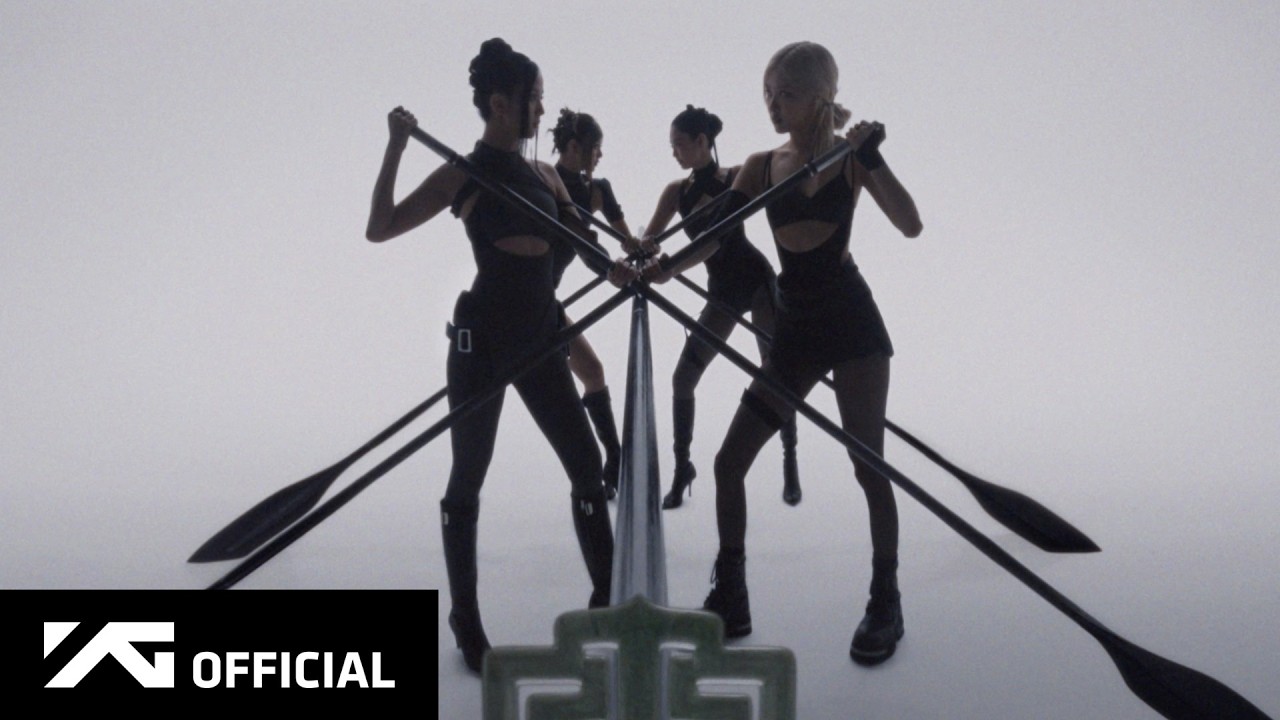
Fourth play, video only: The boat, labyrinths, taegeuk logic, hoemun pattern and shifting elements stopped looking like expensive fantasy wallpaper. The video builds a global future from Korean visual language instead of treating “global” as culturally blank.
Fifth play: The AI-related credits would not leave the room. I could admire the human production and still ask why a company with blockbuster resources brought generative tools into a project already rich with real design, animation and VFX labor. Both reactions fit because fandom is not a loyalty oath against having eyes.
Where I landed: I like the song more than I trust every visual-production choice. “GO” proves BLACKPINK can move forward without reenacting their greatest hits. It also proves technical novelty is not automatically artistic courage.
The song: a machine with one human window
“GO” begins like a launch sequence. The low end is physical, the synths grind and rev, and the arrangement treats silence as a pressure chamber rather than empty space. This is not the familiar BLACKPINK opening built from a traditional instrument loop and a whispered name tag. It feels futuristic, blunt, and deliberately unfriendly.
The verses use each member’s established weapon without forcing a greatest-hits reenactment. Lisa attacks the rhythm. Jennie can underplay a line until it feels more threatening than shouting. Jisoo’s darker tone gives the metallic production something human to scrape against. Rosé brings the thin bright edge that cuts cleanly through the bass.
The chorus is a drop-and-command structure, which means people exhausted by BLACKPINK’s chant endings are not hallucinating. The group still prefers slogans built for stadiums over a chorus that requires a lyric sheet. The difference is texture. “GO” is harsher, more electronic, and less interested in the regal trap language that defined “DDU-DU DDU-DU,” “Kill This Love,” and “Pink Venom.”
Then the bridge pulls out an acoustic guitar and reveals Chris Martin’s fingerprints. Jennie’s delivery softens. Vulnerability appears for a few seconds inside a song otherwise built from control. It should feel ridiculous. It nearly does. But BLACKPINK’s entire identity is the collision of hard and soft, black and pink, threat and ache. The bridge makes the title track remember the second half of the name.
Pitchfork noted that this is the only DEADLINE track to restore “BLACKPINK in your area.” That choice matters. The old tag appears inside their most futuristic single, linking the 2016 introduction to a group that now operates through four solo worlds.
The credits are their own plot twist
The writing file is unusually crowded and unusually revealing. Chris Martin and Henry Walter,Cirkut’s legal name,are credited alongside ROSÉ, Danny Chung, JISOO, JENNIE, and LISA. Composition credits include Cirkut, Chris Martin, and ROSÉ. Arrangement brings Cirkut, TEDDY, and Chris Martin together.
That is why the song sounds like a controlled collision instead of one producer’s clean thesis. Cirkut supplies the industrial-pop scale. TEDDY keeps the BLACKPINK architecture. Chris Martin brings the acoustic emotional release. Rosé helps connect the pop songwriting to the group’s vocal identity. The members’ lyric credits place the performance attitude inside their own authorship.
Michael Buffer is also credited because the track samples his famous “go” call. One word can carry a legal and cultural history when the voice is recognizable enough. Credit chains are not trivia; they tell you which memories the song is borrowing before your conscious brain catches up.
The music video: tradition inside a digital fever dream
Director Rima Yoon and Rigend Film build “GO” as an impossible voyage. The members move through sand-colored labyrinths, organic surfaces, cosmic water, boats, enormous architectural spaces, and worlds that feel grown rather than constructed. The scale makes BLACKPINK look less like people traveling through sets and more like forces moving through mythology.
The boat’s repeated geometric pattern is hoemun, associated with continuity and eternity. The taegeuk,the red-and-blue symbol at the center of South Korea’s flag and a wider sign of balanced opposing forces,appears in the visual language and closes the credits. That is not a random national sticker on a global product. Balance is the group’s founding concept: black and pink, force and softness, individual and collective.
The four members also map easily onto elemental readings, though I would keep that as interpretation rather than official canon. Water, earth, air, fire, and cosmic space constantly trade places. No member controls one element as neatly as a superhero chart. The video is more interested in the universe responding when they move.
“GO” appears across languages, turning the command outward to a global audience. Korean, English, Japanese, Chinese, Thai, Hindi, and Spanish do not simply announce market territories. They show one short word surviving translation. The command changes script and keeps its force.
The AI problem is not imaginary
The music-video credits include multiple AI-related roles, and the finished video contains passages with the slippery, morphing texture viewers associate with generative systems. Fans immediately started arguing over whether every surreal frame was AI, traditional VFX, or a mixture. Some accusations were sloppy. Not every strange digital landscape is machine-generated. Rigend Film employs real directors, designers, animators, compositors, and VFX artists whose work should not be erased by calling the entire video “AI slop.”
But the opposite defense is also weak. If generative AI is credited, then criticizing its use is not a conspiracy theory. The ethical questions remain: what material trained the tools, whose labor was displaced or absorbed, and why a company with YG’s resources needed a technology built on unresolved consent and attribution problems.
My frustration is artistic too. The strongest images have precise Korean cultural meaning: hoemun, taegeuk, traditional design logic, the deliberate construction of opposing forces. Generative texture risks making those choices look like random dream sludge. When the human design is already this good, automation does not automatically add imagination. Sometimes it adds suspicion.
Easter eggs and details worth replaying
- The taegeuk closes the credits. The final layout brings the Korean balance symbol into the production record itself.
- Hoemun appears on the vessel. The repeating angular pattern carries ideas of continuity and eternity,perfect for a group reuniting after separate solo chapters.
- “BLACKPINK in your area” returns. It is the only track on DEADLINE to use the original tag.
- All four members have lyric credits. Jisoo, Jennie, Rosé, and Lisa appear in the official writing chain.
- Rosé also has composition credit. Her placement beside Cirkut and Chris Martin fits the melodic softness cutting through the industrial track.
- The bridge is the pink inside the black. Acoustic guitar and Jennie’s softened delivery interrupt the machinery without destroying the song.
- Michael Buffer is credited for one command. The sampled “go” carries his instantly recognizable fight-announcer identity.
- The title travels through scripts. A one-syllable English command becomes a global visual motif rather than a paragraph of market strategy.
DEADLINE: five tracks after four solo empires
The EP contains “GO,” “JUMP,” “Me and My,” “Champion,” and “Fxxxboy.” Five tracks after years away is objectively rude. BLACKPINK’s catalog has always operated on scarcity, but fans were not unreasonable for expecting more than a short EP after the members proved separately how much music they could make.
Still, the small track list creates a clear snapshot. “JUMP” is the tour-sized return. “GO” is the new group thesis. “Me and My” moves into slower R&B. “Champion” plays with rock and anthem textures. “Fxxxboy” closes on exposed emotion. The record is less a full feast than a meeting where four solo careers agree on what BLACKPINK can still be.
The group’s structure has changed permanently. YG handles group activity; the members control solo careers through their own companies and partnerships. “GO” sounds like that arrangement: separate expertise reconvening for one oversized command.
Credits and release file
Artist: BLACKPINK
Album: DEADLINE
Released: February 27, 2026
Lyrics: Chris Martin, Henry Walter, ROSÉ, Danny Chung, JISOO, JENNIE, LISA
Composition: Cirkut, Chris Martin, ROSÉ
Arrangement: Cirkut, TEDDY, Chris Martin
Mixing: Serban Ghenea; Bryce Bordone
Mastering: Chris Gehringer
MV director: Rima Yoon
Production: Rigend Film Studio
Label: YG Entertainment
RaeRae verdict
“GO” is BLACKPINK refusing to return as a museum exhibit. The industrial production pushes them forward. The bridge remembers they can be vulnerable. The member credits make the command feel owned. The video ties futuristic scale to actual Korean design instead of treating “global” as culturally blank.
And then the generative-AI credits drag an unnecessary ethical fog across the work of a huge human team. I am not throwing away the video because the internet prefers clean teams. I am saying the best parts did not need that shortcut.
BLACKPINK can make the world go. They have already proved it. The more interesting question is where they choose to point all that motion,and who gets credit for building the road.
Sources and further digging
 BLACKPINK , “GO” official music videoDaily+112.3KTotal views94.6M
- YG Entertainment , DEADLINE and title-track announcement
- Weverse Magazine , Korean identity and cultural symbols in “GO”
- STASH , Rima Yoon and Rigend Film production feature
- Pitchfork , DEADLINE review
- Associated Press , DEADLINE review and song context