
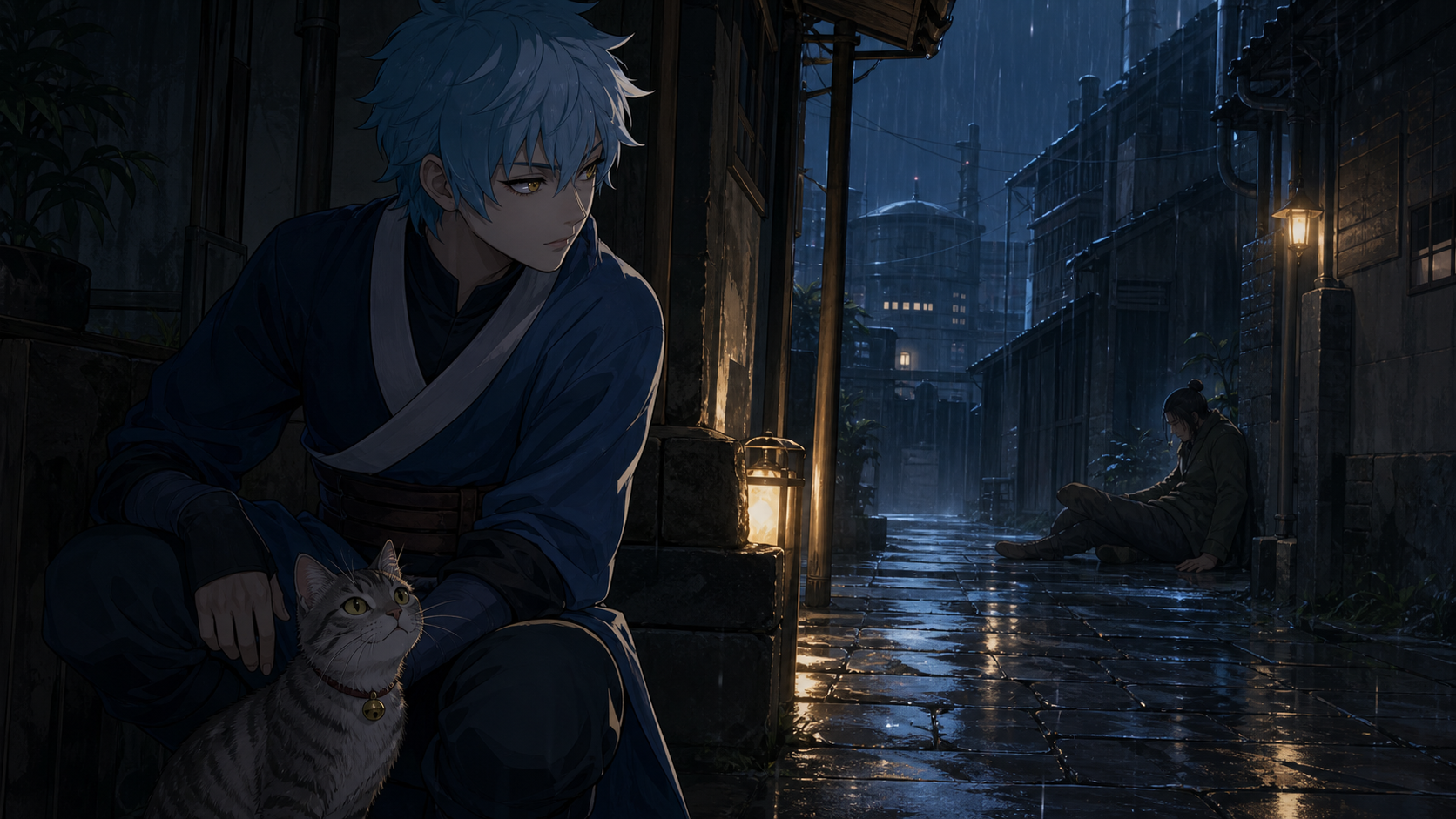
Mitsuki’s Rainy Day
Mikazuki brings Mitsuki an injured stranger, but Samidare’s grief, a buried corporate disaster, and the Rainy Day Killer force Mitsuki to make a moral choice without borrowing Boruto’s light.
Series: Boruto: Naruto Next Generations
Episode: 155 · Mitsuki’s Rainy Day
Arc: Mitsuki
Release: 2020-07-05
Previous: Episode 154 · Himawari’s Ninja Trial Session
Directory: All 293 Boruto episodes
Bottom line
Boruto Episode 155, “Mitsuki’s Rainy Day,” gives Mitsuki a choice that Boruto cannot make for him. Mikazuki the cat leads Mitsuki to Samidare, an injured stranger whose polite story hides a revenge campaign against the people responsible for his sister’s death. When Mitsuki discovers that his new guest is the Rainy Day Killer, he does not wait for Boruto’s moral compass. He reads Samidare’s pain, rejects the murders, stops the attack, and saves the man after Samidare tries to die with his revenge.
The episode works because Mitsuki’s compassion never becomes gullibility. He understands why Samidare hates the company president, and he still refuses to let grief choose another victim. The corporate story also has teeth: workers died, management escaped accountability, and a grieving brother was left with the familiar lesson that wealth can survive consequences better than ordinary people can. The rushed final minutes keep a good story from becoming a great one, but Mitsuki’s decision belongs to him. That matters more than the obvious killer reveal.
Mikazuki finds trouble before Mitsuki does
Rain turns Konoha quiet enough for Mikazuki’s bell and movement to guide the opening. The cat leads Mitsuki into an alley where Samidare sits injured against the wall. Mitsuki does not panic, interrogate him, or summon a crowd. He brings the stranger home and treats the wound.
That response feels exactly right for Mitsuki. He has spent much of his life studying human behavior from the outside, yet he often responds to immediate need with less ceremony than people who consider themselves naturally compassionate. A wounded person requires care first. Questions can wait until the bleeding stops.
Mikazuki also becomes more than a cute returning mascot. The cat creates the relationship, notices Samidare’s vulnerability, and later gives Mitsuki the emotional clue that the man still has tenderness beneath his violence.
Mitsuki helps without pretending to trust
Samidare notices that Mitsuki has not asked why an injured stranger was lying in an alley. Mitsuki answers with the calm distance that makes him both comforting and unnerving. The explanation can come if Samidare wants to give one.
Mitsuki’s hospitality does not equal blind faith. He observes the man, listens to the story, and leaves room for inconsistencies to reveal themselves. That restraint separates him from Boruto, who might demand an explanation immediately, and Sarada, who would probably organize the facts before offering a bed.
The scene lets Mitsuki practice a form of consent. Samidare controls what he shares, while Mitsuki controls how much belief the story receives. Kindness and certainty are not the same transaction.
Samidare builds a believable lie from real grief
Samidare says he came to Konoha to see his younger sister, Mikazuki, who works for a large company. He speaks with pride and shame at the same time, calling himself a poor older brother while describing her success.
The story works because most of the emotional material is true. His sister existed. He loved her. Her job mattered to her future. His guilt is real. Samidare only changes the tense and hides the grave.
Good lies often protect themselves with honest feeling. Mitsuki recognizes the feeling before he understands the deception. The episode does not make him foolish for responding to genuine grief. Samidare weaponizes a truth he cannot bear to state plainly.
Boruto and Himawari become Mitsuki’s reference for siblings
When Samidare talks about his sister, Mitsuki compares that pride with Boruto’s feelings for Himawari. The observation is small, but the comparison shows how Mitsuki builds emotional knowledge.
He does not learn family through a definition. He watches Boruto complain, protect, tease, and worry. Those contradictions teach more than a clean speech about brotherly love ever could.
Mitsuki recognizes Samidare as a brother because he has seen Boruto’s affection survive irritation. That recognition later makes the betrayal hurt. Samidare is not only a target or suspect. He becomes another person whose attachment Mitsuki thought he understood.
The bell collar carries two names
Samidare buys Mikazuki a collar with a bell. The gift thanks the cat for finding him, but the shared name gives the bell another weight. His dead sister and Mitsuki’s living cat occupy the same word.
The episode uses that connection without turning the cat into a supernatural messenger. Mikazuki trusts Samidare because Samidare can still behave gently. The trust does not prove innocence. The trust proves that violence has not erased every other part of him.
That distinction becomes central to Mitsuki’s choice. A murderer can remain a grieving brother. A grieving brother can still be stopped. Human complexity does not require moral surrender.
Team 7 receives the other half of the story
Boruto and Sarada arrive with a mission summons. Team 7 will support the Leaf Police Force while protecting Kaneki, the president of a chemical company. A serial attacker known as the Rainy Day Killer has targeted people connected to the business.
The assignment immediately collides with Samidare’s story. He mentioned a sister employed by a large company. The killer moves during rain. Samidare arrived wounded and avoided a hospital. The mystery is not hiding behind a difficult puzzle.
The obvious answer is not automatically a writing failure. The episode cares more about what Mitsuki will do after he knows than whether viewers can guess the name under the hood.
Corporate negligence created the first violence
Workers died in an explosion connected to Kaneki’s company. Responsibility fell on Samidare’s sister while the president kept his position, money, and public protection. Samidare believes the people who concealed the truth deserve death.
His anger has a legitimate target even when his method becomes indefensible. A workplace can call a death an accident, isolate blame in a dead employee, and continue operating because the people with power control records, lawyers, and public language.
The shinobi world understands revenge against clans and villages more readily than anger at a company. Episode 155 brings labor and corporate power into the same moral landscape. Money can protect wrongdoing as effectively as a political office or famous surname.
Kaneki expects protection without accountability
Kaneki presents himself as a threatened executive rather than a participant in the conditions that produced the threat. Security becomes a service purchased after institutional failure.
The mission still requires Team 7 to protect him. Shinobi do not get to decide that an unpleasant client deserves murder. The assignment exposes the gap between legal responsibility and moral responsibility without asking three children to solve corporate law during an ambush.
Konoha should investigate the explosion as seriously as the attempted killings. Stopping Samidare protects life. Ignoring Kaneki’s conduct protects the system that made revenge feel like the only available consequence.
The killer reveal arrives before the hood comes off
Samidare’s wound, his dead sister, the company connection, and the rain pattern line up early. Mitsuki also notices the absence behind the story. A proud brother who traveled to visit his sister should be moving toward her, not lingering around a stranger’s apartment.
The episode lets viewers sit with the answer while Mitsuki reaches the same conclusion. Suspense moves away from identity and toward confrontation.
Will Mitsuki hesitate because he offered Samidare shelter? Will friendship distort his duty? Will Boruto make the decision? Those questions carry more character value than a last-minute mask removal.
Mitsuki investigates without announcing the investigation
Mitsuki visits the grave connected to Samidare’s sister and confirms the concealed death. He follows evidence quietly because accusation would only produce another lie or an early attack.
This version of Mitsuki feels far removed from the child who once treated Boruto as his sun and every choice as reflected light. He gathers facts, forms a judgment, and prepares to act before asking what Boruto would want.
His calm can look passive when the episode is moving quickly. The calm actually contains work. Mitsuki is watching, comparing, and deciding.
Rain becomes Samidare’s weapon and excuse
Samidare’s Water Release turns rainfall into falling needles. The weather conceals his presence, supplies the attack, and gives the murders a ritual pattern.
Rain also lets him treat violence as something that arrives around him. He becomes the Rainy Day Killer, almost as though the day commits the crime. The technique gives physical form to the excuse.
Mitsuki refuses that distance. Samidare chooses the target, chooses the attack, and chooses to continue after learning the truth will not restore his sister. Grief explains the road. Grief does not remove the person walking down the road.
Mitsuki solves the technique instead of overpowering the emotion
Samidare’s jutsu looks deadly because the rain itself becomes dangerous. Mitsuki studies the pattern and finds the opening rather than stretching the fight into a contest that Samidare could not reasonably win.
Some viewers may want a longer battle after the long broadcast delay before Episode 155. A prolonged exchange would flatter the action at the expense of the character logic. Mitsuki is far stronger, and Samidare does not truly want to kill him.
The brief fight leaves the emotional conflict visible. Samidare is dangerous, but his resistance has already started collapsing from inside.
The cat recognizes the man Mitsuki still sees
Mikazuki approaches Samidare even after the confrontation begins. The cat’s trust does not acquit him. The moment reminds Mitsuki that Samidare can still respond to care.
Stories sometimes use an animal’s approval as a shortcut proving that somebody is good. Episode 155 handles the device more carefully. Samidare has committed murder and attempted another killing. Mikazuki only reveals that cruelty has not consumed every possible choice.
Mitsuki acts on that remaining possibility without denying the bodies behind Samidare’s revenge.
Understanding revenge is not permission
Mitsuki knows what revenge can do to a person long before Samidare explains every detail. Orochimaru built lives around obsession, resentment, and the belief that ordinary limits did not deserve respect. Konoha also carries generations of children taught to inherit political pain.
He can understand why Samidare wants Kaneki to suffer. Understanding gives Mitsuki a better route into the confrontation, not a reason to step aside.
Compassion becomes useful because Mitsuki pairs compassion with a boundary. Samidare will not murder another person in front of him.
Samidare wants death to finish the argument
After losing, Samidare turns the violence toward himself. Death would let him escape judgment, grief, imprisonment, and the possibility that his sister would reject what he did in her name.
The suicide attempt also tries to give the revenge story a clean final shape. He killed for Mikazuki, failed to reach the last target, and can now die beside the memory.
Mitsuki refuses that conclusion. Saving Samidare forces him to remain inside the consequences. Survival is not an easy mercy when living includes responsibility.
Mitsuki makes the decision before Boruto can
Boruto matters deeply to Mitsuki, but Episode 155 does not make Boruto the moral author of this moment. Mitsuki chooses to stop Samidare and chooses to save him.
That independence is the episode’s most important character movement. Mitsuki once described Boruto as the sun illuminating his path. A person cannot mature if every difficult choice requires borrowed light.
The choice still reflects what Mitsuki has learned from Team 7. Independence does not mean isolation. Boruto, Sarada, Orochimaru, Mikazuki, and Konoha have all shaped the person making the decision. Mitsuki owns the final judgment.
Sarada and Boruto support rather than steal the story
Team 7 participates in the protection mission, follows the evidence, and helps contain the threat. Boruto and Sarada do not need speeches proving that murder is wrong.
Their restraint gives Mitsuki room. Boruto episodes often let the title character become the emotional solution even when another teammate receives the premise. Episode 155 resists that habit.
Sarada’s practical attention and Boruto’s concern remain visible, but neither teammate translates Mitsuki’s feelings for the audience. His actions are clear enough.
The episode remembers Episode 104
Mikazuki first bonded with Mitsuki in Episode 104. Bringing the cat back gives continuity to a quieter part of his life beyond missions and Orochimaru’s experiments.
Mitsuki chose the name and made space for another living creature. Caring for Mikazuki requires routine, attention, and a relationship that cannot be reduced to usefulness.
Episode 155 turns that earlier connection into story structure. The cat does not appear because somebody wanted a cute callback. Mikazuki finds Samidare, creates trust, exposes tenderness, and carries the final note of hope through the bell.
The pandemic delay changed the viewing experience
Episode 155 aired after an extended production interruption during the 2020 COVID-19 shutdown. Viewers had waited far longer than usual after Himawari’s trial episode.
That context increased expectations for a return packed with major plot movement or spectacular action. Instead, Boruto returned with a self-contained Mitsuki story about grief, labor, and moral independence.
The mismatch explains some frustration without making the episode a poor choice. A broadcast interruption changes anticipation, not the job the script originally had to perform.
What the episode gets right
Mitsuki remains emotionally reserved without becoming empty. He helps Samidare, recognizes the lie, investigates, confronts the killer, and saves him through one consistent personality.
The corporate grievance gives Samidare more than a generic dead-relative motive. His sister died inside a system capable of assigning blame downward and protecting wealth upward.
Mikazuki’s role also stays connected to the argument. The cat becomes evidence of Samidare’s remaining humanity without turning animal affection into innocence.
The rushed ending costs the story weight
The episode compresses the confrontation, suicide attempt, rescue, and aftermath into too little space. Samidare reaches an emotional breaking point before the audience has enough time to sit with his relationship to his sister or the people he killed.
Kaneki’s accountability also disappears once the immediate threat ends. The company president survives, but the worker deaths and cover-up deserve investigation beyond a line of explanation.
A two-episode story could have followed the evidence, expanded Mikazuki Amaashi’s life, and made Mitsuki’s choice land harder. The existing episode has the right pieces and rushes the final assembly.
The coma is not redemption
Samidare survives in a coma after Mitsuki intervenes. Survival creates the possibility of testimony, punishment, recovery, or continued refusal. None of those outcomes has happened yet.
Calling him redeemed would skip the victims and reduce remorse to one self-destructive act. He hesitates, responds to Mikazuki, and stops short of complete emotional erasure. Those details show a person who may still change.
Redemption requires living choices made after the crisis. Mitsuki saves the possibility. He does not award the result.
The bell gives hope without pretending the damage vanished
Mikazuki’s bell closes the episode with a sound linked to Samidare’s gift and his sister’s name. The bell does not announce forgiveness. The sound keeps connection present while Samidare lies unconscious.
That ending suits Mitsuki because he rarely expresses hope through a large declaration. He waits, listens, and allows a small physical detail to carry what he cannot yet resolve.
The rain stops being Samidare’s weapon. The bell remains. One pattern of action has ended, while the possibility of another life stays uncertain.
Mikazuki Amaashi cannot remain only the dead sister who explains a man
Samidare’s grief supplies the motive, but Mikazuki deserves more than becoming emotional evidence in her brother’s story. She worked, trusted a company, died in an explosion, and left relationships beyond the person who avenged her.
What did she do at work? What warnings existed before the blast? Which colleagues survived? Did her family receive records, compensation, or an apology? The episode uses corporate negligence as moral context without giving the dead worker enough life outside the accident.
That omission matters because revenge stories often erase the victim twice. The institution reduces her to a casualty. The avenger reduces her to permission. Samidare insists that murder honors his sister without establishing what she believed, wanted, or would have asked him to become.
The cat and bell return tenderness to her name, but the investigation should return facts.
Kaneki can be a victim and still owe the truth
Samidare targets a man connected to the company, and the episode correctly refuses a clean category. Kaneki can fear being murdered while still participating in institutional silence. Protection from vigilante violence does not erase accountability for negligence or concealment.
The village should keep him alive, secure records, separate witnesses, and investigate what the company knew before the explosion. If Kaneki made decisions that endangered workers, survival creates an opportunity for lawful consequence. If he lacked authority, testimony can identify who held authority.
Mitsuki protects him because shinobi cannot let one grieving man become judge and executioner. That protection should never become a guarantee that respectable employment shields Kaneki from scrutiny.
Justice needs both parts: stop the killing and open the books.
Mitsuki’s choice is independent because Boruto is not present to authorize compassion
Mitsuki has often used Boruto as a moral sun, observing his choices and measuring his own responses against them. Episode 155 removes that shortcut during the decisive moments.
He listens to Samidare, gathers conflicting evidence, reads Mikazuki’s behavior, and rejects both revenge and self-destruction. Boruto later supports the outcome, but Boruto does not supply the judgment.
That difference marks growth. Mitsuki is not becoming less connected to his friends. He is becoming capable of carrying what those relationships taught him into a situation where nobody can give him the answer.
His restraint also avoids the opposite mistake. Independence does not require dramatic rejection of Boruto. Mitsuki simply makes the necessary choice because the evidence and his values point in the same direction.
The aftermath needs witnesses, records, and care
Samidare’s coma pauses the immediate danger without resolving the case. Police need his weapons, the rain-technique evidence, communications, and a documented account of every attack. Families of the people he killed deserve notification and a voice in later proceedings.
The company explosion also needs independent investigation. Treating Samidare as the entire problem would let corporate negligence vanish behind the more visible murders.
If he wakes, medical stability must come before interrogation. Remorse should be evaluated through conduct over time, not inferred from one collapse. Mikazuki the cat needs a safe caretaker rather than becoming a sentimental object waiting beside a hospital bed.
The episode ends on possibility. Responsible aftermath is how possibility becomes something other than another unfinished file.
RaeRae’s read
Episode 155 is a Mitsuki episode disguised as a serial-killer mystery, and thank goodness the script understands which half deserves the attention. Samidare is obvious almost immediately. Mitsuki’s response is the story.
He does not confuse empathy with obedience. He does not let a corrupt company turn murder into justice. He does not let Kaneki’s victim status erase corporate responsibility. He also does not let Samidare use death as the final decision after forcing death on other families.
The episode needed more room, especially for Mikazuki Amaashi’s life and the aftermath of the company explosion. Even so, Mitsuki leaves the rain with something he did not borrow from Boruto: a moral choice formed from evidence, compassion, duty, and his own judgment. For a boy raised to search for somebody else’s light, that quiet independence is a major step.
Sources and lawful viewing
Official episode reference: Naruto Official episode guide
Licensed episode route: Crunchyroll licensed series page