BIGBANG · Artist, Producer, and Group Member Profile
G-Dragon
Profile
| Stage name | G-DRAGON |
|---|---|
| Birth name | Kwon Ji-yong |
| Born | August 18, 1988 |
| Roles | Leader, rapper, songwriter, producer |
| Group | BIGBANG |
| Group debut | August 19, 2006 |
| Solo activity | 2009-present |
The idol who made authorship part of the center position, turned bad haircuts into industry forecasts, and spent twenty years proving that K-pop influence is not measured by how politely everyone copies you.
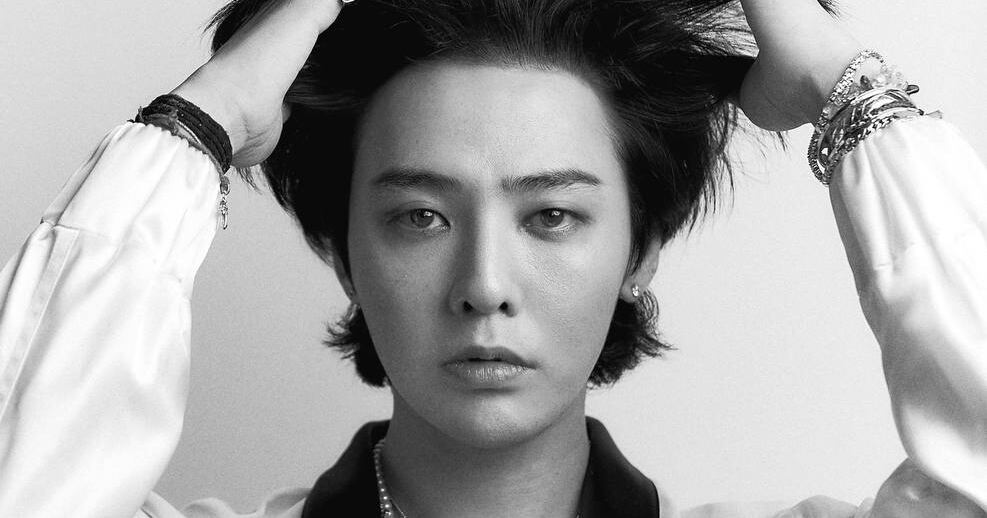
Profile
Kwon Ji-yong
Korean: 권지용
Born: August 18, 1988
From: Seoul, South Korea
Group: BIGBANG
Core roles: leader, rapper, singer, songwriter, producer
Solo debut: Heartbreaker, 2009
Agency: Galaxy Corporation
Label and distribution: Galaxy and Empire for recent solo work
Fashion label: PEACEMINUSONE
A child performer before K-pop knew what to do with him
Kwon Ji-yong began performing as a child. At roughly six years old, he appeared as a member of Little Roo’Ra, a children’s version connected to the popular group Roo’Ra. The project ended, but the entertainment industry did not leave him alone. He trained under SM Entertainment for several years, became interested in hip-hop after hearing Wu-Tang Clan, and entered a different musical education than the one being designed for a conventional child star.
At twelve, he participated in the Korean hip-hop compilation 2001 대한민국 Hip Hop Flex, making him one of its youngest rappers. He then moved into YG Entertainment, where he trained for years alongside Dong Young-bae, the future Taeyang. They were expected at one point to debut as the hip-hop duo GDYB.
The stage name is built from his given name. “Ji” sounds like the English letter G, and “yong” means dragon. His birthday also falls in the Year of the Dragon. Convenient branding, except he had to spend the rest of his career living up to it.
Building BIGBANG from the song file outward
YG changed course and formed BIGBANG through a 2006 documentary. G-Dragon became leader of the five-member lineup with Taeyang, T.O.P, Daesung, and Seungri. He was only eighteen at debut, but he had already spent much of his life in rehearsal rooms.
The first album established the group without immediately defining a generation. The breakthrough came when G-Dragon’s writing moved to the center. “Lies,” released in 2007, fused electronic dance production, hip-hop phrasing, and a huge wounded chorus. It dominated Korean charts and won major Song of the Year awards. “Last Farewell” and “Haru Haru” confirmed that the success was not a one-song accident.
G-Dragon’s leadership was musical before it became symbolic. He wrote, composed, guided recording, shaped concepts, and understood the members as separate instruments. T.O.P’s low rap did not need to resemble his nasal elasticity. Taeyang’s R&B voice, Daesung’s rough power, and Seungri’s lighter tone could each carry different parts of the same song.
That model influenced later generations of idol producers. The point was not simply “an idol wrote a song.” The public associated BIGBANG’s identity with a named member’s creative decisions. Authorship became part of the mythology and the marketing, then the hits kept supplying receipts.
The writer and producer behind several eras of bad decisions
G-Dragon’s catalog moves from electronic pop and hip-hop to R&B, rock, acoustic balladry, trap, and deliberately awkward hybrids. His strength is not technical purity in one genre. It is knowing when a strange element will make a pop song unforgettable.
“Lies,” “Haru Haru,” “Tonight,” “Blue,” “Fantastic Baby,” “Loser,” “Bae Bae,” “Bang Bang Bang,” “If You,” “Sober,” “Let’s Not Fall in Love,” “Fxxk It,” and “Still Life” cover radically different emotional and production spaces. The common thread is an ear for member contrast, sticky melodic phrases, and arrangements that leave visual openings for performance.
He also writes romantic failure with suspicious fluency. BIGBANG’s catalog is full of men recognizing their damage somewhere between the second verse and the final chorus. G-Dragon rarely writes himself as a spotless hero. He is vain, apologetic, lonely, manipulative, exhausted, or all five before the beat changes.
His work with T.O.P on the GD & TOP album showed how two rappers with opposite tones could carry a full project. “High High,” “Oh Yeah,” and “Knock Out” used personality as arrangement. His collaboration with Taeyang on “Good Boy” later turned the contrast between swagger and vocal smoothness into a club record.
Solo eras: every album argues with the previous one
Heartbreaker (2009): His first solo studio album arrived with platinum-blond hair, electronic production, public fascination, and plagiarism accusations surrounding the title track. Representatives connected to Flo Rida’s camp later said the songs were not plagiarized, and Flo Rida appeared on a remix. The album won Album of the Year at MAMA and established that G-Dragon could carry a blockbuster cycle outside BIGBANG.
One of a Kind (2012): The EP moved between the swagger of “One of a Kind,” the playful brat energy of “Crayon,” and the bruised restraint of “That XX.” It distilled the G-Dragon contradiction: luxury and insecurity sharing a closet.
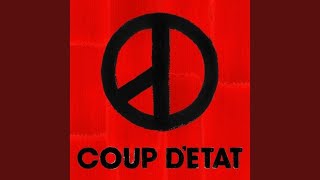
Coup d’Etat (2013): His second full album used international collaborators including Missy Elliott, Diplo, Baauer, Sky Ferreira, Boys Noize, and others without turning into a guest-list brochure. “Crooked” became one of his defining solo songs because its punky release disguises loneliness under the best bad-night chorus imaginable.
Kwon Ji Yong (2017): Released through a USB device instead of a conventional CD, the EP triggered an industry argument over whether the object qualified as an album. The music was more personal. “Untitled, 2014” removed spectacle and left his voice at the piano, while “Bullshit” and “Super Star” explored the uglier side of fame and self-image.
Übermensch (2025): After years without a full solo album, he returned with “Power,” “Home Sweet Home” featuring Taeyang and Daesung, “Too Bad” featuring Anderson .Paak, “Drama,” and a project designed around the split between G-Dragon the public construction and Kwon Ji-yong the person maintaining it. The title invites philosophy homework, but the album still remembers that pop music needs songs.
The accompanying world tour began in Goyang in March 2025 and expanded globally. It placed him back in the touring system not as a nostalgia guest, but as an active solo artist with a new album to defend.
A voice nobody would select in a blind search for “correct idol tone”
G-Dragon’s rap voice is nasal, sharp, elastic, and highly mannered. He changes pronunciation, pitch, spacing, and attitude to make a line recognizable before the listener processes the words. Purists can argue about technique. Producers understand the value of a voice that cannot be mistaken for stock audio.
His flow often prioritizes character over density. He can rap rapidly, but he is more interested in the exact pause, sneer, clipped vowel, or melodic turn that gives a verse identity. He also sings despite owning a voice that sounds fragile under pressure. That fragility became useful in “Untitled, 2014,” “If You,” “Black,” and “Divina Commedia.” A more polished singer might produce prettier notes and less believable damage.
Live performance has varied across health, touring strain, military service, long hiatuses, and different eras of vocal conditioning. A serious fan profile can admire the stage authority without pretending every note arrives untouched by circumstance.
Fashion, art, and the economy of being copied
G-Dragon’s fashion influence extends beyond wearing expensive clothes supplied by brands. He mixes luxury, streetwear, womenswear, vintage, punk references, Korean styling, and deliberate damage. He made painted nails, pearls, oversized tailoring, tiny sunglasses, scarves, brooches, and gender-fluid combinations visible within mainstream male idol styling years before many became common.
Chanel appointed him an ambassador, and his relationship with the house helped change how global luxury treated Korean male artists. He did not arrive at fashion week as a regional promotional guest hidden in the second row. He became part of the event’s attention economy.
His label PEACEMINUSONE, created with longtime collaborator Gee Eun, turned his daisy symbol and personal design language into clothing, accessories, exhibitions, and collaborations. The missing petal became recognizable enough to survive repeated imitation.
Nike collaborations, including PEACEMINUSONE Para-noise and Kwondo footwear, created global resale demand. He has also collected art, participated in exhibitions, and treated visual culture as part of authorship rather than packaging added after the music.
Not every choice is good. That is why the influence matters. Risk requires enough public failure that the successes do not look preapproved by hindsight.
Drug cases, scrutiny, and the difference between accusation and outcome
In 2011, G-Dragon was investigated after testing positive for a small amount of marijuana. He said he had unknowingly smoked a marijuana cigarette offered in Japan. Prosecutors suspended indictment, citing the small amount and circumstances. The incident occurred in a country with strict drug laws and had serious public consequences even without a trial conviction.
In October 2023, police booked him over a separate allegation of illegal drug use based on a witness statement. He denied using drugs, voluntarily appeared for questioning, and tested negative in preliminary and detailed National Forensic Service analyses. Police ultimately closed the case without referring it for prosecution because they lacked supporting evidence.
The distinction matters. Reporting that he was investigated is accurate. Reporting the 2023 allegation as proven is not. Several media outlets were criticized for treating gestures, speech, and edited clips as amateur diagnosis before forensic results existed. Some later apologized.
After the 2023 case, he announced plans for a foundation addressing drug abuse and addiction, framing the issue around treatment and support instead of tabloid spectacle.
Leaving YG, joining Galaxy, and returning on his own timing
G-Dragon completed mandatory military service from 2018 to 2019. His contract relationship with YG eventually ended, and in December 2023 he signed with Galaxy Corporation, an entertainment and technology company.
In June 2024, KAIST appointed him a visiting professor in its Department of Mechanical Engineering through a collaboration exploring entertainment technology, artificial intelligence, avatars, and K-content. The title inspired predictable jokes, but the appointment was an industry-technology role, not a claim that he had secretly completed a doctorate between fittings.
“Power” arrived in October 2024, his first solo single in seven years. “Home Sweet Home” followed with Taeyang and Daesung, and their MAMA performance reminded a room full of idols why BIGBANG stages had become industry folklore.
The 2025 album and tour restored the individual career. BIGBANG’s twentieth-anniversary plans in 2026 restored the group question around the current three-member lineup. G-Dragon now carries both histories at once: the solo artist proving he can still create movement, and the leader of a group whose legacy is too influential and too complicated for a clean reunion slogan.
JusPeace and public work
G-Dragon has made charitable donations across disasters, hospitals, children’s causes, and other campaigns over his career, sometimes privately and sometimes through public drives. Following the 2023 investigation, he established the JusPeace Foundation, combining “justice” and “peace.”
The foundation has discussed addiction treatment, support for vulnerable groups, artistic work, and social problems connected to cultural influence. Its long-term value will depend on sustained programs, not the elegance of the name. Still, directing a humiliating public accusation toward treatment advocacy was a more useful response than releasing a vague statement and disappearing.
Fandom file
BIGBANG fandom: V.I.P
Solo identity: G-Dragon, GD, Kwon Ji-yong. His fans also use several affectionate names, but search engines behave best with the legal spelling attached.
Start with the hits: “Heartbreaker,” “Crayon,” “Crooked,” “Who You?,” “Untitled, 2014,” “Power,” “Home Sweet Home,” “Too Bad.”
Then get less comfortable: “A Boy,” “Obsession,” “Window,” “Black,” “Super Star,” “Divina Commedia,” “Drama,” and the full BIGBANG writing catalog.
What shallow profiles miss: Fashion is not a separate hobby stapled to the music. G-Dragon’s career is about construction: songs, voices, silhouettes, symbols, and the public character called G-Dragon. Kwon Ji-yong keeps writing about what that construction costs.
Official videos and CVM Reacts
The recent videos show the full system working at once: authorship, styling, choreography, performance direction, and the self-aware celebrity character that keeps arguing with Kwon Ji-yong inside the songs.
TOO BAD
DRAMA
Official G-Dragon video tracking
This tracker follows official solo videos across G-Dragon’s catalog and refreshes daily and total YouTube views.
Official Socials
Official site: G-Dragon
Official Instagram: @xxxibgdrgn
Official YouTube: G-DRAGON
BIGBANG archive: YG Entertainment
KAIST appointment: KAIST News
2023 case outcome: KBS World
Recent discography: Release and chart index
Checked against official releases, YG archives, Galaxy-era materials, KAIST, Korean police reporting, published interviews, credits, chart histories, and fashion archives. Influence is described with examples. Allegations are separated from documented outcomes.