
BABYMONSTER CLIK CLAK Performance React: Control Wins
The first film keeps the MV’s black-and-white street mood and shows the choreography’s bones. The special version adds smoke, a horizon stage and enough black fabric to make the same heel tap feel like a board meeting with excellent posture.
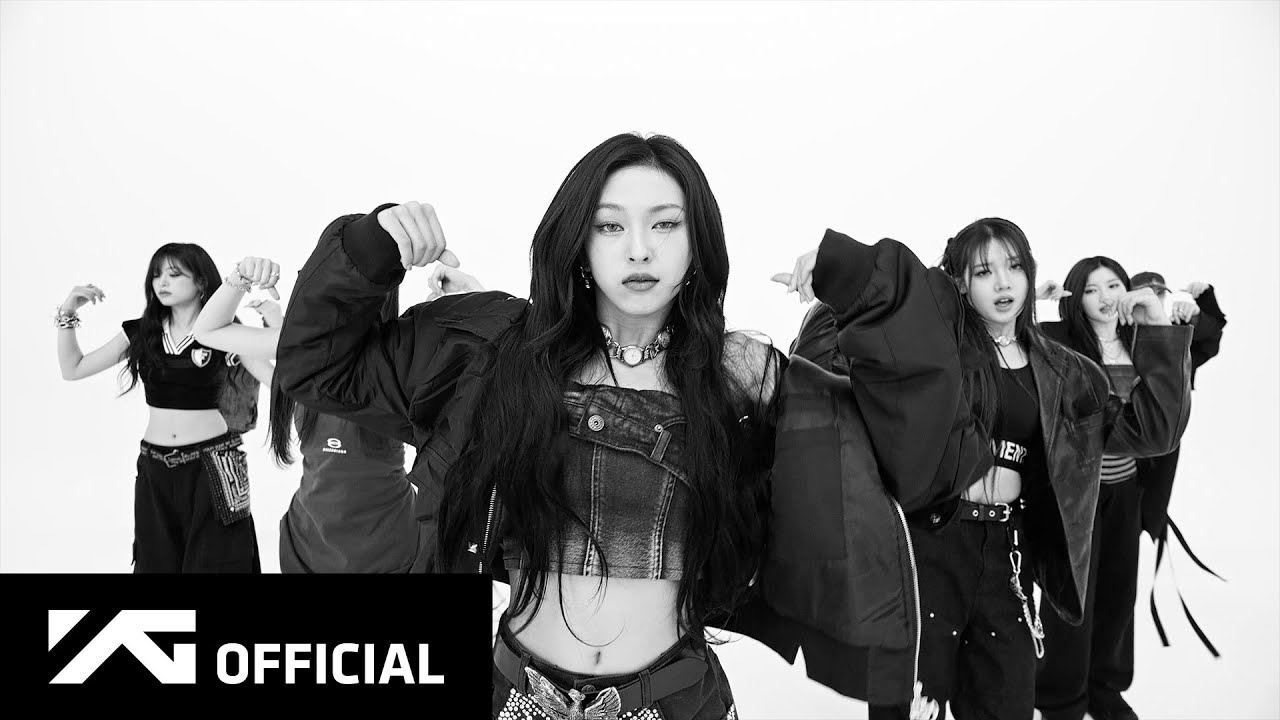
Video presentation: black-and-white performance
Overall vibe
First thought: This choreography understands that swagger dies the second everybody looks desperate to prove they have it.
Sound check: Minimal low-end hip-hop, dry drums, seven rap tones and a late release that lets the group stop walking like a threat and finally become one.
The moment I leaned in: The formation stays restrained long enough that the final group dance feels earned instead of arriving because the K-pop timer demanded one.
The side-eye: Stylish camera movement is welcome. A camera trying to out-rap the rappers should be fined.
Current status: I have ranked multiple heel taps by emotional authority. This site has changed me.
What changed every time I replayed it
First watch: I expected the usual performance-video service package: cleaner formations, fewer sets, and a camera that occasionally remembers choreography has feet. Instead, the restraint became the story. The routine holds energy in the hips, shoulders, walks, and small dismissive gestures. Nobody needs to throw the whole body at every count.
Second watch: I started comparing weight instead of accuracy. RUKA lets a movement settle behind the beat. ASA clips the same phrase closer to the percussion. RAMI grounds it. PHARITA lengthens it. RORA makes stillness look intentional. CHIQUITA sells nerve through the face. AHYEON hits harder without turning every count into an emergency broadcast.
Third watch: The heel tap stopped looking like a cute title gesture and started functioning as visible percussion. The routine translates “clik clak” into a foot, then builds the rest of the body around that sound. Walking patterns, hip placement, wrist changes, and head angles keep the hook moving even when the choreography appears simple.
After watching both versions together: I preferred the first as a continuation of the music video, but the second taught me more about the members. The horizon stage removes the city texture and forces silhouette, spacing, and timing to carry the frame. Same choreography, different evidence.
Lyrics and hook vibe before we discuss the hips
CLIK CLAK turns the sound of heels, jewelry and money into a confidence rhythm. All seven members rap, so the choreography cannot rely on a clean split between “rapper movement” and “vocalist movement.” Everybody has to hold the same low-temperature swagger without becoming seven copies of RUKA.
The routine’s smartest choice is restraint. Hands describe the lyric, hips settle behind the step, and walking patterns carry more attitude than constant full-body attack. The members look like they have somewhere expensive to be and no intention of explaining the route.
Version one: freedom inside the black-and-white frame
The November 3 film continues the official MV’s monochrome language. That makes it feel like a missing chapter rather than a promotional afterthought. The clothes, set and camera stay close to the song’s industrial street mood while wider shots reveal how the seven-member formation is organized.
Rie Hata and Kinjaz collaborators give the members a fixed structure, but the details are intentionally personal. RUKA lets movements hang behind the beat. ASA clips them closer to the percussion. RAMI uses grounded weight, while PHARITA keeps the same phrase longer and cleaner. RORA looks calm enough to make restraint feel intentional. CHIQUITA adds bite through the face. AHYEON attacks without turning every count into an emergency.
The latter section opens the formation and increases the energy. Because the first half did not spend every movement at maximum volume, the explosion has somewhere to go.
The special performance video
Version two: same restraint, heavier room
The November 8 special moves the choreography to a minimalist horizon stage with smoke and severe black styling. It shares production language with the DRIP special performance, making the double titles look like two sides of the same comeback: DRIP is colorful release; CLIK CLAK is controlled pressure.
The darker stage makes silhouette and spacing more important. Small wrist changes and head angles read clearly because the background is not competing. The members’ stated goal in the making film was to show their own freedom inside structured choreography. That is exactly the tension: formation lines remain disciplined while individual groove lives in the spaces between counts.
I prefer the first version as an extension of the MV. It has more location character and the monochrome street texture fits the song. I prefer the special version for comparing members because the horizon removes distractions. Again, two official uploads earn one comparison page because the difference is visible and discussable.
Why simple choreography can be harder to sell
Busy choreography provides camouflage. If arms, levels, formations, and camera cuts change every second, the audience can confuse activity with authority. CLIK CLAK removes that protection. A walk has to land. A pause has to feel chosen. A small head turn has to carry enough intention that the viewer does not start checking the background.
That makes groove the actual difficulty. Seven members must share a rhythmic language without flattening their individual bodies into one company-approved texture. The goal is not perfect sameness. The goal is a readable group while RUKA remains RUKA and PHARITA remains PHARITA.
The choreography succeeds because it treats restraint as active work. Muscles still control the stop. Eyes still choose a target. Weight still transfers on time. The performers look unhurried because they rehearsed the conditions that make unhurried movement readable.
The camera can support swagger or kill it
Performance videos often promise choreography and then edit like the camera is competing for center position. CLIK CLAK mostly avoids that problem. The lens moves enough to preserve the song’s low-temperature threat, but wider frames allow formations and footwork to remain visible.
Version one uses location texture as part of the rhythm. Industrial surfaces, black-and-white contrast, and street space make the choreography feel embedded in the music video’s city. Version two uses the opposite method. Smoke, horizon lighting, and severe black styling reduce context so the viewer reads line, silhouette, and spacing.
I still wanted several longer locked shots. The choreography does not need protection from its own simplicity. Let the seven members hold a frame long enough for viewers to compare timing without the edit completing the sentence for us.
All seven members share the concept without sharing one body
The original song assigns rap to every member, so the choreography cannot park the vocal line in pretty transitional poses while the designated rappers perform attitude. Everybody has to inhabit the same concept. That is useful because posture reveals comfort faster than a line distribution does.
RUKA and ASA look familiar with the low center and delayed weight. RAMI brings density. RORA’s calm stops restraint from looking unfinished. PHARITA proves elegance and swagger are not opposites. CHIQUITA uses expression to make smaller gestures read larger. AHYEON pushes harder but stays inside the groove.
The performance does not prove positions are meaningless. It proves positions are starting points, not prison cells. Versatility should expand the group’s options without pretending every member has identical experience. The rappers keep their specialty. The vocalists gain another usable language.
The cultural and industry lens: ease is manufactured honestly
K-pop audiences often praise “effortless” performers without acknowledging the labor required to look that relaxed. Trainees learn where the camera is, how to preserve a face while breathing hard, how to match a formation without staring at the floor, and how to repeat the same three minutes until instinct replaces visible calculation.
That hidden labor can become unhealthy when companies treat exhaustion as proof of commitment. CLIK CLAK offers a better visual lesson: difficulty does not have to look painful. The performers can show control without advertising suffering. Fans still get precision, but the routine does not turn strain into a moral virtue.
From a modern Confucian lens, the choreography balances collective order with individual responsibility. The formation works only when each member keeps her timing and also adjusts to the group. From a Buddhist lens, swagger becomes less convincing when the performer grasps too hard at the image. The members look coolest when they stop chasing cool and commit to the count.
My military brain recognizes disciplined freedom. The formation sets the boundaries. Inside those boundaries, each member chooses weight, gaze, and timing. Good teams do not erase difference. They make difference useful to the mission.
What the special version adds, and what it cannot replace
The special performance is not a duplicate because it changes the evidence. The first version proves the choreography belongs inside the CLIK CLAK visual world. The second proves the choreography can survive after the world is removed.
The clean stage makes comparison easier, but it also loses some personality. Industrial streets and monochrome location texture give the first film a sense of place. Smoke and horizon lighting make the second elegant, yet closer to a controlled presentation deck. I understand the board meeting joke because the members look ready to acquire the building.
Neither version replaces the original song review. The main React covers lyrics, all-seven rap delivery, the music video, and the status-flex argument. This companion page earns its existence by studying movement, camera, formation, and how performance changes when scenery stops doing part of the work.
Details worth rewinding
- The heel tap is percussion: feet do not merely illustrate the title; they become another visible drum part.
- The hips stay behind the walk: posture creates unhurried confidence without requiring a constant “power” face.
- RUKA’s sunglasses toss became a live-stage detail: the gesture fits a choreography built from dismissive little luxuries rather than giant tricks.
- The final group section changes the energy contract: restrained solos and units finally hand control to a larger, more forceful formation.
- Black and white separates texture from color: leather, metal, smoke and silhouette have to carry the visual interest.
- All seven rap and dance the same concept: no member is parked in a pretty vocal pose while the designated rappers perform the attitude.
Credits and performance file
| Artist | BABYMONSTER |
|---|---|
| Original song | CLIK CLAK |
| Performance video | November 3, 2024 |
| Special performance | November 8, 2024 |
| Choreography | Rie Hata, Kinjaz collaborators |
| Lyrics | Malaynah, Ricky Luna, Rolando Luna, CHOICE37, MASTA WU |
| Composition | Ricky Luna, Rolando Luna, Keith Bykoff |
| Arrangement | Ricky Luna |
Control is not the absence of effort
There is a lazy way to watch restrained choreography and call it easy. That misses the point. Large jumps and fast sequences advertise difficulty. A controlled walk hides the corrections that keep shoulders level, spacing clean, weight centered, and the face connected to the lyric.
The members also have to resist overperforming. Every idol knows the camera rewards intensity, so holding back can feel riskier than adding another expression. CLIK CLAK asks them to trust the groove and let the viewer come closer. That confidence reads most clearly when a member finishes a gesture, leaves the silence alone, and does not decorate the count because empty space made her nervous.
This is why the two videos reward replay. The first watch sees style. Later watches see decisions: who delays a step, who attacks the consonant, who uses the eyes before the body moves, and who understands that stillness can be part of choreography. The routine is not impressive because it looks hard. It is impressive because seven performers make discipline look like personality.
What I love, what I side-eye, and the verdict
CLIK CLAK’s choreography is better than choreography that announces how difficult it is. The difficulty is control: seven performers sharing a groove without erasing their individual weight, timing and face.
The first version belongs to the song’s world. The special version puts that world under cleaner laboratory lighting. Both confirm the same thing: BABYMONSTER looks most convincing here when nobody appears to be begging the audience to notice how cool she is.