BABYMONSTER CLIK CLAK React: Seven Rappers, One Walk
BABYMONSTER puts all seven members on rap duty, drains every color from the room, walks through jewelers and abandoned factories, and discovers that a heel tap can carry more attitude than an entire luxury-car commercial.
Video presentation
Overall vibe
First thought: Oh, they confiscated the color, the singing assignments and everybody’s indoor voice. We are apparently conducting business in an alley now.
Sound check: Minimal hip-hop beat, thick low end, dry percussion, seven different rap tones, a hook built from shoe sounds and money noises, then a late group section that finally releases the pressure.
The moment I leaned in: The quieter members do not imitate RUKA and ASA. Once every member starts treating rap as rhythm instead of a costume, the whole experiment becomes much more interesting.
The side-eye: The English flex lyrics occasionally sound like somebody emptied a designer handbag onto a rhyme sheet. Tone is carrying several bars home.
Current status: The heels tapped. The jeweler has concerns. I replayed it anyway.
What changed every time I replayed it
First watch: The monochrome did most of the talking. I registered seven black outfits, seven controlled stares, a jeweler who probably regretted opening that morning, and a beat so bare that every shoe tap sounded like a personnel announcement. The stunt was obvious: let every member rap and see who survives the empty space.
Second watch: The stunt stopped being the point. RUKA and ASA still sounded like the members with the deepest rap habits, but the vocal-line members were not trying to impersonate them. RORA used calm. PHARITA kept polish in her consonants. RAMI brought weight through texture. CHIQUITA used nerve. AHYEON attacked the pocket as if the beat owed her money. The differences made the song feel like a group record rather than seven audition clips stitched together.
Third watch: I heard how much the hook depends on body percussion. The title is already an onomatopoeia, but the choreography completes the sound. Heels strike, hips settle, shoulders cut, and walking becomes part of the arrangement. The song does not merely describe an entrance. It engineers one.
After the special performance: The expensive scenery became less important. Under tighter lighting and performance framing, the members had to carry the flex through formation, gaze, and timing. That version confirmed the concept was not hiding behind a jeweler, a rooftop, or clever monochrome production. The group could make the sparse beat look occupied.
Lyrics and meaning
CLIK CLAK is a money-and-status flex built around sound. The title imitates heels striking the floor, jewelry or money making noise, and the quick mechanical confidence of something expensive snapping into place. BABYMONSTER is not telling a story with a beginning and a lesson. They are building a walk: hips back, gaze forward, every step announcing itself before the person arrives.
The clever part is not the wealth vocabulary. K-pop has enough cars, diamonds and bank-account boasts to fund a fictional economy. The useful idea is that confidence has a rhythm. “Clik clak” turns status into percussion. The members do not need to stop the beat and explain who they are. Their footsteps become the explanation.
That makes the song closer to a cypher-shaped character test than a traditional vocal title track. Every member receives the same basic assignment,ride the minimal beat and sound unbothered,but the tones are different enough that the track keeps changing faces.
All seven members rap: stunt, experiment or actual point?
YG promoted CLIK CLAK as the first BABYMONSTER track where all seven members rap. That framing could have become a talent-show trick: look, the vocalists can speak quickly too. The better choice was keeping the beat sparse. Speed is not the test. Pocket, tone and attitude are.
- RUKA: sounds the most settled. She leaves air around phrases and trusts her lower tone to carry weight.
- ASA: brings sharper articulation and more obvious rhythmic play. She treats consonants like drum hits.
- AHYEON: attacks with bright pressure. Even when she lowers the vocal temperature, the competitive energy stays visible.
- RAMI: has the textured voice that makes a line feel heavier without forcing a fake “rapper voice.”
- RORA: uses calm and a warmer lower color. Her restraint is more convincing than borrowed aggression would have been.
- PHARITA: keeps an elegant edge in the phrasing, proving swagger does not require sanding every voice into the same rough texture.
- CHIQUITA: sells the visual confidence immediately. The rhythmic work is still developing, but the camera believes her before the beat asks questions.
Not every member suddenly becomes a full-time rapper, and the song does not prove they should. It proves the group has more rhythmic colors than the usual position labels suggest. That is a much better result.
The lyric problem: confident, catchy and occasionally wearing somebody else’s jewelry
The flow is stronger than the writing. Luxury goods, money, hips, shoes and unbothered superiority arrive exactly where you expect them. Some lines land because the sound is satisfying. Others feel inherited from a general YG flex drawer. The all-English approach makes every awkward phrase harder to hide because there is no language switch providing a new texture.
I still prefer the song’s restraint to a title track that adds sirens, brass, a choir and three trap drops because nobody trusts the performers. CLIK CLAK gives the members room. The production by Ricky Luna, with composition from Ricky Luna, Rolando Luna and Keith Bykoff, knows the empty space is part of the swagger.
The final section is important because the track cannot stay emotionally flat forever. The energy gathers, bodies join, and the restrained walk turns into group release. It is the familiar YG party-ending impulse in a smaller room. I can predict it. I also understand why it works.
The black-and-white MV: what changes when color cannot help
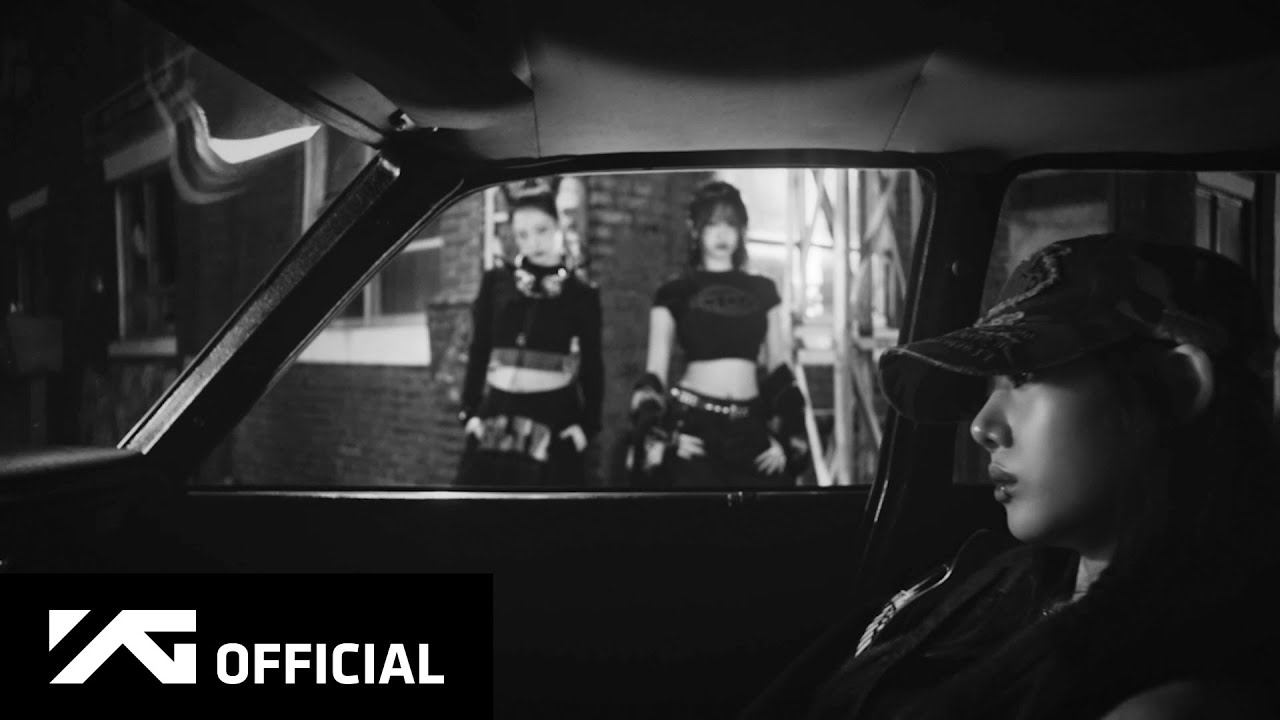
The music video commits to monochrome, vintage alleys, abandoned industrial spaces, a jeweler and stark styling. Removing color forces the eye toward texture: leather, metal, concrete, smoke, hair, jewelry and the sharp contrast of faces against black clothes. It also prevents seven separate sets from feeling like seven unrelated commercials.
The camera moves with the beat but keeps the members close enough for attitude to matter. Wide lenses distort the edges, rooftop shots open the scale, and quick changes between tight interiors and larger industrial spaces make the song feel like it is moving through a city after businesses have closed.
The jewel-store imagery is obvious on purpose. The song talks like wealth is noise, so the video places the members around objects designed to catch light even in black and white. The real joke is that the faces keep winning. Diamonds are reduced to background texture while the group behaves like the expensive item.
The special performance: same song, different pressure
YG released the official CLIK CLAK special performance on November 8, 2024, under exact video ID 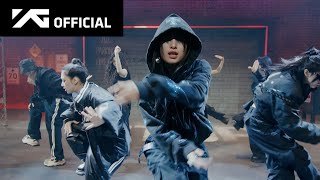 B1gDCOTpDzADaily+13.5KTotal views30.2M. It belongs to this same song family, not a second review. The black styling, spotlights, heel-led gestures, and tighter performance framing pull attention away from the music video sets and toward how each member rides the sparse beat.
The useful difference is proximity. The original video sells a monochrome city and jewel-store fantasy; the special performance makes the group carry the status flex with formation, gaze, and body percussion. That makes the quieter members easier to read and confirms that the all-seven rap concept survives without expensive scenery doing the shouting.
The complete performance-video crew and choreography authorship were not published in the authoritative sources reviewed. Those credits are therefore left unassigned rather than borrowed from fan speculation or a different BABYMONSTER version.
Easter eggs, surprises and rewind points
- The MV arrived before the album: CLIK CLAK was pre-released on October 30, two days before the full DRIP album, after a unusually long first-verse preview had already teased the experiment.
- It became a double title track: the song sits beside DRIP, not underneath it as random filler.
- The rooftop used chroma key: the members later mentioned the transformation while reacting to their own MV.
- The monochrome is continuity: both the MV and first performance video keep the black-and-white language, making the choreography feel like an extension of the same world rather than unrelated promotional content.
- The hook becomes movement: heels, hip placement and walking patterns translate “clik clak” into body percussion.
- This is complete OT7 BABYMONSTER: all seven voices rap and all seven members appear, before RAMI’s later health hiatus changed the visual lineup.
- No G-DRAGON credit here: his widely discussed contribution belongs to DRIP. CLIK CLAK has its own writing and production team.
The confidence problem: flexing is easy, owning the flex is harder
Money songs are not automatically shallow. Wealth can represent survival, revenge, autonomy, status, or the fantasy of never asking permission again. CLIK CLAK mostly stays with the surface vocabulary: jewelry, money, movement, and the certainty that everybody is watching. That makes it fun, but it also makes the members responsible for supplying the personality that the lyrics leave blank.
The best moments happen when a member bends the same luxury language toward her own presence. RUKA sounds settled rather than impressed by herself. ASA treats the rhyme like a machine she can take apart. RORA does not fake aggression to prove she belongs. Those decisions turn generic flexing into character. The weaker bars remain weak. Performance can carry a line home, but it cannot give the line a better passport.
There is also a useful gender reversal in seven young women using the grammar of rap bravado without asking to become softer, sweeter, or romantically available. They occupy the frame, evaluate the room, and treat attention as something already owed. I like that posture. I just want future songs to give them more specific reasons for it than a designer inventory.
The YG family resemblance and the risk of becoming predictable
YG has a recognizable ending reflex: gather the bodies, release the pressure, and turn the final section into a party or chant. CLIK CLAK scales that habit down, but the family resemblance remains. The late group release works because the earlier sections stay restrained. It also works because listeners have been trained to expect the gate to open.
That familiarity can become a strength when a new group uses it to establish lineage. It can become a cage when every song must prove it belongs to the same company museum. BABYMONSTER does not need to reject the YG vocabulary. The members do need enough writing, production, and visual choices that the vocabulary begins sounding like theirs.
CLIK CLAK gets closest to that goal through vocal color. Seven people receive one minimal assignment and refuse to become one voice. The track is less convincing when it reaches for inherited luxury imagery, and more convincing when it lets the members’ natural tones create status. That is the route forward: fewer brand-name props, more member-specific nerve.
The macro and micro view
At the micro level, this is a pocket exercise. Every breath, pause, consonant, and look has room to fail because the instrumental does not provide camouflage. At the group level, it is a position test that proves official labels do not describe the full toolbox. At the industry level, it is a smart pre-release because the concept creates an easy headline without requiring the song to become the album’s largest production.
My military brain appreciates the clear task: seven members, one beat, no hiding. My cultural side-eye notices the opposite problem: a team can praise flexibility until every person is expected to perform every role. Versatility should expand choice, not erase specialty. RUKA and ASA do not become less valuable because the vocalists can rap. The vocalists do not need permanent rap assignments because they handled one experiment well.
The video also understands collective status. Nobody stands alone as the final expensive object. The group image carries the brand. That fits idol economics, where individual appeal and team identity must keep negotiating. CLIK CLAK lets each member flash a distinct tone, then pulls all seven back into one walk.
Credits
| Artist | BABYMONSTER |
|---|---|
| Lyrics | Malaynah, Ricky Luna, Rolando Luna, CHOICE37, MASTA WU |
| Composition | Ricky Luna, Rolando Luna, Keith Bykoff |
| Arrangement | Ricky Luna |
| Album | DRIP · 1st full album |
| MV release | October 30, 2024 |
| Song release | November 1, 2024 |
| Genre file | Minimal hip-hop |
What I love, what I side-eye, and the verdict
CLIK CLAK is more valuable as a group test than as a lyrical masterpiece. It proves BABYMONSTER can hold attention without vocal fireworks, a wall of production or a single fixed rap identity. The beat is bare enough that every tone has to stand up by itself.
The words sometimes shop in the generic luxury aisle. The performances do not. RUKA’s weight, ASA’s precision, RAMI’s texture, RORA’s calm, PHARITA’s polish, CHIQUITA’s nerve and AHYEON’s attack give the same flex seven different receipts. I would like better bars. I would not like a busier song.