
RAERAE REACTS · KATSEYE · MUSIC VIDEO
KATSEYE Debut React: Two Minutes, No Introduction
Bottom line: “Debut” is a sharp two-minute announcement that proves KATSEYE can move like a unit before it proves what the unit sounds like when nobody is dancing. The song has confidence, clean rhythmic instincts, and a hook that knows how to leave. It also ends exactly when I expect the members to reveal another layer. As an introduction, it is effective. As a complete song, it feels like the appetizer walked off with the plate.
KATSEYE
June 28, 2024
SIS (Soft Is Strong)
Ryan Tedder, Tyler Spry, Grant Boutin
bYg6aMDQ_TA
Strong entrance. Very short conversation.
Watch first
My first watch
First thought: The group has entered the building, but the song forgot to unpack.
First sound that grabbed me: The clipped percussion gives every pose and handoff somewhere clean to land.
First member moment: Daniela attacks the choreography like the beat owes her money, while Manon proves stillness can pull focus without begging.
First chorus reaction: The hook is simple, blunt, and designed to stamp the group name into memory.
Immediate complaint: A debut song should introduce voices as aggressively as this video introduces faces.
Replay status: I understood the strategy more on the second listen, but I still wanted a bridge, a vocal turn, or thirty additional seconds of personality.
What changed every time I replayed it
The first replay made the short runtime feel less accidental. “Debut” behaves like a mission statement. It does not build a large emotional arc because the production wants impact before intimacy. The percussion arrives dry and close. The vocal phrases remain clipped. The hook repeats the central claim with the confidence of a logo being pressed into wet concrete. I stopped waiting for a conventional bridge and started listening to the negative space around the beat.
The second replay belonged to the members’ handoffs. The arrangement leaves tiny pockets where tone and attitude matter. Lara gives phrases a knowing edge. Sophia brings directness and stability. Daniela sounds physical even before the choreography confirms it. Megan adds brightness and speed. Manon’s lower color helps the group avoid becoming one thin pop texture. Yoonchae’s lighter tone fits the track’s quick, youthful snap. None of them receives enough time to establish a complete vocal identity, but the contrast is audible if you stop treating the chorus as the entire song.
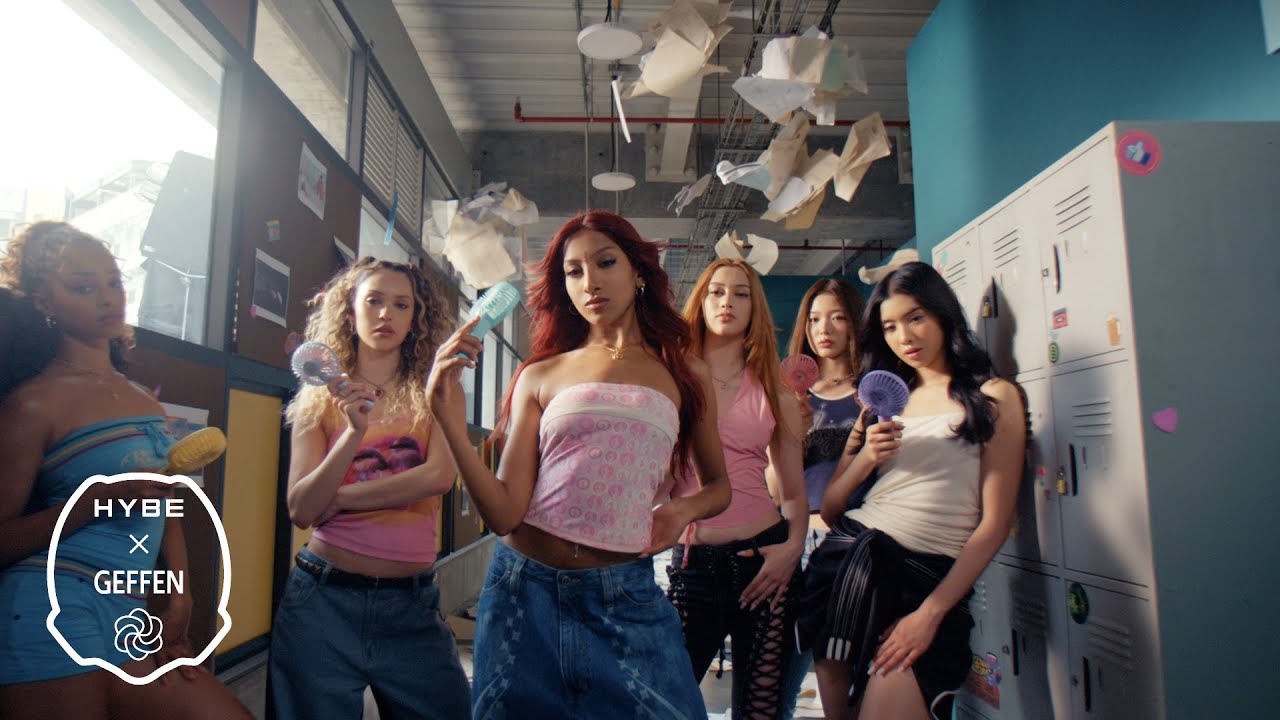
The third replay belonged to the camera. The video alternates between six-person geometry and isolated close-ups, then returns each face to the formation. That pattern teaches recognition. We meet the members one by one, but the edit keeps insisting that KATSEYE is the product. This is not a documentary introduction. It is visual branding. The group has already survived auditions, rankings, eliminations, and public evaluation. The music video skips the vulnerable training story and presents the finished shape.
By the fourth replay, that finished shape started to look like the song’s biggest strength and its biggest limitation. Precision creates authority. Precision can also hide interior life. KATSEYE looks ready because every formation closes neatly and every expression lands on cue. I still leave the video knowing more about the group’s discipline than its emotional range. “Debut” gives me a silhouette. “Touch” and later releases would have to put a pulse inside it.
A song called Debut that refuses to introduce itself
The joke in the title is useful. Most debut singles perform a careful social ritual: here are the members, here is the concept, here is the sound, and here is the reason you should care. “Debut” rejects the polite version. The lyric does not ask whether KATSEYE deserves a place. It acts as if the decision has already been made. The members are not auditioning anymore. The audience is catching up.
That confidence makes sense after The Debut: Dream Academy. Sophia, Lara, Daniela, Megan, Manon, and Yoonchae were assembled through a joint HYBE and Geffen project that turned training and selection into public content. The six members came from different national, ethnic, and cultural backgrounds, then trained inside a system shaped by Korean idol methods and American pop-market goals. By the time the single arrived, “hello, nice to meet you” would have ignored the machinery everybody had already seen.
The song therefore treats arrival as a fact, not a promise. Daniela described it as bold, authentic, empowering, and confident. Manon said the track emphasized KATSEYE’s strong side. Those comments match the finished record. The production does not spend much time on softness, ambiguity, or doubt. It chooses one side of the group’s future “soft is strong” idea and underlines the strong part twice.
The beat is doing most of the talking
Ryan Tedder, Tyler Spry, and Grant Boutin are credited as producers, with Omer Fedi also among the writers. The track’s construction reflects pop professionals who understand how little material a hook needs when rhythm carries the identity. The drums and programmed elements provide clean edges. Phrases arrive in compact blocks. Small ad-libs live around the main lines, giving the arrangement motion without crowding it.
The strongest production choice is restraint. A busier instrumental would compete with the choreography and make the short song feel even smaller. Instead, the track gives the members room to strike poses vocally. Consonants become percussion. Breaths become punctuation. Repetition turns into confidence because the beat never sounds nervous about leaving space.
The weakest production choice is also restraint. The song protects its clean silhouette so carefully that it avoids a messy or surprising turn. No bridge changes the argument. No sustained vocal section lets the members escape the rhythmic grid. No final chorus meaningfully raises the stakes. The track ends before repetition becomes annoying, but it also ends before confidence becomes revelation.
The six-member machine and the people inside it
Direct, centered energy that helps the formation feel led rather than merely synchronized.
A vocal color with bite and an expression that can make a small phrase feel editorial.
Movement that reaches through the camera. She makes precision look competitive.
Quick, bright performance energy that keeps the group’s hard geometry from feeling heavy.
Lower vocal color and rare stillness. She understands that presence is not measured in steps.
A lighter tone and youthful snap that add contrast without breaking the group image.
The video is better at establishing these performance functions than the song is at establishing complete voices. That difference matters. A viewer can leave remembering who pulled focus in a close-up, yet still struggle to describe what each singer contributes to the record without watching line-distribution clips. For a visual-first launch, that may be acceptable. For a group expected to survive playlists, radio, and live stages, the music eventually has to do more of the identity work.
I do not blame the members for that limit. They perform the brief exactly as written. The question belongs to the creative direction: why gather six women with distinct cultural backgrounds, accents, tones, and performance histories, then introduce them through a song that values uniform impact over individual texture? The choice produces a clean debut. It postpones the more interesting conversation.
The lyrics are branding, but branding can still say something
The lyric’s surface message is empowerment. KATSEYE does not need permission, does not plan to shrink, and does not view the debut as a tentative first step. The group speaks from the other side of transformation. That language can sound generic if separated from context, but Dream Academy gives it weight. These members were watched, ranked, compared, edited, and judged before they released a single song. Declaring the audition finished is not empty confidence. It is a boundary.
The repeated assertion also works as a survival tactic. New girl groups are asked to be instantly recognizable, commercially legible, technically polished, culturally interesting, socially available, and grateful for every opinion. KATSEYE had the additional burden of explaining whether it was K-pop, American pop, global pop, or a corporate experiment with excellent cheekbones. “Debut” refuses that whole seminar. The group’s answer is movement, confidence, and a hook short enough to repeat before anybody finishes the question.
Still, empowerment lyrics need specificity if they want to grow beyond merchandise language. The song tells us the members have arrived. It does not tell us what they want to change after arriving, what arrival cost, or how six different people negotiate one public voice. Later interviews and the Netflix documentary exposed a far more complicated reality. The single chooses not to touch it.
The video makes manufacturing part of the fantasy
The industrial setting, hard formations, and controlled editing make the group look assembled on purpose. K-pop often hides labor behind effortlessness. KATSEYE’s launch had already sold the labor as content, so the video makes a smarter choice. It does not pretend six strangers naturally woke up with matching timing. It turns construction into power. The machinery is not backstage. The machinery is the aesthetic.
That reading becomes clearer whenever the camera moves from one member back to the full formation. Individuality is introduced, then disciplined into the group. The pattern mirrors idol training. A performer needs enough distinction to attract attention and enough control to serve the unit. Too little personality and she disappears. Too much uncoordinated personality and the formation breaks. The video keeps showing the balance without explaining it.
The choreography is therefore more than decoration. It demonstrates whether the HYBE training system can create one performance language across different dance backgrounds and cultural habits. The answer is yes, at least on camera. The members hit the same shapes while preserving different ways of occupying them. Daniela attacks. Manon suspends. Sophia steadies. Megan brightens. Lara sharpens. Yoonchae keeps the line quick. Uniform timing does not erase every difference.
The global-group question nobody can fit into two minutes
KATSEYE was built as a global girl group for an American-facing market, using a training model associated with K-pop and a label partnership between HYBE and Geffen. That makes every release carry a business argument. Can a multinational group use idol-level training and fandom infrastructure without pretending cultural difference is a costume? Can the members represent broad communities without becoming six walking flags? Can the music sound internationally accessible without becoming geographically anonymous?
“Debut” answers the commercial part more clearly than the cultural part. The song uses streamlined English-language pop. The choreography and member presentation reflect idol training. The video sells diversity through visible reality rather than a lecture. That is probably wise. Nobody wants a debut single to sound like a corporate inclusion webinar.
But representation creates pressure whether the song names it or not. An Asian American fan may see Lara, Megan, Daniela, Sophia, Manon, and Yoonchae and recognize a lineup that does not demand one narrow version of global beauty. A younger viewer may see her family, skin tone, accent, or mixed household reflected somewhere in the group. That value is real. It also should not trap the members into being inspirational every minute. Representation means they get to be excellent, messy, funny, wrong, ambitious, and occasionally underwhelming like everybody else.
What I love
I love the refusal to crawl into the room asking for approval. I love the rhythmic cleanliness and the way the beat leaves space for posture. I love that the video teaches all six faces without turning into a school roster. I love Daniela’s force, Manon’s stillness, Lara’s bite, Sophia’s center, Megan’s speed, and Yoonchae’s snap. The group image arrives fully formed.
I also love that the song understands its most useful function. It is not trying to be KATSEYE’s final artistic statement. It is the first flag in the ground. Teen Vogue described it as the group’s introduction, and the members later framed it as the strong side of their identity. The track delivers that assignment efficiently.
What I do not love
Two minutes is not automatically a crime. A short song can feel complete if every section earns its place. “Debut” feels cut short because its strongest unanswered question is musical. What happens when these voices are allowed to stretch? What happens when the group shifts from formation to friction? What happens when a bridge gives one member permission to crack the perfect surface?
The song also repeats its confidence without complicating it. Confidence becomes interesting when something tests it. The video supplies scale and movement, but no clear obstacle. The lyric names arrival, but no cost. The arrangement stays precise, but no surprise threatens the grid. I enjoy the record. I do not leave emotionally changed by it.
Finally, the member distribution serves recognition more than depth. Everyone appears. Not everyone receives enough material to establish a musical argument. That is a normal debut problem, especially with six members and a tiny runtime, but normal does not mean invisible.
Tradeoffs the debut team chose
The hook lands quickly. The song sacrifices a fuller arc.
The group looks coherent. Several tones remain underexplored.
The launch feels strong. The members’ inner lives stay offscreen.
The pop language travels easily. Cultural specificity arrives more through the lineup than the song.
The body communicates clearly. The plot barely exists.
The ending invites another click. It also feels like somebody took my bridge.
Facts, receipts, and RaeRae reading
Verified fact: KATSEYE released “Debut” on June 28, 2024 through HYBE and Geffen. The six-member lineup came from The Debut: Dream Academy. Ryan Tedder, Tyler Spry, and Grant Boutin are credited as producers. Tedder, Spry, Boutin, and Omer Fedi are among the credited writers. The group later included the song on SIS (Soft Is Strong).
Documented artist intent: Daniela described the song as bold, authentic, empowering, and confident. Manon said it emphasizes the strong side of KATSEYE. Those statements come from Weverse interviews and match the release’s presentation.
Visible evidence: The music video repeatedly moves between individual close-ups and coordinated six-member formations in an industrial visual environment. The choreography and edit prioritize precision, recognition, and group unity.
RaeRae reading: I read the video as a decision to make manufacturing visible instead of pretending the group appeared naturally. I also read the short song as commercial branding that postpones emotional depth. Those are interpretations based on the finished work and public formation context, not claims that the label published one official symbolic explanation.
The verdict
“Debut” works better as an entrance than as a destination. It tells us KATSEYE can command a camera, close a formation, and carry a compact pop hook. It does not tell us everything six voices can do, and it barely tries. That gap annoyed me on the first listen and interested me more on the fourth.
The group did not need another survival-show montage. It needed a clean break from audition mode. “Debut” gives the members that break. The song says the selection is finished. The video says the unit is real. The two-minute runtime says somebody in the conference room has been staring at completion-rate graphs again.
I wanted more song, but I understood the assignment. KATSEYE entered as a finished formation and left the door open for personality to catch up. I clicked the next video. Mission accomplished, with thirty seconds still missing.
Keep digging
KATSEYE profile · KATSEYE discography · More RaeRae Reacts
Sources
KATSEYE: “Debut” official music videoDaily+103.7KTotal views86.6M
Weverse Magazine: KATSEYE playlist and member comments
Weverse Magazine: SIS interview
Qobuz: “Debut” production and engineering credits
Teen Vogue: KATSEYE’s first group interview