ARTIST PROFILE · DJ DADDY TRANCE · PRODUCER
Marlon Hoffstadt: DJ Daddy Trance, Producer and aespa Remix Collaborator
RaeRae’s read: the beat hits because he is not embarrassed by fun. The useful part of Daddy Trance is not the meme; it is the idea that somebody can take responsibility for a room without making care or pop pleasure sound uncool.
Profile
| Artist name | Marlon Hoffstadt |
|---|---|
| Performance identity | DJ Daddy Trance |
| From | Berlin, Germany |
| Work | DJ and producer |
| Sound | Trance, hard house, Eurodance and pop-facing club music |
| CVM route | aespa — “LEMONADE (Marlon Hoffstadt Remix)” |
| Current status | Active producer and international touring DJ |
Marlon Hoffstadt is a Berlin-born and Berlin-based German DJ and producer who also works under the DJ Daddy Trance name. His career began in house-oriented electronic music before a deliberately bright, emotional, hard-kicking trance identity brought him to much larger rooms.
His exact CVM Sekai relationship is “LEMONADE (Marlon Hoffstadt Remix)” for aespa. The profile keeps that official commission inside his wider catalog instead of pretending one K-pop credit created the artist.
One person, two billing names
Marlon Hoffstadt and DJ Daddy Trance are not two unrelated artists who need duplicate biographies. The latter is a named performance and production identity through which he foregrounds trance, hard house, Eurodance humor and an intentionally affectionate crowd relationship.
Credits may contain one name or both, so the database preserves the exact release wording while routing the work to one canonical profile.
Early life: Berlin without the stereotype
Berlin electronic music is often flattened into black clothing, techno severity and an audience trained not to smile. Hoffstadt’s current work refuses that single-city myth with pop hooks, whistles, bright emotion and public joy.
The refusal does not place him outside Berlin club history. It shows that a city contains competing scenes, generations and ideas about what seriousness sounds like.
The early house years
Earlier Hoffstadt releases used deep house, tech-house and pop-facing house language. “Shake That,” made with Dansson, became an important 2013 club record and established his name before the Daddy Trance turn.
A current profile should not rewrite that period as an embarrassing prehistory. House phrasing, patience and attention to groove remain audible even when later tracks increase tempo and exaggerate hooks.
Tender Games and collaboration
His work with HRRSN as Tender Games placed songwriting and softer house textures beside his solo production. That project demonstrates an interest in voices and emotional form before the current trance identity became the headline.
Side projects matter when they reveal tools that later reappear differently. They should not be used to inflate one person’s solo discography with every shared credit.
Planet Love
The 2020 album Planet Love arrived around the transition toward the DJ Daddy Trance persona. Its title already treats dance music as emotional and communal rather than a test of underground toughness.
Love can become empty festival branding, so the music has to give it a mechanism. Melody, repetition and a kick shared by a room can coordinate feeling without claiming that every dancer has the same experience.
Why Daddy Trance worked
The name is funny enough to puncture self-importance and direct enough to tell listeners what kind of pleasure is coming. Hoffstadt has also connected it to becoming a father, allowing domestic identity and rave identity to occupy the same public body.
That does not make fatherhood a costume or every crowd member a child. The persona works best as hospitality: somebody takes responsibility for the room while refusing to make care sound uncool.
The anti-purist argument
Hoffstadt’s official-facing biography emphasizes feeling, pop pleasure and refusal to act too cool. His sets can place hard trance energy beside familiar hooks without apologizing to genre gatekeepers.
Anti-purism becomes valuable when it expands participation and acknowledges sources. It becomes lazy if every scene history is treated as a sample pack with no context, credit or relationship to the communities that preserved the sound.
It’s That Time
The 2023 It’s That Time release became a defining Daddy Trance statement through pumping bass, a whistle and a phrase that functions like a public cue. The official Bandcamp description leans into the joke while naming trance and hard house directly.
The track is simple in the useful sense: every element has a social job. The whistle gathers attention, the bass moves bodies and the title converts anticipation into permission.
The FISHER remix effect
FISHER’s remix expanded the reach of “It’s That Time” into another festival and club network. A remix can create a second public life without replacing the original arrangement that supplied the core signal.
Exact filing matters here just as it does with aespa. The source and remix are separate masters with different producers, dates and physical purposes.
I Got You
“I Got You” pairs the Daddy Trance credit with a phrase of reassurance. Emotional directness is part of the production language rather than sentimental copy pasted over an anonymous kick.
The strongest Hoffstadt tracks make care and impact reinforce each other. The beat does not interrupt intimacy; it gives a crowd a way to perform it together.
Day ’N’ Nite
His Eurodance-facing treatment of Kid Cudi’s “Day ’N’ Nite” shows how a familiar, inward song can be redirected toward collective release. Recognition creates immediate access, but transformation still has to justify the use.
Speeding a classic up is not automatically reinterpretation. New rhythm, arrangement and crowd function must reveal something beyond nostalgia wearing a harder kick.
Remixing VULGAR
The Sam Smith and Madonna “Vulgar” remix placed Hoffstadt inside a global pop and queer-club conversation. A remix of celebrity material carries large built-in attention and a responsibility not to treat scene language as decorative grit.
His useful contribution is rhythmic permission: the version should give the provocation a room and bodily consequence rather than simply attach a faster BPM to famous names.
Losing Control
The KI/KI collaboration “Losing Control” connects two artists who approach trance energy through different histories and emotional temperatures. Shared billing matters because the record is not evidence that one producer absorbed the other.
Control is a productive theme for dance music: the grid is exact while the crowd seeks surrender. Arrangement decides whether that tension feels liberating, coercive or merely advertised.
Large rooms and first US exposure
Insomniac records a 2025 EDC Las Vegas appearance before roughly 70,000 people as Hoffstadt’s first US performance. Scale changed the public context quickly, placing a Berlin-rooted persona between globally established festival names.
Audience size proves reach, not artistic superiority. It does test whether intimate humor and emotional directness can survive screens, distance and a timetable built for spectacle.
Coachella edits and pop permeability
His public link archive includes a KATSEYE “Gnarly” Coachella edit, another sign that his sets move between electronic scenes and current global pop. An edit played live is not automatically an official released remix.
The database should wait for a verifiable master before creating a React relationship. Set-list excitement cannot substitute for release status, credits or an exact public video.
Current status: the aespa commission
“LEMONADE (Marlon Hoffstadt Remix)” is an official iScreaM/SMTOWN version, not a bootleg dropped anonymously in a set. That formal status creates a precise producer relationship and an exact official MV route.
aespa remain the vocal artists; Hoffstadt is the named remixer. The card belongs on both canonical pages without turning him into a group member or assigning the four members his production credit.
What he hears in LEMONADE
The source hook already contains acid brightness and attitude. Hoffstadt redirects it toward a warehouse-sized trance language where repetition feels like shared timing and the citrus joke becomes a public signal.
He does not need to erase the vocals to prove the version is his. The best changes build a new floor around the recognizable source and let member phrasing cut across the grid.
The kick is not the whole genre
Harder dance coverage often describes every record through BPM and kick size. Those measurements cannot explain why one track feels generous and another feels punishing.
Harmony, phrase length, vocal invitation, density and the amount of recovery between impacts determine the social mood. Hoffstadt’s identity depends on those emotional proportions as much as on force.
Pop pleasure without condescension
Using a familiar melody or direct hook can invite listeners who did not arrive through specialist forums. That audience does not need to be talked down to as tourists who must earn permission to feel the drop.
Context can be offered without shame. A good profile names trance and hard-house histories while allowing a K-pop listener to enter through aespa and keep moving outward.
The Daddy language needs boundaries
The persona invites jokes, affection and merch built around “Daddy.” That can make the room playful, but power language should never substitute for actual care, consent or professional accountability.
His official shop foregrounds rave-safe messages such as looking after each other. The standard is whether event practice, crowd management and communication make those slogans real.
Rave safety is production
Water access, exits, crowd density, harassment response, hearing protection and transport affect what a set means. Safety is not an administrative layer separate from the art; it determines who can remain in the room long enough to experience it.
A performer with a care-centered persona has reason to make those conditions visible rather than assuming venues will handle them quietly.
Queer lineage and commercial scale
Trance, house and rave cultures carry queer histories that large festivals often market without redistributing recognition or safety. A joy-first electronic brand should acknowledge that pleasure did not originate as neutral corporate content.
The point is not to demand a lecture inside every drop. It is to keep credits, collaborators, bookings and public language connected to the communities whose experiments made the present sound possible.
Fatherhood and touring
The public Daddy Trance identity makes parenthood part of the story rather than pretending nightlife belongs only to people without domestic responsibility. That can widen the image of who produces and attends dance music.
It should not romanticize impossible scheduling. Touring, childcare and creative work remain labor organized across families and teams, not a charming contradiction one individual solves alone.
A three-hour set tells a different story
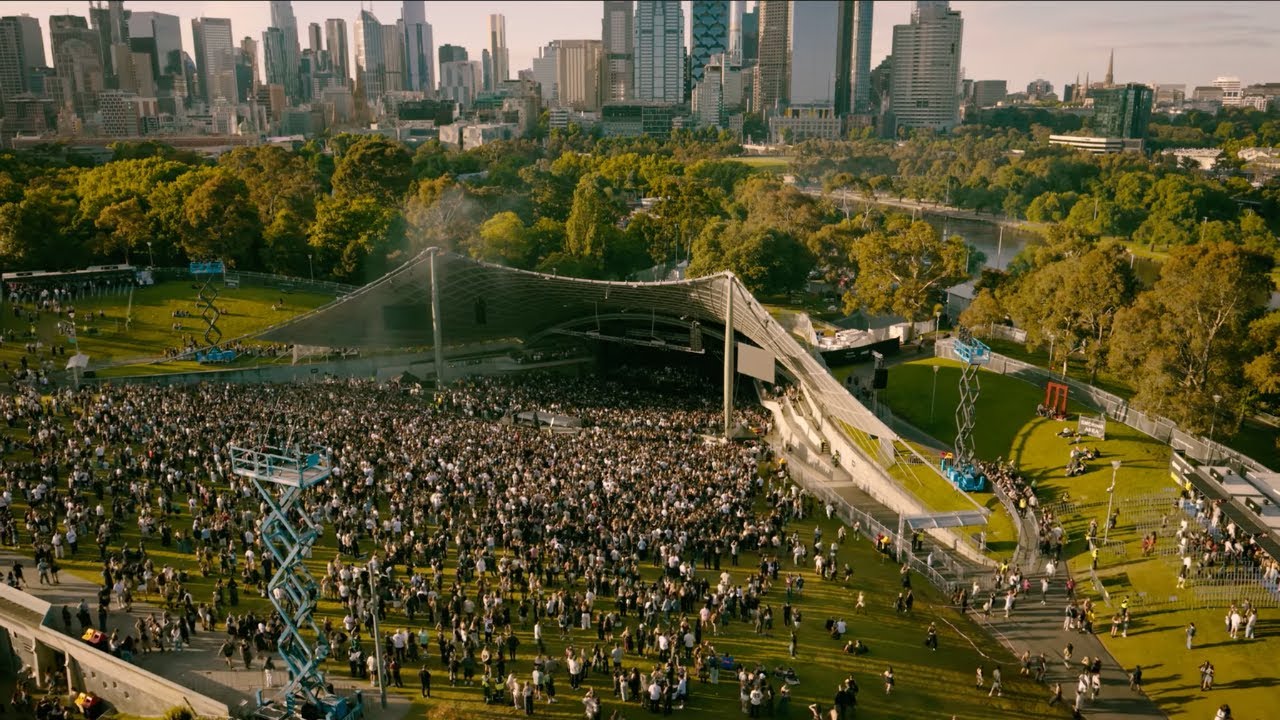
The official 2025 Melbourne recording runs three hours, giving listeners stronger evidence of pacing than a short festival clip. Long sets reveal how a DJ manages tension, genre contrast, recovery and recognition across time.
One viral transition cannot prove that skill. The full arc shows whether emotional openness remains interesting after the first giant singalong and whether harder passages leave the room somewhere to breathe.
The image-card rule
This profile uses a real frame from Hoffstadt’s official Melbourne live-set upload, stored locally with source metadata. It is distinct from the animated aespa remix attachment.
Featured, hero, Open Graph and Twitter roles all use the same canonical profile image. Future exact-video Reacts receive their own local frames and do not reuse this performance portrait.
The exact-credit rule
Marlon Hoffstadt, DJ Daddy Trance and shared billing variants must be preserved as released. A live edit, bootleg, remix, co-production and solo master are not interchangeable relationships.
Role accuracy protects collaborators and prevents search cards from claiming that a producer created source vocals or owns every record played in a set.
The tracker boundary
Only exact Reacts with a verified Hoffstadt relationship appear below. The tracker does not import every track mentioned in a playlist, every live-set ID or every artist whose record he has played.
When a new official master enters CVM Sekai, the video ID, release date, credited role and unique image are checked before the card is added.
What the next K-pop collaboration should risk
A future commission should let Korean lyrics, member contrast and choreography affect the trance arrangement instead of treating the group as a globally portable vocal stem.
Hoffstadt’s gift is making emotional directness feel physically communal. The most interesting K-pop version would give that generosity a specific group personality rather than a generic warehouse costume.
A set is not a playlist on shuffle
Track selection matters, but a DJ set is authored through order, overlap, key, tempo, EQ, timing and the decision to deny or reward a crowd’s expectation. The same recordings can produce a completely different social arc in another sequence.
Hoffstadt’s long-form recordings deserve attention because they expose those transitions. A list of recognizable titles cannot show how he moves from private anticipation to public release and back again.
Humor needs musical follow-through
Daddy jokes, whistles and deliberately unserious merchandise make entry easy. If the records beneath them were interchangeable, the persona would collapse into social copy. The kick, melodic pacing and contrast between hardness and reassurance provide the follow-through.
This is why the page separates brand analysis from listening. A funny name can open the door; arrangement determines whether anyone wants to remain after the first photograph.
Accessibility is more than a familiar hook
Pop recognition can help a newcomer enter a trance set, but physical and cultural access also includes ticket price, venue location, disability accommodation, harassment response and understandable safety information.
A care-centered rave identity becomes convincing when the room is designed for more than the already initiated. Joy is not fully public if only one kind of body can reach or survive it.
Producer relationships should remain reciprocal
The aespa React links to this profile because Hoffstadt changed the master; this profile links back because aespa supplied the voices and source composition that made his version legible. Neither route treats the other as background.
Reciprocity keeps discovery from becoming extraction. K-pop listeners can follow the producer into trance history, while electronic listeners can identify the exact group, members and source version rather than encountering an anonymous vocal sample.
RaeRae’s read
The beat works because Hoffstadt is not embarrassed by fun. “Daddy Trance” could have been one joke stretched until the kick stopped landing, but care, pop permeability and a real sense of crowd timing give it more room than the name suggests.
The aespa remix is fun and properly filed. I want more member-specific disruption inside the warehouse, but the version changes the song’s social purpose enough to earn its own route.
Bottom line
Marlon Hoffstadt is a Berlin DJ and producer whose DJ Daddy Trance identity turns hard trance, Eurodance memory, pop hooks and rave care into deliberately public joy. One canonical page preserves both names and the career before and after the persona.
For CVM Sekai, “LEMONADE (Marlon Hoffstadt Remix)” is the exact aespa relationship: a distinct official master, one unique image, one deep React and a working route back to the producer who moved the lemons into a warehouse.