
RAERAE REACTS · LE SSERAFIM · EXACT OFFICIAL MV
CRAZY Japanese Version MV React: LE SSERAFIM Took Ballroom Into a Different Frame
The Japanese “CRAZY” video is not a clerical duplicate. The song still rides ballroom language, electronic pressure and a hook built to live inside the body, but the new mouth shapes, edit and market framing change how that command lands. LE SSERAFIM keep the performance sharp while the video negotiates a familiar K-pop problem: how do you make another edition worth finding instead of asking fans to replay an export with different captions?
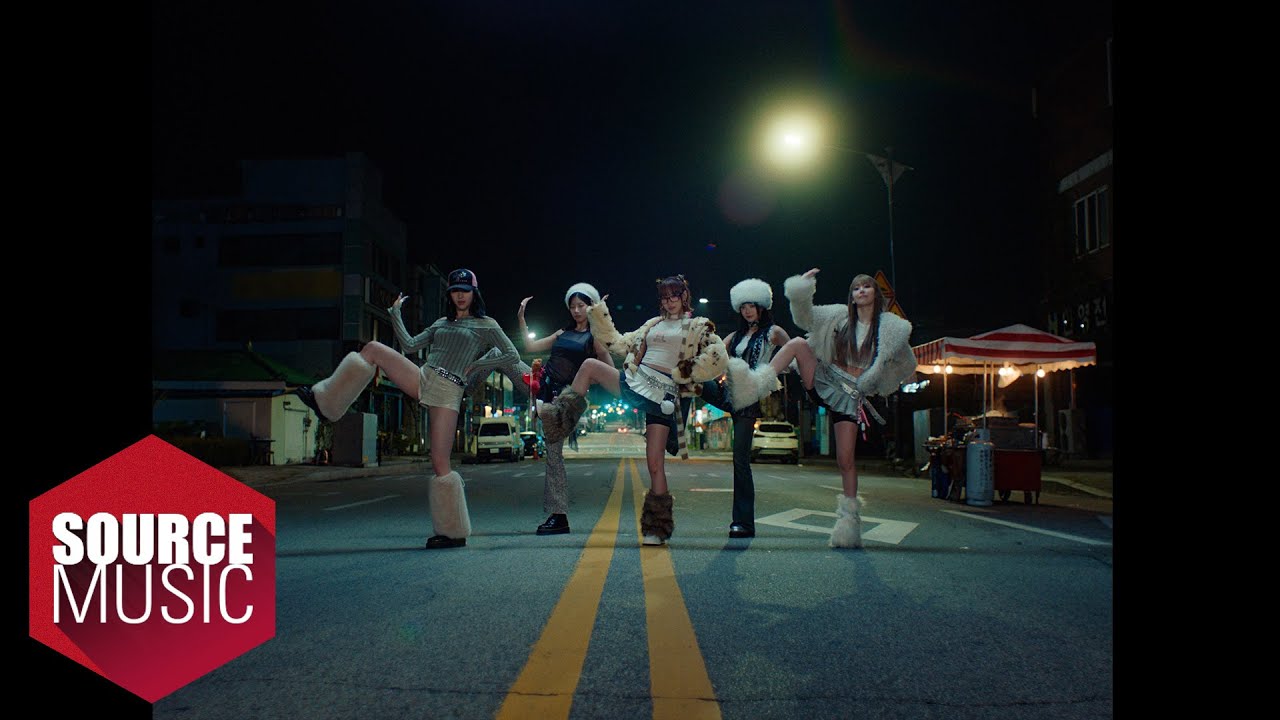
Release file
Released: December 10, 2024
Runtime: 02:49
Artist: LE SSERAFIM — Sakura, Chaewon, Yunjin, Kazuha and Eunchae
Edition: Japanese-language official MV
Label / channel trail: SOURCE MUSIC · HYBE LABELS
Exact-video distinction: Official Japanese-version MV tsS69gld8Ls, separate from the Korean master n6B5gQXlB-0, English version and performance films
Sound: Electronic club-pop with ballroom-derived pulse, repeated hook, clipped vocal attack and a beat that depends on posture as much as melody
Sources: Exact official MVDaily+3.7KTotal views9.9M; official channel description and release metadata.
First reaction: the beat still walks before anyone explains it
The track enters with enough attitude that the body understands the instruction before translation catches up. The Japanese syllables redistribute consonants and breath, so several lines hit with a rounder flow than the Korean master.
That difference is not automatically better or worse. It changes where members can bite, stretch or release a phrase, which makes this exact recording worth reviewing on its own.
Ballroom is a culture, not a convenient pose pack
The choreography borrows from movement language with Black and Latin queer roots. Pop circulation can make those shapes look universal while the history disappears behind styling.
The review can enjoy the performance and still name the lineage. Credit and context do not weaken the beat; they stop admiration from becoming erasure.
Sakura reads the alternate-market frame immediately
Her experience across Japanese and Korean systems gives the edition a performer who understands both familiarity and reset. She does not act as if the audience needs an apology for receiving another version.
That confidence helps the video feel like a release rather than ancillary content.
Chaewon turns repetition into punctuation
A hook this repetitive lives or dies on attack. Chaewon changes emphasis through shoulders, eyes and vocal placement, keeping identical words from becoming flat inventory.
Precision becomes variation when the performer knows which edge to sharpen.
Yunjin keeps “crazy” from becoming decorative rebellion
Her texture adds abrasion when the styling threatens to sell rebellion as an outfit. A phrase can sound amused, confrontational or knowingly theatrical depending on her delivery.
The ambiguity matters because the song is more fun when confidence contains a little danger.
Kazuha makes the line look expensive without sanding it smooth
Her control gives vogue-adjacent shapes a readable silhouette, but the strongest moments retain angularity rather than turning every line into ballet polish.
Different movement traditions should meet without one being treated as the respectable correction of another.
Eunchae supplies bounce where the formation could become severe
Her elasticity lets the group enjoy the beat instead of only demonstrating command.
That pleasure keeps the choreography social. A club rhythm needs people exchanging energy, not five immaculate figures passing an exam.
The edit understands when a pose needs time
Fast cutting can destroy dance by removing the transition that makes a shape impressive. The strongest sequences hold long enough to show how members arrive, not only where they finish.
A few montage bursts still rush the payoff, especially when styling competes with footwork for the same fraction of a second.
The Japanese release deserves its own filing trail
This exact ID, date, runtime and canonical image distinguish the edition from Korean, English and stage files.
Without that metadata, search results collapse multiple creative objects into one title and fans cannot tell which performance a review actually addresses.
The final hook chooses momentum over explanation
The video never pauses to deliver a thesis about being crazy. It trusts repetition, posture and collective timing to make the emotional claim.
That restraint is correct. The song is not a diagnosis; it is a permission slip to move without requesting respectable approval.
The five-member performance is the continuity
Sakura understands how to make a camera feel acknowledged without surrendering the scene to it. Chaewon gives every stop and handoff a clean edge. Yunjin adds vocal grain and facial disruption when the polish risks becoming too obedient. Kazuha turns line and balance into architecture. Eunchae brings elasticity that keeps the formation from looking manufactured by a ruler.
Those tendencies matter because an alternate-language or alternate-market video can easily become a packaging exercise. The current lineup supplies continuity without copying the exact emotional temperature of the other edition. Every participating member receives the same canonical React card on her profile, because a group release does not belong only to the thumbnail face.
Lyrics: language changes the mouth, not only the subtitle
Japanese phrasing changes the distribution of vowels and clipped endings. Lines that snapped shut in Korean sometimes travel farther here, while other phrases gain sharper consonant landings. The members adjust attack rather than pretending translation leaves performance untouched.
That labor is easy to miss because fluent delivery is designed to sound natural. Recording another language means solving rhythm, meaning, pronunciation and personality at once. A useful React hears the new mouth work instead of treating the edition as a metadata footnote.
What changed every time I replayed it
The first watch belonged to styling and the hook. The second followed transitions, especially the half-beat where a dancer turned a clean pose into something loose, social and alive.
By the third replay, the Japanese vocal shapes became the reason to keep this edition. The arrangement stays familiar, but the members place pressure in different corners of the bar.
What I kept replaying
- Sakura entering the Japanese edition without making it feel secondary.
- Chaewon changing the hook through attack rather than extra decoration.
- Yunjin adding vocal abrasion to polished styling.
- Kazuha preserving angularity inside precise lines.
- Eunchae returning bounce to the collective formation.
Where the exact video could hit harder
Some editing treats a finished pose as the entire dance and cuts away before the transition earns it. The ballroom-derived vocabulary deserves more uninterrupted time.
The visual world could distinguish itself more aggressively from the Korean campaign; several choices feel like alternate-market packaging rather than a new argument.
A club reference is not validated by a perfect costume
Ballroom culture is carried through competition, kinship, survival, language and community knowledge, not only recognizable hand shapes. Idol performance can quote the surface with real skill while still leaving the social structure outside the frame. Both statements can be true at once.
The responsible response is not to forbid cross-cultural movement. It is to keep the origin visible, credit choreographers and resist describing a commercial adaptation as though the company invented the vocabulary during comeback planning.
The hook creates permission, but permission for whom?
“All the girls are girling” sounds expansive because it lets identity behave like action rather than a fixed respectable category. Yet pop universality can also erase the queer communities whose language made that freedom imaginable.
The Japanese edition inherits the same tension. Its joy grows when the performance reads as exchange with a lineage, not a brand claiming ownership because the phrase travelled well.
RaeRae verdict
The Japanese “CRAZY” earns a separate React because language changes rhythm, attack and bodily timing even when production stays familiar.
Its best moments respect the beat as social movement, though the video occasionally sells the pose faster than it shows the dance.
Bottom line
LE SSERAFIM take “CRAZY” into Japanese without flattening the members into dubbed copies. The exact edition works when new mouth shapes, ballroom pulse and five different attacks turn familiarity into another performance choice.