
Naruto’s Imposter
Banna copies Naruto’s reputation. Iggy learns that friendship demands more than staging a fake victory.
Bottom line
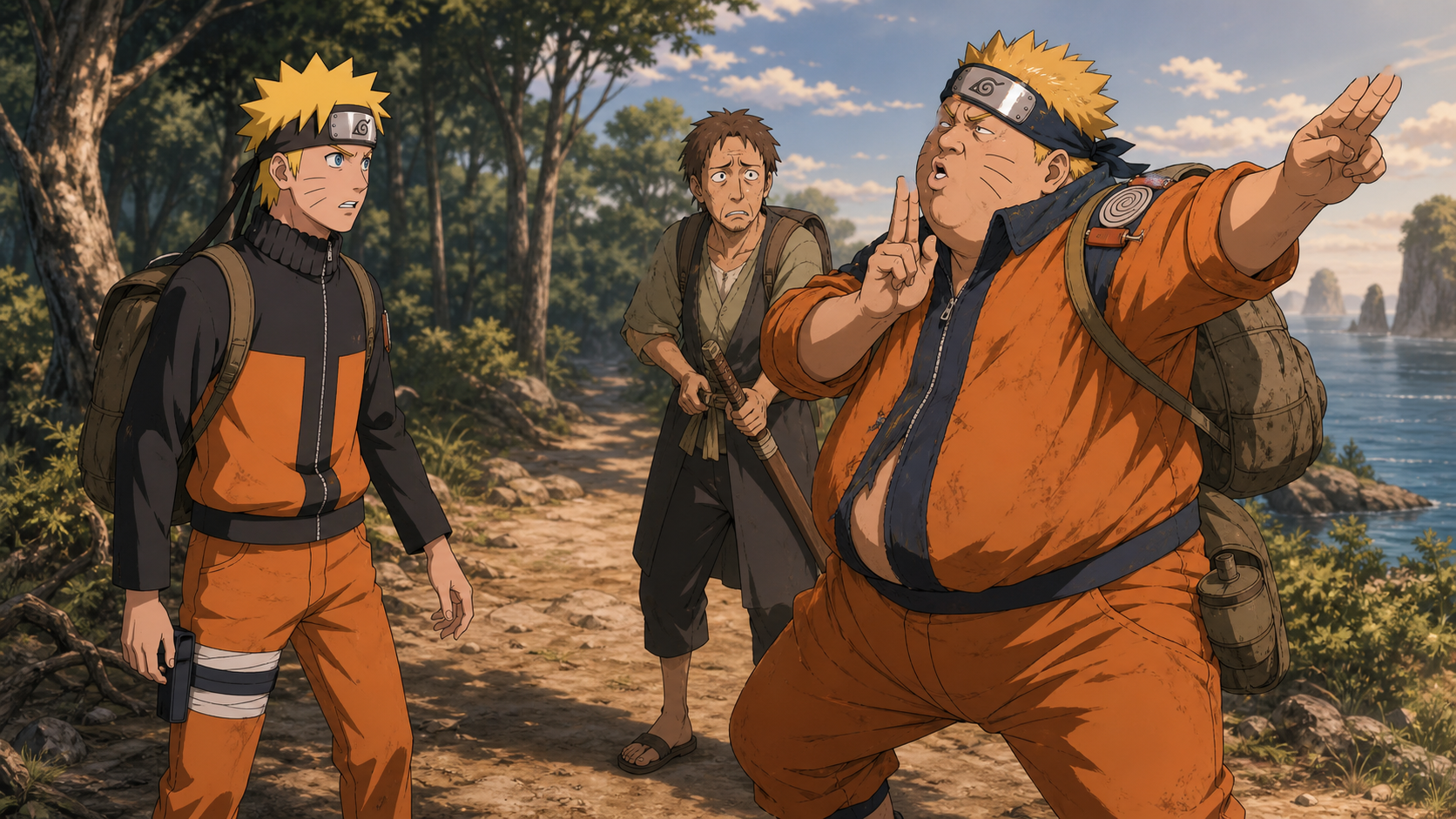
Naruto Shippuden Episode 233 turns Naruto’s new fame into a traveling scam, and the joke works because Banna’s disguise is terrible while the rumor behind the disguise is powerful. People far from Konoha know that a blond Leaf ninja defeated Pain. They do not know Naruto’s face, build, voice, or personality. Banna puts on orange clothes and a forehead protector, then lets other people’s incomplete knowledge do the rest. That is funny until armed mercenaries decide the fake hero might be worth money.
The episode is also a blunt little story about Iggy wanting respect without doing the work that earns respect. He plans to “defeat” Banna’s fake Naruto persona so villages will call him a great ninja before the Fourth Great Ninja War. When the scam puts Banna in real danger, Iggy has to choose between protecting his fantasy and protecting his only friend. The real Naruto gives him no polished lecture. Naruto makes Iggy show up first, then helps once that choice becomes real.
Solid ground produces a ridiculous problem
Naruto, Yamato, Might Guy, and Aoba finally leave their boat for a short land crossing in the Land of Water. Guy celebrates the ground under his feet like a man who has personally defeated the ocean. Naruto immediately asks whether they can finish the journey by land. Yamato explains that the island geography makes that impossible. Another harbor and another ship still wait ahead.
That opening keeps the boat arc’s exhaustion alive without spending another episode on seasickness or strange cargo. The group receives a warning about imposters, then meets one almost at once. A large thief in orange claims to be Naruto Uzumaki and tries to rob them. The real Naruto stares at a counterfeit who resembles him only through rumor, color, and confidence. Guy’s suggestion that the winner can keep the name is exactly the kind of unhelpful encouragement Naruto’s escort has perfected.
Banna copies the reputation, not the person
Banna does not know Naruto well enough to imitate him. He knows the public story. Naruto is a powerful Leaf ninja who drove off the Akatsuki and defeated Pain. Banna adds a headband, orange clothes, loud claims, and aggressive poses. The disguise succeeds with strangers because fame travels faster than accurate information.
The contrast says something useful about Naruto’s life after Pain. Konoha finally treats him as a hero, but remote communities receive a simplified legend. The lonely boy, Jiraiya’s student, Team 7 teammate, jinchūriki, and stubborn peace seeker disappear. “Naruto Uzumaki” becomes a marketable shape. Banna steals that shape without understanding the suffering or labor behind the name.
The real Naruto wins the easiest identity check possible
Naruto defeats Banna without effort. No bloodline technique, secret password, or witness statement is needed. The fake cannot fight like the person whose reputation he borrowed. Naruto’s anger is immediate because Banna has been robbing people under his name. After years spent begging Konoha to recognize him, he has finally earned a public identity. Somebody else is using that identity to recreate the fear and mistrust Naruto worked to overcome.
The escort treats the confrontation lightly because Banna poses no serious threat. That tone makes sense until the later mercenaries arrive. For the moment, Naruto gets the rare pleasure of seeing how absurd an outsider’s version of him looks. The gag also keeps his ego honest. Fame sounds wonderful until a stranger wears the cheap costume.
Iggy arrives with another fake identity
Iggy appears and claims that he has been chasing the notorious thief. He lets Naruto’s group assume he is some kind of officer or capable ninja. Yamato notices the weak story, but the escort is in a hurry. They hand Banna over and continue toward the next harbor.
As soon as the Leaf group leaves, Iggy frees his partner. The whole performance was staged. Banna would terrorize travelers as the famous Naruto, and Iggy would eventually defeat him in public. One fake criminal would create one fake hero. War gives the plan urgency because Iggy believes a reputation will let him join the important people before history moves on without him.
Iggy wants the title without the training
Iggy is a farmer from a mountain village who hates field work and dreams of becoming a ninja. The dream itself is not ridiculous. Naruto built his entire life around a title other people considered impossible. The difference is process. Naruto trained, failed, learned, protected people, and kept returning after humiliation. Iggy tries to manufacture the final applause while skipping every skill and responsibility that should come before the applause.
Episode 233 does not sneer at farming. Iggy does. He treats honest labor as proof that his life is too small, then builds a dangerous con to escape that feeling. His problem is not ambition. His problem is contempt for the work available to him and impatience with the work required for the life he claims to want.
Banna is both partner and disposable prop
Banna and Iggy became friends when other children mocked Banna’s appearance. Iggy stood beside him, and Banna remembers that loyalty. Their current scheme twists the old bond. Iggy reminds Banna what he “owes,” uses him as the body inside a dangerous disguise, and lashes out when the performance goes wrong. Friendship has become debt collection.
Banna still protects Iggy when mercenaries arrive. He claims that Iggy is merely a low-level farmer who followed him around and insists that they are not partners. That lie costs Banna his best chance of immediate help, but the lie keeps the armed men from taking Iggy too. Banna’s choice reveals more loyalty than Iggy’s entire plan.
Rumor turns a stupid disguise into real danger
The mercenary ninja have heard enough about Naruto to believe Banna could be the target. They recognize orange clothing, blond hair, a Leaf forehead protector, and a loud claim. They do not stop for a proper identity check because a possible bounty rewards speed more than care. Banna’s scam has attracted exactly the kind of attention that borrowed fame can bring.
This turn rescues the episode from becoming one long impersonation gag. False identity can cause material harm even when the costume fools nobody close to the victim. Banna has attached Naruto’s name to robberies. The mercenaries attach bounty value to Banna’s body. Everybody acts on a fragment, and the person with the least power gets dragged away.
Iggy confesses because the plan has stopped being fun
Iggy catches Naruto’s group and admits enough of the truth to ask for help. Naruto is furious. He sees a man who abandoned his friend after using that friend as bait. The escort also has a real mission and cannot keep solving every problem created along the route. Yamato tells Iggy they must continue toward the Land of Lightning.
That refusal sounds harsh, but immediate rescue would let Iggy remain passive. Naruto has spent years chasing Sasuke because Naruto refuses to treat a bond as disposable when the bond becomes difficult. He cannot respect Iggy’s request until Iggy accepts personal risk. Words about friendship mean nothing while Banna faces the mercenaries alone.
Naruto sees Banna and Iggy through the Sasuke wound
Naruto’s reaction comes from more than abstract morality. Iggy describes an old friendship damaged by resentment, obligation, and a terrible plan. Naruto hears an echo of his own bond with Sasuke. The comparison is not equal. Banna is no international criminal, and Iggy has not spent years trying to bring him home. Still, Naruto recognizes the moment when somebody must decide whether a friend remains worth reaching.
The Sasuke parallel can feel oversized for two comic filler characters. Naruto makes oversized emotional connections because every broken friendship runs through his deepest wound. That habit can be exhausting, but the habit also explains why he refuses easy abandonment. He wants Iggy to prove that the friendship is more important than pride.
Iggy finally does one thing a ninja should do
Iggy goes after Banna alone. He lacks the strength and training to win, yet he steps between his friend and the mercenaries. That action does not transform him into a shinobi. The action proves he can accept danger for another person instead of arranging danger for applause.
Naruto’s group has stayed close enough to watch. Once Iggy commits, they enter the fight and defeat the mercenaries. The timing is a test, not punishment. Naruto wants evidence that Iggy’s confession has become a choice. Iggy provides that evidence by showing up when failure is almost guaranteed.
Yamato, Guy, and Aoba know Naruto’s pattern
Naruto’s escort understands that he never truly planned to leave Banna behind. Yamato maintains the mission boundary, Guy watches the emotional test unfold, and Aoba stays ready. Their staged departure gives Iggy space to act while keeping the rescue within reach.
This is one of the boat arc’s better uses of the escort. The adults do not merely chase Naruto after another impulsive detour. They cooperate with his judgment. Naruto reads the friendship problem, Yamato protects the larger mission, and the team handles the mercenaries once the moral choice becomes clear.
Honest work is the ending Iggy needed
After the rescue, Iggy gives up the fake-ninja scheme and plans to return to farming. The ending does not tell him to stop dreaming because ordinary people should know their place. The lesson concerns honesty. A farmer who protects a friend and does his work has more honor than a pretend ninja who manufactures praise through theft.
Banna also receives a chance to leave the Naruto disguise behind. Their friendship can continue without one man acting as the other man’s prop. The episode does not promise that farm work will suddenly become exciting. Honest repair rarely arrives with the thrill that caused the damage. Iggy has to return home and live differently after the dramatic moment ends.
Fame creates a public identity Naruto cannot fully own
Naruto earned recognition through specific relationships, losses, training, and choices. Rumor removes that history and carries a portable symbol into places where nobody can verify the person.
Banna does not steal Naruto’s memories. He steals the social power produced when strangers believe the legend has entered their road.
The bad disguise succeeds because information is unequal
Anyone from Konoha would reject Banna immediately. Remote villagers know orange clothing, blond hair, a Leaf symbol, and stories about Pain’s defeat.
The visual joke should not obscure the mechanism. Counterfeit authority often needs only enough familiar markers to satisfy people who lack access to the original.
Banna carries the physical risk in Iggy’s fantasy
Iggy wants applause for defeating a famous criminal. Banna must threaten travelers, absorb retaliation, wear the recognizable costume, and eventually lose in public.
The scheme distributes reward and danger unequally from the beginning. Friendship language helps Iggy disguise that arrangement as a shared opportunity.
Old loyalty becomes a debt Iggy feels entitled to collect
Standing beside Banna during childhood mattered. It does not grant permanent ownership over Banna’s labor, safety, or gratitude.
Iggy turns one decent act into leverage whenever his partner hesitates. That transaction corrupts the memory both men should have been able to keep as friendship.
Banna protects Iggy after the scheme proves disposable
When mercenaries arrive, Banna denies the partnership so Iggy will appear unimportant. He uses the fake identity one final time to redirect danger toward himself.
His choice reveals that loyalty survived exploitation. It also makes Iggy’s flight more painful because the person used as bait still refuses to expose him.
Naruto refuses to perform Iggy’s responsibility for him
An immediate rescue could save Banna while allowing Iggy to remain the person who asks stronger people to repair his choices. Naruto insists that confession become action.
The test is dangerous, but its purpose is clear. Iggy must show that Banna matters when no audience can turn courage into reputation.
Risk does not instantly convert Iggy into a shinobi
Stepping forward demonstrates loyalty and moral courage. It does not supply training, judgment, technique, certification, or responsibility to a village and clients.
The episode wisely lets one brave act repair friendship without pretending identity can be earned through a single dramatic scene.
Farming was never the moral failure
Iggy despises field work because it lacks the recognition attached to ninja stories. Food production still requires knowledge, endurance, timing, and responsibility to other people.
Returning home becomes growth only if he learns to respect honest labor rather than treating farming as punishment for failing to become famous.
Naruto recognizes what public praise failed to give him
The village’s admiration after Pain cannot replace bonds built before applause arrived. Iruka, Team 7, Jiraiya, and others knew versions of Naruto the distant legend cannot contain.
Iggy nearly abandons the one person who knows him for approval from strangers. Naruto understands that trade is never worth the price.
A borrowed reputation attracts danger as well as obedience
The mercenaries reveal that a famous name attracts ownership claims. Banna expects villagers to fear Naruto’s power and surrender goods. He does not anticipate armed people treating the same identity as a prize worth capturing.
Impersonation gives him none of the experience needed to survive what the legend survived. The costume can trigger consequences without providing the skill, relationships, or judgment that made Naruto formidable.
Rumor refuses Iggy’s script.
The escort’s staged departure balances mission and moral intervention
Yamato cannot let every roadside crisis erase the classified journey. Naruto cannot accept leaving Banna after Iggy finally tells the truth.
The team resolves that tension by watching from close enough to intervene while requiring Iggy to move first. Their choice protects the mission boundary without confusing urgency with emotional indifference.
It shows trust. They understand Naruto’s ethics well enough to support the test instead of dragging him toward the harbor.
The Sasuke comparison explains Naruto more than it explains Iggy
Banna and Iggy do not carry Team 7’s history, political consequences, or years of violence. Treating the relationships as equal would flatten both.
Naruto reaches for the comparison because broken friendship is the framework through which he understands abandonment. He sees the decision point before he sees differences in scale.
The parallel belongs to his emotional reflex, not to an objective claim that every estranged pair repeats Sasuke and Naruto.
Repair begins after the dramatic rescue
Iggy’s brave intervention cannot settle the money stolen, travelers frightened, lies told, or pressure placed on Banna. Returning home is only the beginning of accountability.
The friends need to identify victims, return what remains, accept consequences, and rebuild trust without invoking childhood debt. Honest labor matters because repair requires ordinary days after applause disappears.
Banna also needs freedom to decide whether friendship continues and under what terms. Loyalty shown during capture does not erase his right to boundaries.
RaeRae’s final word on Naruto’s Imposter
Banna looks nothing like Naruto, which proves rumor needs very little wardrobe assistance. Orange fabric and audacity apparently pass inspection outside Konoha.
The real fraud is Iggy trying to manufacture respect by placing his friend inside the danger. He becomes worth helping only when he finally enters that danger himself.
Naruto protects the name he earned, but he cares more about the bond Iggy nearly traded away. Fame brings attention. Showing up for Banna is what makes the choice real.
What the episode gets right about fame
The strongest idea is that Naruto’s victory over Pain now belongs partly to public rumor. People use his story for hope, commerce, fear, and fraud. Naruto cannot control every version. He can only defend the meaning of his name when a false version causes harm.
The episode also understands that recognition without community becomes hollow. Iggy wants strangers to call him a ninja, but Banna is the one person who already knows him. He nearly sacrifices that real relationship for imaginary applause. Naruto, who once wanted the entire village to notice him, now values the bond more than the crowd.
What does not land
The mercenaries are functional rather than memorable, and the action ends before the danger develops much personality. Iggy’s childhood connection with Banna arrives quickly, so his change depends on a compact flashback and Naruto’s familiar friendship argument. A longer scene showing their farm life could have made the debt and resentment feel less convenient.
The Sasuke comparison also asks the viewer to place a very large emotional frame around a small con. I understand why Naruto makes the connection, but the episode does not need to imply that every damaged friendship carries Team 7’s weight. Banna and Iggy are strongest when their problem remains specific: two poor friends, one humiliating dream, and a shortcut that turns one person into bait.
Final reaction
“Naruto’s Imposter” is broad comedy with a useful consequence. Banna’s awful costume produces the laughs. Iggy’s hunger for status produces the danger. Naruto’s fame connects both, showing how a hard-earned identity becomes vulnerable once strangers know the legend better than the person.
The episode ends on the correct note. Iggy does not become a ninja because he swung a sword once. He becomes a better friend because he finally risks himself after risking Banna. Naruto helps only after Iggy makes that choice. For a short anime-original detour, that is enough substance to carry the joke back to the ship.
RaeRae’s call
Banna’s costume steals a legend, but Iggy’s scheme spends a friendship. Repair begins only when Iggy risks himself without an audience and chooses the person who already knew him over strangers’ applause.
Episode details and viewing routes
Naruto Shippuden Episode 233, “Naruto’s Imposter,” first aired in Japan on October 20, 2011. The anime-original episode belongs to the Paradise Life on a Boat stretch and follows Naruto’s escort during a land crossing in the Land of Water.
- Official episode reference: Naruto Official episode guide
- Licensed episode route: Crunchyroll licensed episode page