
Title
The official title is spare; the choices ending the reunion are not.
Naruto's appeal reaches a Sasuke who has already chosen his answer
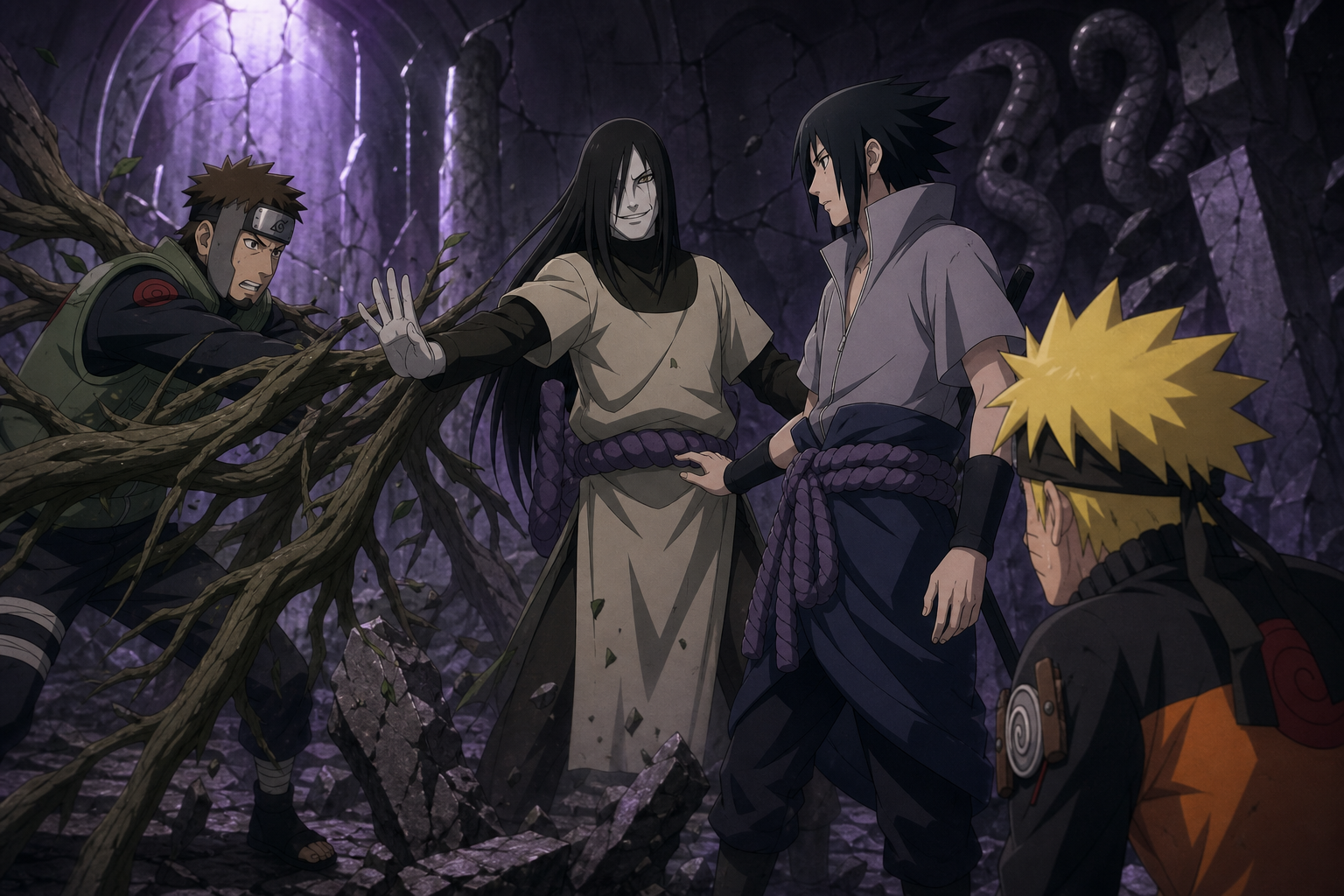
Episode 53 continues the reunion as a confrontation between two definitions of loyalty. Naruto asks Sasuke to remember Team 7 and the village he left. Sasuke answers from the same position he has maintained for three years: revenge against Itachi matters more than every bond Naruto names.
The scene hurts because neither boy is confused about what the other wants. Naruto wants Sasuke alive, connected, and free from Orochimaru's control. Sasuke wants enough power to kill his brother, even if the path requires isolation and danger. The obstacle is not a missing explanation. It is a conflict of values.
Resolve becomes a cage when no future exists beyond it
Sasuke's commitment is impressive in its consistency. It is also frightening because he speaks as though the life after Itachi does not matter. Revenge supplies direction, discipline, and a reason to endure Orochimaru's training, but it does not offer a self beyond completion.
That is why Naruto's references to friendship seem irrelevant to Sasuke. Accepting their importance would force him to imagine a future in which he belongs to people rather than to vengeance. He has spent years treating that possibility as weakness.
Sasuke's resolve protects the mission from doubt by shrinking everything outside it.
Yamato acts when persuasion reaches its limit
Yamato listens long enough to understand that Sasuke will not return voluntarily. He then tries to restrain him with Wood Release. The decision is practical. Sasuke is a dangerous missing shinobi standing inside an enemy base, and Team Kakashi cannot remain frozen in an emotional argument while Orochimaru controls the surroundings.
Yamato's intervention also exposes the difference between responsibility and possession. He is not claiming Naruto's feelings entitle the team to Sasuke. He is responding to an active security threat and an impossible tactical position.
Even so, force cannot solve the emotional problem. Capturing Sasuke's body would not restore Team 7.
Sasuke's calm makes the power gap visible
Yamato's Wood Release has contained Naruto's transformation and protected the team throughout the mission. Sasuke faces it without panic. His composure communicates that the confrontation remains on terms he understands.
This is the hardest part of the reunion for Naruto. Sasuke is not only unwilling to return. He has become powerful enough that wanting him back no longer creates a plausible route to taking him.
Naruto's old pattern of escalating until he breaks through another person's defense cannot work here. Sasuke knows his vulnerabilities, suppresses the Nine-Tails, and refuses the emotional premise behind the rescue.
Orochimaru ends the clash because Sasuke remains useful
Orochimaru intervenes before the confrontation reaches its final result. The restraint is not mercy. Sasuke is valuable to his plans, and Team Kakashi may still be useful in conflicts that serve Orochimaru's interests.
That calculation reveals the limits of Sasuke's apparent independence. He has gained extraordinary power, but he remains inside a relationship where Orochimaru evaluates when he may fight, leave, or survive. Sasuke believes he is using Orochimaru. Orochimaru believes the same about him.
Their temporary alignment is stable only while each person expects to win the eventual betrayal.
Naruto has to survive an ending he refuses to call final
The reunion closes without Sasuke returning. For Naruto, that result feels like failure after years of effort and the physical destruction of this mission. Yet survival matters. Naruto cannot continue the promise if he destroys himself every time Sasuke says no.
Accepting the end of this encounter is not the same as abandoning Sasuke. It means recognizing that persistence needs strategy, training, and limits. Naruto now knows the scale of Sasuke's power and the firmness of his intent.
The next attempt cannot be a repetition of the one that just failed.
Sakura's grief needs space beside Naruto's promise
Sakura stands in the same room with the person she once begged to stay. Sasuke's answer confirms that the emotional distance has grown, and the team leaves without the reunion she hoped might change him.
Her disappointment should not become background for Naruto's resolve. Sakura has carried her own guilt, trained to become stronger, and endured injury during this pursuit. She deserves to process Sasuke's choice as more than motivation for someone else's next vow.
The mission affects every member differently. Teamwork requires those differences to remain visible.
Sai sees the target become a person inside a bond
Danzo ordered Sai to kill Sasuke as a security problem. Naruto and Sakura present Sasuke as someone whose life still matters to them. The reunion forces Sai to witness both realities at once.
Sasuke is dangerous. He is also the absent person whose memory shaped Naruto's devotion and helped Sai reconnect with his own brother. Reducing him to either victim or target would erase part of the truth.
Sai's developing agency depends on making a decision that can hold complexity instead of borrowing Danzo's certainty.
The official title becomes its own strange absence
The licensed English title is simply “Title,” an unusual label that can feel like a missing field. That oddness fits an episode about identities that remain unresolved. Naruto calls Sasuke a friend. The Leaf may call him a rogue ninja. Danzo calls him a target. Orochimaru calls him a future vessel. Sasuke defines himself through revenge.
None of those titles captures the whole person. The blankness around the episode name leaves attention on the choices that actually define the confrontation.
RaeRae's reaction
This episode is painful because Naruto is not failing to explain himself. Sasuke understands that Naruto cares. He simply refuses to let that care outrank revenge. There is no perfect sentence Naruto forgot to say.
Yamato stepping in feels necessary, even though I know force cannot produce the reunion Naruto wants. Someone has to protect the team from standing in that chamber until Sasuke decides to end the conversation himself.
Orochimaru's intervention is a reminder that Sasuke's power does not equal freedom. He may look like the strongest person in the room, but Orochimaru still treats his future as an asset to manage. Sasuke's confidence makes the arrangement look voluntary without making it safe.
The mission ends with information instead of rescue
Team Kakashi does not bring Sasuke home. It leaves with a clearer picture of him: his power has grown, his goal has not changed, and Orochimaru still has reason to keep him close.
That knowledge is not the outcome Naruto wanted, but it prevents future hope from depending entirely on memory. Sasuke must now be approached as the person he is choosing to become.
The encounter closes quickly because Orochimaru decides it should. The larger conflict remains open because Naruto refuses to accept revenge as Sasuke's only possible identity. Whether that refusal becomes care or obsession will depend on what Naruto learns from this failure.
Official episode reference: Naruto Official episode guide
Licensed episode route: Crunchyroll licensed episode page
Naruto’s words fail because Sasuke is not missing the information
Naruto explains the bond, the village, and the people waiting. Sasuke already knows those facts. His refusal does not come from misunderstanding what Team 7 meant.
He has ranked revenge above that meaning. Repeating the evidence of care cannot change a hierarchy Sasuke is actively defending.
The scene forces Naruto to confront a painful distinction: being heard is not the same as being obeyed.
There is no perfect sentence hidden inside this confrontation
Naruto often wins emotional battles by finding the truth another person needs spoken aloud. Here, Sasuke’s problem is not a truth nobody recognized.
He understands Naruto’s persistence and rejects its authority over his path. The disagreement is moral, political, and personal rather than rhetorical.
Searching for a better speech can become another way to avoid accepting that Sasuke possesses agency capable of saying no.
Sasuke’s commitment has become easier to maintain than to examine
Every technique, sacrifice, and year under Orochimaru can be justified if killing Itachi remains the only goal. Doubt would require Sasuke to reconsider the cost and imagine a future beyond revenge.
Certainty protects him from that work. It converts trauma into a plan with measurable progress.
A cage can feel like purpose when every exit leads toward grief with no target to strike.
Yamato intervenes because conversation has become a tactical vulnerability
The team is inside Orochimaru’s base, exposed, injured, and facing a stronger opponent. Naruto cannot keep the room suspended while hoping Sasuke’s answer changes.
Yamato’s Wood Release attempts to end the dangerous stalemate. His action is responsible command even though physical restraint cannot repair relationship.
Sometimes leadership must protect people from the duration of an argument as much as from its content.
Capture could preserve Sasuke’s life without restoring his trust
Bringing him back by force might remove him from Orochimaru’s immediate reach and prevent Danzō’s assassination order. Those material benefits matter.
The result would not equal reconciliation. Sasuke could experience capture as another village authority denying his choices while refusing the history beneath them.
Safety can be necessary before repair. Safety should not be mislabeled as repair itself.
Wood Style meets a problem larger than containment
Yamato’s power suppressed Naruto because the immediate goal was returning his consciousness. Sasuke is conscious, deliberate, and opposed.
Containing him would stop motion without changing the judgment directing it. The same tool therefore carries a different moral meaning.
Effective leadership requires knowing when a successful technique would solve only the visible layer.
Sasuke’s resistance proves power has given him veto authority
He can reject Team Kakashi because they cannot easily override him. Strength changes the practical meaning of consent inside the encounter.
This protects him from being dragged back while making every relationship dependent on whether he allows it.
Power can secure boundaries without teaching what healthy connection inside those boundaries looks like.
Orochimaru stops the fight to protect his investment
His intervention may prevent injury, but care is not the motive. Sasuke remains central to Orochimaru’s plans, and Team Kakashi may serve future strategic purposes.
He manages the confrontation as an owner protects valuable property from premature damage.
The restraint reminds us that Sasuke’s impressive autonomy exists inside another person’s calculation.
Sasuke and Orochimaru each expect to control the eventual betrayal
Sasuke believes he can extract training and survive long enough to defeat Itachi. Orochimaru expects to claim Sasuke’s body when the time is right.
The alliance remains stable because both participants think the other has miscalculated.
Confidence does not make the arrangement equal. Orochimaru built the environment and possesses experience Sasuke may be underestimating.
Naruto must accept retreat without translating it into abandonment
Leaving the hideout without Sasuke feels like breaking the promise. Remaining could get the team killed and destroy any future chance.
Retreat can preserve commitment when the current method has failed. It is not indifference to recognize a limit.
Naruto needs a version of loyalty capable of surviving an unfinished encounter.
Failure becomes useful only when it changes the next attempt
The team now knows Sasuke’s power, emotional position, relationship with Orochimaru, and resistance to direct appeal.
Repeating the same pursuit with more desperation would waste that information. Training, history, strategy, and emotional boundaries must change.
A failed rescue can become reconnaissance if everyone is honest about why it failed.
Sakura’s grief should not be compressed into support for Naruto
She sees Sasuke again after years and receives no comforting recognition. She also watches Naruto confront another devastating refusal.
Sakura may support him, but her emotional experience is not merely an extension of his. She carries her own relationship, regrets, anger, and changed judgment.
The aftermath must allow her to be a participant in the loss rather than the person assigned to stabilize everybody else.
Sasuke should have to encounter Sakura’s growth
He left knowing a girl who begged him to stay and lacked the power to stop him. The Sakura before him trained under Tsunade, fought Sasori, and entered enemy territory as a medic and combatant.
Dismissing Team 7 as a fixed part of the past also denies how they changed.
Reunion should challenge every person’s preserved image, including Sasuke’s image of those he left.
Sai’s order becomes impossible to treat as abstract
Sasuke is no longer a name in a file. He is visibly powerful, dangerous, emotionally connected to Sai’s teammates, and caught inside Orochimaru’s plans.
Assassination might remove a threat. It would also enact Danzō’s private judgment over a life shaped by village secrecy.
Sai’s emerging agency depends on refusing the comfort of either simple label.
Naruto’s trust in Sai is tested by what remains undisclosed
A genuine smile and completed picture book proved feeling. The assassination order proves feeling did not automatically produce full honesty.
Naruto can believe Sai is changing while demanding disclosure about choices that endanger the team.
Trust strong enough for friendship must be strong enough to survive questions.
The title’s odd blankness exposes how labels organize judgment
“Title” looks incomplete, as though someone forgot to name the episode. Inside the story, everyone offers a title for Sasuke: friend, missing-nin, target, vessel, avenger, Uchiha.
Each label emphasizes an interest and excludes information.
The strangely spare official title creates room to ask which names describe and which names attempt to control.
Friend is not a title Naruto can assign unilaterally
Naruto’s claim records real shared history. Sasuke’s rejection does not erase what happened. The word also names a current relationship requiring participation from both people.
Naruto may hold friendship as a promise about his own conduct. He cannot force Sasuke to inhabit the role on demand.
A bond can remain meaningful while its status is contested.
Missing-nin describes law without explaining departure
The term identifies Sasuke’s relationship to village authority and the risk he represents. It does not contain the massacre, curse mark, grief, or failures that shaped his exit.
Legal categories can support necessary response while obscuring institutional history.
Accountability becomes shallow when classification replaces explanation.
Vessel describes Orochimaru’s desire, not Sasuke’s identity
Orochimaru sees a body, bloodline, and future container. Sasuke sees access to power for revenge.
Neither interpretation grants Orochimaru ownership. Sasuke’s willingness to accept risk is not consent to bodily theft.
The term reveals the predator’s plan and should never become the full story of the person targeted.
Avenger gives trauma a role but no life after completion
Sasuke has turned revenge into identity because identity requires continuity and his family’s destruction shattered every earlier source.
The title supplies purpose now and emptiness later.
Healing would require discovering a self capable of carrying the Uchiha dead without making death the only future relationship.
Orochimaru benefits when Team Kakashi mistakes restraint for mercy
Stopping Sasuke from escalating prevents immediate deaths and can look humane. The intervention protects strategic options.
Predatory power often performs limited restraint when destruction would damage its own interests.
The team must evaluate who benefits rather than letting a less violent moment rewrite the system around it.
Naruto’s next vow should include a method
Another promise to bring Sasuke home may sustain hope. Without a plan for control, history, consent, and teammate safety, the vow risks repeating the bridge.
Commitment becomes mature when it specifies what the person will do differently.
Naruto needs more than intensity. He needs a practice of care capable of surviving rejection.
The mission returns with knowledge nobody wanted
Sasuke is alive, powerful, committed to revenge, and still useful to Orochimaru. Sai’s hidden order is exposed. Naruto’s current strength is insufficient.
None of this is the rescue outcome the team sought. It is authoritative evidence for future decisions.
Information can be a painful success when fantasy was the original plan’s weakest point.
The end of the encounter should change how hope is carried
Naruto leaves without Sasuke, but he does not leave with nothing. He has seen the current power gap, heard Sasuke’s position directly, and learned that the Nine-Tails cannot substitute for control or understanding.
Hope becomes more responsible when evidence revises its method. Naruto can keep the belief that Sasuke has a future beyond revenge while abandoning the fantasy that one reunion or greater force will produce it. The bond survives failure only if Naruto survives too, Sakura remains safe, and Sasuke’s present choices become part of the next plan.
A failed reunion can still become the first honest map of the distance remaining.
RaeRae’s full take
There is no missing speech here. Sasuke knows Naruto loves him. He knows Sakura came. He understands what home means to them and still says revenge comes first. That answer hurts because it is informed.
Naruto has to listen without treating listening as surrender. He can refuse to abandon Sasuke while admitting the person in front of him is not an object to retrieve from a shelf marked Team 7.
Yamato stepping in is necessary. The team cannot stand inside Orochimaru’s hideout until emotion produces a miracle. His Wood Style can interrupt danger, but even a successful capture would not manufacture trust.
Orochimaru’s restraint is not kindness. Sasuke is useful, the team may be useful, and predators know when destruction wastes an asset. I will not let one paused fight clean that relationship.
Sakura deserves an aftermath that belongs to her too. She did not train for three years to remain the audience to Naruto and Sasuke’s emotional conflict.
The official title looks like a blank, and that is accidentally perfect. Every authority has tried to title Sasuke according to its need. Friend. Traitor. Target. Vessel. Avenger. The only future worth reaching is one where Sasuke can become more than any single name without somebody else deciding the answer for him.
RaeRae checkpoint: Naruto did not fail to find the correct words. Sasuke heard the bond and rejected its authority. The next act of care begins by taking that answer seriously without calling it final.
Receipts and official routes
- Episode placement, Naruto’s appeal, Yamato’s attempted restraint, Sasuke’s refusal, and Orochimaru ending the confrontation: Naruto Official Site episode guide.
- Licensed episode route: Crunchyroll.