
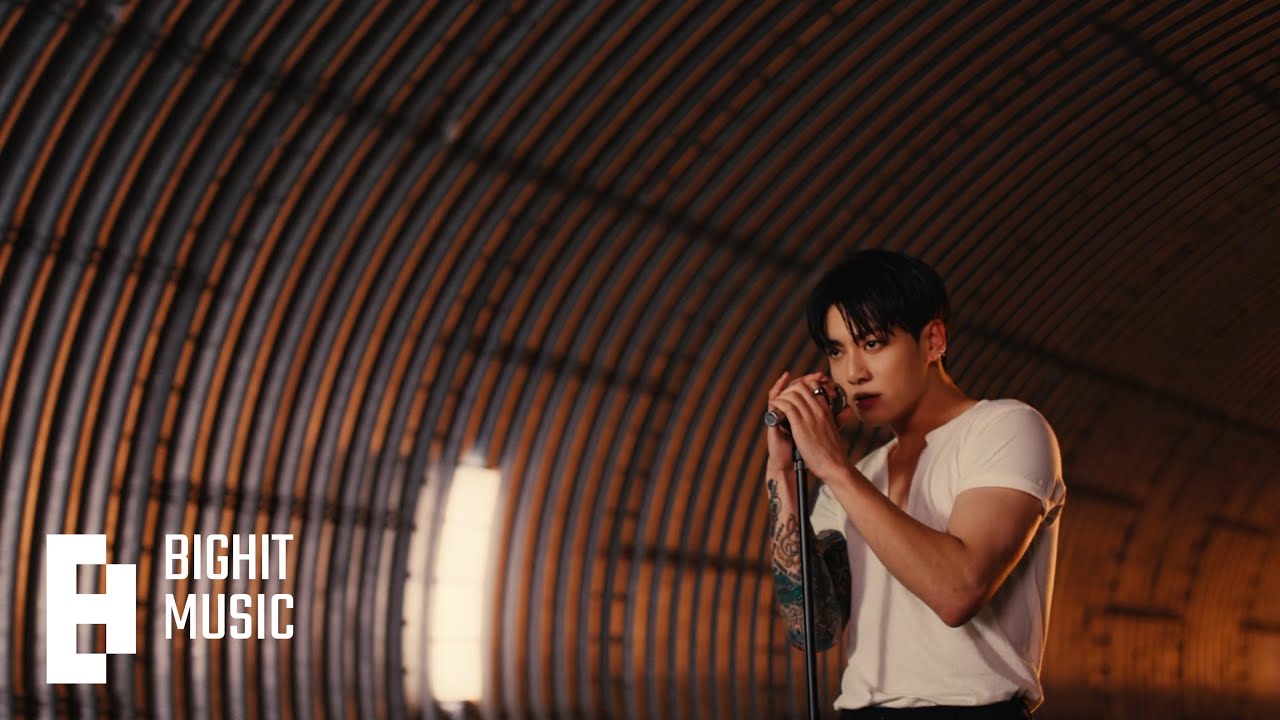
Standing Next to You Choreography: Jung Kook Makes Precision Look Expensive
This choreography version removes narrative cover and leaves Jung Kook, the dancers and a camera close enough to prove exactly how much labor sits inside that effortless silhouette.
Release file
Released: November 7, 2023
Runtime: 3:32
Artist / channel: Jung Kook / BTS / HYBE LABELS
Exact-file focus: The exact official Standing Next to You choreography-version music video, not the narrative MV, dance practice, Usher remix, stage or fan edit.
Bottom line
The choreography version of Standing Next to You proves the performance is not held together by wardrobe, narrative cutting or celebrity close-ups. Jung Kook carries a full-bodied funk vocabulary through exact musical accents while the dancers make scale visible around him. Precision looks expensive here because every clean line has enough breath to avoid looking sterilized.
What changed on replay
Replay one watches feet instead of face. Replay two follows the ensemble’s negative space around Jung Kook. Replay three tracks how arms answer brass and percussion. Replay four looks for recovery breaths after the hardest phrases. Replay five confirms the camera helps readability but does not manufacture difficulty. The body is doing the work.
Musicality before athleticism
The obvious praise is stamina, but stamina without phrasing becomes exercise. Jung Kook changes weight, attack and length according to the arrangement. Sharp hits land against percussion; smoother transitions ride sustained vocal lines. That alternation makes the dance read as music rather than a sequence of expensive capabilities placed beside the song.
The ensemble is not wallpaper
Backup dancers are often discussed as atmosphere, which erases the labor making a solo star legible. Here they create corridors, resistance, symmetry and release. Jung Kook’s authority depends partly on how the group redirects space toward him. Credit does not shrink the star. It explains the system that lets star presence register at full scale.
Camera discipline
The choreography video keeps enough distance for formations to be read, then moves closer when texture matters. It avoids the music-video habit of cutting away whenever a transition becomes difficult. The camera still shapes perception, but it behaves like an informed witness. That makes the video more useful than a fancam and more honest than pure spectacle.
Michael Jackson vocabulary and attribution
The performance uses pop and funk movement language strongly associated in mainstream memory with Michael Jackson. Naming that lineage is more responsible than treating familiar silhouettes as spontaneous Jung Kook invention. His achievement lies in interpretation: adapting inherited vocabulary to his center of gravity, contemporary camera scale and the song’s specific rhythmic architecture.
The suit and the silhouette
Costuming matters because clean tailoring exaggerates lines and makes small errors easier to see. The visual choice does not merely announce adulthood or luxury. It sets a technical challenge: shoulders, hips and hands must remain readable against a controlled silhouette. Jung Kook accepts that exposure instead of hiding effort inside oversized fabric and frantic editing.
Vocals and movement share the same body
Even when viewers hear a polished track, the choreography asks us to imagine breath as a finite resource. Jung Kook’s performance identity depends on refusing the false split between singer and dancer. The phrasing is designed with motion in mind, and the motion respects vocal moments. Neither discipline appears as an accessory to the other.
The counterargument
Some viewers may find the performance too polished, its references too familiar and its masculinity too carefully packaged. Those critiques deserve space. The video is absolutely a premium product. The question is whether craft survives when branding is mentally removed. The sustained timing, formation control and dynamic variation say yes.
What I would change
I would include one uninterrupted full-stage take after the main edit. The existing version already shows more choreography than a narrative MV, but a complete take would expose spacing, recovery and ensemble coordination without editorial assistance. It would also give the dancers a document of their collective work rather than only selected proof.
Why this version belongs in the tracker
A choreography version is not a duplicate of the official MV. It changes the object of analysis from visual narrative to performed structure. The same song reveals different authorship: choreographers, dancers, rehearsal directors, camera operators and Jung Kook’s embodied interpretation. Treating it as a separate file respects that labor and gives replay a clearer purpose.
Replay verdict
This version turns Standing Next to You from a stylish single into a performance argument. Jung Kook’s precision matters, but so do the dancers and inherited movement languages that make it legible. Replay does not expose a trick. It exposes the rehearsal, spacing and breath hidden inside apparent ease.
Formation map
The choreography repeatedly moves from centered solo authority into symmetrical group architecture and back. Those transitions prevent the dancers from functioning as a permanent wall. Space opens, closes and rotates around musical events. Jung Kook’s center is therefore relational: he remains legible because the ensemble changes density and direction. Watching only his body misses half of the choreographic sentence.
Footwork and upper-body contrast
Quick foot placement keeps rhythmic momentum while the upper body alternates between held elegance and sharp accents. That separation is a major source of perceived ease. If every joint attacked every beat, the performance would become frantic. Jung Kook allows different body zones to carry different musical information, creating the impression that groove continues even when one line briefly becomes still.
Recovery is part of technique
The most demanding passages matter, but so do the moments immediately after them. Jung Kook resets posture, breath and facial focus without advertising recovery as a crisis. That is trained performance management. It should not be romanticized as limitless stamina. The skill lies in pacing exertion safely enough that musical intent survives, not in proving a human body can be treated like disposable machinery.
Dance lineage beyond one superstar
Mainstream viewers often route every hat, lean or funk accent through Michael Jackson, but the vocabulary has broader Black social-dance histories and generations of choreographers. Responsible analysis widens the frame rather than replacing one famous attribution with none. Jung Kook’s execution can be excellent while still belonging to inherited languages. Naming lineage makes interpretation richer and reduces the fantasy that global pop invents itself from scratch.
Why the fixed wide take matters
A wide companion take would let viewers evaluate spacing, synchronization and floor travel without lens movement doing part of the expressive labor. Cinematic coverage is not cheating; it is another art. The point is evidence. Offering both versions would document choreographic authorship more completely and help audiences distinguish the dancer’s timing from the editor’s timing without forcing either craft to pretend it works alone.
The solo-star question
The performance answers whether Jung Kook can occupy a large frame without six BTS members distributing contrast around him. He can, but the answer still depends on collaborators. Dancers, choreographers, stylists and camera crew construct the conditions in which solo authority becomes visible. That does not weaken his achievement. Mature star analysis explains interdependence instead of using the word “solo” to make everyone else disappear.
Final evidence check
The performance ultimately argues that polish and evidence can coexist. Camera movement heightens the work, but wide passages still reveal spacing, rebound and ensemble timing. Jung Kook’s authority is real precisely because it is relational: inherited dance language, choreographic design, dancers, styling and rehearsal support a performer capable of making those systems feel coherent in one body. The expensive appearance is not magic. It is coordinated labor made unusually readable.
Canonical profiles
Official video
Receipts
The exact official video is the primary source for the music, performance and visual analysis. BIGHIT MUSIC and the canonical artist profiles provide the release and career context. Claims stop where those sources stop.
Verdict
Jung Kook Standing Next to You choreography React examining musicality, formations, camera choices, stamina and replay value.
What changed every time I replayed it
The second replay follows foot placement and weight transfer instead of the face the camera wants me to watch. The third maps how the ensemble frames Jung Kook without becoming movable furniture. The fourth tracks camera distance and confirms which accents belong to choreography rather than editing. The fifth watches breath and recovery between major phrases, where expensive-looking ease is actually maintained. By the sixth, the performance reads as a conversation between precision and looseness: every line is controlled tightly enough that the moments allowed to swing feel earned.
Lyrics and meaning
The lyric promises durable presence, but this exact file makes the promise physical. Standing next to somebody becomes repetition, alignment, recovery and the discipline to remain available after the dramatic accent ends. The choreography does not deepen every line, yet it exposes labor the narrative video can romanticize away. Devotion is not only a declaration delivered toward a partner; it is the practiced ability to hold timing with other bodies and return to the shared count.
RaeRae verdict
The choreography version is the better craft receipt. Jung Kook’s star control is obvious, but the ensemble, camera discipline and recovery work are what make the polish believable. I can see the labor without the performance begging for applause over it. Precision looks expensive here because everybody in the frame pays attention, not because one man stands in front while anonymous dancers absorb the cost.