
WAO WAO: ALL(H)OURS Built a B-Side Introduction Out of Pure Cardio
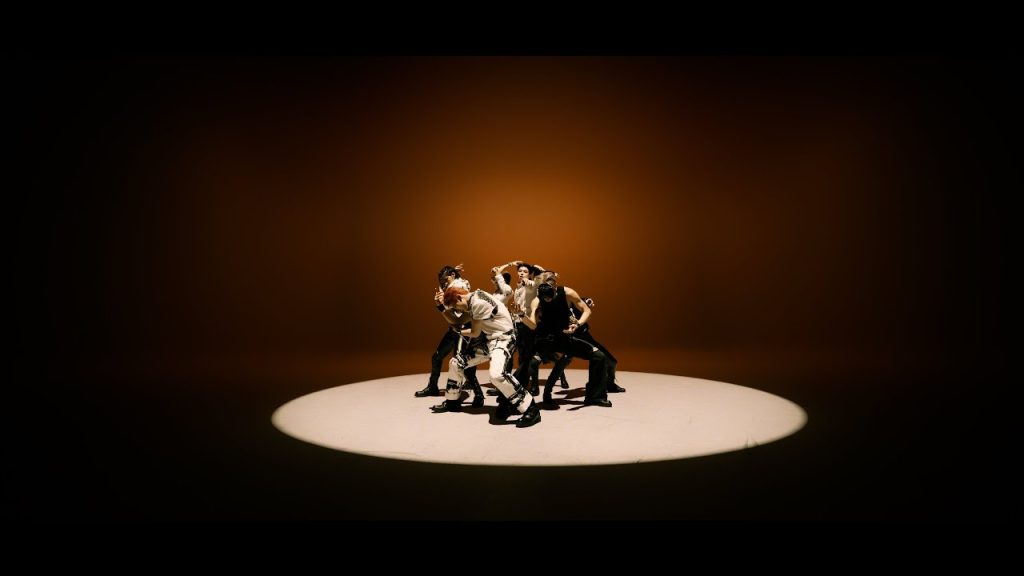
ALL(H)OURS use synchronized spins, formation trust and a deliberately simple hook to make “WAO WAO” a performance-first rookie statement.
Artist: ALL(H)OURS
Released: February 14, 2024 · performance video
Project: ALL OURS · debut mini album
Official videos covered: Official performance music video
Release file
Released: February 13, 2024
Runtime: 03:13
Label / channel trail: 올아워즈 ALL(H)OURS
Sound: ALL(H)OURS use synchronized spins, formation trust and a deliberately simple hook to make “WAO WAO” a performance-first rookie statement.
Sources: Exact official playlist uploadDaily+318Total views3.9M.
My actual first reaction
First thought: This b-side heard “debut introductions” and chose a cardio exam.
The moment I leaned in: The synchronized spins made the seven-member geometry clearer than another sequence of individual close-ups could have.
What sold it: The chorus treats “wao” as propulsion, not a lyric demanding a philosophy seminar.
The side-eye: Performance can give a simple hook shape; it cannot secretly write a second verse.
Current status: The lungs have submitted paperwork. The replay button denied the leave request.
Meaning and performance: WAO WAO is a thesis disguised as a b-side
“WAO WAO” does not carry the narrative burden of a debut title. That freedom is the point. “GOTCHA” must introduce ambition, imagery and a market position. The b-side can ask a narrower question: what happens when these seven bodies receive a strong beat, a repetitive vocal signal and enough floor to prove the training was real?
The answer is motion. The arrangement uses percussion and chant energy to create a loop that choreography can continually reframe. The hook is not lyrically elaborate, and pretending otherwise would be analysis cosplay. Its value is functional: a compact sound the members can throw between formations without losing breath to a paragraph.
That simplicity makes the track useful and limited. It is excellent at sustaining a stage. On audio alone, repeated “wao” figures can feel like placeholders waiting for visual context. This is not evidence that the song fails; it is evidence that performance music should still be evaluated as music and not given a free pass because everybody’s knees are working overtime.
The synchronized spins are the cleanest introduction
Seven-member groups need a visual grammar. Odd numbers provide a natural center, but they also make every transition visible. The synchronized spins in “WAO WAO” establish trust: each performer must commit to speed and direction while preserving enough awareness to land in a shared picture. One late shoulder can turn confidence into airport baggage claim.
Youmin and ON:N are especially readable because their movement carries elasticity rather than only force. Kunho stabilizes the group picture; Minje keeps the vocal line present inside the exertion. Xayden’s lower color gives the beat weight, Hyunbin adds sharper punctuation, and Masami’s height turns clean timing into a formation requirement rather than a cosmetic bonus.
The performance video is better than a member-by-member montage for learning the lineup’s working relationships. A face close-up tells you who looks good. A wide formation tells you who adjusts, who creates space and whether the current center is supported or merely surrounded.
Live singing was the problem before it became the selling point
ON:N later described singing while dancing as one of the hardest parts of pre-debut preparation: pitch and vocal stability suffered, while choreography also became less clean. The group chose to work toward live performance from the beginning. “WAO WAO” is therefore not only a stamina display; it is evidence of a specific training problem the members were trying to solve.
Breath is visible if you stop watching only the highlight. Look at posture immediately after an explosive count, the speed of recovery and whether the next line begins from a collapsed chest. The performance is impressive because the members often make the transition look ordinary. Ordinary is what difficult repetition becomes after enough rehearsal.
That does not mean every stage should be graded like an athletic trial. Vocal color, musicality and emotional communication still matter. Cardio is a means. When it becomes the entire concept, idols are asked to prove worth through exhaustion, and audiences can mistake visible suffering for artistic depth.
The song reveals the debut lineup’s internal balance
Kunho provides the adult center without turning leader posture into a permanent frown. Youmin carries choreographic detail; ON:N brings brightness and attack. Minje gives the hook vocal grain. Xayden, Masami and Hyunbin keep the rap and lower textures from sounding like one assigned position.
The distribution is not a perfect democratic spreadsheet. It does not need to be. A performance should use the person who makes a transition convincing, then ensure the catalog eventually gives everyone enough meaningful work to establish a profile. “WAO WAO” succeeds because the group picture remains the lead character while individual textures are still findable.
The counterargument: impressive choreography can hide a thin song
A viewer can reasonably love the stage and rarely seek the audio alone. The hook is designed for physical repetition, and the arrangement does not develop as far as the choreography. If the spins, formations and facial attack were removed, the composition would lose a substantial part of its argument.
My response is not that visuals make all criticism irrelevant. It is that “WAO WAO” honestly announces its priority. The fix would not be deleting the performance identity; it would be adding one melodic bridge or instrumental change strong enough to give the final formation a new musical reason.
Why it still belongs in the ALL(H)OURS route
The song sits between training and identity. “GOTCHA” is the official debut statement; “WAO WAO” is the supporting evidence that the lineup can function beyond one expensive video. Later tracks become louder, stranger and more authored, but the group’s physical grammar is already here.
Watching it after “HOP” is useful. The 2026 group makes sharper character choices and understands the camera better. The 2024 group has the urgency of people who know every count may be treated as a referendum on whether they deserved to debut. Both energies belong in the file.
What changed every time I replayed it
- First replay: The spins were the headline.
- Second replay: Recovery after the spins became more impressive than the spins.
- Third replay: Minje’s vocal grain kept separating from the chant.
- Fourth replay: Masami’s formation adjustments became easier to see.
- Fifth replay: The simple hook remained the weakness and the exact reason the choreography had room.
The replay test
The hook gets louder on replay, but the real reward is watching how ALL(H)OURS passes momentum across the formation. Nobody waits politely for center.
Bottom line
“WAO WAO” is ALL(H)OURS proving the debut lineup can hold one rhythm, one formation system and one collective pulse without an explosion doing the introduction. The synchronized spins are not decoration; they are a trust exercise performed at speed.
The song is thinner than the stage built on top of it, and one contrasting musical section would improve the replay. But the performance video documents the group’s foundational skill with unusual honesty: seven people learning to make exhaustion look like one decision.
RaeRae verdict: The b-side brought one hook, seven sets of lungs and a choreography bill nobody’s knees agreed to pay.
Receipts
Official WAO WAO performance music videoDaily+318Total views3.9M
ALL(H)OURS official YouTube channel
ALL(H)OURS official website and archive
HelloKpop ALL(H)OURS interview and WAO WAO performance context
ALL(H)OURS interview on formation and live-performance training