
Kiki’s Delivery Service
A young witch leaves home, opens a tiny delivery business, discovers that talent can disappear under pressure, and learns that independence is not the same thing as handling everything alone.
Story Overview
Kiki arrives in a coastal city with Jiji, a broom, a radio, and the confidence of somebody who has not yet had enough time to fail. She needs work because independence has rent attached. Osono gives her a room and a practical route into the city. Deliveries introduce neighbors, clients, weather, mistakes, class differences, and the exhausting reality of turning something joyful into a service other people can rate.
The film’s crisis is not a villain. Kiki loses access to flight and can no longer understand Jiji because exhaustion, loneliness, humiliation, and self-surveillance have changed her relationship to the abilities she treated as automatic. Recovery begins through food, rest, friendship, art, useful work, and the permission to stop treating one bad stretch as proof that the self has vanished.
Begin with the film
Hayao Miyazaki’s 1989 Studio Ghibli film is the complete screen route. Eiko Kadono’s novel series is the larger source route and continues Kiki’s life beyond the film.

A work story that understands rest
Kiki’s Delivery Service does not condemn ambition or paid work. Kiki wants a place in the city and takes pride in becoming dependable. The film objects to the idea that usefulness must be constant. A gift becomes fragile when every quiet day feels like a threat to identity.
This hub keeps the Review separate, then expands through character records, Japanese performances, Koriko’s work and community systems, creative-burnout editorials, and sourced franchise history.
Meet the people of Koriko
Start with the character directory, then move into the Japanese performances that give Kiki, Jiji, Ursula, and Osono their texture.
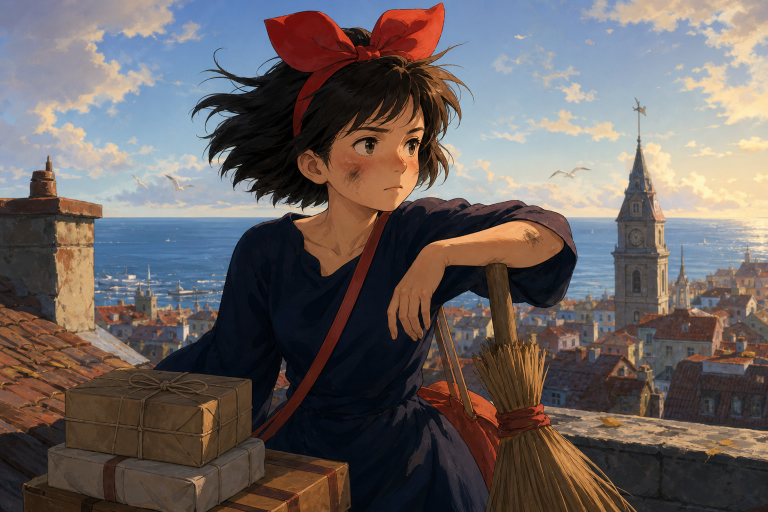






Lore, work and the city
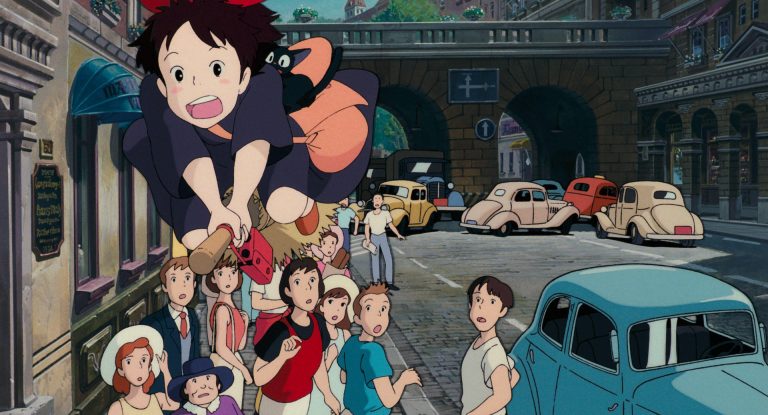


RaeRae editorials
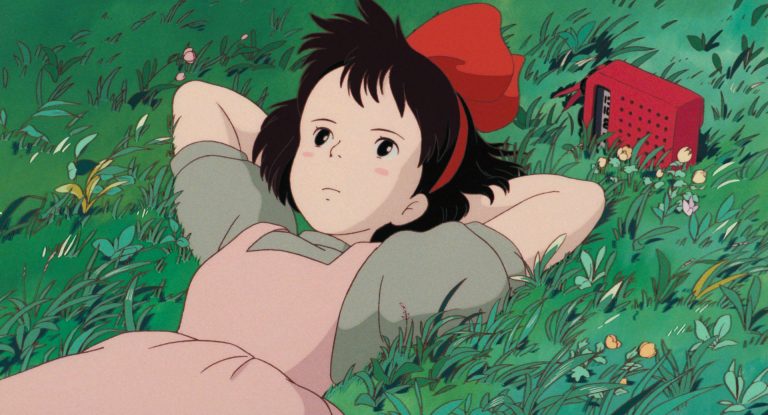
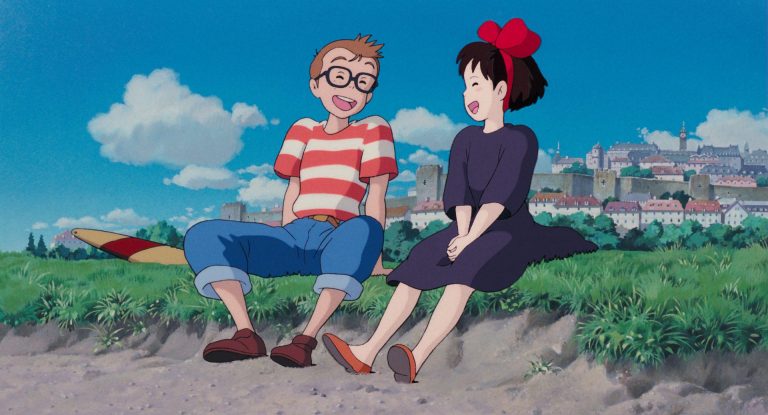
Confirmed news
RaeRae take
Kiki’s Delivery Service understands a problem that adulthood keeps pretending is a personal failure: the work you love can become work that empties you. Kiki does not lose her gift because she is lazy, ungrateful, or secretly untalented. She loses access to it after loneliness, class embarrassment, public comparison, and the pressure to turn a private ability into reliable customer service. That distinction matters. The film does not ask her to want success harder. It asks whether she can build a life around work without letting work consume the person who performs it.
That is why the bakery matters as much as the broom. Osono offers shelter, food, tasks, humor, and a place where Kiki can contribute before she has proved herself exceptional. Community does not arrive as a speech about believing in yourself. It arrives as somebody making room, handing over a practical job, noticing exhaustion, and refusing to turn a bad week into a moral verdict. The magic returns inside that network of care, not above it.
Kiki at a glance
The screen story begins with a thirteen-year-old witch leaving home for a year of independent training. Koriko gives her a beautiful city, but beauty does not erase rent, reputation, weather, customers, or the humiliation of being visibly new. Jiji is her first witness and emotional translator. Osono becomes an employer, landlord, neighbor, and quietly protective adult. Ursula gives the film its clearest language for creative drought, while Tombo represents a kind of friendship Kiki has to stop reading only through embarrassment.
The central conflict is not whether Kiki can defeat an enemy. It is whether she can remain a person while learning to be useful in public. Flight, delivery work, domestic labor, art, friendship, and rest all become parts of that question. The movie stays gentle without becoming soft-headed about how quickly a capable girl can begin measuring her worth through performance.
What the city teaches her
Koriko is not a cruel city, but it is indifferent in the way cities often are. People have schedules. Traffic does not slow down because a young witch is overwhelmed. Wealth is visible in homes, clothes, food, and the casual way some customers treat service work. Kiki has to learn routes, prices, expectations, and social codes while pretending she is less frightened than she feels. Her independence is therefore economic and emotional at the same time.
The film’s kindness comes from refusing to solve that pressure with one perfect mentor. Kiki receives different forms of help from different people. Osono offers material stability. Ursula offers language for burnout. The old woman offers gratitude and reciprocal care. Tombo offers companionship that survives awkwardness. None of them can fly for Kiki, but together they make it possible for her life to become larger than the moment when flying stops.
Kiki does not recover by becoming the girl who never struggled. She recovers by building a life that can hold struggle without calling it failure.
Why this small story carries a whole world
Kiki’s Delivery Service is often described as gentle because it refuses a conventional villain, but gentleness is not the same thing as simplicity. The conflict sits inside work, exhaustion, loneliness, money, and the humiliating fear that a gift can disappear when it becomes a job. Koriko is beautiful, yet the city does not rearrange itself for a thirteen-year-old stranger. Kiki must learn its streets, earn trust one delivery at a time, and discover which forms of independence sustain her rather than merely proving that she can endure alone.
That is why this hub separates the film review, character files, Japanese performances, and world guides without breaking their relationships. Kiki’s flight means something different beside Osono’s practical care, Ursula’s creative burnout, Jiji’s changing voice, or Tombo’s noisy fascination with aviation. Each route returns to the same central question: how does a young person build an adult life without converting every talent, friendship, and moment of rest into evidence of usefulness?
The film’s city is part of that answer. Bakeries, markets, clocks, radio reports, harbor winds, and crowded streets turn magic into a material practice. A delivery succeeds because Kiki can fly, but also because somebody packs the parcel, forecasts the weather, gives directions, repairs a broom, offers a meal, or notices that a child is overwhelmed. The apparent solo business is held by a community whose labor becomes visible only when the route goes wrong.
Use the sections below as connected paths rather than isolated cards. The review studies the whole film’s argument and craft. Character and voice profiles stay close to choices and performances. The lore guides examine labor, mutual aid, flight, city design, and the difficult difference between being independent and being abandoned. Every card uses its post’s own featured and hero artwork so the visual trail remains as coherent as the editorial one.
Start with the question you came carrying
If you remember the film as comfort, begin with the review and ask what kind of material security allows comfort to exist. If you remember the loneliness, open Kiki and Jiji’s profiles together. If the city is what stayed with you, follow the Koriko and delivery-labor guides. The hub is designed for movement between emotional memory and deeper examination, because the film earns affection by making ordinary structures worthy of attention.