
Makoto Hyuga: Evangelion Character Profile
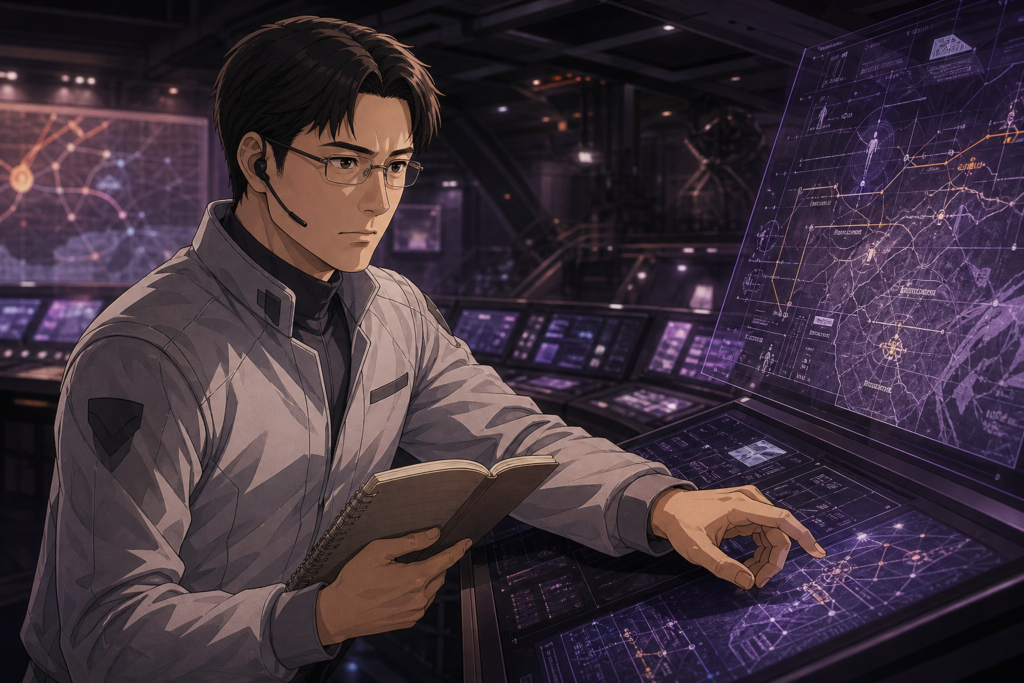
Evangelion Character File
Bottom line first: Makoto Hyuga is the bridge officer who proves that competence can become quiet resistance. He reads manga during calm hours, calculates survival routes during Angel attacks, and feeds Misato information when official channels cannot be trusted. Evangelion never turns him into a secret action hero. Makoto remains a worker inside the machine, which makes every small choice to help somebody feel more believable.
Affiliation
Work
Closest bond
Japanese voice
The bridge officer who watches the whole board
Makoto sits beside Maya Ibuki and Shigeru Aoba in Central Dogma, where every battle becomes a wall of timing windows, damage reports, and decisions made faster than fear can catch up. His station turns chaos into routes. He tracks the Angels, monitors the Evangelions, relays orders, and keeps the command staff aware of threats moving through the city and the base. That work sounds like background noise until one wrong number means a pilot never comes home.
His personality fits the job. Makoto notices patterns without performing intelligence for the room. The manga in his hands during a quiet shift tells the audience that a normal fan exists under the uniform. Once the alarms begin, leisure disappears and technical discipline takes over. The contrast keeps him human. NERV does not employ a faceless computer voice. NERV employs a young man who probably expected an ordinary career and ended up calculating the distance between children and extinction.
Misato Katsuragi and unofficial trust
Makoto’s connection to Misato Katsuragi begins with work. Misato needs accurate battlefield information, and Makoto delivers without wasting time. Their professional rhythm grows into something more private when Makoto helps her investigate NERV. He gathers information that the organization would rather keep buried, which places him outside the safe limits of his assignment.
That support should not be reduced to a crush doing favors. Makoto clearly carries feelings for Misato, but the information he shares also reflects judgment. He has watched Gendo, SEELE, and the command structure withhold facts while asking everyone below them to accept lethal risk. Helping Misato means choosing the investigator who wants the truth over the institution that owns the database. His attraction gives the choice emotional weight. His experience gives the choice political meaning.
Misato does not promise him romance, and Evangelion does not pretend care creates entitlement. Makoto remains useful because he respects the boundary between what he feels and what Misato owes. The End of Evangelion later reveals the shape of his longing, but the original relationship never becomes a prize waiting for him after enough loyal service. That restraint protects both characters from a much cheaper story.
Competence during the blackout
Episode 11 gives the bridge staff one of their clearest chances to matter beyond a readout. NERV loses electrical power, automatic systems fail, and the staff must solve movement, access, and launch problems through physical labor and memory. Makoto’s quick thinking helps the headquarters function without the technology everyone assumed would always be available. The episode makes a simple point: advanced infrastructure still depends on people who understand the system well enough to improvise when the screens go dark.
The blackout also exposes NERV’s institutional arrogance. A city built as a fortress can be paralyzed by ordinary sabotage. Commanders who plan for supernatural enemies overlook the vulnerability created by centralization. Makoto, Maya, and Aoba keep the organization alive because lower-level workers understand daily operations more intimately than the men who claim ownership of the plan.
Information, complicity, and the limits of a good employee
Makoto helps NERV fight Angels, which protects civilians and preserves the world. The same labor also protects Gendo’s private agenda. Both facts remain true. Evangelion refuses to hand bridge officers a clean moral category because modern institutions rarely provide one. A worker can save lives at noon and support a destructive hierarchy by evening without changing desks.
His choice to pass information to Misato creates a limited form of resistance. Makoto does not resign, expose NERV to the public, or overthrow command. He creates leaks inside a structure designed to contain knowledge. That scale feels honest. Most employees cannot destroy the organization paying them. They can decide who receives a document, which warning gets repeated, and whether a superior’s silence deserves obedience.
The limitation matters too. Quiet resistance cannot stop Instrumentality. Makoto’s information helps Misato understand more, but understanding arrives inside a machine already moving toward catastrophe. Evangelion treats knowledge as necessary without pretending knowledge automatically produces power. Makoto sees more than many people at NERV and still cannot force the people above him to stop.
The End of Evangelion
During The End of Evangelion, Makoto remains at his station while the headquarters falls. The JSSDF invasion strips away every layer of institutional ceremony. Staff members who spent years discussing apocalyptic threats face bullets, fire, and sealed corridors. Makoto continues relaying information because Misato and the surviving personnel still need a path through the base.
Instrumentality reaches him through Misato’s form. The scene reveals desire without granting fulfillment. Makoto receives the image of the woman he loves at the exact moment individual boundaries disappear. No real conversation settles whether Misato returned his feelings. The fantasy answers the need inside him, not the unresolved relationship between them. That distinction makes the moment sadder than a simple romantic confirmation.
Rebuild and the long war
The Rebuild films carry Makoto from NERV into WILLE after the time gap. Age changes his face and war changes the workplace, but his function remains recognizable. He operates within a resistance organization built by people who survived the consequences of NERV’s plans. The man who once passed information to Misato now works openly under her command against Gendo.
That shift completes a line the original series only suggested. Makoto’s loyalty was never really to the logo on his uniform. His loyalty belonged to the people he believed were trying to save others. WILLE gives that instinct an organization that better matches his values, even if the new structure carries its own severity and trauma.
Hiro Yuki keeps him grounded
Hiro Yuki voices Makoto in Japanese across the animated series and later Evangelion productions. The performance avoids turning every emergency report into shouting. Makoto sounds alert, technically capable, and emotionally present. When pressure rises, the voice tightens without losing the clarity expected from a command officer. That balance lets viewers trust his work before the script asks them to notice his private loyalties.
Makoto also needs warmth because his story lives in small reactions. A lighter delivery during ordinary bridge talk supports the manga-reading fan under the uniform. A more exposed tone around Misato reveals affection without demanding a romantic speech. The voice builds a supporting character through accumulation, which suits Evangelion’s habit of hiding entire emotional lives behind professional routines.
Why Makoto belongs in the Evangelion hub
A complete Evangelion hub needs the people who make every launch possible. Makoto connects battles to surveillance, workplace loyalty, information control, and the human cost of central command. He also gives Misato someone inside the system who believes her questions deserve answers.
Makoto matters because he is neither chosen child nor grand architect. He is a capable adult trying to do useful work inside a structure that keeps changing the meaning of usefulness. His profile belongs beside pilots, scientists, and commanders because the apocalypse depends on operators too.
Research routes
- Official Evangelion site for franchise continuity and production routes.
- EvaGeeks: Makoto Hyuga for episode references, NERV duties, Misato connections, and Rebuild distinctions.
- Official Evangelion 1.0 staff and cast page for production and cast context.