
RaeRae Rants · Anime Government Secrecy and Classified Childhood File
Secrecy Is Not Protection When the Child Never Gets the Truth
Anime governments hide parentage, experiments, bloodlines, massacres, and medical history, then act shocked when young people build identities around the lies.
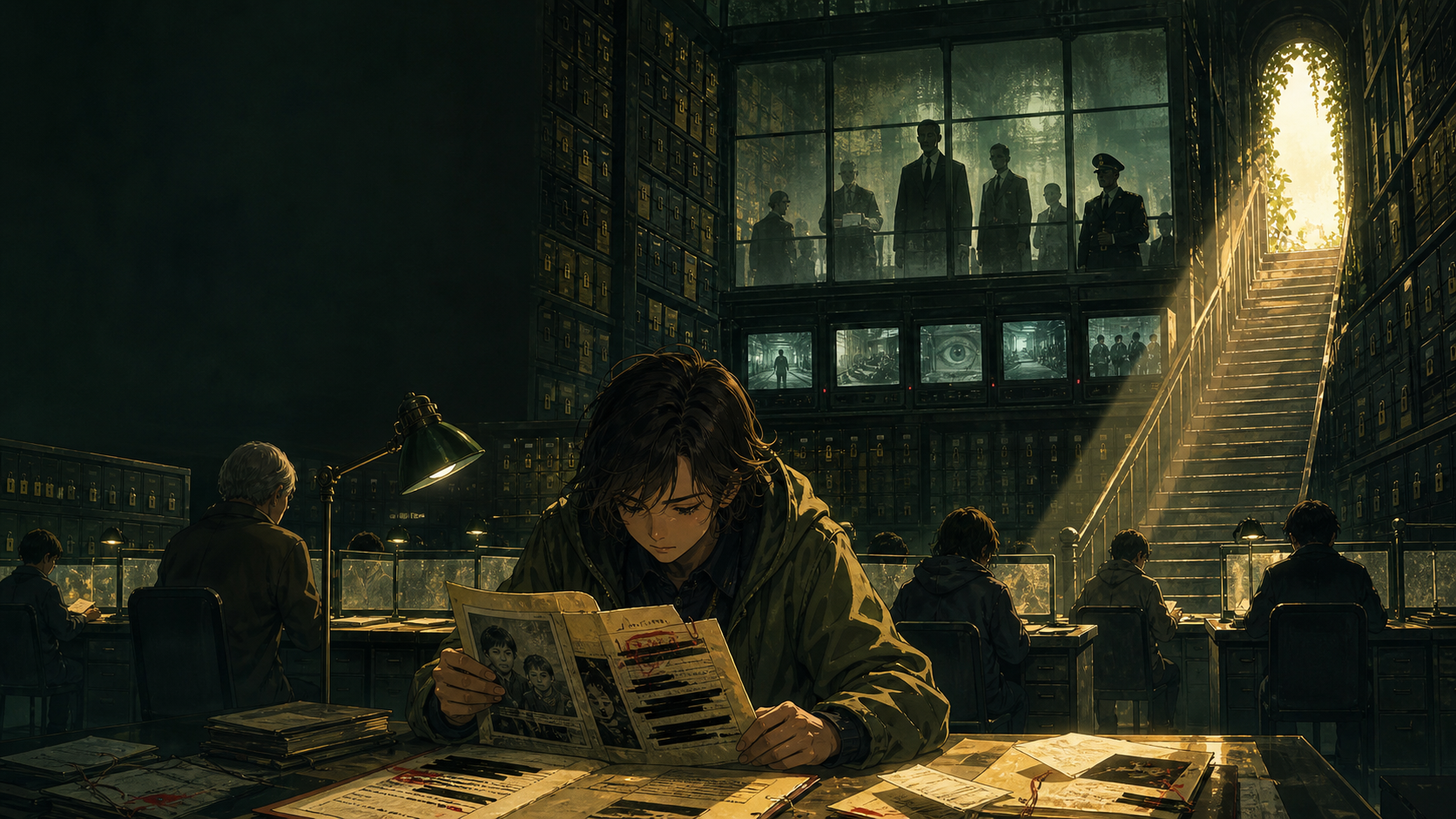
The redacted childhood
A young adult finally reaches the archive. The file contains a childhood photograph, several black bars, a different surname, and signatures belonging to officials who knew the truth for years. Every confusing memory changes shape. The stranger who watched from a distance was family. The recurring medical test belonged to an experiment. The feared power came from an event adults concealed. The parent described as dead may have been imprisoned, exiled, or politically inconvenient.
Officials usually explain that secrecy protected the child. Sometimes the claim contains truth. Public knowledge could attract enemies, expose witnesses, threaten relatives, or destabilize a fragile peace. Protection has a timeline and a beneficiary. When secrecy continues after danger changes, when no independent person reviews the decision, and when the child cannot access personal history even as an adult, protection becomes control.
Knowledge creates risk. Ignorance creates risk too. A person who does not know family medical history, inherited power, political enemies, or past experimentation cannot make informed choices about safety.
When protection becomes ownership
Protective secrecy should be necessary, proportionate, limited, and reviewed. Officials should identify the specific danger, the information requiring restriction, who may access the record, and when disclosure becomes appropriate. Anime governments prefer indefinite classification because indefinite classification reduces accountability. The secret protects the institution from questions as effectively as the child from enemies. Adults confuse control with safety. A child who knows the truth may ask dangerous questions, contact forbidden relatives, reject training, refuse a mission, or expose political wrongdoing. Officials call those possibilities security threats.
Safety designed around obedience protects the plan rather than the person. Gratitude becomes part of the cover story. Institutions provide housing, education, a new name, or elite training. The young person is expected to feel rescued. Questions appear ungrateful because officials frame every missing fact as a sacrifice made on the child’s behalf. Care does not purchase biography. A protected person retains moral ownership of personal history. The secret becomes larger than the original danger. Years of concealment create secondary harm. Friends repeat false stories. Medical decisions rely on incomplete information. Public records become inaccurate. Officials commit new abuses to preserve the first omission. Eventually disclosure threatens institutional reputation more than public safety. Classification survives because truth would reveal how long adults lied.
Identity built around missing facts
People develop identity through family stories, culture, records, bodies, memories, and relationships. Missing information does not leave an empty space. Children create explanations from available evidence. A child may conclude that abandonment reflected personal unworthiness. A frightening power may feel like internal evil rather than inherited or engineered capacity. Social hostility may seem inexplicable, encouraging shame. Later disclosure can bring relief and destabilization together. The truth answers questions and reveals that trusted adults allowed false beliefs to grow.
Names carry political decisions. A new name can protect a witness or child. A name can also erase lineage, ethnicity, and claims to family or property. Protective identity programs should preserve secure original records and create a route for later access. The state should not become permanent author of the person. Medical truth belongs inside informed care. Inherited conditions, prior procedures, experimental exposure, and power-related risks affect treatment. Withholding such information can endanger health.
Young children need age-appropriate explanations. Maturing adolescents should receive increasing detail and participate in decisions. Disclosure can produce grief for a life that never existed. The newly revealed parent, sibling, or homeland may be unavailable. Truth does not guarantee reunion. The person may grieve both actual loss and imagined years built on falsehood. Support should allow anger, relief, loyalty conflicts, and uncertainty without demanding immediate forgiveness.
What the state gains from secrecy
Secrecy preserves operational advantage. Intelligence sources, defenses, and vulnerable people may require confidentiality. Democratic societies still need oversight because secrecy concentrates power. Officials also gain narrative control. A massacre becomes an isolated tragedy rather than policy. An experiment becomes an accident. A child weapon becomes a volunteer. A political prisoner becomes a missing person. Classification can protect leaders from legal consequences, public anger, and demands for compensation. The word “security” discourages inquiry because critics risk appearing reckless.
Compartmentalization distributes ignorance and concentrates command. Each worker knows one fragment. Few people can see the whole system. Limited access may reduce leaks, but compartmentalization also allows participants to deny awareness of overall harm. Independent reviewers need enough access to reconstruct the whole pattern. Emergency powers become permanent habits. War and disaster can justify temporary secrecy. Temporary systems acquire staff, budgets, and political usefulness. Expiration dates move. Regular review should require officials to justify continued restriction with current evidence rather than historical fear.
Anime case files
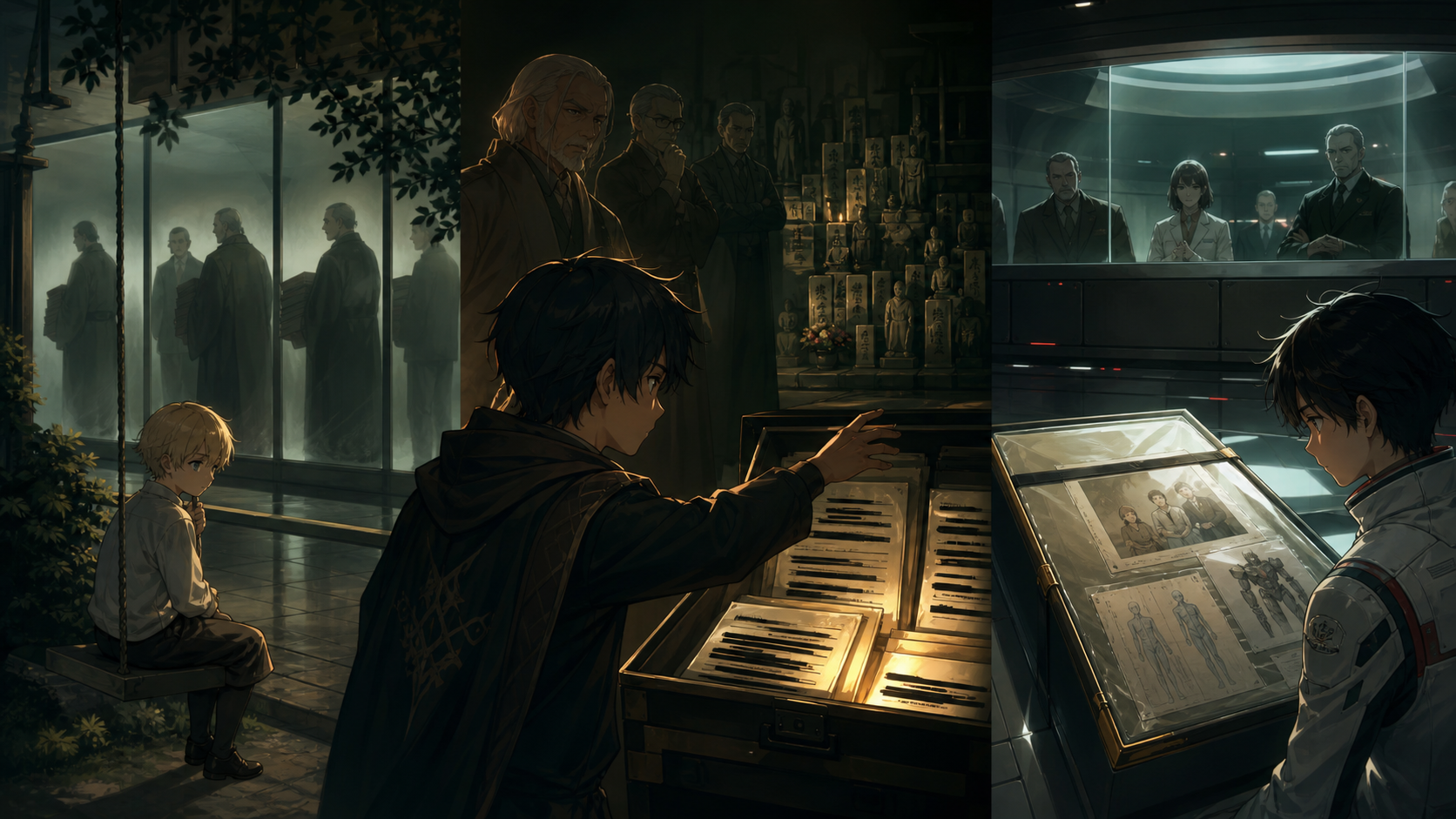
Naruto Uzumaki and the secret every adult expected him to survive. Naruto grows up without an honest explanation of the Nine-Tails, his parents, or why villagers fear him. Adults restrict discussion to prevent dangerous knowledge and social instability. The policy leaves Naruto carrying hostility without context. The village protects information and fails to protect the child’s developing identity. Later truth helps him understand sacrifice and lineage. The delay still belongs to Konoha’s moral record.
The Uchiha massacre and state security through one child’s silence. State leaders respond to political crisis through covert violence and secrecy. Sasuke receives a false personal story while public institutions preserve stability. The lie shapes his entire life. When truth arrives through manipulation, no trusted institution remains capable of explaining responsibly. Secrecy does not prevent radicalization. Secrecy gives the eventual revealer enormous power over interpretation. One For All and selective truth. One For All requires confidentiality because enemies target holders and the power carries national consequences. Midoriya enters the secret through trust and receives information gradually.
Gradual disclosure becomes ethically strained when withheld history affects bodily risk and future autonomy. Mentors must balance operational security with the successor’s right to understand inherited danger. Evangelion and classified parenthood. NERV’s children operate inside layers of concealed family history, scientific purpose, and institutional agenda. Adults withhold facts necessary to understand the machines and personal relationships. Command gains compliance. The pilots lose informed choice and discover truth through crisis rather than care.
Rights to records and truth
People should access records concerning identity, health, education, detention, and state decisions, subject to narrow protections for others and current operations. Records need correction procedures. A false official story can affect status, benefits, safety, and reputation. Children should receive information in developmentally appropriate stages. Guardians and professionals can support understanding without assuming permanent ownership. Adults whose identities were concealed during childhood need independent advice before accessing potentially traumatic material. Support should remain optional rather than another gatekeeping tool. Third-party privacy requires careful redaction. A personal file may include information about relatives, victims, witnesses, or sources. Agencies can protect narrow details while disclosing the core facts a person needs. Whole-document secrecy is often administratively easier and personally devastating.
How responsible disclosure works
Disclosure begins with preparation. Officials identify what is known, uncertain, and previously misstated. The person chooses support figures and setting where possible. Language should be direct. Euphemisms protect adults. The listener deserves accurate terms for adoption, parentage, death, imprisonment, abuse, experimentation, or political violence. Information can arrive in stages when volume or danger requires pacing. Staging should serve understanding rather than indefinite control. The person needs access to records and time for questions. New questions will emerge later. One meeting cannot close the process.
Institutions should acknowledge why information was withheld, which harms followed, and what remedies exist. Disclosure without accountability transfers the emotional burden to the person receiving truth. Timing should reflect the person, not the press cycle. Officials often disclose only after a leak, attack, election, trial, or public scandal. The person learns private history at the same time as strangers. Where safety permits, direct private disclosure should come first. The person needs time before public questions begin. Uncertainty should remain visible. Archives can contain conflicting reports, propaganda, missing evidence, and memories recorded under pressure. Officials should distinguish confirmed fact from inference. Replacing one false certainty with another delays the next betrayal.
Parents do not own the secret forever
Parents may hide adoption, donor conception, parentage, illness, incarceration, family violence, or political danger because they fear harm. The fear can be sincere. Children often sense inconsistency before adults disclose. Silence does not create innocence. Silence creates a puzzle the child solves without reliable pieces. Age-appropriate truth allows understanding to grow. A young child does not need every adult detail. A young child can understand basic facts stated without shame. Parents may need professional guidance and safety planning. Guidance should help tell the truth rather than provide endless reasons to postpone. A parent’s shame should not become a child’s missing history. Adults may conceal information because disclosure exposes choices, stigma, or failure. Calling concealment protection can hide whose emotions receive protection. Accountability begins when the adult separates personal discomfort from the child’s need for truthful identity.
Whistleblowers appear dangerous to institutions built on secrecy
A clerk copies a file, a scientist reveals an experiment, a soldier names an illegal order, or a teacher tells a child what officials concealed. Anime often frames the whistleblower as traitor before revealing the truth. Unauthorized disclosure can genuinely endanger people and operations. Whistleblowing systems should provide protected internal routes, independent investigation, and carefully managed public release. When every internal route belongs to the accused institution, secrecy becomes self-policing. People may face an impossible choice between silence and uncontrolled leakage.
Protection from retaliation matters because career loss, prosecution, surveillance, and social exclusion discourage reporting. The leaker controls the first interpretation. If trusted adults refuse disclosure, a manipulative enemy may reveal the secret. The enemy can mix fact with lies and time the revelation for maximum harm. Responsible transparency reduces that leverage. Truth told with care is harder to weaponize.
Archives are not neutral rooms
Somebody decides which records exist, which language they use, which voices enter, and which events disappear. Destruction and omission shape history as strongly as classification. State archives often preserve official decisions more reliably than the experiences of children, civilians, marginalized groups, and victims. A file may describe compliance without recording fear. Historical reconstruction needs testimony, community records, personal letters, medical evidence, and multiple perspectives. Official paperwork remains evidence rather than complete truth.
Redaction should be precise. Black bars can protect a living source, operational method, or third party. Broad redaction can conceal wrongdoing and prevent the subject from understanding personal history. Agencies should explain legal grounds, disclose separable information, and provide appeal. Permanent secrecy needs a higher threshold than administrative convenience.
Memory manipulation makes consent almost impossible
Science-fiction and fantasy governments can erase, alter, seal, or fabricate memory. Such powers turn secrecy from withholding into direct authorship of identity. Memory intervention may prevent acute psychological collapse or protect an operation in rare emergencies. The power creates extreme risk of abuse because the subject cannot challenge what the subject no longer remembers. Safeguards would require independent authorization, strict necessity, minimal scope, secure original records, later review, and disclosure wherever possible. A person whose memory was altered needs support for the grief and disorientation of restoration. Recovery should not serve only the plot’s need for hidden information.
War makes secrecy easier to justify and harder to end
During war, operational secrecy can protect troops, civilians, intelligence, and negotiations. Children living through war may also need information about evacuation, family status, and personal danger. Adults sometimes withhold truth to preserve morale. Children then encounter death, displacement, or betrayal without preparation. Postwar governments should review classified records, identify missing people, correct public history, and provide families with answers. Peace without truth leaves private wars continuing inside households. National myths can become classified omissions. Victorious states tell stories about unity and sacrifice. Crimes by allies, discrimination, and failed leadership may remain hidden to protect legitimacy. Education built around omission prevents future citizens from understanding how conflict developed. Honest history can support peace by making warning signs recognizable.
Medical secrecy should protect privacy, not deny the patient
Confidentiality protects people from unwanted disclosure. The patient remains entitled to information about diagnosis, treatment, risk, and records. Anime laboratories often reverse that principle. Officials share a child’s data among agencies while withholding the same data from the child. Consent requires understandable information, alternatives, and the ability to ask questions. Emergency treatment may proceed under limited exceptions, but later explanation remains owed. Research data needs separate consent where possible. Care should not become an automatic license for experimentation.
Friends become accidental keepers of state secrets
A young protagonist tells one trusted friend about hidden identity or power. The friend now carries information that governments, enemies, and family members may seek. The intimacy can strengthen a bond and expose a minor to danger. Adults should not rely on adolescent secrecy as an operational safeguard. Friends need clear guidance about immediate threats, trusted contacts, and which facts remain personal. Loyalty should not require lying under dangerous pressure. The person disclosing also needs to consider consent. Sharing a classified burden changes the friend’s risk. “I trust you” does not automatically mean “you agreed to carry this.”
Surveillance often accompanies secrecy
The state hides information from the child while collecting information about the child. Officials monitor location, communication, health, power use, relationships, and emotional state. Some monitoring may protect a threatened person. Surveillance should remain transparent where possible, limited to necessity, secured, and regularly reviewed. Secret monitoring damages trust when discovered. Ordinary friendships and mistakes become part of a government record. Data gathered for safety should not quietly determine school placement, employment, detention, or publicity without due process. Consent cannot be meaningful under invisible observation. A person behaves differently when watched. Secret surveillance removes the ability to understand the social environment and make informed choices. Independent authorization and notice after danger passes provide minimal accountability.
Media disclosure can become a second violation
A leak reveals parentage, medical history, victimization, or classified service. News organizations may argue public interest. Public curiosity alone is not public interest. Reporting should weigh relevance, age, safety, privacy, and potential harm. Children deserve heightened protection. The subject needs an opportunity to prepare and respond without being pressured to confirm private details. Silence should not be treated as evidence of guilt. Corrections matter when official falsehood shaped earlier coverage. News archives can preserve inaccurate identities for years.
Disclosure must include accountability
Officials sometimes release files decades later and treat transparency as completed virtue. The people affected may still lack compensation, healthcare, legal status, or restored family links. Accountability asks who authorized secrecy, whether law was followed, which harms resulted, and which remedies remain possible. Some officials acted under genuine danger and limited knowledge. Fair review can distinguish reasonable protection from self-serving concealment. Institutions should correct public records, notify affected people, fund support, preserve evidence, and change policy. An apology should not praise the institution for finally speaking. Delayed truth may require courage from individuals. The central focus belongs to people who lived with the consequences. Public ceremonies should not turn disclosure into institutional rebranding.
Who watches the secret keepers?
Legislative committees, courts, inspectors general, ombuds offices, archivists, journalists, and civil-society groups can provide different forms of oversight. Reviewers need clearance, independence, resources, and power to obtain records. A ceremonial committee cannot challenge an agency that controls every fact. Reports can protect operational detail while describing legality, scale, harm, and recommendations. Total silence is rarely the only safe option. Whistleblower channels and individual appeal rights create additional checks. Children need their own advocate. A guardian tied to the agency may face conflict between mission and child. Independent advocates should represent safety, identity, education, health, and evolving wishes. The advocate should remain available during disclosure and afterward, when consequences become clearer.
The honest objection: some truths can get people killed
Yes. Witness locations, defense systems, active agents, vulnerable relatives, and negotiation details may require strict secrecy. Immediate disclosure can cause irreversible harm. The existence of legitimate secrets does not validate every secret. Officials should define the harm, use the least restrictive approach, and set review. Personal truth can often be disclosed without operational detail. A child may learn parentage and basic history while locations or methods remain protected. Where disclosure must wait, adults can avoid fabrication. “I cannot safely explain yet” preserves more trust than a detailed lie.
Questions to ask whenever an anime adult says “for your protection”
I stop trusting the phrase “for your protection” when the adults cannot answer basic questions about the protection they designed:
- Which danger is specific, and who benefits from concealment?
- What truth can be shared safely now?
- Who reviews the decision independently, and when does classification expire?
- Does the person have access to medical and identity information?
- What false beliefs will silence create?
- What remedies exist if secrecy caused harm?
- Would officials make the same decision if disclosure threatened no institutional reputation?
A better secret-history reveal
The reveal should not arrive solely as villain monologue. A trusted person prepares the protagonist, names uncertainty, and provides records. The young person reacts without immediately converting pain into mission. Anger, grief, relief, and confusion receive time. Institutions face inquiry. Adults explain choices without demanding forgiveness. Practical remedies follow. Friends support without becoming security officers. Medical experts answer bodily questions. Archivists help reconstruct gaps. Family members retain their own privacy and perspectives. The truth changes public history as well as personal motivation. A secret that shaped society should produce social consequences.
Adoption and hidden parentage need truth without mythology
Anime often treats biological parentage as a destiny reveal. The hero learns that a famous warrior, ruler, villain, or supernatural being was a parent. Blood suddenly explains talent and future role. People deserve accurate origin information where safely available. Biology does not invalidate adoptive or chosen relationships. A reveal should expand identity rather than rank families. Adoptive parents may fear losing the child’s love. That fear can motivate delay. Honest, age-appropriate communication usually protects trust better than a revelation controlled by outsiders.
Records should distinguish biological history, legal parentage, caregiving, culture, and personal relationship. Those categories can overlap without becoming interchangeable. Reunion is not required. Learning identity does not create a duty to contact biological relatives. Safety, desire, family circumstances, and the relative’s consent matter. A person may seek medical history or documents without seeking relationship.
Experiment survivors need more than the project file
A child subjected to research may later receive technical data about procedures, abilities, and side effects. Information matters, but the file often uses language that reduces experience to results. Survivors need access to raw records, independent medical interpretation, legal advice, and psychological support. They may also need compensation and lifelong monitoring. Researchers who withheld information should not control the disclosure process. Conflict of interest remains even when individuals express remorse. Other participants and families may have related records. Privacy and collective truth require careful coordination. The project name should not replace the person’s name. Codes and classifications can follow survivors into public memory. Media and officials should use chosen names and avoid turning experimental history into permanent identity. A person can discuss the project without belonging to the project forever.
Massacre secrets protect the peace by poisoning the peace
Governments may conceal atrocities to prevent retaliation, preserve negotiations, or protect leaders. Short-term stability can depend on silence. Silence leaves survivors without recognition and future citizens without warning. Rumor fills archival gaps. Extremists gain power by offering forbidden explanations. Truth processes need careful timing and safety, but delay should lead toward disclosure rather than permanent burial. Evidence preservation must begin immediately. Responsibility can span individuals, commanders, institutions, and political conditions. A single scapegoat rarely contains the whole event. Children inherit the lie as identity. Descendants may grow up praised or stigmatized through false public stories. Later truth can destabilize community membership. Education and dialogue should accompany archival release so individuals do not process national history alone.
Classification needs an expiration date and a reason
Documents may require different protection periods. Active operations, vulnerable sources, and technical capabilities present distinct risks. Automatic review prevents secrecy from continuing merely because nobody reopened the file. Officials should justify each extension. Subjects of records need notice that information exists, even when full access cannot yet be granted. Secret files whose existence remains secret make appeal impossible. Historical value grows over time. Archives should preserve records safely and plan eventual public access with privacy protections. “Need to know” should include the person who needs to live safely. Agencies define operational need narrowly. A child may need personal truth for health, identity, and informed consent even without mission clearance. Disclosure frameworks should recognize personal need alongside institutional function.
Family medical history can become a life-or-death secret
Inherited conditions, allergies, psychiatric history, power interactions, and prior exposures can affect care. False family records may lead clinicians toward wrong assumptions. Privacy for relatives remains important. Core risk information can often be shared without every personal detail. Adolescents should learn enough to recognize symptoms and communicate with clinicians independently. Waiting until adulthood can expose them during the years when conditions emerge. A government that created or altered the risk owes monitoring and treatment rather than passive access to an archive.
Schools teach the official lie long after officials know better
Textbooks turn classified omissions into curriculum. Teachers repeat simplified wars, heroic leaders, and unexplained disappearances. Students affected by the hidden history may hear family experience contradicted in class. Silence becomes an educational requirement. When records open, curriculum should change. Teachers need resources to address uncertainty, harm, and different perspectives. History education should teach how evidence works, why records conflict, and how governments construct public narratives. Critical literacy strengthens democracy rather than threatening unity.
Bureaucracy can cause harm without a single evil mastermind
One office classifies the file. Another maintains the false identity. A doctor follows incomplete records. A school accepts the official story. Each person performs a narrow task. Distributed responsibility makes correction difficult because nobody feels authorized to reopen the whole decision. Harm continues through routine compliance. Systems need escalation routes for workers who notice contradictions. Staff should document concerns and reach independent reviewers without career retaliation. Leadership remains responsible for designing structures where moral questions can travel upward.
The apology after disclosure needs several parts
First, state the facts. Second, name who made decisions and under which authority. Third, explain the real danger without exaggeration. Fourth, acknowledge avoidable harm. Fifth, provide records, support, correction, compensation, and review. Sixth, accept that trust may not return. An apology should avoid asking the person to praise difficult choices or protect national unity. Emotional response belongs to the recipient. Public apology may be necessary when public history was false. Personal details should remain under the affected person’s control.
The visual language of secret archives
Anime uses dust, locked drawers, green lamps, black bars, and endless shelves to show history made physical. The archive feels older than the protagonist and larger than one family. Officials often stand behind glass or above the reading room. Blocking turns knowledge into hierarchy. The person reads below while authority watches from a protected distance. Stairs and windows symbolize possible exit. A file opens the past, but daylight represents the future the person can choose after truth. Repeated photographs matter. A face cut from a family image or a child labeled by project number reveals how institutions edit belonging.
Truth can destabilize society, and society may still need truth
Disclosure may damage trust, provoke protest, reopen conflict, or implicate respected leaders. Those consequences explain why officials fear transparency. Trust built on falsehood remains fragile. Managed disclosure with evidence, accountability, and public participation can support stronger legitimacy over time. Leaders should prepare practical responses before release: victim services, legal processes, security against retaliation, educational material, and access to source records. Stability cannot mean requiring harmed people to carry silence forever.
Truth does not dictate what the person must do next
A revealed bloodline does not require leadership. A hidden parent does not require reunion. A discovered experiment does not require revenge. A massacre file does not require forgiveness. Information expands choice. Stories often convert revelation immediately into plot obligation, giving institutions another way to control the person through history. The young adult may pause, seek counsel, verify evidence, or decline public involvement. Nobody owns the response merely because they finally delivered the truth.
A final audit for every classified-childhood plot
A classified-childhood plot becomes believable when the reveal changes more than the protagonist’s motivation. I want the story to answer the questions the secret keepers avoided:
- Was a specific danger identified, and could adults have shared a basic truthful version earlier?
- Did withheld information affect health or consent?
- Who reviewed classification, and did secrecy mainly protect institutional reputation?
- Who controlled the reveal?
- Did the person receive records and support?
- Were false public stories corrected, and did policy change?
- Did the person retain freedom to choose what truth means?
Secrecy can obstruct justice for victims and defendants
Classified evidence may prove wrongdoing, support a defense, identify another responsible party, or reveal unlawful government conduct. Courts need procedures that protect real security interests while preserving fairness. When the state controls evidence and prosecution, unchecked secrecy creates structural advantage. Independent judges and cleared counsel can review sensitive material. Victims also need truth. A family cannot pursue accountability when the government refuses to confirm who gave an order, where a person was held, or whether an experiment occurred.
National security should not become a phrase that ends legal inquiry. Amnesty and immunity require public explanation. Governments may grant immunity to operatives or witnesses to obtain information. Such agreements can serve legitimate investigations and frustrate victims. Decision-makers should explain legal standards, preserve victim participation where possible, and avoid hiding politically convenient deals inside classified files.
Families of missing people live inside administrative silence
Uncertainty creates a distinct form of grief. Families cannot confirm death, hope for return, arrange mourning, or settle practical affairs. Governments may possess detention records, battlefield reports, burial information, or witness accounts. Withholding answers can extend harm for decades. Authorities should search, identify remains, preserve records, communicate regularly, and explain uncertainty honestly. Families should not need political influence before a case receives attention. Anime mysteries often use a missing parent as fuel for the protagonist. The wider family experience deserves attention beyond the eventual reveal.
Children have a right to identity, family links, and evolving participation
International child-rights principles recognize identity, family relations, access to information, and participation according to age and maturity. Those rights can face limits for safety, but limits should serve the child. Adults should explain decisions, invite questions, and revisit earlier restrictions. Participation teaches judgment and reduces the shock of sudden adult responsibility. A child may not control every security decision. A child can still understand the reason, know who reviews the restriction, and express a view. Respect does not require pretending children and states hold equal power. Respect requires using state power with restraint and accountability.
Trauma-informed disclosure should not become another form of gatekeeping
Professionals may recommend pacing because overwhelming information can destabilize. Pacing should be collaborative and revisited. Officials sometimes invoke mental health to deny records indefinitely. That response treats the person as too fragile for truth while the institution retains full control. Support can include preparation, choice of setting, breaks, summaries, access to original documents, and follow-up appointments. The person decides how much to read at one time. Risk of distress deserves care. Risk of distress does not automatically defeat autonomy.
Secrets travel across generations
A grandparent hides wartime conduct. A parent inherits shame. A child receives unexplained rules, fear, and silence. The original event shapes family behavior without becoming speakable. Intergenerational secrecy can affect identity, relationships, health knowledge, and belonging. Later generations may discover fragments through documents or genetic testing. Families need space for several perspectives. One relative may seek public truth. Another may fear exposure. Personal privacy and historical accountability require careful distinction. Breaking silence should not require one young person to become family investigator, therapist, and spokesperson.
Official lies become propaganda when repeated as civic virtue
A state may hide facts and promote an opposite story. Covert violence becomes heroic sacrifice. A forced program becomes voluntary service. A targeted clan becomes a security threat. Propaganda shapes who citizens fear and which questions sound disloyal. People act on the false narrative, producing discrimination that the state can later describe as spontaneous. Correcting records requires more than releasing documents. Public officials, schools, museums, media, and memorials should address the former story. People who relied on the official account need a path toward learning without pretending belief carried no consequences.
A leak is not the same as accountable transparency
Leaks can expose wrongdoing when formal systems fail. Leaks can also endanger sources, reveal private medical information, or release unverified material without context. Responsible journalists and whistleblowers minimize unnecessary harm, authenticate records, redact sensitive details, and give affected people an opportunity to respond. Governments should not use imperfect disclosure to avoid the underlying evidence. Separate evaluation of public interest and disclosure method preserves both accountability and safety.
How writers can make secrecy smarter
Define the original threat. Vague security language makes every adult look lazy rather than conflicted. Show review points where officials could have disclosed more and chose not to. Moral responsibility becomes visible through decisions. Give the protagonist records rather than only speeches. Documents can contain contradictions and material detail. Let disclosure change medicine, law, family, education, and politics. Truth with only motivational impact feels artificially private. Preserve uncertainty. Some history may remain unknowable, and responsible adults can admit limits. Most importantly, let the protagonist decide what relationship to build with the truth.
The honest limit: truth does not automatically heal
People may believe answers will settle grief. Answers can reveal further loss, complicity, and uncertainty. A parent may not be heroic. A government may never recover missing evidence. Truth supports informed identity and accountability. Healing also needs time, relationships, material safety, and freedom from continuing harm. Some people choose not to read every record. That choice deserves respect. Access is a right, not a compulsory confrontation. A meaningful story avoids using one revelation as emotional cure. The person continues building a life after knowledge changes the map.
The archive door should open from both sides
The young adult should not need to steal a key, join an enemy, or survive another attack before reading personal history. Responsible institutions create lawful access, protected review, and human support. Officials come down from the observation room and answer questions at the same table. The staircase toward daylight remains visible. Truth does not trap the person inside the past. The file belongs in the story. The future belongs to the person reading.
Truth without compensation can become ceremonial justice
A released file may prove wrongful detention, experimentation, family separation, stolen identity, or unlawful surveillance. Recognition matters. Harm may have created medical bills, lost income, disability, stigma, and years of disrupted life. Compensation should address material consequences through accessible processes. Requiring survivors to relitigate every fact after official acknowledgment creates another barrier. Money cannot replace childhood or family. Financial repair can provide treatment, housing, education, legal support, and greater control over the future. Group harms may require community investment alongside individual claims. Institutions should avoid using broad programs to deny personal remedies.
Trust returns through verifiable behavior, not another classified promise
Officials may ask citizens to trust that secrecy remains necessary. Past deception weakens that request. Trust can grow through independent oversight, published standards, correction of false records, deadlines, appeal, and visible consequences for abuse. The affected person may never trust the institution again. Reform still matters because future people should face safer systems. Personal relationships follow the same rule. A parent or mentor rebuilds trust by answering questions honestly and respecting choices, not by insisting love justified concealment.
Public memory needs the names secrecy removed
Classified histories often preserve leaders and operations while erasing children, civilians, test subjects, and missing families. Later disclosure should restore names where consent and safety permit. Memorials can acknowledge uncertainty rather than invent complete stories. Archives can invite family contributions and corrections. Public memory should explain systems as well as celebrate individual bravery. A lone hero should not absorb every lesson from collective failure. Education, museums, and anniversaries can keep reform visible after scandal fades.
Protection should prepare the child for truth
Sometimes adults must wait. Waiting should include a plan: preserve records, monitor risk, provide truthful foundations, identify support, and revisit timing. Preparation differs from permanent silence. The child grows toward greater agency rather than deeper dependence on the secret keeper. When disclosure finally arrives, the person should recognize earlier conversations as steps toward truth, not discover that every answer was manufactured. Protection worthy of the name helps a young person survive danger and eventually own the full life that survival protected.
The questions every classified-child story should answer
A serious secrecy plot needs more than a locked cabinet and one guilty elder. The story should tell us who authorized the concealment, who reviewed the decision, what evidence supported the danger, and when the danger was supposed to end. Those details may sound procedural, but procedure reveals whether protection was real or merely convenient. A temporary restriction with written reasons and independent review belongs to a different moral category from a lifelong lie maintained because powerful adults dislike embarrassment.
The child also needs a clear route to challenge the record. Who can request disclosure? Can a trusted advocate inspect sealed material? Does a court, council, doctor, or civilian office have authority to overrule the agency that created the secret? Anime often gives the answer through burglary, hacking, forbidden scrolls, or a dying confession. Those scenes create suspense, yet they also expose a broken system. When truth becomes available only through crime or catastrophe, the institution has designed honesty as an act of disobedience.
Writers should ask what ordinary care looked like during concealment. Did anyone arrange counseling without falsifying the reason? Did teachers receive enough truthful information to respond safely? Were guardians given resources, or were they expected to absorb state responsibility inside a private household? A government cannot place a classified burden on one exhausted adult and call the arrangement a support system. Finally, the story should show what happens after disclosure. The archive may open in one episode, while consequences continue for years. Records need correction. Families need answers. Medical decisions may need review. Public honors may need revision. Officials who lied may still control budgets, schools, or security forces. A revelation becomes meaningful when the new truth changes power, not only when the protagonist cries in a hallway and returns to work the next morning.
Final take
Some secrets genuinely save lives, which is exactly why secrecy needs rules strong enough to separate necessary protection from institutional convenience. A government may temporarily conceal a location, witness, operational detail, or vulnerable relative. That authority should come with written reasons, narrow limits, independent review, preserved records, and a plan for age-appropriate disclosure. The person at the center must remain more important than the comfort of the adults who created the secret. A child can receive truth gradually without receiving a fabricated identity, and an adult should not have to beg the state for permission to understand parentage, health, detention, inherited danger, or experiments performed on the body.
Anime archives contain the stories governments buried after calling burial protection. The better ending does not stop when the hero opens one file and cries in a hallway. Records are corrected, families receive answers, medical decisions change, officials lose authority, and the public version of history finally includes the people secrecy erased. The staircase toward daylight should never require a rebellion to reach. If every honest answer must be stolen from a forbidden archive, the villain did not create the crisis of trust. The institution designed honesty as an act of disobedience.
Sources and further reading
- United Nations Human Rights Office: privacy in the digital age
- UNICEF: Convention on the Rights of the Child
- United States National Archives: Freedom of Information Act
- U.S. Department of Health and Human Services: medical-record rights
- International Committee of the Red Cross: missing persons and families
Digital archives make secrecy harder and exposure faster
Copies spread across devices, private servers, message groups, and public platforms. One leak can reach millions before verification. Digital records also preserve metadata that reveals who knew what and when. Accountability gains evidence while personal privacy faces new danger. Governments need secure systems, access logs, breach notification, and proportionate collection. Gathering less sensitive data reduces harm when security fails. People exposed by leaks need rapid support: safety planning, corrected information, takedown requests where possible, and protection from harassment.