
Release file
Released: January 25, 2025
Runtime: 03:31
Label / channel trail: JENNIE
Sound: JENNIE did not make a meditation video. She built a private mythology, hired a visual-effects department, brought an owl, and treated self-possession like a coronation nobody else had permission to schedule.
Sources:  Exact official playlist uploadDaily+55.1KTotal views94.4M.
RAERAE REACTS · JENNIE
JENNIE ZEN React: Inner Peace Arrived With an Owl
JENNIE did not make a meditation video. She built a private mythology, hired a visual-effects department, brought an owl, and treated self-possession like a coronation nobody else had permission to schedule.
Bottom line:
“ZEN” works because JENNIE treats peace as ownership, not passivity. The beat stays spare and ceremonial while her voice moves between cool control, command, and a taunting calm that sounds earned rather than borrowed from a motivational poster. Cho Gi-seok’s video turns that attitude into a surreal kingdom of doubles, planets, animals, and constructed selves. Some of the lyrics remain intentionally blunt, and I wanted the track to develop one more musical idea before leaving, but the visual and performance are not empty luxury. JENNIE is staging the right to define herself after years of being defined at industrial scale.
“ZEN” arrived as a visual release ahead of JENNIE’s first full solo album, Ruby. JENNIE is credited among the songwriters, and the project sits inside the solo structure she built through Odd Atelier. That business context matters. Creative freedom is never magical or total, but a new production system changes who can approve the strange idea, protect the strange idea, and spend money making the strange idea visible.
First listen: calm with its shoes still on your neck
The production opens with space, weight, and very little interest in proving how busy it can be. Percussion lands like a procession. The low end gives JENNIE somewhere solid to stand. Her delivery is clipped enough to sound controlled but loose enough to keep the song from becoming a luxury-brand voice-over.
The title invites a joke because actual Zen practice is not a synonym for looking unbothered in expensive clothing. JENNIE is using the pop meaning: mental control, emotional independence, and the refusal to let an outside voice set the temperature. The song is not a Buddhist lesson. It is a flex built from the language of inner peace.
My first reaction was that the video was doing more narrative labor than the track. The song establishes power quickly, then stays inside that mood. JENNIE sells the repetition through tone and posture, but the arrangement could afford one section where the calm cracks, expands, or reveals what it costs to maintain.
What changed every time I replayed it
On the first replay, I heard a confidence track. On the second, I heard a boundary document. JENNIE is not only saying she feels good. She is identifying the people, judgments, and systems that no longer receive automatic access to her attention.
The difference matters because public women are often praised for confidence only while that confidence remains decorative. The moment it changes contracts, credit, ownership, or availability, the same behavior becomes arrogance. “ZEN” sounds amused by that double standard. JENNIE is not asking to be considered powerful. She is acting as if the consideration period ended.
Later replays made the track feel less peaceful and more disciplined. Control is work. A person who has been watched, judged, and branded does not wake up immune to outside voices. She decides which voices deserve operational authority. The hook becomes a repeated act of selection.
The lyrics: ownership is the actual mantra
The lyric is strongest when it connects self-belief to control over access. JENNIE’s confidence does not depend on universal agreement. That is the song’s real version of peace. If every critic must be defeated before she can move, the critics still control the schedule.
Some lines are broad enough to live on a caption, and that accessibility is part of the design. The weakness is that broad declarations can flatten the specific history making them meaningful. I wanted one sharper image from the machinery around her career: a room, a demand, a contract, a headline, or a moment when somebody else’s version of JENNIE became louder than her own.
Even without that incident, the first-person insistence lands because her career supplies context. BLACKPINK’s scale made JENNIE globally recognizable while also turning every expression, outfit, silence, and decision into public property. “ZEN” answers by treating attention as a resource she can reclaim.
Video deep dive: a coronation without one obedient kingdom
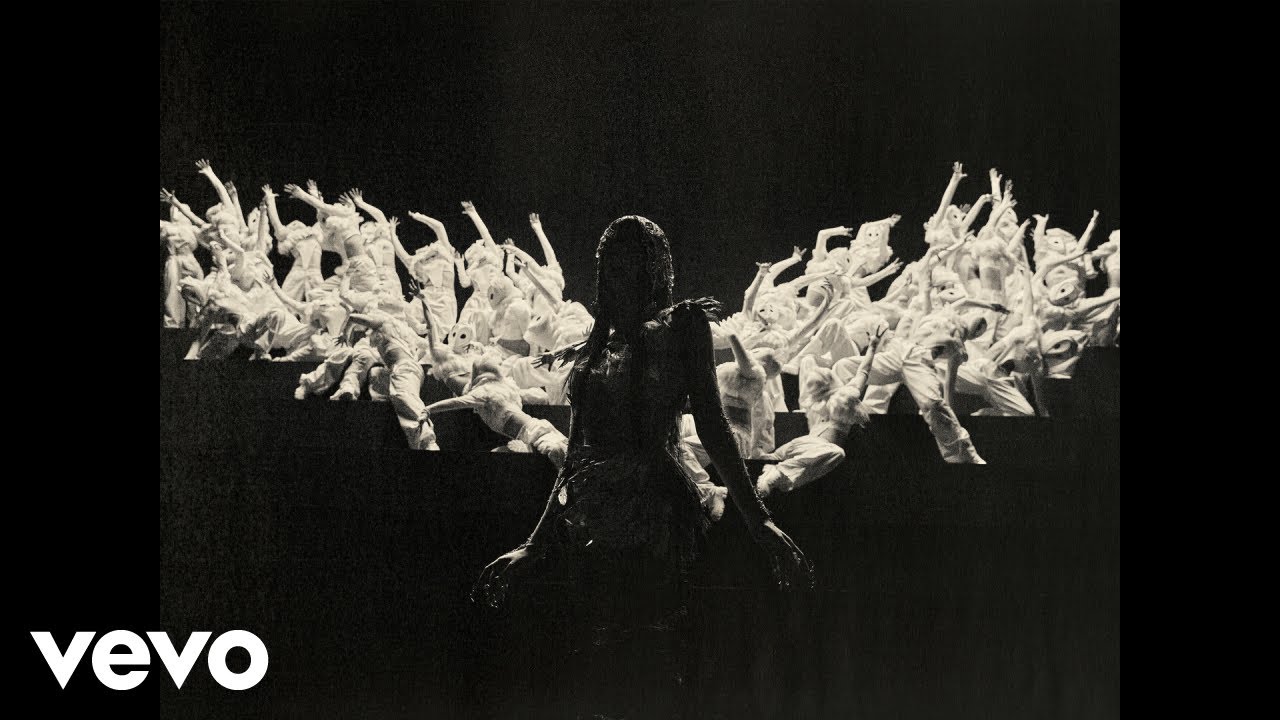
Cho Gi-seok does not build one stable throne room. He gives JENNIE a chain of surreal environments that feel ceremonial, cosmic, organic, artificial, ancient, and futuristic at once. Power is not located in one crown. It follows her across worlds.
The owl is the detail everybody remembers because the bird carries a heavy symbolic résumé. Owls can suggest wisdom, night vision, secrecy, death, protection, or an observer who sees what ordinary daylight misses. The video does not hand us a single official definition. In this context, the owl fits JENNIE’s controlled watchfulness. She is seen, but she is also seeing.
Doubles and transformed bodies complicate the usual authentic-self story. JENNIE appears as image, ruler, creature, object of worship, and person moving among constructed spaces. The video does not reveal one normal woman underneath the spectacle. It argues that self-creation can be real even when it is visibly designed.
The visual excess is also strategic. A performer leaving a restrictive production structure could make a small, tasteful statement about freedom. JENNIE chooses scale. She demonstrates that autonomy is not merely permission to be quiet. It is permission to decide when quiet serves the idea and when an owl, a planet, and several versions of yourself need to report for duty.
Easter eggs worth discussing without inventing a secret constitution
The recurring circles, celestial bodies, and eye-like compositions keep returning the video to observation and wholeness. JENNIE can occupy the center without becoming visually trapped there. The frames often make her the organizing force rather than a decoration placed inside somebody else’s concept.
Natural textures and artificial surfaces keep colliding. That contrast can be read as public construction versus embodied life, but the video refuses to assign goodness to one side. Nature can look uncanny. Technology can look sacred. The point is less “real good, artificial bad” and more “both become material when I control the image.”
The title itself creates another useful tension. Zen traditions emphasize practice, non-attachment, and direct experience, while celebrity branding depends on image, desire, and repetition. The video is not pretending those systems match. It borrows the popular language of centeredness and places it inside maximal spectacle. The contradiction is part of the fun and part of the criticism.
The industry lens: creative control needs infrastructure
Fans often imagine freedom as one brave artist finally saying what she wants. Real control requires budgets, schedules, legal rights, production partners, distribution, and people capable of turning an unusual concept into finished work. Odd Atelier and the broader Ruby rollout matter because independence without infrastructure can become a nice press release followed by no output.
“ZEN” looks like a statement of capacity. JENNIE can commission a director with a distinctive visual language, center a concept that does not explain itself in three seconds, and release it as a major part of her solo identity. That does not prove every decision is hers alone. It does prove the system around her can now support a different range of decisions.
The cultural lens: face, hierarchy, and the right to stop performing gratitude
East Asian professional cultures can place strong value on hierarchy, endurance, and maintaining social harmony. Those values can support collective work, but they can also make boundary-setting look disrespectful when a younger person or woman stops accepting the old arrangement.
JENNIE’s calm is therefore more provocative than open rebellion. She does not need to shout at a former system for the boundary to exist. She proceeds. That behavior can be read as arrogance by anyone who believes gratitude should require permanent obedience. “ZEN” rejects that bargain without turning the song into a courtroom statement.
The Buddhist lens: peace is not another possession
Buddhist practice would challenge the pop fantasy that a person can own a permanent state of being unbothered. Feelings change. Praise and blame arrive. Attachment to the identity of “the peaceful one” can create a new performance to defend.
The more useful connection is attention. JENNIE keeps deciding where attention goes and which judgments receive weight. She cannot control every reaction, but she can reduce the authority granted to those reactions. That is not enlightenment. It is a practical boundary, and pop music is allowed to start there.
The MRT lens: protect the objective from everybody else’s noise
Operational clarity requires identifying the actual objective, available resources, constraints, and threats. Noise becomes dangerous when it changes the mission without earning that authority. Celebrity culture produces industrial quantities of noise and then calls the performer sensitive for noticing.
“ZEN” sounds like JENNIE reasserting command intent. The objective is creative self-definition. Public opinion is information, not command. The owl may submit a briefing. The owl does not get the final signature.
What works
JENNIE’s vocal control, Cho Gi-seok’s visual world, and the scale of the production make self-possession feel active. The video rewards replay without requiring one correct theory. The song’s restraint gives her presence room, and the business context adds weight without becoming the only reason the track matters.
What could be better
The arrangement needs one more turn. A bridge, rhythmic rupture, or vocal escalation could expose the cost beneath the calm. The lyrics also need one concrete memory to anchor their broad confidence. JENNIE carries the current version, but the concept could survive more risk.
RaeRae verdict
“ZEN” is a visual manifesto disguised as a confidence track. It is not about becoming too peaceful to care. It is about caring on purpose, controlling access, and refusing to let recognition become ownership. JENNIE found her center, built several planets around it, and wisely did not hand us the property deed.
Watch the official music video
Sources and credits
- JENNIE official channel: “ZEN” music videoDaily+55.1KTotal views94.4M
- JENNIE official website
- Odd Atelier official website
Exact-video correction
The official ZEN video ID is cXmYNmQ4BuM. The earlier tracker carried a one-character transcription error ending in “A,” which could never prove an exact playlist relationship. The corrected official file now anchors the React, JENNIE profile and playlist row without changing the review’s artistic conclusion.